Prison of Debt Paralyzes West
November 19, 2012 9:01 PM Subscribe
Be it the United States or the European Union, most Western countries are so highly indebted today that the markets have a greater say in their policies than the people. Why are democratic countries so pathetic when it comes to managing their money sustainably? This clear, well-written essay in Der Speigel lays out the current debt crisis - along with current, proposed solutions - in an understandable manner. Not included among the so-far-proposed solutions is one other that has opened up a veritable financial market and debt Pandora's Box - i.e. a central bank debt jubilee.
Couldn't we just build a bunch of highways and start a war?
posted by I love you more when I eat paint chips at 9:26 PM on November 19, 2012 [4 favorites]
posted by I love you more when I eat paint chips at 9:26 PM on November 19, 2012 [4 favorites]
It reads like a slightly less sensational dailyreckoning.com article.
But interesting nonetheless, from the history provided at the beginning of the article, the debt explosion was caused by the unravelling of the Bretton-Woods agreement, which according to the article, was required in order to fund the Vietnam War, which, if I believe correctly was a conflict started by the French colonialists, right? Not sure what I'm getting at, just tracing back threads.
I not sure I can get all GRAR about the debt situation, having spent too many years reading Stephen Roach's end of the world prognostications from I think Merrill Lynch around the turn of the century. I kind of burned out on hand wringing over national debts.
Jubilee sounds nice though!
posted by roboton666 at 9:32 PM on November 19, 2012 [1 favorite]
But interesting nonetheless, from the history provided at the beginning of the article, the debt explosion was caused by the unravelling of the Bretton-Woods agreement, which according to the article, was required in order to fund the Vietnam War, which, if I believe correctly was a conflict started by the French colonialists, right? Not sure what I'm getting at, just tracing back threads.
I not sure I can get all GRAR about the debt situation, having spent too many years reading Stephen Roach's end of the world prognostications from I think Merrill Lynch around the turn of the century. I kind of burned out on hand wringing over national debts.
Jubilee sounds nice though!
posted by roboton666 at 9:32 PM on November 19, 2012 [1 favorite]
this guy took the red pill about a year ago.
in other news, at least we are on the road to a solution, right? dark pool trade is up 50% - that's a good thing, right?
posted by phaedon at 9:43 PM on November 19, 2012 [1 favorite]
in other news, at least we are on the road to a solution, right? dark pool trade is up 50% - that's a good thing, right?
posted by phaedon at 9:43 PM on November 19, 2012 [1 favorite]
Yeah, we're so damned indebted. Only 41% of the US' notional debt is held by...the government itself. That's right kids, the US Government's single largest creditor is itself. That is to say that our left pocket owes our right pocket a princely sum. Doomed, we are, just doomed.
At least with regard to the US Government, the argument isn't actually about debt at all. It's about future tax policy. It's about whether or not the rich will pay the debt they incurred with the Reagan and Bush tax cuts and the trust fund deal in the 80s. They would like to not pay, having gotten used to always being let off the hook when it comes time to pay the piper, so they say that we have this unmanageable debt burden that we can never repay, and imply that this debt is mostly held by foreigners and represents a significant external transfer that will make us poorer.
In reality, the debt burden is quite mild compared to the demonstrated ability of the federal government to tax its citizens much more heavily without significantly impacting economic growth. God forbid that the folks who have gotten a free ride be forced to repay some of their largesse. I think it's pretty damn short sighted of them, given that the money will just wend its way back into their pockets anyway. It's only taking a short walk around the block.
tl;dr: Deadbeats in the US are trying to get out of paying and some find that fact shocking.
posted by wierdo at 9:53 PM on November 19, 2012 [71 favorites]
At least with regard to the US Government, the argument isn't actually about debt at all. It's about future tax policy. It's about whether or not the rich will pay the debt they incurred with the Reagan and Bush tax cuts and the trust fund deal in the 80s. They would like to not pay, having gotten used to always being let off the hook when it comes time to pay the piper, so they say that we have this unmanageable debt burden that we can never repay, and imply that this debt is mostly held by foreigners and represents a significant external transfer that will make us poorer.
In reality, the debt burden is quite mild compared to the demonstrated ability of the federal government to tax its citizens much more heavily without significantly impacting economic growth. God forbid that the folks who have gotten a free ride be forced to repay some of their largesse. I think it's pretty damn short sighted of them, given that the money will just wend its way back into their pockets anyway. It's only taking a short walk around the block.
tl;dr: Deadbeats in the US are trying to get out of paying and some find that fact shocking.
posted by wierdo at 9:53 PM on November 19, 2012 [71 favorites]
Couldn't we just build a bunch of highways and start a war?
We did that already. Over, and over, and over. Now we need to pay the debts we incurred to fight those wars and build bridges to nowhere, and since we haven't invested in actual wealth-producing goods, we don't have the extra true economic power that we should have built with it instead. Rather, what will happen, as soon as we start trying to pay down debt, is that the economy will freaking implode, because about ten percent of it (as of a couple of years ago, it's dropped a little since) is directly government debt accumulation!
Think about that a minute -- 10% of our entire economy, in the 2008-2009 timeframe, was driven by government promises to repay all that stuff we were using up, sometime in the nebulous future. I don't know what the current figures are, but it's probably still about 8%.
What happens if we stop borrowing? The economy instantly shrinks by 8% directly, whatever the actual percentage is. And then we have knock-on after knock-on after knock-on effect, as that slowdown cascades into more slowdown. Probably, you're looking at something like a 25% total slowdown in economic activity if the government stops borrowing. Wham, instant Greater Depression. We can't stop borrowing. But we have to, because the interest costs and principal repayments are killing us. But we can't. But we must. But we can't.
So, the politicians think like politicians always do -- because digging our way out of the hole will be supremely painful (a la Greece, only much worse), they enact short-term fixes that make the underlying problems worse, not better.
The real physical truth of things is that we are living champagne lifestyles on beer pocketbooks, and we're doing this all through the economy, both in the private and in the public sector. We owe the world, quite literally, more than we could ever hope to repay. They've been sending us their flatscreen televisions and computers and amazing cameras, in exchange for green pieces of paper. They expect to be able to turn that green paper into wealth greater than what they sent us -- if they sent us a Honda Civic for $25,000, after we finish paying the interest on that loan, they expect to be able to buy a little more than a Honda Civic with the proceeds.
And there is no way in hell that is ever going to happen. Never, never, not ever. There is not enough economic output in the US to service our titanic debt levels, and we have many tens of trillions of new debts looming, as the disastrous Medicare expansion and the Social Security drawdown start in just a few more years.
No matter how big you are, no matter how much power you have in the world, you can write checks you can't cash, and we have done so with gusto and panache. From here, it's all a Ponzi scheme. Once the world stops supporting dollars, printing their own currencies to absorb the floods of the stuff coming from the Federal Reserve, America will go into economic collapse.
We didn't fix anything in 2008-2009. Instead, we deployed many many trillions of dollars, mostly printed money, to tell the economy to keep doing the stupid shit that got us in trouble in the first place. It's gotten so outrageous now that the Federal Reserve is directly buying mortage securities to juice the housing market -- it was a bubble before, and the popping of the bubble hurts, so they think by reinflating the bubble, things are going to be wonderful again.
We have idiots at the helm. We aren't fixing anything. We just keep compounding our problems. Don't make the mistake of thinking that just because everything seems okay this year, that everything actually is okay. Greece felt just fine right up until the borrowing well ran dry. We won't fail in exactly that same way, but we will fail, just as certainly.
You have to pay for the stuff you use, with equivalent value. Playing games with money does not change that.
posted by Malor at 9:53 PM on November 19, 2012 [14 favorites]
We did that already. Over, and over, and over. Now we need to pay the debts we incurred to fight those wars and build bridges to nowhere, and since we haven't invested in actual wealth-producing goods, we don't have the extra true economic power that we should have built with it instead. Rather, what will happen, as soon as we start trying to pay down debt, is that the economy will freaking implode, because about ten percent of it (as of a couple of years ago, it's dropped a little since) is directly government debt accumulation!
Think about that a minute -- 10% of our entire economy, in the 2008-2009 timeframe, was driven by government promises to repay all that stuff we were using up, sometime in the nebulous future. I don't know what the current figures are, but it's probably still about 8%.
What happens if we stop borrowing? The economy instantly shrinks by 8% directly, whatever the actual percentage is. And then we have knock-on after knock-on after knock-on effect, as that slowdown cascades into more slowdown. Probably, you're looking at something like a 25% total slowdown in economic activity if the government stops borrowing. Wham, instant Greater Depression. We can't stop borrowing. But we have to, because the interest costs and principal repayments are killing us. But we can't. But we must. But we can't.
So, the politicians think like politicians always do -- because digging our way out of the hole will be supremely painful (a la Greece, only much worse), they enact short-term fixes that make the underlying problems worse, not better.
The real physical truth of things is that we are living champagne lifestyles on beer pocketbooks, and we're doing this all through the economy, both in the private and in the public sector. We owe the world, quite literally, more than we could ever hope to repay. They've been sending us their flatscreen televisions and computers and amazing cameras, in exchange for green pieces of paper. They expect to be able to turn that green paper into wealth greater than what they sent us -- if they sent us a Honda Civic for $25,000, after we finish paying the interest on that loan, they expect to be able to buy a little more than a Honda Civic with the proceeds.
And there is no way in hell that is ever going to happen. Never, never, not ever. There is not enough economic output in the US to service our titanic debt levels, and we have many tens of trillions of new debts looming, as the disastrous Medicare expansion and the Social Security drawdown start in just a few more years.
No matter how big you are, no matter how much power you have in the world, you can write checks you can't cash, and we have done so with gusto and panache. From here, it's all a Ponzi scheme. Once the world stops supporting dollars, printing their own currencies to absorb the floods of the stuff coming from the Federal Reserve, America will go into economic collapse.
We didn't fix anything in 2008-2009. Instead, we deployed many many trillions of dollars, mostly printed money, to tell the economy to keep doing the stupid shit that got us in trouble in the first place. It's gotten so outrageous now that the Federal Reserve is directly buying mortage securities to juice the housing market -- it was a bubble before, and the popping of the bubble hurts, so they think by reinflating the bubble, things are going to be wonderful again.
We have idiots at the helm. We aren't fixing anything. We just keep compounding our problems. Don't make the mistake of thinking that just because everything seems okay this year, that everything actually is okay. Greece felt just fine right up until the borrowing well ran dry. We won't fail in exactly that same way, but we will fail, just as certainly.
You have to pay for the stuff you use, with equivalent value. Playing games with money does not change that.
posted by Malor at 9:53 PM on November 19, 2012 [14 favorites]
Couldn't we just build a bunch of highways and start a war?
You know who else... oh, right.
posted by 1367 at 9:54 PM on November 19, 2012 [2 favorites]
You know who else... oh, right.
posted by 1367 at 9:54 PM on November 19, 2012 [2 favorites]
For an in-depth look at the long history of debt forgiveness, i.e., jubilees, as well as the much larger context of debt, credit and the creation of currency, you could do worse than to read David Graeber's "Debt, The First 5,000 Years".
posted by Philofacts at 10:00 PM on November 19, 2012 [5 favorites]
posted by Philofacts at 10:00 PM on November 19, 2012 [5 favorites]
Before we talk about the debt crisis we might want to first establish whether there is a debt crisis. Here in Canada, government debt as a percentage of GDP is slightly lower than it was in 1960. Likewise, the American debt/GDP ratio stayed more or less the same from 1960 to 2000. It got a bit worse during the spendthrift Bush years. That ratio rapidly got worse beginning in 2008 because GDP dropped, tax revenues dropped and unemployed workers needed to claim benefits. What we have right now isn't a debt crisis, it's a revenue crisis.
posted by justsomebodythatyouusedtoknow at 10:04 PM on November 19, 2012 [12 favorites]
posted by justsomebodythatyouusedtoknow at 10:04 PM on November 19, 2012 [12 favorites]
I'm no economist, and I don't pretend to fully understand the article, but from my view Schnibben is saying we are just going to have to make do with less. Everything just seems greatly inflated.
The entire world seems to be in a crunch. From a sort of "take a step back" attitude, where is the money going? The US is in a financial crisis, Europe even more so, and China's growth, by many accounts, is largely fictional. Africa obviously isn't exactly a driver of economic growth - I mean, compared to 6 years ago, why are we less wealthy? My understanding/guess is that we believed we had more than we did, and when we realized we didn't actually have what we did, everyone started panicking and things sort of started adjusting back to "normal". The financial system that we have created is buttressed by imaginary money. Is this what the article is saying? Maybe someone with more financial expertise can explain it in more layman terms.
But if this is the case, again, it seems as though we are just going to have to make do with less as a society. I think many people are in denial that somehow our way of life has been fundamentally changed. Think on this - if you make $60,000 now, will your life be significantly hindered if you make $40,000?
Another thing that has me thinking - how does the economy truly grow? Productivity/skills? If so, shouldn't the economy scale proportionately to population and education?
posted by o310362 at 10:07 PM on November 19, 2012
The entire world seems to be in a crunch. From a sort of "take a step back" attitude, where is the money going? The US is in a financial crisis, Europe even more so, and China's growth, by many accounts, is largely fictional. Africa obviously isn't exactly a driver of economic growth - I mean, compared to 6 years ago, why are we less wealthy? My understanding/guess is that we believed we had more than we did, and when we realized we didn't actually have what we did, everyone started panicking and things sort of started adjusting back to "normal". The financial system that we have created is buttressed by imaginary money. Is this what the article is saying? Maybe someone with more financial expertise can explain it in more layman terms.
But if this is the case, again, it seems as though we are just going to have to make do with less as a society. I think many people are in denial that somehow our way of life has been fundamentally changed. Think on this - if you make $60,000 now, will your life be significantly hindered if you make $40,000?
Another thing that has me thinking - how does the economy truly grow? Productivity/skills? If so, shouldn't the economy scale proportionately to population and education?
posted by o310362 at 10:07 PM on November 19, 2012
Question! Who is all this debt owed to?
Also: to be fair the Bridge to Nowhere was actually the Bridge to the Freakin' Airport. And it never got built so everyone still has to boat to the airport which is a big pain in the ass, boats run every 15 minutes all summer long. They did build the approach road despite the bridge being canceled because the "money came from the federal govt and otherwise we would have had to give it back"- Gov Palin. Righto there Ms Small Govt.
posted by fshgrl at 10:09 PM on November 19, 2012 [2 favorites]
Also: to be fair the Bridge to Nowhere was actually the Bridge to the Freakin' Airport. And it never got built so everyone still has to boat to the airport which is a big pain in the ass, boats run every 15 minutes all summer long. They did build the approach road despite the bridge being canceled because the "money came from the federal govt and otherwise we would have had to give it back"- Gov Palin. Righto there Ms Small Govt.
posted by fshgrl at 10:09 PM on November 19, 2012 [2 favorites]
Malor: "You have to pay for the stuff you use, with equivalent value. Playing games with money does not change that."
Actually, you don't. We aren't on the gold standard any more. You can argue that we ought to (and I would agree), but it's not a physical necessity any more than it's a physical necessity that I type these words. Up to the point someone is willing to start a shooting war, it simply doesn't matter. All they can do is stop giving us stuff. At the moment, that wouldn't be too wise for most of them. It gives them something to do. If we pay them back, all the better.
Give it 10 or 20 years and maybe the rest of the world will be in a position to do without the US market. Until then, they have little choice but to eat shit. Now, the oil rich countries..those guys could really do a number on us thanks to our obstinate refusal to make a serious effort at energy independence.
posted by wierdo at 10:14 PM on November 19, 2012 [5 favorites]
Actually, you don't. We aren't on the gold standard any more. You can argue that we ought to (and I would agree), but it's not a physical necessity any more than it's a physical necessity that I type these words. Up to the point someone is willing to start a shooting war, it simply doesn't matter. All they can do is stop giving us stuff. At the moment, that wouldn't be too wise for most of them. It gives them something to do. If we pay them back, all the better.
Give it 10 or 20 years and maybe the rest of the world will be in a position to do without the US market. Until then, they have little choice but to eat shit. Now, the oil rich countries..those guys could really do a number on us thanks to our obstinate refusal to make a serious effort at energy independence.
posted by wierdo at 10:14 PM on November 19, 2012 [5 favorites]
Angela Merkel is currently making the rounds among nations in debt to the EU/IMF, urging austerity. Most of the money of these countries owe comes from bailouts to their banking industry, which Germany urged, and which benefits German financial markets.
I wouldn't be listening to the Germans for financial advice right now.
posted by clarknova at 10:20 PM on November 19, 2012 [12 favorites]
I wouldn't be listening to the Germans for financial advice right now.
posted by clarknova at 10:20 PM on November 19, 2012 [12 favorites]
Looks like a lot of right-wing hooey to me. Nations are always in debt; British debt in the 19th century was routinely twice its GDP (far more than today).
The Very Serious People, as Paul Krugman calls them, have been advocating austerity all through the last few years. They're listened to more closely in the Eurozone and the UK, and as a result those economies are crashing back into recession. Austerity produces more crisis, not less. We should have learned that from Herbert Hoover's four years of misery.
Europe's real problem is that it created a single currency but refuses to act as an economic unit. It becomes a morality play between industrious Germans and spendthrift Mediterraneans-- despite the fact that Spain's budget was balanced before the crisis, and it was German money pouring into Spain that caused the bubble there.
posted by zompist at 10:29 PM on November 19, 2012 [35 favorites]
The Very Serious People, as Paul Krugman calls them, have been advocating austerity all through the last few years. They're listened to more closely in the Eurozone and the UK, and as a result those economies are crashing back into recession. Austerity produces more crisis, not less. We should have learned that from Herbert Hoover's four years of misery.
Europe's real problem is that it created a single currency but refuses to act as an economic unit. It becomes a morality play between industrious Germans and spendthrift Mediterraneans-- despite the fact that Spain's budget was balanced before the crisis, and it was German money pouring into Spain that caused the bubble there.
posted by zompist at 10:29 PM on November 19, 2012 [35 favorites]
re: 'obstinate refusal to make a serious effort at energy independence' this was going around earlier this week: US Top Oil Producer in 5 years.
posted by Mei's lost sandal at 10:32 PM on November 19, 2012 [1 favorite]
posted by Mei's lost sandal at 10:32 PM on November 19, 2012 [1 favorite]
(Economically independent obviously; not independent of the petroleum crack habit)
posted by Mei's lost sandal at 10:34 PM on November 19, 2012 [1 favorite]
posted by Mei's lost sandal at 10:34 PM on November 19, 2012 [1 favorite]
When I look at this graph from LLNL I'm really skeptical about the US becoming a net oil exporter. Some people (including the EIA) think that oil usage by transportation will flat line. Looking at past trends and seeing no obvious cause of mass conservation besides a shitty economic recovery taking the better part of this decade I question whether this plan will come to fruition.
Transportation is the biggest user of oil by far and we've taken most of the low hanging fruit in the conservation stakes. We're down to playing inches at a time but we're still at the 40 yard line on the third down.
posted by Talez at 10:54 PM on November 19, 2012 [1 favorite]

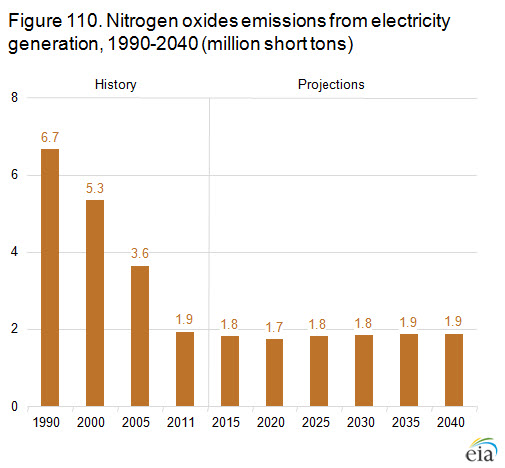
Transportation is the biggest user of oil by far and we've taken most of the low hanging fruit in the conservation stakes. We're down to playing inches at a time but we're still at the 40 yard line on the third down.
posted by Talez at 10:54 PM on November 19, 2012 [1 favorite]
Northwest Passage, Talez. Those big container ships use 5-15 tons of fuel per hour and if they can go north it cuts 11,000 km off the Europe-Asia sailing route. 90% of global transport is by container ship. It could be a significant change.
posted by fshgrl at 11:00 PM on November 19, 2012 [2 favorites]
posted by fshgrl at 11:00 PM on November 19, 2012 [2 favorites]
That's an interesting energy chart. I don't understand the branch called "Rejected Energy" though.
posted by Mei's lost sandal at 11:01 PM on November 19, 2012
posted by Mei's lost sandal at 11:01 PM on November 19, 2012
Question! Who is all this debt owed to?
Fun question. Working with US data alone, the latest sufficiently detailed information I could find was from March 2012. Of the $15.6 trillion of US Government securities, $6.4 trillion is held intra-government, and $9.2 trillion is privately held. The break-up of that $9.2 trillion is:
Deposit-taking institutions: $0.30t
Saving Bonds: $0.18t
Pension Funds (both private and state+local government): $0.74t
Insurance Companies: $0.25t
Mutual Funds: $0.85t
State+Local Governments: $0.44t
Other Investors: $1.23t
Foreign and International: $5.14t
Of those foreign holders, in March 2012, the biggest five groups were:
China: $1.14t
Japan: $1.08t
Major Oil Exporters: $0.26t
Brazil: $0.24t
Caribbean Banking Centres: $0.23t
posted by kithrater at 11:03 PM on November 19, 2012 [11 favorites]
Fun question. Working with US data alone, the latest sufficiently detailed information I could find was from March 2012. Of the $15.6 trillion of US Government securities, $6.4 trillion is held intra-government, and $9.2 trillion is privately held. The break-up of that $9.2 trillion is:
Deposit-taking institutions: $0.30t
Saving Bonds: $0.18t
Pension Funds (both private and state+local government): $0.74t
Insurance Companies: $0.25t
Mutual Funds: $0.85t
State+Local Governments: $0.44t
Other Investors: $1.23t
Foreign and International: $5.14t
Of those foreign holders, in March 2012, the biggest five groups were:
China: $1.14t
Japan: $1.08t
Major Oil Exporters: $0.26t
Brazil: $0.24t
Caribbean Banking Centres: $0.23t
posted by kithrater at 11:03 PM on November 19, 2012 [11 favorites]
Northwest Passage, Talez. Those big container ships use 5-15 tons of fuel per hour and if they can go north it cuts 11,000 km off the Europe-Asia sailing route. 90% of global transport is by container ship. It could be a significant change.I'm not doubting the ability to transport it. I question whether the conservation expectations and increased production expectations are based in reality.
That's an interesting energy chart. I don't understand the branch called "Rejected Energy" though.Excess heat that can't be harnessed effectively. Power generation and internal combustion engines are much less than 100% efficient.
posted by Talez at 11:05 PM on November 19, 2012 [2 favorites]
For many of the world's economic and political elite, austerity is the end, not the means.
posted by Pope Guilty at 11:05 PM on November 19, 2012 [18 favorites]
posted by Pope Guilty at 11:05 PM on November 19, 2012 [18 favorites]
"Rejected Energy" is stuff like waste heat from nuclear power plants and other similar inefficiencies.
It's really transportation that's the least efficient by a huge margin.
posted by aubilenon at 11:08 PM on November 19, 2012
It's really transportation that's the least efficient by a huge margin.
posted by aubilenon at 11:08 PM on November 19, 2012
The first shots across the bow in the war on Keynesians.
posted by Talez at 11:09 PM on November 19, 2012 [1 favorite]
posted by Talez at 11:09 PM on November 19, 2012 [1 favorite]
So kithrater- mostly we owe the money to.. us?
Talez, I'm suggesting there may be a significant decrease in the demand for fuel (and what ships burn is pretty crude) not that it will be more easily transported. Assuming the whole NWP thing happens.
posted by fshgrl at 11:10 PM on November 19, 2012
Talez, I'm suggesting there may be a significant decrease in the demand for fuel (and what ships burn is pretty crude) not that it will be more easily transported. Assuming the whole NWP thing happens.
posted by fshgrl at 11:10 PM on November 19, 2012
Talez, I'm suggesting there may be a significant decrease in the demand for fuel (and what ships burn is pretty crude) not that it will be more easily transported. Assuming the whole NWP thing happens.
But where does it come from? Look at a chart like this. The projected CAFE standards climb well above the historical trend line. The demand for cars isn't subsiding with increasing populations living further from places of work due to suburban sprawl.
I just can't see where these numbers are coming from except for sheer fantasy. It's like watching wheat figures in the cultural revolution.
posted by Talez at 11:18 PM on November 19, 2012
But where does it come from? Look at a chart like this. The projected CAFE standards climb well above the historical trend line. The demand for cars isn't subsiding with increasing populations living further from places of work due to suburban sprawl.
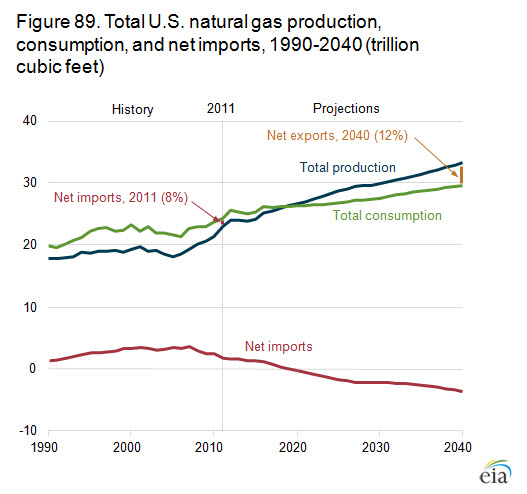
I just can't see where these numbers are coming from except for sheer fantasy. It's like watching wheat figures in the cultural revolution.
posted by Talez at 11:18 PM on November 19, 2012
Start another war? The defense budget is something like $1.2 trillion. It dwarfs all other concerns. Oh and tax marijuana. Just a thought.
posted by Brocktoon at 11:23 PM on November 19, 2012
posted by Brocktoon at 11:23 PM on November 19, 2012
Oh and tax marijuana. Just a thought.
Yes! And build more casinos. Nothing beats taxing the stupid and lazy.
posted by phaedon at 11:27 PM on November 19, 2012
Yes! And build more casinos. Nothing beats taxing the stupid and lazy.
posted by phaedon at 11:27 PM on November 19, 2012
Off the top of my head, the following major historical events have been sparked by sovereign debt crises:
- The signing of Magna Carta (AD 1215).
- The French Revolution (AD 1789).
- The collapse of Weimar Germany and the rise of the Nazi party (1930s).
The problem we're currently facing is that we halfway believed that we could just do whatever the hell we wanted, fiscally speaking. These articles suggest that instead of that, the problem is that we haven't divested ourselves enough of the concept that value has objective meaning, and that governments can essentially conjure wealth out of thin air.
Heaven forgive us for our idolatry.
posted by valkyryn at 11:33 PM on November 19, 2012 [1 favorite]
- The signing of Magna Carta (AD 1215).
- The French Revolution (AD 1789).
- The collapse of Weimar Germany and the rise of the Nazi party (1930s).
The problem we're currently facing is that we halfway believed that we could just do whatever the hell we wanted, fiscally speaking. These articles suggest that instead of that, the problem is that we haven't divested ourselves enough of the concept that value has objective meaning, and that governments can essentially conjure wealth out of thin air.
Heaven forgive us for our idolatry.
posted by valkyryn at 11:33 PM on November 19, 2012 [1 favorite]
Financially, the US isn't like Weimar Germany. If you think that you are ignorant.
posted by wuwei at 11:36 PM on November 19, 2012 [5 favorites]
posted by wuwei at 11:36 PM on November 19, 2012 [5 favorites]
People who consume marijuana are stupid and lazy, eh? What a strange, narrowminded notion. Thats like saying all consumers are stupid and lazy. All consumer goods get taxed right? Tax marijuana, reduce crime related expenditures, cut the defense budget. I have a lot of good ideas like this.
posted by Brocktoon at 11:55 PM on November 19, 2012 [5 favorites]
posted by Brocktoon at 11:55 PM on November 19, 2012 [5 favorites]
Metafilter: an orgy of irrationality, arbitrariness, waste and egoism.
posted by InsertNiftyNameHere at 12:16 AM on November 20, 2012
posted by InsertNiftyNameHere at 12:16 AM on November 20, 2012
Tax marijuana, reduce crime related expenditures, cut the defense budget.
Yeah, a lot of things sound good when you're in a recession. I notice you didn't have anything to say about my casinos comment.
posted by phaedon at 12:21 AM on November 20, 2012
Yeah, a lot of things sound good when you're in a recession. I notice you didn't have anything to say about my casinos comment.
posted by phaedon at 12:21 AM on November 20, 2012
Speaking of casinos, I wonder how closely government corruption correlates to a nations economic performance. Building casinos also has a signifigant social cost that say raising the tax on smokes doesn't.
posted by onya at 12:28 AM on November 20, 2012
posted by onya at 12:28 AM on November 20, 2012
We have several crises facing us right now: unemployment, underutilized productive capacity, deteriorating infrastructure, natural resource depletion, and climate change. Deficits and debt are not among them. Over the long term, we will need to rein in costs to Medicare and slightly raise taxes in order to ensure that Social Security is fully funded for the baby boomers. Current scaremongering around the deficit is merely ideological posturing between conservatives and liberals around funding these programs. Conservatives want to portray Social Security and Medicare as unsustainable, and therefore in need of drastic cuts or elimination, while liberals want to rally support for tax hikes in order to fund those programs. Either way, it is a debate that is occurring at least a decade (probably two decades) too early. Until we have established full employment (around 4 percent) and capacity utilization, attempts to cut spending and raise taxes in order to close the deficit are pointless and possibly dangerously counterproductive (see U.S. 1938, Japan 1990's, and present day Europe where attempts to balance budgets through austerity led and are leading to a decrease in economic activity causing even larger deficits).
The only idolatry being demonstrated right now is on the part of those scaremongering about the deficit. True wealth does not reside in a piece of paper or a shiny piece of metal. It doesn't even reside in a fuel like oil; although unlike gold oil arguably at least has a close connection to the actual productive capacity of an economy. Instead, wealth resides in the total productive capacity of an economy and its constituent parts. It resides in the factories, infrastructure, workers, and social organizations which together produce goods and services. That is why the U.S. was able to go from a depressed economy in the 1930's to producing enough arms and material to win a world war and help rebuild a shattered world - debt and all. That is why Japan is able to carry a debt burden relative to its GDP around twice that of the U.S., despite being much poorer than the U.S. in terms of natural resources and global power.
The U.S. is so far from needing to worry about its deficit or debt right now, especially in light of the other problems it faces, that it is a tragedy that this debate is even occurring. Instead of fighting over changes in the tax code that are little more than ideological markers in a larger war and amount to chump change in the real world, we should be focusing on how we are going to put people back to work building a twenty first century economy that won't cook the planet through climate change. We should be taking advantage of the historically low interest rates at which the government is able to borrow money due to current economic conditions (which is really reflective of the ultra-low opportunity cost of government spending and public sector activity in general at the moment) in order to finance that transformation and rebuild our infrastructure. Unfortunately, both Democrats and Republicans appear to believe that it is politically advantageous to have a fight about government funding to address problems that won't appear for another 20 years, if ever at the rate we are going, so we are treated to the current circus. In actuality, really needing to worry about the deficit would amount to a "good" problem because it would mean that we have achieved full employment and the private sector is healthy again (debt levels are lower, growth is back at post-war norms, demand is back to normal).
posted by eagles12 at 12:36 AM on November 20, 2012 [44 favorites]
The only idolatry being demonstrated right now is on the part of those scaremongering about the deficit. True wealth does not reside in a piece of paper or a shiny piece of metal. It doesn't even reside in a fuel like oil; although unlike gold oil arguably at least has a close connection to the actual productive capacity of an economy. Instead, wealth resides in the total productive capacity of an economy and its constituent parts. It resides in the factories, infrastructure, workers, and social organizations which together produce goods and services. That is why the U.S. was able to go from a depressed economy in the 1930's to producing enough arms and material to win a world war and help rebuild a shattered world - debt and all. That is why Japan is able to carry a debt burden relative to its GDP around twice that of the U.S., despite being much poorer than the U.S. in terms of natural resources and global power.
The U.S. is so far from needing to worry about its deficit or debt right now, especially in light of the other problems it faces, that it is a tragedy that this debate is even occurring. Instead of fighting over changes in the tax code that are little more than ideological markers in a larger war and amount to chump change in the real world, we should be focusing on how we are going to put people back to work building a twenty first century economy that won't cook the planet through climate change. We should be taking advantage of the historically low interest rates at which the government is able to borrow money due to current economic conditions (which is really reflective of the ultra-low opportunity cost of government spending and public sector activity in general at the moment) in order to finance that transformation and rebuild our infrastructure. Unfortunately, both Democrats and Republicans appear to believe that it is politically advantageous to have a fight about government funding to address problems that won't appear for another 20 years, if ever at the rate we are going, so we are treated to the current circus. In actuality, really needing to worry about the deficit would amount to a "good" problem because it would mean that we have achieved full employment and the private sector is healthy again (debt levels are lower, growth is back at post-war norms, demand is back to normal).
posted by eagles12 at 12:36 AM on November 20, 2012 [44 favorites]
Financially, the US isn't like Weimar Germany. If you think that you are ignorant.
So what's a better historical analogy?
posted by philip-random at 12:41 AM on November 20, 2012
Thinking in historical analogies is half the problem.
posted by MartinWisse at 12:51 AM on November 20, 2012 [4 favorites]
posted by MartinWisse at 12:51 AM on November 20, 2012 [4 favorites]
The U.S. isn't Weimar Germany.
The U.S. isn't Zimbabwe.
The U.S. is the U.S..
It is a unique country with its own unique set of properities. Historical analogies? How about Japan in the 1990's. Or Japan now. Except the U.S. is in an even better position because it is a continent spanning global power with vast natural resources rather than an island; and it has a young and growing rather than aging and shrinking population.
What is really important is the fact that the U.S. controls its own currency, has high unemployment, unutilized productive capacity, low growth, and a central bank comitted to keeping interest rates at zero.
posted by eagles12 at 12:58 AM on November 20, 2012 [8 favorites]
The U.S. isn't Zimbabwe.
The U.S. is the U.S..
It is a unique country with its own unique set of properities. Historical analogies? How about Japan in the 1990's. Or Japan now. Except the U.S. is in an even better position because it is a continent spanning global power with vast natural resources rather than an island; and it has a young and growing rather than aging and shrinking population.
What is really important is the fact that the U.S. controls its own currency, has high unemployment, unutilized productive capacity, low growth, and a central bank comitted to keeping interest rates at zero.
posted by eagles12 at 12:58 AM on November 20, 2012 [8 favorites]
Exactly. Historical analogies don't help us.
Weimar Germany had to make payments in foreign currency, and in gold. But you don't have to take my word for it. Here is Bill Mitchell, an econ prof in Australia:
Weimar Germany had to make payments in foreign currency, and in gold. But you don't have to take my word for it. Here is Bill Mitchell, an econ prof in Australia:
If we think about the Weimar Republic for a moment, the problems for them began long before the hyperinflation, which really went off in 1923. Following World War I the reparations payments required under the Versailles Treaty squeezed the German government so badly that they eventually defaulted. The Treaty was just a bloody-minded pay-back by the victors of the war and brought so much subsequent grief to the World in the 1939-1945 War that you wonder what was going on in their heads.posted by wuwei at 1:01 AM on November 20, 2012 [2 favorites]
Anyway, for historians, you will recall that the French and Belgian armies then retaliated after the German default and took over the industrial area of the Ruhr – Germany’s mining and manufacturing heartland. The Germans, in turn, stopped work and production ground to a halt. The Germans kept paying the workers in local currency despite limited production being possible and you can imagine that nominal demand quickly started to rise relative to real output which was grinding to a halt. The crunch came when the export trade stalled and the only way the German Government could keep paying their treaty obligations etc was to keep spending. The inflation followed.
Link
So kithrater- mostly we owe the money to.. us?
Yes. The article's failure to acknowledge that debt is just the other side of an asset is what marks it as a proud example of the deficit-and-debt-moralising genre. But, you know, doom, gloom, hyperinflation, Zimbawe, Weimar Republic, etc.
What I think that the debt crises is another indicator of the accelerating pace of inequality in the western world: the low and middle classes are in both private and public capacities, in a very broad sense with many exceptions, paying more interest to the rich.
posted by kithrater at 1:03 AM on November 20, 2012 [5 favorites]
Yes. The article's failure to acknowledge that debt is just the other side of an asset is what marks it as a proud example of the deficit-and-debt-moralising genre. But, you know, doom, gloom, hyperinflation, Zimbawe, Weimar Republic, etc.
What I think that the debt crises is another indicator of the accelerating pace of inequality in the western world: the low and middle classes are in both private and public capacities, in a very broad sense with many exceptions, paying more interest to the rich.
posted by kithrater at 1:03 AM on November 20, 2012 [5 favorites]
Why are all the people who normally believe almost religiously in the price discovery powers of markets suddenly unconvinced that the market is pricing US government debt properly? If the US was in a spending crisis, and at real risk of default, wouldn't that mean that the real interest rate for Treasuries would be high, instead of you know, so unprecedentedly low that they are negative?
Seriously, look at that link. Every maturity short of 30 year has a negative real yield. Want to invest in 5 year TIPS? The market says you get a return of -1.39%. Well, that's short term, and the debt is a long term problem; so what about 20 year? -0.09% return, you say? Well, that's something.
So, on the one hand, we have politicians on both sides of the aisle saying that the debt is unsustainable, and that the bond markets will punish their profligacy, and on the other, we have the bond markets saying "please, borrow our money, we will pay you for the privilege of being your creditor!"
posted by [expletive deleted] at 1:46 AM on November 20, 2012 [22 favorites]
Seriously, look at that link. Every maturity short of 30 year has a negative real yield. Want to invest in 5 year TIPS? The market says you get a return of -1.39%. Well, that's short term, and the debt is a long term problem; so what about 20 year? -0.09% return, you say? Well, that's something.
So, on the one hand, we have politicians on both sides of the aisle saying that the debt is unsustainable, and that the bond markets will punish their profligacy, and on the other, we have the bond markets saying "please, borrow our money, we will pay you for the privilege of being your creditor!"
posted by [expletive deleted] at 1:46 AM on November 20, 2012 [22 favorites]
>>Couldn't we just build a bunch of highways and start a war?
>We did that already. Over, and over, and over.
Er, well, let's leave aside the wars and concentrate on the highways--or speaking a bit more broadly, the public infrastructure.
We have spent money on that over the past centuries in the U.S., particularly since about 1940.
But . . . over the past 20-30 years we have actually invested gradually less and less. Particularly since the early 1990s, the last time we raised the gas tax, the amount of investment in roads and highways has been going gradually down. (Fuel tax loses buying power each year equal to the inflation rate, and the gradually increasing average gas mileage of our vehicles has taken out another chunk.)
So yeah, we don't need to build the interstate freeway system again. Honestly we don't need many more freeway interchanges and the like
But we DO need to:
- MAINTAIN the road, highway, and bridge system we have
- FILL IN our missing public transit sector--everything from high speed rail to decent, basic public transit in the many U.S. cities that don't have it
- And we've been criminarlly neglecting biking, walking, trails, sidewalks, and other basic, neighborhood level, human-scale infrastructure since the 1940s. That needs to be filled in big time. Luckily, it costs only a fraction of what transit and road maintenance does.
The civil engineers talk about this issue all the time--the infrastructure deficit. Deferred maintenance, basically. It's currently at about $2.1 trillion--the amount required to get us back on track over the five years.
It's one of those things that is going to cost us far more over the long run if we continue to neglect it now.
posted by flug at 2:40 AM on November 20, 2012 [5 favorites]
>We did that already. Over, and over, and over.
Er, well, let's leave aside the wars and concentrate on the highways--or speaking a bit more broadly, the public infrastructure.
We have spent money on that over the past centuries in the U.S., particularly since about 1940.
But . . . over the past 20-30 years we have actually invested gradually less and less. Particularly since the early 1990s, the last time we raised the gas tax, the amount of investment in roads and highways has been going gradually down. (Fuel tax loses buying power each year equal to the inflation rate, and the gradually increasing average gas mileage of our vehicles has taken out another chunk.)
So yeah, we don't need to build the interstate freeway system again. Honestly we don't need many more freeway interchanges and the like
But we DO need to:
- MAINTAIN the road, highway, and bridge system we have
- FILL IN our missing public transit sector--everything from high speed rail to decent, basic public transit in the many U.S. cities that don't have it
- And we've been criminarlly neglecting biking, walking, trails, sidewalks, and other basic, neighborhood level, human-scale infrastructure since the 1940s. That needs to be filled in big time. Luckily, it costs only a fraction of what transit and road maintenance does.
The civil engineers talk about this issue all the time--the infrastructure deficit. Deferred maintenance, basically. It's currently at about $2.1 trillion--the amount required to get us back on track over the five years.
It's one of those things that is going to cost us far more over the long run if we continue to neglect it now.
posted by flug at 2:40 AM on November 20, 2012 [5 favorites]
Drastically Inflating away debt? Central bank debt jubilee?
Ask Zimbabwe how those ones turned out.
Well the last time that was done in the land and population area now know as the United States the result was a phrase "Not worth a continental".
While looking at quotes from the past like “The money powers prey upon the nation in times of peace and conspire against it in times of adversity. It is more despotic than a monarchy, more insolent than autocracy, and more selfish than beaurocracy. It denounces as public enemies all who question its methods or throw light upon its crimes. I have two great enemies, the Southern Army in front of me and the bankers in the rear. Of the two, the one at my rear is my greatest foe.” “Whoever controls the volume of money in any country is absolute master of all industry and commerce.” “You are a den of vipers and thieves! I intend to rout you out, and by the grace of the Eternal God, will rout you out!” its interesting to note what happened to the speakers of those quotes.
A far more "interesting" money/debt issue is Beer VS US because Judges use the same money as citizens.
posted by rough ashlar at 3:56 AM on November 20, 2012 [1 favorite]
Ask Zimbabwe how those ones turned out.
Well the last time that was done in the land and population area now know as the United States the result was a phrase "Not worth a continental".
While looking at quotes from the past like “The money powers prey upon the nation in times of peace and conspire against it in times of adversity. It is more despotic than a monarchy, more insolent than autocracy, and more selfish than beaurocracy. It denounces as public enemies all who question its methods or throw light upon its crimes. I have two great enemies, the Southern Army in front of me and the bankers in the rear. Of the two, the one at my rear is my greatest foe.” “Whoever controls the volume of money in any country is absolute master of all industry and commerce.” “You are a den of vipers and thieves! I intend to rout you out, and by the grace of the Eternal God, will rout you out!” its interesting to note what happened to the speakers of those quotes.
A far more "interesting" money/debt issue is Beer VS US because Judges use the same money as citizens.
posted by rough ashlar at 3:56 AM on November 20, 2012 [1 favorite]
Is there a good Planet Money explainer on debt? Their explanation of the housing bubble was thorough and lucid. I am trying to get my head around the fact that the US owes a lot of money to the US, and can borrow as much as it wants at negative interest.
posted by jetsetsc at 5:01 AM on November 20, 2012
posted by jetsetsc at 5:01 AM on November 20, 2012
But we DO need to:The electrical grid needs attention as well, and I'm sure there are plenty other items to address (floodwalls, etc.).
- MAINTAIN the road, highway, and bridge system we have
posted by e1c at 5:51 AM on November 20, 2012 [1 favorite]
Sandy's landfall should be indication enough that the US has a lot of infrastructure hardening to do.
posted by notyou at 6:50 AM on November 20, 2012 [1 favorite]
posted by notyou at 6:50 AM on November 20, 2012 [1 favorite]
Yes! And build more casinos. Nothing beats taxing the stupid and lazy.
You calling Carl Sagan, Louie Armstrong, and very likely Shakespeare stupid and lazy there, pal? Might want to inspect the log in your own eye first. (I'll agree about casinos though. Gambling is just stupid.)
I think a jubilee would be just the thing to get things running again. And why not? If we could all agree to do it and jump in the boat at the same time, it won't tip.
posted by saulgoodman at 6:55 AM on November 20, 2012 [1 favorite]
You calling Carl Sagan, Louie Armstrong, and very likely Shakespeare stupid and lazy there, pal? Might want to inspect the log in your own eye first. (I'll agree about casinos though. Gambling is just stupid.)
I think a jubilee would be just the thing to get things running again. And why not? If we could all agree to do it and jump in the boat at the same time, it won't tip.
posted by saulgoodman at 6:55 AM on November 20, 2012 [1 favorite]
Northwest Passage, Talez. Those big container ships use 5-15 tons of fuel per hour and if they can go north it cuts 11,000 km off the Europe-Asia sailing route.
This may be a derail at this point, but the new route may not result in any less fuel consumption. Depending on the demand curve for Europe-Asia transportation, reducing the cost of moving a container might result in more containers being shipped, and the net result might be more fuel consumed overall, rather than less.
It's not hard to imagine a lot of pent-up demand for transportation that you'd begin to service if you dropped the marginal cost per TEU. E.g. drop the price 5% and watch shipments go up by 10% or something similar.
In general, this is why projecting energy or fuel savings as a result of efficiency improvements is a tricky business. People may decide to not use the efficiency improvement for fuel savings, but instead spend the same amount on fuel/energy and instead do more.
posted by Kadin2048 at 7:23 AM on November 20, 2012
This may be a derail at this point, but the new route may not result in any less fuel consumption. Depending on the demand curve for Europe-Asia transportation, reducing the cost of moving a container might result in more containers being shipped, and the net result might be more fuel consumed overall, rather than less.
It's not hard to imagine a lot of pent-up demand for transportation that you'd begin to service if you dropped the marginal cost per TEU. E.g. drop the price 5% and watch shipments go up by 10% or something similar.
In general, this is why projecting energy or fuel savings as a result of efficiency improvements is a tricky business. People may decide to not use the efficiency improvement for fuel savings, but instead spend the same amount on fuel/energy and instead do more.
posted by Kadin2048 at 7:23 AM on November 20, 2012
Current scaremongering around the deficit is merely ideological posturing between conservatives and liberals around funding these programs.
posted by eagles12 at 2:36 AM on November 20
^^^^^^^This.
posted by goethean at 7:41 AM on November 20, 2012
posted by eagles12 at 2:36 AM on November 20
^^^^^^^This.
posted by goethean at 7:41 AM on November 20, 2012
Yeah, a lot of things sound good when you're in a recession. I notice you didn't have anything to say about my casinos comment.
Everyone who gambles is stupid? Why is that spending any worse than any other entertainment spending? I hope you live a totally spartan life, otherwise you're calling yourself stupid as well.
posted by spaltavian at 7:41 AM on November 20, 2012
Everyone who gambles is stupid? Why is that spending any worse than any other entertainment spending? I hope you live a totally spartan life, otherwise you're calling yourself stupid as well.
posted by spaltavian at 7:41 AM on November 20, 2012
I am trying to get my head around the fact that the US owes a lot of money to the US,
By law, when the Social Security Trust Fund has an excess amount of receipts compared to its payments it must invest that excess in non-marketable securities backed by the full faith and credit of the US government. This is a special bond only available to US government trust funds and listed on the balance sheet as part of the national debt.
and can borrow as much as it wants at negative interest.
Debt is wiped away gradually by expected inflation and growth in the economy shoring up tax receipts. Remember you don't look at debt load as an ever expanding number but as a percentage of GDP.
Even with the anemic recovery the US has still been seeing close to 2% growth year on year. Due to extremely high demand for safe places to stash large amounts of money the current treasury yield on 10 year T-Note is 1.61%. If you're growing well above that then you're effectively going to be paying close to a net rate of zero or even negative interest rates on the money.
posted by Talez at 7:41 AM on November 20, 2012 [1 favorite]
By law, when the Social Security Trust Fund has an excess amount of receipts compared to its payments it must invest that excess in non-marketable securities backed by the full faith and credit of the US government. This is a special bond only available to US government trust funds and listed on the balance sheet as part of the national debt.
and can borrow as much as it wants at negative interest.
Debt is wiped away gradually by expected inflation and growth in the economy shoring up tax receipts. Remember you don't look at debt load as an ever expanding number but as a percentage of GDP.
Even with the anemic recovery the US has still been seeing close to 2% growth year on year. Due to extremely high demand for safe places to stash large amounts of money the current treasury yield on 10 year T-Note is 1.61%. If you're growing well above that then you're effectively going to be paying close to a net rate of zero or even negative interest rates on the money.
posted by Talez at 7:41 AM on November 20, 2012 [1 favorite]
Clinton had a surplus. Then George W Bush's Series of Unfortunate Events happened.
posted by East Manitoba Regional Junior Kabaddi Champion '94 at 7:47 AM on November 20, 2012 [4 favorites]
posted by East Manitoba Regional Junior Kabaddi Champion '94 at 7:47 AM on November 20, 2012 [4 favorites]
So, on the one hand, we have politicians on both sides of the aisle saying that the debt is unsustainable, and that the bond markets will punish their profligacy, and on the other, we have the bond markets saying "please, borrow our money, we will pay you for the privilege of being your creditor!"
How do we know bond market prices will stay where they are now? We made a pretty big assumption that housing prices would continue to increase or remain constant with disastrous consequences. If rates go up significantly the interest rate costs of rolling over government debt could start to become a significant percentage of the budget, I would think.
For the last few decades the U.S. has had large current account deficits, but I would think this could change with increasing domestic oil and gas production. I wonder how this will effect interest rates - it seems that the trade imbalance is one of the reasons for large demand in U.S. government debt.
posted by Golden Eternity at 7:56 AM on November 20, 2012 [1 favorite]
How do we know bond market prices will stay where they are now? We made a pretty big assumption that housing prices would continue to increase or remain constant with disastrous consequences. If rates go up significantly the interest rate costs of rolling over government debt could start to become a significant percentage of the budget, I would think.
For the last few decades the U.S. has had large current account deficits, but I would think this could change with increasing domestic oil and gas production. I wonder how this will effect interest rates - it seems that the trade imbalance is one of the reasons for large demand in U.S. government debt.
posted by Golden Eternity at 7:56 AM on November 20, 2012 [1 favorite]
British debt in the 19th century was routinely twice its GDP (far more than today).
Great Britain was a massive empire with sprawling trading routes and a massive economy. See their share of global manufacturing during that century or a 9% share of global GDP in 1870.
posted by ersatz at 8:01 AM on November 20, 2012
Great Britain was a massive empire with sprawling trading routes and a massive economy. See their share of global manufacturing during that century or a 9% share of global GDP in 1870.

posted by ersatz at 8:01 AM on November 20, 2012
I'm suggesting there may be a significant decrease in the demand for fuel
Do you have any numbers to back up this suggestion?
posted by adamdschneider at 8:04 AM on November 20, 2012
Do you have any numbers to back up this suggestion?
posted by adamdschneider at 8:04 AM on November 20, 2012
[expletive deleted]: "Why are all the people who normally believe almost religiously in the price discovery powers of markets suddenly unconvinced that the market is pricing US government debt properly? If the US was in a spending crisis, and at real risk of default, wouldn't that mean that the real interest rate for Treasuries would be high, instead of you know, so unprecedentedly low that they are negative?"
This -- a thousand times, this. The usual response from Austrian/Austerian types is that the day of reckoning is right around the corner, but despite passing thousands of these corners without incident, they keep saying the day will come. All they're missing is a "THE END IS NIGH" sandwich board.
posted by tonycpsu at 8:21 AM on November 20, 2012 [4 favorites]
This -- a thousand times, this. The usual response from Austrian/Austerian types is that the day of reckoning is right around the corner, but despite passing thousands of these corners without incident, they keep saying the day will come. All they're missing is a "THE END IS NIGH" sandwich board.
posted by tonycpsu at 8:21 AM on November 20, 2012 [4 favorites]
British debt in the 19th century was routinely twice its GDP (far more than today).
Great Britain was a massive empire with sprawling trading routes and a massive economy. See their share of global manufacturing during that century or a 9% share of global GDP in 1870.
yes, and it was still double that. sort of the point of measuring indebtedness in terms of % of GDP
posted by JPD at 8:28 AM on November 20, 2012 [2 favorites]
Great Britain was a massive empire with sprawling trading routes and a massive economy. See their share of global manufacturing during that century or a 9% share of global GDP in 1870.
yes, and it was still double that. sort of the point of measuring indebtedness in terms of % of GDP
posted by JPD at 8:28 AM on November 20, 2012 [2 favorites]
Great Britain was a massive empire with sprawling trading routes and a massive economy. See their share of global manufacturing during that century or a 9% share of global GDP in 1870.
By my calculations, the US's share of world GDP is about 22%? wiki
posted by goethean at 8:41 AM on November 20, 2012 [2 favorites]
By my calculations, the US's share of world GDP is about 22%? wiki
posted by goethean at 8:41 AM on November 20, 2012 [2 favorites]
For the life of me I can't understand macro economics. If I borrowed personally at the rate that governments borrow I would go bankrupt. I don't understand why my household has to operate with a positive net worth yet governments nearly always owe money.
posted by dgran at 8:47 AM on November 20, 2012 [1 favorite]
posted by dgran at 8:47 AM on November 20, 2012 [1 favorite]
dgran: " If I borrowed personally at the rate that governments borrow I would go bankrupt. I don't understand why my household has to operate with a positive net worth yet governments nearly always owe money."
Krugman has you covered:
posted by tonycpsu at 9:00 AM on November 20, 2012 [7 favorites]
Krugman has you covered:
Deficit-worriers portray a future in which we’re impoverished by the need to pay back money we’ve been borrowing. They see America as being like a family that took out too large a mortgage, and will have a hard time making the monthly payments.(read the whole thing for details)
This is, however, a really bad analogy in at least two ways.
First, families have to pay back their debt. Governments don’t — all they need to do is ensure that debt grows more slowly than their tax base. The debt from World War II was never repaid; it just became increasingly irrelevant as the U.S. economy grew, and with it the income subject to taxation.
Second — and this is the point almost nobody seems to get — an over-borrowed family owes money to someone else; U.S. debt is, to a large extent, money we owe to ourselves.
This was clearly true of the debt incurred to win World War II. Taxpayers were on the hook for a debt that was significantly bigger, as a percentage of G.D.P., than debt today; but that debt was also owned by taxpayers, such as all the people who bought savings bonds. So the debt didn’t make postwar America poorer. In particular, the debt didn’t prevent the postwar generation from experiencing the biggest rise in incomes and living standards in our nation’s history.
posted by tonycpsu at 9:00 AM on November 20, 2012 [7 favorites]
I don't understand why my household has to operate with a positive net worth yet governments nearly always owe money.
If you're stuck in a household analogy let me make it simple: Because your household doesn't have a credit card that gets ~20% cash back like the government does.
posted by Talez at 9:02 AM on November 20, 2012 [5 favorites]
If you're stuck in a household analogy let me make it simple: Because your household doesn't have a credit card that gets ~20% cash back like the government does.
posted by Talez at 9:02 AM on November 20, 2012 [5 favorites]
It is quite possible for a household to operate with a negative net worth though. Ask me how!
posted by Talez at 9:03 AM on November 20, 2012 [5 favorites]
posted by Talez at 9:03 AM on November 20, 2012 [5 favorites]
I don't understand why my household has to operate with a positive net worth yet governments nearly always owe money.
It also helps if your household is in a gated community (defense), the biggest on the block economic size), and all other households use the money your household prints (this one's obvious).
posted by FJT at 9:18 AM on November 20, 2012 [2 favorites]
It also helps if your household is in a gated community (defense), the biggest on the block economic size), and all other households use the money your household prints (this one's obvious).
posted by FJT at 9:18 AM on November 20, 2012 [2 favorites]
and all other households use the money your household prints (this one's obvious).
no it isn't and it isn't true that the USD's role as a reserve currency matters wrt to borrowing rates
posted by JPD at 9:23 AM on November 20, 2012
no it isn't and it isn't true that the USD's role as a reserve currency matters wrt to borrowing rates
posted by JPD at 9:23 AM on November 20, 2012
I often see the claim that capitalism is bad because it "requires" exponential growth to work, which usually turns out to be a confused way of stating that free markets have things like interest rates which measure the exponential growth that they've historically been so good at ensuring.
Yet even if the first premise of that syllogism is incorrect, the second premise of "requiring exponential growth to work is bad", is probably entirely true.
posted by roystgnr at 9:25 AM on November 20, 2012
Yet even if the first premise of that syllogism is incorrect, the second premise of "requiring exponential growth to work is bad", is probably entirely true.
Governments don’t — all they need to do is ensure that debt grows more slowly than their tax base.And so when we see tens of trillions of dollars of public institutions (not just federal and not just debt, but also entitlement spending promises, defined-benefit pension promises, etc.) whose solution is that "all they need to do is ensure [exponential growth of] their tax base", the end result of that may be bad. Exponential economic growth isn't a constant of human history, it's the result of a couple centuries of population growth (which is slowing down and graying), technological growth (which may slow or stagnate), economic freedom (which may be limited) and cheap energy (some sources of which may be peaking). Making decisions whose catastrophic failure can only be averted if growth continues at the same rates forever may be unwise.
posted by roystgnr at 9:25 AM on November 20, 2012
We have idiots at the helm
The American people have historically voted for lower taxes and more government benefits, so the 'idiots' have done what Americans asked of them. Lower taxes and expanded government programs. In fact, that is what Americans voted for in this last election. A President that would resist a rollback in government spending and a Congress that would resist tax increases.
Historically, the United States has been able to wiggle around debt problems, but at least right now, it does not seem like that is going to happen. The United States will stay on a path of continued borrowing until something critical happens and the United States will no longer be able to borrow, no longer be able to fund itself. As mentioned above, debt crises can happen and they set the climate for large scale conflicts.
You can quibble about how the US is unique in history, somehow above floating above all historical lessons and untouchable by a debt crisis, I am not convinced, in fact, it only increases my concern when US citizens detach themselves from the math.
day of reckoning is right around the corner
I was wrong about the housing market in 2003, 2004 and 2005 - but I eventually nailed it! It might be that the USA can duck and weave around this, but there's only the slightest hint people in power are willing to deal with it and the Boomers only just started to retire.
posted by relish at 9:27 AM on November 20, 2012
The American people have historically voted for lower taxes and more government benefits, so the 'idiots' have done what Americans asked of them. Lower taxes and expanded government programs. In fact, that is what Americans voted for in this last election. A President that would resist a rollback in government spending and a Congress that would resist tax increases.
Historically, the United States has been able to wiggle around debt problems, but at least right now, it does not seem like that is going to happen. The United States will stay on a path of continued borrowing until something critical happens and the United States will no longer be able to borrow, no longer be able to fund itself. As mentioned above, debt crises can happen and they set the climate for large scale conflicts.
You can quibble about how the US is unique in history, somehow above floating above all historical lessons and untouchable by a debt crisis, I am not convinced, in fact, it only increases my concern when US citizens detach themselves from the math.
day of reckoning is right around the corner
I was wrong about the housing market in 2003, 2004 and 2005 - but I eventually nailed it! It might be that the USA can duck and weave around this, but there's only the slightest hint people in power are willing to deal with it and the Boomers only just started to retire.
posted by relish at 9:27 AM on November 20, 2012
Exponential economic growth isn't a constant of human history, it's the result of a couple centuries of population growth (which is slowing down and graying), technological growth (which may slow or stagnate), economic freedom (which may be limited) and cheap energy (some sources of which may be peaking). Making decisions whose catastrophic failure can only be averted if growth continues at the same rates forever may be unwise.
I'll go further to say that it is without question unwise, but that's not what at all we're doing.
Krugman's point is not that growth has to remain exponential forever. Growth is obviously part of it, but with taxes at historical lows (somewhere around 14% of GDP, well below the post-war historical average of 18%) we can raise more revenue if we need to. (This of course leads to the "will taxes kill growth even further" argument, which is a side discussion I'm happy to have.) Of course, Krugman, as a Keynesian, believes (as I do) that you can also create growth by spending a little now to get people working (and paying taxes), creating demand for businesses (who pay taxes), etc. If there were no work to do anywhere in the U.S. then maybe the "we can't grow our way out of this" theory would have merit, but take a look at any road or bridge you've driven over recently and tell me there isn't room for spending that would create jobs and get people spending (or even saving!) money.
posted by tonycpsu at 9:38 AM on November 20, 2012 [2 favorites]
I'll go further to say that it is without question unwise, but that's not what at all we're doing.
Krugman's point is not that growth has to remain exponential forever. Growth is obviously part of it, but with taxes at historical lows (somewhere around 14% of GDP, well below the post-war historical average of 18%) we can raise more revenue if we need to. (This of course leads to the "will taxes kill growth even further" argument, which is a side discussion I'm happy to have.) Of course, Krugman, as a Keynesian, believes (as I do) that you can also create growth by spending a little now to get people working (and paying taxes), creating demand for businesses (who pay taxes), etc. If there were no work to do anywhere in the U.S. then maybe the "we can't grow our way out of this" theory would have merit, but take a look at any road or bridge you've driven over recently and tell me there isn't room for spending that would create jobs and get people spending (or even saving!) money.
posted by tonycpsu at 9:38 AM on November 20, 2012 [2 favorites]
USD Debt/GDP declines at fastest rate since WWII
From that noted left-wing orthodox Keynesian rag "The Investors Business Daily" aka John Birch Pravda. Seriously their editorial page makes the Journal look like the Guardian.
posted by JPD at 9:42 AM on November 20, 2012 [3 favorites]
From that noted left-wing orthodox Keynesian rag "The Investors Business Daily" aka John Birch Pravda. Seriously their editorial page makes the Journal look like the Guardian.
posted by JPD at 9:42 AM on November 20, 2012 [3 favorites]
relish: " I was wrong about the housing market in 2003, 2004 and 2005 - but I eventually nailed it! It might be that the USA can duck and weave around this, but there's only the slightest hint people in power are willing to deal with it and the Boomers only just started to retire."
No ducking and weaving necessary. The Social Security Administration didn't just wake up one day and realize there were going to be a fuckload of baby boomers retiring in the early part of the 21st century. The projected shortfalls, which take into account the retirement of the boomers, are very easily manageable with slight tweaks. Even if we did nothing, it's solvent (paying out 100% of current benefits) until at least 2039, after which it will be able to pay out 80% of current benefits ad infinitum.
Medicare is a different story -- the growth in healthcare costs is a real problem -- but that has nothing to do with our deficit.
posted by tonycpsu at 9:44 AM on November 20, 2012 [2 favorites]
No ducking and weaving necessary. The Social Security Administration didn't just wake up one day and realize there were going to be a fuckload of baby boomers retiring in the early part of the 21st century. The projected shortfalls, which take into account the retirement of the boomers, are very easily manageable with slight tweaks. Even if we did nothing, it's solvent (paying out 100% of current benefits) until at least 2039, after which it will be able to pay out 80% of current benefits ad infinitum.
Medicare is a different story -- the growth in healthcare costs is a real problem -- but that has nothing to do with our deficit.
posted by tonycpsu at 9:44 AM on November 20, 2012 [2 favorites]
I don't understand why my household has to operate with a positive net worth yet governments nearly always owe money.
I'm not an economist, haven't even taken a course since Grade 10. I don't own a home. But it's always struck me that the justification for a nation going into debt is that constitutes a faith in the future. ie: if we spend this money now, and we spend it well (ie: not on gold bathtubs for el presidente and his family), it will pay off down the line, because we'll have healthier, smarter, better connected populace.
Which gets me wondering how much these current debt concerns (and this seems to be a universal thing, encompassing the whole world) are really a statement of fear, trepidation etc for the future. We're more concerned about looming threats (real and perceived) than we are invested in future hopes and dreams.
And so on.
posted by philip-random at 9:50 AM on November 20, 2012 [8 favorites]
I'm not an economist, haven't even taken a course since Grade 10. I don't own a home. But it's always struck me that the justification for a nation going into debt is that constitutes a faith in the future. ie: if we spend this money now, and we spend it well (ie: not on gold bathtubs for el presidente and his family), it will pay off down the line, because we'll have healthier, smarter, better connected populace.
Which gets me wondering how much these current debt concerns (and this seems to be a universal thing, encompassing the whole world) are really a statement of fear, trepidation etc for the future. We're more concerned about looming threats (real and perceived) than we are invested in future hopes and dreams.
And so on.
posted by philip-random at 9:50 AM on November 20, 2012 [8 favorites]
it's the result of a couple centuries of population growth (which is slowing down and graying), technological growth (which may slow or stagnate), economic freedom (which may be limited) and cheap energy (some sources of which may be peaking).
We shouldn't expect growth, so we should spend less. But by spending less we inhibit growth.
posted by FJT at 9:56 AM on November 20, 2012
We shouldn't expect growth, so we should spend less. But by spending less we inhibit growth.
posted by FJT at 9:56 AM on November 20, 2012
The debt from World War II was never repaid; it just became increasingly irrelevant as the U.S. economy grew, and with it the income subject to taxation.
All debt is paid. It's just a question of whom by. And how.
posted by BWA at 10:04 AM on November 20, 2012 [1 favorite]
All debt is paid. It's just a question of whom by. And how.
posted by BWA at 10:04 AM on November 20, 2012 [1 favorite]
All debt is paid. It's just a question of whom by. And how.
OK, fine, how about "it was paid back with cheaper post-war dollars through a small increase in taxation during the post-war boom." Kind of a small price to pay to be on the winning side of the war, no?
posted by tonycpsu at 10:14 AM on November 20, 2012
OK, fine, how about "it was paid back with cheaper post-war dollars through a small increase in taxation during the post-war boom." Kind of a small price to pay to be on the winning side of the war, no?
posted by tonycpsu at 10:14 AM on November 20, 2012
... and I'd also like to throw in that I'm personally a firm believer in unlimited growth ... as long as it's limited to the virtual/cultural realm. Because we really are there now. Everybody can have every album, every book, every movie etc they ever wanted -- they just can't have them made out of perishable, unreplenishable materials.
Or as a wise elder friend put it a few years back. "The 20th century is best viewed as a massive junkyard. So much utter garbage. And yet there are treasures buried. And all manner of bits and pieces that could be used for things we actually do need. Which is what the future will be built with. And the things we can't find the pieces for, well that's what all these computers are for, are they not?"
posted by philip-random at 10:15 AM on November 20, 2012 [2 favorites]
Or as a wise elder friend put it a few years back. "The 20th century is best viewed as a massive junkyard. So much utter garbage. And yet there are treasures buried. And all manner of bits and pieces that could be used for things we actually do need. Which is what the future will be built with. And the things we can't find the pieces for, well that's what all these computers are for, are they not?"
posted by philip-random at 10:15 AM on November 20, 2012 [2 favorites]
I'm personally a firm believer in unlimited growth ... as long as it's limited to the virtual/cultural realm. Because we really are there now. Everybody can have every album, every book, every movie etc they ever wanted
The energy and rare-earth minerals that power that virtual realm are neither free nor inexhaustible, though.
posted by adamdschneider at 10:18 AM on November 20, 2012 [1 favorite]
The energy and rare-earth minerals that power that virtual realm are neither free nor inexhaustible, though.
posted by adamdschneider at 10:18 AM on November 20, 2012 [1 favorite]
Rare earth metals: not so rare.
Not free, not inexhaustible, but not a limiting factor in the short or medium term.
posted by tonycpsu at 10:22 AM on November 20, 2012 [1 favorite]
Not free, not inexhaustible, but not a limiting factor in the short or medium term.
posted by tonycpsu at 10:22 AM on November 20, 2012 [1 favorite]
That is not a refutation of my refutation of unlimited growth in "the virtual/cultural realm".
posted by adamdschneider at 10:26 AM on November 20, 2012
posted by adamdschneider at 10:26 AM on November 20, 2012
Well, despite my many years of employment in the digital realm, I'm not such an Internet or technology triumphalist to say that I buy into unlimited growth. But you seemed to be trying to make the case that the rare earths would specifically put a dent in said growth, and that's only true if they really are rare, or if they become rare before we find a way to produce the same tech without them. If that isn't the statement you were making, then please rephrase, because it sure looks like you were citing rare earth rareness as a means of saying growth will slow or stop.
posted by tonycpsu at 10:29 AM on November 20, 2012
posted by tonycpsu at 10:29 AM on November 20, 2012
My one question for these "elites" would be: if you really wanna live in a country with low/no taxes, no social welfare, a large military and police force to protect your interests, a privatized infrastructure, no regulations on business, no environmental regulations, no public education etc etc. why not move to a "3rd world country", or one of the many "failed states" that exist on our planet?
How can the people who push these neo-liberal policies be taken seriously? WTF!
I'll continue to watch the "shock doctrine" in action / manufacturing consent / creation of a new neo-liberal "market" hegemony and SMFH.
posted by nikoniko at 10:33 AM on November 20, 2012 [1 favorite]
How can the people who push these neo-liberal policies be taken seriously? WTF!
I'll continue to watch the "shock doctrine" in action / manufacturing consent / creation of a new neo-liberal "market" hegemony and SMFH.
posted by nikoniko at 10:33 AM on November 20, 2012 [1 favorite]
OK, fine, how about "it was paid back with cheaper post-war dollars through a small increase in taxation during the post-war boom." Kind of a small price to pay to be on the winning side of the war, no?
No need to get tetchy, I'm just pointing out a Krugman fallacy is all. Anyway, post war tax increases weren't all that small, add to which inflation, a very regressive, albeit sort of hidden, tax. As far as wars go, maybe it was worth it for that war, but has it been, will it be, for the wars we've fought since?
posted by BWA at 10:39 AM on November 20, 2012
No need to get tetchy, I'm just pointing out a Krugman fallacy is all. Anyway, post war tax increases weren't all that small, add to which inflation, a very regressive, albeit sort of hidden, tax. As far as wars go, maybe it was worth it for that war, but has it been, will it be, for the wars we've fought since?
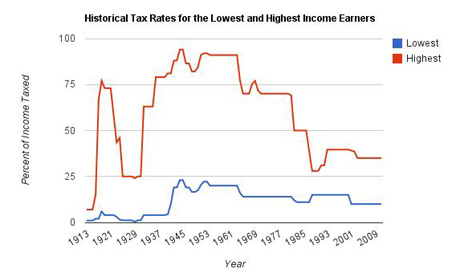
posted by BWA at 10:39 AM on November 20, 2012
For the wars? Hell no. For taking care of our sick, feeding our hungry, and paying people to fix crumbling roads, bridges, sewer systems, etc.? Hell yes.
posted by tonycpsu at 10:42 AM on November 20, 2012
posted by tonycpsu at 10:42 AM on November 20, 2012
Well, write your congressman, I guess. Here's hoping you have better luck than I have.
posted by BWA at 10:51 AM on November 20, 2012
posted by BWA at 10:51 AM on November 20, 2012
The energy and rare-earth minerals that power that virtual realm are neither free nor inexhaustible, though.
Sticking with the junkyard analogy -- have we even really begun to mine all the garbage (figurative and otherwise) we've got in our landfills for these rare-earth minerals?
posted by philip-random at 10:51 AM on November 20, 2012
Sticking with the junkyard analogy -- have we even really begun to mine all the garbage (figurative and otherwise) we've got in our landfills for these rare-earth minerals?
posted by philip-random at 10:51 AM on November 20, 2012
Man, do I ever regret even mentioning the stupid rare-earth minerals. How about the energy bit that everyone is ignoring? Do you believe energy utilization can be unlimited? If no, then neither can the "virtual realm". Period.
posted by adamdschneider at 10:52 AM on November 20, 2012 [1 favorite]
posted by adamdschneider at 10:52 AM on November 20, 2012 [1 favorite]
In the long run, we run out of energy, but in the long run, we're all dead.
Note that we can do more with less energy with newer chips. Energy efficiency is keeping up with Moore's law. There is no reason to believe this will be the case forever, but the idea that it's going to be such a significant drag on us that we can't keep pace using renewables, nuclear, natural gas, and, if necessary, oil and coal, seems far-fetched.
posted by tonycpsu at 10:59 AM on November 20, 2012
Note that we can do more with less energy with newer chips. Energy efficiency is keeping up with Moore's law. There is no reason to believe this will be the case forever, but the idea that it's going to be such a significant drag on us that we can't keep pace using renewables, nuclear, natural gas, and, if necessary, oil and coal, seems far-fetched.
posted by tonycpsu at 10:59 AM on November 20, 2012
... or again, if we focus on the negativity of NOW, it will crush us, just as debt will. But the assumptions underlying these positions is that there won't be positive CHANGE. We won't come up with alternate means of energy and/or far more efficient devices, all these investments we're making in education, healthcare, infrastructure, research etc won't pay off.
I'm not saying there's any certainty to this kind of positivity, just that, as wise ass once said, "The future depends on what we decide now." Which is why we have these discussions.
posted by philip-random at 11:11 AM on November 20, 2012 [1 favorite]
I'm not saying there's any certainty to this kind of positivity, just that, as wise ass once said, "The future depends on what we decide now." Which is why we have these discussions.
posted by philip-random at 11:11 AM on November 20, 2012 [1 favorite]
I am not sure what you are arguing against. I have given no target dates (although you can certainly see the inaugural postings of the Do the Math blog, referenced several times on MeFi and posted by yours truly) to get a hard limit on energy use on earth, so I don't know what "significant drag" etc have to do with anything. I was responding, very simply, to a claim that the virtual could undergo unlimited growth. I am pointing out that this virtual is not divorced from the physical, which cannot undergo unlimited growth. Fin.
As for "in the long run, we're all dead," that is true. There is one question to ask yourself: "Do I care about what happens after I am gone?" If no, party on; the question is totally irrelevant to you, as it is (possibly) unlikely that climate change/energy constraints, etc. will cause a significant discontinuity within your lifetime if societal changes are not made, so for you, growth might as well be infinite. If you do care about what happens after you're gone, it bears thinking about.
posted by adamdschneider at 11:11 AM on November 20, 2012
As for "in the long run, we're all dead," that is true. There is one question to ask yourself: "Do I care about what happens after I am gone?" If no, party on; the question is totally irrelevant to you, as it is (possibly) unlikely that climate change/energy constraints, etc. will cause a significant discontinuity within your lifetime if societal changes are not made, so for you, growth might as well be infinite. If you do care about what happens after you're gone, it bears thinking about.
posted by adamdschneider at 11:11 AM on November 20, 2012
Semantic arguments are cheap. It is perfectly clear to everyone that, literally speaking, all debts are repaid by someone else (unless they are forgiven). To say that postwar growth helped to "repay" costs incurred during WW2 is merely a shorthand way of saying that tax receipts from the booming postwar economy made repaying the debt easier than it otherwise would have been (less tax increases needed). That should be clear to anyone participating in the discussion in good faith. "Fallacies" are not involved.
The importance of the WW2 spending, aside from winning the war, was that it allowed the private sector to repay its debts and amass some savings that was then invested in new businesses and other economic activity. Similar policies are needed now to reduce private sector indebtedness.
Finally, I'm not sure why energy keeps getting brought up. Delaying investments intended to make our economy more efficient just increases the amount of energy we use. Such spending would constitute "growth" as well.
posted by eagles12 at 11:12 AM on November 20, 2012 [1 favorite]
The importance of the WW2 spending, aside from winning the war, was that it allowed the private sector to repay its debts and amass some savings that was then invested in new businesses and other economic activity. Similar policies are needed now to reduce private sector indebtedness.
Finally, I'm not sure why energy keeps getting brought up. Delaying investments intended to make our economy more efficient just increases the amount of energy we use. Such spending would constitute "growth" as well.
posted by eagles12 at 11:12 AM on November 20, 2012 [1 favorite]
Malor: There is not enough economic output in the US to service our titanic debt levels.
Perhaps the most misinformed statement I have heard all day, but it's still early. The interest burden to service the debt today is close to the lowest in the last 70 years -- about 1.5% of GDP.
posted by JackFlash at 11:18 AM on November 20, 2012 [4 favorites]
Perhaps the most misinformed statement I have heard all day, but it's still early. The interest burden to service the debt today is close to the lowest in the last 70 years -- about 1.5% of GDP.
posted by JackFlash at 11:18 AM on November 20, 2012 [4 favorites]
I am not sure what you are arguing against.
You keep saying that you're only trying to argue against unlimited growth, and I've already said I don't buy into unlimited growth, so we have no argument there.
I was trying to move beyond that discussion to get a handle on exactly how limited you think our growth is, when these limitations will be a serious threat to our forward progress, etc. In so doing, I've shown that each of your examples of obstacles to unlimited growth (energy and rare earths) is so far from being an immediate concern that to prioritize them above our current, immediate problems would be silly. Of course I am very much on board with reducing our energy use, switching to forms of energy that aren't as limited, etc., and where those things don't significantly get in the way of our economic growth (many of them in fact help economic growth by limiting unpriced externalities) I'm on board with doing them immediately. But this discussion started out with economic growth, and I see no short or medium term problem with economic growth as it relates to energy use / exhaustion, and, in fact, I think changing our energy use patterns will help us usher in an era of increased economic growth.
In terms of "in the long run we're all dead" -- of course I care about the kids and grandkids, but I don't care about anything that happens when the human race is extinct. So if you can't show me that we'll be out of energy before that happens, I don't worry about running out of energy.
posted by tonycpsu at 11:35 AM on November 20, 2012
You keep saying that you're only trying to argue against unlimited growth, and I've already said I don't buy into unlimited growth, so we have no argument there.
I was trying to move beyond that discussion to get a handle on exactly how limited you think our growth is, when these limitations will be a serious threat to our forward progress, etc. In so doing, I've shown that each of your examples of obstacles to unlimited growth (energy and rare earths) is so far from being an immediate concern that to prioritize them above our current, immediate problems would be silly. Of course I am very much on board with reducing our energy use, switching to forms of energy that aren't as limited, etc., and where those things don't significantly get in the way of our economic growth (many of them in fact help economic growth by limiting unpriced externalities) I'm on board with doing them immediately. But this discussion started out with economic growth, and I see no short or medium term problem with economic growth as it relates to energy use / exhaustion, and, in fact, I think changing our energy use patterns will help us usher in an era of increased economic growth.
In terms of "in the long run we're all dead" -- of course I care about the kids and grandkids, but I don't care about anything that happens when the human race is extinct. So if you can't show me that we'll be out of energy before that happens, I don't worry about running out of energy.
posted by tonycpsu at 11:35 AM on November 20, 2012
Ah. Well, as far as a hard handle on when we're going to hit our limits, I think this post on climate change and this post on the thermal limits to growth (self...link?) are excellent food for thought. Does your care extend beyond your grandkids? If not, why not?
posted by adamdschneider at 11:51 AM on November 20, 2012
posted by adamdschneider at 11:51 AM on November 20, 2012
Talez: "The demand for cars isn't subsiding with increasing populations living further from places of work due to suburban sprawl."
Actually, in a lot of places, people are moving closer to work because gas is so freakin' expensive.
As far as limits to our debt and debt requiring continuous growth, no. Continuous growth in debt requires continuous growth, but if our economy were growing only at the rate of population growth, we'd still be fine. Our external debt simply isn't large enough relative to the size of our economy to be a huge burden. It seems like a huge burden because tax collections are the lowest they've been since the early part of last century. What seems to be and what is are two different things.
If we were still using energy at the efficiency levels of the early 1970s, I suspect we'd already be at adamdschneider's melting point. Thankfully, as energy has increased in price, more and more people have been thinking about how to more efficiently use energy and we have in fact been doing so. I see no reason that trend will not continue at least for a couple more decades.
Doom and gloom has rarely been a good long term prediction.
posted by wierdo at 11:56 AM on November 20, 2012 [1 favorite]
Actually, in a lot of places, people are moving closer to work because gas is so freakin' expensive.
As far as limits to our debt and debt requiring continuous growth, no. Continuous growth in debt requires continuous growth, but if our economy were growing only at the rate of population growth, we'd still be fine. Our external debt simply isn't large enough relative to the size of our economy to be a huge burden. It seems like a huge burden because tax collections are the lowest they've been since the early part of last century. What seems to be and what is are two different things.
If we were still using energy at the efficiency levels of the early 1970s, I suspect we'd already be at adamdschneider's melting point. Thankfully, as energy has increased in price, more and more people have been thinking about how to more efficiently use energy and we have in fact been doing so. I see no reason that trend will not continue at least for a couple more decades.
Doom and gloom has rarely been a good long term prediction.
posted by wierdo at 11:56 AM on November 20, 2012 [1 favorite]
Does your care extend beyond your grandkids? If not, why not?
Of course I care beyond my (hypothetical) kids and my (even more hypothetical) grandkids. I believe climate change is real, and that man contributes greatly to it. I also believe that technology is helping us in many ways that are worth the energy cost to power that technology.
I'm pro renewable energy, pro moving from coal to natural gas in the short term, pro moving from natural gas to nuclear in the medium term, and pro moving from nuclear to renewables in the long term (obviously with a lot of overlap, since no one energy method is a panacea.)
posted by tonycpsu at 12:04 PM on November 20, 2012
Of course I care beyond my (hypothetical) kids and my (even more hypothetical) grandkids. I believe climate change is real, and that man contributes greatly to it. I also believe that technology is helping us in many ways that are worth the energy cost to power that technology.
I'm pro renewable energy, pro moving from coal to natural gas in the short term, pro moving from natural gas to nuclear in the medium term, and pro moving from nuclear to renewables in the long term (obviously with a lot of overlap, since no one energy method is a panacea.)
posted by tonycpsu at 12:04 PM on November 20, 2012
Doom and gloom has rarely been a good long term prediction.
Well, I'll stick up for the doomsayers just a tiny bit here to say doom and gloom happens, and that having Cassandra types around is not always a bad thing. "Dr. Doom" Nouriel Roubini saw the housing bubble coming from a mile away, and if we'd listened to him, we would have been better off. The difference between a guy like Roubini and the people forecasting an invasion of the bond vigilantes now is that Roubini based his forecasts on observable trends at the time, whereas the Austerian doomsayers have failed, IMHO, to put forth any credible evidence that our fear of debt in the future should be any greater than our fear of unemployment and economic misery right now.
They can point to certain data points that suggest there might be higher borrowing costs in the future, but their solution (drastically cutting spending) makes things far worse. There are also many of them who seem to be just using the crisis in a Shock Doctrine manner as mentioned above to implement their preferred policy of tax cuts for rich people.
So, yeah, doom and gloom sometimes happens, but if you're going to sound the alarm, have some persuasive data, and show that the consequences of your remedy don't make the problem you're trying to solve worse.
posted by tonycpsu at 12:09 PM on November 20, 2012
Well, I'll stick up for the doomsayers just a tiny bit here to say doom and gloom happens, and that having Cassandra types around is not always a bad thing. "Dr. Doom" Nouriel Roubini saw the housing bubble coming from a mile away, and if we'd listened to him, we would have been better off. The difference between a guy like Roubini and the people forecasting an invasion of the bond vigilantes now is that Roubini based his forecasts on observable trends at the time, whereas the Austerian doomsayers have failed, IMHO, to put forth any credible evidence that our fear of debt in the future should be any greater than our fear of unemployment and economic misery right now.
They can point to certain data points that suggest there might be higher borrowing costs in the future, but their solution (drastically cutting spending) makes things far worse. There are also many of them who seem to be just using the crisis in a Shock Doctrine manner as mentioned above to implement their preferred policy of tax cuts for rich people.
So, yeah, doom and gloom sometimes happens, but if you're going to sound the alarm, have some persuasive data, and show that the consequences of your remedy don't make the problem you're trying to solve worse.
posted by tonycpsu at 12:09 PM on November 20, 2012
Dean Baker: Debt Worries: Economists Fail Arithmetic, Again
Dean Baker: The "Devastating" Interest Burden of the Debt
posted by Golden Eternity at 12:53 PM on November 20, 2012 [1 favorite]
Dean Baker: The "Devastating" Interest Burden of the Debt
posted by Golden Eternity at 12:53 PM on November 20, 2012 [1 favorite]
philip-random: "Which gets me wondering how much these current debt concerns (and this seems to be a universal thing, encompassing the whole world) are really a statement of fear, trepidation etc for the future. We're more concerned about looming threats (real and perceived) than we are invested in future hopes and dreams."
This, so much this. We're in a global economic crisis that has lasted four years now, and the two intellectual schools of thought on how to deal with it seem to break down like so:
Keynesians: The crisis of 2008 was caused by rampant, unregulated speculation in financial markets. This has led to a Liquidity Trap, wherein private investment can't be stimulated because interest rates are already near zero. What is needed is new spending to generate new demand, and since interest rates can't go any lower that spending has to come from government. Additional government debt can eventually be eroded away by inflation and economic growth.
Austerians: The crisis of 2008 was touched off by the collapse of the US housing bubble, but its underlying cause is the unsustainable accumulation of private and public debt made possible by the Post Bretton Woods monetary system. The world financial markets can no longer sustain economic growth because there's so much debt no one can foresee a time when it will be paid off. The solution is for governments to balance their budgets by spending less, and putting hard limits on the rate at which future debt can be accumulated. This will put the economy back on the road to full repayment of all debts, and along with tax cuts, it will restore investor confidence and get markets spending again.
Aside from any considerations of who's right and who's wrong, it's apparent that one school of thought is fundamentally confident about the future, while the other predicts disaster unless we go back to an earlier, simpler time. Based on that alone, I know which solution I'd support.
posted by Kevin Street at 5:27 PM on November 20, 2012 [3 favorites]
This, so much this. We're in a global economic crisis that has lasted four years now, and the two intellectual schools of thought on how to deal with it seem to break down like so:
Keynesians: The crisis of 2008 was caused by rampant, unregulated speculation in financial markets. This has led to a Liquidity Trap, wherein private investment can't be stimulated because interest rates are already near zero. What is needed is new spending to generate new demand, and since interest rates can't go any lower that spending has to come from government. Additional government debt can eventually be eroded away by inflation and economic growth.
Austerians: The crisis of 2008 was touched off by the collapse of the US housing bubble, but its underlying cause is the unsustainable accumulation of private and public debt made possible by the Post Bretton Woods monetary system. The world financial markets can no longer sustain economic growth because there's so much debt no one can foresee a time when it will be paid off. The solution is for governments to balance their budgets by spending less, and putting hard limits on the rate at which future debt can be accumulated. This will put the economy back on the road to full repayment of all debts, and along with tax cuts, it will restore investor confidence and get markets spending again.
Aside from any considerations of who's right and who's wrong, it's apparent that one school of thought is fundamentally confident about the future, while the other predicts disaster unless we go back to an earlier, simpler time. Based on that alone, I know which solution I'd support.
posted by Kevin Street at 5:27 PM on November 20, 2012 [3 favorites]
yes, and it was still double that. sort of the point of measuring indebtedness in terms of % of GDP
My point was that the more integral a country is for the global economy, the harder it is to bet against it (not to mention the military might of Great Britain at that point). You can bet against Greece and you end up with all sorts of lucrative loans. You can bet against modern-day UK and you might end up being a millionaire. Bet against the US and you risk blowing up a significant chunk of the global economy.
posted by ersatz at 6:10 AM on November 21, 2012
My point was that the more integral a country is for the global economy, the harder it is to bet against it (not to mention the military might of Great Britain at that point). You can bet against Greece and you end up with all sorts of lucrative loans. You can bet against modern-day UK and you might end up being a millionaire. Bet against the US and you risk blowing up a significant chunk of the global economy.
posted by ersatz at 6:10 AM on November 21, 2012
eagles12: " The importance of the WW2 spending, aside from winning the war, was that it allowed the private sector to repay its debts and amass some savings that was then invested in new businesses and other economic activity."
Right, and as a senior fellow at the Cato Institute accidentally points out while trying to make a case against Keynesian economics, the war effort itself was a massive boon to the economy, leading to many post-war innovations that ushered in a level of prosperity that was able to easily handle paying off the debt. I can usually see where libertarians are coming from even if I don't agree with them, but the one thing that they always fail at is explaining how central planning is okay for our standing army but not for the rest of the population.
posted by tonycpsu at 10:13 AM on November 21, 2012 [3 favorites]
Right, and as a senior fellow at the Cato Institute accidentally points out while trying to make a case against Keynesian economics, the war effort itself was a massive boon to the economy, leading to many post-war innovations that ushered in a level of prosperity that was able to easily handle paying off the debt. I can usually see where libertarians are coming from even if I don't agree with them, but the one thing that they always fail at is explaining how central planning is okay for our standing army but not for the rest of the population.
posted by tonycpsu at 10:13 AM on November 21, 2012 [3 favorites]
The countries in the eurozone are fucked because they don't have their own currencies. The countries like the US, UK and Japan which do control their currencies are doing just fine and enjoying super-low interest rates, thus "public markets" have no say whatsoever in their policies.
This is just petulant whining by germans who want to belive they havn't destroyed most of the economies in europe by being idiots.
posted by delmoi at 5:04 PM on November 21, 2012
This is just petulant whining by germans who want to belive they havn't destroyed most of the economies in europe by being idiots.
posted by delmoi at 5:04 PM on November 21, 2012
Well, not idiots. But their perspective is different, and that gives them different priorities from someone outside of the Eurozone. For Germany, the Euro has been nothing but a good thing, because it kept their exports relatively cheap. So losing the Euro is a terrible result, maybe almost as bad rest of the crisis put together, that they want to avoid. And they really hate inflation. Just look at the Der Spiegel article and the articles mentioned in the sidebar, inflation is "a threat to savers and consumers," and a "monster." Probably sinful and medically unwise, too.
posted by Kevin Street at 5:43 PM on November 21, 2012
posted by Kevin Street at 5:43 PM on November 21, 2012
Franc Thoughts on Bond Vigilantes
[T]he problem with bond vigilante scare tactics runs even deeper than that — because it’s actually quite hard to tell a story in which a loss of confidence in U.S. bonds hurts the real economy. Why wouldn’t it just drive down the dollar, and thereby have an expansionary effect?posted by tonycpsu at 10:40 AM on November 23, 2012
Yes, I know, Greece — but Greece doesn’t have its own currency. What’s the model under which a country that does have its own currency and borrows in that currency can experience a slump due to an attack by bond vigilantes? Or failing that, where are the historical examples?
The closest I can come to anything resembling the danger supposedly lurking for America is the tale of France in the 1920s, which emerged from World War I burdened by large debt, and which did in fact face an attack by speculators as a result. Yet the French story does not, if you look at it closely, offer any support to the deficit scare talk we keep hearing.
the one thing that they always fail at is explaining how central planning is okay for our standing army but not for the rest of the population
Because there's no expectation of freedom or liberty within the command structure of an army, and thus you can pursue efficiency uber alles, without such pesky concerns? That seems like the pretty obvious response.
Setting aside the question of whether such command economics are really scalable beyond the obvious and immediate needs of a wartime economy (and the historical results don't seem too good), it seems pretty reasonable to just take on premise that we don't want to live in a society organized along military lines and work from there to devise economic systems.
posted by Kadin2048 at 6:40 PM on November 23, 2012
Because there's no expectation of freedom or liberty within the command structure of an army, and thus you can pursue efficiency uber alles, without such pesky concerns? That seems like the pretty obvious response.
Setting aside the question of whether such command economics are really scalable beyond the obvious and immediate needs of a wartime economy (and the historical results don't seem too good), it seems pretty reasonable to just take on premise that we don't want to live in a society organized along military lines and work from there to devise economic systems.
posted by Kadin2048 at 6:40 PM on November 23, 2012
So what of the VA, which takes care of soldiers long after they're out of the military chain of command? Ditto the GI bill?
posted by tonycpsu at 9:27 PM on November 23, 2012
posted by tonycpsu at 9:27 PM on November 23, 2012
tonycpsu: I'm not really sure what your point is. The VA isn't a military department, it's a civilian-run, Cabinet-level Federal agency, located wholly outside the Department of Defense. This is an intentional organizational choice, although I think there's some merit to the occasionally-made argument that allowing DoD to effectively externalize the lifetime costs of Veterans medical care outside of its own budget is distortive. (I.e., the US "defense" budget should really be the sum of both the actual DoD budget and also the VA.)
The establishment of the VA as an independent agency outside the traditional military chain of command is, IMO, a recognition of the latter's traditional lack of ability (or willingness) to take care of veterans after their time in the service ends.
But perhaps I'm missing the thrust of your argument.
posted by Kadin2048 at 10:57 AM on November 24, 2012
The establishment of the VA as an independent agency outside the traditional military chain of command is, IMO, a recognition of the latter's traditional lack of ability (or willingness) to take care of veterans after their time in the service ends.
But perhaps I'm missing the thrust of your argument.
posted by Kadin2048 at 10:57 AM on November 24, 2012
Yeah, I was unclear -- I'm not talking about federal org charts. My original statement was that people who have a problem with the creeping socialism of central planning have no problem (or far less of a problem) when the socialism is related to our military. I'm not just talking about the research and development projects that occur under the auspices of the DoD*, it's also the use of military spending (sometimes contracted out to the private sector) as a jobs program, enlistment-to-grave socialized medicine for soldiers and veterans, programs like the GI bill, etc.
My point wasn't that the socialism is confined to the Pentagon, it's that anything related to the military is treated by many conservatarian types as sacrosanct. Sure, there are libertarians that oppose the size of the DOD, but not the overall structure of how we support our standing army with socialist programs. Ron Paul even stated the VA would be the only agency to keep its current funding levels. Why? Your efficiency uber alles statemnt is an interesting one, because aren't free markets supposed to be the pinnacle of efficiency?
* Full disclosure -- some funding for my own work comes from the DoD.
posted by tonycpsu at 6:33 PM on November 24, 2012
My point wasn't that the socialism is confined to the Pentagon, it's that anything related to the military is treated by many conservatarian types as sacrosanct. Sure, there are libertarians that oppose the size of the DOD, but not the overall structure of how we support our standing army with socialist programs. Ron Paul even stated the VA would be the only agency to keep its current funding levels. Why? Your efficiency uber alles statemnt is an interesting one, because aren't free markets supposed to be the pinnacle of efficiency?
* Full disclosure -- some funding for my own work comes from the DoD.
posted by tonycpsu at 6:33 PM on November 24, 2012
The projected shortfalls, which take into account the retirement of the boomers, are very easily manageable with slight tweaks
If it were easily manageable it would have been managed, right? It's been a topic on the table for many years and nothing has been done about it. So, what might seem easy in a parlor discussion is not actually that easy when it comes to implementation.
Moreover, those "slight tweaks" you are talking about are going to cost me, an unremarkable average contributor to the system, thousands of dollars and/or years of benefits. The younger you are the more it's going to hurt. Let's not be too flip about it.
It is true, in a sense, that the Social Security problem is relatively less significant than some, but if Social Security retirement age were bumped up three years, it would cut about a fifth of the projected 2030 budget shortfall, well over 200 billion dollars; a much greater impact on the projected 2030 shortfall than, say, allowing the Bush tax cuts to expire on households making 250k and higher. Obviously bumping the retirement age would not have an immediate impact, unlike eliminating those cuts, because it would not apply to people just about to retire, but in the long term it would have a much bigger impact on the projected budget shortfall.
posted by relish at 8:50 AM on November 25, 2012
If it were easily manageable it would have been managed, right? It's been a topic on the table for many years and nothing has been done about it. So, what might seem easy in a parlor discussion is not actually that easy when it comes to implementation.
Moreover, those "slight tweaks" you are talking about are going to cost me, an unremarkable average contributor to the system, thousands of dollars and/or years of benefits. The younger you are the more it's going to hurt. Let's not be too flip about it.
It is true, in a sense, that the Social Security problem is relatively less significant than some, but if Social Security retirement age were bumped up three years, it would cut about a fifth of the projected 2030 budget shortfall, well over 200 billion dollars; a much greater impact on the projected 2030 shortfall than, say, allowing the Bush tax cuts to expire on households making 250k and higher. Obviously bumping the retirement age would not have an immediate impact, unlike eliminating those cuts, because it would not apply to people just about to retire, but in the long term it would have a much bigger impact on the projected budget shortfall.
posted by relish at 8:50 AM on November 25, 2012
relish: "If it were easily manageable it would have been managed, right?"
Mathematically easy, not politically easy. The shortfall could be completely eliminated (with a bonus surplus of funding) if we eliminated the income cap. Of course this would be a tax hike on rich folks, and we all know how that would go over in the GOP-dominated House of Representatives.
Bumping up the retirement age, in addition to by your own admission only solving 20% of the funding problem, is a terrible, horrible, no good, very bad idea.
Mathematically easy, not politically easy. The shortfall could be completely eliminated (with a bonus surplus of funding) if we eliminated the income cap. Of course this would be a tax hike on rich folks, and we all know how that would go over in the GOP-dominated House of Representatives.
Bumping up the retirement age, in addition to by your own admission only solving 20% of the funding problem, is a terrible, horrible, no good, very bad idea.
But [Lloyd Blankfein] and all these folks who like to talk about raising the Social Security retirement age as if it's a no-brainer need to think harder about why they've settled on the cut to Social Security that will concentrate its pain on people who haven't fully shared in the remarkable increase in life expectancy, who don't make much money and who don't love going to their jobs every day.posted by tonycpsu at 9:02 AM on November 25, 2012 [1 favorite]
So, you want to raise taxes on people making $100,000 a year? That would not be popular on either side of the aisle. The current administration is unwilling to raise taxes on people making less than $250,000, even if it would be a practical way to take another 20 percent off the 2030 budget shortfall.
At any rate, in theory, you solve the entire problem, but in practice the idea I am echoing could have more widespread popular support and could be part of a more workable plan to get federal budget in order. So, cut all the Bush tax cuts and bump up the retirement age, both ideas which have been and are probably currently being floated around in Washington. That cuts the shortfall down by 40 percent in the long term - within the realm of the possible.
Also, I understand that blaming moneylenders has a long and popular history in Western civilization, way more popular than either raising taxes or cutting programs, but it actually diminishes your better points.
posted by relish at 2:22 PM on November 25, 2012
At any rate, in theory, you solve the entire problem, but in practice the idea I am echoing could have more widespread popular support and could be part of a more workable plan to get federal budget in order. So, cut all the Bush tax cuts and bump up the retirement age, both ideas which have been and are probably currently being floated around in Washington. That cuts the shortfall down by 40 percent in the long term - within the realm of the possible.
Also, I understand that blaming moneylenders has a long and popular history in Western civilization, way more popular than either raising taxes or cutting programs, but it actually diminishes your better points.
posted by relish at 2:22 PM on November 25, 2012
You're trying to phrase this discussion in terms of the income tax debate ($100k vs $250k), which, with its tax brackets and current relative progressivity, is a very flawed analogy.
The rich currently pay about 1.7% of their income in payroll taxes, while the rest of us pay about 7%. Lifting the cap would reduce or eliminate this disparity, because it's (for the most part) not a tax you can hide from with deductions and loopholes.
Obviously, you're correct that there's a large disparity between someone making $100k and someone making $250k, and raising any taxes within this range is unpopular. However, I guarantee you that Democrats would be happy to pair the lifting of the cap with a reduction in income tax rates between $100k and $250k to offset the increased taxes on these "merely rich" in order to have the "filthy rich" paying more into Social Security, Medicare, and Medicaid.
Of course a deal like this would be dead on arrival in the House, but this just shows you that it's about protecting the wealth of the wealthy, not about maintaining the solvency of Social Security.
Your half measure, as I said, would force people who don't want to work and haven't benefitted from the gains in life expectancy to take shitty jobs that nobody wants them for, in an economy that really doesn't need any more job seekers. Lifting the income cap is a much simpler solution that doesn't force Grandma to be a Wal-Mart greeter so she can have a decent living when she eventually retires.
posted by tonycpsu at 2:34 PM on November 25, 2012
The rich currently pay about 1.7% of their income in payroll taxes, while the rest of us pay about 7%. Lifting the cap would reduce or eliminate this disparity, because it's (for the most part) not a tax you can hide from with deductions and loopholes.
Obviously, you're correct that there's a large disparity between someone making $100k and someone making $250k, and raising any taxes within this range is unpopular. However, I guarantee you that Democrats would be happy to pair the lifting of the cap with a reduction in income tax rates between $100k and $250k to offset the increased taxes on these "merely rich" in order to have the "filthy rich" paying more into Social Security, Medicare, and Medicaid.
Of course a deal like this would be dead on arrival in the House, but this just shows you that it's about protecting the wealth of the wealthy, not about maintaining the solvency of Social Security.
Your half measure, as I said, would force people who don't want to work and haven't benefitted from the gains in life expectancy to take shitty jobs that nobody wants them for, in an economy that really doesn't need any more job seekers. Lifting the income cap is a much simpler solution that doesn't force Grandma to be a Wal-Mart greeter so she can have a decent living when she eventually retires.
posted by tonycpsu at 2:34 PM on November 25, 2012
Well, maybe I am missing your point, but I'm not trying to frame the debate around those numbers - the numbers are what they are. A person making $100,000 would have a tax increase and that will not fly in the House, Senate or the White House.
You should understand, where I'm sitting my "half measure" has actually reduced the shortfall 40 percent and, to me, it seems like it's workable. When was the last time there was a bill along the lines you are suggesting? How much support did it have?
posted by relish at 2:50 PM on November 25, 2012
You should understand, where I'm sitting my "half measure" has actually reduced the shortfall 40 percent and, to me, it seems like it's workable. When was the last time there was a bill along the lines you are suggesting? How much support did it have?
posted by relish at 2:50 PM on November 25, 2012
So a less than half measure, then?
posted by wierdo at 2:58 PM on November 25, 2012 [1 favorite]
posted by wierdo at 2:58 PM on November 25, 2012 [1 favorite]
Yes. It's a 40 percent measure now, but I have only been adding items as we discussed them. I'm confident I can get to 100 percent. I can even do it without having grandma working at Wall Mart, although I'm not sure that's the most horrible thing in this world, but 100 percent can not be done without cutting spending and increasing taxes - some groups of people will be unhappy.
posted by relish at 3:02 PM on November 25, 2012
posted by relish at 3:02 PM on November 25, 2012
So you're in favor of a group of people who, quite intentionally, got to shift their tax burden to people lower down the income scale forcing sacrifice on those of us who did not get the benefit of that deal so that they don't have to repay their debt?
Is there any debt we can afford to make the rich pay? Will there ever come a time they don't get bailed out?
posted by wierdo at 4:00 PM on November 25, 2012 [1 favorite]
Is there any debt we can afford to make the rich pay? Will there ever come a time they don't get bailed out?
posted by wierdo at 4:00 PM on November 25, 2012 [1 favorite]
relish, you can't limit the discussion with "when was the last time a bill along lines of X...", because there is an ongoing discussion among both parties about a "Grand Bargain" which would make changes to government programs and tax increases that seem unthinkable if you only looked at what Congress has been able to do in the last few years (i.e. other than Obamacare, not a whole hell of a lot.) So, quite simply, the old rules do not apply.
Within this context, and keeping in mind that Social Security is already 100% solvent until 2039, I think it's perfectly acceptable for Democrats to demand that lifting of the payroll tax income cap is on the table during any negotiations on 'strengthening" social security. Then anyone who, like you, talks about raising the retirement age to make up 20%, 40%, or whatever% of the shortfall will have to explain why Grandma should be required to work at Wal-Mart to get her full share when we could go get 100% of the shortfall by making everyone pay the payroll tax on all of their earned income.
That's really what this is all about. Making benefits less generous is a choice, not something that the math compels us to do.
posted by tonycpsu at 6:46 PM on November 25, 2012 [1 favorite]
Within this context, and keeping in mind that Social Security is already 100% solvent until 2039, I think it's perfectly acceptable for Democrats to demand that lifting of the payroll tax income cap is on the table during any negotiations on 'strengthening" social security. Then anyone who, like you, talks about raising the retirement age to make up 20%, 40%, or whatever% of the shortfall will have to explain why Grandma should be required to work at Wal-Mart to get her full share when we could go get 100% of the shortfall by making everyone pay the payroll tax on all of their earned income.
That's really what this is all about. Making benefits less generous is a choice, not something that the math compels us to do.
posted by tonycpsu at 6:46 PM on November 25, 2012 [1 favorite]
More debunking of the life expectancy canard:
posted by tonycpsu at 8:05 AM on November 26, 2012 [1 favorite]
The most popular red herring Social Security hustlers have unleashed into the waters of public discourse has grown into such a massive whale of a lie that liberals frequently subscribe to it. The idea goes like this: We need to somehow "fix" Social Security because people are living longer - "fix" in this context being code for "cut." Two groups stand to benefit in the short-term from such a scheme: the greedy rich, who do not want to pay their share in taxes, and financiers, who want to move towards privatizing retirement accounts so they can collect fees. As for the masses of hard-working people who have rightfully earned their retirement, the only "fix" is the fix they will be in if already modest benefits are further reduced.Each of these points is expanded in detail in the linked piece. Read this and then try to make a reasoned argument for raising the retirement age.
Here are five clear reasons why the life expectancy argument is nonsensical, counterproductive and based on a pack of lies:
1. Social Security's original designers considered rising life expectancy.
2. Life expectancy gains since 1935 have been modest.
3. The Greenspan Commission already raised the retirement age two years.
4. Longevity gains have gone mostly to high earners.
5. Life expectancy rises are likely to slow in the future.
posted by tonycpsu at 8:05 AM on November 26, 2012 [1 favorite]
Buffett Mocks Norquist Idea on Taxes Thwarting Investment
5. Life expectancy rises are likely to slow in the future.
This is a bit surprising to me. Life expectancy in the U.S. seems low compared to other countries, but throwing money at the problem certainly hasn't worked:
Cost of Healthcare and Average Life Expectancy World Averages show USA a MASSIVE Outlier – InfoGraphic
posted by Golden Eternity at 8:31 AM on November 26, 2012
5. Life expectancy rises are likely to slow in the future.
This is a bit surprising to me. Life expectancy in the U.S. seems low compared to other countries, but throwing money at the problem certainly hasn't worked:
Cost of Healthcare and Average Life Expectancy World Averages show USA a MASSIVE Outlier – InfoGraphic
posted by Golden Eternity at 8:31 AM on November 26, 2012
The Pirates Behind The Campaign To Fix The Debt
posted by tonycpsu at 1:22 PM on November 29, 2012 [1 favorite]
posted by tonycpsu at 1:22 PM on November 29, 2012 [1 favorite]
« Older Twilight of the idolators? | Up through Los Angeles came a bubblin' crude:... Newer »
This thread has been archived and is closed to new comments
Ask Zimbabwe how those ones turned out.
posted by Talez at 9:20 PM on November 19, 2012 [8 favorites]