Who Are The Prisoners at Guantánamo, The Prisoners Speak & Calling Cruelty What It Is
September 19, 2006 12:44 PM Subscribe
After two months of sifting the information, Hegland had her answer. 'The data was really clear,' she says. 'It was mind-boggling.' It showed that most of the detainees hadn’t been caught 'on the battlefield' but rather mostly in Pakistan; fewer than half were accused of fighting against the U.S., and there was scant evidence to confirm that they were even combatants. In other words, most of the detainees probably were entirely innocent. Just a few days after Hegland published a three-part series on her findings in early February, a law professor at Seton Hall University... and his son, ...who together have represented Guantanamo detainees, published a study that also used the Defense Department’s own data... Only 8 percent of detainees at Guantanamo were labeled by the Defense Department as 'al Qaeda fighters,' they found, and just 11 percent had been captured 'on the battlefield' by coalition forces.Who are the Prisoners at Gitmo?
For a detailed, inside history of recent events at the prison of Guantánamo Bay, see
The battle for Guantánamo
See also Call Cruelty What It Is
See also The Prisoners Speak
See also Rebelling against torture and Bush
On a related topic, see also Iraq's Reality Sinks In
As for the last, we can only hope...
posted by y2karl at 12:52 PM on September 19, 2006
Man, that fifth link is the money quote. I got cold chills reading it and realizing the magnitude of what we have done.
posted by George_Spiggott at 12:54 PM on September 19, 2006
posted by George_Spiggott at 12:54 PM on September 19, 2006
im in ur white house, violating ur geneva conventions
posted by spaltavian at 1:00 PM on September 19, 2006 [2 favorites]
posted by spaltavian at 1:00 PM on September 19, 2006 [2 favorites]
God, this is depressing.
And, why? I honestly do not understand why the administration would think this is a good idea. Even setting aside the fact that they may have different opinions about, say, the Geneva Conventions...from a purely practical standpoint they cannot honestly think abducting random people from Pakistan and torturing them is a good fucking idea.
posted by miss tea at 1:12 PM on September 19, 2006
And, why? I honestly do not understand why the administration would think this is a good idea. Even setting aside the fact that they may have different opinions about, say, the Geneva Conventions...from a purely practical standpoint they cannot honestly think abducting random people from Pakistan and torturing them is a good fucking idea.
posted by miss tea at 1:12 PM on September 19, 2006
The ambiguity Bush forces into discussion of this topic is appalling. Where then is the line? He has yet (as far as I’ve seen anyway) to describe any techniques which are unacceptable.
+ what miss tea sed
posted by Smedleyman at 1:14 PM on September 19, 2006
+ what miss tea sed
posted by Smedleyman at 1:14 PM on September 19, 2006
It showed that most of the detainees hadn’t been caught 'on the battlefield' but rather mostly in Pakistan; fewer than half were accused of fighting against the U.S., and there was scant evidence to confirm that they were even combatants. In other words, most of the detainees probably were entirely innocent.
That is a non sequitur in that her conclusion does not follow from her premises.
A person in Pakistan who has some circumstantial link to funding some group might very well be the kind of person is not "entirely innocent" but would also be the kind of person who "hadn’t been caught 'on the battlefield' but rather mostly in Pakistan; fewer than half were accused of fighting against the U.S., and there was scant evidence to confirm that they were even combatants."
The whole thing in GITMO is FUBAR and needs to be scrapped and addressed. But why go the extra mile of trying to argue that everyone there is an innocent virgin angel that was working at a soup kitchen before GITMO? Why not concede that there might be some reason to detain certain people connected with terror groups, while also arguing that the specific set-up at GITMO is wrong and needs to be addressed? Why is it necessary to white wash people when arguing against a policy that might have some practical utility?
You see this over and over. Opposition of the Death Penalty takes the form of people arguing that everyone on Death Row is innocent. Opposition of drug laws leads to people disclaiming any possible negative consequence of the a drug law. Opposition of same sex marriage leads to disclaiming any potential benefit or worth in those who would seek it. Opposition of X is because X is wholly bad and the Opposite of X is wholly good.
People need to learn how to argue their points without undermining them by overstating the merits of their position.
posted by dios at 1:16 PM on September 19, 2006
That is a non sequitur in that her conclusion does not follow from her premises.
A person in Pakistan who has some circumstantial link to funding some group might very well be the kind of person is not "entirely innocent" but would also be the kind of person who "hadn’t been caught 'on the battlefield' but rather mostly in Pakistan; fewer than half were accused of fighting against the U.S., and there was scant evidence to confirm that they were even combatants."
The whole thing in GITMO is FUBAR and needs to be scrapped and addressed. But why go the extra mile of trying to argue that everyone there is an innocent virgin angel that was working at a soup kitchen before GITMO? Why not concede that there might be some reason to detain certain people connected with terror groups, while also arguing that the specific set-up at GITMO is wrong and needs to be addressed? Why is it necessary to white wash people when arguing against a policy that might have some practical utility?
You see this over and over. Opposition of the Death Penalty takes the form of people arguing that everyone on Death Row is innocent. Opposition of drug laws leads to people disclaiming any possible negative consequence of the a drug law. Opposition of same sex marriage leads to disclaiming any potential benefit or worth in those who would seek it. Opposition of X is because X is wholly bad and the Opposite of X is wholly good.
People need to learn how to argue their points without undermining them by overstating the merits of their position.
posted by dios at 1:16 PM on September 19, 2006
Opposition of drug laws leads to people disclaiming any possible negative consequence of the a drug law.
It should read: "consequence of drugs"
posted by dios at 1:17 PM on September 19, 2006
It should read: "consequence of drugs"
posted by dios at 1:17 PM on September 19, 2006
my outrage short circuited a few months back. i wouldn't be surprised if they discovered dead boys in the crawlspace of the white house.
posted by jmarq at 1:18 PM on September 19, 2006
posted by jmarq at 1:18 PM on September 19, 2006
Innocent is a legal word, dios. It seems perfectly understandable in this context that "most of the detainees probably were entirely innocent" when innocent means innocent of any actual legal wrongdoing.
Furthermore, prove to me that:
Opposition of the Death Penalty takes the form of people arguing that everyone on Death Row is innocent. Opposition of drug laws leads to people disclaiming any possible negative consequence of the a drug law. Opposition of same sex marriage leads to disclaiming any potential benefit or worth in those who would seek it.
I know of no one advocating such positions.
posted by cell divide at 1:19 PM on September 19, 2006
Furthermore, prove to me that:
Opposition of the Death Penalty takes the form of people arguing that everyone on Death Row is innocent. Opposition of drug laws leads to people disclaiming any possible negative consequence of the a drug law. Opposition of same sex marriage leads to disclaiming any potential benefit or worth in those who would seek it.
I know of no one advocating such positions.
posted by cell divide at 1:19 PM on September 19, 2006
dios: Unlike you, apparently, the rest of us don't like to be lied to. Further, when we are lied to it makes us begin to disbelieve everything the liar says. We were told pretty clearly that the prisoners at Gitmo were "enemy combatants", and now it appears they weren't 'combatants' in a location and war that the U.S is involved in at all. Sure, they might be Very Bad People, but that's not what we were told, and that really fucking matters to a lot of people.
posted by Kickstart70 at 1:20 PM on September 19, 2006
posted by Kickstart70 at 1:20 PM on September 19, 2006
well, OK dios. Fine, a lot of these folks are probably real assholes. They probably beat women and hate Jews and think OBL is a stand-up guy. Still; note the key phrase:
there was scant evidence to confirm...
Without jousting at your straw man of the innocent virgin angels, I think you've got to admit that's pretty clear.
posted by miss tea at 1:20 PM on September 19, 2006
there was scant evidence to confirm...
Without jousting at your straw man of the innocent virgin angels, I think you've got to admit that's pretty clear.
posted by miss tea at 1:20 PM on September 19, 2006
"You see this over and over. Opposition of the Death Penalty takes the form of people arguing that everyone on Death Row is innocent. Opposition of drug laws leads to people disclaiming any possible negative consequence of the a drug law."
No... Methinks YOU see this over and over, through the DiosFilter™
Most of the discussion I've seen regarding the death penalty, drug prohibition, etc, has come from a realists viewpoint, ie - "sure some drugs are quite harmful, but regulation would be safer and more cost effective than prohibition," "sure, many people on death row are dangerous and a menace to society, but what about the wrongly convicted, the ethics of state sactioned murder, etc."
In fact, I don't think I've ever seen ANYONE claim that there's no downside to drug use, or that all convicted death row inmates are innocent, etc.
Essentially, you're full of it.
posted by stenseng at 1:22 PM on September 19, 2006 [2 favorites]
No... Methinks YOU see this over and over, through the DiosFilter™
Most of the discussion I've seen regarding the death penalty, drug prohibition, etc, has come from a realists viewpoint, ie - "sure some drugs are quite harmful, but regulation would be safer and more cost effective than prohibition," "sure, many people on death row are dangerous and a menace to society, but what about the wrongly convicted, the ethics of state sactioned murder, etc."
In fact, I don't think I've ever seen ANYONE claim that there's no downside to drug use, or that all convicted death row inmates are innocent, etc.
Essentially, you're full of it.
posted by stenseng at 1:22 PM on September 19, 2006 [2 favorites]
People need to learn how to argue their points without undermining them by overstating the merits of their position.
Right, like you just did by comparing this situation to the most pathetically constructed false-dichotomies you could dig up? Brilliant.
posted by prostyle at 1:24 PM on September 19, 2006
Right, like you just did by comparing this situation to the most pathetically constructed false-dichotomies you could dig up? Brilliant.
posted by prostyle at 1:24 PM on September 19, 2006
Wait. dios, are you saying that we should detain, indefinitely and without benefit of counsel: "A person in Pakistan who has some circumstantial link to funding some group?"
Cuz that's what it sounds like you're saying.
posted by Floydd at 1:24 PM on September 19, 2006
Cuz that's what it sounds like you're saying.
posted by Floydd at 1:24 PM on September 19, 2006
But why go the extra mile of trying to argue that everyone there is an innocent virgin angel that was working at a soup kitchen before GITMO?
...
Opposition of the Death Penalty takes the form of people arguing that everyone on Death Row is innocent. Opposition of drug laws leads to people disclaiming any possible negative consequence of the a drug law. Opposition of same sex marriage leads to disclaiming any potential benefit or worth in those who would seek it. Opposition of X is because X is wholly bad and the Opposite of X is wholly good.
bad straw men, even for your tragically low standards.
wanna see some people who really are dangerous for America? look in the mirror -- it's fascists like you
posted by matteo at 1:28 PM on September 19, 2006 [1 favorite]
...
Opposition of the Death Penalty takes the form of people arguing that everyone on Death Row is innocent. Opposition of drug laws leads to people disclaiming any possible negative consequence of the a drug law. Opposition of same sex marriage leads to disclaiming any potential benefit or worth in those who would seek it. Opposition of X is because X is wholly bad and the Opposite of X is wholly good.
bad straw men, even for your tragically low standards.
wanna see some people who really are dangerous for America? look in the mirror -- it's fascists like you
posted by matteo at 1:28 PM on September 19, 2006 [1 favorite]
"People need to learn how to argue their points without undermining them by overstating the merits of their position."
Somehow I read that as......
"People need to learn how to tell the truth without leaving minuscule rhetoric blemishes which my brilliant legal mind can use to undermine the merits of their documented facts."
posted by Daenoora at 1:30 PM on September 19, 2006
Somehow I read that as......
"People need to learn how to tell the truth without leaving minuscule rhetoric blemishes which my brilliant legal mind can use to undermine the merits of their documented facts."
posted by Daenoora at 1:30 PM on September 19, 2006
OK, OK, Mission Accomplished--enough with the anti-dios barrage. It's a waste of time now.
posted by y2karl at 1:32 PM on September 19, 2006
posted by y2karl at 1:32 PM on September 19, 2006
Help maintain a healthy, respectful discussion by focusing comments on the
issues, topics, and facts at hand -- not at other members of the site.
posted by Richard Daly at 1:32 PM on September 19, 2006
issues, topics, and facts at hand -- not at other members of the site.
posted by Richard Daly at 1:32 PM on September 19, 2006
My suspicion is that this is all part of the deal struck between Bush and Musharraf. Bush wants Pakistan as a base and an ally, and Musharraf leads a fragile secular government in a country with many Islamic extremists plotting to overthrow him. A little quid pro quo makes Musharrraf's enemies disappear and gives the US a local ally...and neither side cares much about the fate of a few Islamofascists, right?
posted by rocket88 at 1:37 PM on September 19, 2006
posted by rocket88 at 1:37 PM on September 19, 2006
If anyone, ever, anywhere, wants a proper definition of 'completely fucked', just have them read that fifth link of y2karl's. And yet, people still defend these actions. Unbelievable.
posted by WinnipegDragon at 1:40 PM on September 19, 2006
posted by WinnipegDragon at 1:40 PM on September 19, 2006
Dios writes But why go the extra mile of trying to argue that everyone there is an innocent virgin angel that was working at a soup kitchen before GITMO?
Shorter dios: Arrest everyone, then let a judge decide who stays and who goes. Because everybody's guilty of something in their past.
Dios writes: Opposition of the Death Penalty takes the form of people arguing that everyone on Death Row is innocent. Opposition of drug laws leads to people disclaiming any possible negative consequence of the a drug law. Opposition of same sex marriage leads to disclaiming any potential benefit or worth in those who would seek it. Opposition of X is because X is wholly bad and the Opposite of X is wholly good.
Who said these things? Where? Certainly not in this thread. If it has been said, it's outside of the mainstream of my understanding of general arguments against the death penalty and for drug legalization. As mentioned, you're putting up nothing but (quite flammable) strawmen today.
/preview: If someone says something really, really stupid or entirely misinformed, they deserve to be called on it. The line between disabusing someone and personally attacking them can be blurry, but I don't think anyone crossed it here.
posted by bardic at 1:40 PM on September 19, 2006
Shorter dios: Arrest everyone, then let a judge decide who stays and who goes. Because everybody's guilty of something in their past.
Dios writes: Opposition of the Death Penalty takes the form of people arguing that everyone on Death Row is innocent. Opposition of drug laws leads to people disclaiming any possible negative consequence of the a drug law. Opposition of same sex marriage leads to disclaiming any potential benefit or worth in those who would seek it. Opposition of X is because X is wholly bad and the Opposite of X is wholly good.
Who said these things? Where? Certainly not in this thread. If it has been said, it's outside of the mainstream of my understanding of general arguments against the death penalty and for drug legalization. As mentioned, you're putting up nothing but (quite flammable) strawmen today.
/preview: If someone says something really, really stupid or entirely misinformed, they deserve to be called on it. The line between disabusing someone and personally attacking them can be blurry, but I don't think anyone crossed it here.
posted by bardic at 1:40 PM on September 19, 2006
U.S. accidentally sends Canadian to Syria to be tortured
In somewhat related news -- US Holds AP Photographer for Months without Charges.
posted by ericb at 1:45 PM on September 19, 2006
In somewhat related news -- US Holds AP Photographer for Months without Charges.
posted by ericb at 1:45 PM on September 19, 2006
So allow us to elaborate, again, exactly what Mr. Bush means by "the program." He's talking about the practice of sequestering terrorist suspects indefinitely and without charge in secret foreign locations and holding them incommunicado even from the International Red Cross. Until recently, such "disappearances" were the signature of Third World dictatorships. U.S. adoption of them has roiled relations with our closest European allies and impeded collaboration with foreign police and intelligence services.A License to Abuse
Mr. Bush also wants the CIA to be able to treat its detainees to such practices as "cold cell," or induced hypothermia, in which detainees are held naked in near-freezing temperatures and repeatedly doused with water; "long standing," in which prisoners are handcuffed in an uncomfortable standing position and forced to remain there for up to 40 hours; and prolonged sleep deprivation.
Throughout the world and for decades, such practices have been called torture. That's what the United States called them when they were used by the Soviet KGB. As the president himself tacitly acknowledges, they violate Geneva and other international conventions as well as current U.S. law...
Common Article 3, which prohibits cruel treatment and humiliation, is an inflexible standard. The U.S. military, which lived with it comfortably for decades before the Bush administration, just reembraced it after a prolonged battle with the White House. The Army issued a thick manual this month that tells interrogators exactly what they can and cannot do in complying with the standard. The nation's most respected military leaders have said that they need and want nothing more to accomplish the mission of detaining and interrogating enemy prisoners -- and that harsher methods would be counterproductive.
Mr. Bush wants to replace these clear rules with a flexible and subjective standard -- one that would legalize any method that does not "shock the conscience." What shocks the conscience? According to Mr. Bush's Justice Department, the torture techniques described above -- and at least in the past, waterboarding -- do not, "in certain circumstances." So Mr. Bush's real objection to Common Article 3 is not that it is vague. It is that it will not permit abusive practices that he isn't willing publicly to discuss or defend.
posted by y2karl at 1:47 PM on September 19, 2006
What Is Torture ? An Interactive Primer On American Interrogation
posted by y2karl at 1:56 PM on September 19, 2006
posted by y2karl at 1:56 PM on September 19, 2006
Surely this....
(Sorry. Just feeling particularly pessimistic today.)
posted by jokeefe at 2:01 PM on September 19, 2006
(Sorry. Just feeling particularly pessimistic today.)
posted by jokeefe at 2:01 PM on September 19, 2006
Dios, you aren't even trying anymore.
To be frank, given what you've tasked yourself to defend, I don't blame you.
posted by [expletive deleted] at 2:02 PM on September 19, 2006
To be frank, given what you've tasked yourself to defend, I don't blame you.
posted by [expletive deleted] at 2:02 PM on September 19, 2006
(Sorry. Just feeling particularly pessimistic today.)
I don't know, even dios seems to have run out of half decent arguments to defend this mess. I'd say it's a good day.
posted by twistedonion at 2:25 PM on September 19, 2006
I don't know, even dios seems to have run out of half decent arguments to defend this mess. I'd say it's a good day.
posted by twistedonion at 2:25 PM on September 19, 2006
Lawyers Go to Court for Gitmo Detainee
"A Saudi has been held in solitary confinement for a year at the Guantanamo Bay prison and is now so mentally unbalanced he considers insects his friends, lawyers said in a motion filed Monday seeking the man's removal from isolation.posted by ericb at 2:37 PM on September 19, 2006
Shaker Aamer, a 37-year-old resident of Britain, was placed in isolated confinement Sept. 24, 2005, and has been beaten by guards, deprived of sleep and subjected to temperature extremes, according to the motion filed in U.S. District Court for the District of Columbia.
Aamer, however, has said he had contact with fellow prisoners as recently as early June, one of his lawyers, Zachary Katznelson, said in a declaration to the court. Aamer's attorneys could not be immediately contacted to elaborate.
The treatment violates Geneva Conventions protections, Aamer's lawyers argued. The U.S. military denied he is being mistreated.
...'His only consistent contact with living beings beside his captors is with the ants in his cell. He feeds them and considers them his friends,' Katznelson said in a statement filed with the court.
'There is no question in my mind that he is mentally unstable,' he added.
The motion, a copy of which was provided to The Associated Press, said Aamer lives in a 6-by-8-foot cell containing a steel bunk, steel toilet, steel sink, a Quran and a thin mattress. The cell is contained entirely within a wooden shack.
Katznelson said that on June 9 - the day before three Guantanamo detainees committed suicide by hanging themselves in their cells - military police beat Aamer because he resisted providing a retina scan and fingerprints.
'They choked him,' the lawyer said. 'They bent his nose repeatedly so hard to the side he thought it would break. ... They gouged his eyes. They held his eyes open and shined a mag-lite in them for minutes on end, generating intense heat. They bent his fingers until he screamed. When he screamed, they cut off his airway, then put a mask on him so he could not cry out.'
The motion said the treatment of Aamer, who is fluent in English and is known to military guards as 'the Professor,' violates Article Three of the Geneva Conventions, which states prisoners 'shall in all circumstances be treated humanely.'
...Aamer told his lawyer the air conditioner in his cell is often turned off, leaving him sweltering in the tropical heat, or turned up full blast 'so the cell is freezing cold.'
...The detainee won a measure of fame at the prison last year when he met with Army Col. Mike Bumgarner, who was then the warden, to end a hunger strike by detainees.
Aamer brought together a six-man prisoners council that attempted to negotiate improved conditions and advocated that detainees be tried or sent home, his lawyers said, but the talks failed and Aamer was put in solitary confinement."
[Associated Press | September 19, 2006]
The question of where the President gets the notions known to the nation as "I'm the decider" and within the White House as "the unitary executive theory" leads pretty fast to the blackout zone that is the Vice President and his office. It was the Vice President who took the early offensive on the contention that whatever the decider decides to do is by definition legal. "We believe, Jim, that we have all the legal authority we need," the Vice President told Jim Lehrer on PBS after it was reported that the National Security Agency was conducting warrantless wiretapping in violation of existing statutes. It was the Vice President who pioneered the tactic of not only declaring such apparently illegal activities legal but recasting them as points of pride, commands to enter attack mode, unflinching defenses of the American people by a president whose role as commander in chief authorizes him to go any extra undisclosed mile he chooses to go on their behalf.Cheney: The Fatal Touch
By Joan Didion
posted by matteo at 2:57 PM on September 19, 2006
“Why not concede that there might be some reason to detain certain people connected with terror groups, while also arguing that the specific set-up at GITMO is wrong and needs to be addressed?”
On another topic, perhaps there is a point here. But there is no reason to concede that certain people connected with terror groups need to be detained.
I’ve argued this point many times (occasionally here) that tactical and operational expediancy does not equate to good policy. There must be, and are, limits to how long one can detain an individual suspected of a connection with a terrorist organization. Furthermore - detention is probably the least likely method to be used since if you have evidence you can charge and legally hold them for trial, if not you’re better off simply speaking to them informally.
We have predictor variables for the identification of potential terrorists that can be worked through without detention. Most of those are facilitated by the community. And standard operating procedures include ensuring minimal adverse impact to that community.
Humans have a negativity bias, they remember the bad things more than the good things. Detention - or any form of victimization - is likely to breed solidarity. (This is OBVIOUS. Gang members returning from prison are treated with greater respect to use a street example. Or better still the IRA - the Brits saw an increase in sympathy for the IRA from the community commensurate with the extent of the victimization (harassment, detention or killing)).
So do we then detain the entire community as we did with the Japanese interment camps?
In screening and detaining people you run the risk of alienating the people you need to help you and you wind up nailing the little guy instead of getting the little guy to help you nail the big guys.
So, from first principles, while there may be some need in the field to temporarily detain someone to ascertain their status (suspect, witness, terrorist, etc.) there is no need to detain them in a facility like GITMO for years on end no matter how well they are treated.
posted by Smedleyman at 3:20 PM on September 19, 2006 [1 favorite]
On another topic, perhaps there is a point here. But there is no reason to concede that certain people connected with terror groups need to be detained.
I’ve argued this point many times (occasionally here) that tactical and operational expediancy does not equate to good policy. There must be, and are, limits to how long one can detain an individual suspected of a connection with a terrorist organization. Furthermore - detention is probably the least likely method to be used since if you have evidence you can charge and legally hold them for trial, if not you’re better off simply speaking to them informally.
We have predictor variables for the identification of potential terrorists that can be worked through without detention. Most of those are facilitated by the community. And standard operating procedures include ensuring minimal adverse impact to that community.
Humans have a negativity bias, they remember the bad things more than the good things. Detention - or any form of victimization - is likely to breed solidarity. (This is OBVIOUS. Gang members returning from prison are treated with greater respect to use a street example. Or better still the IRA - the Brits saw an increase in sympathy for the IRA from the community commensurate with the extent of the victimization (harassment, detention or killing)).
So do we then detain the entire community as we did with the Japanese interment camps?
In screening and detaining people you run the risk of alienating the people you need to help you and you wind up nailing the little guy instead of getting the little guy to help you nail the big guys.
So, from first principles, while there may be some need in the field to temporarily detain someone to ascertain their status (suspect, witness, terrorist, etc.) there is no need to detain them in a facility like GITMO for years on end no matter how well they are treated.
posted by Smedleyman at 3:20 PM on September 19, 2006 [1 favorite]
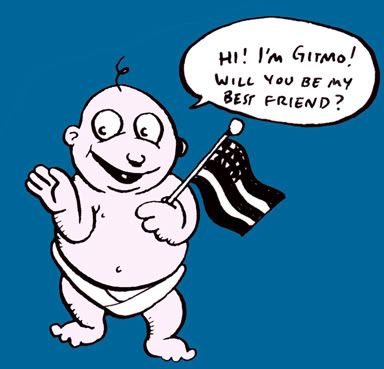
"Gitmo". What a charming and cute little diminutive we have for America's own concentration camp.
posted by interrobang at 3:26 PM on September 19, 2006
posted by interrobang at 3:26 PM on September 19, 2006
Shaker Aamer, a 37-year-old resident of Britain, was placed in isolated confinement Sept. 24, 2005, and has been beaten by guards, deprived of sleep and subjected to temperature extremes, according to the motion filed in U.S. District Court for the District of Columbia.
Aamer, however, has said he had contact with fellow prisoners as recently as early June, one of his lawyers, Zachary Katznelson, said in a declaration to the court. Aamer's attorneys could not be immediately contacted to elaborate.
Things have changed from The Battle for Guantánamo:
Aamer, however, has said he had contact with fellow prisoners as recently as early June, one of his lawyers, Zachary Katznelson, said in a declaration to the court. Aamer's attorneys could not be immediately contacted to elaborate.
Things have changed from The Battle for Guantánamo:
Soon after the strike began, Bumgarner was alerted to a disturbance in Camp Echo, an area of more isolated cells on the eastern edge of the detention center. The problem was with a 38-year-old Saudi named Shaker Aamer. The colonel had not previously encountered Aamer, but he was already familiar with the legend of detainee No. 239 - the one his guards called the Professor. They marveled at his English, which was eloquent, and his presence, which was formidable. Some intelligence officials said they believed he had been an important Qaeda operative in London, where he lived and married before moving to Afghanistan in the summer of 2001. (Aamer has denied having anything to do with Al Qaeda or terrorism.)posted by y2karl at 3:31 PM on September 19, 2006
The colonel's immediate concern was that Aamer was giving his guards fits, pressing one of the sporadic civil disobedience campaigns for which he was famous. "I finally said: 'That's it! I'm gonna go down to talk to him myself."' As Bumgarner remembers it, he burst into the small, hospital-white room as Aamer sat on his bunk, fuming behind the painted mesh that caged him into one corner. "You're either gonna start complying with the rules," Bumgarner recalls warning him, "or life's gonna get really rough." The colonel said he did not mean to threaten physical force, only to emphasize strongly that Aamer's few privileges - like, say, his use of a toothbrush - hung in the balance.
Aamer, who wore a thick black beard and had his hair pulled back in a ponytail, was unimpressed. The prisoner, who was not wearing his glasses, squinted for a moment, trying to read the officer's insignia. "Colonel," he finally said, "don't come in here giving me that."
As Bumgarner settled into a white plastic chair, Aamer crossed his legs on the bunk and began to talk about his life. He spoke about his family, his travel to Afghanistan, his feelings about the United States. He told of working as an interpreter for American troops in Saudi Arabia during the first gulf war, and of later working at a coffee shop outside Atlanta.
"I got the impression that he was hanging around in clubs, drinking," Bumgarner told me. "He loved women. But he said he had realized the error of his ways." Aamer had a revelation, he told the colonel, "that this life of running around with women and boozing it up was the wrong path."
"It was part of his charisma, that drawing me in," Bumgarner said later. "He became a person."
Much of the conversation centered on Aamer's thoughts on the detention operation and what could be done to improve it. The Saudi's ideas, it seemed, were perhaps not so far from Hood's. "His implication was that if you applied the Geneva Conventions fully, everything would be just fine in the camps," Bumgarner recalled.
After almost five hours, Aamer asked the colonel if he had made someone very angry. "Otherwise, you wouldn't be in Guantánamo.
"Nobody survives Guantánamo," he added. "You won't survive, either."
Anyway I'm we know they're guilt at this point, after all they've probably all signed confessions.
posted by delmoi at 3:51 PM on September 19, 2006
posted by delmoi at 3:51 PM on September 19, 2006
I don't doubt that you missed it delmoi. He finally said something that wasn't blitheringly pro-Bush.
And more oddly, I agree with him. It doesn't make sense to say that everyone on Gitmo is innocent. The fact is, however, if even ONE person thereis innocent then a grievous wrong has been committed. And it's extremely likely there's a lot more than one innocent person in there. And it is even possible to treat the guilty shamefully.
Dios goes overboard in claiming that people claim everyone on death row is innocent -- although, again, if even one person there is then incalculable harm has been done.
posted by JHarris at 4:08 PM on September 19, 2006
And more oddly, I agree with him. It doesn't make sense to say that everyone on Gitmo is innocent. The fact is, however, if even ONE person thereis innocent then a grievous wrong has been committed. And it's extremely likely there's a lot more than one innocent person in there. And it is even possible to treat the guilty shamefully.
Dios goes overboard in claiming that people claim everyone on death row is innocent -- although, again, if even one person there is then incalculable harm has been done.
posted by JHarris at 4:08 PM on September 19, 2006
Yeah I've never heard anyone say that everyone on death row was innocent. I would be willing to bet a pretty high number are, though.
posted by delmoi at 4:17 PM on September 19, 2006
posted by delmoi at 4:17 PM on September 19, 2006
OK, OK, Mission Accomplished--enough with the anti-dios barrage.
This is ironic on so many levels.
posted by Krrrlson at 4:22 PM on September 19, 2006
This is ironic on so many levels.
posted by Krrrlson at 4:22 PM on September 19, 2006
No, this is ironic:
People need to learn how to argue their points without undermining them by overstating the merits of their position.
posted by y2karl at 4:31 PM on September 19, 2006
People need to learn how to argue their points without undermining them by overstating the merits of their position.
posted by y2karl at 4:31 PM on September 19, 2006
So do we then detain the entire community as we did with the Japanese interment camps?
if/when the US is hit again on a 9/11 scale, yes, of course. don't tell me you seriously doubt that
posted by matteo at 4:41 PM on September 19, 2006
JHarris: Yes, but he does make one serious error: See, here in the good 'ol U.S.A you are presumed innocent untill proven guilty by a jury of your peers. None of the people in Gitmo have been proven guilty in anything even remotely resembling due process.
Thus, I think it's fair to say, we can presume they are innocent.
posted by Freen at 4:43 PM on September 19, 2006
Thus, I think it's fair to say, we can presume they are innocent.
posted by Freen at 4:43 PM on September 19, 2006
From Didion's article linked above:
In February 2001, Joe Allbaugh, whose previous experience was running the governor's office for Bush in Texas, became head of FEMA, where he hired Michael D. ("Brownie, you're doing a heckuva job") Brown. In December 2002, Allbaugh announced that he was resigning from FEMA, leaving Brown in charge while he himself founded New Bridge Strategies, LLC, "a unique company," according to its Web site, "that was created specifically with the aim of assisting clients to evaluate and take advantage of business opportunities in the Middle East following the conclusion of the US-led war in Iraq."posted by jokeefe at 4:47 PM on September 19, 2006
This was the US-led war in Iraq that had not then yet begun. When David Kennedy spoke at Stanford about the vacuum in political accountability that could result from waging a war while a majority of Americans went on "with their own affairs unbloodied and undistracted," he was talking only about the absence of a draft. He was not talking about the ultimate step, the temptation to wage the war itself to further private ends, or "business opportunities," or other priorities. Nor was he talking about the intermediate step, which was to replace the manpower no longer available by draft by contracting out "logistical" support to the private sector, in other words by privatizing the waging of the war. This step, now so well known as to be a plot point on Law and Order (civilian contract employees in Iraq fall out among themselves; a death ensues; Sam Waterston sorts it out), had already been taken. There are now, split among more than 150 private firms, thousands of such contracts outstanding. Halliburton alone had by July 2004 contracts worth $11,431,000,000.
It doesn't make sense to say that everyone on Gitmo is innocent.
But nobody is saying that. Jesus. Really, dios, that was pretty lame.
y2karl, thanks for this enlightening post and the usual excellent supporting links.
posted by languagehat at 5:08 PM on September 19, 2006
But nobody is saying that. Jesus. Really, dios, that was pretty lame.
y2karl, thanks for this enlightening post and the usual excellent supporting links.
posted by languagehat at 5:08 PM on September 19, 2006
impeachment --> removal from office --> extraordinary rendition
posted by neuron at 5:11 PM on September 19, 2006
posted by neuron at 5:11 PM on September 19, 2006
After the Taliban fell in November 2001, the U.S. military moved to set up what are known as Article 5 hearings. Mandated by the Geneva Conventions, the hearings are meant to cull from the ranks of captured personnel any noncombatants swept up by mistake. For the military, the hearings were standard operating procedure. It held them during the first gulf war, as it has done during every war since the late 1940s, when the Geneva Conventions were adopted.
But President Bush took a different tack. As The New Yorker’s Jane Mayer recently noted, in January 2002 Bush declared that al Qaeda and Taliban suspects were a new kind of enemy, and he reversed the military’s order for Article 5 hearings by issuing an executive order establishing that all detainees in U.S. custody in Afghanistan were in one way or another associated with al Qaeda or the Taliban, and thus “enemy combatants.” The executive order also declared that detained al Qaeda suspects weren’t covered by any aspect of the Geneva Conventions.
that executive order is a betrayal of my trust and confidence that the current United States executive administration supports the Constitution and Bill of Rights. it is a breach of my faith that the US Government will uphold the tenets of Democracy here, and abroad--- where they claim to advance it. that executive order is treason.
posted by carsonb at 6:05 PM on September 19, 2006
But President Bush took a different tack. As The New Yorker’s Jane Mayer recently noted, in January 2002 Bush declared that al Qaeda and Taliban suspects were a new kind of enemy, and he reversed the military’s order for Article 5 hearings by issuing an executive order establishing that all detainees in U.S. custody in Afghanistan were in one way or another associated with al Qaeda or the Taliban, and thus “enemy combatants.” The executive order also declared that detained al Qaeda suspects weren’t covered by any aspect of the Geneva Conventions.
that executive order is a betrayal of my trust and confidence that the current United States executive administration supports the Constitution and Bill of Rights. it is a breach of my faith that the US Government will uphold the tenets of Democracy here, and abroad--- where they claim to advance it. that executive order is treason.
posted by carsonb at 6:05 PM on September 19, 2006
yes, yes, surely this... and all that. btw, is there a setting in firefox for showing the whole of a link title text onmouseover? y2karl always puts so much text there that I have to view the link properties and slowly highlight-scroll through the whole thing.
posted by carsonb at 6:06 PM on September 19, 2006 [1 favorite]
posted by carsonb at 6:06 PM on September 19, 2006 [1 favorite]
carsonb - well said.
posted by Smedleyman at 6:21 PM on September 19, 2006
posted by Smedleyman at 6:21 PM on September 19, 2006
One thing that's always stuck in my craw: Shrub talks about how everyone in Gitmo was picked up "on the battlefield," thus justifying their detainment, and then he turns around and spouts how this is a "new kind of enemy," who "hides in the shadows" and doesn't, you know, fight on a battlefield -- thus justifying their lack of POW status. (washes out craw with beer, again)
posted by turducken at 6:44 PM on September 19, 2006
posted by turducken at 6:44 PM on September 19, 2006
This Report is the first effort to provide a more detailed picture of who the Guantanamo detainees are, how they ended up there, and the purported bases for their enemy combatant designation. The data in this Report is based almost entirely upon the United States Government's own documents. This Report provides a window into the Government's success detaining only those that the President has called "the worst of the worst."Report on Guantanamo Detainees: A Profile of 517 Detainees through Analysis of Department of Defense Data (PDF)
Among the findings of the Report:
1. Fifty-five percent (55%) of the detainees are not determined to have committed any hostile acts against the United States or its coalition allies.
2. Only 8% of the detainees were characterized as al Qaeda fighters. Of the remaining detainees, 40% have no definitive connection with al Qaeda at all and 18% are have no definitive affiliation with either al Qaeda or the Taliban.
3. The Government has detained numerous persons based on mere affiliations with a large number of groups that, in fact, are not on the Department of Homeland Security terrorist watchlist. Moreover, the nexus between such a detainee and such organizations varies considerably. Eight percent are detained because they are deemed "fighters for;" 30% considered "members of;" a large majority - 60% - are detained merely because they are "associated with" a group or groups the Government asserts are terrorist organizations. For 2% of the prisoners, a nexus to any terrorist group is not identified by the Government.
4. Only 5% of the detainees were captured by United States forces. 86% of the detainees were arrested by either Pakistan or the Northern Alliance and turned over to United States custody. This 86% of the detainees captured by Pakistan or the Northern Alliance were handed over to the United States at a time in which the United States offered large bounties for capture of suspected enemies.
5. Finally, the population of persons deemed not to be enemy combatants - mostly Uighers - are in fact accused of more serious allegations than a great many persons still deemed to be enemy combatants.
The examples attached of the leaflets dropped in Afghanistan read:
'Get wealth and power beyond your dreams. Help the Anti-Taliban Forces rid Afghanistan of murderers and terrorists'posted by y2karl at 6:48 PM on September 19, 2006
'You can receive millions of dollars for helping the Anti-Taliban Force catch Al-Qaida and Taliban murderers.
This is enough money to take care of your family, your village, your tribe for the rest of your life. Pay for livestock and doctors and school books and housing for all your people.'
In Afghanistan, from late 2001 through the early months of 2003, local and tribal informers played on America's naivete by reporting their enemies as Qaeda members, according to a former intelligence operative there. The Americans, upon investigating, would find that a man did have weapons and assume that he was, indeed, Al Qaeda. "They wouldn't know the factions," the operative said, "and they wouldn't think, 'This is Afghanistan. Of course he has weapons.' "Empty Evidence
Ignorance of local politics might explain how, for example, an Arabic-speaking Iraqi Shiite ended up at Guantanamo accused of serving as the regional intelligence director for the Pashto-speaking Sunni Taliban.
Some of the men at Guantanamo came from targeted, U.S.-guided raids in Pakistani cities, and the cases against those men tend to be fairly strong. But the largest single group at Guantanamo Bay today consists of men caught in indiscriminate sweeps for Arabs in Pakistan. Once arrested, these men passed through several captors before being given to the U.S. military. Some of the men say they were arrested after asking for help getting to their embassies; a few say the Pakistanis asked them for bribes to avoid being turned over to America.
Others assert that they were sold for bounties, a charge substantiated in 2004 when Sami Yousafzai, a Newsweek reporter then stringing for ABC's "20/20," visited the Pakistani village where five Kuwaiti detainees were captured. The locals remembered the men. They had arrived with a larger group of a hundred refugees a few weeks after Qaeda fighters had passed through. The villagers said they had offered the group shelter and food, but somebody in the village sold out the guests. Pretty soon, bright lights came swooping down from the skies. "Helicopters ... were announcing through loud speakers: 'Where is Arab? Where is Arab?' And, 'Please, you get $1,000 for one Arab,' " one resident told Yousafzai.
"The one thing we were never clear of was where they came from," Scheuer said of the Guantanamo detainees. "DOD picked them up somewhere." When National Journal told Scheuer that the largest group came from Pakistani custody, he chuckled. "Then they were probably people the Pakistanis thought were dangerous to Pakistan," he said. "We absolutely got the wrong people."
posted by y2karl at 6:49 PM on September 19, 2006
interrobang: On a wholly unrelated note, and I suppose the Español-phone audience knows this already, but I was surprised to learn that one of my favourite Spanish songs drew its inspiration from Guantanamo city.
Quite chilling, and ironic, to think that a communist nation associates the place with romantic, and patriotic, feelings, while another democratic nation associates it with its internment camp, and its human rights abuses.
posted by the cydonian at 7:21 PM on September 19, 2006
Quite chilling, and ironic, to think that a communist nation associates the place with romantic, and patriotic, feelings, while another democratic nation associates it with its internment camp, and its human rights abuses.
posted by the cydonian at 7:21 PM on September 19, 2006
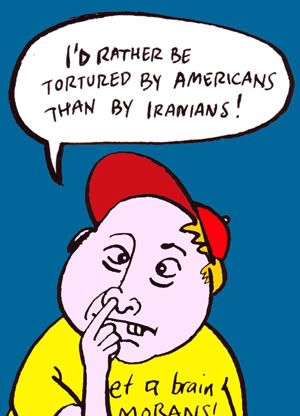
I'd rather be tortured by americans than by iranians.
posted by obeygiant at 8:37 PM on September 19, 2006
posted by obeygiant at 8:37 PM on September 19, 2006
if/when the US is hit again on a 9/11 scale, yes, of course. don't tell me you seriously doubt that
Really? When the police and government reaction after every Muslim transgression is "we must protect mosques against the 'inevitable' backlash?" Nice try.
posted by Krrrlson at 8:53 PM on September 19, 2006
Really? When the police and government reaction after every Muslim transgression is "we must protect mosques against the 'inevitable' backlash?" Nice try.
posted by Krrrlson at 8:53 PM on September 19, 2006
Opposition of the Death Penalty takes the form of people arguing that everyone on Death Row is innocent. Opposition of drug laws leads to people disclaiming any possible negative consequence of the a drug law. Opposition of same sex marriage leads to disclaiming any potential benefit or worth in those who would seek it. Opposition of X is because X is wholly bad and the Opposite of X is wholly good.
‘Did you go and see the prisoners hanged yesterday?’ said Syme.
‘I was working,’ said Winston indifferently. ‘I shall see it on the flicks, I suppose.’
‘A very inadequate substitute,’ said Syme.
His mocking eyes roved over Winston's face. ‘I know you,’ the eyes seemed to say, ‘I see through you. I know very well why you didn't go to see those prisoners hanged.’ In an intellectual way, Syme was venomously orthodox. He would talk with a disagreeable gloating satisfaction of helicopter raids on enemy villages, and trials and confessions of thought-criminals, the executions in the cellars of the Ministry of Love. Talking to him was largely a matter of getting him away from such subjects and entangling him, if possible, in the technicalities of Newspeak, on which he was authoritative and interesting. Winston turned his head a little aside to avoid the scrutiny of the large dark eyes.
‘It was a good hanging,’ said Syme reminiscently. ‘I think it spoils it when they tie their feet together. I like to see them kicking. And above all, at the end, the tongue sticking right out, and blue — a quite bright blue. That's the detail that appeals to me.’
posted by Blazecock Pileon at 10:56 PM on September 19, 2006
‘Did you go and see the prisoners hanged yesterday?’ said Syme.
‘I was working,’ said Winston indifferently. ‘I shall see it on the flicks, I suppose.’
‘A very inadequate substitute,’ said Syme.
His mocking eyes roved over Winston's face. ‘I know you,’ the eyes seemed to say, ‘I see through you. I know very well why you didn't go to see those prisoners hanged.’ In an intellectual way, Syme was venomously orthodox. He would talk with a disagreeable gloating satisfaction of helicopter raids on enemy villages, and trials and confessions of thought-criminals, the executions in the cellars of the Ministry of Love. Talking to him was largely a matter of getting him away from such subjects and entangling him, if possible, in the technicalities of Newspeak, on which he was authoritative and interesting. Winston turned his head a little aside to avoid the scrutiny of the large dark eyes.
‘It was a good hanging,’ said Syme reminiscently. ‘I think it spoils it when they tie their feet together. I like to see them kicking. And above all, at the end, the tongue sticking right out, and blue — a quite bright blue. That's the detail that appeals to me.’
posted by Blazecock Pileon at 10:56 PM on September 19, 2006
Really? When the police and government reaction after every Muslim transgression is "we must protect mosques against the 'inevitable' backlash?" Nice try.
what the fuck are you talking about? protection like for the Sikh who was slain in phoenix? or for the steady rise of hate directed at muslims?
your capacity to be misinformed and make stupid statements is truly impressive. almost as impressive as another member's posting upthread. grrrrrrrrrrrrrrr, son! you're growling because you're angry at your limited intellect, is that right?
posted by Hat Maui at 2:16 AM on September 20, 2006
what the fuck are you talking about? protection like for the Sikh who was slain in phoenix? or for the steady rise of hate directed at muslims?
your capacity to be misinformed and make stupid statements is truly impressive. almost as impressive as another member's posting upthread. grrrrrrrrrrrrrrr, son! you're growling because you're angry at your limited intellect, is that right?
posted by Hat Maui at 2:16 AM on September 20, 2006
What saddens me is that we've come to the point where torture levels are a point of discussion, a debate, instead of simply following the axiom, "we shalt not torture."
We lost the high ground during the Reagan years. We tried to regain it, and we were making progress, but Dubya has handily cashed it in with the rest of his political capital. It's going to take a long time and a lot of work to undo what has been done here, if it's even possible to do so.
posted by FormlessOne at 6:22 AM on September 20, 2006
We lost the high ground during the Reagan years. We tried to regain it, and we were making progress, but Dubya has handily cashed it in with the rest of his political capital. It's going to take a long time and a lot of work to undo what has been done here, if it's even possible to do so.
posted by FormlessOne at 6:22 AM on September 20, 2006
A person in Pakistan who has some circumstantial link to funding some group might very well be the kind of person is not "entirely innocent" but would also be the kind of person who "hadn’t been caught 'on the battlefield' but rather mostly in Pakistan; fewer than half were accused of fighting against the U.S., and there was scant evidence to confirm that they were even combatants."
Ah, yes. "Circumstantial link"...."to some group"..."not entirely innocent"....even in the face of scant evidence.
King Ferdinand once visited the conservative university of Cervera. There, the Rector (a little known historical fact is that the Rector's friends called him by his self-important nickname "dios") proudly reassured the Monarch with the words; "Far be from us, Sire, the dangerous novelty of thinking.
posted by fold_and_mutilate at 11:04 AM on September 20, 2006
Ah, yes. "Circumstantial link"...."to some group"..."not entirely innocent"....even in the face of scant evidence.
King Ferdinand once visited the conservative university of Cervera. There, the Rector (a little known historical fact is that the Rector's friends called him by his self-important nickname "dios") proudly reassured the Monarch with the words; "Far be from us, Sire, the dangerous novelty of thinking.
posted by fold_and_mutilate at 11:04 AM on September 20, 2006
what the fuck are you talking about? protection like for the Sikh who was slain in phoenix?
Let's start by reading up on the difference between Sikhs and Muslims. I heard a black man was killed in Phoenix as well. Black is pretty close to brown too, right?
or for the steady rise of hate directed at muslims?
This steady rise? Never mind that such a rise doesn't invalidate my earlier statement, but that's okay because I don't expect you to know how to read.
grrrrrrrrrrrrrrr, son! you're growling because you're angry at your limited intellect, is that right?
Clearly, that must be it.
posted by Krrrlson at 4:32 PM on September 20, 2006
Let's start by reading up on the difference between Sikhs and Muslims. I heard a black man was killed in Phoenix as well. Black is pretty close to brown too, right?
or for the steady rise of hate directed at muslims?
This steady rise? Never mind that such a rise doesn't invalidate my earlier statement, but that's okay because I don't expect you to know how to read.
grrrrrrrrrrrrrrr, son! you're growling because you're angry at your limited intellect, is that right?
Clearly, that must be it.
posted by Krrrlson at 4:32 PM on September 20, 2006
look, dummy, the Sikh was killed because the murderer thought he was a muslim/arab.
but then i suppose i'm the dummy for even responding to you in the first place.
posted by Hat Maui at 5:07 PM on September 20, 2006
but then i suppose i'm the dummy for even responding to you in the first place.
posted by Hat Maui at 5:07 PM on September 20, 2006
Nice try.
Yeah, niiiiice tryyyyyy. But you didn't get away with it!
posted by sonofsamiam at 5:17 PM on September 20, 2006
Yeah, niiiiice tryyyyyy. But you didn't get away with it!
posted by sonofsamiam at 5:17 PM on September 20, 2006
but then i suppose i'm the dummy for even responding to you in the first place.
I'd advise against it, going forward.
posted by Blazecock Pileon at 6:00 PM on September 20, 2006
I'd advise against it, going forward.
posted by Blazecock Pileon at 6:00 PM on September 20, 2006
When the police and government reaction after every Muslim transgression is "we must protect mosques against the 'inevitable' backlash?
don't be bitter, maybe one day you'll outsmart those cops
posted by matteo at 7:38 AM on September 21, 2006
don't be bitter, maybe one day you'll outsmart those cops
posted by matteo at 7:38 AM on September 21, 2006
Krrrlson - if there were 2000 complaints about attacks and harassment on Jews, then we would be talking about a rise in anti-Semitism.
Your link is rather distasteful. Picking through trying to excuse racist behaviour on flismy pretenses? I love how a man calls a woman a "sand n****r", but it's her fault because she is in a bar, and obviously muslim women shouldn't be in bars. It's like saying it's okay to hit someone for being Jewish if they are eating a ham sandwich.
Anti-Muslim and anti-Middle eastern prejudice is on the rise, and it is being spurred on by the pundits. If they said what they do about any other group (except maybe hispanics), they would be vilified. And they should be.
posted by jb at 2:57 AM on September 22, 2006
Your link is rather distasteful. Picking through trying to excuse racist behaviour on flismy pretenses? I love how a man calls a woman a "sand n****r", but it's her fault because she is in a bar, and obviously muslim women shouldn't be in bars. It's like saying it's okay to hit someone for being Jewish if they are eating a ham sandwich.
Anti-Muslim and anti-Middle eastern prejudice is on the rise, and it is being spurred on by the pundits. If they said what they do about any other group (except maybe hispanics), they would be vilified. And they should be.
posted by jb at 2:57 AM on September 22, 2006
Krrrlson - if there were 2000 complaints about attacks and harassment on Jews, then we would be talking about a rise in anti-Semitism.
There is a rise in anti-Semitism, but you aren't talking about it.
I love how a man calls a woman a "sand n****r", but it's her fault because she is in a bar, and obviously muslim women shouldn't be in bars.
You obviously didn't read the followup link.
I don't care how distasteful it is to you, but CAIR is known for lying and inflating statistics (not to mention support for terrorism, but that's an aside). Luckily for them, the people posting in this thread would never question them.
posted by Krrrlson at 8:46 AM on September 22, 2006
There is a rise in anti-Semitism, but you aren't talking about it.
I love how a man calls a woman a "sand n****r", but it's her fault because she is in a bar, and obviously muslim women shouldn't be in bars.
You obviously didn't read the followup link.
I don't care how distasteful it is to you, but CAIR is known for lying and inflating statistics (not to mention support for terrorism, but that's an aside). Luckily for them, the people posting in this thread would never question them.
posted by Krrrlson at 8:46 AM on September 22, 2006
I did read the follow-up link. Attacks on the woman's character do not in any excuse the obvious racism in the man's behaviour. He began the altercation by objecting to her shirt, because it was militantly pro-Arabic. He threw the first, and uncalled for, racial epithet. He didn't have to read her shirt - it was not racist or obscene.
Also, I'm not talking about the rise in anti-Semitism because this isn't a thread about it. Actually, in Canada, anti-Semitism is talked about more than any other hate crime. This article is obviously polemic, but illustrates some of the problem.
But, of course, who are the victims of the majority of violent hate crimes? Gay men. The majority of anti-Semitic incidents in Toronto are vadalism; the majority of homophobic hate crimes are personal assault. My husband read this in an article (probably in the Globe and Mail - he suscribed at the time) -- but the headline was all about anti-Semitism.
posted by jb at 9:26 AM on September 22, 2006
Also, I'm not talking about the rise in anti-Semitism because this isn't a thread about it. Actually, in Canada, anti-Semitism is talked about more than any other hate crime. This article is obviously polemic, but illustrates some of the problem.
But, of course, who are the victims of the majority of violent hate crimes? Gay men. The majority of anti-Semitic incidents in Toronto are vadalism; the majority of homophobic hate crimes are personal assault. My husband read this in an article (probably in the Globe and Mail - he suscribed at the time) -- but the headline was all about anti-Semitism.
posted by jb at 9:26 AM on September 22, 2006
Actually, it was a Toronto Police report. The report was trying to claim that racist and anti-semitic incindents were more serious than anti-gay, but buried down in the details were these little facts: the majority of anti-Semitic incidents were graffitti, and the majority of anti-gay were violent.
posted by jb at 11:15 AM on September 22, 2006
posted by jb at 11:15 AM on September 22, 2006
Attacks on the woman's character do not in any excuse the obvious racism in the man's behaviour. He threw the first, and uncalled for, racial epithet.
Then you willfully chose to ignore the fact that these allegations were never proven -- moreover, especially in light of the woman's character, it is quite possible that they were false. According to the defendant, she made the first verbal attack.
This article is obviously polemic, but illustrates some of the problem.
The article makes a pathetic and selectively supported claim, using the very mountain-out-of-a-molehill tactics that it decries and conveniently ignoring the multiple instances of attacks against Jews downplayed as "not hate crimes."
Actually, in Canada, anti-Semitism is talked about more than any other hate crime.
Can you cite a source that's slightly less laughable than the one you linked (which, by the way, examines *one* newspaper), or did you arrive at this through your own deductive abilities?
posted by Krrrlson at 1:01 PM on September 22, 2006
Then you willfully chose to ignore the fact that these allegations were never proven -- moreover, especially in light of the woman's character, it is quite possible that they were false. According to the defendant, she made the first verbal attack.
This article is obviously polemic, but illustrates some of the problem.
The article makes a pathetic and selectively supported claim, using the very mountain-out-of-a-molehill tactics that it decries and conveniently ignoring the multiple instances of attacks against Jews downplayed as "not hate crimes."
Actually, in Canada, anti-Semitism is talked about more than any other hate crime.
Can you cite a source that's slightly less laughable than the one you linked (which, by the way, examines *one* newspaper), or did you arrive at this through your own deductive abilities?
posted by Krrrlson at 1:01 PM on September 22, 2006
Also, I'm not talking about the rise in anti-Semitism because this isn't a thread about it.
Oh. What would you say about the ratio of anti-Semitism threads to Islamophobia threads here on Metafilter? To Homophobia threads?
posted by Krrrlson at 1:05 PM on September 22, 2006
Oh. What would you say about the ratio of anti-Semitism threads to Islamophobia threads here on Metafilter? To Homophobia threads?
posted by Krrrlson at 1:05 PM on September 22, 2006
I base it on my own experiences. In high school, I remember having several weeks of studying anti-Semitism in English class. Actually, I did a project using periodical indexes to pull out every incidence of amti-Semitism reported in several Toronto newspapers. I found incidents of grafitti, vandalism. I didn't find any incidents of Jewish teenagers being shot by the police, like black teenagers. But clearly, when studying racism, anti-Semitism was at the forefront of our curriculum.
At my school, there was no open anti-Semitism. I didn't even know a friend of mine was Jewish until she asked me to explain the Trinity (saying that she didn't understand multiple gods). There was homophobia - and we were lucky. At the school up the street, gay students were physically assaulted with stones. We didn't talk about homophobia, at all, except one day. On that day, a teacher asked a student not to use the word "fag" in a piece of writing for no reason (it was not in a gay context, just a random insult). He came out to the class, and said that it hurt him to see it used that way. He didn't know that in another class, I had had to sit as listen to people talk about how they weren't going to have their picture in the grad photo next to "that fag", who was a friend of mine. That was the only time homophobia was ever discussed at my liberal, "tolerant" arts school.
And I have seen charges of anti-Semitism entirely fabricated. I went to a university which has a traditional connection to Toronto's Jewish community, hosts a Jewish education program, and which cancels all classes and exams for the high holidays (something it does for no other religion, except those which are government enforced statutory holidays).
But when both pro-Palistinian and pro-Israeli groups were banned from holding loud demonstrations in classroom areas of that University, the metafilter post here slandered the university as antisemitic. Sound familier?
Interestingly, it was a member of the pro-Palestinian organisation who was suspended for three years (later withdrawn). But that was probably just because he is Jewish, since York is so anti-Semitic.
I read the whole of your link - it is an attack on the woman's character and adds details to the story, but it does not deny what the man called her, or that the whole incident began when he objected to her inoffensive shirt. Perhaps you should learn to read.
posted by jb at 3:46 AM on September 23, 2006
At my school, there was no open anti-Semitism. I didn't even know a friend of mine was Jewish until she asked me to explain the Trinity (saying that she didn't understand multiple gods). There was homophobia - and we were lucky. At the school up the street, gay students were physically assaulted with stones. We didn't talk about homophobia, at all, except one day. On that day, a teacher asked a student not to use the word "fag" in a piece of writing for no reason (it was not in a gay context, just a random insult). He came out to the class, and said that it hurt him to see it used that way. He didn't know that in another class, I had had to sit as listen to people talk about how they weren't going to have their picture in the grad photo next to "that fag", who was a friend of mine. That was the only time homophobia was ever discussed at my liberal, "tolerant" arts school.
And I have seen charges of anti-Semitism entirely fabricated. I went to a university which has a traditional connection to Toronto's Jewish community, hosts a Jewish education program, and which cancels all classes and exams for the high holidays (something it does for no other religion, except those which are government enforced statutory holidays).
But when both pro-Palistinian and pro-Israeli groups were banned from holding loud demonstrations in classroom areas of that University, the metafilter post here slandered the university as antisemitic. Sound familier?
Interestingly, it was a member of the pro-Palestinian organisation who was suspended for three years (later withdrawn). But that was probably just because he is Jewish, since York is so anti-Semitic.
I read the whole of your link - it is an attack on the woman's character and adds details to the story, but it does not deny what the man called her, or that the whole incident began when he objected to her inoffensive shirt. Perhaps you should learn to read.
posted by jb at 3:46 AM on September 23, 2006
It's people like you who do disservice to talking about real Anti-Semitism. You make up lies about York University, you downplay any discrimination against any other group -- but then people won't take seriously real Anti-Semitism, like the harassment against the family in Delaware over school prayer. If you want people to take anti-Semitism seriously, stop slandering and start looking at the reality of the situation. (Actually, there is a Muslim family involved in the same school dispute. They should co-operate.)
posted by jb at 4:02 AM on September 23, 2006
posted by jb at 4:02 AM on September 23, 2006
I base it on my own experiences. In high school, I remember having several weeks of studying anti-Semitism in English class...
And I have seen charges of anti-Semitism entirely fabricated.
Ha! Indeed, why ask for proof when *you* have seen it all. Yes, I get it -- you resent the lack of homophobia coverage. Too bad it says nothing about anti-Semitism.
But when both pro-Palistinian and pro-Israeli groups were banned from holding loud demonstrations in classroom areas of that University, the metafilter post here slandered the university as antisemitic. Sound familier?
Yes, except it was not slander, because the groups were only banned after the Jewish demonstration, despite several Palestinian demonstrations prior to that. So your best example of an anti-Semitism discussion here is my one post, which was broadly shouted down and vilified? Nice.
By the way, if I were to claim that Concordia has strong anti-Semitic tendencies, is that slander too?
I read the whole of your link - it is an attack on the woman's character and adds details to the story, but it does not deny what the man called her, or that the whole incident began when he objected to her inoffensive shirt. Perhaps you should learn to read.
Perhaps you should learn the difference between "states" and "does not deny."
You make up lies about York University...
You whitewash bigots. Clashes a little with your anti-homophobia crusade.
posted by Krrrlson at 5:41 PM on September 23, 2006
And I have seen charges of anti-Semitism entirely fabricated.
Ha! Indeed, why ask for proof when *you* have seen it all. Yes, I get it -- you resent the lack of homophobia coverage. Too bad it says nothing about anti-Semitism.
But when both pro-Palistinian and pro-Israeli groups were banned from holding loud demonstrations in classroom areas of that University, the metafilter post here slandered the university as antisemitic. Sound familier?
Yes, except it was not slander, because the groups were only banned after the Jewish demonstration, despite several Palestinian demonstrations prior to that. So your best example of an anti-Semitism discussion here is my one post, which was broadly shouted down and vilified? Nice.
By the way, if I were to claim that Concordia has strong anti-Semitic tendencies, is that slander too?
I read the whole of your link - it is an attack on the woman's character and adds details to the story, but it does not deny what the man called her, or that the whole incident began when he objected to her inoffensive shirt. Perhaps you should learn to read.
Perhaps you should learn the difference between "states" and "does not deny."
You make up lies about York University...
You whitewash bigots. Clashes a little with your anti-homophobia crusade.
posted by Krrrlson at 5:41 PM on September 23, 2006
Concordia University has done nothing. Either their student council or their student newspaper (both of which are not the university) was militantly anti-Israel, and has used Jewish symbols to represent Israel (symbols which also appear on the Israeli flag - a blue Star of David). I saw the images, and they could be interpreted to have been anti-Semitic, or simply militantly anti-Israel, but it was by no means cut and dry. I found the image immature and shrill and the use of the Star of David (as opposed to the Israeli flag) to be a poor choice (lending itself as it did to anti-Semitic interpretations); it didn't address the complex issues in any way.
The groups at York were banned after a loud disturbance that included both groups. Banning just the pro-Palestinian group would have biased. There may have been pro-Palestinian protests earlier - it's a university campus, protests are like bake sales - but they obviously had not caused a problem. I attended York for four years just shortly before (and had classes in Vari Hall), and there were no loud or disruptive demonstrations from either group.
However, while I was there, this "anti-Semitic" university (or so you slander) did do all they could to make devout Jewish students, among others, comfortable on campus (shutting down for high holidays, allowing any student to be excused from an exam or test for Passover or any other religious holiday). The kosher cafe did shut down during Passover, but that was because the kitchens couldn't be used during passover and remain Kosher. (I missed them - they had the best crossants and cheapest coffee on campus). And you continue to name the UNIVERSITY (not the individual protestors) as anti-Semitic. You have also just here slandered Concordia University.
This whole discussion started with your whitewashing of bigots.
If you were really concerned about anti-Semitism and racism in Canada, maybe you should start with the Partis Quebequois, which blamed its loss in the referendum on "the vote ethnique" and whose language policies continue to chip away at the English community in Montreal (which is traditionally strongly Jewish).
posted by jb at 6:29 AM on September 24, 2006
The groups at York were banned after a loud disturbance that included both groups. Banning just the pro-Palestinian group would have biased. There may have been pro-Palestinian protests earlier - it's a university campus, protests are like bake sales - but they obviously had not caused a problem. I attended York for four years just shortly before (and had classes in Vari Hall), and there were no loud or disruptive demonstrations from either group.
However, while I was there, this "anti-Semitic" university (or so you slander) did do all they could to make devout Jewish students, among others, comfortable on campus (shutting down for high holidays, allowing any student to be excused from an exam or test for Passover or any other religious holiday). The kosher cafe did shut down during Passover, but that was because the kitchens couldn't be used during passover and remain Kosher. (I missed them - they had the best crossants and cheapest coffee on campus). And you continue to name the UNIVERSITY (not the individual protestors) as anti-Semitic. You have also just here slandered Concordia University.
This whole discussion started with your whitewashing of bigots.
If you were really concerned about anti-Semitism and racism in Canada, maybe you should start with the Partis Quebequois, which blamed its loss in the referendum on "the vote ethnique" and whose language policies continue to chip away at the English community in Montreal (which is traditionally strongly Jewish).
posted by jb at 6:29 AM on September 24, 2006
It's just such an irony that you pick on York, which of the two universities in Toronto has the larger Jewish student population. Clearly it's the anti-Semitic university.
(I don't actually know why - maybe it is the physical proximity to some of Toronto's historic Jewish neighbourhoods.)
posted by jb at 6:40 AM on September 24, 2006
(I don't actually know why - maybe it is the physical proximity to some of Toronto's historic Jewish neighbourhoods.)
posted by jb at 6:40 AM on September 24, 2006
Concordia University has done nothing. Either their student council or their student newspaper (both of which are not the university) was militantly anti-Israel, and has used Jewish symbols to represent Israel (symbols which also appear on the Israeli flag - a blue Star of David).
The Netanyahu visit riots and assaults on Jewish students? Doesn't ring a bell? Nothing?
The groups at York were banned after a loud disturbance that included both groups.
They were banned because they were violating York's regulations for protests. The Palestinian demonstrations violated the regulations as well, but the banning only came after the Jewish demonstration violated them in the same way.
However, while I was there, this "anti-Semitic" university (or so you slander)...
Ah, so the reason you're up in arms is pride for your alma mater. I suppose you're arguing that anti-Semitic incidents are okay as long as Jews get the high holidays off?
You have also just here slandered Concordia University.
Then let me do it again -- Concordia is a breeding ground for violent racism and an embarrassment to all educational institutions in Canada. You can feel free to keep plugging your ears and screaming "there's no place like home" if it helps you ignore the problem. Just don't act surprised when people ignore the persecution of gays.
This whole discussion started with your whitewashing of bigots.
If you say so. You've proven quite well that you're okay with such whitewashing as long as the bigots aren't attacking anything *you* care about.
If you were really concerned about anti-Semitism and racism in Canada, maybe you should start with the Partis Quebequois...
Yeah, I agree. But why should I limit myself to the PQ?
It's just such an irony that you pick on York, which of the two universities in Toronto has the larger Jewish student population. Clearly it's the anti-Semitic university.
It's just such an irony that the university in Toronto with the larger Jewish student population is allowing anti-Semitic behaviour.
posted by Krrrlson at 10:04 PM on September 24, 2006
The Netanyahu visit riots and assaults on Jewish students? Doesn't ring a bell? Nothing?
The groups at York were banned after a loud disturbance that included both groups.
They were banned because they were violating York's regulations for protests. The Palestinian demonstrations violated the regulations as well, but the banning only came after the Jewish demonstration violated them in the same way.
However, while I was there, this "anti-Semitic" university (or so you slander)...
Ah, so the reason you're up in arms is pride for your alma mater. I suppose you're arguing that anti-Semitic incidents are okay as long as Jews get the high holidays off?
You have also just here slandered Concordia University.
Then let me do it again -- Concordia is a breeding ground for violent racism and an embarrassment to all educational institutions in Canada. You can feel free to keep plugging your ears and screaming "there's no place like home" if it helps you ignore the problem. Just don't act surprised when people ignore the persecution of gays.
This whole discussion started with your whitewashing of bigots.
If you say so. You've proven quite well that you're okay with such whitewashing as long as the bigots aren't attacking anything *you* care about.
If you were really concerned about anti-Semitism and racism in Canada, maybe you should start with the Partis Quebequois...
Yeah, I agree. But why should I limit myself to the PQ?
It's just such an irony that you pick on York, which of the two universities in Toronto has the larger Jewish student population. Clearly it's the anti-Semitic university.
It's just such an irony that the university in Toronto with the larger Jewish student population is allowing anti-Semitic behaviour.
posted by Krrrlson at 10:04 PM on September 24, 2006
So the university is now responsible for everything their students do? Will Yale be held responsible for the Iraq war?
The student union at Concordia has at times been militantly anti-Israel (neither you nor I have any idea what they are like now - they change constantly). Some of the students riot when Netanyahu tries to visit (frankly, it's not like they invited Ghandi - Netanyahu is a controversial figure, even in Israel). The local Hillel also likes to recruit for foreign armies, something that is not allowed on campus, and cries racism when they are told they are not allowed to do that. Again, the UNIVERSITY is caught in the middle.
The reason things are heating up at places like York and Concordia is that they do have large number of both pro-Israel and pro-Palestinian students. If the students were all in agreement on the issue of Israel-Palestine, there would not be any controversy or any arguments. Netanyahu would never have been invited to speak at Concordia if the university and the student body were anti-Semitic. What I see happening in these places is that both sides are becoming more extreme, and no, I don't think it's healthy. But accusations of anti-Semitism against the university, particularly when they are trying to diffuse tensions are counter-productive. That's just taking sides, and slandering anyone who doesn't agree with you, or who tries to negotiate between two extremist positions.
I haven't followed Concordia news (and googling just finds me lots of opinion sites and blogs, so I can't get to the truth of what happened), but I can say this about York - that you have provided absolutely no evidence of anti-Semitic policy or wide spread anti-Semitic activity on campus. There have been anti-Israel protests; that is not the same thing, and I think to conflate the two actually feeds anti-Semitism (please see below).
York does clamp down on all protests within Vari Hall. Not simple posters and quiet demonstrations - it is the main "market place" of the university and where most career fairs, clubs recruiting, etc, happens; when classes aren't happening (e.g. in the evening) dance practices happen there. The severe action taken in the case of the two groups was because violence broke out. Since then the university has continued to enforce the policy against groups of all kinds, including calling the police. York's statement on use of Vari Hall, a different protest quashed by police at Vari Hall. Any suggestion that this policy is used only against pro-Israel demonstrations is just ignoring the facts, perhaps willfully.
You have, in other comments, conflated anti-Israel opinions with anti-Semitism. I think this is dangerous, most of all to Jewish people. When anyone begins conflating Judaism and the state of Israel, I think they are seeding anti-Semitism. Because the state of Israel is not a happy place right now - it has serious problems, and if it is to continue (which I hope it will) it needs to deal with those problems. I think its security will increase if it does. But if when people say that to talk about these problems is to be filled with hate or that they must support a state they do not agree with or hate a whole religion, then they rip the middle ground away. The moderates will either go silent, or cease being moderate. It means that the only people who will be left standing are the extremists on both sides, those who really are filled with hate.
posted by jb at 5:37 AM on September 25, 2006
The student union at Concordia has at times been militantly anti-Israel (neither you nor I have any idea what they are like now - they change constantly). Some of the students riot when Netanyahu tries to visit (frankly, it's not like they invited Ghandi - Netanyahu is a controversial figure, even in Israel). The local Hillel also likes to recruit for foreign armies, something that is not allowed on campus, and cries racism when they are told they are not allowed to do that. Again, the UNIVERSITY is caught in the middle.
The reason things are heating up at places like York and Concordia is that they do have large number of both pro-Israel and pro-Palestinian students. If the students were all in agreement on the issue of Israel-Palestine, there would not be any controversy or any arguments. Netanyahu would never have been invited to speak at Concordia if the university and the student body were anti-Semitic. What I see happening in these places is that both sides are becoming more extreme, and no, I don't think it's healthy. But accusations of anti-Semitism against the university, particularly when they are trying to diffuse tensions are counter-productive. That's just taking sides, and slandering anyone who doesn't agree with you, or who tries to negotiate between two extremist positions.
I haven't followed Concordia news (and googling just finds me lots of opinion sites and blogs, so I can't get to the truth of what happened), but I can say this about York - that you have provided absolutely no evidence of anti-Semitic policy or wide spread anti-Semitic activity on campus. There have been anti-Israel protests; that is not the same thing, and I think to conflate the two actually feeds anti-Semitism (please see below).
York does clamp down on all protests within Vari Hall. Not simple posters and quiet demonstrations - it is the main "market place" of the university and where most career fairs, clubs recruiting, etc, happens; when classes aren't happening (e.g. in the evening) dance practices happen there. The severe action taken in the case of the two groups was because violence broke out. Since then the university has continued to enforce the policy against groups of all kinds, including calling the police. York's statement on use of Vari Hall, a different protest quashed by police at Vari Hall. Any suggestion that this policy is used only against pro-Israel demonstrations is just ignoring the facts, perhaps willfully.
You have, in other comments, conflated anti-Israel opinions with anti-Semitism. I think this is dangerous, most of all to Jewish people. When anyone begins conflating Judaism and the state of Israel, I think they are seeding anti-Semitism. Because the state of Israel is not a happy place right now - it has serious problems, and if it is to continue (which I hope it will) it needs to deal with those problems. I think its security will increase if it does. But if when people say that to talk about these problems is to be filled with hate or that they must support a state they do not agree with or hate a whole religion, then they rip the middle ground away. The moderates will either go silent, or cease being moderate. It means that the only people who will be left standing are the extremists on both sides, those who really are filled with hate.
posted by jb at 5:37 AM on September 25, 2006
So the university is now responsible for everything their students do? Will Yale be held responsible for the Iraq war?
Right, students have nothing to do with the university's image. No, seriously, the university is responsible for its own image, including regulating student behaviour.
The student union at Concordia has at times been militantly anti-Israel (neither you nor I have any idea what they are like now - they change constantly).
It's a shame that you waste your powers of understatement on me when so many issues remain exaggerated at this very moment.
The local Hillel also likes to recruit for foreign armies, something that is not allowed on campus, and cries racism when they are told they are not allowed to do that.
You mean when Hillel is banned from campus on flimsy pretexts and without a hearing and denied funding by a self-admittedly anti-Israel student union? Well, it's all shipshape, no racism here!
Netanyahu would never have been invited to speak at Concordia if the university and the student body were anti-Semitic.
The events surrounding the visit expose the above sentence as the pure bullshit that it is.
I can say this about York - that you have provided absolutely no evidence of anti-Semitic policy or wide spread anti-Semitic activity on campus.
It has to be widespread before I speak up? Apart from the banning incident, there was at least one violent attack against a Jewish student I recall reading about (sadly I can't find the link at the moment), as well as attacks on "the Jewish lobby" during student-sponsored seminars (you said something about conflation?).
Since then the university has continued to enforce the policy against groups of all kinds...
So in other words the policy *was* left unenforced until the Jewish group also became involved in the protests?
You have, in other comments, conflated anti-Israel opinions with anti-Semitism.
Only in your head. Anti-Israeli sentiments are fine as long as they take the extra step of dissociating themselves from anti-Semitism. Anti-Zionist and anti-Israeli statements have historically served as a cover for anti-Semitism, as I'm sure you're aware -- this makes it harder for honest, objective critics, but there it is. We don't crack cancer jokes when we want to be taken seriously by cancer sufferers.
When anyone begins conflating Judaism and the state of Israel, I think they are seeding anti-Semitism.
In other words, Jews should be afraid to support or in any way identify themselves with Israel? Now there's that famed Western freedom! When anyone begins conflating homosexuality with loud gay pride parades, they are seeding gay-bashing, agreed?
posted by Krrrlson at 10:25 PM on September 25, 2006
Right, students have nothing to do with the university's image. No, seriously, the university is responsible for its own image, including regulating student behaviour.
The student union at Concordia has at times been militantly anti-Israel (neither you nor I have any idea what they are like now - they change constantly).
It's a shame that you waste your powers of understatement on me when so many issues remain exaggerated at this very moment.
The local Hillel also likes to recruit for foreign armies, something that is not allowed on campus, and cries racism when they are told they are not allowed to do that.
You mean when Hillel is banned from campus on flimsy pretexts and without a hearing and denied funding by a self-admittedly anti-Israel student union? Well, it's all shipshape, no racism here!
Netanyahu would never have been invited to speak at Concordia if the university and the student body were anti-Semitic.
The events surrounding the visit expose the above sentence as the pure bullshit that it is.
I can say this about York - that you have provided absolutely no evidence of anti-Semitic policy or wide spread anti-Semitic activity on campus.
It has to be widespread before I speak up? Apart from the banning incident, there was at least one violent attack against a Jewish student I recall reading about (sadly I can't find the link at the moment), as well as attacks on "the Jewish lobby" during student-sponsored seminars (you said something about conflation?).
Since then the university has continued to enforce the policy against groups of all kinds...
So in other words the policy *was* left unenforced until the Jewish group also became involved in the protests?
You have, in other comments, conflated anti-Israel opinions with anti-Semitism.
Only in your head. Anti-Israeli sentiments are fine as long as they take the extra step of dissociating themselves from anti-Semitism. Anti-Zionist and anti-Israeli statements have historically served as a cover for anti-Semitism, as I'm sure you're aware -- this makes it harder for honest, objective critics, but there it is. We don't crack cancer jokes when we want to be taken seriously by cancer sufferers.
When anyone begins conflating Judaism and the state of Israel, I think they are seeding anti-Semitism.
In other words, Jews should be afraid to support or in any way identify themselves with Israel? Now there's that famed Western freedom! When anyone begins conflating homosexuality with loud gay pride parades, they are seeding gay-bashing, agreed?
posted by Krrrlson at 10:25 PM on September 25, 2006
« Older Machine-made synthesizer weirdness. | Mini Business Cards from Moo/Flickr Newer »
This thread has been archived and is closed to new comments
Oh, they weren't Al Qaeda fighters when we captured them. But if you locked me up for 3 years and tortured me without accusing me of a crime, I'd wanna run some planes into your skyscrapers too.
posted by StrasbourgSecaucus at 12:50 PM on September 19, 2006