[newsfilter] The surge starts now.
January 10, 2007 3:19 PM Subscribe
"Good evening. My fellow americans, as we speak our brave young men and women ...."
posted by R. Mutt at 3:22 PM on January 10, 2007
posted by R. Mutt at 3:22 PM on January 10, 2007
Great! I was really worried about his reputation. I'm sure this will fix everything. What a fucking jerk.
posted by fungible at 3:22 PM on January 10, 2007
posted by fungible at 3:22 PM on January 10, 2007
MISSION ACOMPLISHED!
posted by Artw at 3:23 PM on January 10, 2007 [3 favorites]
posted by Artw at 3:23 PM on January 10, 2007 [3 favorites]
In Speech on Adding Troops, Bush to Admit Errors in Iraq
Good thing he's doing it in such a fortright and timely manner, too!
So, surely there must be a ruleset for a drinking game that would make the speech actually bearable to those of us with intellects?
posted by clevershark at 3:25 PM on January 10, 2007
Good thing he's doing it in such a fortright and timely manner, too!
So, surely there must be a ruleset for a drinking game that would make the speech actually bearable to those of us with intellects?
posted by clevershark at 3:25 PM on January 10, 2007
Just a bit of mental exercise: what happens if, by the time the speech is delivered tonight, something really, truly awful happens as a direct result of the influx of new troops?
What happens to the speech, I mean. I don't feel like thinking about what happens to the people impacted by the really, truly awful thing.
posted by davejay at 3:25 PM on January 10, 2007
What happens to the speech, I mean. I don't feel like thinking about what happens to the people impacted by the really, truly awful thing.
posted by davejay at 3:25 PM on January 10, 2007
I am soooo tempted to use Bush and premature ejac** in a sentence. What?
posted by BillsR100 at 3:27 PM on January 10, 2007
posted by BillsR100 at 3:27 PM on January 10, 2007
I am going to miss that show with bald Howie fucking Mandel and a bunch of European models for this ?!?!?one!!?questionmark!?!!,,,
posted by Mister_A at 3:28 PM on January 10, 2007 [1 favorite]
posted by Mister_A at 3:28 PM on January 10, 2007 [1 favorite]
I hate living in a time of historical significance. This kind, anyway.
posted by hal9k at 3:32 PM on January 10, 2007 [1 favorite]
posted by hal9k at 3:32 PM on January 10, 2007 [1 favorite]
Bush's unwanted, self-righteous, pseudodemocratic spooge bespatters the faces of the Iraqi people. . . Again.
posted by gorgor_balabala at 3:33 PM on January 10, 2007
posted by gorgor_balabala at 3:33 PM on January 10, 2007
Easier to ask for forgiveness than permission, eh?
posted by lekvar at 3:35 PM on January 10, 2007 [1 favorite]
posted by lekvar at 3:35 PM on January 10, 2007 [1 favorite]
Who is going to stab him to death on the Senate floor? Ted Kennedy? Et tu, Joe!
posted by muckster at 3:36 PM on January 10, 2007
posted by muckster at 3:36 PM on January 10, 2007
What a motherfucker.
posted by washburn at 3:37 PM on January 10, 2007 [2 favorites]
posted by washburn at 3:37 PM on January 10, 2007 [2 favorites]
He jumped the shark a while ago. Actually, probably earlier then that.
posted by delmoi at 3:38 PM on January 10, 2007
posted by delmoi at 3:38 PM on January 10, 2007
Boy, I'd hate to think about what Bush would be up to if he wasn't a "lame duck" with his "hands tied" by a "hostile Congress"...
posted by The Card Cheat at 3:38 PM on January 10, 2007
posted by The Card Cheat at 3:38 PM on January 10, 2007
um... 90 troops? That's not really jumping the gun in any significant way.
posted by found missing at 3:38 PM on January 10, 2007
posted by found missing at 3:38 PM on January 10, 2007
There are guys in the parking lot writing down all our license-plate numbers.
posted by Dizzy at 3:38 PM on January 10, 2007
posted by Dizzy at 3:38 PM on January 10, 2007
um... 90 troops? That's not really jumping the gun in any significant way.
That is unless its you son/daughter/parent/lover....
posted by R. Mutt at 3:42 PM on January 10, 2007
That is unless its you son/daughter/parent/lover....
posted by R. Mutt at 3:42 PM on January 10, 2007
Ok, somebody fill me in: I thought there was supposed to be a provision that Bush get approval from congress before this whole troop surge thing?
If so, please don't tell me that congress approved it.
posted by CitrusFreak12 at 3:47 PM on January 10, 2007
If so, please don't tell me that congress approved it.
posted by CitrusFreak12 at 3:47 PM on January 10, 2007
By your logic, bringing one soldier home would be a significant reduction in our forces in Iraq.
posted by found missing at 3:47 PM on January 10, 2007
posted by found missing at 3:47 PM on January 10, 2007
Surely this will...
lead to more dead soldiers and iraqis
posted by ninjew at 3:47 PM on January 10, 2007
lead to more dead soldiers and iraqis
posted by ninjew at 3:47 PM on January 10, 2007
Ass.
posted by miss lynnster at 3:48 PM on January 10, 2007
posted by miss lynnster at 3:48 PM on January 10, 2007
Congress doesn't manage troop levels. They fund the whole thing, of course.
posted by found missing at 3:48 PM on January 10, 2007
posted by found missing at 3:48 PM on January 10, 2007
Lame dick.
posted by adamgreenfield at 3:52 PM on January 10, 2007
posted by adamgreenfield at 3:52 PM on January 10, 2007
This was announced on Dec 28
posted by MonkeySaltedNuts at 3:52 PM on January 10, 2007
About 3,500 paratroopers with the 82nd Airborne Division’s 2nd Brigade will begin deploying to Iraq next month as the new call-forward force, Defense officials said Wednesday.I don't see why it is being spun as "the surge has started".
The troops are slated to replace Marines and sailors in the 15th Marine Expeditionary Unit, who were called from Kuwait to Anbar Province in November.
posted by MonkeySaltedNuts at 3:52 PM on January 10, 2007
Only thing congress can do at this point is restrict funding. It's a dangerous game as by doing so they become vulnerable to attacks along the lines that Congress doesn't care about the troops.
IIRC this is essentially how Vietnam ended, with a Democratic Congress pulling the plug on funds, and there was indeed some backlash as a result, even though it was an unpopular war. Never let it be said that the American population is actually consistent.
posted by edgeways at 3:54 PM on January 10, 2007
IIRC this is essentially how Vietnam ended, with a Democratic Congress pulling the plug on funds, and there was indeed some backlash as a result, even though it was an unpopular war. Never let it be said that the American population is actually consistent.
posted by edgeways at 3:54 PM on January 10, 2007
Read excerpts of the speech here.
The White House has just sent out selected excerpts of President Bush's planned speech tonight calling for escalation of the Iraq war. One line in particular jumped out at us:
"Victory [in Iraq] will not look like the ones our fathers and grandfathers achieved. There will be no surrender ceremony on the deck of a battleship.
posted by gottabefunky at 3:54 PM on January 10, 2007
The White House has just sent out selected excerpts of President Bush's planned speech tonight calling for escalation of the Iraq war. One line in particular jumped out at us:
"Victory [in Iraq] will not look like the ones our fathers and grandfathers achieved. There will be no surrender ceremony on the deck of a battleship.
posted by gottabefunky at 3:54 PM on January 10, 2007
No, I'm sorry: Lame unconstitutional, grandiose, shallow-assed, monomaniacal, halfwit, dry-drunk, infantile, honor-raping, shame-of-the-nation dick.
posted by adamgreenfield at 3:54 PM on January 10, 2007 [1 favorite]
posted by adamgreenfield at 3:54 PM on January 10, 2007 [1 favorite]
There's this quote from Tony Snow yesterday that various news organizations have been glossing over:
As far as public opinion, the President will not shape policy according to public opinion...
He's already acknowledged that he doesn't care what anybody thinks. Why wait until after the speech to act? That would imply that he actually does care. I'm happy that he's being courteous enough to actually give a speech. I half expected just to get the finger.
posted by dsword at 3:55 PM on January 10, 2007
As far as public opinion, the President will not shape policy according to public opinion...
He's already acknowledged that he doesn't care what anybody thinks. Why wait until after the speech to act? That would imply that he actually does care. I'm happy that he's being courteous enough to actually give a speech. I half expected just to get the finger.
posted by dsword at 3:55 PM on January 10, 2007
In Vietnam, Congress pulled the plug on funding the war, but only after our troops had left. Ford requested additional funds for South Vietnam's war effort, but Congress wouldn't go for it. It would be virtually politically impossible for Congress to constrict funding while we still have troops on the ground.
posted by found missing at 3:58 PM on January 10, 2007
posted by found missing at 3:58 PM on January 10, 2007
As far as public opinion, the President will not shape policy according to public opinion...
!?!?!
WHAT.
THE.
FUCK.
BUSH?
posted by CitrusFreak12 at 3:58 PM on January 10, 2007
!?!?!
WHAT.
THE.
FUCK.
BUSH?
posted by CitrusFreak12 at 3:58 PM on January 10, 2007
found_missing wrote: um... 90 troops? That's not really jumping the gun in any significant way.
90 today, 800 on Thursday, all 20,000 expected soon.
I didn't mean "jump the gun" with respect to his speech, but with respect to the "end of the month" which was the previous timetable, and with respect to Congress.
In some sense, now I have a chance to think, it's as close as Bush will ever get to a master stroke. It actually has some aspects of rationality am kleinen -- if you were planning a war and were going to make a decisive blow, announcing when you were going to do it and then doing it three weeks earlier is, like, a surprise! Wow!
Of course, it just shows how crazy he is. Sending in 20,000 troops, a large portion of which has no experience in Iraq at all, isn't going to change anything. He isn't going "stabilize" Baghdad -- at best, nothing much will happen.
I feel a little sick though. They had to set up the logistics for this for a while in advance -- I assume their security is at the same shoddy level that all the rest of their skills are -- this would be a logical time for a huge bombing with all these new soldiers flailing around and disorganized. Some terrible catastrophe like that might save lives in the long run if it encouraged a dramatic change of strategy but it's still really dreadful to contemplate as a human.
posted by lupus_yonderboy at 4:01 PM on January 10, 2007
90 today, 800 on Thursday, all 20,000 expected soon.
I didn't mean "jump the gun" with respect to his speech, but with respect to the "end of the month" which was the previous timetable, and with respect to Congress.
In some sense, now I have a chance to think, it's as close as Bush will ever get to a master stroke. It actually has some aspects of rationality am kleinen -- if you were planning a war and were going to make a decisive blow, announcing when you were going to do it and then doing it three weeks earlier is, like, a surprise! Wow!
Of course, it just shows how crazy he is. Sending in 20,000 troops, a large portion of which has no experience in Iraq at all, isn't going to change anything. He isn't going "stabilize" Baghdad -- at best, nothing much will happen.
I feel a little sick though. They had to set up the logistics for this for a while in advance -- I assume their security is at the same shoddy level that all the rest of their skills are -- this would be a logical time for a huge bombing with all these new soldiers flailing around and disorganized. Some terrible catastrophe like that might save lives in the long run if it encouraged a dramatic change of strategy but it's still really dreadful to contemplate as a human.
posted by lupus_yonderboy at 4:01 PM on January 10, 2007
A poor reader wrote: I don't see why it is being spun as "the surge has started".
From the very first lines of the article:
President Bush's speech may be scheduled for tonight, but the troop surge in Iraq is already under way.
ABC News has learned that the "surge" Bush is expected to announce in a prime time speech tonight has already begun.
Perhaps ABC News is wrong, but the story is not, "We are seeing troop movements, is it a surge?" but, "The surge has started, here are the first troop movements".
posted by lupus_yonderboy at 4:06 PM on January 10, 2007
From the very first lines of the article:
President Bush's speech may be scheduled for tonight, but the troop surge in Iraq is already under way.
ABC News has learned that the "surge" Bush is expected to announce in a prime time speech tonight has already begun.
Perhaps ABC News is wrong, but the story is not, "We are seeing troop movements, is it a surge?" but, "The surge has started, here are the first troop movements".
posted by lupus_yonderboy at 4:06 PM on January 10, 2007
One thing I have not seen in any news reports is any actual quotes from the commanders on the ground as to their initial strategy and lack of asking for more ground forces initially. I understand some are first time battlefield theorist who were getting their wicks burnt by reality, but there's something to be said about the actual logistics involved with this whole operation. Where exactly are these new units going to be housed, fed, get their R&R, do their laundry? The green zone is one thing (secured, walled off and isolated from the general population, large defensive implacements) but this new talk about "mini bases" in the other areas of the city concern me for several reasons.
1) Smaller forces, less fortifications, less access to armaments, supplies, etc.
2) Surrounded. It's easier to defend a mountain than a hill in a field. You only have so much space to work with on the hill, and the plains surrounding you give you a 360 degree area of assault. At least with the Green Zone, the access points and facing defenses gave a field of fire advantage to the defenders. With a mini base/neighborhood station, you have a much more limited are of force escalation. 2 truck bombs and a couple dozen snipers and you have a very bad situation, no matter how much you want to see it any other way. Unless they intend to build these mini bases with dead zones surrounding them (which defeats their purposes), you end up with a very easy and open target.
3) Didn't Congress already balk about the last financial request coming from the centcom regarding the 2007 military budget? Wasn't it something like a 50% increase over the previous years budget due to having to repair/replace a shit ton on broken helicopters/tanks/APC's? Sand, it's so wonderful when it gets into your gear housing.
But that's just me and my whole arguement against any troop level increase.
I also seem to recall some dude from Saudi Arabia saying something back in 2001 about bankrupting us or something by getting us involved in some untenable situation. But you know, I could have just been deluded by all the terrar.
posted by daq at 4:11 PM on January 10, 2007 [1 favorite]
1) Smaller forces, less fortifications, less access to armaments, supplies, etc.
2) Surrounded. It's easier to defend a mountain than a hill in a field. You only have so much space to work with on the hill, and the plains surrounding you give you a 360 degree area of assault. At least with the Green Zone, the access points and facing defenses gave a field of fire advantage to the defenders. With a mini base/neighborhood station, you have a much more limited are of force escalation. 2 truck bombs and a couple dozen snipers and you have a very bad situation, no matter how much you want to see it any other way. Unless they intend to build these mini bases with dead zones surrounding them (which defeats their purposes), you end up with a very easy and open target.
3) Didn't Congress already balk about the last financial request coming from the centcom regarding the 2007 military budget? Wasn't it something like a 50% increase over the previous years budget due to having to repair/replace a shit ton on broken helicopters/tanks/APC's? Sand, it's so wonderful when it gets into your gear housing.
But that's just me and my whole arguement against any troop level increase.
I also seem to recall some dude from Saudi Arabia saying something back in 2001 about bankrupting us or something by getting us involved in some untenable situation. But you know, I could have just been deluded by all the terrar.
posted by daq at 4:11 PM on January 10, 2007 [1 favorite]
Perhaps ABC News is wrong about the surge already beginning. That doesn't take away from the fact that the surge, whenever it does occur, is the President's prerogative. He isn't required to give a speech, or ask Congress. While they hold the purse strings, their real power to restrain him is minimal.
It also doesn't take away from the fact that this escalation of the war is profoundly misguided.
From: Quagmire of the Vanities, by Paul Krugman, Commentary, NY Times: The only real question about the planned “surge” in Iraq — which is better described as a Vietnam-style escalation — is whether its proponents are cynical or delusional.
Senator Joseph Biden ... thinks they’re cynical. He recently told The Washington Post that administration officials are simply running out the clock, so that the next president will be “the guy landing helicopters inside the Green Zone, taking people off the roof.”
Daniel Kahneman, who won the Nobel Memorial Prize ... for his research on irrationality in decision-making, thinks they’re delusional. Mr. Kahneman and Jonathan Renshon recently argued in Foreign Policy magazine that the administration’s unwillingness to face reality in Iraq reflects a basic human aversion to cutting one’s losses — the same instinct that makes gamblers stay at the table, hoping to break even.
posted by found missing at 4:16 PM on January 10, 2007
It also doesn't take away from the fact that this escalation of the war is profoundly misguided.
From: Quagmire of the Vanities, by Paul Krugman, Commentary, NY Times: The only real question about the planned “surge” in Iraq — which is better described as a Vietnam-style escalation — is whether its proponents are cynical or delusional.
Senator Joseph Biden ... thinks they’re cynical. He recently told The Washington Post that administration officials are simply running out the clock, so that the next president will be “the guy landing helicopters inside the Green Zone, taking people off the roof.”
Daniel Kahneman, who won the Nobel Memorial Prize ... for his research on irrationality in decision-making, thinks they’re delusional. Mr. Kahneman and Jonathan Renshon recently argued in Foreign Policy magazine that the administration’s unwillingness to face reality in Iraq reflects a basic human aversion to cutting one’s losses — the same instinct that makes gamblers stay at the table, hoping to break even.
posted by found missing at 4:16 PM on January 10, 2007
He really doesn't believe in our system of govt at all--it's futile even for Congress to try to stop him--he'll just refuse and ignore.
posted by amberglow at 4:17 PM on January 10, 2007
posted by amberglow at 4:17 PM on January 10, 2007
This from TalkLeft is absolutely right on the 2002 authorization: ... This blanket grant of war power to the President was a disgrace. But it was done. And now it must be undone. ...
posted by amberglow at 4:19 PM on January 10, 2007
posted by amberglow at 4:19 PM on January 10, 2007
But aren't there only 9,000 available for this stupid been there done that 'surge' ?
I wish this country would hurry up and impeach and remove this guy and his minions from office to make up for the lousy job Gerald Ford did in pardoning Nixon. If you don't hold these people they will only do more and more evil things. . . .
posted by mk1gti at 4:19 PM on January 10, 2007
I wish this country would hurry up and impeach and remove this guy and his minions from office to make up for the lousy job Gerald Ford did in pardoning Nixon. If you don't hold these people they will only do more and more evil things. . . .
posted by mk1gti at 4:19 PM on January 10, 2007
Bush is out of control.
posted by Blazecock Pileon at 4:21 PM on January 10, 2007
posted by Blazecock Pileon at 4:21 PM on January 10, 2007
SURGE!!!!
This is so fucking stupid. Democracy is worthless. We should be led by enlightened philosopher kings.
posted by mr_roboto at 4:21 PM on January 10, 2007 [1 favorite]
This is so fucking stupid. Democracy is worthless. We should be led by enlightened philosopher kings.
posted by mr_roboto at 4:21 PM on January 10, 2007 [1 favorite]
That's it. I'm going to kill him. And I live in fucking Canada.
posted by tehloki at 4:22 PM on January 10, 2007
posted by tehloki at 4:22 PM on January 10, 2007
Actually, I think I'll just stick around in this thread until some weak-kneed apologist tries to explain how we should be absolutely fine with this and how everything is going to be alright. I could use a laugh.
posted by tehloki at 4:24 PM on January 10, 2007
posted by tehloki at 4:24 PM on January 10, 2007
I am soooo tempted to use Bush and premature ejac** in a sentence.
This thread itself is a bit of a premature ejaculation. It hasn't been bad enough with this address being in the news for the past two days straight (as an event that has not yet happened, I do not consider it news), but that this piece of turd of a post is the one to broach to subject here on MeFi.
I, personally, am amused at the term "surge." It seems to imply that all that is needed in Iraq is more power. Get it, power, surge? Some focus group spent a lot of time playing word associations to come up with this positive branding concept. What a damn joke.
posted by peeedro at 4:26 PM on January 10, 2007
This thread itself is a bit of a premature ejaculation. It hasn't been bad enough with this address being in the news for the past two days straight (as an event that has not yet happened, I do not consider it news), but that this piece of turd of a post is the one to broach to subject here on MeFi.
I, personally, am amused at the term "surge." It seems to imply that all that is needed in Iraq is more power. Get it, power, surge? Some focus group spent a lot of time playing word associations to come up with this positive branding concept. What a damn joke.
posted by peeedro at 4:26 PM on January 10, 2007
But aren't there only 9,000 available for this stupid been there done that 'surge' ?
They're extending a lot of tours. Three army brigades and two marine battalions at least.
It's the new math.
posted by Cyrano at 4:27 PM on January 10, 2007
They're extending a lot of tours. Three army brigades and two marine battalions at least.
It's the new math.
posted by Cyrano at 4:27 PM on January 10, 2007
Escalation: Strategy That Has Failed Before
Over the past four years, the Bush Administration has on numerous occasions sanctioned troop increases. In every case this strategy has had little long-term impact. ... (it lists the 4 previous escalations from 12/03)
posted by amberglow at 4:29 PM on January 10, 2007 [1 favorite]
Over the past four years, the Bush Administration has on numerous occasions sanctioned troop increases. In every case this strategy has had little long-term impact. ... (it lists the 4 previous escalations from 12/03)
posted by amberglow at 4:29 PM on January 10, 2007 [1 favorite]
There will be no surrender ceremony on the deck of a battleship.
I'd gladly help pay to recommission Wisconsin if she'll surrender Bush to justice.
See, here's the strategery. Go door to door in "safe" parts of Baghdad, and kill a few hundred people.
This makes everyone else in these safe areas mad.
This ensures that we have to keep troops in Iraq for at least two years.
This means that Bush doesn't have to stop saying he's the Commander in Chief.
Since Nancy Pelosi has already declared that impeachment is off the table, and we don't have the votes to convict anyway, there is nothing we can do.
The only answer is here. No money, period, for DoD, until the last boot leave Iraq. If the House isn't willing to make that stand, we're stuck.
Translation: We're stuck.
We should be led by enlightened philosopher kings.
The problem is they die, and their children are selfish idiots with god complexes.
posted by eriko at 4:29 PM on January 10, 2007 [1 favorite]
I'd gladly help pay to recommission Wisconsin if she'll surrender Bush to justice.
See, here's the strategery. Go door to door in "safe" parts of Baghdad, and kill a few hundred people.
This makes everyone else in these safe areas mad.
This ensures that we have to keep troops in Iraq for at least two years.
This means that Bush doesn't have to stop saying he's the Commander in Chief.
Since Nancy Pelosi has already declared that impeachment is off the table, and we don't have the votes to convict anyway, there is nothing we can do.
The only answer is here. No money, period, for DoD, until the last boot leave Iraq. If the House isn't willing to make that stand, we're stuck.
Translation: We're stuck.
We should be led by enlightened philosopher kings.
The problem is they die, and their children are selfish idiots with god complexes.
posted by eriko at 4:29 PM on January 10, 2007 [1 favorite]
I read somewhere they're pulling troops from Afghanistan to send to Iraq--is that so?
posted by amberglow at 4:30 PM on January 10, 2007
posted by amberglow at 4:30 PM on January 10, 2007
So, maybe it was just foreshadowing in 1998 when he said he'd like to be dictator.
posted by threadbare at 4:36 PM on January 10, 2007
posted by threadbare at 4:36 PM on January 10, 2007
Most pathetic president, ever. If he weren't so scary, anyway.
posted by fourcheesemac at 4:38 PM on January 10, 2007
posted by fourcheesemac at 4:38 PM on January 10, 2007
mr. roboto
Apparently you weren't the only one who thought of that:
posted by Target Practice at 4:49 PM on January 10, 2007
Apparently you weren't the only one who thought of that:
posted by Target Practice at 4:49 PM on January 10, 2007
D'oh.
http://idrewthis.org/comics/idt20070109.png
posted by Target Practice at 4:49 PM on January 10, 2007
http://idrewthis.org/comics/idt20070109.png
posted by Target Practice at 4:49 PM on January 10, 2007
Some focus group spent a lot of time playing word associations to come up with this positive branding concept. What a damn joke.
The 'Surge' Author
The 'Surge' Author
"Balding, bespectacled and pudgy-faced, Frederick Kagan would struggle to be noticed by, let alone inspire, the battle-weary US soldiers heading to Baghdad.posted by ericb at 4:50 PM on January 10, 2007
But this military historian and resident scholar at the American Enterprise Institute, a right-wing think-tank, managed last month to rekindle the flames of defiance deep within President Bush. At that time, the Iraq Study Group’s report appeared to represent a bleak consensus that the war was being lost. Mr Bush was being told to start bringing the troops home.
According to Mr Kagan’s colleagues, when the President met him it was as if a burden was lifted from Mr Bush’s shoulders. 'He said, "Wow, you mean we can actually still win this war?"' one said. The title of Mr Kagan’s alternative strategy is Choosing Victory: A Plan for Success in Iraq.
It arrived at the White House unsolicited, having originated outside the usual military planning channels, and suggests that America can still win through military might. Mr Kagan said there had never been enough US troops in Iraq and they had focused too much on killing insurgents rather than securing law and order.
He still fears possible half-measures on troop numbers. He has argued for a sustained increase of 35,000 troops rather than the expected 'surge' of 20,000.
'The enemy always expects us to surge and leave. If we surge for three or six months and then pull our forces back, the enemy will be right there waiting.'"
So...basically the report the Baker commission put forward has been completely ignored. And the new congress will be too afraid to cut funding for fear of "not supporting the troops".
Awesome.
posted by rsanheim at 4:54 PM on January 10, 2007
Awesome.
posted by rsanheim at 4:54 PM on January 10, 2007
Along with ericb's link, "surge" implies that Bush is going to fully unleash our military power by loading up planes and sending 22,000 unused troops chilling at Fort Whatever over to Iraq to really get the job done.
But it's complete bullshit. Guys on their third and fourth rotation will not get released, and guys who had a few months back home trying to keep their families together are being sped back into rotation.
And only a few Democrats are willing to say anything about it (although more than a few Republicans are starting to call bullshit as well, which is hopefully a start).
posted by bardic at 5:00 PM on January 10, 2007
But it's complete bullshit. Guys on their third and fourth rotation will not get released, and guys who had a few months back home trying to keep their families together are being sped back into rotation.
And only a few Democrats are willing to say anything about it (although more than a few Republicans are starting to call bullshit as well, which is hopefully a start).
posted by bardic at 5:00 PM on January 10, 2007
And the new congress will be too afraid to cut funding for fear of "not supporting the troops".
Hopefully, not.
Nancy Pelosi:
posted by ericb at 5:01 PM on January 10, 2007
Hopefully, not.
Nancy Pelosi:
"If the president wants to add to this mission, he is going to have to justify it. And this is new for him because up until now the Republican Congress has given him a blank check with no oversight, no standards, no conditions.-- from her 'Face the Nation' interview this past Sunday. [YouTube]
...And we’ve gone into this situation, which is a war without end, which the American people have rejected. If the president chooses to escalate the war, in his budget request we want to see a distinction between what is there to support the troops who are there now. The American people and the Congress support those troops. We will not abandon them.
...The president wants to escalate a war where his generals are telling him that the additional troops will not be effective...and then again, ignoring the strong message of the American people. We will always support the troops who are there...
...If the president wants to expand the mission, that’s a conversation he has to have with the Congress of the United States."
posted by ericb at 5:01 PM on January 10, 2007
And the new congress will be too afraid to cut funding for fear of "not supporting the troops".
Kennedy Calls for Oversight on Iraq Troop Surge
Kennedy Calls for Oversight on Iraq Troop Surge
"Senator Edward M. Kennedy today called for Congress to require President Bush to submit his plan for a troop surge in Iraq to the House and Senate before it can be implemented, arguing that Democrats must make good on their campaign promise to bring an end to the warposted by ericb at 5:05 PM on January 10, 2007
In a speech delivered at the National Press Club this afternoon, the Massachusetts Democrat outlined a bill he plans to introduce that would prevent a troop escalation and additional funding for such a move until it is approved by Congress.
'We cannot simply speak out against an escalation of troops in Iraq. We must act to prevent it,' Kennedy said, according to excerpts released by his office. 'The president may deny the plain truth. But the truth speaks loudly and tragically. Congress must no longer follow him deeper into the quagmire in Iraq.'"
Eh, Pelosi has been backpedalling and it sounds to me like she will continue to backpedal. I can't expect she will demand much justification from the administration beyond "well, because".
posted by rsanheim at 5:06 PM on January 10, 2007
posted by rsanheim at 5:06 PM on January 10, 2007
Please explain the difference between Bush and a dictator.
I'm asking this in all seriousness.
posted by NorthernLite at 5:08 PM on January 10, 2007
I'm asking this in all seriousness.
posted by NorthernLite at 5:08 PM on January 10, 2007
The game of chicken here is this -- Bush thinks he can plow more troops in, and the only thing that will stop him is the Dems in Congress cutting the funding. Indeed, Pelosi is too afraid to actually ever do this. However, Bush seems to think this is still 2004. In fact, "red state" Americans are really disillusioned, and when Iraqi troops start firing on American troops within Sadr City, that will turn to rage. The Dems will end up doing the right thing and bringing our troops home, but only after posturing on boths sides leads to thousands more deaths.
posted by bardic at 5:09 PM on January 10, 2007
posted by bardic at 5:09 PM on January 10, 2007
The 'Surge' Author
Well, then I guess I'll throw this up here for fun: "Choosing Victory: A Plan for Success in Iraq" by giant-neck-man Frederick W. Kagan.
I love the last line, "Committing to victory now will demonstrate America’s strength to our friends and enemies around the world." We don't have to win, we just have to commit to want to win. And I guess we probably get to redefine win anytime we choose, right?
from bardic: Guys on their third and fourth rotation will not get released, and guys who had a few months back home trying to keep their families together are being sped back into rotation.
Kagan's apparently influential report says:
* Ground forces and nation guard will have to accept longer deployments.
* The non-deployed military and national guard will have to give up their equipment to prevent a shortage in Iraq.
* There has to be a dramatic increase in reconstruction funding for Iraq.
* The military has to get much bigger to sustain itself. The president must call for more "volunteers" to help out.
posted by peeedro at 5:13 PM on January 10, 2007
Well, then I guess I'll throw this up here for fun: "Choosing Victory: A Plan for Success in Iraq" by giant-neck-man Frederick W. Kagan.
I love the last line, "Committing to victory now will demonstrate America’s strength to our friends and enemies around the world." We don't have to win, we just have to commit to want to win. And I guess we probably get to redefine win anytime we choose, right?
from bardic: Guys on their third and fourth rotation will not get released, and guys who had a few months back home trying to keep their families together are being sped back into rotation.
Kagan's apparently influential report says:
* Ground forces and nation guard will have to accept longer deployments.
* The non-deployed military and national guard will have to give up their equipment to prevent a shortage in Iraq.
* There has to be a dramatic increase in reconstruction funding for Iraq.
* The military has to get much bigger to sustain itself. The president must call for more "volunteers" to help out.
posted by peeedro at 5:13 PM on January 10, 2007
Pelosi has been backpedalling and it sounds to me like she will continue to backpedal
I don't consider her 'backpedaling,' but making it clear that things are different now with the Democrats controlling Congress.
She laid the groundwork on Sunday that distinguishes supporting current troops and overall army expansion, but not this "surge." Clever on her part rhetorically, so as to fend off opponents who would try and smear Democrats as defeastists, "cut-and-runners," and unpatriotic.
I concur with this analysis of Pelosi's statements:
I don't consider her 'backpedaling,' but making it clear that things are different now with the Democrats controlling Congress.
She laid the groundwork on Sunday that distinguishes supporting current troops and overall army expansion, but not this "surge." Clever on her part rhetorically, so as to fend off opponents who would try and smear Democrats as defeastists, "cut-and-runners," and unpatriotic.
I concur with this analysis of Pelosi's statements:
"'If the president chooses to escalate the war, in his budget request we want to see a distinction between what is there to support the troops who are there now. The American people and the Congress support those troops. We will not abandon them.'posted by ericb at 5:14 PM on January 10, 2007
That last part is a critical distinction for Pelosi to make because, as we all know, most Republicans will use any negative response to a troop surge to paint Democrats as unpatriotic and unsupportive of the troops in Iraq. The House Speaker could not possibly have been more clear that she will never block funding for the troops already on active duty in Iraq, but that Bush, for the first time ever, will have to justify and get consensus from Congress on any escalation to the war.
Pelosi also made the point that she supports expanding the overall size of the U.S. military -- but to address how stretched the military is because of the Iraq war and the extent to which it's made us less safe for any other defense imperatives that may arise.
'Democrats do support increasing the size of the Army by 30,000, the Marines by 10,000 to make sure we’re able to protect the American people,' said Pelosi, adding that it is important to protect all of our security interests '…wherever they may occur. That’s different, though, from adding troops to Iraq.'
'The president wants to escalate a war where his generals are telling him that the additional troops will not be effective… and then again, ignoring the strong message of the American people.'"
I also wonder if the Army has been asking for more troops since ages ago.
Years later, he brings in some reinforcements.
daq asked the same question, but strategies won't be discussed OTOH. Talk about showing your hand. These boys ever play poker¿
What are the insugents' strategies I want to know, damnit./
A while ago, wasn't George saying he wanted Iraqui's to settle their own shit and whip up a military force of their own¿ And we're pulling our forces out. Am I mistaken in this¿
I don't like the constant saw of global war on terrerists. And terror. He's the terrorist, by definition.
Burn the Constitutional Rights of American citizens, it seems to really mean.
Like an advert for a home that is a 'handy man special'. meaning a piece of crap you should bulldoze.
How goes that sectarian violence in the cities of America, BTW¿ eh George.
Remember Florida, George, we haven't forgotten how you shilled your way into the Presidential suite and called it a democratic process.
On CBC tonight they asked old Vietnamese gents what they thought of sugarBush's more troops effort.
Bottom line, it won't work. It didn't work during the Vietnam war and it 'aint gonna work in Iraq. Listen to the elders they say, who bin there and done that ... and left.
Thanks gottabefunky for the excerpts, now I can get to the Buffalo and Chicago hockey game without ur insurgents copywritten speeches.
Bankrupcy¿ Hell, money grows in Congress huh¿ We'll just plant some more.
!Waiter, circle the wagons.
moan, 2 more years¿ Dang./
posted by alicesshoe at 5:17 PM on January 10, 2007
Years later, he brings in some reinforcements.
daq asked the same question, but strategies won't be discussed OTOH. Talk about showing your hand. These boys ever play poker¿
What are the insugents' strategies I want to know, damnit./
A while ago, wasn't George saying he wanted Iraqui's to settle their own shit and whip up a military force of their own¿ And we're pulling our forces out. Am I mistaken in this¿
I don't like the constant saw of global war on terrerists. And terror. He's the terrorist, by definition.
Burn the Constitutional Rights of American citizens, it seems to really mean.
Like an advert for a home that is a 'handy man special'. meaning a piece of crap you should bulldoze.
How goes that sectarian violence in the cities of America, BTW¿ eh George.
Remember Florida, George, we haven't forgotten how you shilled your way into the Presidential suite and called it a democratic process.
On CBC tonight they asked old Vietnamese gents what they thought of sugarBush's more troops effort.
Bottom line, it won't work. It didn't work during the Vietnam war and it 'aint gonna work in Iraq. Listen to the elders they say, who bin there and done that ... and left.
Thanks gottabefunky for the excerpts, now I can get to the Buffalo and Chicago hockey game without ur insurgents copywritten speeches.
Bankrupcy¿ Hell, money grows in Congress huh¿ We'll just plant some more.
!Waiter, circle the wagons.
moan, 2 more years¿ Dang./
posted by alicesshoe at 5:17 PM on January 10, 2007
As far as public opinion, the president will not shape policy according to public...
The important part is right after...
but he does understand that it’s important to bring the public back to this war and restore public confidence and support for the mission.
So the new strategy is to better manipulate public opinion. Whether or not the troop surge will somehow swing momentum our way in Iraq is irrelevant, it's theater for the sole purpose of bringing "the public back to this war."
posted by effwerd at 5:17 PM on January 10, 2007
The important part is right after...
but he does understand that it’s important to bring the public back to this war and restore public confidence and support for the mission.
So the new strategy is to better manipulate public opinion. Whether or not the troop surge will somehow swing momentum our way in Iraq is irrelevant, it's theater for the sole purpose of bringing "the public back to this war."
posted by effwerd at 5:17 PM on January 10, 2007
!aliceshoe: what a maverick/
posted by found missing at 5:22 PM on January 10, 2007
posted by found missing at 5:22 PM on January 10, 2007
Bush's Hail Mary
"...the United States has been woefully deficient in anticipating backlashes and blowback to its policies. Decommissioning the Iraqi army was one such failure. The Iraqi government's incompetence and bungling of Saddam's trial and execution is another devastating example of the failure to anticipate consequences that speaks volumes about its inability to govern.posted by ericb at 5:23 PM on January 10, 2007
Of course, Mr. Bush may surprise us with a radically different approach. While we can hope so, we ought not be blind to past lessons that suggest what may lie ahead. This new strategy is a 'hail Mary pass' at best. Pray that we have some awfully capable receivers downfield, Iraqi and American, who can catch that pass."
They can't continue to fund the troops already there, and then refuse to fund any new ones. They have to completely stop all funding for anything to change, i think, and they don't have the balls.
posted by amberglow at 5:26 PM on January 10, 2007
posted by amberglow at 5:26 PM on January 10, 2007
Couldn't they put conditions on the funds and then put the decision to "cut funding" on Bush's desk?
posted by effwerd at 5:33 PM on January 10, 2007
posted by effwerd at 5:33 PM on January 10, 2007
The president must call for more "volunteers" to help out.
I will be genuinely shocked if he does this.
And if he does, might I suggest Jenna, Barbara, and Pierce Bush for starters?
posted by bardic at 5:33 PM on January 10, 2007
I will be genuinely shocked if he does this.
And if he does, might I suggest Jenna, Barbara, and Pierce Bush for starters?
posted by bardic at 5:33 PM on January 10, 2007
Jeez people! Is a SPOILER WARNING too much to ask?
posted by robocop is bleeding at 5:34 PM on January 10, 2007
posted by robocop is bleeding at 5:34 PM on January 10, 2007
So, surely there must be a ruleset for a drinking game that would make the speech actually bearable to those of us with intellects?
Turn off the teevee set: drink in a chair in a dark room.
Seriously, I can't believe anyone is bothering to tune into this. Hey, ou know that utter fucking bullshit I've been spewing for the last several years? I got some more! I know I'm not even going to be able to listen to my public radio news station tomorrow, for that matter. I'll give all this shit a few days to tone down and settle out before I subject my eternally bruised intellect to another barrage.
posted by nanojath at 5:40 PM on January 10, 2007
Turn off the teevee set: drink in a chair in a dark room.
Seriously, I can't believe anyone is bothering to tune into this. Hey, ou know that utter fucking bullshit I've been spewing for the last several years? I got some more! I know I'm not even going to be able to listen to my public radio news station tomorrow, for that matter. I'll give all this shit a few days to tone down and settle out before I subject my eternally bruised intellect to another barrage.
posted by nanojath at 5:40 PM on January 10, 2007
So, your solution to this is pretty much what Bush's has been:
*hands over ears* LA LA LA LA LA I CAN'T HEAR YOU
posted by ninjew at 5:48 PM on January 10, 2007
*hands over ears* LA LA LA LA LA I CAN'T HEAR YOU
posted by ninjew at 5:48 PM on January 10, 2007
One thing I have not seen in any news reports is any actual quotes from the commanders on the ground as to their initial strategy and lack of asking for more ground forces initially.
At what point are you definining "Initial"? Because there was that whole General Shinseki thing.
Surrounded. It's easier to defend a mountain than a hill in a field.
I'd expect more helicopter losses during the next year. And as the brother of an active (although not currently deployed and as of this moment, not part of the "surge," Apache pilot) I find this an unpleasant idea (because if as many black market DVD's as I've heard are floating around there, some of them have to be Black Hawk Down.)
Couldn't they put conditions on the funds and then put the decision to "cut funding" on Bush's desk?
See? Now this is a good idea. All the devious lawyers in all the world, and you can't draft a bill like this one?
posted by Cyrano at 5:49 PM on January 10, 2007
At what point are you definining "Initial"? Because there was that whole General Shinseki thing.
Surrounded. It's easier to defend a mountain than a hill in a field.
I'd expect more helicopter losses during the next year. And as the brother of an active (although not currently deployed and as of this moment, not part of the "surge," Apache pilot) I find this an unpleasant idea (because if as many black market DVD's as I've heard are floating around there, some of them have to be Black Hawk Down.)
Couldn't they put conditions on the funds and then put the decision to "cut funding" on Bush's desk?
See? Now this is a good idea. All the devious lawyers in all the world, and you can't draft a bill like this one?
posted by Cyrano at 5:49 PM on January 10, 2007
Turn off the teevee set: drink in a chair in a dark room.
I'm pretty sure moments like this are why Tivo was invented.
posted by Cyrano at 5:49 PM on January 10, 2007
I'm pretty sure moments like this are why Tivo was invented.
posted by Cyrano at 5:49 PM on January 10, 2007
Couldn't they put conditions on the funds and then put the decision to "cut funding" on Bush's desk?
I think they have to put conditions on all the funds going to Iraq, not just the additional funds for this escalation.
posted by amberglow at 5:54 PM on January 10, 2007
I think they have to put conditions on all the funds going to Iraq, not just the additional funds for this escalation.
posted by amberglow at 5:54 PM on January 10, 2007
*
posted by The White Hat at 5:55 PM on January 10, 2007
posted by The White Hat at 5:55 PM on January 10, 2007
Sending more Americans would undermine our strategy of encouraging Iraqis to take the lead in this fight. And sending more Americans would suggest that we intend to stay forever, when we are, in fact, working for the day when Iraq can defend itself and we can leave. As we determine the right force level, our troops can know that I will continue to be guided by the advice that matters: the sober judgment of our military leaders.-- President George W. Bush, June 28, 2005
Previous examples of Congress passing laws to limit military deployments.
Commanders seek more forces in Afghanistan: "A US Army battalion fighting in a critical area of eastern Afghanistan is due to be withdrawn within weeks to deploy to Iraq."
Better armor lacking for new troops in Iraq
posted by kirkaracha at 5:55 PM on January 10, 2007
"No funds appropriated by Congress shall be used to ..."
posted by amberglow at 5:58 PM on January 10, 2007
posted by amberglow at 5:58 PM on January 10, 2007
furtive, that article is so infuriating, and says so much about who this jackass is. We have to have his Daddy conflicts played on on a global stage.
But far more troubling is the notion that the Bush administration has shaped its escalation plan in part to spite the ISG.
Although the president was publicly polite, few of the key Baker-Hamilton recommendations appealed to the administration, which intensified its own deliberations over a new “way forward” in Iraq. How to look distinctive from the study group became a recurring theme.
As described by participants in the administration review, some staff members on the National Security Council became enamored of the idea of sending more troops to Iraq in part because it was not a key feature of Baker-Hamilton.
posted by madamjujujive at 6:01 PM on January 10, 2007
But far more troubling is the notion that the Bush administration has shaped its escalation plan in part to spite the ISG.
Although the president was publicly polite, few of the key Baker-Hamilton recommendations appealed to the administration, which intensified its own deliberations over a new “way forward” in Iraq. How to look distinctive from the study group became a recurring theme.
As described by participants in the administration review, some staff members on the National Security Council became enamored of the idea of sending more troops to Iraq in part because it was not a key feature of Baker-Hamilton.
posted by madamjujujive at 6:01 PM on January 10, 2007
About 3,500 paratroopers with the 82nd Airborne Division’s 2nd Brigade will begin deploying to Iraq next month as the new call-forward force, Defense officials said Wednesday.
These are the same troops that just got home from deployment right before the holidays.
posted by konolia at 6:05 PM on January 10, 2007
These are the same troops that just got home from deployment right before the holidays.
posted by konolia at 6:05 PM on January 10, 2007
Whatever happened to that show "That's My Bush!" on Comedy Central? Did it get canceled for being too accurate?
posted by mullingitover at 6:06 PM on January 10, 2007
posted by mullingitover at 6:06 PM on January 10, 2007
So flipping through channels now:
ABC... "Presidential Address on Iraq"
CBS... "Presidential Address on Iraq"
NBC... "Presidential Address on Iraq"
FOX... "Iraq: Moving Forward"
Hrm...
posted by robocop is bleeding at 6:06 PM on January 10, 2007
ABC... "Presidential Address on Iraq"
CBS... "Presidential Address on Iraq"
NBC... "Presidential Address on Iraq"
FOX... "Iraq: Moving Forward"
Hrm...
posted by robocop is bleeding at 6:06 PM on January 10, 2007
our troops will be going door-to-door with the invisible Iraqi troops???
posted by amberglow at 6:07 PM on January 10, 2007
posted by amberglow at 6:07 PM on January 10, 2007
This is really hard to watch... Just absolutely Orwellian.
posted by bardic at 6:07 PM on January 10, 2007
posted by bardic at 6:07 PM on January 10, 2007
No, no, ninjew, I listen, I think, I hear... I just gotta wait until it has gone through a few media filters, a few layers of analysis so that it doesn't actually harm my brain, as listening to, for example, unfiltered Bush speech does.
posted by nanojath at 6:08 PM on January 10, 2007
posted by nanojath at 6:08 PM on January 10, 2007
this Maliki stuff is lies--he will not do anything to antagonize Sadr.
posted by amberglow at 6:09 PM on January 10, 2007
posted by amberglow at 6:09 PM on January 10, 2007
Maliki won't tolerate sectarian fighting, and yet, he staged the Saddam execution to the chants of "Muktada! Muktada!"
Rubber hits the road when the first Iraqi troops open fire and kill the first American ones, and vice versa.
posted by bardic at 6:09 PM on January 10, 2007
Rubber hits the road when the first Iraqi troops open fire and kill the first American ones, and vice versa.
posted by bardic at 6:09 PM on January 10, 2007
What are the American people going to do about all of this?
posted by hojoki at 6:09 PM on January 10, 2007
posted by hojoki at 6:09 PM on January 10, 2007
More "advisors."
He's not even trying to hide the parallels to Vietnam.
posted by bardic at 6:11 PM on January 10, 2007
He's not even trying to hide the parallels to Vietnam.
posted by bardic at 6:11 PM on January 10, 2007
Impeach now. Ready a cell in Gitmo even without impeaching.
posted by amberglow at 6:13 PM on January 10, 2007
posted by amberglow at 6:13 PM on January 10, 2007
"Iran is providing material support"
Like they said Saddam was providing material support?
posted by amberglow at 6:14 PM on January 10, 2007
Like they said Saddam was providing material support?
posted by amberglow at 6:14 PM on January 10, 2007
If any die-hard Bush apologists were hoping for some cover from this speech, for something to give them a reason to cling to this guy, it ain't there.
Expect the number of Hagels and Gordon Smiths to grow exponentially by tomorrow morning.
posted by bardic at 6:15 PM on January 10, 2007
Expect the number of Hagels and Gordon Smiths to grow exponentially by tomorrow morning.
posted by bardic at 6:15 PM on January 10, 2007
That's just it--if we succeed Iraq won't be at peace with its neighbors. We have to fail for that to happen.
posted by amberglow at 6:15 PM on January 10, 2007
posted by amberglow at 6:15 PM on January 10, 2007
this is freakin scary stuff - the man is unhinged.
posted by madamjujujive at 6:16 PM on January 10, 2007
posted by madamjujujive at 6:16 PM on January 10, 2007
they didn't make any choice for freedom--we invaded and occupied and overthrew their govt.
posted by amberglow at 6:17 PM on January 10, 2007
posted by amberglow at 6:17 PM on January 10, 2007
FFS, what is the "new strategy"? Hope is not a fucking strategy.
This guy just makes me want to pull my hair out.
posted by bardic at 6:18 PM on January 10, 2007
This guy just makes me want to pull my hair out.
posted by bardic at 6:18 PM on January 10, 2007
whoever wrote that battleship line should be fired--hysterical! do they think we don't remember "mission accomplished" and the flightsuit?
posted by amberglow at 6:18 PM on January 10, 2007
posted by amberglow at 6:18 PM on January 10, 2007
this is my surprised face.
posted by StrasbourgSecaucus at 6:19 PM on January 10, 2007
posted by StrasbourgSecaucus at 6:19 PM on January 10, 2007
He does seem, rhetorically, to have eaten a slice of humble pie. Wait, he just mentioned Lieberman, so fuck him.
posted by peeedro at 6:20 PM on January 10, 2007
posted by peeedro at 6:20 PM on January 10, 2007
insane. and he mentions Lieberman as part of a new bipartisan working group? just insane.
posted by amberglow at 6:20 PM on January 10, 2007
posted by amberglow at 6:20 PM on January 10, 2007
"give their lives to ensure our liberty"
nope. not true in any way. Our liberty was never at threat from Iraq or Saddam (nor was it at threat from Osama or anyone).
posted by amberglow at 6:21 PM on January 10, 2007
nope. not true in any way. Our liberty was never at threat from Iraq or Saddam (nor was it at threat from Osama or anyone).
posted by amberglow at 6:21 PM on January 10, 2007
Too much of a coward to ask more people to enlist. What did he say? "Export" more talented Americans overseas?
posted by bardic at 6:21 PM on January 10, 2007
posted by bardic at 6:21 PM on January 10, 2007
Who the fuck is the author of liberty? Seriously.
posted by MarvinTheCat at 6:22 PM on January 10, 2007
posted by MarvinTheCat at 6:22 PM on January 10, 2007
Okay, the "Take a Drink Every Time Bush says 'Freedom'" was both a bad and good idea.
posted by robocop is bleeding at 6:22 PM on January 10, 2007
posted by robocop is bleeding at 6:22 PM on January 10, 2007
Yes! Russert invokes a Friedman!
posted by MarvinTheCat at 6:23 PM on January 10, 2007
posted by MarvinTheCat at 6:23 PM on January 10, 2007
Olbermann and Matthews commenting on MSNBC
posted by madamjujujive at 6:24 PM on January 10, 2007
posted by madamjujujive at 6:24 PM on January 10, 2007
Worst president ever.
No hyperbole, no ramped up rhetoric.
A coward, a fraud, and simply a callous bastard who doesn't give a fuck about dead American kids (nor dead Iraqis, obviously).
I really hope Jim Baker and George Bush Sr. were watching this. I hope they took their heart medications with dinner, because otherwise their aortas are about to explode.
posted by bardic at 6:24 PM on January 10, 2007
No hyperbole, no ramped up rhetoric.
A coward, a fraud, and simply a callous bastard who doesn't give a fuck about dead American kids (nor dead Iraqis, obviously).
I really hope Jim Baker and George Bush Sr. were watching this. I hope they took their heart medications with dinner, because otherwise their aortas are about to explode.
posted by bardic at 6:24 PM on January 10, 2007
Durbin's hitting exactly the right notes -- why the fuck are we trying to referee a civil war, and why are we not doing what the generals want?
posted by bardic at 6:26 PM on January 10, 2007
posted by bardic at 6:26 PM on January 10, 2007
Hey Bush-hole, if you want to find the real threat to our liberty and freedom from terror, look in the FUCKING MIRROR.
posted by ninjew at 6:26 PM on January 10, 2007
posted by ninjew at 6:26 PM on January 10, 2007
Let me get this straight, lie about a blowjob get impeached, lie to start a fake war, no impeachment.
Crazy.
posted by IronWolve at 6:26 PM on January 10, 2007
Crazy.
posted by IronWolve at 6:26 PM on January 10, 2007
note that Durbin did not say what they're going to do to stop Bush.
posted by amberglow at 6:28 PM on January 10, 2007
posted by amberglow at 6:28 PM on January 10, 2007
Did I mis-hear, or did Bush not end with "God bless America"?
posted by Monk at 6:29 PM on January 10, 2007
posted by Monk at 6:29 PM on January 10, 2007
Hey Bush-hole, if you want to find the real threat to our liberty and freedom from terror, look in the FUCKING MIRROR.
It's so true--he's a dictator. He ignores our laws, our Constitution, our checks and balances--everything.
posted by amberglow at 6:30 PM on January 10, 2007
It's so true--he's a dictator. He ignores our laws, our Constitution, our checks and balances--everything.
posted by amberglow at 6:30 PM on January 10, 2007
Let me get this straight, lie about a blowjob get impeached, lie to start a fake war, no impeachment.
Crazy.
Not if you follow the industry standard MPAA ratings. =D
posted by Atreides at 6:31 PM on January 10, 2007 [2 favorites]
The George W. Bush Drinking Game:
If his lips are moving, take a drink.
posted by bigbigdog at 6:31 PM on January 10, 2007
If his lips are moving, take a drink.
posted by bigbigdog at 6:31 PM on January 10, 2007
He even ignores mirrors! Bastard!
posted by robocop is bleeding at 6:31 PM on January 10, 2007
posted by robocop is bleeding at 6:31 PM on January 10, 2007
Senate Majority Leader Harry Reid, D-N.M., also responded to the report, calling the troops' arrival "deeply disappointing."
Isn't Reid the Senator from Nevada?
posted by karson at 6:33 PM on January 10, 2007
Isn't Reid the Senator from Nevada?
posted by karson at 6:33 PM on January 10, 2007
Oh, I also love the declaration that we're going to attack Iran and Syria, too. Totally awesome.
My brother's scheduled to come home from Baghdad in a couple of weeks, but now I'm not so sure that'll happen. But hey, at least he'll get to see his baby's first steps via videoconference. Yay.
posted by bigbigdog at 6:40 PM on January 10, 2007
My brother's scheduled to come home from Baghdad in a couple of weeks, but now I'm not so sure that'll happen. But hey, at least he'll get to see his baby's first steps via videoconference. Yay.
posted by bigbigdog at 6:40 PM on January 10, 2007
i hope he lives to come home and see the baby, bigbig.
posted by amberglow at 6:41 PM on January 10, 2007
posted by amberglow at 6:41 PM on January 10, 2007
Y'know, maybe Congress should just cut the funding for Bush and Cheney's salaries, medical care, transportation, etc. Just as a nice gesture.
and a bad precedent, I know, but I can dream
posted by dilettante at 6:43 PM on January 10, 2007
and a bad precedent, I know, but I can dream
posted by dilettante at 6:43 PM on January 10, 2007
I for one welcome our '90 troop=surge' overlords.
posted by oxford blue at 6:46 PM on January 10, 2007
posted by oxford blue at 6:46 PM on January 10, 2007
"Succeeding in Iraq also requires defending its territorial integrity — and stabilizing the region in the face of the extremist challenge. This begins with addressing Iran and Syria. These two regimes are allowing terrorists and insurgents to use their territory to move in and out of Iraq. Iran is providing material support for attacks on American troops. We will disrupt the attacks on our forces. We will interrupt the flow of support from Iran and Syria. And we will seek out and destroy the networks providing advanced weaponry and training to our enemies in Iraq.
We are also taking other steps to bolster the security of Iraq and protect American interests in the Middle East. I recently ordered the deployment of an additional carrier strike group to the region. We will expand intelligence sharing — and deploy Patriot air defense systems to reassure our friends and allies. We will work with the governments of Turkey and Iraq to help them resolve problems along their border. And we will work with others to prevent Iran from gaining nuclear weapons and dominating the region."
Poke the hornets' nests with a sharpened stick!
posted by ericb at 6:46 PM on January 10, 2007
We are also taking other steps to bolster the security of Iraq and protect American interests in the Middle East. I recently ordered the deployment of an additional carrier strike group to the region. We will expand intelligence sharing — and deploy Patriot air defense systems to reassure our friends and allies. We will work with the governments of Turkey and Iraq to help them resolve problems along their border. And we will work with others to prevent Iran from gaining nuclear weapons and dominating the region."
Poke the hornets' nests with a sharpened stick!
posted by ericb at 6:46 PM on January 10, 2007
And we will seek out and destroy the networks providing advanced weaponry and training to our enemies in Iraq.
That means we start bombing Iran in 5 minutes, to paraphrase Reagan's non-joke.
posted by amberglow at 6:48 PM on January 10, 2007
That means we start bombing Iran in 5 minutes, to paraphrase Reagan's non-joke.
posted by amberglow at 6:48 PM on January 10, 2007
These are the same troops that just got home from deployment right before the holidays.
No. 2-82 last deployed early 2003, and rotated home early 2004. 3-82 just rotated back (deployed Nov. 2005.)
posted by eriko at 6:48 PM on January 10, 2007
No. 2-82 last deployed early 2003, and rotated home early 2004. 3-82 just rotated back (deployed Nov. 2005.)
posted by eriko at 6:48 PM on January 10, 2007
Note that Bush did not say our surge was contingent on anything the Iraqis do, or that we wouldn't surge until they started doing any of it--we're escalating whether or not they do what they say they would.
posted by amberglow at 6:50 PM on January 10, 2007
posted by amberglow at 6:50 PM on January 10, 2007
Who the fuck is the author of liberty? Seriously.
I wish he meant James Madison, but I'm pretty sure it's God.
Did I mis-hear, or did Bush not end with "God bless America"?
He didn't, according to the transcript.
We consulted members of Congress from both parties...
John McCain and Joe Lieberman.
"I said to Maliki this has to work or you're out." Uh, in my opinion, speaking as one democratically-elected leader of a sovereign country to another, natch. "Pressed on why he thought this strategy would succeed where previous efforts had failed, Mr. Bush shot back: 'Because it has to.'"
posted by kirkaracha at 6:51 PM on January 10, 2007
Russert just called this speech Bush's "doubling down."
That sounds about right, but unlike a drunk blowing his bank account in Vegas, he's going to try and take my country down with him.
posted by bardic at 6:52 PM on January 10, 2007
That sounds about right, but unlike a drunk blowing his bank account in Vegas, he's going to try and take my country down with him.
posted by bardic at 6:52 PM on January 10, 2007
"I said to Maliki this has to work or you're out."
Yup--Maliki's out, not us.
posted by amberglow at 6:53 PM on January 10, 2007
"The George W. Bush Drinking Game: If his lips are moving, take a drink."
I'd pee myself.
posted by davy at 6:54 PM on January 10, 2007
I'd pee myself.
posted by davy at 6:54 PM on January 10, 2007
and a bad precedent, I know, but I can dream
posted by dilettante
Our Bad President is setting some bad precedents of his own. Daily. So yeah, that cat's pretty much out of the bag, running down the street, and then hiding in your neighbor's ceiling.
posted by ninjew at 6:54 PM on January 10, 2007
posted by dilettante
Our Bad President is setting some bad precedents of his own. Daily. So yeah, that cat's pretty much out of the bag, running down the street, and then hiding in your neighbor's ceiling.
posted by ninjew at 6:54 PM on January 10, 2007
"Pressed on why he thought this strategy would succeed where previous efforts had failed, Mr. Bush shot back: 'Because it has to.'"
Oh? Are we all grown up now and serious about things?
posted by peeedro at 6:54 PM on January 10, 2007
Oh? Are we all grown up now and serious about things?
posted by peeedro at 6:54 PM on January 10, 2007
Russert, Williams, Matthews--all tools. All about Bush's thinking and his "rare admission"-- rather than the war or deaths or anything. And Iran--ugh.
posted by amberglow at 6:55 PM on January 10, 2007
posted by amberglow at 6:55 PM on January 10, 2007
It's so predictable--the Saudis are supposedly helping the Sunnis, but Bush doesn't talk of that--only about the Iranians.
posted by amberglow at 7:02 PM on January 10, 2007
posted by amberglow at 7:02 PM on January 10, 2007
... Bush is picking this option out of vanity and spite simply because the Baker Group didn’t offer it.
All in all, it sounds like a promising strategy. After all, if history has taught us nothing else, it’s that military strategies with no empirical basis adopted out of pride and vanity are usually phenomenally successful.
posted by amberglow at 7:06 PM on January 10, 2007
All in all, it sounds like a promising strategy. After all, if history has taught us nothing else, it’s that military strategies with no empirical basis adopted out of pride and vanity are usually phenomenally successful.
posted by amberglow at 7:06 PM on January 10, 2007
It's so pathetic--it's not even about withdrawal or staying--it's now only about escalating or not.
posted by amberglow at 7:10 PM on January 10, 2007
posted by amberglow at 7:10 PM on January 10, 2007
Larry Johnson: George Bush still does not get it. The war in Iraq is not and never has been about terrorism. ...
posted by amberglow at 7:15 PM on January 10, 2007
posted by amberglow at 7:15 PM on January 10, 2007
and from there: In casting our lot with Iraqi police we are supporting a Shia force that is the main mover behind the death squads. The Sunnis get that message loud and clear and will hold us responsible. That means more attacks against American soldiers.
The Army also is largely Shia. This is not a deal that the Sunnis can live with.
posted by amberglow at 7:16 PM on January 10, 2007
The Army also is largely Shia. This is not a deal that the Sunnis can live with.
posted by amberglow at 7:16 PM on January 10, 2007
These are the same troops that just got home from deployment right before the holidays.
No. 2-82 last deployed early 2003, and rotated home early 2004. 3-82 just rotated back (deployed Nov. 2005.)
posted by eriko at 9:48 PM EST on January 10 [+]
[!]
Okay, I don't remember which group it is but we ARE redeploying some troops that just got back. Their families are not too thrilled. (This is local for me, if you didn't know.)
posted by konolia at 7:32 PM on January 10, 2007
No. 2-82 last deployed early 2003, and rotated home early 2004. 3-82 just rotated back (deployed Nov. 2005.)
posted by eriko at 9:48 PM EST on January 10 [+]
[!]
Okay, I don't remember which group it is but we ARE redeploying some troops that just got back. Their families are not too thrilled. (This is local for me, if you didn't know.)
posted by konolia at 7:32 PM on January 10, 2007
He even ignores mirrors! Bastard!
He's a vampire! That sneaky, Something-or-other-vanian bastard!
I've got a cat named Buffy. I'm willing to fling her at him if anyone thinks it will help.
posted by Cyrano at 7:32 PM on January 10, 2007
He's a vampire! That sneaky, Something-or-other-vanian bastard!
I've got a cat named Buffy. I'm willing to fling her at him if anyone thinks it will help.
posted by Cyrano at 7:32 PM on January 10, 2007
konolia, have the families been yelling about it? contacting their congresspeople? their voices carry a lot of weight.
posted by amberglow at 7:39 PM on January 10, 2007
posted by amberglow at 7:39 PM on January 10, 2007
Man, he is in sooooo far over his head. He's just flailing. Poor guy, he just wasn't cut out for this job. It's hard to watch, really.
posted by mr_roboto at 7:49 PM on January 10, 2007
posted by mr_roboto at 7:49 PM on January 10, 2007
I'd piss on a spark plug if I thought it would do any good.
posted by oats at 8:03 PM on January 10, 2007 [2 favorites]
posted by oats at 8:03 PM on January 10, 2007 [2 favorites]
... A short six weeks ago it would have been impossible to believe that the Administration could avoid debating the merits of withdrawal, at least under the Study Group's relatively unambitious terms. Bush needed to re-frame the debate to buy himself more time. He's done it.
Withdrawal is now off the table. ...
posted by amberglow at 8:06 PM on January 10, 2007
Withdrawal is now off the table. ...
posted by amberglow at 8:06 PM on January 10, 2007
The Dems better make some serious fucking hay out of this.
The George W. Bush Drinking Game:
If his lips are moving, take a drink.
Well, that explains why the First Lady is always half in the bag after Dubya reads one of his Garfield treasuries.
posted by Alvy Ampersand at 8:11 PM on January 10, 2007
The George W. Bush Drinking Game:
If his lips are moving, take a drink.
Well, that explains why the First Lady is always half in the bag after Dubya reads one of his Garfield treasuries.
posted by Alvy Ampersand at 8:11 PM on January 10, 2007
Why hasn't your country done something about this idiot?
posted by five fresh fish at 8:12 PM on January 10, 2007
posted by five fresh fish at 8:12 PM on January 10, 2007
In fact, isn't this about the point where it would make sense for everyone to march on Congress? Putting the miliary back under professional military control while the Congress and Senate figure out how to deal with an off-the-tracks Presidency just might be preferable to this current state of affairs.
Indeed, it would make a whole lot of people 'round the globe respect the American people, and be willing to give the next iteration of government a fair chance to demonstrate a new and improved approach to foreign politics...
posted by five fresh fish at 8:20 PM on January 10, 2007
Indeed, it would make a whole lot of people 'round the globe respect the American people, and be willing to give the next iteration of government a fair chance to demonstrate a new and improved approach to foreign politics...
posted by five fresh fish at 8:20 PM on January 10, 2007
er... or would you march on Senate? On Pentagon? On Dasher, on Blitzen? I'm never quite sure who's ass is ultimately on the line...
posted by five fresh fish at 8:22 PM on January 10, 2007
posted by five fresh fish at 8:22 PM on January 10, 2007
Interesting times, these.
posted by ZenMasterThis at 8:24 PM on January 10, 2007
posted by ZenMasterThis at 8:24 PM on January 10, 2007
fff: we marched in the millions pre-war and it wasn't even covered. we voted new people in to do something about this, and if they don't, they'll lose control in 08. Many of us call and email all the time--they're cowards, all of them--they're not willing to face the rightwing and the media accusing them of "not supporting the troops". it's disheartening and pathetic.
posted by amberglow at 8:27 PM on January 10, 2007
posted by amberglow at 8:27 PM on January 10, 2007
Their families are not too thrilled. (This is local for me, if you didn't know.)
I hope they all make it back safe, but I also hope they and their families realize that support for Bush means they won't be coming home for at least two more years. That might sound bitchy and I don't mean for it to. But I'll never wrap my brain around the idea that when Bill Clinton sent the military in a limited role to Somalia and Yugoslavia, it was "nation building," a dirty thing. Under Bush, it was "advancing democracy," and people like me who questioned it were asked why I hated both our troops and America.
John Kerry has many flaws. Contempt for people who wear the uniform is not one of them.
posted by bardic at 8:28 PM on January 10, 2007 [2 favorites]
I hope they all make it back safe, but I also hope they and their families realize that support for Bush means they won't be coming home for at least two more years. That might sound bitchy and I don't mean for it to. But I'll never wrap my brain around the idea that when Bill Clinton sent the military in a limited role to Somalia and Yugoslavia, it was "nation building," a dirty thing. Under Bush, it was "advancing democracy," and people like me who questioned it were asked why I hated both our troops and America.
John Kerry has many flaws. Contempt for people who wear the uniform is not one of them.
posted by bardic at 8:28 PM on January 10, 2007 [2 favorites]
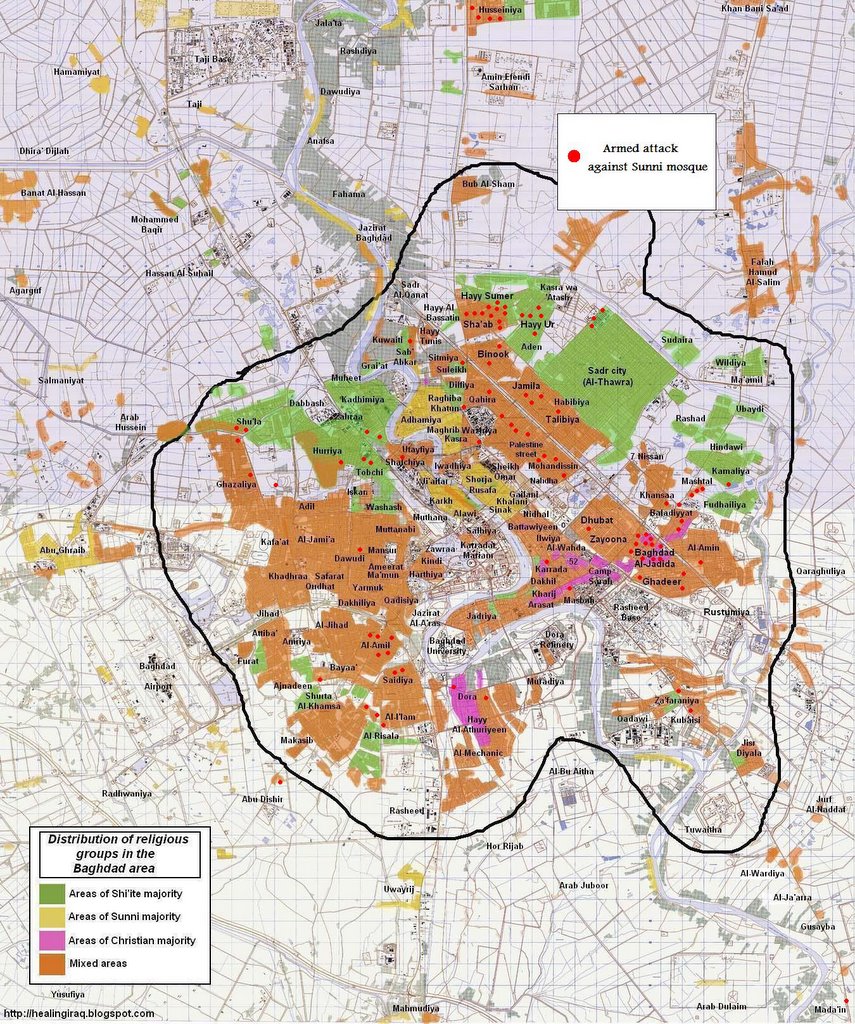
Meanwhile, rumour has is it North Korea is preparing for a second test. That is if they don't all die from lung cancer first.
posted by furtive at 8:35 PM on January 10, 2007
posted by furtive at 8:35 PM on January 10, 2007
We are also taking other steps to bolster the security of Iraq and protect American interests in the Middle East. I recently ordered the deployment of an additional carrier strike group to the region. We will expand intelligence sharing and deploy Patriot air defense systems to reassure our friends and allies.
a couple of people noticed it, but i thought i'd repeat it - this is the balloon going up, right here
just what are insurgents going to do that our friends and allies would feel a need for the patriot anti missile system? ... nothing, of course
but none the less, they might need that system
gee, i wonder who we're going to attack that has missiles?
i heard this on the radio at work and i immediately realized that he's up to a lot more than he's letting on ... god help us
posted by pyramid termite at 8:37 PM on January 10, 2007 [1 favorite]
a couple of people noticed it, but i thought i'd repeat it - this is the balloon going up, right here
just what are insurgents going to do that our friends and allies would feel a need for the patriot anti missile system? ... nothing, of course
but none the less, they might need that system
gee, i wonder who we're going to attack that has missiles?
i heard this on the radio at work and i immediately realized that he's up to a lot more than he's letting on ... god help us
posted by pyramid termite at 8:37 PM on January 10, 2007 [1 favorite]
fff: stuff people are doing all over the country thruout January
posted by amberglow at 8:39 PM on January 10, 2007
posted by amberglow at 8:39 PM on January 10, 2007
A senior White House official said that Maliki told the president, "I swear to God, I'm not going to let Sadr run this country."
God: I’m not in right now, but if you leave a message after the blast, I’ll be sure to get back to you…
posted by hadjiboy at 9:06 PM on January 10, 2007
God: I’m not in right now, but if you leave a message after the blast, I’ll be sure to get back to you…
posted by hadjiboy at 9:06 PM on January 10, 2007
Bush: neither enough troops nor enough resources to halt the country’s descent into chaos
Nor enough Brain Cells
posted by hadjiboy at 9:10 PM on January 10, 2007
Nor enough Brain Cells
posted by hadjiboy at 9:10 PM on January 10, 2007
Americans needed to hear a clear plan to extricate United States troops from the disaster that Mr. Bush created. What they got was more gauzy talk of victory in the war on terrorism and of creating a “young democracy” in Iraq. In other words, a way for this president to run out the clock and leave his mess for the next one.- Tomorrow's NY Times Editorial (emphasis mine) (Quoted in Editor & Publisher in case the NY Times demands a login)
posted by George_Spiggott at 9:21 PM on January 10, 2007
Any Congressman that does not respond to this horseshit with anything less than a declaration that this idiot must be taken out back and hanged, immediately, for the good of the Country, is a fucking traitor and should be shot.
This is our Turing Test for patriotism: do you support the president in any way, shape or form? Then you are a traitor. There really can be no middle ground on this: the guy is fucking crazy.
posted by Civil_Disobedient at 9:23 PM on January 10, 2007
This is our Turing Test for patriotism: do you support the president in any way, shape or form? Then you are a traitor. There really can be no middle ground on this: the guy is fucking crazy.
posted by Civil_Disobedient at 9:23 PM on January 10, 2007
Iraq doesn't even want more troops: ...“The government believes there is no need for extra troops from the American side,” Haidar al-Abadi, a Parliament member and close associate of Mr. Maliki, said Wednesday. “The existing troops can do the job.”
It is an opinion that is broadly held among a Shiite political elite that is increasingly impatient, after nearly two years heading the government here, to exercise power without the constraining supervision of the United States. ...
posted by amberglow at 9:39 PM on January 10, 2007
It is an opinion that is broadly held among a Shiite political elite that is increasingly impatient, after nearly two years heading the government here, to exercise power without the constraining supervision of the United States. ...
posted by amberglow at 9:39 PM on January 10, 2007
Amberglow: Just wanted to say I appreciate your article-finding skills especially for this topic. They're very useful since I've been attempting to keep my head in the sand and see if that makes me feel any better about the country I live in. Didn't work. So. Keep 'em coming. I need to play catch-up.
posted by CitrusFreak12 at 9:43 PM on January 10, 2007
posted by CitrusFreak12 at 9:43 PM on January 10, 2007
amberglow says: nope. not true in any way. Our liberty was never at threat from Iraq or Saddam (nor was it at threat from Osama or anyone).
Abraham Lincoln had a pretty good quote about that: "If destruction be our lot, we must ourselves be its author and finisher."
He was referring to the fact that no conventional army could ever succeed in a military campaign against us, but the sentiment applies just as well here; no terrorist group of any stripe could ever destroy our freedom, nor could the Iraqis under Hussein.
We're doing a bang-up job of it, though, all by ourselves.
posted by Malor at 9:43 PM on January 10, 2007 [2 favorites]
Abraham Lincoln had a pretty good quote about that: "If destruction be our lot, we must ourselves be its author and finisher."
He was referring to the fact that no conventional army could ever succeed in a military campaign against us, but the sentiment applies just as well here; no terrorist group of any stripe could ever destroy our freedom, nor could the Iraqis under Hussein.
We're doing a bang-up job of it, though, all by ourselves.
posted by Malor at 9:43 PM on January 10, 2007 [2 favorites]
I hate politicians.
In this case, I think it's alright to hate both the playah and the game...
posted by RollingGreens at 9:47 PM on January 10, 2007
In this case, I think it's alright to hate both the playah and the game...
posted by RollingGreens at 9:47 PM on January 10, 2007
Did the Army block Israeli anti-RPG system? The U.S. Army has repeatedly told Congress that the Israeli–made anti-RPG system Trophy is too flawed to battle test in Iraq. But documents obtained by NBC News Senior Investigative Correspondent Lisa Myers reveal that the Army's own engineers at one point gave the system high marks.
posted by homunculus at 9:58 PM on January 10, 2007
posted by homunculus at 9:58 PM on January 10, 2007
It's all about sacrifice.
Bush is a complete and total fucking ass hole.
posted by exlotuseater at 10:17 PM on January 10, 2007
Bush is a complete and total fucking ass hole.
posted by exlotuseater at 10:17 PM on January 10, 2007
Surge: The new euphemism for "pissing into the wind."
posted by moonbiter at 11:00 PM on January 10, 2007
posted by moonbiter at 11:00 PM on January 10, 2007
So depressing. So fucking depressing.
You know who really hates America? Anyone who voted for Bush in 2004. There was absolutely no way to rationalize that decision in anything other than at the level of "Dur, my team, rah rah. Libtards! Homersexuals! Purple Hearts bad! AWOL good!"
2000 was forgiveable, who knew he'd do anything other than spend record amounts of time on vacation? 2004? Fucking shoot yourself now.
posted by maxwelton at 11:05 PM on January 10, 2007
You know who really hates America? Anyone who voted for Bush in 2004. There was absolutely no way to rationalize that decision in anything other than at the level of "Dur, my team, rah rah. Libtards! Homersexuals! Purple Hearts bad! AWOL good!"
2000 was forgiveable, who knew he'd do anything other than spend record amounts of time on vacation? 2004? Fucking shoot yourself now.
posted by maxwelton at 11:05 PM on January 10, 2007
lemme apologize right off the bat and admit I didn't read the whole thread...
So basically what the president is saying is, and let me see if I can nutshell this; 'OMG Z3RG Ru$H!!1!'
So after "Mission Accomplished" and "The Insurgents are in their last throes." We suddenly need to send more troops? Remind me again how these people have not repeatedly lied to us.
And if at all possible, explain how this has been allowed to go on with no reprisals. Why aren't all the people involved in this fiasco in jail?
[I was at a gun range today, and I witnessed a store clerk explaining to a young man who was on leave from his completion of boot camp, how to operate the AR-15 he had rented to shoot. For those that don't know guns, the AR-15 is exactly the same in operation as the M-16/ M4 that the military is currently fielding.
This was someone, I'm going to guess days out of boot camp, that wasn't familiar with the primary weapon we issue our troops.
Perhaps he was lying about his affiliation to the military, and perhaps he is a rear support person that wouldn't have had the education on that particular gun, but it chilled the hell out of me. Because if this was a front line personnel, we are going to lose. Badly.]
posted by quin at 11:36 PM on January 10, 2007
So basically what the president is saying is, and let me see if I can nutshell this; 'OMG Z3RG Ru$H!!1!'
So after "Mission Accomplished" and "The Insurgents are in their last throes." We suddenly need to send more troops? Remind me again how these people have not repeatedly lied to us.
And if at all possible, explain how this has been allowed to go on with no reprisals. Why aren't all the people involved in this fiasco in jail?
[I was at a gun range today, and I witnessed a store clerk explaining to a young man who was on leave from his completion of boot camp, how to operate the AR-15 he had rented to shoot. For those that don't know guns, the AR-15 is exactly the same in operation as the M-16/ M4 that the military is currently fielding.
This was someone, I'm going to guess days out of boot camp, that wasn't familiar with the primary weapon we issue our troops.
Perhaps he was lying about his affiliation to the military, and perhaps he is a rear support person that wouldn't have had the education on that particular gun, but it chilled the hell out of me. Because if this was a front line personnel, we are going to lose. Badly.]
posted by quin at 11:36 PM on January 10, 2007
2000 was forgiveable, who knew he'd do anything other than spend record amounts of time on vacation? 2004? Fucking shoot yourself now.
I think much of the world considered the American people to be largely held hostage pre-2004. After that, sympathy dried up, fast.
The good news is, he's such a screw up that we're feeling bad for you guys again.
posted by dreamsign at 4:12 AM on January 11, 2007
I think much of the world considered the American people to be largely held hostage pre-2004. After that, sympathy dried up, fast.
The good news is, he's such a screw up that we're feeling bad for you guys again.
posted by dreamsign at 4:12 AM on January 11, 2007
"My lean is mean and I call it 'Surge,' can't even put it into words/my potion, caffine ocean."
posted by owenkun at 4:13 AM on January 11, 2007
posted by owenkun at 4:13 AM on January 11, 2007
There will be no surrender ceremony on the deck of a battleship.
Then where is the US going to surrender? On some roof while CIA employees wait for a helicopter?
I'm dreaming of a white Christmas...
posted by pracowity at 4:20 AM on January 11, 2007
Then where is the US going to surrender? On some roof while CIA employees wait for a helicopter?
I'm dreaming of a white Christmas...
posted by pracowity at 4:20 AM on January 11, 2007
This was someone, I'm going to guess days out of boot camp, that wasn't familiar with the primary weapon we issue our troops.
He wasn't a Marine, then.
It is possible that he was Navy, USCG or Air Force. Matter of fact, looking at your profile, the closest basic facility is Naval Station Great Lakes, North Chicago, IL.
posted by eriko at 5:33 AM on January 11, 2007
He wasn't a Marine, then.
It is possible that he was Navy, USCG or Air Force. Matter of fact, looking at your profile, the closest basic facility is Naval Station Great Lakes, North Chicago, IL.
posted by eriko at 5:33 AM on January 11, 2007
Thank you, pyramid termite. That is absolutely a red flag.
posted by tizzie at 5:34 AM on January 11, 2007
posted by tizzie at 5:34 AM on January 11, 2007
konolia, have the families been yelling about it? contacting their congresspeople? their voices carry a lot of weight.
Probably not. It is totally against the military dependent culture to complain. They expect each other to be strong and suck it up.
posted by konolia at 5:44 AM on January 11, 2007
Probably not. It is totally against the military dependent culture to complain. They expect each other to be strong and suck it up.
posted by konolia at 5:44 AM on January 11, 2007
The President's plan for re-taking and holding Baghdad, if I understand it correctly, is to set up ("embed") American and Iraqi infantry troops in something like 30 little district and neighborhood Alamos, and to broaden their "rules of engagement." And so, in a few months, we'll have thousands of troops dispersed into small enclaves, among the populace, where the troops are easier targets for suicide minded extremists, and those troops are going to be much more likely to shoot first, and ask questions later, at nearly any loud noise.
About that time, the heat of a Baghdad summer will be ramping up.
This is going to be so much worse than ugly. Haditha, maybe, every day, but this time sanctioned as policy under broader "rules of engagement" and "more pragmatic" force protection strategies, until the world becomes innured, and Baghdad is empty. Welcome to Mogadishu West.
posted by paulsc at 5:47 AM on January 11, 2007
About that time, the heat of a Baghdad summer will be ramping up.
This is going to be so much worse than ugly. Haditha, maybe, every day, but this time sanctioned as policy under broader "rules of engagement" and "more pragmatic" force protection strategies, until the world becomes innured, and Baghdad is empty. Welcome to Mogadishu West.
posted by paulsc at 5:47 AM on January 11, 2007
I think we're going to be launching air strikes against either Iran or Syria or both shortly, after all, why would we need an extra carrier group for operations in Iraq?
posted by drezdn at 6:20 AM on January 11, 2007
posted by drezdn at 6:20 AM on January 11, 2007
The part of all this that I find perplexing (and sadly, darkly humorous) is the general US attitude on Iraq now. Listening to people from both sides of the aisle, there seems to be this growing attitude that this whole mess is Iraq's fault. That somehow they are to blame for the conditions they now find themselves in. This morning, I even heard one congresscritter remark that "the Iraqis can no longer expect the US to come running whenever they dial 911"
WTF???
I want our guys out of the cesspool as much as anyone else. And, yeah, this mess is pretty-much a texbook no-win situation. However, Iraq, to me, definitely falls under the "You broke it, you buy it" rule.
posted by Thorzdad at 7:08 AM on January 11, 2007
WTF???
I want our guys out of the cesspool as much as anyone else. And, yeah, this mess is pretty-much a texbook no-win situation. However, Iraq, to me, definitely falls under the "You broke it, you buy it" rule.
posted by Thorzdad at 7:08 AM on January 11, 2007
Christ, what an asshole.
posted by thekilgore at 7:21 AM on January 11, 2007
posted by thekilgore at 7:21 AM on January 11, 2007
jokeefe writes "The missiles are flying. Hallelujah, hallelujah."
yes they are in a manner of speaking.
posted by Fezboy! at 8:47 AM on January 11, 2007
yes they are in a manner of speaking.
posted by Fezboy! at 8:47 AM on January 11, 2007
Oh wait, I see, they're going after Iran.
Everybody please raid the grocery stores now, while they still have stuff.
posted by tehloki at 9:45 AM on January 11, 2007
Everybody please raid the grocery stores now, while they still have stuff.
posted by tehloki at 9:45 AM on January 11, 2007
Probably not. It is totally against the military dependent culture to complain. They expect each other to be strong and suck it up.
That's a deadly mistake. If the things they're being told to do are not for our nation's security or benefit at all, they should speak up.
posted by amberglow at 9:47 AM on January 11, 2007
Juan Cole:
"To listen to Bush's speech on Wednesday, you would imagine that al-Qaeda has occupied large swathes of Iraq with the help of Syria and Iran and is brandishing missiles at the US mainland. That the president of the United States can come out after nearly four years of such lies and try to put this fantasy over on the American people is shameful."Andrew Sullivan:
"The premise of the speech, and of the strategy, is that there is a national democratic government in Baghdad, defending itself against Jihadist attacks. The task, in the president's mind, is therefore to send more troops to defend such a government. But the reality facing us each day is a starkly different one from the scenario assumed by the president. The government of which Bush speaks, to put it bluntly, does not exist."posted by ericb at 11:21 AM on January 11, 2007
‘The Surge Won’t Work, But Concentration Camps Might Do The Trick’
(commenting on insane suggestions to look to the Boer War as a model, with camps and laying waste to the countryside)
regarding the Cole thing--just before on TV, Pace said that Al Qaeda is with the Sunnis--he said that more than once.
posted by amberglow at 11:23 AM on January 11, 2007
(commenting on insane suggestions to look to the Boer War as a model, with camps and laying waste to the countryside)
regarding the Cole thing--just before on TV, Pace said that Al Qaeda is with the Sunnis--he said that more than once.
posted by amberglow at 11:23 AM on January 11, 2007
Top GOP senator 'will filibuster any Democratic attempt to decrease funding for Bush's new Iraq plan (Mitch McConnell--a total ass who has used this threat before)
posted by amberglow at 11:28 AM on January 11, 2007
posted by amberglow at 11:28 AM on January 11, 2007
Hagel On Escalation: 'The Most Dangerous Foreign Policy Blunder in this Country Since Vietnam'
"Sen. Chuck Hagel (R-NE) passionately argued against President Bush’s escalation plan during a Senate Foreign Relations Committee hearing today.posted by ericb at 11:36 AM on January 11, 2007
During questioning of Secretary of State Condoleezza Rice, Hagel called the new strategy 'morally wrong' and 'tactically, strategically, militarily wrong,' and declared, 'I have to say, Madam Secretary, that I think this speech given last night by this president represents the most dangerous foreign policy blunder in this country since Vietnam.' Members in the hearing room clapped as Hagel concluded, 'I will resist it.'"
Good. I'm not Biden's biggest fan, but he saw this strategery though. The American people don't want this war any longer, and the sooner we get Republicans to come out on the record and vote for the surge the better. Come 2008, 2010, and 2012, they'll regret it.
posted by bardic at 11:36 AM on January 11, 2007
posted by bardic at 11:36 AM on January 11, 2007
(I'm not Hagel's biggest fan either, but he'll provide plenty of cover for junior Republicans to come out against this.)
posted by bardic at 11:37 AM on January 11, 2007
posted by bardic at 11:37 AM on January 11, 2007
Poll: Americans oppose sending more troops to Iraq
"Americans [70%] overwhelmingly oppose sending more U.S. forces to Iraq, according to a new AP-Ipsos poll that serves as a strong repudiation of President Bush's plan to send another 21,500 troops.posted by ericb at 11:49 AM on January 11, 2007
The opposition to boosting troop levels in Iraq reflects growing skepticism that the United States made the right decision in going to war in the first place and that a stable, democratic government can be established there. Just 35 percent think it was right for the United States to go to war, a new low in AP polling and a reversal from two years ago, when two-thirds of Americans thought it was the correct move.
Sixty percent, meanwhile, think it is unlikely that a stable, democratic Iraqi government will be established.
Senate Foreign Relations Committee Chairman Joseph Biden, D-Del., warned Thursday that any solution to the Iraq problem must have public support. Harking back to Vietnam, he said: 'No foreign policy can be sustained in this country without the informed consent of the American people. They've got to sign on.'"
Biden is a big talker, but never follows thru with action--the media always calls him, and he's full of shit always.
He's already said that Bush can do what he wants, and that Congress can't stop him.
posted by amberglow at 11:56 AM on January 11, 2007
He's already said that Bush can do what he wants, and that Congress can't stop him.
posted by amberglow at 11:56 AM on January 11, 2007
My point re: Biden is that he's been behind the scenes pushing for exactly the sort of "litmus test" vote that the Republicans tried to crucify Murtha for when he suggested redeployment. Those Republicans who still think it's 2003 would be welcome to sign their own political death-warrant if they were to go on record for the surge.
posted by bardic at 12:05 PM on January 11, 2007
posted by bardic at 12:05 PM on January 11, 2007
Dead Maliki Walking -- We’re taking bets on the eventual overthrow of our very own 21st Century Ngo Dinh Diem, Iraq Prime Minister Nuri Kamal al-Maliki — will it be surreptitiously sponsored by us or by al-Sadr-allied Shia hardliners? ...
posted by amberglow at 12:06 PM on January 11, 2007
posted by amberglow at 12:06 PM on January 11, 2007
bardic, Biden is not sponsoring nor actually doing the real work to get a vote to the floor tho--he's just talking--it's all he ever does on all topics.
posted by amberglow at 12:07 PM on January 11, 2007
posted by amberglow at 12:07 PM on January 11, 2007
get this: yesterday pre-speech Tony Snow held a phone thing with only rightwing bloggers to help sell it all: I HAD THE HONOR TO TAKE PART IN A WHITE HOUSE CONFERENCE CALL WITH BLOGGERS TO DISCUSS THE PRESIDENT'S SPEECH ON THE WAY FORWARD IN IRAQ
White House Press Secretary Tony Snow and Brett McGurk, Director for Iraq, National Security Council, discussed President Bush's speech on the way forward in Iraq today at 4 PM with a small group of bloggers. Joining me was Austin Bay, Lori Byrd, Wizbang, John Hawkins - RightWing News, Human Events Online, Redstate , NZ Bear among others. ...
posted by amberglow at 12:10 PM on January 11, 2007
White House Press Secretary Tony Snow and Brett McGurk, Director for Iraq, National Security Council, discussed President Bush's speech on the way forward in Iraq today at 4 PM with a small group of bloggers. Joining me was Austin Bay, Lori Byrd, Wizbang, John Hawkins - RightWing News, Human Events Online, Redstate , NZ Bear among others. ...
posted by amberglow at 12:10 PM on January 11, 2007
When the East Coast gets nuked, I will find George W. Bush in Hell and join the line to punch him in the face for all eternity.
posted by Faint of Butt at 12:36 PM on January 11, 2007
posted by Faint of Butt at 12:36 PM on January 11, 2007
"There will be no surrender ceremony on the deck of a battleship."
Well duh, neither the insurgents nor the US have a commisioned battleship.
dilettante writes "Y'know, maybe Congress should just cut the funding for Bush and Cheney's salaries, medical care, transportation, etc. Just as a nice gesture."
They are independently wealthy, a personal funding cut would effect them very little.
ericb quotes Bush "We will work with the governments of Turkey and Iraq to help them resolve problems along their border. "
Glad I'm not a Kurd.
posted by Mitheral at 1:18 PM on January 11, 2007
Well duh, neither the insurgents nor the US have a commisioned battleship.
dilettante writes "Y'know, maybe Congress should just cut the funding for Bush and Cheney's salaries, medical care, transportation, etc. Just as a nice gesture."
They are independently wealthy, a personal funding cut would effect them very little.
ericb quotes Bush "We will work with the governments of Turkey and Iraq to help them resolve problems along their border. "
Glad I'm not a Kurd.
posted by Mitheral at 1:18 PM on January 11, 2007
Who has to suck W.'s cock to get him impeached in this country? (Jonah Goldberg, pick up the white phone.) ... (dirty text--maybe nsfw)
posted by amberglow at 3:07 PM on January 11, 2007
posted by amberglow at 3:07 PM on January 11, 2007
Four Ways To Stop the War--What Congress could do—if it dared.
posted by amberglow at 4:23 PM on January 11, 2007
posted by amberglow at 4:23 PM on January 11, 2007
I apologize ahead of time because I am sure this has been mentioned. I haven't read all the comments. But I just came here to say / ask:
Is Bush the WORST speechmaker of ANY president EVER?!!?!?
He didn't get 2 sentences out before he was stumbling all over himself. I actually Tifauxed it because I had to run an errand. When I tried to watch it, I couldn't even make it through. ARGH!
OK. I'm done. That is all.
But really, if anyone can think of a worse speaker in modern history, please tell me.
posted by The Deej at 5:08 PM on January 11, 2007
Is Bush the WORST speechmaker of ANY president EVER?!!?!?
He didn't get 2 sentences out before he was stumbling all over himself. I actually Tifauxed it because I had to run an errand. When I tried to watch it, I couldn't even make it through. ARGH!
OK. I'm done. That is all.
But really, if anyone can think of a worse speaker in modern history, please tell me.
posted by The Deej at 5:08 PM on January 11, 2007
Ford was really bad but not as bad as Bush (way too slow and with very little variation in tone or volume or emphasis --a little like how Woodward sounds if you see him talk)
posted by amberglow at 5:32 PM on January 11, 2007
posted by amberglow at 5:32 PM on January 11, 2007
Thanks amberglow. Yeah, Ford is the first example I can think of, but even he had some passion once in a while. I still remember seeing his speeches on TV as a teen. I specifically remember him being criticized for his use of veto-power, and he gave a very passionate defense of it. Even as a kid I was impressed by his resolve: "as long as the veto works, I will continue to use it!!" or something like that.
And of course the "long national nightmare is over" speech was actually very good. At least he didn't trip over his tongue every other word. He tripped on airplane steps, but still.
::: breathing out now :::
posted by The Deej at 5:39 PM on January 11, 2007
And of course the "long national nightmare is over" speech was actually very good. At least he didn't trip over his tongue every other word. He tripped on airplane steps, but still.
::: breathing out now :::
posted by The Deej at 5:39 PM on January 11, 2007
I wonder how many of you did something to actively assist in the impeachment of this President today.
Not many, I'd wager.
posted by five fresh fish at 5:47 PM on January 11, 2007
Not many, I'd wager.
posted by five fresh fish at 5:47 PM on January 11, 2007
Well, I have been working really hard to find a chubby intern to make a visit.
posted by The Deej at 6:08 PM on January 11, 2007 [1 favorite]
posted by The Deej at 6:08 PM on January 11, 2007 [1 favorite]
"Failure in Iraq would be a disaster for the United States."
There seems to be a lot of heart felt anguish about how the situation in Iraq is affecting the good ole U. S. of A., but how about the civililian people in Iraq? This speech makes me want to scream so many rebuttles at the screen, most of which have been dealt with above already (particularly the public opinon business) it's not funny, but GWB has turned these peoples lives upside down and now all he's interested in is it's effect on his own country. Bah.
posted by dubious at 6:11 PM on January 11, 2007
There seems to be a lot of heart felt anguish about how the situation in Iraq is affecting the good ole U. S. of A., but how about the civililian people in Iraq? This speech makes me want to scream so many rebuttles at the screen, most of which have been dealt with above already (particularly the public opinon business) it's not funny, but GWB has turned these peoples lives upside down and now all he's interested in is it's effect on his own country. Bah.
posted by dubious at 6:11 PM on January 11, 2007
Top GOP senator 'will filibuster any Democratic attempt to decrease funding for Bush's new Iraq plan
Good. That means *zero* dollars for DoD, because the funding bills will never get passed then.
Alas, if only the Democrats had balls.
"We'd love to get money to the troops. But the GOP won't let us...."
posted by eriko at 7:02 PM on January 11, 2007
Good. That means *zero* dollars for DoD, because the funding bills will never get passed then.
Alas, if only the Democrats had balls.
"We'd love to get money to the troops. But the GOP won't let us...."
posted by eriko at 7:02 PM on January 11, 2007
Top GOP senator 'will filibuster any Democratic attempt to decrease funding for Bush's new Iraq plan
Good. That means *zero* dollars for DoD, because the funding bills will never get passed then.
Correct me if I'm wrong, and I very well may be, but I thought it meant the opposite of what you're saying.
posted by CitrusFreak12 at 8:57 PM on January 11, 2007
Good. That means *zero* dollars for DoD, because the funding bills will never get passed then.
Correct me if I'm wrong, and I very well may be, but I thought it meant the opposite of what you're saying.
posted by CitrusFreak12 at 8:57 PM on January 11, 2007
I wonder how many of you did something to actively assist in the impeachment of this President today.
the house has no intention of impeaching the president
posted by pyramid termite at 9:07 PM on January 11, 2007
the house has no intention of impeaching the president
posted by pyramid termite at 9:07 PM on January 11, 2007
explosion at u s embassy in athens ... related?
posted by pyramid termite at 9:26 PM on January 11, 2007
posted by pyramid termite at 9:26 PM on January 11, 2007
sounds like someone fired an rpg into the bathroom there ... no one hurt ... never mind
posted by pyramid termite at 10:30 PM on January 11, 2007
posted by pyramid termite at 10:30 PM on January 11, 2007
explosion at u s embassy in athens ... related?
Pyramid. Darling. Are you really asking if our crazy president's take on international politics is related to us getting attacked? Come now. You know the answer, deep down inside.
I still don't understand Osama's reasons for 9/11. Like, why he didn't like the US. But after all this? I'd say any attack, terrorist or otherwise, will be damn easy to justify or at least explain the reasoning behind it.
posted by CitrusFreak12 at 10:32 PM on January 11, 2007
Pyramid. Darling. Are you really asking if our crazy president's take on international politics is related to us getting attacked? Come now. You know the answer, deep down inside.
I still don't understand Osama's reasons for 9/11. Like, why he didn't like the US. But after all this? I'd say any attack, terrorist or otherwise, will be damn easy to justify or at least explain the reasoning behind it.
posted by CitrusFreak12 at 10:32 PM on January 11, 2007
I still don't understand Osama's reasons for 9/11.
Are you joking? He was explicit in saying that he wanted US military bases (and influence in general) out of the Middle East, particularly Saudi Arabia.
Not trying to defend the guy, but this whole "Why do they hate us?" thing is annoying. Maybe you don't agree with them, but they've been saying over and over why they hate us in taped messages since the first WTC bombing.
posted by bardic at 10:42 PM on January 11, 2007
Are you joking? He was explicit in saying that he wanted US military bases (and influence in general) out of the Middle East, particularly Saudi Arabia.
Not trying to defend the guy, but this whole "Why do they hate us?" thing is annoying. Maybe you don't agree with them, but they've been saying over and over why they hate us in taped messages since the first WTC bombing.
posted by bardic at 10:42 PM on January 11, 2007
Americans [70%] overwhelmingly oppose sending more U.S. forces to Iraq
So nearly 1 in 3 don't?
Seriously, break your country in two and let the other half sink in its own ignorance.
posted by dreamsign at 1:36 AM on January 12, 2007
So nearly 1 in 3 don't?
Seriously, break your country in two and let the other half sink in its own ignorance.
posted by dreamsign at 1:36 AM on January 12, 2007
In other news: Senator Jim Webb introduced new legislation to provide more educational benefits to new veterans.
posted by homunculus at 2:13 PM on January 12, 2007
posted by homunculus at 2:13 PM on January 12, 2007
"Are you joking?..."
"...but this whole "Why do they hate us?" thing is annoying."
Thank you, bardic. I was 12 years old, had just left elementary school, and was not very big on watching the news when 9/11 happened.
Ever since then it's just been "the war on terror" and then the war in Iraq started when I was a freshman in high school, and that's all I've been hearing about ever since.
I apologize for annoying you. I probably should have provided a little background info to give you an idea of where I'm coming from, and said "I never knew the reasons" instead of "I don't understand."
If you could point me in a good direction so I could atone for my (hopefully understandable) ignorance, I would greatly appreciate it.
posted by CitrusFreak12 at 3:00 PM on January 12, 2007
"...but this whole "Why do they hate us?" thing is annoying."
Thank you, bardic. I was 12 years old, had just left elementary school, and was not very big on watching the news when 9/11 happened.
Ever since then it's just been "the war on terror" and then the war in Iraq started when I was a freshman in high school, and that's all I've been hearing about ever since.
I apologize for annoying you. I probably should have provided a little background info to give you an idea of where I'm coming from, and said "I never knew the reasons" instead of "I don't understand."
If you could point me in a good direction so I could atone for my (hopefully understandable) ignorance, I would greatly appreciate it.
posted by CitrusFreak12 at 3:00 PM on January 12, 2007
Citrus: Start with this: ... bin Laden said he did so because of injustices against the Lebanese and Palestinians by Israel and the United
States.
In what appeared to be conciliatory lan-
guage, bin Laden said he wanted to explain
why he ordered the suicide airline hijackings
that hit the World Trade Center and the Penta-
gon so Americans would know how to act to
prevent another attack ...
posted by amberglow at 3:30 PM on January 12, 2007
States.
In what appeared to be conciliatory lan-
guage, bin Laden said he wanted to explain
why he ordered the suicide airline hijackings
that hit the World Trade Center and the Penta-
gon so Americans would know how to act to
prevent another attack ...
posted by amberglow at 3:30 PM on January 12, 2007
and from there: Unlike what Bush says
that we hate freedom, let him
tell us why didn’t we attack
Sweden, for example.
posted by amberglow at 3:31 PM on January 12, 2007
that we hate freedom, let him
tell us why didn’t we attack
Sweden, for example.
posted by amberglow at 3:31 PM on January 12, 2007
a transcript of that speech: 'Your security is in your own hands'
posted by amberglow at 3:33 PM on January 12, 2007
posted by amberglow at 3:33 PM on January 12, 2007
(over and over Bin Ladin made it clear that it was our actions in the Middle East that were the reasons, which is why our current actions now just make it all worse and ensure more attacks here)
posted by amberglow at 3:36 PM on January 12, 2007
posted by amberglow at 3:36 PM on January 12, 2007
Thanks amberglow!
posted by CitrusFreak12 at 3:39 PM on January 12, 2007
posted by CitrusFreak12 at 3:39 PM on January 12, 2007
anytime, Citrus : >
(google him for more quotes, and search within UK newpaper sites for more reasoned explanations of the whole thing, for the most part--less of Bush and the administration's lies, on the whole.)
posted by amberglow at 4:25 PM on January 12, 2007
(google him for more quotes, and search within UK newpaper sites for more reasoned explanations of the whole thing, for the most part--less of Bush and the administration's lies, on the whole.)
posted by amberglow at 4:25 PM on January 12, 2007
U.S. Unit Patrolling Baghdad Sees Flaws in Bush Strategy--... “They’re kicking a dead horse here. The Iraqi army can’t stand up on their own.”...
posted by amberglow at 5:15 PM on January 12, 2007
posted by amberglow at 5:15 PM on January 12, 2007
Bush vows to 60 Minutes that 'no matter what Congress wants' surge is on
posted by amberglow at 3:47 PM on January 13, 2007
posted by amberglow at 3:47 PM on January 13, 2007
How did the speech & the surge affect Bush's approval rating? Did I miss that poll? Seems like usually they do it every other day?
posted by muckster at 7:07 PM on January 13, 2007
posted by muckster at 7:07 PM on January 13, 2007
Rasmussen has him dropping 9 points since the speech.
posted by amberglow at 7:20 PM on January 13, 2007
posted by amberglow at 7:20 PM on January 13, 2007
Thousands have come home from Iraq injured, sometimes severely. Here are the stories of three Marines' struggle to heal.
posted by homunculus at 12:21 AM on January 14, 2007
posted by homunculus at 12:21 AM on January 14, 2007
The Armed Forces can't adequately equip those already in uniform, but the Pentagon is committing itself to massive corporate contracts for new high-tech weapons systems slated to come on-line decades from now.
posted by homunculus at 9:37 AM on January 14, 2007
posted by homunculus at 9:37 AM on January 14, 2007
"Scott, sometimes you're the commander-in-chief, sometimes you're the educator-in-chief, and a lot of times you're both when it comes to war. And I've just gotta continue to take my message to the people and to explain to them this is a well-thought-out decision that is in the interests of the today's generation of Americans and tomorrow's generation of Americans."
Is our citizens learning?
posted by homunculus at 7:44 PM on January 14, 2007
Is our citizens learning?
posted by homunculus at 7:44 PM on January 14, 2007
Bush Knows Best.
posted by CitrusFreak12 at 9:32 PM on January 14, 2007
posted by CitrusFreak12 at 9:32 PM on January 14, 2007
homunculus, I know I've complimented your information gathering skills before, but have you and amberglow ever considered working together? [assuming you don't already. I have not the energy to track down both of your origins]
Seriously, between the two of you I get my best information. I joke about how MeFi is my favorite news source, and have gotten much grief about it, but you two always seem faster than hitting the big news outlets for sharp reporting.
What I'm saying is, Get Your Own Fucking Blog. Because I will read it religiously.
/looks, finds amberglow's blog, bookmarks it.
You're not off the hook, homunculus. You have skills. I'm gonna be watching you.
posted by quin at 10:50 PM on January 14, 2007
Seriously, between the two of you I get my best information. I joke about how MeFi is my favorite news source, and have gotten much grief about it, but you two always seem faster than hitting the big news outlets for sharp reporting.
What I'm saying is, Get Your Own Fucking Blog. Because I will read it religiously.
/looks, finds amberglow's blog, bookmarks it.
You're not off the hook, homunculus. You have skills. I'm gonna be watching you.
posted by quin at 10:50 PM on January 14, 2007
2nd what quin said.
posted by CitrusFreak12 at 11:00 PM on January 14, 2007
posted by CitrusFreak12 at 11:00 PM on January 14, 2007
we should create an anti-drudge or something : >
more factcheck--What Bush failed to mention
posted by amberglow at 10:22 AM on January 15, 2007
more factcheck--What Bush failed to mention
posted by amberglow at 10:22 AM on January 15, 2007
Snow: As far as public opinion, the President will not shape policy according to public opinion...
WALLACE: ...If Congress passes a resolution opposing increasing the troops in Iraq, will that stop you?
CHENEY: ...it would not affect the president's ability to carry out his policy.
Wow. Just wow.
posted by CitrusFreak12 at 12:31 PM on January 15, 2007
WALLACE: ...If Congress passes a resolution opposing increasing the troops in Iraq, will that stop you?
CHENEY: ...it would not affect the president's ability to carry out his policy.
Wow. Just wow.
posted by CitrusFreak12 at 12:31 PM on January 15, 2007
Administration leaving out important details on Iraq (McClatchy newspapers, which has pretty much been the only big media group doing real fact-checking on any of this)
posted by amberglow at 2:17 PM on January 15, 2007
posted by amberglow at 2:17 PM on January 15, 2007
The Bush Administration is going to force the USA to reform its power structure. Quite clearly it is a mistake to allow your collective resources to be wholly controlled at the whim of a single madman.
posted by five fresh fish at 3:03 PM on January 15, 2007
posted by five fresh fish at 3:03 PM on January 15, 2007
What I'm saying is, Get Your Own Fucking Blog. Because I will read it religiously.
But I don't want my own blog. I like it here (and MonkeyFilter). Maybe Amberglow and I are like the MeFi Wonder Twins. You could be Gleek!
posted by homunculus at 9:45 PM on January 15, 2007
But I don't want my own blog. I like it here (and MonkeyFilter). Maybe Amberglow and I are like the MeFi Wonder Twins. You could be Gleek!
posted by homunculus at 9:45 PM on January 15, 2007
outrage wouldn't stop it, anyway, in spite of what people think ... bush isn't going for re-election, he has no realistic chance of impeachment, he has no realistic chance of having congress cut off his spending, and if his approval rating went down to 2 drunks and a guy who thinks he's napoleon, he could give a fuck less
he's going to continue this war no matter what
one thing about that article ... just how the hell is it that the "kids who go to community college" are the ones getting killed? ... i thought it was the kids who went and enlisted who got killed
but where is that outrage? ... many are just burned out with outrage over the last 30-40 years ... and younger people ... seeing as there's not a draft, they can just ignore it if they really want to, or just settle for voting for the right people ...
which brings me to another question ... where are our outraged leaders? ... true, we have some now, but they were pretty damn hard to find in 2003 and 2004
posted by pyramid termite at 10:26 PM on January 15, 2007
he's going to continue this war no matter what
one thing about that article ... just how the hell is it that the "kids who go to community college" are the ones getting killed? ... i thought it was the kids who went and enlisted who got killed
but where is that outrage? ... many are just burned out with outrage over the last 30-40 years ... and younger people ... seeing as there's not a draft, they can just ignore it if they really want to, or just settle for voting for the right people ...
which brings me to another question ... where are our outraged leaders? ... true, we have some now, but they were pretty damn hard to find in 2003 and 2004
posted by pyramid termite at 10:26 PM on January 15, 2007
President Wants War with Bigger Tits: Rice Calls For Augmentation
posted by homunculus at 12:44 PM on January 16, 2007
posted by homunculus at 12:44 PM on January 16, 2007
If all y'all can't get worked up into a revolution over the lies told to you so as to commit atrocities in your names, perhaps you could get worked up about the financial costs? For gods sakes, you people are going to allow your country to be bankrupted.
posted by five fresh fish at 7:37 PM on January 16, 2007
posted by five fresh fish at 7:37 PM on January 16, 2007
perhaps you could get worked up about the financial costs?
the way people borrow and spend, spend, spend?? ... is it any wonder we have a government that does the same thing?
For gods sakes, you people are going to allow your country to be bankrupted.
bankruptcy always happens to someone else, don't you know that?
most of the american people, many democrats included, honestly think this can go on forever
posted by pyramid termite at 10:09 PM on January 16, 2007
the way people borrow and spend, spend, spend?? ... is it any wonder we have a government that does the same thing?
For gods sakes, you people are going to allow your country to be bankrupted.
bankruptcy always happens to someone else, don't you know that?
most of the american people, many democrats included, honestly think this can go on forever
posted by pyramid termite at 10:09 PM on January 16, 2007
2007 Syllabus of Iraq War Spinifcation (many new lies, and even a few truths)
posted by amberglow at 4:06 PM on January 17, 2007
posted by amberglow at 4:06 PM on January 17, 2007
for CitrusFreak12: Bin Ladin in 1998: (Scroll down) ... First, for over seven years the United States has been occupying the lands of Islam in the holiest of places, the Arabian Peninsula, plundering its riches, dictating to its rulers, humiliating its people, terrorizing its neighbors, and turning its bases in the Peninsula into a spearhead through which to fight the neighboring Muslim peoples.
If some people have in the past argued about the fact of the occupation, all the people of the Peninsula have now acknowledged it.
The best proof of this is the Americans' continuing aggression against the Iraqi people using the Peninsula as a staging post, even though all its rulers are against their territories being used to that end, but they are helpless.
Second, despite the great devastation inflicted on the Iraqi people by the crusader-Zionist alliance, and despite the huge number of those killed, which has exceeded 1 million... despite all this, the Americans are once against trying to repeat the horrific massacres, as though they are not content with the protracted blockade imposed after the ferocious war or the fragmentation and devastation.....
posted by amberglow at 5:32 PM on January 17, 2007
If some people have in the past argued about the fact of the occupation, all the people of the Peninsula have now acknowledged it.
The best proof of this is the Americans' continuing aggression against the Iraqi people using the Peninsula as a staging post, even though all its rulers are against their territories being used to that end, but they are helpless.
Second, despite the great devastation inflicted on the Iraqi people by the crusader-Zionist alliance, and despite the huge number of those killed, which has exceeded 1 million... despite all this, the Americans are once against trying to repeat the horrific massacres, as though they are not content with the protracted blockade imposed after the ferocious war or the fragmentation and devastation.....
posted by amberglow at 5:32 PM on January 17, 2007
Our mercenaries in Iraq: The president relies on thousands of private soldiers with little oversight, a disturbing example of the military-industrial complex.
posted by homunculus at 4:56 PM on January 26, 2007
posted by homunculus at 4:56 PM on January 26, 2007
Olbermann Special Comment Fact Checking the President
posted by homunculus at 11:49 AM on January 31, 2007
posted by homunculus at 11:49 AM on January 31, 2007
« Older DO YOU WANNA HEAR SOMETHING SO HEAVY IT'S LIKE... | What evil lurks in the hearts of men? Newer »
This thread has been archived and is closed to new comments
posted by pmbuko at 3:22 PM on January 10, 2007 [1 favorite]