Well, if Bill says so...
February 18, 2010 9:43 AM Subscribe
So here's a spray bottle that will replace every cleaner in your home. The Ionator.
"You charge it, fill it with tap water (and only tap water), which takes on an electric charge, transforming it into negative and positive nano-bubbles that attract dirt. Then you spray and use a clean cloth to wipe away the dirt from your floors, windows, mirrors, cars, bird cages, dishes, coffee makers, refrigerators, tile and clothes..."
Really? Sounds like a crakpot scam. Well, Bill Nye The Science Guy himself explains the science. And Bill's my man.
That is the highest-stakes celebrity endorsement I've ever seen. I want so much not to think of Bill Nye as a shill. This stuff had better be amazing.
posted by gurple at 9:51 AM on February 18, 2010 [4 favorites]
posted by gurple at 9:51 AM on February 18, 2010 [4 favorites]
Simple elixir called "a miracle liquid"
It's a kitchen degreaser. It's a window cleaner. It kills athlete's foot. Oh, and you can drink it.
Sounds like the old "Saturday Night Live" gag for Shimmer, the faux floor polish plugged by Gilda Radner. But the elixir is real. It has been approved by U.S. regulators. And it's starting to replace the toxic chemicals Americans use at home and on the job.
...
There are drawbacks.
Electrolyzed water loses its potency fairly quickly, so it can't be stored long. Machines are pricey and geared mainly for industrial use. The process also needs to be monitored frequently for the right strength.
Then there's the "magic water" hype that has accompanied electrolyzed drinking water.
posted by Cool Papa Bell at 9:54 AM on February 18, 2010 [1 favorite]
It's a kitchen degreaser. It's a window cleaner. It kills athlete's foot. Oh, and you can drink it.
Sounds like the old "Saturday Night Live" gag for Shimmer, the faux floor polish plugged by Gilda Radner. But the elixir is real. It has been approved by U.S. regulators. And it's starting to replace the toxic chemicals Americans use at home and on the job.
...
There are drawbacks.
Electrolyzed water loses its potency fairly quickly, so it can't be stored long. Machines are pricey and geared mainly for industrial use. The process also needs to be monitored frequently for the right strength.
Then there's the "magic water" hype that has accompanied electrolyzed drinking water.
posted by Cool Papa Bell at 9:54 AM on February 18, 2010 [1 favorite]
Given that tap water is chlorinated, this makes a reasonable amount of sense. I won't be convinced until I see a killer infomercial, however. Preferably involving "Mabel" of Magic bullet fame.
posted by Go Banana at 9:54 AM on February 18, 2010 [1 favorite]
posted by Go Banana at 9:54 AM on February 18, 2010 [1 favorite]
Wow, if it has the coveted stamp of approval from noted mother, actor, and producer Laura Dern, I will definitely be making room for this under my sink!
posted by Alvy Ampersand at 9:55 AM on February 18, 2010 [1 favorite]
posted by Alvy Ampersand at 9:55 AM on February 18, 2010 [1 favorite]
From the second link: "...kills harmful bacteria without chemicals, even H1N1...."
I like to take sanitation advice from people with bad grammar and a poor understanding of biology.
posted by JMOZ at 9:55 AM on February 18, 2010 [8 favorites]
I like to take sanitation advice from people with bad grammar and a poor understanding of biology.
posted by JMOZ at 9:55 AM on February 18, 2010 [8 favorites]
For those not following along, I'm pretty sure H1N1 is a virus and not a bacterial.
posted by JMOZ at 9:56 AM on February 18, 2010 [4 favorites]
posted by JMOZ at 9:56 AM on February 18, 2010 [4 favorites]
"As a mom, I am impressed by the way Activeion has proven to be an incredibly effective and easy way to clean in my home..."
Jesus fuck.
posted by uncleozzy at 9:56 AM on February 18, 2010 [1 favorite]
Jesus fuck.
posted by uncleozzy at 9:56 AM on February 18, 2010 [1 favorite]
This is the first time a celebrity endorsement has actually made me consider the product. But then I was all like "cleaning? What the hell is that?"
posted by Think_Long at 9:57 AM on February 18, 2010 [3 favorites]
posted by Think_Long at 9:57 AM on February 18, 2010 [3 favorites]
$169 for the "HOM" model? $329 for the more industrial-looking one? Pass. If you want to avoid "chemicals" just put some diluted vinegar in a spray bottle.
posted by zsazsa at 10:00 AM on February 18, 2010 [6 favorites]
posted by zsazsa at 10:00 AM on February 18, 2010 [6 favorites]
Preferably involving "Mabel" of Magic bullet fame.
I'd rather see an endorsement from Vivian Vance in her Maxwell House mode.
posted by blucevalo at 10:01 AM on February 18, 2010 [1 favorite]
I'd rather see an endorsement from Vivian Vance in her Maxwell House mode.
posted by blucevalo at 10:01 AM on February 18, 2010 [1 favorite]
H2O sounds suspiciously like a chemical to me. I'll stick to plain ol' water, thanks.
posted by Plutor at 10:02 AM on February 18, 2010 [9 favorites]
posted by Plutor at 10:02 AM on February 18, 2010 [9 favorites]
Dihydrogen monoxide! It'll kill us all!
posted by The Winsome Parker Lewis at 10:05 AM on February 18, 2010 [2 favorites]
posted by The Winsome Parker Lewis at 10:05 AM on February 18, 2010 [2 favorites]
Di-Hydrogen Monoxide causes debilitating addiction, where the withdraw symptoms include certain death. Once one starts, often in infancy, there's no escape.
Adding electricity only makes things better though, right? Also, I hope no one sprays their computer with this stuff.
posted by LD Feral at 10:07 AM on February 18, 2010 [3 favorites]
Adding electricity only makes things better though, right? Also, I hope no one sprays their computer with this stuff.
posted by LD Feral at 10:07 AM on February 18, 2010 [3 favorites]
So wait, I spray water on something, and then wipe the water away with a clean cloth and this will make the thing clean? I AM SOLD, THANK YOU BILL NYE.
posted by ThePinkSuperhero at 10:08 AM on February 18, 2010 [2 favorites]
posted by ThePinkSuperhero at 10:08 AM on February 18, 2010 [2 favorites]
Unfortunately the term "ionic" has a herpepetroliate connotation (ref. Sharper Image)
(yes, that word's made up)
posted by kurumi at 10:09 AM on February 18, 2010 [3 favorites]
(yes, that word's made up)
posted by kurumi at 10:09 AM on February 18, 2010 [3 favorites]
Activeion. Apply directly to the forehead.
Activeion. Apply directly to the forehead.
Activeion. Apply directly to the forehead.
posted by Ratio at 10:14 AM on February 18, 2010 [7 favorites]
Activeion. Apply directly to the forehead.
Activeion. Apply directly to the forehead.
posted by Ratio at 10:14 AM on February 18, 2010 [7 favorites]
I just need to know what will happen when I use it to spray my cat for being a little shit. Will she be cleaner? Will the nano-bubbles help me train her to not try to eat the parakeets?
Because that would be worth it.
posted by quin at 10:14 AM on February 18, 2010 [3 favorites]
Because that would be worth it.
posted by quin at 10:14 AM on February 18, 2010 [3 favorites]
Flagged as Pepsi Blue.
Is there an unaffiliated, unbiased review for this product? Because right now it looks like you basically just posted the equivalent of a press release to MeFi.
posted by zarq at 10:17 AM on February 18, 2010 [1 favorite]
ActiveionTM Cleaning Solutions, LLC, announces the engagement of Wvilliam (Bill) S. Nye as spokesman. (pdf) A recognized expert in science education and sustainable causes, Mr. Nye will assist in the continuing introduction of Activeion Cleaning Solutions’ proprietary chemical-free cleaning technology.He's being paid to record an ad in the form of a video endorsement. Which really throws any possibility that he'd be unbiased out the window.
Is there an unaffiliated, unbiased review for this product? Because right now it looks like you basically just posted the equivalent of a press release to MeFi.
posted by zarq at 10:17 AM on February 18, 2010 [1 favorite]
Now it seems like the tougher the stain, the stronger the chemical we need to clean it up.
Tautology. The bigger the pile of horse shit, the bigger the celebrity required to move it.
posted by weapons-grade pandemonium at 10:18 AM on February 18, 2010
Tautology. The bigger the pile of horse shit, the bigger the celebrity required to move it.
posted by weapons-grade pandemonium at 10:18 AM on February 18, 2010
Let's see, water with a "carefully controlled, very small amount" of some other invisible agent. Why is this ringing a bell for me somewhere?
posted by tula at 10:21 AM on February 18, 2010 [2 favorites]
posted by tula at 10:21 AM on February 18, 2010 [2 favorites]
Tautology. The bigger the pile of horse shit, the bigger the celebrity required to move it.
So, like... how exactly does Bill Nye fit into your hypothesis here?
posted by fusinski at 10:25 AM on February 18, 2010 [1 favorite]
So, like... how exactly does Bill Nye fit into your hypothesis here?
posted by fusinski at 10:25 AM on February 18, 2010 [1 favorite]
So the real news here is that Bill Nye can no longer be trusted?
I swear, if Alton Brown starts endorsing High Fructose Corn Syrup tomorrow, I'm just going to go ahead and move into a yurt.
What's a good brand of yurt to buy? Does Suzanne Somers endorse any particular kind?
posted by bondcliff at 10:30 AM on February 18, 2010 [6 favorites]
I swear, if Alton Brown starts endorsing High Fructose Corn Syrup tomorrow, I'm just going to go ahead and move into a yurt.
What's a good brand of yurt to buy? Does Suzanne Somers endorse any particular kind?
posted by bondcliff at 10:30 AM on February 18, 2010 [6 favorites]
But I want to believe! I'm allergic to everything, and any sort of cleaner makes me wheeze.
posted by amj at 10:31 AM on February 18, 2010
posted by amj at 10:31 AM on February 18, 2010
Flagged. Although I have to say, Bill Nye's CV makes an interesting post. Did you know he was part of the design team for the Mars Rover?
posted by Slarty Bartfast at 10:32 AM on February 18, 2010
posted by Slarty Bartfast at 10:32 AM on February 18, 2010
.
posted by cairnish at 10:39 AM on February 18, 2010 [1 favorite]
posted by cairnish at 10:39 AM on February 18, 2010 [1 favorite]
Given that tap water is chlorinated...
Not mine- mine's calcified. That should work well with electrolysis.
And, is this thing battery powered? That's not so green.
(Unless the electrolysis of my hard water creates some verdigris)
posted by MtDewd at 10:41 AM on February 18, 2010
Not mine- mine's calcified. That should work well with electrolysis.
And, is this thing battery powered? That's not so green.
(Unless the electrolysis of my hard water creates some verdigris)
posted by MtDewd at 10:41 AM on February 18, 2010
Does Suzanne Somers endorse any particular kind?
She knows far more about the subject of yurts than you can possibly imagine.
posted by Horace Rumpole at 10:41 AM on February 18, 2010
She knows far more about the subject of yurts than you can possibly imagine.
posted by Horace Rumpole at 10:41 AM on February 18, 2010
if Alton Brown starts endorsing High Fructose Corn Syrup tomorrow
Close enough.
posted by uncleozzy at 10:43 AM on February 18, 2010 [3 favorites]
Close enough.

posted by uncleozzy at 10:43 AM on February 18, 2010 [3 favorites]
Customers who bought this item also bought ShamWow.
posted by iamkimiam at 10:43 AM on February 18, 2010
posted by iamkimiam at 10:43 AM on February 18, 2010
This is not total woo, but the science is overblown and the device is overpriced. I mean, it pumps water into a little electrolysis cell, which should indeed produce little hydrogen and oxygen bubbles and water with a mix of ions, positive and negative. How ionized is the water? No idea. Plain water (as opposed to salt water) has very low conductivity, so it takes a lot to really electrolyze it. The rest is just basic cleaning. The bubbles lower the surface tension, making the bubbly water a better cleaner than still water.
Is this worth $169.00? Oh hell no. Get a regular mister, fill it with plan water, and I bet it does 99.99% of the job this thing does. Put a little vinegar in it if it's not getting something clean enough.
posted by rusty at 10:44 AM on February 18, 2010 [3 favorites]
Is this worth $169.00? Oh hell no. Get a regular mister, fill it with plan water, and I bet it does 99.99% of the job this thing does. Put a little vinegar in it if it's not getting something clean enough.
posted by rusty at 10:44 AM on February 18, 2010 [3 favorites]
So, like... how exactly does Bill Nye fit into your hypothesis here?
This is mostly water mixed with a relatively small amount of electrically charged horse shit.
posted by weapons-grade pandemonium at 10:44 AM on February 18, 2010 [2 favorites]
This is mostly water mixed with a relatively small amount of electrically charged horse shit.
posted by weapons-grade pandemonium at 10:44 AM on February 18, 2010 [2 favorites]
ActiveionTM Cleaning Solutions, LLC, announces the engagement of Wvilliam (Bill) S. Nye as spokesman.
I'd like this post to be deleted and also someone to invent a time machine and go back and make this "engagement" never happened. We must preserve the good and holy.
posted by DU at 10:46 AM on February 18, 2010
I'd like this post to be deleted and also someone to invent a time machine and go back and make this "engagement" never happened. We must preserve the good and holy.
posted by DU at 10:46 AM on February 18, 2010
It really makes me sad that I have to mentally change his name now...
Bill Nye the Science* Guy
posted by Babblesort at 10:46 AM on February 18, 2010 [2 favorites]
Bill Nye the Science
posted by Babblesort at 10:46 AM on February 18, 2010 [2 favorites]
The last line of the LA Times article nails it:
posted by ErikaB at 10:48 AM on February 18, 2010
""This sounds too good to be true, which is really the biggest problem," said Feirtag, an associate professor at the University of Minnesota."Extraordinary claims require etc etc.
posted by ErikaB at 10:48 AM on February 18, 2010
This is a job for Consumer Reports.
posted by davel at 10:53 AM on February 18, 2010 [2 favorites]
posted by davel at 10:53 AM on February 18, 2010 [2 favorites]
You'd think the thing would be powered by water driving a little generator. That would be a tad more green.
posted by davejay at 10:56 AM on February 18, 2010
posted by davejay at 10:56 AM on February 18, 2010
We got one of those little pressurized steam cleaners for Christmas. It does a helluva job cleaning almost anything and is only about half the price of that ionizer thingamajig.
(NOT A PAID SPOKESPERSON, BUT WOULD GLADLY ENTERTAIN OFFERS)
posted by briank at 10:56 AM on February 18, 2010
(NOT A PAID SPOKESPERSON, BUT WOULD GLADLY ENTERTAIN OFFERS)
posted by briank at 10:56 AM on February 18, 2010
So, someone want to run this stuff through a spectrometer to see what's chemically going on? I mean, couldn't it potentially be making hydrogen peroxide? Which isn't something you should drink?
posted by mccarty.tim at 11:04 AM on February 18, 2010
posted by mccarty.tim at 11:04 AM on February 18, 2010
BILLY MAYS WOULD HAVE SOLD THE FUCK OUT OF THIS!
posted by TheWhiteSkull at 11:07 AM on February 18, 2010 [4 favorites]
posted by TheWhiteSkull at 11:07 AM on February 18, 2010 [4 favorites]
>as a mom
Glad to see I'm not the only one who's sick of seeing testimonials that act like moms are as good an expert as a scientist or doctor. It's that kind of thinking that allows the anti-vaxers and (a lot of) Sarah Palin's support to thrive. I love my mom dearly, and I'm sure almost every mother wants the best for their family, but that doesn't mean they always make the best decisions.
posted by mccarty.tim at 11:08 AM on February 18, 2010 [1 favorite]
Glad to see I'm not the only one who's sick of seeing testimonials that act like moms are as good an expert as a scientist or doctor. It's that kind of thinking that allows the anti-vaxers and (a lot of) Sarah Palin's support to thrive. I love my mom dearly, and I'm sure almost every mother wants the best for their family, but that doesn't mean they always make the best decisions.
posted by mccarty.tim at 11:08 AM on February 18, 2010 [1 favorite]
I think I'm just going to coat every surface with that filth-repellent spray-on glass until we know more about this.
posted by The Mouthchew at 11:08 AM on February 18, 2010 [1 favorite]
posted by The Mouthchew at 11:08 AM on February 18, 2010 [1 favorite]
The skepticism is good, and my bullshit-o-meter is tweaking too, but for the record: just because someone is a paid spokesman for a product doesn't mean they don't really believe in the product. It's unusual in this day and age, but there are actually celebrities who have a policy of only endorsing products they use and believe in, especially when that guy's reputation is on the line. Something to bear in mind before we go further down the "Bill used to be totally metal before he FUCKING SOLD OUT" road. FWIW.
posted by middleclasstool at 11:11 AM on February 18, 2010 [1 favorite]
posted by middleclasstool at 11:11 AM on February 18, 2010 [1 favorite]
Laura Dern is not so smart when it comes to green products.
But I still like Jurassic Park.
posted by mccarty.tim at 11:12 AM on February 18, 2010
But I still like Jurassic Park.
posted by mccarty.tim at 11:12 AM on February 18, 2010
Yeah, yeah, call me when you can get me Doric or Corinthian water in my home...
Ionic! Pshaw! That is so 6th C. BC.
posted by GenjiandProust at 11:16 AM on February 18, 2010 [6 favorites]
Ionic! Pshaw! That is so 6th C. BC.
posted by GenjiandProust at 11:16 AM on February 18, 2010 [6 favorites]
The skepticism is good, and my bullshit-o-meter is tweaking too, but for the record: just because someone is a paid spokesman for a product doesn't mean they don't really believe in the product.
I never said he didn't. But he's not an objective source, and he's giving scientific explanations about how their product works in a manner that suggests he's unbiased. He's not. The moment they "engaged him as a spokesperson" he lost any claim he might have had to objectivity.
posted by zarq at 11:16 AM on February 18, 2010
I never said he didn't. But he's not an objective source, and he's giving scientific explanations about how their product works in a manner that suggests he's unbiased. He's not. The moment they "engaged him as a spokesperson" he lost any claim he might have had to objectivity.
posted by zarq at 11:16 AM on February 18, 2010
Wow, a gadget that can create a 1/1000 dilution of household bleach out of tap water and salt! $169 is a steal when you consider that a 2L jug of bleach (and eyedropper) costs almost 99 cents.
posted by benzenedream at 11:33 AM on February 18, 2010 [2 favorites]
posted by benzenedream at 11:33 AM on February 18, 2010 [2 favorites]
Beakman would never have sunk this low.
posted by Atom Eyes at 11:49 AM on February 18, 2010 [1 favorite]
posted by Atom Eyes at 11:49 AM on February 18, 2010 [1 favorite]
BILL NYE KILLED BEAKMAN!
Seriously. Look at Beakman's World. Look at Bill Nye. Which scientist* would YOU trust?!
posted by cavalier at 11:55 AM on February 18, 2010 [1 favorite]
Seriously. Look at Beakman's World. Look at Bill Nye. Which scientist* would YOU trust?!
posted by cavalier at 11:55 AM on February 18, 2010 [1 favorite]
Graaaar. 4pts distilled water, 2pt white vinegar, 1pt isopropyl alcohol, 2 drops dish detergent. In a spray bottle. Nothing beats it. Nothing.
posted by seanmpuckett at 12:18 PM on February 18, 2010 [15 favorites]
posted by seanmpuckett at 12:18 PM on February 18, 2010 [15 favorites]
I use Star San when I brew, and keep a spray bottle full of it hanging around the kitchen all the time. It's not particularly expensive, it's an effective sanitizer, and the FDA says it's no-rinse. Good enough for me. Plus: foam snake.
(The dish soap likely makes seanmpuckett's mixture useless for brewing.)
posted by uncleozzy at 12:41 PM on February 18, 2010 [1 favorite]
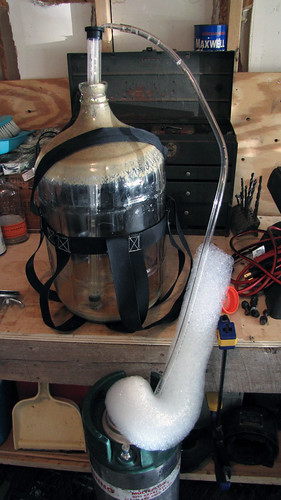
(The dish soap likely makes seanmpuckett's mixture useless for brewing.)
posted by uncleozzy at 12:41 PM on February 18, 2010 [1 favorite]
What is the underlying technology that's supposedly been used for decades to clean hotels and restaurants? bleach?
I read the "explanation" of the technology and it didn't make sense to me. I'm a biochemist so I know something about stuff like electrolysis and ion exchange, but the web site just sounds like bafflegab. I'm not an expert on cleaning/sanitization technology, though, so I don't want to overstate my position. But still, ion exchange membranes? Do they mean reverse osmosis? And if so, then ... what?
posted by Quietgal at 12:54 PM on February 18, 2010
I read the "explanation" of the technology and it didn't make sense to me. I'm a biochemist so I know something about stuff like electrolysis and ion exchange, but the web site just sounds like bafflegab. I'm not an expert on cleaning/sanitization technology, though, so I don't want to overstate my position. But still, ion exchange membranes? Do they mean reverse osmosis? And if so, then ... what?
posted by Quietgal at 12:54 PM on February 18, 2010
if Alton Brown starts endorsing High Fructose Corn Syrup tomorrow
Close enough.
Also.
posted by Splunge at 12:57 PM on February 18, 2010
Close enough.
Also.

posted by Splunge at 12:57 PM on February 18, 2010
To be fair to Alton Brown, he's holding a bottle of Welch's 100% grape juice, which according to their site, do not contain any added sugar.
Now, you jump on him for promoting sugary juice or crappy lite beer, just because it's sugary juice and crappy lite beer, and I won't argue with that. But it's not like we're talking about hyper-processed cheez-whiz here.
posted by Cool Papa Bell at 1:12 PM on February 18, 2010
Now, you jump on him for promoting sugary juice or crappy lite beer, just because it's sugary juice and crappy lite beer, and I won't argue with that. But it's not like we're talking about hyper-processed cheez-whiz here.
posted by Cool Papa Bell at 1:12 PM on February 18, 2010
Because right now it looks like you basically just posted the equivalent of a press release to MeFi.
That's what we do on MeFi these days. Gripe about it all you want, it doesn't seem to make any difference any more. Pepsi Blue won.
posted by five fresh fish at 1:14 PM on February 18, 2010
That's what we do on MeFi these days. Gripe about it all you want, it doesn't seem to make any difference any more. Pepsi Blue won.
posted by five fresh fish at 1:14 PM on February 18, 2010
crappy lite beer [...] it's not like we're talking about hyper-processed cheez-whiz here
I don't have a problem with the juice--it's juice--but light beer... I'm not going to say definitively that Miller Lite has weird, non-beer ingredients (brewers aren't required to say), but you can't make a product like that without a little creative chemistry.
posted by uncleozzy at 1:24 PM on February 18, 2010
I don't have a problem with the juice--it's juice--but light beer... I'm not going to say definitively that Miller Lite has weird, non-beer ingredients (brewers aren't required to say), but you can't make a product like that without a little creative chemistry.
posted by uncleozzy at 1:24 PM on February 18, 2010
It's only a matter of time before my (up until last week or so) favorite Mr. Nye tells us that if we don't believe it works - we are being unpatriotic.
posted by winks007 at 1:24 PM on February 18, 2010
posted by winks007 at 1:24 PM on February 18, 2010
I believe I have seen one of these at work in the wild, as it were. The boy and I had dinner at Bardessono in Yountville a while back for my birthday. In addition to their absolutely riveting Japanese toilets (seriously, people would to to the restroom and not come back for 15 minutes), one of the main selling points of the hotel and restaurant is the sustainable and environmentally friendly design. I read they just got platinum LEED certification.
Anyway, it was a late dinner and toward the end, I saw a woman start wiping down the other tables. But she was wielding what appeared to be a plastic spray bottle with a green light inside. It was oddly pretty in an "I like shiny things" way, but seemed pointless, like a prop they would have made for an episode of Star Trek TNG focused on the ship's cleaning staff. I'm a little relieved to know that, at least in theory, it wasn't just for show.
posted by mostlymartha at 1:33 PM on February 18, 2010 [1 favorite]
Anyway, it was a late dinner and toward the end, I saw a woman start wiping down the other tables. But she was wielding what appeared to be a plastic spray bottle with a green light inside. It was oddly pretty in an "I like shiny things" way, but seemed pointless, like a prop they would have made for an episode of Star Trek TNG focused on the ship's cleaning staff. I'm a little relieved to know that, at least in theory, it wasn't just for show.
posted by mostlymartha at 1:33 PM on February 18, 2010 [1 favorite]
But he's not an objective source, and he's giving scientific explanations about how their product works in a manner that suggests he's unbiased.
On the contrary, it was pretty obvious to me watching the video that this was a paid, well-produced endorsement. He's explaining the science behind it, yeah, but nothing about that video screams "unpaid objective testimonial" to me.
posted by middleclasstool at 1:57 PM on February 18, 2010
On the contrary, it was pretty obvious to me watching the video that this was a paid, well-produced endorsement. He's explaining the science behind it, yeah, but nothing about that video screams "unpaid objective testimonial" to me.
posted by middleclasstool at 1:57 PM on February 18, 2010
On the contrary, it was pretty obvious to me watching the video that this was a paid, well-produced endorsement. He's explaining the science behind it, yeah, but nothing about that video screams "unpaid objective testimonial" to me.
posted by middleclasstool at 4:57 PM on February 18 [+] [!]
Well, I think most accurately, (and right out of Cialdini's Influence: The Psychology of Persuasion) he's capitalizing on his objective Bill Nye the science guy image (and all the attendant goodwill of science explaining that he's built up there) to convince us that there is some scientific basis behind the claims of the of ActiveIon.
Because otherwise you have a mechanical engineer with a TV show, and why would we expect him to know anything about how this cleaning product works? He's not a chemist.
I don't know, I, like Bill Nye, am a mechanical engineer and not a chemist. For all I know Bill Nye really bought into their explanation, which doesn't mean he's a shill, it means we're expecting an awful lot from Bill Nye.
I mean, he's Bill Nye, science guy, not Bill Nye the All-Knowing, Master of All Sciences Ever.
posted by Comrade_robot at 2:11 PM on February 18, 2010
posted by middleclasstool at 4:57 PM on February 18 [+] [!]
Well, I think most accurately, (and right out of Cialdini's Influence: The Psychology of Persuasion) he's capitalizing on his objective Bill Nye the science guy image (and all the attendant goodwill of science explaining that he's built up there) to convince us that there is some scientific basis behind the claims of the of ActiveIon.
Because otherwise you have a mechanical engineer with a TV show, and why would we expect him to know anything about how this cleaning product works? He's not a chemist.
I don't know, I, like Bill Nye, am a mechanical engineer and not a chemist. For all I know Bill Nye really bought into their explanation, which doesn't mean he's a shill, it means we're expecting an awful lot from Bill Nye.
I mean, he's Bill Nye, science guy, not Bill Nye the All-Knowing, Master of All Sciences Ever.
posted by Comrade_robot at 2:11 PM on February 18, 2010
The best part of this whole post is the revelation (from his CV) that Bill Nye has a patent on a pointe shoes for ballet!
posted by ChuraChura at 2:27 PM on February 18, 2010
posted by ChuraChura at 2:27 PM on February 18, 2010
Skeptical about its effectiveness in the home. While ionized water would work well for dust and dirt, it wouldn't be very effective with organic matter like water insoluble grease. Soap works great because the saponification of an ester like animal fat or vege oil give the chain a ionic charged end O-Na+ and a hydrocarbon chain that's exhibits Van del Waals effect.
In chemistry, like attract like. No hydrocarbons means you're not gonna clean any stove tops with this stuff.
posted by MiltonRandKalman at 3:41 PM on February 18, 2010
In chemistry, like attract like. No hydrocarbons means you're not gonna clean any stove tops with this stuff.
posted by MiltonRandKalman at 3:41 PM on February 18, 2010
On the contrary, it was pretty obvious to me watching the video that this was a paid, well-produced endorsement. He's explaining the science behind it, yeah, but nothing about that video screams "unpaid objective testimonial" to me.
He's an educator, and his program is produced by public television, which means that it is not a commercial enterprise. PBS educational and news shows are commercially underwritten, so viewers can be sure that they are free of influence from advertisers. Nye is using his "science guy" persona, which has an established reputation as being objective, unbiased and uninfluenced by financial obligations, to shill for a product.
The entire premise of that persona is "unpaid objective testimonial." Because of this, the lack of overt disclosure and use of his own brand (seen by many as entirely objective and above reproach,) is pretty slimy.
Is it illegal? Nope. He's not misleading the public. Well, no more than most marketing hype that would have us believe.
posted by zarq at 4:04 PM on February 18, 2010
He's an educator, and his program is produced by public television, which means that it is not a commercial enterprise. PBS educational and news shows are commercially underwritten, so viewers can be sure that they are free of influence from advertisers. Nye is using his "science guy" persona, which has an established reputation as being objective, unbiased and uninfluenced by financial obligations, to shill for a product.
The entire premise of that persona is "unpaid objective testimonial." Because of this, the lack of overt disclosure and use of his own brand (seen by many as entirely objective and above reproach,) is pretty slimy.
Is it illegal? Nope. He's not misleading the public. Well, no more than most marketing hype that would have us believe.
posted by zarq at 4:04 PM on February 18, 2010
Fox News is going to be disappointed they covered it when they realize that the effect of ionization on free radicals doesn't mean what they think it does.
posted by BrotherCaine at 7:01 PM on February 18, 2010 [2 favorites]
posted by BrotherCaine at 7:01 PM on February 18, 2010 [2 favorites]
Wow, y'all are making a ton of claims, but I seem to see a decent amount of links suggesting this stuff actually works in solid studies:
Electrolyzed water effective as chemical cleaner, study finds
Environmentally-Benign Cleaning for Giga DRAM Using Electrolyzed Water
Electrolyzed Water as the Novel Cleaning Media in Ultra-Large-Scale Integration and Liquid-Crystal Display Manufacturing
Efficacy of electrolyzed water as a primary cleaning agent.
Cleaning With Water
Simple elixir called a 'miracle liquid'
From one of the links:
Bill Nye, The Science Guy: 1
Haters: 0
(Now, you're welcome to claim "there's no reason to believe this thing does as much ionization as when there's a bit of salt", but it's possible the impurities in tap water are enough to operate roughly the same way, especially since the ionization is delivered within seconds of the necessary cleaning action.)
posted by effugas at 8:28 PM on February 18, 2010
Electrolyzed water effective as chemical cleaner, study finds
Environmentally-Benign Cleaning for Giga DRAM Using Electrolyzed Water
Electrolyzed Water as the Novel Cleaning Media in Ultra-Large-Scale Integration and Liquid-Crystal Display Manufacturing
Efficacy of electrolyzed water as a primary cleaning agent.
Cleaning With Water
Simple elixir called a 'miracle liquid'
From one of the links:
Alkaline (AIEW) and acidic electrolysed water (AcEW) were prepared by the electrolysis of a dilute sodium nitrate solution. The efficacy of AIEW (pH 11.5) in removing the gelatin deposited on stainless steel particles was compared with that of warm deionized water (DIW; pH 5.7) at various temperatures of 20 to 80°C. The efficiency of the DIW cleaning increased with increasing temperatures from 20 to 70°C, whereas it decreased to some extent at 80°C. On the other hand, the efficiency of AIEW cleaning increased with increasing temperatures up to 50°C, above which it decreased gradually. AIEW cleaning was shown to be by far more effective in removing gelatin than warm DIW cleaning, and its optimum temperature was 50°C. AcEW cleaning removed calcium hydrogenphosphate deposited on stainless steel particles, depending on the solution pH, and resulted in the modification of the surface charge of stainless steel particles, due to the oxidizing action of nitrate in AcEW.Well then, I think I'm going to score this as:
Bill Nye, The Science Guy: 1
Haters: 0
(Now, you're welcome to claim "there's no reason to believe this thing does as much ionization as when there's a bit of salt", but it's possible the impurities in tap water are enough to operate roughly the same way, especially since the ionization is delivered within seconds of the necessary cleaning action.)
posted by effugas at 8:28 PM on February 18, 2010
Er,
Nobody's suggesting that it doesn't work -- I do suggest, however, that it doesn't work the way he says it does and that as per the link above, a dilute bleach solution is being generated. And I can buy bleach for like 2 bucks a gallon.
Another useful product generated by the electrolysis of weak brine is sodium hypochlorite, otherwise known as "bleach." Sodium hypochlorite cells generally do not require saturated brine, but can utilize weak brine or even seawater. Bleach is produced "on-site" for disinfection of drinking water and wastewater. The cells employed for this purpose are the same as those used for chlorate manufacture, that is, they consist of an anode and a cathode without a separator or diaphragm. The anodic and the cathodic reactions are the same as in chlor-alkali and chlorate cells, the difference being the pH of the electrolyte, which is maintained in the range of 10 to 12. The electrolytically generated chlorine reacts with sodium hydroxide to form sodium hypochlorite. However, the hypochlorite ion, formed in the bulk, is easily reduced at the cathode to reform chloride. Therefore, only dilute solutions of bleach can be produced in the cell. Hypochlorite can also react further to form chlorate, but this can be minimized by keeping the solution basic and the temperature low (close to room temperature).
Or,
In-situ production of sodium hypochlorite is one of the oldest electrochemical processes of the chemical industry. During the past twenty years a new in-situ hypochlorite industry has developed. Construction and performance of present-day cells are considered in detail. Modern cells are fed with seawater or similar weak brines and yield solutions suitable for disinfection, e. g. in breweries, laundries, etc., or for treatment of municipal sewage. Particular importance attaches to units for chlorination of cooling water for power stations or on board ships, thus hindering growth of organisms leading to operating failures. The article closes by considering development trends.
posted by Comrade_robot at 8:55 PM on February 18, 2010
Nobody's suggesting that it doesn't work -- I do suggest, however, that it doesn't work the way he says it does and that as per the link above, a dilute bleach solution is being generated. And I can buy bleach for like 2 bucks a gallon.
Another useful product generated by the electrolysis of weak brine is sodium hypochlorite, otherwise known as "bleach." Sodium hypochlorite cells generally do not require saturated brine, but can utilize weak brine or even seawater. Bleach is produced "on-site" for disinfection of drinking water and wastewater. The cells employed for this purpose are the same as those used for chlorate manufacture, that is, they consist of an anode and a cathode without a separator or diaphragm. The anodic and the cathodic reactions are the same as in chlor-alkali and chlorate cells, the difference being the pH of the electrolyte, which is maintained in the range of 10 to 12. The electrolytically generated chlorine reacts with sodium hydroxide to form sodium hypochlorite. However, the hypochlorite ion, formed in the bulk, is easily reduced at the cathode to reform chloride. Therefore, only dilute solutions of bleach can be produced in the cell. Hypochlorite can also react further to form chlorate, but this can be minimized by keeping the solution basic and the temperature low (close to room temperature).
Or,
In-situ production of sodium hypochlorite is one of the oldest electrochemical processes of the chemical industry. During the past twenty years a new in-situ hypochlorite industry has developed. Construction and performance of present-day cells are considered in detail. Modern cells are fed with seawater or similar weak brines and yield solutions suitable for disinfection, e. g. in breweries, laundries, etc., or for treatment of municipal sewage. Particular importance attaches to units for chlorination of cooling water for power stations or on board ships, thus hindering growth of organisms leading to operating failures. The article closes by considering development trends.
posted by Comrade_robot at 8:55 PM on February 18, 2010
Well, one thing for sure: next time I need to remove calcium hydrogenphosphate deposited on stainless steel particles, I'm turning to The Ionator-or-or-or. The Ionator will clean that calcium hydrogenphosphate right off those stainless steel particles! And you know, and I know, that you do not want calcium hydrogenphosphate on your stainless steel particles — so make sure you use The Ionato-or-or-or to clean your stainless steel particles!
posted by five fresh fish at 9:18 PM on February 18, 2010 [1 favorite]
posted by five fresh fish at 9:18 PM on February 18, 2010 [1 favorite]
Oh no! How did those heirloom steel shotgun pellets get into Aunt Mabel's Jell-O salad? Time to call the Ionator Home&trade!
posted by benzenedream at 11:10 PM on February 18, 2010
posted by benzenedream at 11:10 PM on February 18, 2010
I'm reminded of watching Rich Koz on The Koz Zone as a kid and seeing his faux commercial for "Age 2 Whoa!"
It's definitely time for Consumer Reports. Though if you have kids and were going to get one of these things anyways, it seems like it would make a great science fair project. Have the kid swab a counter, look at the microbe count under a microscope, then clean it with this and swab again. Or heck, just take the 2 samples before and after cleaning and swipe them on a petri dish with agar.
posted by IndigoRain at 12:37 AM on February 19, 2010
It's definitely time for Consumer Reports. Though if you have kids and were going to get one of these things anyways, it seems like it would make a great science fair project. Have the kid swab a counter, look at the microbe count under a microscope, then clean it with this and swab again. Or heck, just take the 2 samples before and after cleaning and swipe them on a petri dish with agar.
posted by IndigoRain at 12:37 AM on February 19, 2010
oh, bill of the nye...
we like this idea
but i suspect that hundreds of dollars is a stretch
when i know i could build a similar device
out of a nine volt battery.
( i actually crashed into mr. nye skiing on the slopes one day in Washington. He was not pleased.)
posted by vantam at 2:43 AM on February 19, 2010
we like this idea
but i suspect that hundreds of dollars is a stretch
when i know i could build a similar device
out of a nine volt battery.
( i actually crashed into mr. nye skiing on the slopes one day in Washington. He was not pleased.)
posted by vantam at 2:43 AM on February 19, 2010
Graaaar. 4pts distilled water, 2pt white vinegar, 1pt isopropyl alcohol, 2 drops dish detergent. In a spray bottle. Nothing beats it. Nothing.
posted by seanmpuckett at 12:18 PM on February 18 [9 favorites +] [!]
I was going to make a remark about the difficulty of finding a 7-pint capacity spray bottle, but I realized just in time.
posted by primer_dimer at 4:36 AM on February 19, 2010 [4 favorites]
posted by seanmpuckett at 12:18 PM on February 18 [9 favorites +] [!]
I was going to make a remark about the difficulty of finding a 7-pint capacity spray bottle, but I realized just in time.
posted by primer_dimer at 4:36 AM on February 19, 2010 [4 favorites]
I very much doubt the dissolved minerals in tap water are enough to do anything but improve the conductivity a bit. They're certainly not producing any meaningful quantity of bleach. The weak solution of salts that Wikipedia talks about is probably more like seawater than tap water. Same with the various other industrial ionized water solutions.
posted by rusty at 6:25 AM on February 19, 2010
posted by rusty at 6:25 AM on February 19, 2010
I very much doubt the dissolved minerals in tap water are enough to do anything but improve the conductivity a bit. They're certainly not producing any meaningful quantity of bleach. The weak solution of salts that Wikipedia talks about is probably more like seawater than tap water. Same with the various other industrial ionized water solutions.
posted by rusty at 9:25 AM on February 19 [+] [!]
Wellll ... maybe, maybe not. I'm just a poor lil' mechanical engineer, just like Bill Nye, but it looks like ActiveIon is licensing this technology from the Tennant Company. The Tennant Company holds a bunch of patents (including one for the light up bottle), but, rather significantly, one of them is:
ATOMIZER USING ELECTROLYZED LIQUID AND METHOD THEREFOR
Bruce F. Field
Application number: 12/481,098
Publication number: US 2009/0311137 A1
Filing date: Jun 9, 2009
Furthermore, since regular tap water typically includes sodium chloride and/or other chlorides, the anode 30 oxidizes the chlorides present to form chlorine gas. As a result, a substantial amount of chlorine is produced and the pH of the anolyte composition 34 becomes increasingly acidic over time. 0034 As noted, water molecules in contact with the cathone 32 are electrochemically reduced to hydrogen gas and hydroxyl ions (OH-) while cations in the anode chamber 24 pass through the cation-exchange membrane 29 into the cathode chamber 26 ... these cations are available to ionically associate with the hydroxyl ions produced at the cathode 32 while hydrogen gas bubbles form in the liquid. A substantial amount of hyroxyl ions accumulates over time in the cathode chamber and reacts with cations to form basic hydroxides. In addition, the hydroxides remain confined to the cathode chamber 26 since the cation-exhcnage membrane does not allow the negatively charged hydroxyl ions pass through the cation-exchange membrane. Consequently, a substantial amount of hydroxides is produced in the cathode chamber 26 ...
If you can take the trouble to look at the first comment (from wikipedia) I made on this posting:
At the anode, chloride ions are oxidized to elemental chlorine. If some of this chlorine is allowed to combine with some of the hydroxide ions produced at the cathode, it disproportionates into hypochlorous acid, a weak acid and an oxidizing agent.[2] This "acidic electrolyzed water" can be raised in pH by mixing in the desired amount of hydroxide ion solution from the cathode compartment, yielding a solution of sodium hypochlorite NaOCl which is the major component of ordinary household laundry bleach.
To summarize: It's bleach.
posted by Comrade_robot at 7:04 AM on February 19, 2010 [2 favorites]
posted by rusty at 9:25 AM on February 19 [+] [!]
Wellll ... maybe, maybe not. I'm just a poor lil' mechanical engineer, just like Bill Nye, but it looks like ActiveIon is licensing this technology from the Tennant Company. The Tennant Company holds a bunch of patents (including one for the light up bottle), but, rather significantly, one of them is:
ATOMIZER USING ELECTROLYZED LIQUID AND METHOD THEREFOR
Bruce F. Field
Application number: 12/481,098
Publication number: US 2009/0311137 A1
Filing date: Jun 9, 2009
Furthermore, since regular tap water typically includes sodium chloride and/or other chlorides, the anode 30 oxidizes the chlorides present to form chlorine gas. As a result, a substantial amount of chlorine is produced and the pH of the anolyte composition 34 becomes increasingly acidic over time. 0034 As noted, water molecules in contact with the cathone 32 are electrochemically reduced to hydrogen gas and hydroxyl ions (OH-) while cations in the anode chamber 24 pass through the cation-exchange membrane 29 into the cathode chamber 26 ... these cations are available to ionically associate with the hydroxyl ions produced at the cathode 32 while hydrogen gas bubbles form in the liquid. A substantial amount of hyroxyl ions accumulates over time in the cathode chamber and reacts with cations to form basic hydroxides. In addition, the hydroxides remain confined to the cathode chamber 26 since the cation-exhcnage membrane does not allow the negatively charged hydroxyl ions pass through the cation-exchange membrane. Consequently, a substantial amount of hydroxides is produced in the cathode chamber 26 ...
If you can take the trouble to look at the first comment (from wikipedia) I made on this posting:
At the anode, chloride ions are oxidized to elemental chlorine. If some of this chlorine is allowed to combine with some of the hydroxide ions produced at the cathode, it disproportionates into hypochlorous acid, a weak acid and an oxidizing agent.[2] This "acidic electrolyzed water" can be raised in pH by mixing in the desired amount of hydroxide ion solution from the cathode compartment, yielding a solution of sodium hypochlorite NaOCl which is the major component of ordinary household laundry bleach.
To summarize: It's bleach.
posted by Comrade_robot at 7:04 AM on February 19, 2010 [2 favorites]
You know what I have pumped into my home?
Water.
You know what else is sent to my place?
Electricity.
You know what I have to go out and buy, and then try to mix in in nontoxic quantities?
Bleach.
You know what this thing stops me having to do?
That.
posted by effugas at 11:24 AM on February 19, 2010
Water.
You know what else is sent to my place?
Electricity.
You know what I have to go out and buy, and then try to mix in in nontoxic quantities?
Bleach.
You know what this thing stops me having to do?
That.
posted by effugas at 11:24 AM on February 19, 2010
Nobody's suggesting that it doesn't work
"I want so much not to think of Bill Nye as a shill. This stuff had better be amazing."
"Wow, if it has the coveted stamp of approval from noted mother, actor, and producer Laura Dern, I will definitely be making room for this under my sink!"
"Tautology. The bigger the pile of horse shit, the bigger the celebrity required to move it."
"So the real news here is that Bill Nye can no longer be trusted?"
"This is not total woo, but the science is overblown and the device is overpriced."
"This is mostly water mixed with a relatively small amount of electrically charged horse shit."
"It really makes me sad that I have to mentally change his name now...Bill Nye the Science* Guy"
"Because otherwise you have a mechanical engineer with a TV show, and why would we expect him to know anything about how this cleaning product works? He's not a chemist."
Yes. When you attack Bill Nye for vouching for this, you're saying "I can't believe this guy we trusted is vouching for something that doesn't work." Meanwhile, the science is pretty damn good on the basic concept.
posted by effugas at 11:59 AM on February 19, 2010
"I want so much not to think of Bill Nye as a shill. This stuff had better be amazing."
"Wow, if it has the coveted stamp of approval from noted mother, actor, and producer Laura Dern, I will definitely be making room for this under my sink!"
"Tautology. The bigger the pile of horse shit, the bigger the celebrity required to move it."
"So the real news here is that Bill Nye can no longer be trusted?"
"This is not total woo, but the science is overblown and the device is overpriced."
"This is mostly water mixed with a relatively small amount of electrically charged horse shit."
"It really makes me sad that I have to mentally change his name now...Bill Nye the Science* Guy"
"Because otherwise you have a mechanical engineer with a TV show, and why would we expect him to know anything about how this cleaning product works? He's not a chemist."
Yes. When you attack Bill Nye for vouching for this, you're saying "I can't believe this guy we trusted is vouching for something that doesn't work." Meanwhile, the science is pretty damn good on the basic concept.
posted by effugas at 11:59 AM on February 19, 2010
“Tautology. The bigger the pile of horse shit, the bigger the celebrity required to move it.”
*burly bearded man in flannel shirt*
Hi! It’s Heracles here for Alpheus & Peneus brand miracle cleaner!
When I’m up against 12 labors, that’s when Heracles performs best and when I need to clean gigantic piles of horse shit I use Alpheus & Peneus. Just divert two rivers, and the shit is gone! That’s the power of Alpheus & Peneus!
*crowd goes wild with enthusiasm *
Sure it costs a little more, up to one tenth of your cattle, but if you don’t buy it, I’ll kill you with a club, build a stadium on your house and throw a discus around with some nude men.
*crowd less enthusiastic*
CHORUS: Hail famous singing sensation Linus!
*Linus enters with a guitar*
Linus: Waitaminute Herc, I can’t believe that Alpheus & Peneus does all that?!
Hercules: BE SILENT! *smashes him repeatedly with guitar *
*long pause, crowd tentative*
But wait, if you call in the next five minutes I’ll throw in a genuine Nemean Lion skin replica. You get two riverfuls of Alpheus & Peneus AND the famous Nemean Lion skin all for the low low price of one tenth your cattle.
*crowd boos/catcalls ‘too much’*
Be silent! Or by Zeus I will drag Cerberus choking blood from Hades and let him devour you all!
*long pause in silence *
Ok, I’ll throw in the apples from the garden of the Hesperides.
*wild enthusiasm from the crowd *
posted by Smedleyman at 12:19 PM on February 19, 2010 [1 favorite]
*burly bearded man in flannel shirt*
Hi! It’s Heracles here for Alpheus & Peneus brand miracle cleaner!
When I’m up against 12 labors, that’s when Heracles performs best and when I need to clean gigantic piles of horse shit I use Alpheus & Peneus. Just divert two rivers, and the shit is gone! That’s the power of Alpheus & Peneus!
*crowd goes wild with enthusiasm *
Sure it costs a little more, up to one tenth of your cattle, but if you don’t buy it, I’ll kill you with a club, build a stadium on your house and throw a discus around with some nude men.
*crowd less enthusiastic*
CHORUS: Hail famous singing sensation Linus!
*Linus enters with a guitar*
Linus: Waitaminute Herc, I can’t believe that Alpheus & Peneus does all that?!
Hercules: BE SILENT! *smashes him repeatedly with guitar *
*long pause, crowd tentative*
But wait, if you call in the next five minutes I’ll throw in a genuine Nemean Lion skin replica. You get two riverfuls of Alpheus & Peneus AND the famous Nemean Lion skin all for the low low price of one tenth your cattle.
*crowd boos/catcalls ‘too much’*
Be silent! Or by Zeus I will drag Cerberus choking blood from Hades and let him devour you all!
*long pause in silence *
Ok, I’ll throw in the apples from the garden of the Hesperides.
*wild enthusiasm from the crowd *
posted by Smedleyman at 12:19 PM on February 19, 2010 [1 favorite]
No, I'm pretty sure that's not what I am saying. If you think that's what I'm saying, I apologize, let me try to state my point more clearly.
This machine makes small amounts of bleach.
Bleach is an effective disinfectant. I use it to clean stuff all the time.
Bleach is fairly cheap.
You can buy bleach at the store.
It costs like two dollars for a gallon bottle of bleach.
That's a very expensive machine for making little amounts of bleach at home.
Because you can buy bleach fairly cheaply.
Does this machine work?
In the sense that this machine produces bleach, which is an effective disinfectant, yes, this machine works.
Bill Nye plays a character on a TV show known as Bill Nye the Science Guy. Bill Nye the Science Guy is known for explaining scientific principles in a simple to understand manner. Bill Nye is using the Bill Nye the Science Guy persona to sell a home bleach generator while not explaining that this is, indeed, a home bleach generator. This generator is expensive. Bleach is not.
The science behind making bleach using electrolysis is sound. The use of bleach as a disinfectant is sound. The economics of buying a home bleach maker is not.
Yes? Do I need to explain further? Or again?
posted by Comrade_robot at 12:39 PM on February 19, 2010 [1 favorite]
This machine makes small amounts of bleach.
Bleach is an effective disinfectant. I use it to clean stuff all the time.
Bleach is fairly cheap.
You can buy bleach at the store.
It costs like two dollars for a gallon bottle of bleach.
That's a very expensive machine for making little amounts of bleach at home.
Because you can buy bleach fairly cheaply.
Does this machine work?
In the sense that this machine produces bleach, which is an effective disinfectant, yes, this machine works.
Bill Nye plays a character on a TV show known as Bill Nye the Science Guy. Bill Nye the Science Guy is known for explaining scientific principles in a simple to understand manner. Bill Nye is using the Bill Nye the Science Guy persona to sell a home bleach generator while not explaining that this is, indeed, a home bleach generator. This generator is expensive. Bleach is not.
The science behind making bleach using electrolysis is sound. The use of bleach as a disinfectant is sound. The economics of buying a home bleach maker is not.
Yes? Do I need to explain further? Or again?
posted by Comrade_robot at 12:39 PM on February 19, 2010 [1 favorite]
Comrade--
Some people don't want a gallon jug of poison lying around, if they can avoid it.
posted by effugas at 1:04 PM on February 19, 2010
Some people don't want a gallon jug of poison lying around, if they can avoid it.
posted by effugas at 1:04 PM on February 19, 2010
I can still stand by my mockery of Laura Dern without running the risk of being on the receiving end of a stern fisking though, right?
posted by Alvy Ampersand at 1:17 PM on February 19, 2010
posted by Alvy Ampersand at 1:17 PM on February 19, 2010
primer_dimer: "I was going to make a remark about the difficulty of finding a 7-pint capacity spray bottle, but I realized just in time."
Yeah, a 7-pint bottle would overflow when you put in the two drops of dish detergent.
posted by Plutor at 3:02 PM on February 19, 2010
Yeah, a 7-pint bottle would overflow when you put in the two drops of dish detergent.
posted by Plutor at 3:02 PM on February 19, 2010
i actually crashed into mr. nye skiing on the slopes one day in Washington. He was not pleased.
Inertia is a property of matter!
posted by phrontist at 7:30 PM on February 19, 2010
Inertia is a property of matter!
posted by phrontist at 7:30 PM on February 19, 2010
The trick, effugas, is to purchase a 1oz eyedropper bottle. Go to your neighbour. As him or her to fill said 1oz bottle. Go home, add two drops bleach to spraybottle of water. Secure 1oz bottle where you keep your other household poisons, like liquor, paint, and cocaine.
Problem solved for about a buck. Donate the other $149 to charity.
posted by five fresh fish at 7:43 PM on February 19, 2010
Problem solved for about a buck. Donate the other $149 to charity.
posted by five fresh fish at 7:43 PM on February 19, 2010
« Older Political Insiders Are the New Political Outsiders | Student observed plagiarizing 1984 Newer »
This thread has been archived and is closed to new comments
The electrolysis occurs in a specially designed reactor which allows the separation of the cathodic and anodic solutions. In this process, hydrogen gas and hydroxide ions are produced at the cathode, leading to an alkaline solution that consists essentially of sodium hydroxide. At the anode, chloride ions are oxidized to elemental chlorine. If some of this chlorine is allowed to combine with some of the hydroxide ions produced at the cathode, it disproportionates into hypochlorous acid, a weak acid and an oxidizing agent.[2] This "acidic electrolyzed water" can be raised in pH by mixing in the desired amount of hydroxide ion solution from the cathode compartment, yielding a solution of sodium hypochlorite NaOCl which is the major component of ordinary household laundry bleach.
posted by Comrade_robot at 9:47 AM on February 18, 2010 [5 favorites]