Lady Gaga discusses the human form
April 27, 2010 9:14 AM Subscribe
An essay on perceptions of the human body, written before Lady Gaga was Lady Gaga Love her or hate her, there's a lot more going on in her head then the average pop star.
Oh man, how I would pay good money to see it revealed that her college essay was bought online...
posted by Cool Papa Bell at 9:18 AM on April 27, 2010
posted by Cool Papa Bell at 9:18 AM on April 27, 2010
yet, she misused "it's" when she REALLY wanted "its."
BURN HER WITH FIRE AND DENY HER A GRAMMY!
posted by Windigo at 9:20 AM on April 27, 2010 [7 favorites]
BURN HER WITH FIRE AND DENY HER A GRAMMY!
posted by Windigo at 9:20 AM on April 27, 2010 [7 favorites]
It's a college paper. There are other pop stars who went to college.
posted by neroli at 9:20 AM on April 27, 2010 [15 favorites]
posted by neroli at 9:20 AM on April 27, 2010 [15 favorites]
I'm 12 and what is this
posted by adipocere at 9:23 AM on April 27, 2010 [12 favorites]
posted by adipocere at 9:23 AM on April 27, 2010 [12 favorites]
B-
posted by IjonTichy at 9:25 AM on April 27, 2010 [2 favorites]
posted by IjonTichy at 9:25 AM on April 27, 2010 [2 favorites]
I like it. I like her. She is the American Bjork.
posted by jbickers at 9:26 AM on April 27, 2010 [18 favorites]
posted by jbickers at 9:26 AM on April 27, 2010 [18 favorites]
> yet, she misused "it's" when she REALLY wanted "its."
> BURN HER WITH FIRE AND DENY HER A GRAMMY!
I know the name is misleading, but a Grammy is not a grammar award.
posted by keepoutofreach at 9:27 AM on April 27, 2010 [106 favorites]
> BURN HER WITH FIRE AND DENY HER A GRAMMY!
I know the name is misleading, but a Grammy is not a grammar award.
posted by keepoutofreach at 9:27 AM on April 27, 2010 [106 favorites]
An internet thread about women, pop culture, beauty and intelligence. This will end well.
posted by DU at 9:27 AM on April 27, 2010 [17 favorites]
posted by DU at 9:27 AM on April 27, 2010 [17 favorites]
I feel like every time I read an anything about the physical body and/or gender and/or social aspects of these things, the Foucault name-drop is really just a matter of time.
When someone's work is as important as Foucault's is for a given topic, you're often faulted if you don't at least display some knowledge of it. It would be like discussing Realist IR without acknowledging Morgenthau's influence. You can sometimes get away with it, but often you'd just look ignorant of the history of your topic.
posted by Kurichina at 9:30 AM on April 27, 2010 [4 favorites]
When someone's work is as important as Foucault's is for a given topic, you're often faulted if you don't at least display some knowledge of it. It would be like discussing Realist IR without acknowledging Morgenthau's influence. You can sometimes get away with it, but often you'd just look ignorant of the history of your topic.
posted by Kurichina at 9:30 AM on April 27, 2010 [4 favorites]
I like to imagine that there was no Stephani Germanotta and that instead Lady Gaga emerged from the Large Hadron Collider when it exploded. And then a flimsy "prior" identity was created just like was done with Obama's birth certificate.
As for why Just Dance came out before the collider was turned on: Tachyons.
posted by mccarty.tim at 9:30 AM on April 27, 2010 [44 favorites]
As for why Just Dance came out before the collider was turned on: Tachyons.
posted by mccarty.tim at 9:30 AM on April 27, 2010 [44 favorites]
yet, she misused "it's" when she REALLY wanted "its."
...and used "artist's" and "artists" in the same sentence (neither as a possessive).
posted by rocket88 at 9:31 AM on April 27, 2010
...and used "artist's" and "artists" in the same sentence (neither as a possessive).
posted by rocket88 at 9:31 AM on April 27, 2010
As far as style goes, you tell me whose better. And this is live. And Dale Bozzio probably had no desire to do anything else. Gaga and Stefani need to pay this woman. And this was off subject, I know, but I'm tired of all the Gaga talk.
posted by Flex1970 at 9:31 AM on April 27, 2010 [3 favorites]
posted by Flex1970 at 9:31 AM on April 27, 2010 [3 favorites]
I found Ke$ha's PhD dissertation to be unoriginal and rambling, but this is good.
posted by stupidsexyFlanders at 9:32 AM on April 27, 2010 [31 favorites]
posted by stupidsexyFlanders at 9:32 AM on April 27, 2010 [31 favorites]
Academic adventures of musicians ahoy: Greg Graffin from Bad Religion has a PhD in Zoology from Cornell. His dissertation was "Monism, Atheism and the Naturalist Worldview: Perspectives from Evolutionary Biology," and he now teaches science courses at UCLA.
posted by Sticherbeast at 9:34 AM on April 27, 2010 [7 favorites]
posted by Sticherbeast at 9:34 AM on April 27, 2010 [7 favorites]
Although Dale Bozzio WAS a Playboy Bunny...
(I've been saying Gaga is the 00s Bozzio for MONTHS now)
posted by bitter-girl.com at 9:34 AM on April 27, 2010
(I've been saying Gaga is the 00s Bozzio for MONTHS now)
posted by bitter-girl.com at 9:34 AM on April 27, 2010
yet, she misused "it's" when she REALLY wanted "its."
...and used "artist's" and "artists" in the same sentence (neither as a possessive).
She, also, over-used, her, commas.
posted by zarq at 9:38 AM on April 27, 2010 [1 favorite]
...and used "artist's" and "artists" in the same sentence (neither as a possessive).
She, also, over-used, her, commas.
posted by zarq at 9:38 AM on April 27, 2010 [1 favorite]
I found that essay to be terribly poorly written...
posted by HuronBob at 9:38 AM on April 27, 2010 [5 favorites]
posted by HuronBob at 9:38 AM on April 27, 2010 [5 favorites]
Who here is mad that the current single is Alejandro and not Teeth? I mean, the video writes itself, which is too easy. Lady Gaga and Beyonce go to Mexico to flee the police, Gaga falls for some Mexican guys.
posted by mccarty.tim at 9:39 AM on April 27, 2010 [1 favorite]
posted by mccarty.tim at 9:39 AM on April 27, 2010 [1 favorite]
Gaga and Stefani need to pay this woman.
Actually, the woman they need to pay is Grace Jones.
posted by blucevalo at 9:42 AM on April 27, 2010 [8 favorites]
Actually, the woman they need to pay is Grace Jones.
posted by blucevalo at 9:42 AM on April 27, 2010 [8 favorites]
I also went to college, and hid the shadow of a half-formed idea in a mass of words.
Plus, I did a quick proof-read before I turned things in.
posted by frobozz at 9:45 AM on April 27, 2010 [8 favorites]
Plus, I did a quick proof-read before I turned things in.
posted by frobozz at 9:45 AM on April 27, 2010 [8 favorites]
jbickers: “She is the American Bjork.”
You say that like it's a good thing.
posted by koeselitz at 9:45 AM on April 27, 2010 [3 favorites]
You say that like it's a good thing.
posted by koeselitz at 9:45 AM on April 27, 2010 [3 favorites]
I'll read this after May's A Survey of Radial Velocities in the Zodiacal Dust Cloud.
posted by swift at 9:46 AM on April 27, 2010 [5 favorites]
posted by swift at 9:46 AM on April 27, 2010 [5 favorites]
jbickers: “She is the American Bjork.”
You say that like it's a good thing.
Fine, let's put it another way: she is the American Pre-Matthew Barney Björk.
posted by Sticherbeast at 9:46 AM on April 27, 2010 [3 favorites]
You say that like it's a good thing.
Fine, let's put it another way: she is the American Pre-Matthew Barney Björk.
posted by Sticherbeast at 9:46 AM on April 27, 2010 [3 favorites]
Removed of sexual implication or intention, the nudes are used primarily and only as intended by the artist,
She must not have had a lot of teenage male friends.
posted by spicynuts at 9:47 AM on April 27, 2010
She must not have had a lot of teenage male friends.
posted by spicynuts at 9:47 AM on April 27, 2010
The last paragraph of the essay seems bizarrely misplaced. The penultimate paragraph should have been the end.
There is no way this essay would be widely linked on the internet if people didn't know who wrote it. It's a fairly standard college paper. [Description of artwork, with the assertion that the artist is "exploring" an important theme, followed by an insight attributed to the artist that challenges what the paper has previously claimed is the conventional wisdom.] It's not that bad for what it is; she probably got a pretty good grade. But it has that artificial college-student quality that's clearly designed to impress professors rather than engage a general audience.
posted by Jaltcoh at 9:47 AM on April 27, 2010 [10 favorites]
There is no way this essay would be widely linked on the internet if people didn't know who wrote it. It's a fairly standard college paper. [Description of artwork, with the assertion that the artist is "exploring" an important theme, followed by an insight attributed to the artist that challenges what the paper has previously claimed is the conventional wisdom.] It's not that bad for what it is; she probably got a pretty good grade. But it has that artificial college-student quality that's clearly designed to impress professors rather than engage a general audience.
posted by Jaltcoh at 9:47 AM on April 27, 2010 [10 favorites]
This is why I don't want to become famous. I'm positive that my writing from college were awful. Lord knows I've read some awful stuff I'd written on LJ just post college. I can't imagine that anything before hand was much better.
posted by khaibit at 9:48 AM on April 27, 2010
posted by khaibit at 9:48 AM on April 27, 2010
Besides, how is it people still listen to Lady Gaga after that Fever Ray album last year? Much better stuff. Karin Dreijer Andersson even does the whole costume/dance thing, too, and is, in my opinion, much better at being visually and aurally interesting.
posted by koeselitz at 9:50 AM on April 27, 2010 [7 favorites]
posted by koeselitz at 9:50 AM on April 27, 2010 [7 favorites]
Please god let no one ever find my college papers.
Also, Dale Bozzio is an addled lunatic, having met her a year or so back.
posted by klangklangston at 9:51 AM on April 27, 2010 [1 favorite]
Also, Dale Bozzio is an addled lunatic, having met her a year or so back.
posted by klangklangston at 9:51 AM on April 27, 2010 [1 favorite]
found Ke$ha's PhD dissertation to be unoriginal and rambling
Ke$ha got something like 1560 on her SATs. She's not unintelligent. At all.
posted by ethnomethodologist at 9:52 AM on April 27, 2010 [3 favorites]
Ke$ha got something like 1560 on her SATs. She's not unintelligent. At all.
posted by ethnomethodologist at 9:52 AM on April 27, 2010 [3 favorites]
I'm wearing silver balloons because it's Lady Gaga Day here at Denver School of the Arts Spirit Week and I just finished reading Joyce Carol Oates' intro to her 1983 work on Lit Crit called The Profane Art. I'm smelling synchronicity here. I think I like her videos more than her writing, and I don't like her videos much.
posted by kozad at 9:57 AM on April 27, 2010
posted by kozad at 9:57 AM on April 27, 2010
Dashed off the night before. Or possibly the morning of.
posted by Durn Bronzefist at 10:02 AM on April 27, 2010 [5 favorites]
posted by Durn Bronzefist at 10:02 AM on April 27, 2010 [5 favorites]
I like Lady Gaga's music and all (I don't have fantastic taste in music and will listen to anything popular), but I see a number of posts about her on the blue that seem to want to affirm that she is legitimate beyond her brand, like she is "the real deal." This post is another one that seems to try to convince me that she's a deeper thinker and therefore her music is better and more legitimate than, say, Taylor Swift or Ke$ha's.
The last time I listened to "Just Dance" and "Bad Romance," I really tried to find some deep meaning in it that would reveal why she's better than Britney Spears lyrically and musically, but aside from my liking Lady Gaga's voice better than Spears's, I don't get what's so deep about her music or so amazing. Her theatrics are interesting and makes for good entertainment, but I'm clearly missing something. I must be listening to it all wrong. Or, what I really suspect, is that I'm getting dumber and less interesting the older I get (but I'm more fun to be around now and I'm getting less judge-y and less anxious by the year so it's an okay trade off).
posted by anniecat at 10:03 AM on April 27, 2010 [4 favorites]
The last time I listened to "Just Dance" and "Bad Romance," I really tried to find some deep meaning in it that would reveal why she's better than Britney Spears lyrically and musically, but aside from my liking Lady Gaga's voice better than Spears's, I don't get what's so deep about her music or so amazing. Her theatrics are interesting and makes for good entertainment, but I'm clearly missing something. I must be listening to it all wrong. Or, what I really suspect, is that I'm getting dumber and less interesting the older I get (but I'm more fun to be around now and I'm getting less judge-y and less anxious by the year so it's an okay trade off).
posted by anniecat at 10:03 AM on April 27, 2010 [4 favorites]
Ke$ha got something like 1560 on her SATs. She's not unintelligent. At all.
The SAT has been changed a few times in recent years. Ke$ha is only 23 years old -- she's likely to have taken the test after the 2005 addition of the writing portion and score changes. A score of 1560 on this SAT is roughly equivalent of a score of 1040–1070 on the pre-2005 test, where a 1600 reflected a perfect score.
In other words, if this story is true, then Ke$ha's score is merely average, and actually right at the mean. Not unintelligent, but nothing notable, either.
posted by Cool Papa Bell at 10:03 AM on April 27, 2010 [9 favorites]
The SAT has been changed a few times in recent years. Ke$ha is only 23 years old -- she's likely to have taken the test after the 2005 addition of the writing portion and score changes. A score of 1560 on this SAT is roughly equivalent of a score of 1040–1070 on the pre-2005 test, where a 1600 reflected a perfect score.
In other words, if this story is true, then Ke$ha's score is merely average, and actually right at the mean. Not unintelligent, but nothing notable, either.
posted by Cool Papa Bell at 10:03 AM on April 27, 2010 [9 favorites]
Love her or hate her...
Is "I have no opinion whatsoever" still a viable option? Because I'd like to choose that one, pleaseandthankyou.
posted by Dr. Wu at 10:03 AM on April 27, 2010 [1 favorite]
Is "I have no opinion whatsoever" still a viable option? Because I'd like to choose that one, pleaseandthankyou.
posted by Dr. Wu at 10:03 AM on April 27, 2010 [1 favorite]
Ke$ha got something like 1560 on her SATs. She's not unintelligent. At all.
It's true. She's very intelligent, and her brother, Lagan, is a political journalist. Plus, she was raised by a single mom who was in a punk band but ultimately had to go make her money writing country songs. I know none of these things should have a bearing on how I feel about her or her music, but these things have made me more open to liking her. She doesn't seem like a snob.
Plus, Lady Gaga attended NYU and her dad paid her rent and tuition and paid her rent when she wanted a music career and made her promise to re-enroll in college should she fail. So it's nice that she could spend time discussing art and politics and gender at NYU instead of risking it all for a music career.
posted by anniecat at 10:11 AM on April 27, 2010 [2 favorites]
It's true. She's very intelligent, and her brother, Lagan, is a political journalist. Plus, she was raised by a single mom who was in a punk band but ultimately had to go make her money writing country songs. I know none of these things should have a bearing on how I feel about her or her music, but these things have made me more open to liking her. She doesn't seem like a snob.
Plus, Lady Gaga attended NYU and her dad paid her rent and tuition and paid her rent when she wanted a music career and made her promise to re-enroll in college should she fail. So it's nice that she could spend time discussing art and politics and gender at NYU instead of risking it all for a music career.
posted by anniecat at 10:11 AM on April 27, 2010 [2 favorites]
The npr interview with kesha was just creepy. She was insecure; the host was lecherous. As ridiculous the gaga overexposure here is, it is mildly preferable to her.
posted by beardlace at 10:11 AM on April 27, 2010
posted by beardlace at 10:11 AM on April 27, 2010
I like to imagine that there was no Stephani Germanotta and that instead Lady Gaga emerged from the Large Hadron Collider when it exploded. And then a flimsy "prior" identity was created just like was done with Obama's birth certificate.
As for why Just Dance came out before the collider was turned on: Tachyons.
I see my "Lady Gaga-is-time-traveler-theory" is gaining some new adherents. (previously. Even more previously). TEACH THE CONTROVERSY!
posted by KingEdRa at 10:13 AM on April 27, 2010 [3 favorites]
As for why Just Dance came out before the collider was turned on: Tachyons.
I see my "Lady Gaga-is-time-traveler-theory" is gaining some new adherents. (previously. Even more previously). TEACH THE CONTROVERSY!
posted by KingEdRa at 10:13 AM on April 27, 2010 [3 favorites]
Eh. I'm sure I wrote some not-academic-genius level work when I was in college as well, and if I were to pull some of it out I have no doubt I would now cringe. She doesn't portend to be an intellectual. If that's what she thought she was good at she'd be trying to get into a PhD program like all the rest of the intellectual hacks who suffer from delusions of grandeur. At least she goes balls to the wall with her look-at-me-ness.
Some people of Metafilter will always hate successful people. The time and energy some people here spend bashing someone like Lady Gaga only reveals how much people are dissatisfied with their own failed lives. If you don't like her work, who the fuck cares? A lot of people do, and as far as role models go you could do worse. Hell, as far as musicians go you could do a lot worse. If you really don't like her whole aesthetic thing, why waste your time yelling about it. Hate on something worth hating.
posted by Lutoslawski at 10:15 AM on April 27, 2010 [7 favorites]
Some people of Metafilter will always hate successful people. The time and energy some people here spend bashing someone like Lady Gaga only reveals how much people are dissatisfied with their own failed lives. If you don't like her work, who the fuck cares? A lot of people do, and as far as role models go you could do worse. Hell, as far as musicians go you could do a lot worse. If you really don't like her whole aesthetic thing, why waste your time yelling about it. Hate on something worth hating.
posted by Lutoslawski at 10:15 AM on April 27, 2010 [7 favorites]
I enjoy Gaga well enough, but I also enjoyed this takedown from Mark Dery.
posted by everichon at 10:18 AM on April 27, 2010 [4 favorites]
posted by everichon at 10:18 AM on April 27, 2010 [4 favorites]
> Gaga and Stefani need to pay this woman.
> the woman they need to pay is Grace Jones
Gaga wears her influences on the skin where her sleeves would otherwise be.
Bozzio's persona (and to some extent, her genre, New Wave) was about being From the Future and Ahead of Its Time.
Grace Jones' persona suggested that she was the ambassadress of some advanced and hedonistic planet, one where a puny human visitor would be forcibly tattooed with differential equations before being consumed alive in an orgasmic blood-feast.
Gaga has had the luck of living a little closer in time to the Future Dale Bozzio was trying to depict-- on the other hand, though Gaga quite explicitly cites Jones as an influence, present US culture is further away from the ideal hedonistic society than it was in the days of Studio 54.
posted by darth_tedious at 10:19 AM on April 27, 2010 [8 favorites]
> the woman they need to pay is Grace Jones
Gaga wears her influences on the skin where her sleeves would otherwise be.
Bozzio's persona (and to some extent, her genre, New Wave) was about being From the Future and Ahead of Its Time.
Grace Jones' persona suggested that she was the ambassadress of some advanced and hedonistic planet, one where a puny human visitor would be forcibly tattooed with differential equations before being consumed alive in an orgasmic blood-feast.
Gaga has had the luck of living a little closer in time to the Future Dale Bozzio was trying to depict-- on the other hand, though Gaga quite explicitly cites Jones as an influence, present US culture is further away from the ideal hedonistic society than it was in the days of Studio 54.
posted by darth_tedious at 10:19 AM on April 27, 2010 [8 favorites]
Lady Gaga-is-time-traveler-theory
Wait, that's Gaga at the opening of the South Fork Bridge? Huh.
posted by everichon at 10:20 AM on April 27, 2010 [3 favorites]
Wait, that's Gaga at the opening of the South Fork Bridge? Huh.
posted by everichon at 10:20 AM on April 27, 2010 [3 favorites]
Koeselitz, I like this Fever Ray very much, but it's not at all doing what Lady Gaga's doing.
posted by Rory Marinich at 10:20 AM on April 27, 2010 [1 favorite]
posted by Rory Marinich at 10:20 AM on April 27, 2010 [1 favorite]
What is GaGa going to do when she can't top herself anymore?
posted by fuq at 10:20 AM on April 27, 2010
posted by fuq at 10:20 AM on April 27, 2010
anniecat: I agree with you. I think the song "Paparazzi" is really catchy and well done, though not at all original, and her other songs that I've heard haven't been as good. Musically, I find Rihanna, Amerie, and other mainstream artists a lot more appealing. Culturally, I feel like she's supposed to be the new Madonna ... but Madonna already did that (and so have a lot of other rock/pop stars). Is it maybe that she fills a similar cultural role for people today who are too young to remember Madonna? In short, I don't see what's new or exciting or fantastic about her, either musically or culturally, but maybe I'm missing something.
posted by Jaltcoh at 10:22 AM on April 27, 2010 [1 favorite]
posted by Jaltcoh at 10:22 AM on April 27, 2010 [1 favorite]
Oh man, how I would pay good money to see it revealed that her college essay was bought online...
I want to be sure I understand the meaning here -- you would hope it to be revealed that his paper is fake, because that would prove her to be... ??
posted by cavalier at 10:22 AM on April 27, 2010
I want to be sure I understand the meaning here -- you would hope it to be revealed that his paper is fake, because that would prove her to be... ??
posted by cavalier at 10:22 AM on April 27, 2010
MERDE! this! THIS! Do not let us go down the path of the imaginary gender gap derail.
3 minute edit window ffs.
posted by cavalier at 10:23 AM on April 27, 2010
3 minute edit window ffs.
posted by cavalier at 10:23 AM on April 27, 2010
i was just thinking it'd been a long time since we had a gaga thread, perhaps the next time we'll just spit and drool
posted by infini at 10:24 AM on April 27, 2010
posted by infini at 10:24 AM on April 27, 2010
Plus, Lady Gaga attended NYU and her dad paid her rent and tuition and paid her rent when she wanted a music career and made her promise to re-enroll in college should she fail. So it's nice that she could spend time discussing art and politics and gender at NYU instead of risking it all for a music career.
How is this different from any other upper-middle-class kid? I mean, aside from her being famous now. It may be financially true that a liberal-arts education is increasingly a luxury, which makes me very sad, but you seem to me to be expressing derision for "discussing art and politics and gender at NYU." Maybe you think this is frivolous, but that's pretty much how a college education works.
posted by desuetude at 10:25 AM on April 27, 2010 [9 favorites]
How is this different from any other upper-middle-class kid? I mean, aside from her being famous now. It may be financially true that a liberal-arts education is increasingly a luxury, which makes me very sad, but you seem to me to be expressing derision for "discussing art and politics and gender at NYU." Maybe you think this is frivolous, but that's pretty much how a college education works.
posted by desuetude at 10:25 AM on April 27, 2010 [9 favorites]
Metafilter: perhaps the next time we'll just spit and drool.
posted by Dr. Wu at 10:28 AM on April 27, 2010
posted by Dr. Wu at 10:28 AM on April 27, 2010
I enjoy Gaga well enough, but I also enjoyed this takedown from Mark Dery.
His critisism seems to be: "I don't like Lady Gaga because she makes stupid music and old rock and roll music is better. Oh yeah, Lady Gaga looks funny too. Sure some might say I'm "rockist" in that I'm an old straight white man who thinks music should only be made by white men with guitars, but actually I'm an old straight white man who thinks music should only be made by white men with guitars, and did I mention that old rock and roll is the best music ever and nothing good has ever been done. I hate disco. Anyway, the music I listened to as a teenager was the last good music ever made and I'm really smart (hold on let me drop some references to some stuff) and Lady Gaga is stupid. Well, I guess Lady GaGa could be smart if she thought like I do, because I'm smart!"
Now you don't have to read the article.
posted by fuq at 10:32 AM on April 27, 2010 [15 favorites]
His critisism seems to be: "I don't like Lady Gaga because she makes stupid music and old rock and roll music is better. Oh yeah, Lady Gaga looks funny too. Sure some might say I'm "rockist" in that I'm an old straight white man who thinks music should only be made by white men with guitars, but actually I'm an old straight white man who thinks music should only be made by white men with guitars, and did I mention that old rock and roll is the best music ever and nothing good has ever been done. I hate disco. Anyway, the music I listened to as a teenager was the last good music ever made and I'm really smart (hold on let me drop some references to some stuff) and Lady Gaga is stupid. Well, I guess Lady GaGa could be smart if she thought like I do, because I'm smart!"
Now you don't have to read the article.
posted by fuq at 10:32 AM on April 27, 2010 [15 favorites]
Love her or hate her, there's a lot more going on in her head then the average pop star.
A completely unprovable assumption.
What they show you on TV is not reality, folks. None of us know a damn thing about any of these people. There is a giant industry attempting to convince you that you know about the personalities and personal lives of complete strangers. You don't.
posted by Ironmouth at 10:36 AM on April 27, 2010 [10 favorites]
A completely unprovable assumption.
What they show you on TV is not reality, folks. None of us know a damn thing about any of these people. There is a giant industry attempting to convince you that you know about the personalities and personal lives of complete strangers. You don't.
posted by Ironmouth at 10:36 AM on April 27, 2010 [10 favorites]
She is the American Bjork.
Unless there's some wildly original, experimental and bold stuff on the Lady Gaga album that her singles don't reflect at all, I'd have to disagree. Doesn't Gaga just do pop tunes with fairly standard singing-along-to-the-melody that doesn't sound like it shreds the vocal cords? In my mind, Bjork was way less about image and spectacle than Lady Gaga is.
posted by Kirk Grim at 10:40 AM on April 27, 2010 [10 favorites]
Unless there's some wildly original, experimental and bold stuff on the Lady Gaga album that her singles don't reflect at all, I'd have to disagree. Doesn't Gaga just do pop tunes with fairly standard singing-along-to-the-melody that doesn't sound like it shreds the vocal cords? In my mind, Bjork was way less about image and spectacle than Lady Gaga is.
posted by Kirk Grim at 10:40 AM on April 27, 2010 [10 favorites]
there's a lot more going on in her head then the average pop star.
Odd. Do you have some mechanism through which you can divine the thoughts or lack thereof inside the heads of pop stars?
posted by xmutex at 10:42 AM on April 27, 2010
Odd. Do you have some mechanism through which you can divine the thoughts or lack thereof inside the heads of pop stars?
posted by xmutex at 10:42 AM on April 27, 2010
In fact, I've never seen any analysis of the college writings of artists who ostensibly have academic backgrounds that bear heavily on their music - like Tom Morello or Frank Black, for example.What about musicians who go meta? Like former '80s indie guitar rocker Matthew Bannister, who is now an academic specializing in the sociology of ... men in '80s indie guitar rock.
posted by Sonny Jim at 10:45 AM on April 27, 2010 [1 favorite]
Call me when she writes her next essay while spinning from a curtain 50 feet in the air, and soakin' wet.
posted by BozoBurgerBonanza at 10:46 AM on April 27, 2010 [1 favorite]
posted by BozoBurgerBonanza at 10:46 AM on April 27, 2010 [1 favorite]
now Queen had way more brainpower than most university classrooms
posted by infini at 10:46 AM on April 27, 2010 [1 favorite]
posted by infini at 10:46 AM on April 27, 2010 [1 favorite]
How is this different from any other upper-middle-class kid? I mean, aside from her being famous now. It may be financially true that a liberal-arts education is increasingly a luxury, which makes me very sad, but you seem to me to be expressing derision for "discussing art and politics and gender at NYU." Maybe you think this is frivolous, but that's pretty much how a college education works.
You're reading too much into what I'm saying, and then deciding I'm being derisive. My point is that money wasn't a big concern for her like it is for artists who struggle and sacrifice, and those are the people I have a special respect for. So I'm not super impressed by her path to fame, is all. That's all. Nothing more to it.
I think "discussing art and politics and gender at NYU" is fine and it's an obvious stereotype/shorthand. Like my college experience was "feverishly discussing when [whatever silly company] was coming to campus" or "feverishly discussing who would get the coveted internship with [this or that NGO]." Sorry if you find it so offensive to your self-esteem. I don't mean to make you feel bad about your choices.
posted by anniecat at 10:47 AM on April 27, 2010
You're reading too much into what I'm saying, and then deciding I'm being derisive. My point is that money wasn't a big concern for her like it is for artists who struggle and sacrifice, and those are the people I have a special respect for. So I'm not super impressed by her path to fame, is all. That's all. Nothing more to it.
I think "discussing art and politics and gender at NYU" is fine and it's an obvious stereotype/shorthand. Like my college experience was "feverishly discussing when [whatever silly company] was coming to campus" or "feverishly discussing who would get the coveted internship with [this or that NGO]." Sorry if you find it so offensive to your self-esteem. I don't mean to make you feel bad about your choices.
posted by anniecat at 10:47 AM on April 27, 2010
Lady Gaga emerged from the Large Hardon Collider when it exploded.
posted by stenseng at 10:48 AM on April 27, 2010 [2 favorites]
posted by stenseng at 10:48 AM on April 27, 2010 [2 favorites]
So, the college paper, if it is indeed hers, is shallow, full of borrowed ideas reworked with little congruity, a little confused and a little more confusing. All bad things for critical discourse, but great for pop music.
You know how zoos encourage you to sponsor an animal but in fact lots of people sponsor the same animal so at best you're sponsoring its ears or its anus? I buy into Gaga so wholeheartedly that if she were in a zoo I'd sponsor her and even if I were really only sponsoring her snot I wouldn't grumble.
I'm straight and I don't do drugs.
posted by tigrefacile at 10:50 AM on April 27, 2010 [5 favorites]
You know how zoos encourage you to sponsor an animal but in fact lots of people sponsor the same animal so at best you're sponsoring its ears or its anus? I buy into Gaga so wholeheartedly that if she were in a zoo I'd sponsor her and even if I were really only sponsoring her snot I wouldn't grumble.
I'm straight and I don't do drugs.
posted by tigrefacile at 10:50 AM on April 27, 2010 [5 favorites]
Someone please explain that tiny white font on a varied black and white background is not the way to get people to read and comprehend something. Maybe that was the point?I know right? How can anyone take her seriously without a professional white background. And it's not like web browsers let you zoom in on text or anything like that.
---
Anyway, I don't think the essay is that interesting. Seems like a simple idea padded out to about 8x the number of words needed. For example:
The terms of the human body, some might say, are determined through a theoretical dissection of both the private environments and public atmospheres in which we live. By terms, the rules and evaluations of bodily condition, I mean to establish a division of perception. The first divide is that of the social body, the perception of our bodies in relation to a larger intellectual and sexual community, one that views each other in groups. The second divide is the condition of our nature, a perception of the body without relation or comparison, a singular entity that is independent, formless, and free. This segregation of seeing is general and yet universal because it capitalizes our differences. By examining these seeming generalizations, we break them down. It is through a demolition and reconstruction of these concepts that we can assign specificity and reason to these ways in which we look.I'm not exactly sure what she's trying to say, but my best guess could be paraphrased like this:
We can think of our perception of the human body along two different dimensions: public and private. The public being our perception of our bodies as members of groups in the larger sexual and intellectual community. The private being our natural, and unrestrained self image. By looking closely at the at these generalizations, we can reason more clearly about how we lookHowever, I don't think the rest of her essay really pulls this off either. If it were written more clearly, we would all be discussing what she had to say, rather then whether or not she's actually a time traveling quantum singularity.
posted by delmoi at 10:50 AM on April 27, 2010 [1 favorite]
The time and energy some people here spend bashing someone like Lady Gaga only reveals how much people are dissatisfied with their own failed lives.
Either that or they simply don't like her music. Why would you dismiss the most likely explanation?
posted by rocket88 at 10:54 AM on April 27, 2010 [2 favorites]
Either that or they simply don't like her music. Why would you dismiss the most likely explanation?
posted by rocket88 at 10:54 AM on April 27, 2010 [2 favorites]
Hey, I have a great idea. Let's not post every fucking little Lady Gaga related thing to the front page. I mean seriously, this shit is getting old.
The same should go for Tim & Eric
posted by cyphill at 10:54 AM on April 27, 2010 [1 favorite]
The same should go for Tim & Eric
posted by cyphill at 10:54 AM on April 27, 2010 [1 favorite]
As delmoi essentially said, this is a pretty standard overly-wordy, trying-to-impress-people-by-making-things-sound-important-when-they're-very-simple college essay.
Gaga and Stefani need to pay this woman.
the woman they need to pay is Grace Jones
Actually, I've always thought that the women Gaga needs to pay is...er, the people Gaga needs to pay... are Elton John and Ziggy Stardust/David Bowie.
And I thought they both wore all that stuff with a lot more flair.
posted by MexicanYenta at 10:58 AM on April 27, 2010 [1 favorite]
Gaga and Stefani need to pay this woman.
the woman they need to pay is Grace Jones
Actually, I've always thought that the women Gaga needs to pay is...er, the people Gaga needs to pay... are Elton John and Ziggy Stardust/David Bowie.
And I thought they both wore all that stuff with a lot more flair.
posted by MexicanYenta at 10:58 AM on April 27, 2010 [1 favorite]
In other words, if this story is true, then Ke$ha's score is merely average, and actually right at the mean. Not unintelligent, but nothing notable, either.
With near-perfect SAT scores, for her, a backup plan was never out of the realm of possibility. As a teenager, Ke$ha had a strong intellectual curiosity that extended beyond the music world.
posted by Comrade_robot at 11:08 AM on April 27, 2010 [1 favorite]
As delmoi essentially said, this is a pretty standard overly-wordy, trying-to-impress-people-by-making-things-sound-important-when-they're-very-simple college essay.
I think it's mostly interesting because the topic of public nudity and monstrousness seems to have been one she's come back to in her work.
posted by empath at 11:09 AM on April 27, 2010
I think it's mostly interesting because the topic of public nudity and monstrousness seems to have been one she's come back to in her work.
posted by empath at 11:09 AM on April 27, 2010
I can't wait for the Pomplamoose cover. I like Lady Gaga and her typing is decent, but I really love essays when they're written in cursive on squirrel-print stationery.
posted by Metroid Baby at 11:16 AM on April 27, 2010 [10 favorites]
posted by Metroid Baby at 11:16 AM on April 27, 2010 [10 favorites]
"Because it is not socially ordinary; it is irregular to see that many nudes amassed at one time„the art possesses a grotesque quality for the viewer."
It ended abruptly, "Sexuality manifests most physically" - am I missing the rest?
So far, not great.
posted by mrgrimm at 11:17 AM on April 27, 2010
It ended abruptly, "Sexuality manifests most physically" - am I missing the rest?
So far, not great.
posted by mrgrimm at 11:17 AM on April 27, 2010
People taking a fine comb to this paper are missing the point. Lady Gaga's major was in the music production program at NYU, not in the gender studies program. This paper is something she did on the side. As minor assignments go, it's neither notably shitty nor notably good. But, who cares? Her REAL interest was, clearly, in music, and with regard to pop music success, boy howdy has she found it.
Caring one way or another about this paper - was this for Writing Workshop? anyway - is silly. It's silly not just because this is Yet Another Lady Gaga Post, but also because writing papers isn't Lady Gaga's job. This is like gawping at Tom Waits' ability or inability to repair a bookshelf.
...
Speaking of pop icons working outside of their area of expertise: I'm not sure if we need another Ebert post any more than we need another Lady Gaga post, but Roger Ebert has posted the Who Killed Bambi? screenplay to his blog. Looks rather entertaining.
posted by Sticherbeast at 11:20 AM on April 27, 2010 [3 favorites]
Caring one way or another about this paper - was this for Writing Workshop? anyway - is silly. It's silly not just because this is Yet Another Lady Gaga Post, but also because writing papers isn't Lady Gaga's job. This is like gawping at Tom Waits' ability or inability to repair a bookshelf.
...
Speaking of pop icons working outside of their area of expertise: I'm not sure if we need another Ebert post any more than we need another Lady Gaga post, but Roger Ebert has posted the Who Killed Bambi? screenplay to his blog. Looks rather entertaining.
posted by Sticherbeast at 11:20 AM on April 27, 2010 [3 favorites]
I enjoy Gaga well enough, but I also enjoyed this takedown from Mark Dery.
That's a lot of words to say 'get off my lawn'.
posted by empath at 11:26 AM on April 27, 2010 [1 favorite]
That's a lot of words to say 'get off my lawn'.
posted by empath at 11:26 AM on April 27, 2010 [1 favorite]
Ke$ha is only 23 years old -- she's likely to have taken the test after the 2005 addition of the writing portion and score changes. A score of 1560 on this SAT is roughly equivalent of a score of 1040–1070 on the pre-2005 test, where a 1600 reflected a perfect score.
I'm 23 and I took it in 2004, the last year of the 1600-point scale. So assuming Ke$ha was class of '05 like me, she would also have been taking it in '04, her junior year. (The fact that she scored higher than me makes me feel slightly better about belting out "Tik Tok" during karaoke. Slightly.)
posted by eggplantplacebo at 11:34 AM on April 27, 2010 [1 favorite]
I'm 23 and I took it in 2004, the last year of the 1600-point scale. So assuming Ke$ha was class of '05 like me, she would also have been taking it in '04, her junior year. (The fact that she scored higher than me makes me feel slightly better about belting out "Tik Tok" during karaoke. Slightly.)
posted by eggplantplacebo at 11:34 AM on April 27, 2010 [1 favorite]
Besides, how is it people still listen to Lady Gaga after that Fever Ray album last year?
I tend to listen to them one after the other. It's a great way to induce aural whiplash.
The two are not mutually exclusive.
posted by lekvar at 11:37 AM on April 27, 2010
I tend to listen to them one after the other. It's a great way to induce aural whiplash.
The two are not mutually exclusive.
posted by lekvar at 11:37 AM on April 27, 2010
there's a lot more going on in her head then the average pop star.
Not likely.
posted by Drasher at 11:46 AM on April 27, 2010
Not likely.
posted by Drasher at 11:46 AM on April 27, 2010
Read something today that made me think of Lady Gaga:
"[Richard] Dyer has always taken care to give the impression that behind the star image there is no real 'private' person whom we can ever hope to know. The real person (if there is one) is more functional than real in the way he or she is involed as an authenticating presence." (quoted from Jane Gaines 'Contested Culture' discussing R.Dyer The Stars. If you get the chance, read 'Contested Culture', it's a fascinating look at copyright and intellectual property generally)
We've been over this before, of Gaga playing with the pop star as a commodity and I really am starting to believe it's studied and purposeful. Which makes her all the more interesting.
posted by litleozy at 11:48 AM on April 27, 2010 [1 favorite]
"[Richard] Dyer has always taken care to give the impression that behind the star image there is no real 'private' person whom we can ever hope to know. The real person (if there is one) is more functional than real in the way he or she is involed as an authenticating presence." (quoted from Jane Gaines 'Contested Culture' discussing R.Dyer The Stars. If you get the chance, read 'Contested Culture', it's a fascinating look at copyright and intellectual property generally)
We've been over this before, of Gaga playing with the pop star as a commodity and I really am starting to believe it's studied and purposeful. Which makes her all the more interesting.
posted by litleozy at 11:48 AM on April 27, 2010 [1 favorite]
This is like gawping at Tom Waits' ability or inability to repair a bookshelf.
But wouldn't it be fascinating to find out that he was actually an extremely accomplished carpenter? Like Brian May...he's famous, of course, as the lead guitarist of Queen, but he's also written a book about astrophysics. I mean, that's awesome, right?
posted by infinitywaltz at 11:56 AM on April 27, 2010 [1 favorite]
But wouldn't it be fascinating to find out that he was actually an extremely accomplished carpenter? Like Brian May...he's famous, of course, as the lead guitarist of Queen, but he's also written a book about astrophysics. I mean, that's awesome, right?
posted by infinitywaltz at 11:56 AM on April 27, 2010 [1 favorite]
You're reading too much into what I'm saying, and then deciding I'm being derisive. My point is that money wasn't a big concern for her like it is for artists who struggle and sacrifice, and those are the people I have a special respect for. So I'm not super impressed by her path to fame, is all. That's all. Nothing more to it.
I think "discussing art and politics and gender at NYU" is fine and it's an obvious stereotype/shorthand. Like my college experience was "feverishly discussing when [whatever silly company] was coming to campus" or "feverishly discussing who would get the coveted internship with [this or that NGO]." Sorry if you find it so offensive to your self-esteem. I don't mean to make you feel bad about your choices.
Huh? Where on earth are you getting that my self-esteem has been offended? Feel bad about what choices? Look, it's a discussion. I replied to a comment you made. Try not to take it as a personal attack when it obviously wasn't one.
Lady Gaga's not really my style of music, though I'm modestly amused by her hook-laded pop and theatrics. But I don't think that the knowledge that her folks sent her to college and paid her rent is a very meaningful indicator of her relative level of sacrifice and struggle, if indeed those things matter. (I think it's good when people overcome difficult backgrounds, but I don't think it necessarily makes their music better or worse.)
Lots of rock/pop musicians have college educations, but like The World Famous, I wonder why we aren't judging Frank Black by the quality of his college essays.
posted by desuetude at 11:56 AM on April 27, 2010
I think "discussing art and politics and gender at NYU" is fine and it's an obvious stereotype/shorthand. Like my college experience was "feverishly discussing when [whatever silly company] was coming to campus" or "feverishly discussing who would get the coveted internship with [this or that NGO]." Sorry if you find it so offensive to your self-esteem. I don't mean to make you feel bad about your choices.
Huh? Where on earth are you getting that my self-esteem has been offended? Feel bad about what choices? Look, it's a discussion. I replied to a comment you made. Try not to take it as a personal attack when it obviously wasn't one.
Lady Gaga's not really my style of music, though I'm modestly amused by her hook-laded pop and theatrics. But I don't think that the knowledge that her folks sent her to college and paid her rent is a very meaningful indicator of her relative level of sacrifice and struggle, if indeed those things matter. (I think it's good when people overcome difficult backgrounds, but I don't think it necessarily makes their music better or worse.)
Lots of rock/pop musicians have college educations, but like The World Famous, I wonder why we aren't judging Frank Black by the quality of his college essays.
posted by desuetude at 11:56 AM on April 27, 2010
public nudity and monstrousness seems to have been one she's come back to in her work
Gaga playing with the pop star as a commodity and I really am starting to believe it's studied and purposeful
I could be wrong here, but isn't most of this derived from her videos and performances rather than the music itself? I always thought those aspects of the public image were less hands-on for the pop musician and often were the creative input of someone else entirely based on their interpretation of the music. Again, not being too familiar with Lady Gaga, I could be wrong.
posted by Kirk Grim at 11:59 AM on April 27, 2010
Gaga playing with the pop star as a commodity and I really am starting to believe it's studied and purposeful
I could be wrong here, but isn't most of this derived from her videos and performances rather than the music itself? I always thought those aspects of the public image were less hands-on for the pop musician and often were the creative input of someone else entirely based on their interpretation of the music. Again, not being too familiar with Lady Gaga, I could be wrong.
posted by Kirk Grim at 11:59 AM on April 27, 2010
I don't mean to brag but, ahem, I got the same score as Ke$ha! Does this mean I could be the next Madonna (candidate) if I put my heart to it?
posted by mccarty.tim at 12:00 PM on April 27, 2010
posted by mccarty.tim at 12:00 PM on April 27, 2010
I kind of wish Lady Gaga was from the hard sciences, just so that we could more objectively determine if she's awesome outside of pop music or not. Plus, think about the tattoos she would have.
posted by mccarty.tim at 12:06 PM on April 27, 2010
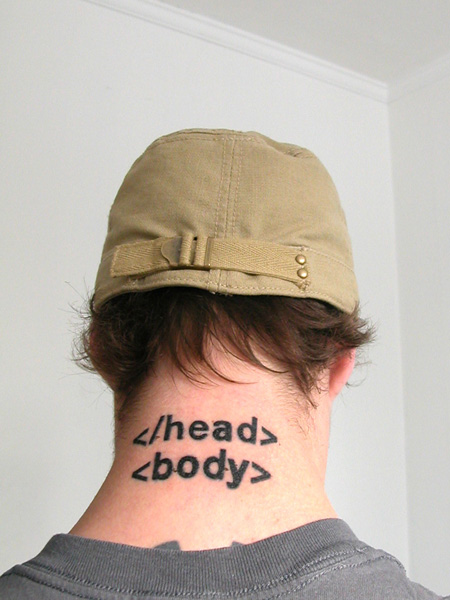

posted by mccarty.tim at 12:06 PM on April 27, 2010
Try not to take it as a personal attack when it obviously wasn't one.
That's what I just said to you. You seemed so upset after deciding I was being derisive, when I wasn't. You really latched onto that, so I figured you were deeply hurt. Ha.
posted by anniecat at 12:09 PM on April 27, 2010
That's what I just said to you. You seemed so upset after deciding I was being derisive, when I wasn't. You really latched onto that, so I figured you were deeply hurt. Ha.
posted by anniecat at 12:09 PM on April 27, 2010
But wouldn't it be fascinating to find out that he was actually an extremely accomplished carpenter? Like Brian May...he's famous, of course, as the lead guitarist of Queen, but he's also written a book about astrophysics. I mean, that's awesome, right?
Oh, definitely! That's definitely awesome of May, and that's why I brought up Graffin's work at Cornell and UCLA above. And it would indeed be awesome if Tom Waits was as skilled at woodworking as he was at his music.
Sidenote: I would be curious to see James Franco's academic output, since apparently he loves college and grad school so much.
...
I wonder why we aren't judging Frank Black by the quality of his college essays.
Frank Black is established Rock Royalty. Also, there isn't really any debate as to whether Black's work has a secret intellectual undertone. Gaga's pop is often seen through a lens where it's some how smarter or artier than other pop, so there's more scrutiny being applied to her. This adds to her polarizing nature, as people either hold her up as the Second Coming of Madonna (which is a bold statement), or as a Failure Not Fit To Lick Grace Jones' Leather (also a bold statement). I'd say this scrutiny is unfair, but whatever. Gaga is no more or less of a magpie than any other pop star, except this magpie takes from better sources than usual, and she can actually sing quite well without the aid of Auto-Tune.
Some other points to address the comparison with Ke$ha. Ke$ha certainly had a single mother bringing her up, and for a time in her youth she was on welfare and food stamps, but not only did her mother eventually secure a music publishing deal, thereby getting off of the food stamps and whatnot, but Ke$ha also had the privilege of growing up around music and recording studios. Also: she is a very, very pretty white girl. I'd say she's more conventionally pretty than Lady Gaga. I don't doubt that Ke$ha's hard work played well into her success, but money isn't the only privilege out there.
Either way, they're both fun pop stars, although all in all I prefer Gaga's stuff to Ke$ha's, mostly because Ke$ha's live performances look like shit.
posted by Sticherbeast at 12:17 PM on April 27, 2010 [1 favorite]
Oh, definitely! That's definitely awesome of May, and that's why I brought up Graffin's work at Cornell and UCLA above. And it would indeed be awesome if Tom Waits was as skilled at woodworking as he was at his music.
Sidenote: I would be curious to see James Franco's academic output, since apparently he loves college and grad school so much.
...
I wonder why we aren't judging Frank Black by the quality of his college essays.
Frank Black is established Rock Royalty. Also, there isn't really any debate as to whether Black's work has a secret intellectual undertone. Gaga's pop is often seen through a lens where it's some how smarter or artier than other pop, so there's more scrutiny being applied to her. This adds to her polarizing nature, as people either hold her up as the Second Coming of Madonna (which is a bold statement), or as a Failure Not Fit To Lick Grace Jones' Leather (also a bold statement). I'd say this scrutiny is unfair, but whatever. Gaga is no more or less of a magpie than any other pop star, except this magpie takes from better sources than usual, and she can actually sing quite well without the aid of Auto-Tune.
Some other points to address the comparison with Ke$ha. Ke$ha certainly had a single mother bringing her up, and for a time in her youth she was on welfare and food stamps, but not only did her mother eventually secure a music publishing deal, thereby getting off of the food stamps and whatnot, but Ke$ha also had the privilege of growing up around music and recording studios. Also: she is a very, very pretty white girl. I'd say she's more conventionally pretty than Lady Gaga. I don't doubt that Ke$ha's hard work played well into her success, but money isn't the only privilege out there.
Either way, they're both fun pop stars, although all in all I prefer Gaga's stuff to Ke$ha's, mostly because Ke$ha's live performances look like shit.
posted by Sticherbeast at 12:17 PM on April 27, 2010 [1 favorite]
Gaga and Stefani need to pay this woman.
Actually, the woman they need to pay is Grace Jones.
Grace Jones cannot be appeased with ....mortal things.
First person to turn her essay into a club hit with sick beats and hooks wins.
posted by The Whelk at 12:18 PM on April 27, 2010
With near-perfect SAT scores, for her, a backup plan was never out of the realm of possibility. As a teenager, Ke$ha had a strong intellectual curiosity that extended beyond the music world.Could just be a mistake on the part of the author. Ke$ha would have been 18 in 2005 (WOW I'M OLD). The scoring changes were in. That's the same year they introduced the new scoring.
According to wikipedia
The older SAT (before 1995) had a very high ceiling. In any given year, only seven of the million test-takers scored above 1580. A score above 1580 was equivalent to the 99.9995 percentile.[14]It seems unlikely to me that she was in the top half % or whatever. I suppose it's possible, but it seems more likely people are just getting confused between the old and new scores. But I guess it's possible.
posted by delmoi at 12:19 PM on April 27, 2010
I don't mean to brag but, ahem, I got the same score as Ke$ha! Does this mean I could be the next Madonna (candidate) if I put my heart to it?
i) Depends when you took the test, duh.
ii) That should be 'open my heart' to it.
posted by tigrefacile at 12:21 PM on April 27, 2010 [1 favorite]
i) Depends when you took the test, duh.
ii) That should be 'open my heart' to it.
posted by tigrefacile at 12:21 PM on April 27, 2010 [1 favorite]
IIRC, the first year the new scoring came out, you could decide between the old and new.
posted by mccarty.tim at 12:22 PM on April 27, 2010
posted by mccarty.tim at 12:22 PM on April 27, 2010
I support the comment upon Greg Graffin's remarkable career, which is so far superior to Lady Gaga's. Carry on.
posted by fook at 12:23 PM on April 27, 2010
posted by fook at 12:23 PM on April 27, 2010
For anyone who has Lady Gaga burnout: try this Greasemonkey script. In fact, I have it running now, so I'm not sure if my text will show up correctly.
Suddenly EVERYONE is obsessed with Half Life.
posted by Dr-Baa at 12:23 PM on April 27, 2010
Suddenly EVERYONE is obsessed with Half Life.
posted by Dr-Baa at 12:23 PM on April 27, 2010
Dr Baa, I'll sign up if you expand its vocabulary to change Ke$ha to GlaDOS.
posted by mccarty.tim at 12:26 PM on April 27, 2010
posted by mccarty.tim at 12:26 PM on April 27, 2010
she can actually sing quite well without the aid of Auto-Tune.
Properly applied, you would not be able to detect the use of Auto-Tune in either her recorded or live work. So, we have no idea if she uses it or not.
posted by Ironmouth at 12:26 PM on April 27, 2010
Properly applied, you would not be able to detect the use of Auto-Tune in either her recorded or live work. So, we have no idea if she uses it or not.
posted by Ironmouth at 12:26 PM on April 27, 2010
Properly applied, you would not be able to detect the use of Auto-Tune in either her recorded or live work. So, we have no idea if she uses it or not.
I would be amazed if Auto-Tune was not used on her actual albums. However, I have seen footage of pre-famous Gaga performing, and she can, indeed, sing quite well.
posted by Sticherbeast at 12:28 PM on April 27, 2010 [1 favorite]
I would be amazed if Auto-Tune was not used on her actual albums. However, I have seen footage of pre-famous Gaga performing, and she can, indeed, sing quite well.
posted by Sticherbeast at 12:28 PM on April 27, 2010 [1 favorite]
try this Greasemonkey script
Man, I loved it when Lady Gaga fought the headcrabs with the gravity gun
MAKE IT HAPPEN HAUS OF GAGA . MAKE. IT. HAPPEN
posted by The Whelk at 12:28 PM on April 27, 2010 [3 favorites]
Man, I loved it when Lady Gaga fought the headcrabs with the gravity gun
MAKE IT HAPPEN HAUS OF GAGA . MAKE. IT. HAPPEN
posted by The Whelk at 12:28 PM on April 27, 2010 [3 favorites]
I could be wrong here, but isn't most of this derived from her videos and performances rather than the music itself? I always thought those aspects of the public image were less hands-on for the pop musician and often were the creative input of someone else entirely based on their interpretation of the music.
My impression is that in her case, she is the driving creative force behind her public persona/stage presence), but that the songs were largely written by her producers. (With some exceptions-- Speechless, for example). I know she gets a lot of credit for song writing and she is obviously a talented songwriter, but comparing the songs she wrote before she got famous (and Speechless, which is really personal) to songs like Telephone, Just Dance, and Love Game, I just don't see the connection. I do, however, see the connection to Rob Fusari's and Red One's other songs pretty easily.
posted by empath at 12:28 PM on April 27, 2010 [1 favorite]
My impression is that in her case, she is the driving creative force behind her public persona/stage presence), but that the songs were largely written by her producers. (With some exceptions-- Speechless, for example). I know she gets a lot of credit for song writing and she is obviously a talented songwriter, but comparing the songs she wrote before she got famous (and Speechless, which is really personal) to songs like Telephone, Just Dance, and Love Game, I just don't see the connection. I do, however, see the connection to Rob Fusari's and Red One's other songs pretty easily.
posted by empath at 12:28 PM on April 27, 2010 [1 favorite]
Ke$ha would have been 18 in 2005 (WOW I'M OLD). The scoring changes were in. That's the same year they introduced the new scoring.
You don't take the SAT when you're 18. Unless you're a huge procrastinator.
There's also confusion because the SAT has changed several times within the last 15 years or so. There was the scoring change done in 1994, and a writing section which was added in 2005. 1560 is pretty good for a pre-writing section score. But really, doing well on the SATs just means you did well on the SATs. There's plenty of smart people who did poorly on SATs, and there's a huge range in intellectual ability of people who did really well. If you know how to study for it and you understand how standardized tests work, it's pretty easy to get at least 1500.
posted by kmz at 12:30 PM on April 27, 2010
You don't take the SAT when you're 18. Unless you're a huge procrastinator.
There's also confusion because the SAT has changed several times within the last 15 years or so. There was the scoring change done in 1994, and a writing section which was added in 2005. 1560 is pretty good for a pre-writing section score. But really, doing well on the SATs just means you did well on the SATs. There's plenty of smart people who did poorly on SATs, and there's a huge range in intellectual ability of people who did really well. If you know how to study for it and you understand how standardized tests work, it's pretty easy to get at least 1500.
posted by kmz at 12:30 PM on April 27, 2010
For anyone who has Lady Gaga burnout: try this Greasemonkey script.
Excellent. Thanks, Baa!
posted by Kwine at 12:37 PM on April 27, 2010
Excellent. Thanks, Baa!
posted by Kwine at 12:37 PM on April 27, 2010
This essay is exactly the reason I'm scared to look at an entire folder of work on my computer. I'm worried that things that I thought were well-written or reasoned will turn out to be rambling, padded, and generalized.
posted by piratebowling at 12:42 PM on April 27, 2010
posted by piratebowling at 12:42 PM on April 27, 2010
Man, I loved it when Lady Gaga fought the headcrabs
They prefer the term "Spiders from Mars", if you please.
posted by Blazecock Pileon at 12:48 PM on April 27, 2010 [2 favorites]
They prefer the term "Spiders from Mars", if you please.
posted by Blazecock Pileon at 12:48 PM on April 27, 2010 [2 favorites]
Person writes paper like person, pursues dream like person, succeeds like person, gets overthought like beans.
posted by davejay at 12:51 PM on April 27, 2010 [1 favorite]
posted by davejay at 12:51 PM on April 27, 2010 [1 favorite]
who the fuck is Ke$ha, and is that really her name? hey, YouTube ...
oh, I have heard this. I thought it was Lady Gaga. Very similar music (from the 2 songs I listened to).
posted by mrgrimm at 12:51 PM on April 27, 2010
oh, I have heard this. I thought it was Lady Gaga. Very similar music (from the 2 songs I listened to).
posted by mrgrimm at 12:51 PM on April 27, 2010
First time I heard Ke$ha, I thought it was Taylor Swift, but then I realized it was too good, and that the lyrics weren't pro-abstinence kiss kiss lovey.
posted by mccarty.tim at 12:54 PM on April 27, 2010
posted by mccarty.tim at 12:54 PM on April 27, 2010
What if it turns out she's the one who stole that iPhone?
posted by First Post at 1:16 PM on April 27, 2010 [2 favorites]
posted by First Post at 1:16 PM on April 27, 2010 [2 favorites]
This post has gone over 100 comments without really going anywhere at all. I'm not sure what that says about MetaFilters relationship with Lady Gaga other than that people like to chat about it.
If I had a liberal arts education like Ms Germanotta I'm sure I'd be able to come up with something "insightful" about that. Sadly I was educated stupid and merely have this contribute.
Lady Gaga is so 2009. All the cool kids are salivating over iamamiwhoami these days.
posted by public at 1:19 PM on April 27, 2010
If I had a liberal arts education like Ms Germanotta I'm sure I'd be able to come up with something "insightful" about that. Sadly I was educated stupid and merely have this contribute.
Lady Gaga is so 2009. All the cool kids are salivating over iamamiwhoami these days.
posted by public at 1:19 PM on April 27, 2010
Gag Gaga with a spoon.
As close as we can get to that.
posted by Sticherbeast at 1:22 PM on April 27, 2010
As close as we can get to that.
posted by Sticherbeast at 1:22 PM on April 27, 2010
What if it turns out she's the one who stole that iPhone?
She'll have to go back to prison.
posted by Blazecock Pileon at 1:29 PM on April 27, 2010
She'll have to go back to prison.
posted by Blazecock Pileon at 1:29 PM on April 27, 2010
My friend's nine year old adores her--I was meeting them for breakfast out awhile back and the kid showed up all dressed in black with a cape and a black lightning bolt on her cheek. Black did not strike me as a very Lady Gagaesque color scheme but as mom is a lapsed Goth, I assumed that the kid was working with a limited pallette. Well, that and the cape was left over from the kid's Batman wannabe phase.
We went to Hattie's Hat that morning and sat in the back room and the kid would not sit at the same table with us. We were too embarrassing. Nine years old and she's a tween already. Whatever happened to the little girl who wanted to be Velma from Scooby Doo ?
posted by y2karl at 1:30 PM on April 27, 2010
We went to Hattie's Hat that morning and sat in the back room and the kid would not sit at the same table with us. We were too embarrassing. Nine years old and she's a tween already. Whatever happened to the little girl who wanted to be Velma from Scooby Doo ?
posted by y2karl at 1:30 PM on April 27, 2010
Lady Gaga is so 2009
Yeah, I am starting to think it's time to start seeing other people.
posted by everichon at 1:36 PM on April 27, 2010 [2 favorites]
Yeah, I am starting to think it's time to start seeing other people.
posted by everichon at 1:36 PM on April 27, 2010 [2 favorites]
I wonder if the teacher lit up a fatty when reading this. It's the only way anyone can get through it.
Ugh.
posted by stormpooper at 2:05 PM on April 27, 2010
Ugh.
posted by stormpooper at 2:05 PM on April 27, 2010
For anyone who has Lady Gaga burnout: try this Greasemonkey script.
Ooo! Ooo! Do ICP next! Fucking Greasemonkey: how does it work?
posted by Kirk Grim at 2:11 PM on April 27, 2010 [2 favorites]
Ooo! Ooo! Do ICP next! Fucking Greasemonkey: how does it work?
posted by Kirk Grim at 2:11 PM on April 27, 2010 [2 favorites]
It's a pretty good article. The stuff I wrote as an undergrad was usually "get-this-done-so-i-can-party" quality, since I was a self involved asshole in my early-20's. I don't think I really became a better writer until a few years after college. The fact is that it shows what's she was interested in, and what she was interested in relates pretty heavily to the songs she's written since then, and public persona that she's built up.
If someone dug up the crap-ass essay I wrote on Hamlet without having read the play then I'd be embarassed, but don't think it would reflect my current level of thinking or writing.
posted by codacorolla at 2:13 PM on April 27, 2010
If someone dug up the crap-ass essay I wrote on Hamlet without having read the play then I'd be embarassed, but don't think it would reflect my current level of thinking or writing.
posted by codacorolla at 2:13 PM on April 27, 2010
article = essay
posted by codacorolla at 2:13 PM on April 27, 2010
posted by codacorolla at 2:13 PM on April 27, 2010
Ok, some subjects are overplayed on the blue. Still, who wouldn't want to peruse Collected Juggalo Essays over coffee?
posted by Durn Bronzefist at 2:17 PM on April 27, 2010
posted by Durn Bronzefist at 2:17 PM on April 27, 2010
Juggalo engineering whitepapers would be so awesome.
posted by mccarty.tim at 2:32 PM on April 27, 2010 [3 favorites]
posted by mccarty.tim at 2:32 PM on April 27, 2010 [3 favorites]
What they show you on TV is not reality, folks. None of us know a damn thing about any of these people. There is a giant industry attempting to convince you that you know about the personalities and personal lives of complete strangers. You don't.
Well, Bono just issued a statement on "the poor". It was delivered from the balcony of his castle.
I know Bono cares.
posted by pianomover at 2:57 PM on April 27, 2010
Well, Bono just issued a statement on "the poor". It was delivered from the balcony of his castle.
I know Bono cares.
posted by pianomover at 2:57 PM on April 27, 2010
Love her or hate her,
Can I choose option 3 and just not give a damn about her?
posted by Saxon Kane at 3:37 PM on April 27, 2010
Can I choose option 3 and just not give a damn about her?
posted by Saxon Kane at 3:37 PM on April 27, 2010
I still hate her.
posted by jonmc at 4:56 PM on April 27, 2010 [3 favorites]
posted by jonmc at 4:56 PM on April 27, 2010 [3 favorites]
Could just be a mistake on the part of the author. Ke$ha would have been 18 in 2005 (WOW I'M OLD). The scoring changes were in. That's the same year they introduced the new scoring.
Wilipedia says she left school at 17 and got her GED.
Juggalo engineering whitepapers would be so awesome.
How does skyscrapers stay up? Is it magnets? Probably!
posted by Sparx at 5:29 PM on April 27, 2010 [2 favorites]
Wilipedia says she left school at 17 and got her GED.
Juggalo engineering whitepapers would be so awesome.
How does skyscrapers stay up? Is it magnets? Probably!
posted by Sparx at 5:29 PM on April 27, 2010 [2 favorites]
I like Lady Gaga. She's talented, and she has a voice that I find appealing. But I am fascinated by how her image/videos/theatrics have instantly made her into this phenomenon where she's somehow surpassed "emerging artist" or even "pop star" status and gone straight into "legend." Because when you take away all her avant-garde looks and epic videos, you're left with songs that are catchy and well-written pop songs, but that's about it. Without the videos, these songs don't seem deep at all, as well as not offering much in the way of a unique sound; they fit squarely into the world of Top 40 music. But the videos make them into these profound statements on fame, celebrity, and obsession, and she seems so different.
The first time I heard "Bad Romance" was in the form of watching the video for the first time, and I was pretty much blown away by the whole experience. But then, hearing the song by itself over the following weeks... eh. Catchy, but what did I find so amazing about it at first? And I didn't really get the appeal of "Paparazzi" until I saw her perform it, at which point I also found that song kind of amazing.
Then you get people who are truly amazed just to find that she can sing well and play piano (as can loads of other women), and write an intellectual college essay (as loads of college students do every day). While I haven't been reading MetaFilter regularly for all that long, I haven't noticed any other musician get anywhere near the amount of coverage she does. And all this topic is about is a single essay that she wrote in college. If it were a brilliant essay, maybe that would be something, but the sloppy grammar and awkward sentence structure make it so much more difficult to read than it needs to be.
Anyway, Interscope and Stefani Germanotta have done a terrific job with the Lady Gaga product.
posted by wondermouse at 5:30 PM on April 27, 2010 [2 favorites]
The first time I heard "Bad Romance" was in the form of watching the video for the first time, and I was pretty much blown away by the whole experience. But then, hearing the song by itself over the following weeks... eh. Catchy, but what did I find so amazing about it at first? And I didn't really get the appeal of "Paparazzi" until I saw her perform it, at which point I also found that song kind of amazing.
Then you get people who are truly amazed just to find that she can sing well and play piano (as can loads of other women), and write an intellectual college essay (as loads of college students do every day). While I haven't been reading MetaFilter regularly for all that long, I haven't noticed any other musician get anywhere near the amount of coverage she does. And all this topic is about is a single essay that she wrote in college. If it were a brilliant essay, maybe that would be something, but the sloppy grammar and awkward sentence structure make it so much more difficult to read than it needs to be.
Anyway, Interscope and Stefani Germanotta have done a terrific job with the Lady Gaga product.
posted by wondermouse at 5:30 PM on April 27, 2010 [2 favorites]
Considering that a a lot of what makes the Gaga Product WORK is the videos (which is INSANE, who makes big expensive videos anymore? Who thought THAT would come back?) I feel the need to take a look back on Madonna, whose video skills and imagine manipulation are seen as the forerunner for Gaga. (although if you ask me Lady Gaga is ripping on this and this, not really Madonna, but whatevers)
So, speaking as the biggest little Madonna fan way back in the 80s, lets take a look back - I'm leaving out straight performance clips and going more toward stuff that is part of the General Pop Knowledge. Lets go!
Lucky Star - Ragamuffin Madonna! Pretty much set the scene for the Madonna Character - lots of dancing, outfit borrowed from downtown NYC scenes. Mostly working on her natural charisma and camera-vamping. If nothing else Madonna knows how to look at a camera. Not mean feat.
Like A Virgin - Pretty much the Ur Madonna video. She's in Venice! She's being stalked by a lion! Lots of inklings to what would come, the masks, the animals, the dreamy art-school surrealism. It's still pretty low-budget and focusing more on "hey! Look at this chick!" and less "hey look at the CRAZY SHIT!"
Material Girl - Oh now, we're in the breeding zone of Gaga. Opening scene talking about fame, little playlets? It still works - mostly cause it borrows from all the right things (She's a Norma Desmond-Norma Jean!) and shows off her skill as a dancer, always stronger then her musical ability. There's that dialogue with the camera from before (In short, she Gazes back) now wrapped up in a high gloss package. Fame, money, Greed, Celebrity, it's all good. This is Madonna not saying she's a Big Star.
Like A Prayer - Uh okay now it's getting weird. Like courting outrage for it's own sake weird. Burning crosses? Mackin on Black Jesus? Stigmata? It doesn't come together, the story seems forced and hokey and the song isn't that catchy, although Little Whelk has oddly transfixed by the shot of her pressed against the bars - must explore that later.
posted by The Whelk at 5:59 PM on April 27, 2010
So, speaking as the biggest little Madonna fan way back in the 80s, lets take a look back - I'm leaving out straight performance clips and going more toward stuff that is part of the General Pop Knowledge. Lets go!
Lucky Star - Ragamuffin Madonna! Pretty much set the scene for the Madonna Character - lots of dancing, outfit borrowed from downtown NYC scenes. Mostly working on her natural charisma and camera-vamping. If nothing else Madonna knows how to look at a camera. Not mean feat.
Like A Virgin - Pretty much the Ur Madonna video. She's in Venice! She's being stalked by a lion! Lots of inklings to what would come, the masks, the animals, the dreamy art-school surrealism. It's still pretty low-budget and focusing more on "hey! Look at this chick!" and less "hey look at the CRAZY SHIT!"
Material Girl - Oh now, we're in the breeding zone of Gaga. Opening scene talking about fame, little playlets? It still works - mostly cause it borrows from all the right things (She's a Norma Desmond-Norma Jean!) and shows off her skill as a dancer, always stronger then her musical ability. There's that dialogue with the camera from before (In short, she Gazes back) now wrapped up in a high gloss package. Fame, money, Greed, Celebrity, it's all good. This is Madonna not saying she's a Big Star.
Like A Prayer - Uh okay now it's getting weird. Like courting outrage for it's own sake weird. Burning crosses? Mackin on Black Jesus? Stigmata? It doesn't come together, the story seems forced and hokey and the song isn't that catchy, although Little Whelk has oddly transfixed by the shot of her pressed against the bars - must explore that later.
posted by The Whelk at 5:59 PM on April 27, 2010
Vouge - And we're back on track. Everything here works, the lighting, the editing, the Ultra-Glam Black and white. David Fincher has rarely been as good. It's just one idea, sure, but it's explored very well - it even looks like it has a silver sheen.
Express Yourself - The high point! Big Budget robot 30s Madonna takes down Society with pure sexual energy. Interesting note, Madonna's best videos invoke the Glamor of the past and celebrity culture from decades ago by putting them all in a blender. it's all very nostalgic.
Justify Me Love - Oh dear, we;re into the Erotica peroid, when Madonna was overexposed and putting out books and everyone was getting a little tired of the sexy sex button-pushing thing. "Madonna Shocks 7" indeed. The video works like how the others do, by taking off a genre - in this case "explicit" art films ...possibly from Europe. Still, it's all very cold, very removed. Stylish and "shocking" without payoff. This will become a trend....
posted by The Whelk at 6:08 PM on April 27, 2010 [1 favorite]
Express Yourself - The high point! Big Budget robot 30s Madonna takes down Society with pure sexual energy. Interesting note, Madonna's best videos invoke the Glamor of the past and celebrity culture from decades ago by putting them all in a blender. it's all very nostalgic.
Justify Me Love - Oh dear, we;re into the Erotica peroid, when Madonna was overexposed and putting out books and everyone was getting a little tired of the sexy sex button-pushing thing. "Madonna Shocks 7" indeed. The video works like how the others do, by taking off a genre - in this case "explicit" art films ...possibly from Europe. Still, it's all very cold, very removed. Stylish and "shocking" without payoff. This will become a trend....
posted by The Whelk at 6:08 PM on April 27, 2010 [1 favorite]
Take A Bow - Madonna sleeps with a TV! Despite the tight bullfighter pants, it's oddly prim and played out. We get it, you're attractive and into the bedroom rumba.
Rain - A triumph of lighting design over everything else, even the music. Also, she looks like needs. a. sandwich.
Deeper And Deeper - You can see a lot of Gaga in this ode to 70s nightlife, it's all super-fun but you keep wishing she's go stranger with the Studio 54 motif..which leads us to.
Bedtime Story - Whoo! Dervishes! But also a good move, lets just throw crazy dream logic at things and see what works. Pretty soon every dance music video would look like this It's cliche now, but for an established artist to do something arty with skulls and eye-mouths? A good thing.
posted by The Whelk at 6:19 PM on April 27, 2010 [3 favorites]
Rain - A triumph of lighting design over everything else, even the music. Also, she looks like needs. a. sandwich.
Deeper And Deeper - You can see a lot of Gaga in this ode to 70s nightlife, it's all super-fun but you keep wishing she's go stranger with the Studio 54 motif..which leads us to.
Bedtime Story - Whoo! Dervishes! But also a good move, lets just throw crazy dream logic at things and see what works. Pretty soon every dance music video would look like this It's cliche now, but for an established artist to do something arty with skulls and eye-mouths? A good thing.
posted by The Whelk at 6:19 PM on April 27, 2010 [3 favorites]
the woman they need to pay is Grace Jones
Actually, I've always thought that the women Gaga needs to pay is...er, the people Gaga needs to pay... are Elton John and Ziggy Stardust/David Bowie.
Yeah, as much as I like Grace Jones, she needs to pay David Bowie. (And since they did collaborate on "Nightclubbing", I guess she probably did pay him.)
I think Lady Gaga is okay but I wonder how long she can keep this always-over-the-top schtick of hers up. Eventually she'll become like Madonna, perpetually looking for ways to reinvent herself.
posted by fuse theorem at 6:28 PM on April 27, 2010
Actually, I've always thought that the women Gaga needs to pay is...er, the people Gaga needs to pay... are Elton John and Ziggy Stardust/David Bowie.
Yeah, as much as I like Grace Jones, she needs to pay David Bowie. (And since they did collaborate on "Nightclubbing", I guess she probably did pay him.)
I think Lady Gaga is okay but I wonder how long she can keep this always-over-the-top schtick of hers up. Eventually she'll become like Madonna, perpetually looking for ways to reinvent herself.
posted by fuse theorem at 6:28 PM on April 27, 2010
Oh, I just remembered that my very first exposure to Lady Gaga was in the summer of 2008, before her first album was released, when she performed on So You Think You Can Dance?
I was not blown away by that. I'd never heard of her, and my reaction to her performance was more like "WTF is that crap?" and then I thought I'd never hear about her again. The stuff at the beginning of her performance seemed so contrived, like her fame preceded her. It's kind of funny - I hadn't seen it since then until just now, and that entire performance is so tame by Lady Gaga standards. I have since learned that just about anyone who gives a musical performance on So You Think You Can Dance is about to blow up in my face.
posted by wondermouse at 6:31 PM on April 27, 2010 [1 favorite]
I was not blown away by that. I'd never heard of her, and my reaction to her performance was more like "WTF is that crap?" and then I thought I'd never hear about her again. The stuff at the beginning of her performance seemed so contrived, like her fame preceded her. It's kind of funny - I hadn't seen it since then until just now, and that entire performance is so tame by Lady Gaga standards. I have since learned that just about anyone who gives a musical performance on So You Think You Can Dance is about to blow up in my face.
posted by wondermouse at 6:31 PM on April 27, 2010 [1 favorite]
The time and energy some people here spend bashing someone like Lady Gaga only reveals how much people are dissatisfied with their own failed lives.
Or the time and energy people spend "defending" a complete stranger they've never met from criticisms of the media machine that stranger uses to make large amounts of money only reveals how much people are dissatisfied with their own failed lives.
posted by Ironmouth at 6:56 PM on April 27, 2010
Or the time and energy people spend "defending" a complete stranger they've never met from criticisms of the media machine that stranger uses to make large amounts of money only reveals how much people are dissatisfied with their own failed lives.
posted by Ironmouth at 6:56 PM on April 27, 2010
Metafilter: reveals how much people are dissatisfied with their own failed lives.
posted by diocletian at 6:58 PM on April 27, 2010 [3 favorites]
posted by diocletian at 6:58 PM on April 27, 2010 [3 favorites]
Lady Gaga merely represents the pop music industry trying to adjust to the existence Youtube and Pitchfork.
posted by koeselitz at 7:06 PM on April 27, 2010
posted by koeselitz at 7:06 PM on April 27, 2010
If it's good enough for Amanda Palmer and the Boston Pops...
Best. Cover of "Poker Face" to include the phrase "post-structuralist prison of ego." Ever.
posted by Eumachia L F at 7:07 PM on April 27, 2010
Best. Cover of "Poker Face" to include the phrase "post-structuralist prison of ego." Ever.
posted by Eumachia L F at 7:07 PM on April 27, 2010
Smart metafiltery people seem to like Lady Gaga. Or at least a lot of them do. But I don't understand why. I understand why they'd like They Might Be Giants or Weird Al. The lyrics are clever and inside-jokey. Lady Gaga wears silly clothes and writes pop songs that are, to my ears, indistinguishable from those of scores of others artists. What am I missing?
posted by jewzilla at 7:25 PM on April 27, 2010
posted by jewzilla at 7:25 PM on April 27, 2010
I'd be surprised if she doesn't now start a more "intelligent" phase of her product, mirroring the post Xtina phase of Christina Aguilera's career. In fact, I would argue that GaGa is more like Christina Aguilera than she is like Madonna, except that Christina Aguilera is actually a really competent vocalist.
Isn't it funny that Christina Aguilera is now being accused of biting on Lady Gaga's style? As if she needs to; she can sing circles around Gaga and will probably have a viable singing career long after the costuming gimmicks have grown stale.
I don't know, Lady Gaga may have gone so far that she won't be able to pull it back into a more "intelligent" phase. No one other than her hardcore fans will be able to take her seriously.
posted by fuse theorem at 7:34 PM on April 27, 2010
Isn't it funny that Christina Aguilera is now being accused of biting on Lady Gaga's style? As if she needs to; she can sing circles around Gaga and will probably have a viable singing career long after the costuming gimmicks have grown stale.
I don't know, Lady Gaga may have gone so far that she won't be able to pull it back into a more "intelligent" phase. No one other than her hardcore fans will be able to take her seriously.
posted by fuse theorem at 7:34 PM on April 27, 2010
And more Madonna
Ray Of Light - Madonna's "comeback" single and the song is catchy enough, but the video is all over the place. It's a good concept but it's not really a "Madonna" video, she's barely in it. The big focus is on her kickin' abs. Again, this is will be the hallmark of the late Madonna videos, the best early ones showcased her athletic dancing and dramatic choreography ...this is the first sign that the latter is fading ..later videos are less about concept and more about, well more Madonna ..usually alone..usually with lots of close-ups on how awesomely toned she is.
Nothing Really Matters - And then we get this! Terrible, terrible song but what, geisha Kabuki plastic baby Dark mother? The first image hints at a much more interesting video that, again turns into a lot of close-up solo dance numbers.
Frozen - The fuck? Okay you can be a pop music Proteus Madonna but you can't be Tori Amos. I don't hit the Mads Button for angsty crows, k? You're at your best when you're being totally glam and Hollywood Original Formula, I am not buying your weak sauce Yoga hands., Stevie Nicks could eat your for Breakfast and spit out the bones.
Music - You know that scene in Bladerunner when Pris fails around on the floor screaming? This is that scene. Visuals are completely incoherent and almost amateurish and then a cartoon what? Look we still think you're attractive and I'm sure you're fun and stuff but, aren't you 50 now? Can we not do this? A full cartoon video would have been better, cause then you wouldn't look like Edina Monsoon in a cowboy hat.
Don't Tell Me - Ladies and Gentlemen, we are now at Officially Not Trying.
Hung Up - Kinda sums up the entire later peroid, Mads is alone in a room with her scary, scary body and a ABBA hook and it is also the 70s. Oh wait we also have some nods to the street culture you crib from. This makes me think of A Chorus Line or some reason.
Celebration - A call back to Lucky Star, with a bad song and outfits that look like ..well they look like lady Gaga's last season castoffs. And the panties - I just, you like a bunch of kids right? Would it kill you to dance with someone else in the room? Also - stop distracting that DJ! he has work to do!
posted by The Whelk at 7:40 PM on April 27, 2010 [2 favorites]
Ray Of Light - Madonna's "comeback" single and the song is catchy enough, but the video is all over the place. It's a good concept but it's not really a "Madonna" video, she's barely in it. The big focus is on her kickin' abs. Again, this is will be the hallmark of the late Madonna videos, the best early ones showcased her athletic dancing and dramatic choreography ...this is the first sign that the latter is fading ..later videos are less about concept and more about, well more Madonna ..usually alone..usually with lots of close-ups on how awesomely toned she is.
Nothing Really Matters - And then we get this! Terrible, terrible song but what, geisha Kabuki plastic baby Dark mother? The first image hints at a much more interesting video that, again turns into a lot of close-up solo dance numbers.
Frozen - The fuck? Okay you can be a pop music Proteus Madonna but you can't be Tori Amos. I don't hit the Mads Button for angsty crows, k? You're at your best when you're being totally glam and Hollywood Original Formula, I am not buying your weak sauce Yoga hands., Stevie Nicks could eat your for Breakfast and spit out the bones.
Music - You know that scene in Bladerunner when Pris fails around on the floor screaming? This is that scene. Visuals are completely incoherent and almost amateurish and then a cartoon what? Look we still think you're attractive and I'm sure you're fun and stuff but, aren't you 50 now? Can we not do this? A full cartoon video would have been better, cause then you wouldn't look like Edina Monsoon in a cowboy hat.
Don't Tell Me - Ladies and Gentlemen, we are now at Officially Not Trying.
Hung Up - Kinda sums up the entire later peroid, Mads is alone in a room with her scary, scary body and a ABBA hook and it is also the 70s. Oh wait we also have some nods to the street culture you crib from. This makes me think of A Chorus Line or some reason.
Celebration - A call back to Lucky Star, with a bad song and outfits that look like ..well they look like lady Gaga's last season castoffs. And the panties - I just, you like a bunch of kids right? Would it kill you to dance with someone else in the room? Also - stop distracting that DJ! he has work to do!
posted by The Whelk at 7:40 PM on April 27, 2010 [2 favorites]
and THIS IS THE BEST PALMER MADONNA GAGA THING
posted by The Whelk at 7:41 PM on April 27, 2010 [2 favorites]
posted by The Whelk at 7:41 PM on April 27, 2010 [2 favorites]
I just, you like a bunch of kids right?
Should be you just HAD a bunch of kids.
I assume she likes them.
posted by The Whelk at 7:48 PM on April 27, 2010
Should be you just HAD a bunch of kids.
I assume she likes them.
posted by The Whelk at 7:48 PM on April 27, 2010
Nothing Really Matters - And then we get this! Terrible, terrible song
Don't make me take you to Metatalk.
posted by Blazecock Pileon at 8:05 PM on April 27, 2010
Don't make me take you to Metatalk.
posted by Blazecock Pileon at 8:05 PM on April 27, 2010
So yes, after Erotica there is a real feeling of Not Trying Aymore in the videos, think of all the hair and make-up changes in Vouge compared to Celebration. No more high-concepts, lots of solo dancing. Visually flat. Dull. Compare with Grace Jones Then and Now
So my only advice to Lady Gaga is NEVER LET MADONNA KISS YOU THAT'S SHOW SHE STEALS PEOPLE'S POWER LOOK AT BRITNEY AND SANDRA STAY AWAY! DAS VAMPYR! DAS VAMPYR!
posted by The Whelk at 8:13 PM on April 27, 2010 [7 favorites]
So my only advice to Lady Gaga is NEVER LET MADONNA KISS YOU THAT'S SHOW SHE STEALS PEOPLE'S POWER LOOK AT BRITNEY AND SANDRA STAY AWAY! DAS VAMPYR! DAS VAMPYR!
posted by The Whelk at 8:13 PM on April 27, 2010 [7 favorites]
Actually, when gaga first showed up on metafilter, pretty much everyone hated her. A couple of months later, everyone loved her. Seems like the tide is turning and people are getting bored.
I think the whole "Nobody -> legend" has to do with the fact that the music industry has been starved of hits for such a long time. They finally had a money maker, and they were going to milk that as fast and hard as they could.
posted by delmoi at 9:49 PM on April 27, 2010
I think the whole "Nobody -> legend" has to do with the fact that the music industry has been starved of hits for such a long time. They finally had a money maker, and they were going to milk that as fast and hard as they could.
posted by delmoi at 9:49 PM on April 27, 2010
What they show you on TV is not reality, folks. None of us know a damn thing about any of these people. There is a giant industry attempting to convince you that you know about the personalities and personal lives of complete strangers. You don't.
Oh, right, it's obviously Britney who's the brains of this operation.
posted by dhartung at 9:59 PM on April 27, 2010
Oh, right, it's obviously Britney who's the brains of this operation.
posted by dhartung at 9:59 PM on April 27, 2010
I think the whole "Nobody -> legend" has to do with the fact that the music industry has been starved of hits for such a long time.
There might be some truth to this. There hasn't been a giant pop diva since Britney Spears, who imploded in slow motion for our entertainment. I kinda like that the new divas like Ke$ha and Gaga are more self-aware and cynical, but Gaga's music doesn't reach the level that, say, Talking Heads or The Clash did. I think Gaga's smart enough to make something along those lines, catchy but really pretty great musically with cynical, detached lyrics, although maybe that's giving her too much credit. I like that she's turning it inside out, but it seems like she's succeeding at producing the shallow pop star veneer a bit too well, and her music should be more interesting - occasionally she lets something interesting slip through, but not often enough. It's like she's afraid to tread too far from the well-worn tropes of dance music, when it could be so much better. She's very clever and I do look forward to new stuff, especially the videos, but if it's more production than music then I won't return to it too many times.
posted by krinklyfig at 11:29 PM on April 27, 2010
There might be some truth to this. There hasn't been a giant pop diva since Britney Spears, who imploded in slow motion for our entertainment. I kinda like that the new divas like Ke$ha and Gaga are more self-aware and cynical, but Gaga's music doesn't reach the level that, say, Talking Heads or The Clash did. I think Gaga's smart enough to make something along those lines, catchy but really pretty great musically with cynical, detached lyrics, although maybe that's giving her too much credit. I like that she's turning it inside out, but it seems like she's succeeding at producing the shallow pop star veneer a bit too well, and her music should be more interesting - occasionally she lets something interesting slip through, but not often enough. It's like she's afraid to tread too far from the well-worn tropes of dance music, when it could be so much better. She's very clever and I do look forward to new stuff, especially the videos, but if it's more production than music then I won't return to it too many times.
posted by krinklyfig at 11:29 PM on April 27, 2010
i don't think anyone has to justify the music they like. i like lady gaga because hearing her and seeing her make me feel good, and that's plenty for me. i think her popularity has to do with her ability, however it is conveyed, to give something back to her audience; it's somehow a two-way communication, or a way that she can be glamorous and make us feel like we're right along with her, not that she's above us or within some realm we can't attain. she doesn't seem part of celebrity culture; she seems genuine, sincere. there's some element there that draws people in, some of which is humor. she seems to take her role as an entertainer seriously, but she doesn't take the elements of the performance too seriously (she seems relaxed in a way i think madonna never really got to, but just as committed to the work).
maybe my musical tastes are unrefined enough that i can enjoy her songs, though dance music was never my primary interest. i play around with her stuff on piano and find neat elements in the music that seem different than in typical pop stuff i've played. i didn't realize until doing 'telephone' on the piano that the groupings of 16th notes in the chorus imitate a telephone ring. the rhythms don't seem typical; it takes me a while to get some of it down and match it with the melody. (i'm self-taught and don't have the words for it, but the rhythm often seems shifted or offset.)
posted by fallacy of the beard at 12:05 AM on April 28, 2010 [1 favorite]
maybe my musical tastes are unrefined enough that i can enjoy her songs, though dance music was never my primary interest. i play around with her stuff on piano and find neat elements in the music that seem different than in typical pop stuff i've played. i didn't realize until doing 'telephone' on the piano that the groupings of 16th notes in the chorus imitate a telephone ring. the rhythms don't seem typical; it takes me a while to get some of it down and match it with the melody. (i'm self-taught and don't have the words for it, but the rhythm often seems shifted or offset.)
posted by fallacy of the beard at 12:05 AM on April 28, 2010 [1 favorite]
It's like she's afraid to tread too far from the well-worn tropes of dance music, when it could be so much better.
my gut sense, not that it is accurate or informed, is that her early work is a kind of mastery and retrospective of the past thirty or so years of dance-pop music--it plays like another artist's greatest hits collection--and that this is a jumping-off point for evolving into something else. i think she knows how to work an idea and set up collaboration to make it happen. i don't know that you could yet say she's afraid to tread too far; she's still working her intro material. i like the possibility that its success gives her the confidence and freedom to take risk; she doesn't seem to fear it otherwise.
posted by fallacy of the beard at 12:17 AM on April 28, 2010
my gut sense, not that it is accurate or informed, is that her early work is a kind of mastery and retrospective of the past thirty or so years of dance-pop music--it plays like another artist's greatest hits collection--and that this is a jumping-off point for evolving into something else. i think she knows how to work an idea and set up collaboration to make it happen. i don't know that you could yet say she's afraid to tread too far; she's still working her intro material. i like the possibility that its success gives her the confidence and freedom to take risk; she doesn't seem to fear it otherwise.
posted by fallacy of the beard at 12:17 AM on April 28, 2010
I'd always figured that her music was mostly just meant as a soundtrack for the spectacle of the videos and shows. People who really liked a movie like listening to the soundtrack because it reminds them of the movie they loved, whereas people who haven't seen it basically just regard it as kind-of-nice-I-guess at best; I don't really see how she's all that much different from that situation.
posted by DoctorFedora at 12:41 AM on April 28, 2010 [2 favorites]
posted by DoctorFedora at 12:41 AM on April 28, 2010 [2 favorites]
I figured the pop music was Gaga's day job - it's what gives her the money to be able to fund her actual art, which is visual/performance art (as seen on her stage shows and music videos). If her music was just as artsy as her visuals she probably wouldn't be able to earn enough to afford either.
Gaga's unique in that her day job and her passion are interlinked and feed one another, but I think there's a very different process and mindset happening with the music than with the fashion & design & visuals. She's an entertainer by trade but a designer by heart.
posted by divabat at 1:54 AM on April 28, 2010 [3 favorites]
Gaga's unique in that her day job and her passion are interlinked and feed one another, but I think there's a very different process and mindset happening with the music than with the fashion & design & visuals. She's an entertainer by trade but a designer by heart.
posted by divabat at 1:54 AM on April 28, 2010 [3 favorites]
She's an entertainer by trade but a designer by heart
that's an interesting viewpoint divabat, I wouldn't have thought of it that way. I can see however how she's got the makings of an experience designer / visual communicator , even brand strategist
posted by infini at 1:59 AM on April 28, 2010
that's an interesting viewpoint divabat, I wouldn't have thought of it that way. I can see however how she's got the makings of an experience designer / visual communicator , even brand strategist
posted by infini at 1:59 AM on April 28, 2010
Well summarized, TWF. It only took us 49 posts and 15,571 MF comments about Lady Gaga to get there. (Can we quit now?)
posted by mrgrimm at 12:54 PM on April 28, 2010
posted by mrgrimm at 12:54 PM on April 28, 2010
Lady GaGa's songs are interesting lyrically and politically. In particular, she make everyone like the music gay men like. She also executes the pop hook very well, which some people appreciate, and makes good sense politically.
I doubt she views her act as part product part promotion, neither did David Bowie or Iggy Pop, well mixing aesthetics and music was the whole point.
In fact, the entire genre of punk places aesthetics before music. By comparison, progressive rock and metal placed music and skill respectively ahead of aesthetics, eschewing hooks. Guess what average people prefer?
Bjork was way more musically interesting than Lady Gaga, no argument there. I quite like Fever Ray too. Ke$ha is a good pop star, listenable, well done, but not interesting.
posted by jeffburdges at 4:34 PM on April 28, 2010
I doubt she views her act as part product part promotion, neither did David Bowie or Iggy Pop, well mixing aesthetics and music was the whole point.
In fact, the entire genre of punk places aesthetics before music. By comparison, progressive rock and metal placed music and skill respectively ahead of aesthetics, eschewing hooks. Guess what average people prefer?
Bjork was way more musically interesting than Lady Gaga, no argument there. I quite like Fever Ray too. Ke$ha is a good pop star, listenable, well done, but not interesting.
posted by jeffburdges at 4:34 PM on April 28, 2010
Smart metafiltery people seem to like Lady Gaga. Or at least a lot of them do. But I don't understand why. I understand why they'd like They Might Be Giants or Weird Al. The lyrics are clever and inside-jokey. Lady Gaga wears silly clothes and writes pop songs that are, to my ears, indistinguishable from those of scores of others artists. What am I missing?
Have you ever been to a party where they were playing clever inside-jokey music? Those parties suck.There's a time for being brainy, and there's a time to have one too many drinks and booty-dance to "Erotic City"
posted by billyfleetwood at 5:51 PM on April 28, 2010 [3 favorites]
Have you ever been to a party where they were playing clever inside-jokey music? Those parties suck.There's a time for being brainy, and there's a time to have one too many drinks and booty-dance to "Erotic City"
posted by billyfleetwood at 5:51 PM on April 28, 2010 [3 favorites]
i understand people talking about music they like and maybe trying to get other people to like it or hear it the same way, because it's like making a connection. i don't understand why people who don't like something require some kind of objective evidence from those who do in order to justify their preference. i really don't understand why people who don't like something feel the need to assert some kind of measure of likability to prop up their personal preferences as authoritative, or why the language of such is so cradled in terms of aesthetic or intellectual superiority.
what confuses me most of all, however, is why people who particularly don't prefer something spend so much time and effort (1) discussing it in the first place and (2) trying to convince others of its objective un-likability.
i could maybe get it if this was like the old days, when you could whine that the misguided and stupid had too much control over, say, the limited musical options available to you on the radio. but this is the age of niche content, when it is easier than ever to find the stuff you personally like and to limit your exposure to the stuff you don't. personally, i find that i'm rarely forced to endure entertainment i dislike or have no interest in; it wouldn't occur to me to intentionally expose myself to it for the sake of complaining about it. when i first checked out lady gaga, i had heard the name, but i had no idea who she was or even what she did until i actively sought it out; so i have a hard time believing that this is a justifiable reaction to some kind of forced assault upon one's aesthetic sensibilities. (and on metafilter it's quite easy to see that a FPP is something that holds no interest for you; yet people act as if they are forced to enter and suffer their way through every post.)
i guess where i'm lost is: what personal need or desire is being fulfilled with what appears to be a self-punishing process of engaging with what you hate and chiding others who don't feel the same way? it's like if you don't like peanuts, but then you never pass them up when you see them, and then you make a big deal to everybody around you that you hate peanuts and what the is their deal for liking peanuts, and they must have no sense of taste and just don't realize it.
posted by fallacy of the beard at 11:05 PM on April 28, 2010 [6 favorites]
what confuses me most of all, however, is why people who particularly don't prefer something spend so much time and effort (1) discussing it in the first place and (2) trying to convince others of its objective un-likability.
i could maybe get it if this was like the old days, when you could whine that the misguided and stupid had too much control over, say, the limited musical options available to you on the radio. but this is the age of niche content, when it is easier than ever to find the stuff you personally like and to limit your exposure to the stuff you don't. personally, i find that i'm rarely forced to endure entertainment i dislike or have no interest in; it wouldn't occur to me to intentionally expose myself to it for the sake of complaining about it. when i first checked out lady gaga, i had heard the name, but i had no idea who she was or even what she did until i actively sought it out; so i have a hard time believing that this is a justifiable reaction to some kind of forced assault upon one's aesthetic sensibilities. (and on metafilter it's quite easy to see that a FPP is something that holds no interest for you; yet people act as if they are forced to enter and suffer their way through every post.)
i guess where i'm lost is: what personal need or desire is being fulfilled with what appears to be a self-punishing process of engaging with what you hate and chiding others who don't feel the same way? it's like if you don't like peanuts, but then you never pass them up when you see them, and then you make a big deal to everybody around you that you hate peanuts and what the is their deal for liking peanuts, and they must have no sense of taste and just don't realize it.
posted by fallacy of the beard at 11:05 PM on April 28, 2010 [6 favorites]
Fallacy, I want to favorite that comment and then unfavorite it, just so I can favorite it again.
posted by Eumachia L F at 2:43 AM on April 29, 2010
posted by Eumachia L F at 2:43 AM on April 29, 2010
fallacy of the beard: I don't know if you're responding to my comment (among others), but when I ask why Lady Gaga is considered a big deal, I don't mean to "chide" anyone or be hateful or call anyone "stupid." I am genuinely curious about a cultural/musical phenomenon and wondering if I'm missing something. Look, if someone told me they didn't understand why the Beatles or Stevie Wonder or Prince or Radiohead are a big deal or why their music is so great, I'd be eager to explain what it is I hear in their music, why I consider it original and exciting, and which things in particular to listen for (particular songs, notes, instruments, voices, etc.).
I realize that some people might not be sincere in asking what's so great about Lady Gaga, but I'm sincerely curious and not asking it as a rhetorical question.
posted by Jaltcoh at 5:41 AM on April 29, 2010
I realize that some people might not be sincere in asking what's so great about Lady Gaga, but I'm sincerely curious and not asking it as a rhetorical question.
posted by Jaltcoh at 5:41 AM on April 29, 2010
jaltcoh: sorry to be all vague about it; it's part rant and, like you're describing, a genuine curiosity about a general trend i see around here. there are certain things that come up--particular music, or something apple-related--where people seem to engage simply for the purpose of insulting those who are interested; sometimes it reads like actual resentment and disdain of people who enjoy something, as if their enjoyment were a harmful or destructive act as opposed to a celebration of something one doesn't happen celebrate. i don't get seeing a FPP and thinking, "hmm, that subject is stupid and totally bores me, and i think i want to go in and talk about it."
but, of course, it's one of those things that's part of the fabric around here, and i don't want to be that kind of person who says how everybody should behave or anything. and i'm not guiltless, for instance, when it comes to topics of religion--which criticisms i justify by my perception of actual harm, though that rationalization might rest on as shaky ground as those who feel they should save the world from bad art or whatever.
posted by fallacy of the beard at 6:38 AM on April 29, 2010
but, of course, it's one of those things that's part of the fabric around here, and i don't want to be that kind of person who says how everybody should behave or anything. and i'm not guiltless, for instance, when it comes to topics of religion--which criticisms i justify by my perception of actual harm, though that rationalization might rest on as shaky ground as those who feel they should save the world from bad art or whatever.
posted by fallacy of the beard at 6:38 AM on April 29, 2010
Oh, I definitely agree that what you're describing is a big problem. After the latest Joanna Newsom thread, I felt like never participating in another music discussion on MeFi again. (People seemed to be upset with me for not thinking Joanna Newsom is the greatest female musical artist of the past 30 years. I don't know what they think they're accomplishing.) But there's also a genuinely interesting (to me) question about why Lada Gaga has gotten so huge. It's not inherently bad to ask what's so great about her music; the problem is if things turn to insults and close-mindedness.
posted by Jaltcoh at 6:44 AM on April 29, 2010
posted by Jaltcoh at 6:44 AM on April 29, 2010
i should have and meant to clarify that i wasn't responding to your comment in particular--just a general thing that got under my skin (and overflow from being truly confounded by a growing anti-apple trend that seems to turn technology preference into some kind of character analysis).
i guess part of it also, when it comes to music, it's not just that there is a subjective component to enjoying it, but there can be a particularly emotional element. it could be just that in the rich tapestry of metafilter there's a kind of scale that ranges between those who intellectualize and analyze music on one end, and those who just go with it and let it affect them on a gut level without thinking about it on the other; i tend to be more toward the latter end of it, but i like to think that i don't view any point on the scale as being inherently more or less valid than any other.
posted by fallacy of the beard at 7:12 AM on April 29, 2010
i guess part of it also, when it comes to music, it's not just that there is a subjective component to enjoying it, but there can be a particularly emotional element. it could be just that in the rich tapestry of metafilter there's a kind of scale that ranges between those who intellectualize and analyze music on one end, and those who just go with it and let it affect them on a gut level without thinking about it on the other; i tend to be more toward the latter end of it, but i like to think that i don't view any point on the scale as being inherently more or less valid than any other.
posted by fallacy of the beard at 7:12 AM on April 29, 2010
i guess part of it also, when it comes to music, it's not just that there is a subjective component to enjoying it, but there can be a particularly emotional element. it could be just that in the rich tapestry of metafilter there's a kind of scale that ranges between those who intellectualize and analyze music on one end, and those who just go with it and let it affect them on a gut level without thinking about it on the other; i tend to be more toward the latter end of it, but i like to think that i don't view any point on the scale as being inherently more or less valid than any other.
That's a really good point, but what I think should be the goal is some kind of happy medium where the emotional and subjective and personal side of music is appreciated, but we can also speak semi-objectively about some musical artists being more important than others.
While I can't argue with someone who finds Oasis's "Wonderwall" to be the most moving song of all time, anyone who thinks Oasis is a more important band than the Beatles would simply not be well-informed.
I can respect someone who prefers listening to Satie rather than Debussy, but everyone should be able to agree that Debussy matters more to the history of music than Satie.
By the same token, if the topic is Lady Gaga, I don't think anyone should be put down for enjoying her music or image. But I also think it's worth asking whether her huge success has anything to do with her actually making important/influential pop music (the way, say, Madonna and Michael Jackson did), or if it's fairly run-of-the-mill, derivative music that mainly exists as a vehicle for spectacular videos and performances.
posted by Jaltcoh at 8:29 AM on April 29, 2010
That's a really good point, but what I think should be the goal is some kind of happy medium where the emotional and subjective and personal side of music is appreciated, but we can also speak semi-objectively about some musical artists being more important than others.
While I can't argue with someone who finds Oasis's "Wonderwall" to be the most moving song of all time, anyone who thinks Oasis is a more important band than the Beatles would simply not be well-informed.
I can respect someone who prefers listening to Satie rather than Debussy, but everyone should be able to agree that Debussy matters more to the history of music than Satie.
By the same token, if the topic is Lady Gaga, I don't think anyone should be put down for enjoying her music or image. But I also think it's worth asking whether her huge success has anything to do with her actually making important/influential pop music (the way, say, Madonna and Michael Jackson did), or if it's fairly run-of-the-mill, derivative music that mainly exists as a vehicle for spectacular videos and performances.
posted by Jaltcoh at 8:29 AM on April 29, 2010
I'd agree with you, Jaltcoh, and I love Lady Gaga. I would argue, however, that the same questions you apply to Lady Gaga in terms of "important/influential" pop music vs. image and performance could also be applied to Madonna (I'm pretty weird in that I like Lady Gaga and don't find Madonna in the least bit interesting).
posted by infinitywaltz at 9:17 AM on April 29, 2010
posted by infinitywaltz at 9:17 AM on April 29, 2010
While I can't argue with someone who finds Oasis's "Wonderwall" to be the most moving song of all time, anyone who thinks Oasis is a more important band than the Beatles would simply not be well-informed.
i think my thing is that importance here is so vague as to be meaningless. it seems like an attempt to turn a subjective qualitative assessment into an objective quantitative rating, and i think more often in the service of validating one's own preferences. but even those elements that are quantifiable--record sales, for instance--are not viewed as accurately reflecting qualitative differences.
i wonder if it's the consumer mentality--the importance placed on tv ratings and sales and ad dollars--that is driving what seems to be a forced ranking of discrete artistic works. did it used to matter, for instance, whether one book or one painting or one poem should be deemed better or worse than another? if i'm engaging with a piece of music in this moment, am i supposed to adjust my response based on whether i think it is important or derivative or influential; it seems to me that attempting to do so would take me out of the experience itself, and what fun is that?
posted by fallacy of the beard at 9:17 AM on April 29, 2010 [1 favorite]
i think my thing is that importance here is so vague as to be meaningless. it seems like an attempt to turn a subjective qualitative assessment into an objective quantitative rating, and i think more often in the service of validating one's own preferences. but even those elements that are quantifiable--record sales, for instance--are not viewed as accurately reflecting qualitative differences.
i wonder if it's the consumer mentality--the importance placed on tv ratings and sales and ad dollars--that is driving what seems to be a forced ranking of discrete artistic works. did it used to matter, for instance, whether one book or one painting or one poem should be deemed better or worse than another? if i'm engaging with a piece of music in this moment, am i supposed to adjust my response based on whether i think it is important or derivative or influential; it seems to me that attempting to do so would take me out of the experience itself, and what fun is that?
posted by fallacy of the beard at 9:17 AM on April 29, 2010 [1 favorite]
I made a Wordle of this essay:
http://www.wordle.net/show/wrdl/1957673/Lady_Gaga%27s_essay
posted by k8t at 9:45 AM on April 29, 2010 [1 favorite]
http://www.wordle.net/show/wrdl/1957673/Lady_Gaga%27s_essay
posted by k8t at 9:45 AM on April 29, 2010 [1 favorite]
I got a tattoo of k8t's Wordle of this essay.
No, not really.
posted by infinitywaltz at 10:24 AM on April 29, 2010
No, not really.
posted by infinitywaltz at 10:24 AM on April 29, 2010
I cannot believe this bullshit
Polaroid, Lady Gaga collaborate on product design
I also cannot believe I'm linking to a Gaga activity
BAH
where's my multiyear gazillion dollar contract eh? eh?
posted by infini at 9:09 AM on April 30, 2010
Polaroid, Lady Gaga collaborate on product design
I also cannot believe I'm linking to a Gaga activity
BAH
where's my multiyear gazillion dollar contract eh? eh?
posted by infini at 9:09 AM on April 30, 2010
where's my multiyear gazillion dollar contract eh? eh?
You just have to follow her business plan.
First step: Stop wearing pants in public.
posted by zarq at 9:10 AM on April 30, 2010
You just have to follow her business plan.
First step: Stop wearing pants in public.
posted by zarq at 9:10 AM on April 30, 2010
hmm I actually indulged spring fever yesterday after a couple of decades and bought a big dress, at a boutique adn the designer/seamstress is not only refitting it to me but also making me a little bolero type coat. and heels. lets see if that multiyear gazillion dollar contract manifests itself now... (godammit)
posted by infini at 9:18 AM on April 30, 2010
posted by infini at 9:18 AM on April 30, 2010
oh dear, have I ruined gender parity for women in engineering for ever?
posted by infini at 9:19 AM on April 30, 2010
posted by infini at 9:19 AM on April 30, 2010
oh dear, have I ruined gender parity for women in engineering for ever?
Who cares? You'll be rich!
posted by zarq at 9:32 AM on April 30, 2010
Who cares? You'll be rich!
posted by zarq at 9:32 AM on April 30, 2010
Rich women in Engineering? hmm, should see if there's even any material out there for a FPP
posted by infini at 9:36 AM on April 30, 2010
posted by infini at 9:36 AM on April 30, 2010
i think my thing is that importance here is so vague as to be meaningless.
It's complex; it's not meaningless. I find it hard to believe you don't see my point that one can objectively say the Beatles are more important/influential than Oasis without getting into people's individual preferences about either of those bands.
posted by Jaltcoh at 10:33 AM on April 30, 2010
It's complex; it's not meaningless. I find it hard to believe you don't see my point that one can objectively say the Beatles are more important/influential than Oasis without getting into people's individual preferences about either of those bands.
posted by Jaltcoh at 10:33 AM on April 30, 2010
I'd agree with you, Jaltcoh, and I love Lady Gaga. I would argue, however, that the same questions you apply to Lady Gaga in terms of "important/influential" pop music vs. image and performance could also be applied to Madonna (I'm pretty weird in that I like Lady Gaga and don't find Madonna in the least bit interesting).
I agree with you, infinitywaltz, that Madonna is overrated, but she has a more important role in music history than Lady Gaga (as far as I can tell right now).
posted by Jaltcoh at 10:34 AM on April 30, 2010
I agree with you, infinitywaltz, that Madonna is overrated, but she has a more important role in music history than Lady Gaga (as far as I can tell right now).
posted by Jaltcoh at 10:34 AM on April 30, 2010
Oh, of course we're not as good at judging the significance someone like Lady Gaga as we are at looking back and judging older music. By the same token, we're not as good as judging whether Obama's health care plan is a success as we are at judging whether Social Security has been a success. But you know what? People enjoy discussing things that are happening right now. Anyone who's saying people shouldn't have those discussions is contradicting the idea that everyone's entitled to enjoy the things they subjectively find enjoyable. Some of us actually enjoy thinking about brand-new music not just as a moment-by-moment experience but as something that fits into the whole narrative of music history. And the fact that the topic is complex and subjective makes it all the more interesting to talk about. Or, maybe you don't find it interesting ... but that's just your personal preference.
posted by Jaltcoh at 11:52 AM on April 30, 2010
posted by Jaltcoh at 11:52 AM on April 30, 2010
Obama's health care plan
Stop the Lady GaGa Death Panels.
posted by HP LaserJet P10006 at 12:04 PM on April 30, 2010
Stop the Lady GaGa Death Panels.
posted by HP LaserJet P10006 at 12:04 PM on April 30, 2010
Hurr I hear Lady Gaga's got a birth certificate that says she's actually a dude from Kenya!
posted by mccarty.tim at 12:06 PM on April 30, 2010 [1 favorite]
posted by mccarty.tim at 12:06 PM on April 30, 2010 [1 favorite]
Hurr I hear Lady Gaga's got a birth certificate that says she's actually a dude from Kenya!
Thanks. Now I have a mental image of President Obama doing the Bad Romance dance moves during the State of the Union, while the Congressional Mafia sits in their seats and bids on him.
And then Congress spontaneously combusts. So it isn't all bad.
posted by zarq at 12:23 PM on April 30, 2010 [1 favorite]
Thanks. Now I have a mental image of President Obama doing the Bad Romance dance moves during the State of the Union, while the Congressional Mafia sits in their seats and bids on him.
And then Congress spontaneously combusts. So it isn't all bad.
posted by zarq at 12:23 PM on April 30, 2010 [1 favorite]
She is the American Bjork</em
Only in the sense that they both like to wear interesting costumes. Bjork's music is billions of miles above the kind of bland, heavily-produced club shit that gaga churns out.
posted by aesacus at 10:05 PM on May 25, 2010
Only in the sense that they both like to wear interesting costumes. Bjork's music is billions of miles above the kind of bland, heavily-produced club shit that gaga churns out.
posted by aesacus at 10:05 PM on May 25, 2010
« Older This is your brain on... a layer of bits? | I pick the Motorcycle. Newer »
This thread has been archived and is closed to new comments
posted by The Esteemed Doctor Bunsen Honeydew at 9:17 AM on April 27, 2010