Spoiler Warning: He did.
April 20, 2012 8:26 PM Subscribe
Alexander Sergeyevich Pushkin, great-grandson of African nobleman and military strategist Abram Petrovich Gannibal, is well known for the tremendous influence his writings have had on both Russian and American literature. What is somewhat less known is that Pushkin, a notorious firebrand, fought in a total of twenty-nine duels in his youth.
Imagine how different the world would be if he had died as a result of one of them.
Imagine how different the world would be if he had died as a result of one of them.
Oh, hello there, post title.
posted by kenko at 9:18 PM on April 20, 2012 [10 favorites]
posted by kenko at 9:18 PM on April 20, 2012 [10 favorites]
Scientific and historical progress is a massive hurricane. Even the "great men of history" are most likely not enough to alter its course. Scientific advances, especially, are often made by multiple people nearly simultaneously. A great work of art or literature, on the other hand, is completely unique and it is safe to say that it would never have occurred were it not for its creator.
Pushkin can be viewed as Shakespeare's equivalent in Russian. The influence of a writer of such calibre on world consciousness is both subtle and far-reaching.
posted by yoz420 at 9:19 PM on April 20, 2012 [11 favorites]
Pushkin can be viewed as Shakespeare's equivalent in Russian. The influence of a writer of such calibre on world consciousness is both subtle and far-reaching.
posted by yoz420 at 9:19 PM on April 20, 2012 [11 favorites]
Literature is not a closed system, Chocolate Pickle; something that influences literature can, by influencing literature, have an influence outside of literature.
posted by kenko at 9:21 PM on April 20, 2012 [6 favorites]
posted by kenko at 9:21 PM on April 20, 2012 [6 favorites]
If the only thing this guy influenced was "Russian and American literature", that's pretty small beans.
LITERATURE IS USELESS BECAUSE YOU CAN'T USE IT TO BUILD AN IPHONE. YOU CAN STOP THE DEBATE. I WON. GO HOME.
posted by Behemoth at 9:25 PM on April 20, 2012 [23 favorites]
LITERATURE IS USELESS BECAUSE YOU CAN'T USE IT TO BUILD AN IPHONE. YOU CAN STOP THE DEBATE. I WON. GO HOME.
posted by Behemoth at 9:25 PM on April 20, 2012 [23 favorites]
Kenko, that's true. But it's also extremely rare. Uncle Tom's Cabin unquestionably influenced the course of history, and changed the lives of tens of millions of people.
But just how many other works of literature have had measurable effects outside of literature?
Literature isn't a closed system, but the openings are pretty small.
posted by Chocolate Pickle at 9:26 PM on April 20, 2012
But just how many other works of literature have had measurable effects outside of literature?
Literature isn't a closed system, but the openings are pretty small.
posted by Chocolate Pickle at 9:26 PM on April 20, 2012
It is difficult to overstate Pushkin's prominence in Russian popular culture. Not literary culture, not academic culture, but popular culture. He is bigger and more ubiquitous than Shakespeare.
With Shakespeare in English, people will generally recognize a few of his plays and will know where "to be or not to be" comes from. Anything else, whether it's "get thee to a nunnery" or "exeunt, pursued by bear," and you're well into drama nerd territory.
A typical Russian on the street, of virtually any age, will be able to recite the prologue to Ruslan & Lyudmila, all 35 lines of it, by heart. Phrases from it give name to consumer products and business establishments, from hotels to chocolate candy. Users upload videos of their kids reciting it, and a great deal more, to YouTube. Memorizing Pushkin's poetry (as well as poetry in general) is a popular Russian pastime.
Pushkin's fairy tales in verse are familiar to most Russian children. They are animated, reenacted, and televised with the verse intact. Motifs, scenes and passages from them have entered the language in droves, and Russian as a living language is notoriously rich in literary quotations and nostrums.
Those who had to read Shakespeare in school often remember his plays with resentment. Many Russians would consider any negative sentiment toward Pushkin and his oeuvre to be offensive, indicative of extreme ignorance, and even unpatriotic. He is an emblem of the entire people in a way that no English author ever was.
And this is a poet and author whose period of activity only spanned a couple of decades and was cut tragically short by a fatal encounter. It is hardly an overstatement that the fabric of Russian culture would be rather different had he lived.
posted by Nomyte at 9:27 PM on April 20, 2012 [40 favorites]
With Shakespeare in English, people will generally recognize a few of his plays and will know where "to be or not to be" comes from. Anything else, whether it's "get thee to a nunnery" or "exeunt, pursued by bear," and you're well into drama nerd territory.
A typical Russian on the street, of virtually any age, will be able to recite the prologue to Ruslan & Lyudmila, all 35 lines of it, by heart. Phrases from it give name to consumer products and business establishments, from hotels to chocolate candy. Users upload videos of their kids reciting it, and a great deal more, to YouTube. Memorizing Pushkin's poetry (as well as poetry in general) is a popular Russian pastime.
Pushkin's fairy tales in verse are familiar to most Russian children. They are animated, reenacted, and televised with the verse intact. Motifs, scenes and passages from them have entered the language in droves, and Russian as a living language is notoriously rich in literary quotations and nostrums.
Those who had to read Shakespeare in school often remember his plays with resentment. Many Russians would consider any negative sentiment toward Pushkin and his oeuvre to be offensive, indicative of extreme ignorance, and even unpatriotic. He is an emblem of the entire people in a way that no English author ever was.
And this is a poet and author whose period of activity only spanned a couple of decades and was cut tragically short by a fatal encounter. It is hardly an overstatement that the fabric of Russian culture would be rather different had he lived.
posted by Nomyte at 9:27 PM on April 20, 2012 [40 favorites]
Pushkin is like the prototype to the most interesting man in the world. A couple of my Russian friends have told me that his wife (the one about with the jealousy provoking the final fatal duel) was regarded as the most beautiful woman in all of Russia.
As Father Yod said, "women will always leave you for a man whose vibration is at a higher level".
posted by bukvich at 9:49 PM on April 20, 2012 [1 favorite]
As Father Yod said, "women will always leave you for a man whose vibration is at a higher level".
posted by bukvich at 9:49 PM on April 20, 2012 [1 favorite]
Another culture example: "Pushkin!" is a standard response to a range of rhetorical questions in Russian.
And another: The Russian Lurkmore derives its name from one of Pushkin's poems (the above-mentioned prologue).
posted by Nomyte at 9:56 PM on April 20, 2012
And another: The Russian Lurkmore derives its name from one of Pushkin's poems (the above-mentioned prologue).
posted by Nomyte at 9:56 PM on April 20, 2012
But just how many other works of literature have had measurable effects outside of literature?
Untold numbers, I'm sure.
Random books that influence people to do something that they wouldn't otherwise have done are thereby influential. Maybe someone read Pushkin's luv poetry and was inspired to suit another, thereby setting in motion a chain of events culminating with … the birth of Hitler!!!!
Or maybe Pushkin's work, and more work inspired by it, have just affected the lives of many people who've encountered it, in one way or another, in ways that may have had further effefts, and so on. Why, maybe some of the people on your very list were influenced by "literature" to lead the lives they did, as they did.
None of that is very measurable, of course. And it's a phenomenally stupid way of assessing the value of literature—by instrumentalizing it and showing it to be good for promoting something else. But if that's the way you want to go, you have to acknowledge that you just don't know what the effects are. It doesn't admit of easy measurement, but that doesn't make it less real.
posted by kenko at 10:31 PM on April 20, 2012 [3 favorites]
Untold numbers, I'm sure.
Random books that influence people to do something that they wouldn't otherwise have done are thereby influential. Maybe someone read Pushkin's luv poetry and was inspired to suit another, thereby setting in motion a chain of events culminating with … the birth of Hitler!!!!
Or maybe Pushkin's work, and more work inspired by it, have just affected the lives of many people who've encountered it, in one way or another, in ways that may have had further effefts, and so on. Why, maybe some of the people on your very list were influenced by "literature" to lead the lives they did, as they did.
None of that is very measurable, of course. And it's a phenomenally stupid way of assessing the value of literature—by instrumentalizing it and showing it to be good for promoting something else. But if that's the way you want to go, you have to acknowledge that you just don't know what the effects are. It doesn't admit of easy measurement, but that doesn't make it less real.
posted by kenko at 10:31 PM on April 20, 2012 [3 favorites]
I will now quote Oscar Wilde and Nietzsche. First OW:
Literature.
posted by kenko at 10:32 PM on April 20, 2012 [6 favorites]
Schopenhauer has analysed the pessimism that characterises modern thought, but Hamlet invented it. The world has become sad because a puppet was once melancholy. The Nihilist, that strange martyr who has no faith, who goes to the stake without enthusiasm, and dies for what he does not believe in, is a purely literary product. He was invented by young Tourgénieff, and completed by Dostoieffski. Robespierre came out of the pages of Rousseau as surely as the People's Palace rose out of the débris of a novel.N:
The Christian decision to find the world ugly and bad has made the world ugly and bad.(And let's not forget the havoc wreaked by Platonic dialogues!)
Literature.
posted by kenko at 10:32 PM on April 20, 2012 [6 favorites]
And it's a phenomenally stupid way of assessing the value of literature—by instrumentalizing it and showing it to be good for promoting something else.I don't assess the value of literature that way. I was responding to the OP: "Imagine how different the world would be if he had died as a result of one of them."
But I guess my opinion is in the minority, and therefore unwelcome here. I withdraw now.
posted by Chocolate Pickle at 10:33 PM on April 20, 2012
I don't assess the value of literature that way.
True! I take back my unjustified assault.
posted by kenko at 10:37 PM on April 20, 2012
True! I take back my unjustified assault.
posted by kenko at 10:37 PM on April 20, 2012
Nomyte seems to have made a good argument for Pushkin's importance, absent any sort of weird mandelbrot-style hypotheticals.
posted by kavasa at 10:44 PM on April 20, 2012 [2 favorites]
posted by kavasa at 10:44 PM on April 20, 2012 [2 favorites]
It's sad that the greatest Russian poet AND the second-greatest (Lermontov), both died very young in duels.
Both duels were avoidable: in case of Pushkin, the cause of the duel was a letter insulting to Pushkin's wife Natalia, which Pushkin felt was authored by her acquantance d'Anthes; when duel appeared to be imminent, d'Anthes proposed to Natalia's sister and the duel was thus avoided for a time but soon after Pushkin felt d'Anthes was inappropriately contacting or stalking Natalia in high society salons, he re-initiated the duel.
Lermontov first widely known poem was called "Poet's death", it was dedicated to Pushkin's duel and landed Lermontov in hot water for its harsh censure of d'Anthes -- he was arrested and under trial and ended up in exile to Caucasus.
Lermontov's death appears to be entirely his fault: he had a sharp tongue and he came into a habit of mercilessly jeering and mocking a retired major he knew; after several warnings from the major, enough was enough and the duel was on. This was his second, and last, duel.
Not long before that Lermontov wrote a poem describing a narrator death at a duel, matching his own death almost in every detail.
posted by rainy at 10:45 PM on April 20, 2012
Both duels were avoidable: in case of Pushkin, the cause of the duel was a letter insulting to Pushkin's wife Natalia, which Pushkin felt was authored by her acquantance d'Anthes; when duel appeared to be imminent, d'Anthes proposed to Natalia's sister and the duel was thus avoided for a time but soon after Pushkin felt d'Anthes was inappropriately contacting or stalking Natalia in high society salons, he re-initiated the duel.
Lermontov first widely known poem was called "Poet's death", it was dedicated to Pushkin's duel and landed Lermontov in hot water for its harsh censure of d'Anthes -- he was arrested and under trial and ended up in exile to Caucasus.
Lermontov's death appears to be entirely his fault: he had a sharp tongue and he came into a habit of mercilessly jeering and mocking a retired major he knew; after several warnings from the major, enough was enough and the duel was on. This was his second, and last, duel.
Not long before that Lermontov wrote a poem describing a narrator death at a duel, matching his own death almost in every detail.
posted by rainy at 10:45 PM on April 20, 2012
I'm sorry, but I can't imagine it would truly make much difference.
Say that's a nice overcoat you've got there. Don't you guys think so?
posted by shakespeherian at 11:04 PM on April 20, 2012 [2 favorites]
Say that's a nice overcoat you've got there. Don't you guys think so?
posted by shakespeherian at 11:04 PM on April 20, 2012 [2 favorites]
I came in here expecting to find out more about Gannibal
posted by infini at 11:06 PM on April 20, 2012
posted by infini at 11:06 PM on April 20, 2012
Nomyte: "And this is a poet and author whose period of activity only spanned a couple of decades and was cut tragically short by a fatal encounter. It is hardly an overstatement that the fabric of Russian culture would be rather different had he lived."
Как сказать "Nomyte slapped down the haters!" по-русски?
posted by barnacles at 11:11 PM on April 20, 2012 [3 favorites]
Как сказать "Nomyte slapped down the haters!" по-русски?
posted by barnacles at 11:11 PM on April 20, 2012 [3 favorites]
Как сказать "Nomyte slapped down the haters!" по-русски?
Мы все учились понемногу
Чему-нибудь и как-нибудь,
Так воспитаньем, слава богу,
У нас немудрено блеснуть.
posted by Nomyte at 11:29 PM on April 20, 2012 [4 favorites]
Мы все учились понемногу
Чему-нибудь и как-нибудь,
Так воспитаньем, слава богу,
У нас немудрено блеснуть.
posted by Nomyte at 11:29 PM on April 20, 2012 [4 favorites]
I'm just wondering- are these types of duels usually to the death? Two men enter, one man leaves kind of deal? Seems like it would have thinned the young high born male population an awful lot if so!
posted by Philby at 11:40 PM on April 20, 2012
posted by Philby at 11:40 PM on April 20, 2012
Philby, you say that like it would've been a bad thing.
posted by 1adam12 at 11:41 PM on April 20, 2012
posted by 1adam12 at 11:41 PM on April 20, 2012
As a Russian, I'm slightly ashamed to know so little about this, but from what I've been told, Pushkin had a significant effect on Russian written language, incorporating slang and making up words that are still in common use today.
posted by archagon at 11:48 PM on April 20, 2012
posted by archagon at 11:48 PM on April 20, 2012
But just how many other works of literature have had measurable effects outside of literature?Hilarious.
Literature isn't a closed system, but the openings are pretty small.
I don't assess the value of literature that way. I was responding to the OP: "Imagine how different the world would be if he had died as a result of one of them."How different would the world be if Shakespeare hadn't lived? I hadn't heard of this guy but apparently people think he's the Russian equivalent. I think the idea that things would be the same without him seem ridiculous. You can't "measure" these kinds of things because it's a chaotic system, but anything that influences people's thinking in a broad way is going to have a major effect.
I'm just wondering- are these types of duels usually to the death? Two men enter, one man leaves kind of deal? Seems like it would have thinned the young high born male population an awful lot if so!Death at a young age was much more common though. I mean, we are talking about essentially no modern medical care for anyone, no matter how rich they were. People routinely died from cuts and scrapes getting infected.
posted by delmoi at 12:24 AM on April 21, 2012
What an amazing life this Gannibal had.
posted by joost de vries at 12:25 AM on April 21, 2012
posted by joost de vries at 12:25 AM on April 21, 2012
Think how famous he would have been if he had ate a bit of the people he killed.
posted by biffa at 12:40 AM on April 21, 2012 [2 favorites]
posted by biffa at 12:40 AM on April 21, 2012 [2 favorites]
I would read an FPP on Gannibal's life
posted by infini at 12:51 AM on April 21, 2012 [1 favorite]
posted by infini at 12:51 AM on April 21, 2012 [1 favorite]
But just how many other works of literature have had measurable effects outside of literature?
I could probably name a dozen or so books that had a significant influance on who I am now, I am sure I have forgotten plenty of others, and I am sure some other people read them also.
posted by St. Sorryass at 1:13 AM on April 21, 2012
I could probably name a dozen or so books that had a significant influance on who I am now, I am sure I have forgotten plenty of others, and I am sure some other people read them also.
posted by St. Sorryass at 1:13 AM on April 21, 2012
Yeah, I've never met a Russian who couldn't recite reams of Pushkin on demand. It helps you immeasurably as a foreigner if you can name a favorite Pushkin poem and recite a few lines. (I use the section of The Bronze Horseman that starts, "I love you, Peter's daughter ...") It's hard to express how deeply embedded in the culture he is, and how, like, a bus driver would love to argue with you about Pushkin.
Also without Pushkin, there would have been no Oscar-winning "Amadeus".
posted by Eyebrows McGee at 1:25 AM on April 21, 2012 [1 favorite]
Also without Pushkin, there would have been no Oscar-winning "Amadeus".
posted by Eyebrows McGee at 1:25 AM on April 21, 2012 [1 favorite]
I don't want to get into a pissing contest, but I think a case could be mounted that the world would be more different, sans Pushkin than Shakespeare.
CP, Nomyte has smacked you down sufficiently, I feel, but you really do both Pushkin, Russian history, and yourself a disservice with such uninformed skepticism.
Pushkin was so much more than a literary figure - even a titanic, widely-celebrated one - and highly influential. His works contributed, immeasurably, to the development of the Russian identity - the core of what Russia, and Russian actually mean. The Russian character, Russia's place in the world, the discourse of Russian-ness would be entirely different without Pushkin.
The comparison with Shakespeare doesn't really hold when you consider how vastly different the evolution and concurrent states of the respective countries where. When Pushkin was writing, the idea of "Russia" itself was still in flux, and a subject of vociferous debate amongst nobles, royalty, and commoners. What it should mean, what it could be. Pushkin was instrumental in that conversation.
I would argue, that if you think the course of world history would be different with a different Russia, then you're agreeing that the world would be different without Pushkin, such - in my opinion - is his impact on the Russian discourse.
posted by smoke at 1:45 AM on April 21, 2012 [2 favorites]
CP, Nomyte has smacked you down sufficiently, I feel, but you really do both Pushkin, Russian history, and yourself a disservice with such uninformed skepticism.
Pushkin was so much more than a literary figure - even a titanic, widely-celebrated one - and highly influential. His works contributed, immeasurably, to the development of the Russian identity - the core of what Russia, and Russian actually mean. The Russian character, Russia's place in the world, the discourse of Russian-ness would be entirely different without Pushkin.
The comparison with Shakespeare doesn't really hold when you consider how vastly different the evolution and concurrent states of the respective countries where. When Pushkin was writing, the idea of "Russia" itself was still in flux, and a subject of vociferous debate amongst nobles, royalty, and commoners. What it should mean, what it could be. Pushkin was instrumental in that conversation.
I would argue, that if you think the course of world history would be different with a different Russia, then you're agreeing that the world would be different without Pushkin, such - in my opinion - is his impact on the Russian discourse.
posted by smoke at 1:45 AM on April 21, 2012 [2 favorites]
Yes, Pushkin may have been a literary badass, but boy, this Gannibal guy sure had an amazing life. Almost sounds like someone made this up:
- origin uncertain, but possibly from Ethiopia or Cameroon, into a noble family;
- sent to the Sultanate court in Constantinople as a hostage at age 7;
- taken to the Court of Peter the Great at age 8 and raised together with the Czar's children;
- finished his education in France;
- fought against the Spanish and advanced to Captain;
- friend of Voltaire;
- exiled to Siberia;
- pardoned for being a badass military engineer;
- rose to the rank of major-general and became governor of Reval in Estonia
etc.
Someone should make a movie about this guy.
posted by sour cream at 3:57 AM on April 21, 2012 [6 favorites]
- origin uncertain, but possibly from Ethiopia or Cameroon, into a noble family;
- sent to the Sultanate court in Constantinople as a hostage at age 7;
- taken to the Court of Peter the Great at age 8 and raised together with the Czar's children;
- finished his education in France;
- fought against the Spanish and advanced to Captain;
- friend of Voltaire;
- exiled to Siberia;
- pardoned for being a badass military engineer;
- rose to the rank of major-general and became governor of Reval in Estonia
etc.
Someone should make a movie about this guy.
posted by sour cream at 3:57 AM on April 21, 2012 [6 favorites]
Does anyone else have the vague idea that there was a Tatort where these women were re-enacting the duel that caused Pushkin's death?
Since Google likes to make search terms optional at random, this is becoming very difficult to Google.
posted by hoyland at 4:49 AM on April 21, 2012
Since Google likes to make search terms optional at random, this is becoming very difficult to Google.
posted by hoyland at 4:49 AM on April 21, 2012
With Shakespeare in English, people will generally recognize a few of his plays and will know where "to be or not to be" comes from. Anything else, whether it's "get thee to a nunnery" or "exeunt, pursued by bear," and you're well into drama nerd territory.
I'm admittedly a drama nerd, but I still have to say "O RLY?".
Bonus Bernard Levin quote:
To be fair, Levin misattributed "But me no buts"--it wasn't coined until the early 18th century.
posted by Mr. Bad Example at 4:49 AM on April 21, 2012 [11 favorites]
I'm admittedly a drama nerd, but I still have to say "O RLY?".
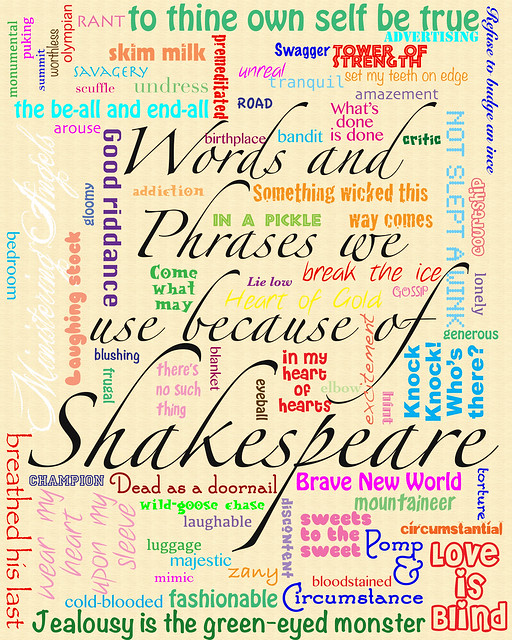

Bonus Bernard Levin quote:
If you cannot understand my argument, and declare "It's Greek to me'', you are quoting Shakespeare; if you claim to be more sinned against than sinning, you are quoting Shakespeare; if you recall your salad days, you are quoting Shakespeare; if you act more in sorrow than in anger; if your wish is father to the thought; if your lost property has vanished into thin air, you are quoting Shakespeare; if you have ever refused to budge an inch or suffered from green-eyed jealousy, if you have played fast and loose, if you have been tongue-tied, a tower of strength, hoodwinked or in a pickle, if you have knitted your brows, made a virtue of necessity, insisted on fair play, slept not one wink, stood on ceremony, danced attendance (on your lord and master), laughed yourself into stitches, had short shrift, cold comfort or too much of a good thing, if you have seen better days or lived in a fool's paradise -why, be that as it may, the more fool you , for it is a foregone conclusion that you are (as good luck would have it) quoting Shakespeare; if you think it is early days and clear out bag and baggage, if you think it is high time and that that is the long and short of it, if you believe that the game is up and that truth will out even if it involves your own flesh and blood, if you lie low till the crack of doom because you suspect foul play, if you have your teeth set on edge (at one fell swoop) without rhyme or reason, then - to give the devil his due - if the truth were known (for surely you have a tongue in your head) you are quoting Shakespeare; even if you bid me good riddance and send me packing, if you wish I was dead as a door-nail, if you think I am an eyesore, a laughing stock, the devil incarnate, a stony-hearted villain, bloody-minded or a blinking idiot, then - by Jove! O Lord! Tut tut! For goodness' sake! What the dickens! But me no buts! - it is all one to me, for you are quoting Shakespeare.
To be fair, Levin misattributed "But me no buts"--it wasn't coined until the early 18th century.
posted by Mr. Bad Example at 4:49 AM on April 21, 2012 [11 favorites]
Googled in German.* It was Waffenschwestern (german). I'll leave you people to your erudite conversation now. Though I suppose it's somewhat indicative of Pushkin's greater status in places other than the US that while I'd heard of Pushkin in school, Tatort taught me he died in a duel.
*German google will suggest Puschkin for Pushkin, meaning you actually get results from German page. It's too early for me to think about transliteration.
posted by hoyland at 4:55 AM on April 21, 2012 [1 favorite]
*German google will suggest Puschkin for Pushkin, meaning you actually get results from German page. It's too early for me to think about transliteration.
posted by hoyland at 4:55 AM on April 21, 2012 [1 favorite]
You'll have to change your handle now though. That was an excellent example with the bonus quote.
Since Google likes to make search terms optional at random, this is becoming very difficult to Google.
A search engine is broken when cookie recipes show up for the keyword "coolie"
posted by infini at 4:55 AM on April 21, 2012
Since Google likes to make search terms optional at random, this is becoming very difficult to Google.
A search engine is broken when cookie recipes show up for the keyword "coolie"
posted by infini at 4:55 AM on April 21, 2012
A guy told me once "The Bible says, neither a borrower nor a lender be"
posted by thelonius at 7:18 AM on April 21, 2012 [1 favorite]
posted by thelonius at 7:18 AM on April 21, 2012 [1 favorite]
One frustrating thing to any student of Russian literature is how little of what Russians consider the best of Russian literature is read by non-Russians. But that's not so much a problem of philistinism as translation. The Russian novel is what's best known in the West, but in Russia, poetry is considered the high art, and the novel a solid second tier. Not that Russians don't have much respect for Tolstoy and Dostoyevsky, but no one would place them in the company of Pushkin, or Lermontov, or Akhmatova. But Russian is hard to translate---certain aspects of the language become very stiff when translated into Romance languages---and poetry, of course, is damn near impossible, so it's the novels that we know (and even those read very differently in English).
Still, I heartily recommend that anyone interested flip through a few translations of Eugene Onegin, pick the one you like best, and read the hell out of it---it's a wonderful, funny, swift and clever book, and arguably a major progenitor of postmodern literature. Avoid Nabokov's translation at all costs, though---that one was more proving a point than producing a readable text.
posted by ThatFuzzyBastard at 7:36 AM on April 21, 2012 [2 favorites]
Still, I heartily recommend that anyone interested flip through a few translations of Eugene Onegin, pick the one you like best, and read the hell out of it---it's a wonderful, funny, swift and clever book, and arguably a major progenitor of postmodern literature. Avoid Nabokov's translation at all costs, though---that one was more proving a point than producing a readable text.
posted by ThatFuzzyBastard at 7:36 AM on April 21, 2012 [2 favorites]
Very clever Belilovsky piece (interesting comment thread, too; don't miss the author's reply to commenter Julie); thanks for the post! Too bad about the mindbogglingly philistine first comment, but the writer of it has been sufficiently smacked down that I don't need to add anything, and the rest of the thread is excellent, MeFi at its best.
Yes, Pushkin is so foundational to Russian literature and culture (both high and low) that it's hard for a non-Russian to conceive; so much so that the numerous Russian anti-Pushkin rants, jokes, parodies, and the like acknowledge his greatness but make the attempt to get out from under his shade, if only for a moment, or give him a whack on the ear just to demonstrate independence (Andrei Sinyavski's Strolls with Pushkin is a classic in the field, and don't miss the great Daniil Kharms's Anecdotes from the Life of Pushkin). There was a debate among Russian exiles in the late 1920s and early '30s about Pushkin and his legacy; the "Paris group," led by the brilliant but erratic critic Georgii Adamovich, thought Pushkin's simplicity and formal perfection was excessive and inadequate to the modern world (they considered Lermontov and Pasternak better models), while the Pushkinians were led by Nabokov's friend Vladislav Khodasevich (who was then, like Nabokov, in Berlin). One consequence of this was that Adamovich, while reluctantly recognizing Nabokov's brilliance, criticized him relentlessly and often (in hindsight) stupidly.
For Nabokov, of course (born exactly a hundred years after Pushkin), he was fundamental; here's a long and interesting piece by Alexander Dolinin (a great Russian Nabokov scholar) about "Pushkinian Subtexts in Nabokov’s Invitation to a Beheading" that covers a great deal more territory but does not, oddly, mention one of the most moving episodes in The Gift (and one that ties in nicely with this post); it begins on p. 115 of my Popular Library paperback, and is supposedly by the invented memoirist Sukhoshchekov (or, to use Nabokov's preferred transliteration, Suhoshchokov):
Yes, Pushkin is so foundational to Russian literature and culture (both high and low) that it's hard for a non-Russian to conceive; so much so that the numerous Russian anti-Pushkin rants, jokes, parodies, and the like acknowledge his greatness but make the attempt to get out from under his shade, if only for a moment, or give him a whack on the ear just to demonstrate independence (Andrei Sinyavski's Strolls with Pushkin is a classic in the field, and don't miss the great Daniil Kharms's Anecdotes from the Life of Pushkin). There was a debate among Russian exiles in the late 1920s and early '30s about Pushkin and his legacy; the "Paris group," led by the brilliant but erratic critic Georgii Adamovich, thought Pushkin's simplicity and formal perfection was excessive and inadequate to the modern world (they considered Lermontov and Pasternak better models), while the Pushkinians were led by Nabokov's friend Vladislav Khodasevich (who was then, like Nabokov, in Berlin). One consequence of this was that Adamovich, while reluctantly recognizing Nabokov's brilliance, criticized him relentlessly and often (in hindsight) stupidly.
For Nabokov, of course (born exactly a hundred years after Pushkin), he was fundamental; here's a long and interesting piece by Alexander Dolinin (a great Russian Nabokov scholar) about "Pushkinian Subtexts in Nabokov’s Invitation to a Beheading" that covers a great deal more territory but does not, oddly, mention one of the most moving episodes in The Gift (and one that ties in nicely with this post); it begins on p. 115 of my Popular Library paperback, and is supposedly by the invented memoirist Sukhoshchekov (or, to use Nabokov's preferred transliteration, Suhoshchokov):
They say that a man whose leg is cut off at the hip can feel it for a long time, moving nonexistent toes and flexing nonexistent muscles. Thus will Russia long continue to feel the living presence of Pushkin. [...] I do not think one could find any other poet who peered so often—now in jest, now superstitiously, or with inspired seriousness—into the future. Right to this day there lives in the Province of Kursk, topping the hundred mark, an old man whom I remember as being already elderly, stupid and malicious—but Pushkin is no longer with us. Meeting in the course of my long life with remarkable talents and living through remarkable events, I have often meditated on how he would have reacted to this and that: why, he could have seen the emancipation of the serfs and could have read Anna Karenin! . . . Returning now to these reveries of mine I recall that once in my youth I had something in the nature of a vision. This psychological episode is closely linked with the recollection of a personage still thriving to this day, whom I shall call Ch.—I trust he will not blame me for this revival of a distant past. We were acquainted through our families—my grandfather had once been friendly with his father. In 1836, while abroad, this Ch. who was then quite young—barely seventeen—quarreled with his family (and in so doing hastened, so they say, the decease of his sire, a hero of the Napoleonic War), and in the company of some Hamburg merchants sailed nonchalantly off to Boston, from there landing in Texas where he successfully took up cattle breeding. [...] Once, on a winter's day in 1858, he visited us unexpectedly at our house on the Moyka, in St. Petersburg: Father was away and the guest was received by us youngsters. As we looked at this outlandish fop [...] my brother and I could hardly contain our laughter and decided there and then to take advantage of the fact that during all these years he had heard absolutely nothing of his homeland, as if it had fallen through some trap door, so that now, like a forty-year-old Rip van Winkle waking up in a transformed St. Petersburg, Ch. was hungry for any news, the which we undertook to give him plenty of, mixed with our outrageous fabrications. To the question, for instance, was Pushkin alive and what was he writing, I blasphemously replied, “Why, he came out with a new poem the other day.” That night we took our guest to the theater. It did not turn out too well, however. [They see a performance of Othello with "the famous black tragedian Aldridge."]posted by languagehat at 8:47 AM on April 21, 2012 [11 favorites]
“Look who's sitting next to us,” my brother suddenly said to Ch. in a low voice, “There, to our right.”
In the neighboring box there sat an old man. . . . Of shortish stature, in a worn tailcoat, with a sallow and swarthy complexion, disheveled ashen side-whiskers, and sparse, gray-streaked tousled hair, he was taking a most eccentric delight in the acting of the African: his thick lips twitched, his nostrils were dilated, and at certain bits he even jumped up and down in his seat and banged with delight on the parapet, his rings flashing.
“Who's that?” asked Ch.
“What, don't you recognize him? Look closer.”
“I don't recognize him.”
Then my brother made big eyes and whispered, “Why, that's Pushkin!”
...It seems funny now to recall what a strange mood came upon me then: the prank, as happens from time to time, rebounded, and this frivolously summoned ghost did not want to disappear: I was quite incapable of tearing myself away from the neighboring box; I looked at those harsh wrinkles, that broad nose, those large ears . . . shivers ran down my back, and not all of Othello's jealousy was able to drag me away. What if this is indeed Pushkin, I mused, Pushkin at sixty, Pushkin spared two decades ago by the bullet of the fatal coxcomb, Pushkin in the rich autumn of his genius. . . . This is he; this yellow hand grasping those lady's opera glasses wrote Anchar, Graf Nulin, The Egyptian Nights. . . . The act finished; applause thundered. Gray-haired Pushkin stood up abruptly, and still smiling, with a bright sparkle in his youthful eyes, quickly left his box.
Someone should make a movie about this guy.
Not surprisingly, Pushkin wrote a prose novel about his ancestor called «Арап Петра Великого» (i.e., "The Blackamoor of Peter the Great").
The novel was adapted into a 1976 Soviet film titled «Сказ про то, как царь Пётр арапа женил» and notably starring Vladimir Vysotsky as Gannibal.
To avoid another disquisition, I will only say that Vysotsky is another very prominent figure in post-Soviet popular culture.
posted by Nomyte at 9:13 AM on April 21, 2012 [1 favorite]
Not surprisingly, Pushkin wrote a prose novel about his ancestor called «Арап Петра Великого» (i.e., "The Blackamoor of Peter the Great").
The novel was adapted into a 1976 Soviet film titled «Сказ про то, как царь Пётр арапа женил» and notably starring Vladimir Vysotsky as Gannibal.
To avoid another disquisition, I will only say that Vysotsky is another very prominent figure in post-Soviet popular culture.
posted by Nomyte at 9:13 AM on April 21, 2012 [1 favorite]
So whose translations of Pushkin should be considered?
posted by jadepearl at 9:40 AM on April 21, 2012
posted by jadepearl at 9:40 AM on April 21, 2012
I don't read Russian and I haven't even read multiple translations, but my introduction to Pushkin was through the Gillon Aitken translation of his short stories (Often collected as "The Queen of Spades and Other Tales"). I recommend it absolutely without reservation.
posted by 256 at 10:06 AM on April 21, 2012 [1 favorite]
posted by 256 at 10:06 AM on April 21, 2012 [1 favorite]
What is somewhat less known is that Pushkin, a notorious firebrand, fought in a total of twenty-nine duels in his youth.
Trivia: Pushkin's nickname ("Cricket") came from his energetic, bouncy dueling style.
posted by Amanojaku at 10:50 AM on April 21, 2012
Trivia: Pushkin's nickname ("Cricket") came from his energetic, bouncy dueling style.
posted by Amanojaku at 10:50 AM on April 21, 2012
Philby: "I'm just wondering- are these types of duels usually to the death? Two men enter, one man leaves kind of deal?"A duel stipulated until death would probably have been unusual (reserved for great affronts). The norm would have been for the challenged to fire first, then the challenger shoots, and then any survivors go their merry way again.
For beginners, I can recommend Pushkin's short story The Shot which we read in Russian class in high school. There is a shot due to me, and I have come to discharge my pistol. Are you ready?
posted by brokkr at 11:43 AM on April 21, 2012 [2 favorites]
jadepearl: I honestly recommend pulling a couple off the shelf at your local bookstore/Amazon preview, and buying the one you most like reading. Translation is such an imperfect art that unless a translation is known for major cuts, like the Constance Garnett translations are, you should just read the one that you enjoy. Onegin is a particularly good one for that treatment because the first stanza is such a marvelous, funny little thing that it's a good translator's test.
posted by ThatFuzzyBastard at 4:46 PM on April 21, 2012
posted by ThatFuzzyBastard at 4:46 PM on April 21, 2012
This argument is irresolvable.
posted by LogicalDash at 6:11 PM on April 21, 2012
posted by LogicalDash at 6:11 PM on April 21, 2012
What argument are you talking about?
posted by languagehat at 7:02 AM on April 22, 2012
posted by languagehat at 7:02 AM on April 22, 2012
« Older Wanna test a friendship...? | Prince's "Sign O The Times" Newer »
This thread has been archived and is closed to new comments
Think how much different the world would be without James Clerk Maxwell, for comparison. Or Thomas Edison. Or Abraham Lincoln.
If the only thing this guy influenced was "Russian and American literature", that's pretty small beans.
posted by Chocolate Pickle at 9:00 PM on April 20, 2012 [1 favorite]