Ozark Giraffes
November 15, 2011 6:59 AM Subscribe
Ozark Giraffe Rock architectural exteriors are a common sight along Route 66 in the Ozarks region of the United States, as they were a popular building choice between 1910 - 1940. The construction materials for giraffe rock exteriors were inexpensive and produced locally from materials found in plentiful supply in the Ozark Mountains, and the style was most predominant on small houses, usually bungalows.
Ozark giraffe rock gets its name from the stone pattern of the exterior. Local stone, usually limestone or sandstone, would be split into thin slabs. The resulting pieces would be of inconsistent size and shape, and were pieced together (like a crazy quilt) with thick mortar joints. The mortar could be concave or convex, and was often painted. The contrast between the painted mortar and the gray/brown stone slabs would look like the pattern on a giraffe's coat.
This exterior pattern meant that all of the procured slab rock could be used in the construction process, and little would go to waste. It was a practical and thrifty choice for a region mostly populated by farmers, ranchers, miners, loggers, and others in the working class.
In the Ozark region, which includes parts of Arkansas, Missouri, and Oklahoma (as well as a tiny bit of Kansas), Ozark giraffe is a common exterior on older homes built in the first half of the twentieth century. The exteriors were found on community and commercial buildings in addition to residential homes. On some homes, a combination of giraffe rock and stucco (or other building materials) was used. Generally, it was a practical, low-cost exterior made with locally-available materials. Ozark giraffe houses are usually small and modest, often bungalows.
The origin of Ozark giraffe has its roots in the Arts and Crafts movement, which encouraged the visibility of handicraft and local, natural materials. The style fell out of favor in the latter half of the twentieth century. In the US, larger homes and structures with a clean, modern look were favored. Many of the original Ozark Giraffe homes and buildings have since been torn down.
For more pictures of Ozark giraffe rock exteriors, take a look at this series by James Radke, a photographer based in Springfield, Missouri. (Scroll down a bit.)

Ozark giraffe rock gets its name from the stone pattern of the exterior. Local stone, usually limestone or sandstone, would be split into thin slabs. The resulting pieces would be of inconsistent size and shape, and were pieced together (like a crazy quilt) with thick mortar joints. The mortar could be concave or convex, and was often painted. The contrast between the painted mortar and the gray/brown stone slabs would look like the pattern on a giraffe's coat.

This exterior pattern meant that all of the procured slab rock could be used in the construction process, and little would go to waste. It was a practical and thrifty choice for a region mostly populated by farmers, ranchers, miners, loggers, and others in the working class.
In the Ozark region, which includes parts of Arkansas, Missouri, and Oklahoma (as well as a tiny bit of Kansas), Ozark giraffe is a common exterior on older homes built in the first half of the twentieth century. The exteriors were found on community and commercial buildings in addition to residential homes. On some homes, a combination of giraffe rock and stucco (or other building materials) was used. Generally, it was a practical, low-cost exterior made with locally-available materials. Ozark giraffe houses are usually small and modest, often bungalows.

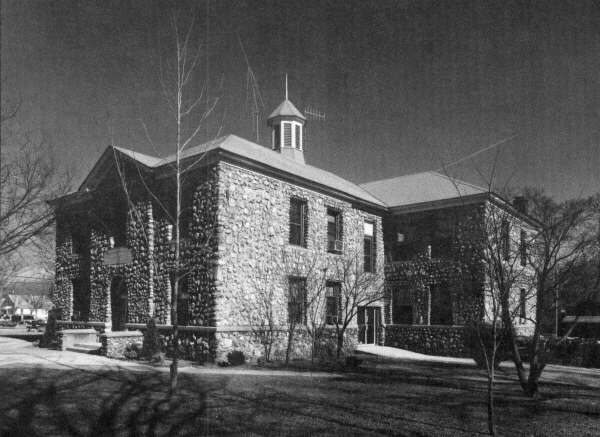

The origin of Ozark giraffe has its roots in the Arts and Crafts movement, which encouraged the visibility of handicraft and local, natural materials. The style fell out of favor in the latter half of the twentieth century. In the US, larger homes and structures with a clean, modern look were favored. Many of the original Ozark Giraffe homes and buildings have since been torn down.
For more pictures of Ozark giraffe rock exteriors, take a look at this series by James Radke, a photographer based in Springfield, Missouri. (Scroll down a bit.)
Wow, terrific post. Thanks so much for this, aabbbiee.
posted by shiu mai baby at 7:25 AM on November 15, 2011
posted by shiu mai baby at 7:25 AM on November 15, 2011
Thanks, OP! Will explore later.
posted by Capt. Renault at 7:29 AM on November 15, 2011
posted by Capt. Renault at 7:29 AM on November 15, 2011
This is fantastic! I was in the depths of the Ozarks for six weeks this summer, saw tons of this style and loved it-- but never knew it had a name.
posted by WidgetAlley at 7:34 AM on November 15, 2011
posted by WidgetAlley at 7:34 AM on November 15, 2011
This exterior pattern meant that all of the procured slab rock could be used in the construction process, and little would go to waste. It was a practical and thrifty choice for a region mostly populated by farmers, ranchers, miners, loggers, and others in the working class.
My grandfather's wood-frame house in Pittsburgh which was built in the 1930s had asphalt shingles on the exterior walls that had exactly this sort of irregular, fake stone, two-tone design imprinted onto them.
Real stone would have been an expensive luxury, I think.
posted by three blind mice at 7:42 AM on November 15, 2011
My grandfather's wood-frame house in Pittsburgh which was built in the 1930s had asphalt shingles on the exterior walls that had exactly this sort of irregular, fake stone, two-tone design imprinted onto them.
Real stone would have been an expensive luxury, I think.
posted by three blind mice at 7:42 AM on November 15, 2011
Neat! I spent most of my life living within a mile or two of old Route 66 in Tulsa and there are a bunch of these little buildings scattered around. I've always loved them and I never heard of the name. In fact, my last house in Tulsa (built 1929) was brick, but had a section of this stuff around the front door. I really miss that house.
posted by Dojie at 7:45 AM on November 15, 2011
posted by Dojie at 7:45 AM on November 15, 2011
That house on Washington Avenue on Radke's page was for sale recently: $300,000. Oh, how I do covet.
posted by psylosyren at 7:51 AM on November 15, 2011
posted by psylosyren at 7:51 AM on November 15, 2011
Huh. I had never realized that this was a specific style of house with a name, and I also had never thought about how regionally specific it is. Apparently (even if you've lived in a dozen or so other places since), if you're from the Ozarks, this is just what houses are supposed to look like! Great post.
posted by naoko at 8:11 AM on November 15, 2011 [1 favorite]
posted by naoko at 8:11 AM on November 15, 2011 [1 favorite]
I learned about these from my native Ozark wife and love spotting them when we head to her neck of the woods. The variation between them can be fascinating to note. Thanks for the post!
posted by Atreides at 8:18 AM on November 15, 2011
posted by Atreides at 8:18 AM on November 15, 2011
Oh wow those are gorgeous. I bet people who grew up in/around houses that look like that think they're ugly/boring/low-rent because they're so familiar.
posted by headnsouth at 8:22 AM on November 15, 2011
posted by headnsouth at 8:22 AM on November 15, 2011
So I never knew the Combination Giraffe Rock / Stucco was distinct from the half timber Partial Tudor Revival houses where the top was stucco with Tudor wood ornamentation and the bottom was some type of flagstone. I grew up in Tulsa as well and would guess most of the older houses in mid-town were Giraffe rock, while the 1980's builds in South Tulsa were exclusively a more tudor flagstone. I wonder if the giraffe rock heritage influenced the local expression of (what I'd guess to be) the more 'national' trend of half timber tudor style homes
posted by midmarch snowman at 8:29 AM on November 15, 2011
posted by midmarch snowman at 8:29 AM on November 15, 2011
Add me to the list who didn't realize this was a regional thing - I spent every summer vacation in the Missouri Ozarks until I graduated from college.
This style is pretty common in my hometown in northwest Missouri as well.
posted by something something at 8:32 AM on November 15, 2011
This style is pretty common in my hometown in northwest Missouri as well.
posted by something something at 8:32 AM on November 15, 2011
aw, this post made me a little homesick.
posted by daisystomper at 9:57 AM on November 15, 2011 [1 favorite]
posted by daisystomper at 9:57 AM on November 15, 2011 [1 favorite]
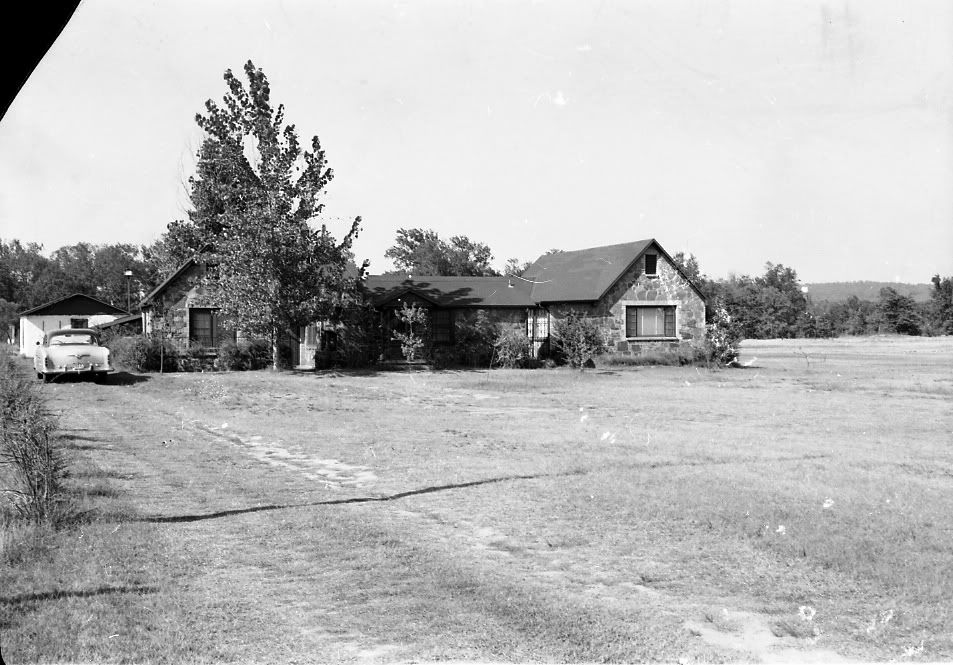
Here's the house I grew up in, Fort Smith, Arkansas.
drhydrohouse
posted by drhydro at 10:00 AM on November 15, 2011
drhydrohouse
posted by drhydro at 10:00 AM on November 15, 2011
I was going to add that all the rock that went into that house was taken from my grandfather's farm, about 20 miles away.
posted by drhydro at 10:04 AM on November 15, 2011 [1 favorite]
posted by drhydro at 10:04 AM on November 15, 2011 [1 favorite]
I love rock architecture. Here in central New York State, thanks to the local glacially-tumbled stones and an abundance of skilled masons following completion of the Erie Canal, we have cobblestone buildings.
These are lovely. Fun post. Makes me yearn for a road trip.
posted by kinnakeet at 10:18 AM on November 15, 2011
These are lovely. Fun post. Makes me yearn for a road trip.
posted by kinnakeet at 10:18 AM on November 15, 2011
I grew up in the Ozarks; the older part of my high school was made of this stuff.
Relatedly, it sure is hard to google for a picture of your high school when you're from the town of Licking.
posted by Occula at 10:41 AM on November 15, 2011 [3 favorites]
Relatedly, it sure is hard to google for a picture of your high school when you're from the town of Licking.
posted by Occula at 10:41 AM on November 15, 2011 [3 favorites]
Addendum: I've never heard the expression "giraffe houses," however. I think most people would just call them stone or "fieldstone" houses.
posted by Occula at 10:42 AM on November 15, 2011 [1 favorite]
posted by Occula at 10:42 AM on November 15, 2011 [1 favorite]
If I saw these described as stone or fieldstone houses, I'd certainly assume that they had load-bearing stone walls. So it's useful to have a specific name for houses that have a stone veneer on a timber frame.
posted by Azara at 10:54 AM on November 15, 2011
posted by Azara at 10:54 AM on November 15, 2011
That's funny, I grew up and lived near the Ozarks for years, and saw this style all the time. Never knew it even had a name!
posted by zardoz at 1:23 PM on November 15, 2011
posted by zardoz at 1:23 PM on November 15, 2011
I have lived in Springfield, MO (dead center of The Ozarks) and 1) It never occured to me these houses weren't found everywhere and 2) They had a name.
I've even lived in a couple.
posted by sourwookie at 3:04 PM on November 15, 2011 [1 favorite]
I've even lived in a couple.
posted by sourwookie at 3:04 PM on November 15, 2011 [1 favorite]
And Oh Hey! James Radke! As an active local musician I keep showing up in his photos. Odd how Mefi keeps coming 'round to Springfield.
posted by sourwookie at 3:13 PM on November 15, 2011
posted by sourwookie at 3:13 PM on November 15, 2011
Yeah, add me to the list: I was born in the Ozarks, lived in one of these as a child and never knew they had a name.
posted by Bookhouse at 4:25 PM on November 15, 2011
posted by Bookhouse at 4:25 PM on November 15, 2011
Nthing what Occula said, I'd always heard them called fieldstone houses. I spent my childhood in Joplin and later graduated from MSU. Makes me homesick.
posted by davismbagpiper at 10:30 AM on November 16, 2011
posted by davismbagpiper at 10:30 AM on November 16, 2011
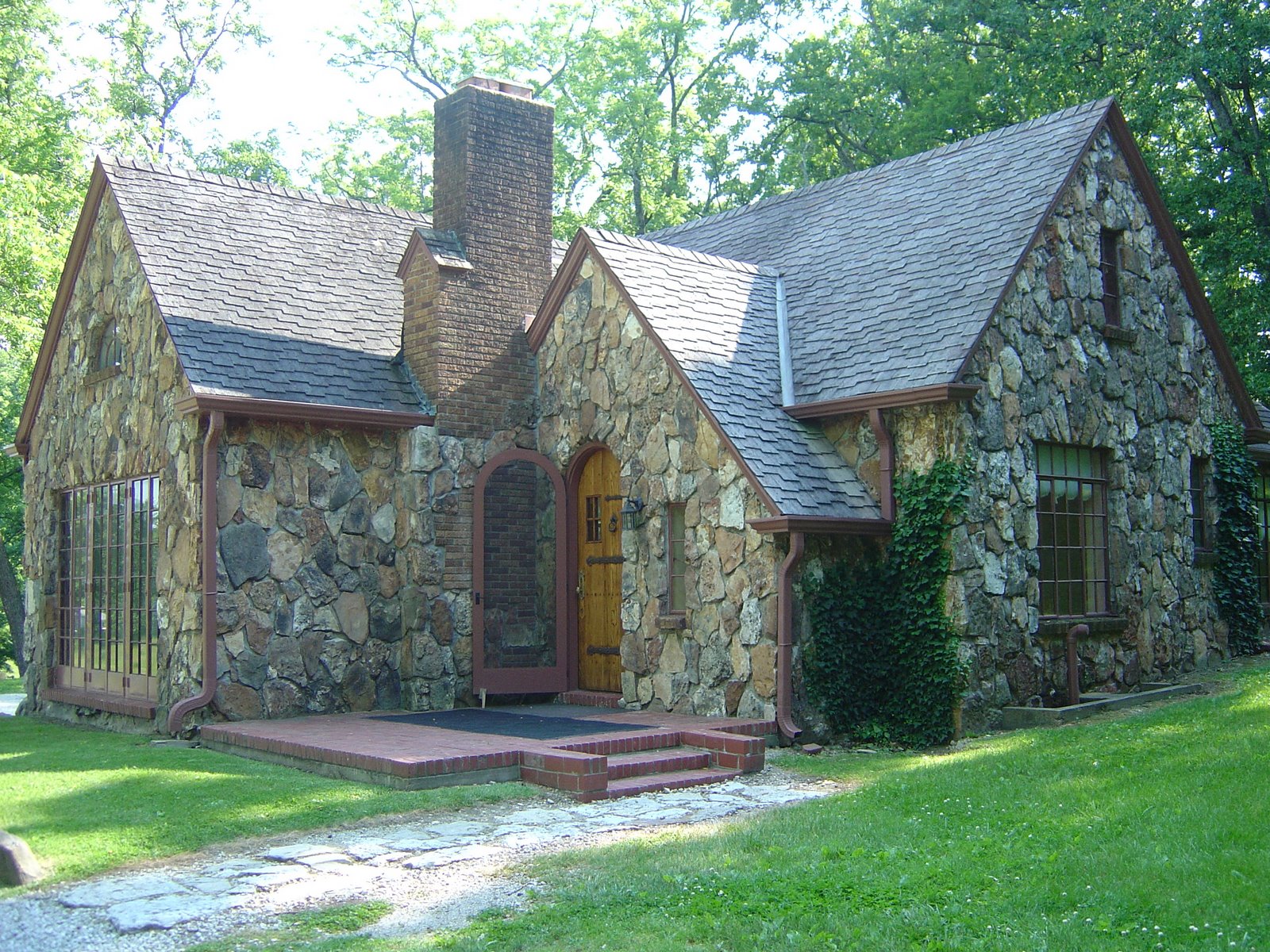
Laura Ingalls Wilder's "Rock House" on Rocky Ridge Farm in Mansfield, MO is also a giraffe rock house.
posted by deborah at 7:38 PM on November 16, 2011 [1 favorite]
posted by deborah at 7:38 PM on November 16, 2011 [1 favorite]
I almost included a photo of that Rock House in the post, deborah, but I didn't find that nice big image in my search! Thanks for posting!
posted by aabbbiee at 7:08 AM on November 17, 2011 [1 favorite]
posted by aabbbiee at 7:08 AM on November 17, 2011 [1 favorite]
The Rock House at Rocky Ridge in Mansfield is actually a Sears & Roebuck catalog house (The Mitchell), customized a bit and faced with Ozark fieldstone. They've recently restored it, and it is a beauty.
LHS Class of '96!
posted by General Tonic at 12:30 PM on November 17, 2011 [2 favorites]
LHS Class of '96!
posted by General Tonic at 12:30 PM on November 17, 2011 [2 favorites]
« Older Guernica 3D | How to Build a Computer Model of God Newer »
This thread has been archived and is closed to new comments
posted by Floydd at 7:21 AM on November 15, 2011