You shall Hear things, Wonderful to tell
December 22, 2011 11:35 AM Subscribe
A decade on, the Coen brothers' woefully underrated O Brother, Where Art Thou? [alt] is remembered for a lot of things: its sun-drenched, sepia-rich cinematography (a pioneer of digital color grading), its whimsical humor, fluid vernacular, and many subtle references to Homer's Odyssey. But one part of its legacy truly stands out: the music.
Assembled by T-Bone Burnett, the soundtrack is a cornucopia of American folk music, exhibiting everything from cheery ballads and angelic hymns to wistful blues and chain-gang anthems. Woven into the plot of the film through radio and live performances, the songs lent the story a heartfelt, homespun feel that echoed its cultural heritage, a paean and uchronia of the Old South.
Though the multiplatinum album was recently reissued, the movie's medley is best heard via famed documentarian D. A. Pennebaker's Down from the Mountain, an extraordinary yet intimate concert film focused on a night of live music by the soundtrack's stars (among them Gillian Welch, Emmylou Harris, Chris Thomas King, bluegrass legend Dr. Ralph Stanley) and wryly hosted by John Hartford, an accomplished fiddler, riverboat captain, and raconteur whose struggle with terminal cancer made this his last major performance. The film is free in its entirety on Hulu and YouTube -- click inside for individual clips, song links, and breakdowns of the set list's fascinating history.
1 | "Po' Lazarus" (lyrics) by James Carter and the Prisoners
2 | "Big Rock Candy Mountain" (lyrics) by Harry McClintock
3 | "You Are My Sunshine" (lyrics) by Norman Blake
4 | "Down to the River to Pray" (lyrics) by Alison Krauss
5 | "I Am a Man of Constant Sorrow" (lyrics) by Dan Tyminski
6 | "Hard Time Killing Floor Blues" (lyrics) by Chris Thomas King
7 | "Keep On the Sunny Side" (lyrics) by The Whites
8 | "I'll Fly Away" (lyrics) by
9 | "Didn't Leave Nobody But the Baby" (lyrics) by Emmylou Harris, Alison Krauss, and Gillian Welch
10 | "In the Highways" (lyrics) by the Peasall Sisters
11 | "I Am Weary, Let Me Rest" (lyrics) by the Cox Family
12 | "O Death" (lyrics) by Dr. Ralph Stanley
13 | "In the Jailhouse Now" (lyrics) by Tim Blake Nelson
14 | "Indian War Whoop" by John Hartford
15 | "Lonesome Valley" (lyrics) by the Fairfield Four
16 | "Angel Band" (lyrics) by the Stanley Brothers
1 | "Po' Lazarus" (lyrics) by James Carter and the Prisoners
Context: This plodding chain-gang chorus opens the film -- and suggests the whole story is an elaborate jailyard song in itself.
Background: Despite the name, James Carter and the Prisoners isn't your traditional band -- it's the informal title of an actual 1950s Mississippi chain gang featuring Carter and a number of other anonymous convicts. Encountered by traveling ethnomusicologist Alan Lomax, their worker chant was recorded and entered into his vast field collection (much of which is now available online). Four decades later, Carter was tracked down and paid $20,000 by the Coens for the use of his music in the movie.
The song itself is a traditional fable about a larger-than-life prisoner. Mudcat.org explains:
Lazarus was a worker on a levy camp, in the days when "you worked from can to can't and maybe they paid you and maybe they didn't." One evening at the mess hall he got tired of finding "meat in his greens" (worms in his salad). Then he did something for which [he] must be feeling really pissed off and had to really have some balls. He "walked the table". He stood up on the mess table and stomped everyone's plates with his muddy boots. Knowing he'd face a minimum of a whippiong for his deed, and with revolvers in either hand, he went straight for the pay window, took the money and ran. Our story (the song) begins with the high sherrif telling the deputy to go get "Po' Laz'us".
In concert: The five singers of the Fairfield Four used a slightly more lighthearted take on the song to open the concert.
Other versions: The Bright Light Quartet's harmonious rendition, also from Lomax's collection
2 | "Big Rock Candy Mountain" (lyrics) by Harry McClintock
Context: Everett, Pete, and Delmar make a break for it during the opening credits.
Background: While the cleaned-up version by Burl Ives is more famous, Harry "Haywire Mac" McClintock originally penned the song as an off-color riff on a hobo's idea of paradise, a Cockaigne-esque land of plenty where alcohol ran like water.
In concert: Emcee John Hartford led a fiddle-based version.
3 | "You Are My Sunshine" (lyrics) by Norman Blake
Context: The official radio campaign song of Governor Menelaus "Pass the Biscuits" Pappy O'Daniel.
Background: Adapting it from the Ukrainian folk song "Up There On the Mountain," original singer Jimmie Davis later used the tune as his own campaign song when he ran for governor of Louisiana (on a horse named Sunshine). It's now one of the state's official songs.
Other versions: Too many to count, but Wikipedia lists many of them.
4 | "Down to the River to Pray" (lyrics) by Alison Krauss
Context: An argument is interrupted by a white-robed baptismal procession.
Background: This traditional hymn was possibly written by slaves back in the 1800s before it wound its way to Appalachia. Choralnet.org goes into more detail.
In concert: Alison Krauss performed the song with the backing of a full gospel chorus.
Other versions: A peppy version by Laila Biala on piano.
5 | "I Am a Man of Constant Sorrow" (lyrics) by Dan Tyminski
Context: The popular off-the-cuff single that wins the Soggy Bottom Boys their freedom.
Background: The most conventional hit of the album has its roots in a "Farewell Song" recorded by blind Kentucky folk singer Dick Burnett in 1913, though it almost certainly predates him. Dr. Ralph Stanley discussed the song and his attempts to revive it in this 2009 Diane Rehm interview, where he speculates it may be two or three hundred years old.
(Fun fact: the accompaniment in the film, Tommy Johnson, was a direct reference to the real-life blues virtuoso of the same name, who likewise claimed to have sold his soul to the devil in exchange for musical talent.)
There were several variations on this piece throughout the movie, including two different instrumental interpretations. Video of the original singers.
In concert: The lyrical version was notably absent, but the late John Hartford performed a haunting wordless solo of his fiddle interpretation, one of his last before cancer rendered him incapable of handling his beloved instrument.
Other versions: Again, many, but some of the most notable: Bob Dylan (his first national TV appearance) - Roscoe Holcomb - Jerry Garcia (via the Pizza Tapes) - Ralph Stanley
6 | "Hard Time Killing Floor Blues" (lyrics) by Chris Thomas King
Context: Bluesman Tommy plays a melancholy dirge at a pensive campfire.
Background: Adapted from the keening original by Skip James, it reflects on the hard times faced by the nation's poor in the depths of the Great Depression.
Other versions: Another, more ethereal take on the song by James (bio and lyrics in description).
7 | "Keep On the Sunny Side" (lyrics) by The Whites
Context: The official campaign song of reform candidate Homer Stokes.
Background + lyrics
8 | "I'll Fly Away" (lyrics) by
Context: A montage of light-hearted scenes from the middle of the film.
Background: Ironically this gospel hymn was adapted from a line in a secular tune musing about jailbreaking from prison life.
Other versions: Lots, including Johnny Cash (with a great singalong version from his TV show) and Gillian Welch/David Rawlings. One version by the Kossoy Sisters was used in the movie in place of the soundtrack version; it's included on the reissue.
9 | "Didn't Leave Nobody But the Baby" (lyrics) by Emmylou Harris, Alison Krauss, and Gillian Welch
Context: A trio of sirens seduces the group by a cold creek.
Background: This eerie tune was said to be based on a combination of an old lullaby with the steady cadence of a prison work song (compare with the rhythm of "Po' Lazarus."
In concert: The three original singers reprised the song together on stage.
10 | "In the Highways" (lyrics) by the Peasall Sisters
Context: The song performed by the Little Warvey Gals at the Stokes rally.
In concert: Reprised by the three sisters.
11 | "I Am Weary, Let Me Rest" (lyrics) by the Cox Family
Context: A brief act at the Stokes rally.
Background: Dating back to 1864, the tune was modified somewhat by the Coxes for their in-film cameo.
In concert: Introduced with good humor by Hartford.
Other versions: Jade Turner live
12 | "O Death" (lyrics) by Dr. Ralph Stanley
Context: The chilling KKK rally scene (similar to the infiltration of the witch's castle in The Wizard of Oz).
Background + lyrics
In concert: Bluegrass legend Stanley gives a striking solo performance shrouded in shadow.
Other versions: Jen Titus
13 | "In the Jailhouse Now" (lyrics) by Tim Blake Nelson
Context: A holdover song done to buy time during the ending concert.
Background: A somewhat silly yodeling vaudeville piece with a busy history.
14 | "Indian War Whoop" by John Hartford
Context: The celebratory ditty aired while hauling George Nelson to his execution.
Background: An instrumental piece by Hoyt Ming with myriad variations; Old Weird America (a blog about Harry Smith's seminal Anthology of American Folk Music) goes into all the details complete with videos and links.
In concert: John Hartford and his fiddle have some fun at Gillian Welch's expense.
Other versions: An older recording from Smith's anthology, an exuberant take from Dr. Scantlin's Red Hot Peppers, plus some YouTube demonstration.
15 | "Lonesome Valley" (lyrics) by the Fairfield Four
Context: Echoing the movie's intro, a group of workmen sing an execution song in unison as the boys pray for their lives.
Background: The earliest known date for this is David Miller's 1927 record, though it's probably much older.
Other versions: A jazzy cover by the "Million Dollar Quartet" -- Elvis Presley, Johnny Cash, Jerry Lee Lewis, and Carl Perkins. Another uptempo version by Mississippi John Hurt, plus Woody Guthrie, Arlo Guthrie/Pete Seeger, and Bruce Springsteen.
16 | "Angel Band" (lyrics) by the Stanley Brothers
Context: Bridges the epilogue and end credits.Other original music featured in the documentary:
In concert: This uplifting song closed out the concert in a mass singalong featuring all the stage's stars.
Other versions: Several, but the most unexpected is likely the Monkees.
"Wild Bill Jones" - Alison Krauss and Union StationWant more? The reissued deluxe edition soundtrack contains a second disc with 14 songs from the film never released on the original album.
"Blue and Lonesome" - Alison Krauss and Union Station
"Green Pastures" - Emmylou Harris and Gillian Welch
"John Law Burned Down the Liquor Store" - Chris Thomas King and Colin Linden
"Will There Be Any Stars In My Crown?" - The Cox Family
"Dear Someone" by Gillian Welch, David Rawlings, and John Hartford (my favorite)
"I Want to Sing That Rock and Roll" - Gillian Welch and David Rawlings
"Shove That Hog's Foot Further In the Bed" - John Hartford
You win. Wow. Amazing.
posted by mattbucher at 11:38 AM on December 22, 2011 [1 favorite]
posted by mattbucher at 11:38 AM on December 22, 2011 [1 favorite]
Here's my favorite version of 'Big Rock Candy Mountain,' as remixed by Jpod. His whole 'Grass and Gospel' mix is worth a listen.
posted by kaibutsu at 11:39 AM on December 22, 2011 [7 favorites]
posted by kaibutsu at 11:39 AM on December 22, 2011 [7 favorites]
I would give an extra [+], if I could, for the tag line. . .just fantastic!
posted by Danf at 11:40 AM on December 22, 2011
posted by Danf at 11:40 AM on December 22, 2011
A decade on, the Coen brothers' woefully underrated O Brother, Where Art Thou?
I see it has 7.8/10 on IMDB. Who underrated it?
posted by pracowity at 11:41 AM on December 22, 2011 [5 favorites]
I see it has 7.8/10 on IMDB. Who underrated it?
posted by pracowity at 11:41 AM on December 22, 2011 [5 favorites]
Incredible post, but----is the film really underrated? Maybe it's just me and my social circle, but I always thought it was very well-received, did good box office, and remains popular as one of the more "accessible" Coen Brothers hit.
posted by Bromius at 11:41 AM on December 22, 2011 [10 favorites]
posted by Bromius at 11:41 AM on December 22, 2011 [10 favorites]
Boom!
My wife and I don't go to music concerts often, and in fact, Down from the Mountain was probably the first we attended together. It was as great as the post implies. Thanks for the reminder!
posted by Atreides at 11:41 AM on December 22, 2011
My wife and I don't go to music concerts often, and in fact, Down from the Mountain was probably the first we attended together. It was as great as the post implies. Thanks for the reminder!
posted by Atreides at 11:41 AM on December 22, 2011
:-)
I have multiple versions of many of these songs, and in a lot of cases, the soundtrack versions are my faves. It's led me to doing some deeper digging, and I count myself firmly as a major Ralph Stanley fan as a result.
posted by Devils Rancher at 11:41 AM on December 22, 2011
I have multiple versions of many of these songs, and in a lot of cases, the soundtrack versions are my faves. It's led me to doing some deeper digging, and I count myself firmly as a major Ralph Stanley fan as a result.
posted by Devils Rancher at 11:41 AM on December 22, 2011
One of my favorite soundtracks, and favorite documentary/concert films. Also, terrific post.
posted by tzikeh at 11:41 AM on December 22, 2011
posted by tzikeh at 11:41 AM on December 22, 2011
Excellent post on one of my most favourite movies. I'm going to look forward to working through the links this evening.
posted by sfred at 11:42 AM on December 22, 2011
posted by sfred at 11:42 AM on December 22, 2011
Not available on youtube or Hulu in Canada.
posted by Pruitt-Igoe at 11:42 AM on December 22, 2011 [2 favorites]
posted by Pruitt-Igoe at 11:42 AM on December 22, 2011 [2 favorites]
... many subtle references to Homer's Odyssey
Not to take away from the rest of this amazing post, but...subtle?
posted by Greg_Ace at 11:43 AM on December 22, 2011 [4 favorites]
Not to take away from the rest of this amazing post, but...subtle?
posted by Greg_Ace at 11:43 AM on December 22, 2011 [4 favorites]
The future is just typing "O Brother" into the Spotify search box and enjoying and entire post without any further effort.
posted by jsavimbi at 11:43 AM on December 22, 2011
posted by jsavimbi at 11:43 AM on December 22, 2011
I see it has 7.8/10 on IMDB. Who underrated it?
I guess that's an average or a median, so pretty much everyone who went lower than that?
posted by Hoopo at 11:44 AM on December 22, 2011
I guess that's an average or a median, so pretty much everyone who went lower than that?
posted by Hoopo at 11:44 AM on December 22, 2011
Four decades later, Carter was tracked down and paid $20,000 by the Coens for the use of his music in the movie.
I can't fault how you put this post together, but I also feel like you might have buried the lede here.
posted by straight at 11:45 AM on December 22, 2011 [1 favorite]
I can't fault how you put this post together, but I also feel like you might have buried the lede here.
posted by straight at 11:45 AM on December 22, 2011 [1 favorite]
-is the film really underrated?
In the UK it was huge, though maybe not quite as big as the Big Lebowski was there. Always kind of weirds me out that these are considered obscure little cult movies in the US.
posted by Artw at 11:46 AM on December 22, 2011 [1 favorite]
In the UK it was huge, though maybe not quite as big as the Big Lebowski was there. Always kind of weirds me out that these are considered obscure little cult movies in the US.
posted by Artw at 11:46 AM on December 22, 2011 [1 favorite]
Damn! We've got a tight post!
posted by Iridic at 11:47 AM on December 22, 2011 [10 favorites]
posted by Iridic at 11:47 AM on December 22, 2011 [10 favorites]
Brilliant, awesome, fantastic post. One of my favorite films of all time, because it's not often I see my people on film swirling in the eddies of an epic, portrayed as clever, ignorant, caring, careless - just like everyone everywhere. And the music, oh the music; how it tells a story and takes me somewhere both familiar and strange. <3 this post.
posted by custardfairy at 11:49 AM on December 22, 2011 [1 favorite]
posted by custardfairy at 11:49 AM on December 22, 2011 [1 favorite]
Even though it's not explicitly a Christmas song, something about 'Down in the River to Pray' epitomizes my nice quiet lonesome Christmas mornings, so this is a seasonal post for me - as well as an example of the very best MeFi has to offer. Thanks!
posted by not_that_epiphanius at 11:50 AM on December 22, 2011 [1 favorite]
posted by not_that_epiphanius at 11:50 AM on December 22, 2011 [1 favorite]
Okay... I'm with you fellers.
posted by kimdog at 11:52 AM on December 22, 2011 [10 favorites]
posted by kimdog at 11:52 AM on December 22, 2011 [10 favorites]
It's very simple, but something about the melody and chord progression in "Down in the River to Pray" just works. If I sit down to sing and play it on guitar (sometimes my family will chime in) and can be 10 or 20 minutes on that one song before I want to stop.
posted by straight at 11:57 AM on December 22, 2011
posted by straight at 11:57 AM on December 22, 2011
Did anyone else have, like, serious trouble with the Down from the Mountain DVD? I got it from Netflix, and it freezed my roommate's DVD player, literally until the laser burnt out. Thinking it was just a problem with that disc, I bought it at a store, and when it started getting really choppy, I decided to return it to the store.
posted by roll truck roll at 11:58 AM on December 22, 2011
posted by roll truck roll at 11:58 AM on December 22, 2011
Yeah, it seemed to me that O Brother... was a pretty big critical hit immediately upon release. Not just typical film nerds, either. My father and I saw it together and the rest of the theater was packed with elderly and seemingly rural people (a lot of non-ironic trucker hats and overalls). The audience gave a standing ovation at the end.
(Also, great post!)
posted by brundlefly at 11:59 AM on December 22, 2011
(Also, great post!)
posted by brundlefly at 11:59 AM on December 22, 2011
For years I've refused to watch O Brother, Where Art Thou? for the simple reason that doing so would destroy a happy illusion of mine. I've always preferred to believe that John L. Sullivan never made O Brother, Where Art Thou? and that he instead went back to the studios and made another Ants In Your Pants Of 1939 – which is, let's all admit, a much better film title than O Brother, Where Art Thou?
posted by koeselitz at 12:00 PM on December 22, 2011 [4 favorites]
posted by koeselitz at 12:00 PM on December 22, 2011 [4 favorites]
Fantastic, excellent post. A treasure trove of interesting things related to an excellent soundtrack and movie. Thank you for adding this to my life.
posted by dios at 12:00 PM on December 22, 2011
posted by dios at 12:00 PM on December 22, 2011
Previously: Big Rock Candy Mountain, with some really great comments about various versions and history of the song.
posted by filthy light thief at 12:00 PM on December 22, 2011
posted by filthy light thief at 12:00 PM on December 22, 2011
YES! one of my favorite albums. Whatever the South's problems, it's been blessed with the most magical music
posted by moorooka at 12:01 PM on December 22, 2011 [1 favorite]
posted by moorooka at 12:01 PM on December 22, 2011 [1 favorite]
from post: “Four decades later, Carter was tracked down and paid $20,000 by the Coens for the use of his music in the movie.”
Yeah, sure. But how much money did they give to Sinclair Beckstein?
posted by koeselitz at 12:02 PM on December 22, 2011
Yeah, sure. But how much money did they give to Sinclair Beckstein?
posted by koeselitz at 12:02 PM on December 22, 2011
There are other of their films that are far, far more underrated than this one. Almost all of them, in fact. Fantastic post, though. Thanks!
posted by blucevalo at 12:04 PM on December 22, 2011
posted by blucevalo at 12:04 PM on December 22, 2011
You've got my vote for best post of the month.
Wasn't there a thread in MeTa about how Rhaomi was ineligible due to being too awesome?
posted by Mister Fabulous at 12:04 PM on December 22, 2011 [1 favorite]
Wasn't there a thread in MeTa about how Rhaomi was ineligible due to being too awesome?
posted by Mister Fabulous at 12:04 PM on December 22, 2011 [1 favorite]
O Brother isn't underrated. The Man Who Wasn't There is underrated.
posted by Bunny Ultramod at 12:05 PM on December 22, 2011 [13 favorites]
posted by Bunny Ultramod at 12:05 PM on December 22, 2011 [13 favorites]
For all the care that the Coens [yay, Minnesota!] put into choosing this music, and the passion the musicians put into making these great sounds…well, Rhaomi, you have done justice by them.
posted by wenestvedt at 12:06 PM on December 22, 2011
posted by wenestvedt at 12:06 PM on December 22, 2011
Wow, Rhaomi, thank you! This post is what the web ought to be like, but so seldom lives up to.
posted by tyllwin at 12:06 PM on December 22, 2011
posted by tyllwin at 12:06 PM on December 22, 2011
Wow, monolithic post! Funny, O Brother is actually playing TONIGHT at my local art theater. I'm going to see The Descendents beforehand, but delving into this post might just make me want to stick around for the late show...
posted by obscurator at 12:09 PM on December 22, 2011
posted by obscurator at 12:09 PM on December 22, 2011
Great film, great soundtrack, and great post. The soundtrack really is made of beauty, and though I haven't listened in a while, it still holds a place in my mp3 player.
However, I agree with the above posters in saying this movie is not only not underrated, but it is one of the more accessible Coens movies, and a favorite among my family and friends. This is one of my dad's favorite movies, and still inspires quotes in day-to-day life.
Also, I always saw this movie as a retelling of The Odyssey, so I would say the references are far from subtle.
posted by mysterpigg at 12:09 PM on December 22, 2011
However, I agree with the above posters in saying this movie is not only not underrated, but it is one of the more accessible Coens movies, and a favorite among my family and friends. This is one of my dad's favorite movies, and still inspires quotes in day-to-day life.
Also, I always saw this movie as a retelling of The Odyssey, so I would say the references are far from subtle.
posted by mysterpigg at 12:09 PM on December 22, 2011
I was holding out for a Hey-Hey in the Hayloft sequel, myself.
[Falls through a hole, sneezes at a horse.]
posted by Iridic at 12:10 PM on December 22, 2011 [1 favorite]
[Falls through a hole, sneezes at a horse.]
posted by Iridic at 12:10 PM on December 22, 2011 [1 favorite]
i also raised my eyebrow at "underrated" then i went to metacritc and some people HATED it.
which is sort of my problem with metacritc - because so many people grade things as 50 or above (or 3 stars and above), the people who grade with 0s have way more influence on the ranking.
regardless, it's my favorite of the coen brother movies.
posted by nadawi at 12:10 PM on December 22, 2011
which is sort of my problem with metacritc - because so many people grade things as 50 or above (or 3 stars and above), the people who grade with 0s have way more influence on the ranking.
regardless, it's my favorite of the coen brother movies.
posted by nadawi at 12:10 PM on December 22, 2011
One of my favorite movies. One of my favorite albums. Awesome post!!
posted by zarq at 12:14 PM on December 22, 2011
posted by zarq at 12:14 PM on December 22, 2011
The moment where George Clooney says "We in a tight spot!" and then shrieks as the barn catches on fire is one of the most hilarious moments in all of film.
posted by infinitywaltz at 12:15 PM on December 22, 2011 [5 favorites]
posted by infinitywaltz at 12:15 PM on December 22, 2011 [5 favorites]
Iceberg post! A little bit above the surface, and much, much more below. And what a wonderful iceberg it is. Fantastic work.
/off to put the DVD in
posted by azpenguin at 12:17 PM on December 22, 2011
/off to put the DVD in
posted by azpenguin at 12:17 PM on December 22, 2011
I was unaware that there were people boorish enough to dislike this film. Normally, I don't care much about who likes what, but if I ever met someone who actively dislike O Brother, that would be a might deep hole for them to crawl out of to convince me that any of their ideas were worth listening to.
posted by cmoj at 12:19 PM on December 22, 2011 [4 favorites]
posted by cmoj at 12:19 PM on December 22, 2011 [4 favorites]
True story: this post was inspired by Reddit. I love the movie and have owned the soundtrack for years, but it wouldn't have occurred to me to post about this if I hadn't seen that thread.
The YouTube/Hulu movies aren't available overseas, but almost all of the songs have regular YouTube links below the gold that should work. Don't miss "Dear Someone," its great!
And no, I'm not eligible after having won before, but it was still a treat making this and I'm thrilledyou all y'all like it. I learned so much just reading background for it that it was totally worth it. And I'm posting it today because it's the 11-year anniversary of the movie premier! Also the one-year anniversary of my Starship Titanic post... auspicious!
(Also re: underrated, that's the impression I got insofar as the movie wasn't a blockbuster and is relatively obscure today for a lot of people -- or at least compared to the soundtrack.)
posted by Rhaomi at 12:19 PM on December 22, 2011
The YouTube/Hulu movies aren't available overseas, but almost all of the songs have regular YouTube links below the gold that should work. Don't miss "Dear Someone," its great!
And no, I'm not eligible after having won before, but it was still a treat making this and I'm thrilled
(Also re: underrated, that's the impression I got insofar as the movie wasn't a blockbuster and is relatively obscure today for a lot of people -- or at least compared to the soundtrack.)
posted by Rhaomi at 12:19 PM on December 22, 2011
Not doing huge box office doesn't mean "underrated." The movie was lauded critically- it wasn't even remotely underrated.
posted by ethnomethodologist at 12:22 PM on December 22, 2011
posted by ethnomethodologist at 12:22 PM on December 22, 2011
I had a roommate who watched O Brother at least once a day for months. I eventually threw out the copy we had. And, while I love the movie, I don't think I can ever watch it again.
He did the same thing with High Fidelity, too, after the disposal of which I was able to convince him to make The Muppet Movie his default. There's a movie I could handle having to see on a daily basis.
posted by The Great Big Mulp at 12:26 PM on December 22, 2011
He did the same thing with High Fidelity, too, after the disposal of which I was able to convince him to make The Muppet Movie his default. There's a movie I could handle having to see on a daily basis.
posted by The Great Big Mulp at 12:26 PM on December 22, 2011
nadawi: "i also raised my eyebrow at "underrated" then i went to metacritc and some people HATED it... "
I occasionally find him insightful even when I disagree with him, but everything that seperates me from the Chicago Reader's Jonathan Rosenbaum is displayed in his review of this movie. Sometimes, from my perspective, he just. doesn't. get. it.
posted by MCMikeNamara at 12:26 PM on December 22, 2011 [1 favorite]
I occasionally find him insightful even when I disagree with him, but everything that seperates me from the Chicago Reader's Jonathan Rosenbaum is displayed in his review of this movie. Sometimes, from my perspective, he just. doesn't. get. it.
posted by MCMikeNamara at 12:26 PM on December 22, 2011 [1 favorite]
I finally got around to watching this movie earlier this year. I'd been worried that it would turn out to be oversold by fans of the Coens (I know quite a few) but it lived up to billing. Thanks for the pointer to the concert documentary; the music was one of the great things about the film. I'm glad to see it get some more love.
posted by immlass at 12:26 PM on December 22, 2011
posted by immlass at 12:26 PM on December 22, 2011
Just as I was fixin' to R-U-N-N O-F-T back to doing actual work, I find this post which is the siren that will lull me into the rocks of non-productivity for the rest of the afternoon.
Well done Rhaomi.
posted by BigHeartedGuy at 12:30 PM on December 22, 2011 [2 favorites]
Well done Rhaomi.
posted by BigHeartedGuy at 12:30 PM on December 22, 2011 [2 favorites]
More a comment on the music: A theater company I've worked with did a staging of a play about Jesse James in 2005, and incorporated a lot of live, on-stage folk music into the staging. It was tremendous fun.
I went to the closing show, and hung out with them all at the cast party -- which turned into a sort of jam session because, well, everyone in the cast was musically inclined. At some point someone wondered aloud how the auditions had gone -- because the people trying out had to come in and do a song as well.
And the producer winced a bit and said, "The only problem was, the auditions were just like hearing the 'O Brother, Where Art Thou' soundtrack over..... and over..... and over.....
posted by EmpressCallipygos at 12:31 PM on December 22, 2011
I went to the closing show, and hung out with them all at the cast party -- which turned into a sort of jam session because, well, everyone in the cast was musically inclined. At some point someone wondered aloud how the auditions had gone -- because the people trying out had to come in and do a song as well.
And the producer winced a bit and said, "The only problem was, the auditions were just like hearing the 'O Brother, Where Art Thou' soundtrack over..... and over..... and over.....
posted by EmpressCallipygos at 12:31 PM on December 22, 2011
Its got a 69 on Metacritic, which is a good 20 points below what I'd give it. Anyway, I hope the thread doesn't get fixated on that one choice of word -- at the risk of making some people feel old, I was 12 when it came out, so I'm admittedly not the best judge of what the critical reaction to it was at the time. I'm totally prepared for informed Power Rangers criticism, though!
posted by Rhaomi at 12:32 PM on December 22, 2011 [2 favorites]
posted by Rhaomi at 12:32 PM on December 22, 2011 [2 favorites]
Anyway, I hope the thread doesn't get fixated on that one choice of word
Is this site Metafilter?
posted by Artw at 12:33 PM on December 22, 2011 [3 favorites]
Is this site Metafilter?
posted by Artw at 12:33 PM on December 22, 2011 [3 favorites]
Also, oddly, the other day, I was complaining offhandedly to my wife about having to go down to a salon just to get Bumble-and-Bumble Sumotech, and how I wish I could just pick it up during a regular shopping trip (context: my wife was a hair-stylist when we first started dating, and picked some up for me, and I haven't gotten anything else since. Since she cuts my hair, I have no reason to go down to the salon except for buying product).
We ended up getting some J. Crew palmade, and I remarked to her that my luck would be that I would hate it and end up going down to the salon anyway, ending the conversation with "I don't want Fop, goddammit! I'm a Dapper Dan man!"
posted by mysterpigg at 12:34 PM on December 22, 2011 [7 favorites]
We ended up getting some J. Crew palmade, and I remarked to her that my luck would be that I would hate it and end up going down to the salon anyway, ending the conversation with "I don't want Fop, goddammit! I'm a Dapper Dan man!"
posted by mysterpigg at 12:34 PM on December 22, 2011 [7 favorites]
also: movie time, so I will be back later. Happy listenin'
posted by Rhaomi at 12:34 PM on December 22, 2011
posted by Rhaomi at 12:34 PM on December 22, 2011
Ice cream, too, is underrated. How can we adequately rate that which exceeds all expectations?
posted by No Robots at 12:40 PM on December 22, 2011
posted by No Robots at 12:40 PM on December 22, 2011
I practically have this movie memorized. Oddly enough every Yankee friend I have is afraid the movie is offensive to Southerner ....on the contrary,it gets the tone of the rural south down better than any other movie I have seen. The scene with the blind radio guy and the record producer is spot on. "You gonna ENJOY......"
posted by St. Alia of the Bunnies at 12:47 PM on December 22, 2011 [2 favorites]
posted by St. Alia of the Bunnies at 12:47 PM on December 22, 2011 [2 favorites]
Weird. I've had O Death in my head for the past 3 days or so. STOP TURNING YOUR MIND RAYS ON ME DUDE.
posted by elizardbits at 12:48 PM on December 22, 2011
posted by elizardbits at 12:48 PM on December 22, 2011
"Hard Time Killing Floor Blues"; (lyrics) by Chris Thomas King
Context: Bluesman Tommy plays a melancholy dirge at a pensive campfire.
I'd like to thank this scene for existing. Hello, Chris Thomas King.
From the "reissued" link:
A decade later, it's getting the royal reissue treatment with a 10th anniversary deluxe edition, out today. A second disc of 14 tracks, 12 previously unreleased, includes the Kossoy Sisters' I'll Fly Away
I stopped reading there because IS THAT, AT LAST, THE ONE THAT IS ACTUALLY IN THE MOVIE? EEEEEEEEEEEEE
posted by jinjo at 12:50 PM on December 22, 2011 [2 favorites]
Context: Bluesman Tommy plays a melancholy dirge at a pensive campfire.
I'd like to thank this scene for existing. Hello, Chris Thomas King.
From the "reissued" link:
A decade later, it's getting the royal reissue treatment with a 10th anniversary deluxe edition, out today. A second disc of 14 tracks, 12 previously unreleased, includes the Kossoy Sisters' I'll Fly Away
I stopped reading there because IS THAT, AT LAST, THE ONE THAT IS ACTUALLY IN THE MOVIE? EEEEEEEEEEEEE
posted by jinjo at 12:50 PM on December 22, 2011 [2 favorites]
Fantastic post, Rhaomi. I love the movie and the soundtrack. Thanks!
posted by homunculus at 12:52 PM on December 22, 2011
posted by homunculus at 12:52 PM on December 22, 2011
Marvelous post about one of our all time favorite movies, not least because of the soundtrack. Thank you!! Not only do you win the best post prize in my book, but this is one special holiday present to all of us.
posted by bearwife at 12:55 PM on December 22, 2011
posted by bearwife at 12:55 PM on December 22, 2011
Thanks, Rhaomi, for being the paterfamilias of this thread.
posted by Ghostride The Whip at 12:56 PM on December 22, 2011 [3 favorites]
posted by Ghostride The Whip at 12:56 PM on December 22, 2011 [3 favorites]
The moment where George Clooney says "We in a tight spot!" and then shrieks as the barn catches on fire is one of the most hilarious moments in all of film.
Clooney saw the film as analogous to the Wizard of Oz, with himself as the Scarecrow character, and so based his reaction to the fire as being what the Scarecrow would do if surrounded by flame. Weird, huh?
Nope. There is cause for him to think this. I would argue that the Odyssey stuff isn't subtle, but there are subtler Oz references that abound. Most obviously, there is the march of the Klan, which is lifted wholecloth from the March of the Winkies (compare: Klan vs Winkies); Joel Coen on the scene: "That scene is sort of reminiscent of that movie, in that there are parallels between that scene and the scary monkey scene of Oz." But the yellow tint on the film makes almost every road the three characters are on yellow brick (or, at least, yellow dust). There is a wizard who is a liar. There is a singing munchkin, of sorts. Of course, there is a quest to to get home. There is a scene in which the characters disguise themselves to gain access to a place of power, as in Oz.
Farfetched? well, consider this quote by Joel Coen: "“Every movie ever made is an attempt to remake The Wizard of Oz." Their subsequent films include a tornado ("A Serious Man"), a young rural girl on a quest ("True Grit," which no less than Larry McMurtry compares to the story of Dorothy), a movie with a character named Oz ("Burn After Reading"); one of their most frequent cast members is J. K. Simmons, who was in HBO's "Oz."
It's perfectly impossible to understand the Coens without understanding that they incessantly reference The Wizard of Oz.
posted by Bunny Ultramod at 12:58 PM on December 22, 2011 [27 favorites]
Clooney saw the film as analogous to the Wizard of Oz, with himself as the Scarecrow character, and so based his reaction to the fire as being what the Scarecrow would do if surrounded by flame. Weird, huh?
Nope. There is cause for him to think this. I would argue that the Odyssey stuff isn't subtle, but there are subtler Oz references that abound. Most obviously, there is the march of the Klan, which is lifted wholecloth from the March of the Winkies (compare: Klan vs Winkies); Joel Coen on the scene: "That scene is sort of reminiscent of that movie, in that there are parallels between that scene and the scary monkey scene of Oz." But the yellow tint on the film makes almost every road the three characters are on yellow brick (or, at least, yellow dust). There is a wizard who is a liar. There is a singing munchkin, of sorts. Of course, there is a quest to to get home. There is a scene in which the characters disguise themselves to gain access to a place of power, as in Oz.

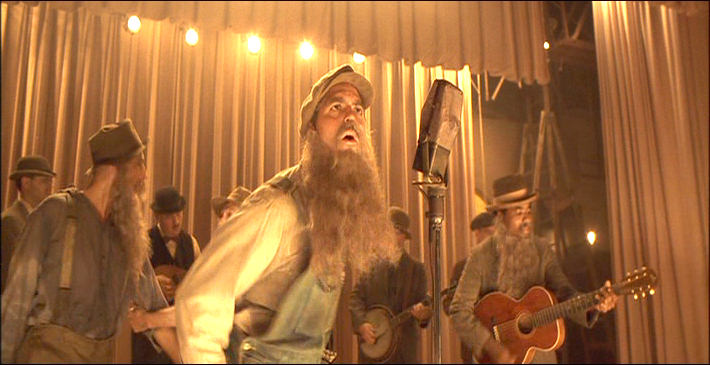
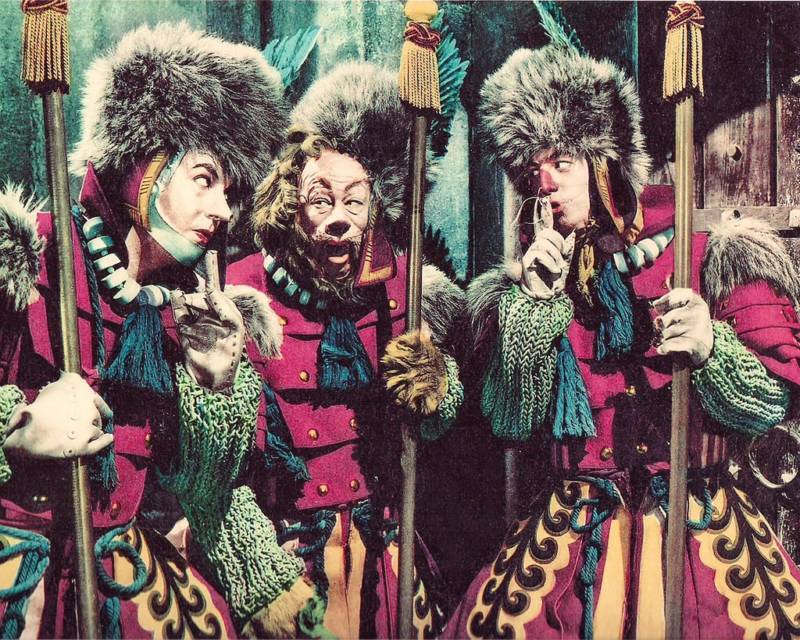
Farfetched? well, consider this quote by Joel Coen: "“Every movie ever made is an attempt to remake The Wizard of Oz." Their subsequent films include a tornado ("A Serious Man"), a young rural girl on a quest ("True Grit," which no less than Larry McMurtry compares to the story of Dorothy), a movie with a character named Oz ("Burn After Reading"); one of their most frequent cast members is J. K. Simmons, who was in HBO's "Oz."
It's perfectly impossible to understand the Coens without understanding that they incessantly reference The Wizard of Oz.
posted by Bunny Ultramod at 12:58 PM on December 22, 2011 [27 favorites]
They loved him up and turned him into a horny toad.
posted by yeti at 12:59 PM on December 22, 2011 [5 favorites]
posted by yeti at 12:59 PM on December 22, 2011 [5 favorites]
There is, in fact, one way in which I feel this movie is totally underrated: people don't give it nearly enough credit for being a clever critique of the Odyssey itself. People see the guy with a patch over his eye, and they say "Oh, Cyclops scene." Or they see the journey motif or the idea of the reunion with the wife and notice those parallels from the epic. What they usually don't understand--and I don't think I've seen this anywhere in print yet--is that the movie takes those traditional expectations and in almost every single case turns them on the head. *Spoilers ahead* For instance, when the flag is thrown at our Cyclops, we expect from the Odyssey that it's going to be a piercing of the eye that leads to our hero's escape, but the stabbing is in the end averted (even if other craziness isn't). We expect from ancient epic that there will indeed be a reunion between husband and wife as they again enjoy the bliss of the marriage-bed; in the movie, though, we end with that final re-marriage being thwarted by the hero lacking the ability to retrieve the correct ring--what could also be seen as him lacking the correct token of recognition needed for completion of the story-pattern. Sometimes the Coen brothers get even more obscure: the Odyssey foretells that Odysseus' death will come from the sea, but in the movie it is the sea (or at least water) that saves him from an untimely end. That same scene also involves the idea of hangings being averted, though they happen with particular goriness at the end of the epic. And so on and so on. Pretty much every scene works in the same way, which is pretty cool given that the Coen brothers have more or less pretended only to have had a passing knowledge of the epic.
posted by zeugitai_guy at 1:01 PM on December 22, 2011 [19 favorites]
posted by zeugitai_guy at 1:01 PM on December 22, 2011 [19 favorites]
The scene with the blind radio guy and the record producer is spot on.
Played by Stephen Root of Office Space fame, btw.
posted by homunculus at 1:05 PM on December 22, 2011 [1 favorite]
Played by Stephen Root of Office Space fame, btw.
posted by homunculus at 1:05 PM on December 22, 2011 [1 favorite]
Ha. I never made the connection that that was the same guy.
posted by roll truck roll at 1:13 PM on December 22, 2011
posted by roll truck roll at 1:13 PM on December 22, 2011
i also raised my eyebrow at "underrated" then i went to metacritc and some people HATED it.
Some people hate the Godfather. That doesn't mean it's underrated.
I love the movie, but it's certainly not underrated, much less woefully.
the movie was so loved there was a small backlash for a while, but thats another story.
posted by justgary at 1:13 PM on December 22, 2011
Some people hate the Godfather. That doesn't mean it's underrated.
I love the movie, but it's certainly not underrated, much less woefully.
the movie was so loved there was a small backlash for a while, but thats another story.
posted by justgary at 1:13 PM on December 22, 2011
Rhaomi is bona fide.
posted by kamikazegopher at 1:16 PM on December 22, 2011 [11 favorites]
posted by kamikazegopher at 1:16 PM on December 22, 2011 [11 favorites]
A friend of mine was working at a cd store next door to a theatre when this came out - he said he could totally tell when the movie finished, because there would be waves of people coming into the store asking for the soundtrack. Most of them had to leave dissapointed, of course, because the cd sold out in about a day.
posted by 5_13_23_42_69_666 at 1:26 PM on December 22, 2011
posted by 5_13_23_42_69_666 at 1:26 PM on December 22, 2011
Fantastic post. This movie took me back to the seventies, when I had a major thing for Americana. Hearing John Hartford again was something special.
If you're interested in Coen Bros. references, the title is taken from a film within the film "Sullivan's Travels" (dir. Preston Sturges), another road picture set in the same time period. It's a hilarious masterpiece in it's own right.
posted by Carmody'sPrize at 1:31 PM on December 22, 2011
If you're interested in Coen Bros. references, the title is taken from a film within the film "Sullivan's Travels" (dir. Preston Sturges), another road picture set in the same time period. It's a hilarious masterpiece in it's own right.
posted by Carmody'sPrize at 1:31 PM on December 22, 2011
I don't think it's that far off to say the film was under-rated. Consider the following: while the film has an 87% rating among viewers over at Rotten Tomatoes, it only has a 77% rating among critics, and it has an even lower 69% rating among "top" critics. Those ratings are not high enough to get the film into the top ten Coen brothers films in the Rotten Tomatoes total recall.
Maybe it's not "woefully" under-rated. But I think a case can be made that the critics and especially the top critics undervalued the film.
posted by Jonathan Livengood at 1:36 PM on December 22, 2011 [2 favorites]
Maybe it's not "woefully" under-rated. But I think a case can be made that the critics and especially the top critics undervalued the film.
posted by Jonathan Livengood at 1:36 PM on December 22, 2011 [2 favorites]
It just occurred to me that this was the first movie I ever villainously downloaded.
posted by elizardbits at 1:40 PM on December 22, 2011
posted by elizardbits at 1:40 PM on December 22, 2011
Rhaomi steps up to the plate to hit another grand slam.
I said it before in the post contest thread, but you are the reason people pay five bucks for MetaFilter.
posted by DoctorFedora at 2:19 PM on December 22, 2011
I said it before in the post contest thread, but you are the reason people pay five bucks for MetaFilter.
posted by DoctorFedora at 2:19 PM on December 22, 2011
fantastic post, thank you
posted by radiosilents at 2:19 PM on December 22, 2011
posted by radiosilents at 2:19 PM on December 22, 2011
O Brother had me from the trailer—not a compilation of best bits or an attempt to tell the story in two minutes, but a single scene from near the beginning of the movie, as the three convicts attempt to board a moving train. The pacing, the characters, the dynamic and the journey are all beautifully conveyed, and it's funny as hell.
posted by Hogshead at 3:10 PM on December 22, 2011
posted by Hogshead at 3:10 PM on December 22, 2011
Damn if I Want To Play That Rock & Roll isn't one of the finest musical performances ever captured on film. There's a little bit just after Rawlings plays his solo where a fair few of the audience seem to want to leap out of their seats and, with the casual disregard for civility and upbringing common to musicians most everywhere, tell him to fuck straight off.
posted by Jofus at 3:17 PM on December 22, 2011
posted by Jofus at 3:17 PM on December 22, 2011
Also, right at the end there, the cameraman turns to Welch and tells her (or so I imagine) that that damn if that wasn't one of the finest musical performances ever captured on film.
Pro-tip: Cameramen never say this.
posted by Jofus at 3:19 PM on December 22, 2011
Pro-tip: Cameramen never say this.
posted by Jofus at 3:19 PM on December 22, 2011
I've recently put the album back on my iPhone, and several tracks are in my top rated shuffle, particularly I'll Fly Away and Down By The River. Te one that pops up most, though, and which I find myself whistling without thinking about, is Big Rock Candy Mountain. When that song is a constant presence in your subconscious, perhaps it really is time to find a new job.
Fantastic post, Rhaomi.
posted by Ghidorah at 4:00 PM on December 22, 2011
Fantastic post, Rhaomi.
posted by Ghidorah at 4:00 PM on December 22, 2011
Btw, for those of you giving this thing a rewatch, it's the little subtle things that are a joy to catch. Such as, almost every time you see the Sheriff, his shades will be reflecting fire....I think I have watched this thing a bajillion times and always feel I catch something new every time.
posted by St. Alia of the Bunnies at 4:12 PM on December 22, 2011 [2 favorites]
posted by St. Alia of the Bunnies at 4:12 PM on December 22, 2011 [2 favorites]
Just to throw a little more fuel on the "woefully underrated?" fire ... from Amazon's description of the remastered and expanded soundtrack:
It has been a decade since one of the most unlikely successes in music history was released. O Brother, Where Art Thou? is one of the 10 top-selling soundtracks of all time (according to the RIAA), the No. 1-selling soundtrack and the 17th biggest album of the 21st Century, with more than nine million albums sold. On August 23, UMe will celebrate this 10th Anniversary with an expanded two-CD set, O Brother, Where Art Thou? - Deluxe Edition, with legendary original producer T Bone Burnett personally involved in all aspects of this release.
posted by pmurray63 at 4:52 PM on December 22, 2011
It has been a decade since one of the most unlikely successes in music history was released. O Brother, Where Art Thou? is one of the 10 top-selling soundtracks of all time (according to the RIAA), the No. 1-selling soundtrack and the 17th biggest album of the 21st Century, with more than nine million albums sold. On August 23, UMe will celebrate this 10th Anniversary with an expanded two-CD set, O Brother, Where Art Thou? - Deluxe Edition, with legendary original producer T Bone Burnett personally involved in all aspects of this release.
posted by pmurray63 at 4:52 PM on December 22, 2011
The scene with the blind radio guy and the record producer is spot on. "You gonna ENJOY......"
"Oh lordy yes, we've gotta beat that competition..."
posted by Navelgazer at 5:05 PM on December 22, 2011 [1 favorite]
"Oh lordy yes, we've gotta beat that competition..."
posted by Navelgazer at 5:05 PM on December 22, 2011 [1 favorite]
Great post Rhaomi. Great movie great music. John Hartford could probably have his own fpp.
posted by Sailormom at 5:21 PM on December 22, 2011
posted by Sailormom at 5:21 PM on December 22, 2011
This might be my memory playing tricks on me, but the version of Big Rock Candy Mountain that floats around my subconscious from time to time is sung by Clooney's character's daughters, I think towards the end of the film? Had a quick look on youtube but was overwhelmed by the number of different versions, so if anyone has watched the film recently and can confirm or deny that would be ace.
And, of course, great post Rhaomi. Being ineligible for the contest, perhaps the mods could consider one day introducing something along the lines of a life-time achievement award?
posted by Hello, I'm David McGahan at 5:47 PM on December 22, 2011
And, of course, great post Rhaomi. Being ineligible for the contest, perhaps the mods could consider one day introducing something along the lines of a life-time achievement award?
posted by Hello, I'm David McGahan at 5:47 PM on December 22, 2011
I had not been at all interested in this film until someone unexpectedly recommended it to me and mentioned that it was based on The Odyssey. Knowing that George Clooney was the star of the movie, I was prepared not be impressed. (However, my opinion of him as an actor improved as he developed a more substantial body of work.) I was so blown away the I watched the video two or three times in a row, and later purchased the soundtrack CD.
I did pick up on the light Wizard of Oz references, which pretty much doubled the fun for me. O Brother, Where Art Thou? is a brilliant film and I regret that I never saw it in a theater. It would be awesome in IMAX if the Coens ever consider re-releasing it.
(And wow, some of y'all are coming hard with the great posts as the month winds down...)
posted by fuse theorem at 5:55 PM on December 22, 2011
I did pick up on the light Wizard of Oz references, which pretty much doubled the fun for me. O Brother, Where Art Thou? is a brilliant film and I regret that I never saw it in a theater. It would be awesome in IMAX if the Coens ever consider re-releasing it.
(And wow, some of y'all are coming hard with the great posts as the month winds down...)
posted by fuse theorem at 5:55 PM on December 22, 2011
>>The scene with the blind radio guy and the record producer is spot on.
>Played by Stephen Root of Office Space fame, btw.
The more obvious callback is to his role in NewsRadio where he was the owner of a radio station.
O Brother was the first Coen film I saw in the theater after catching the Coen bug. Then it became the first movie I ever voluntarily saw in the theater twice. (Also, the first time I ever realized George Clooney could be awesome.)
posted by neckro23 at 6:04 PM on December 22, 2011
>Played by Stephen Root of Office Space fame, btw.
The more obvious callback is to his role in NewsRadio where he was the owner of a radio station.
O Brother was the first Coen film I saw in the theater after catching the Coen bug. Then it became the first movie I ever voluntarily saw in the theater twice. (Also, the first time I ever realized George Clooney could be awesome.)
posted by neckro23 at 6:04 PM on December 22, 2011
St. Alia, you are 100% right about how the movie gets the rural South. I saw this in the theater and thought to myself, "Finally! Someone gets me!"
posted by infinitewindow at 7:27 PM on December 22, 2011
posted by infinitewindow at 7:27 PM on December 22, 2011
I just really like those stunned facial expressions of total incomprehension on the Foggy Bottom Boys when they unknowingly play their hit song and the crowd goes crazy...
posted by ovvl at 8:02 PM on December 22, 2011 [2 favorites]
posted by ovvl at 8:02 PM on December 22, 2011 [2 favorites]
It's mentioned in the post that Filthy Light Thief linked to, but both the setting and theme song to The Marvelous Misadventures of Flapjack are giant somersaults of nods to Big Rock Candy Mountain.
posted by ArgentCorvid at 8:22 PM on December 22, 2011
posted by ArgentCorvid at 8:22 PM on December 22, 2011
What a knockout of a post! I saw O Brother opening day, and the next day, and each time it was sparsely populated. Third time? Couldn't get near the place. Saw a few of the Down from The Mountain shows and the highlight had to be Patty Loveless at the second show (with Ralph Stanley a close second). Talk about someone who can fill a hall!
This post brought great joy today - thanks so very much!
posted by TomSophieIvy at 9:12 PM on December 22, 2011
This post brought great joy today - thanks so very much!
posted by TomSophieIvy at 9:12 PM on December 22, 2011
I have a friend who's a professional folk singer, with one of those voices you'd steal from her if you could. When she sings "Down in the River to Pray" around the campfire the rest of us just quietly drink it in. If those moments weren't in my life I'd be the less for it, and I thank this wonderful movie for starting it.
posted by kostia at 9:19 PM on December 22, 2011
posted by kostia at 9:19 PM on December 22, 2011
I personally know two whole people who dislike this movie (I know, what???), and they are the two people I saw it with: my sister and my grandmother. We had a girls' day out and went to two movies in a row - we saw both O Brother and Finding Forrester. Both of them really disliked the former and really liked the latter. I...just...augh.
Super post - I love me some Gillian Welch in particular.
posted by naoko at 9:52 PM on December 22, 2011
Super post - I love me some Gillian Welch in particular.
posted by naoko at 9:52 PM on December 22, 2011
Of all the wonderful performances in Down From The Mountain the one that made my hair stand up and heart soar has to be the Cox Family's two songs.
posted by wobh at 6:52 AM on December 23, 2011
posted by wobh at 6:52 AM on December 23, 2011
I swear I read somewhere that George Clooney wanted like blazes to actually sing "Man of Constant Sorrow" himself, and that they even did a few takes with him trying it before everyone realized it just wasn't gonna work.
posted by EmpressCallipygos at 7:01 AM on December 23, 2011
posted by EmpressCallipygos at 7:01 AM on December 23, 2011
The movie is about as underrated as Lawrence Olivier's Hamlet, amongst my crowd, but other than that... great post!
posted by IAmBroom at 9:12 AM on December 23, 2011
posted by IAmBroom at 9:12 AM on December 23, 2011
I'm going to straight ahead call out Rhaomi for being some kind of wizard here.
posted by The Whelk at 9:14 AM on December 23, 2011 [2 favorites]
posted by The Whelk at 9:14 AM on December 23, 2011 [2 favorites]
Hilarious trivia: O Brother, Where Art Thou was shot on location... in France.
posted by ovvl at 3:37 PM on December 23, 2011
posted by ovvl at 3:37 PM on December 23, 2011
Btw, for those of you giving this thing a rewatch, it's the little subtle things that are a joy to catch.
"Everett, my beard itches." is one of my favourite throw-away lines of all time.
And as for underrated, I remember the film, though not the soundtrack, getting luke-warm reviews.
posted by jeffen at 9:18 PM on December 23, 2011
"Everett, my beard itches." is one of my favourite throw-away lines of all time.
And as for underrated, I remember the film, though not the soundtrack, getting luke-warm reviews.
posted by jeffen at 9:18 PM on December 23, 2011
In the US the Coen brothers have this pattern of releasing films that everyone likes but no one watches, and then it gets a rabid fanbase like five years later. Some films excluded of course
(cause the first Spider-man movie is totally a covert Coen brothers movie)
posted by The Whelk at 9:28 PM on December 23, 2011
(cause the first Spider-man movie is totally a covert Coen brothers movie)
posted by The Whelk at 9:28 PM on December 23, 2011
I've linked to this here before, but I really like this reading of the film, which argues that the protagonists all die in the flood at the end.
posted by the duck by the oboe at 9:33 PM on December 23, 2011 [3 favorites]
posted by the duck by the oboe at 9:33 PM on December 23, 2011 [3 favorites]
This post has made my day.
And If there was ever a time to get my dad into metafilter this post would be the one to do it.
posted by loominpapa at 11:16 PM on December 23, 2011
And If there was ever a time to get my dad into metafilter this post would be the one to do it.
posted by loominpapa at 11:16 PM on December 23, 2011
Hank Williams - I'll Fly away Live complete with crackling sounds of old vinyl
posted by Sailormom at 8:37 AM on December 25, 2011
posted by Sailormom at 8:37 AM on December 25, 2011
And you can't forget about the Arlo Guthrie version of Valley to Pray (YouTube), arranged by Van Dyke Parks. It can be found on Arrangements Vol. 1, and it is delightful.
posted by cybertaur1 at 5:00 PM on December 26, 2011
posted by cybertaur1 at 5:00 PM on December 26, 2011
I love the movie and the music, but I feel very conflicted about too, as a romantic fantasy about that time and place and how we look back on it. I'm sure Mark Twain would have hated it and it amuses me to imagine the review he would have written of it.
posted by wobh at 5:42 PM on December 28, 2011 [1 favorite]
posted by wobh at 5:42 PM on December 28, 2011 [1 favorite]
I love the movie, Mrs. A and I were talking about Dapper Dan only yesterday. Fantastic post!
posted by arcticseal at 4:41 PM on January 2, 2012
posted by arcticseal at 4:41 PM on January 2, 2012
Cross-posted from MetaTalk, here's a distilled version of the post with only the best links since the whole thing as-is looks pretty daunting:
Above-the-fold stuff:
The full movie: in one piece - as a playlist
behind-the-scenes essay by T-Bone Burnett
multi-part analysis of the film's mythology
The most important link: The great documentary/concert film Down From the Mountain free on YouTube and Hulu, featuring interviews and live performances of the film's songs plus original music by all the soundtrack's star musicians. Not available outside the US, but there are links to individual clips of the concert performances below the fold of the main post.
Best cover versions of the soundtrack's songs:
"Po' Lazarus" - Bright Light Quartet
"Big Rock Candy Mountain" - John Hartford
"Man of Constant Sorrow" (instrumental) - John Hartford
"Man of Constant Sorrow" - Bob Dylan
"Hard Time Killing Floor Blues" - Skip James
"I'll Fly Away" - Johnny Cash et al
"I Am Weary, Let Me Rest" - The Cox Family
"O Death" - Jen Titus
"Indian War Whoop" - John Hartford and Gillian Welch
"Lonesome Valley" - Million Dollar Quartet (Elvis Presley, Johnny Cash, Jerry Lee Lewis, and Carl Perkins)
"Angel Band" - Ralph Stanley + everbody
Original songs from the concert only:
"Wild Bill Jones" - Alison Krauss and Union Station
"Blue and Lonesome" - Alison Krauss and Union Station
"Green Pastures" - Emmylou Harris and Gillian Welch
"John Law Burned Down the Liquor Store" - Chris Thomas King and Colin Linden
"Will There Be Any Stars In My Crown?" - The Cox Family
"Dear Someone" by Gillian Welch, David Rawlings, and John Hartford
"I Want to Sing That Rock and Roll" - Gillian Welch and David Rawlings
"Shove That Hog's Foot Further In the Bed" - John Hartford
posted by Rhaomi at 10:31 PM on January 2, 2012 [1 favorite]
Above-the-fold stuff:
The full movie: in one piece - as a playlist
behind-the-scenes essay by T-Bone Burnett
multi-part analysis of the film's mythology
The most important link: The great documentary/concert film Down From the Mountain free on YouTube and Hulu, featuring interviews and live performances of the film's songs plus original music by all the soundtrack's star musicians. Not available outside the US, but there are links to individual clips of the concert performances below the fold of the main post.
Best cover versions of the soundtrack's songs:
"Po' Lazarus" - Bright Light Quartet
"Big Rock Candy Mountain" - John Hartford
"Man of Constant Sorrow" (instrumental) - John Hartford
"Man of Constant Sorrow" - Bob Dylan
"Hard Time Killing Floor Blues" - Skip James
"I'll Fly Away" - Johnny Cash et al
"I Am Weary, Let Me Rest" - The Cox Family
"O Death" - Jen Titus
"Indian War Whoop" - John Hartford and Gillian Welch
"Lonesome Valley" - Million Dollar Quartet (Elvis Presley, Johnny Cash, Jerry Lee Lewis, and Carl Perkins)
"Angel Band" - Ralph Stanley + everbody
Original songs from the concert only:
"Wild Bill Jones" - Alison Krauss and Union Station
"Blue and Lonesome" - Alison Krauss and Union Station
"Green Pastures" - Emmylou Harris and Gillian Welch
"John Law Burned Down the Liquor Store" - Chris Thomas King and Colin Linden
"Will There Be Any Stars In My Crown?" - The Cox Family
"Dear Someone" by Gillian Welch, David Rawlings, and John Hartford
"I Want to Sing That Rock and Roll" - Gillian Welch and David Rawlings
"Shove That Hog's Foot Further In the Bed" - John Hartford
posted by Rhaomi at 10:31 PM on January 2, 2012 [1 favorite]
the Kossoy Sisters' I'll Fly Away
I stopped reading there because IS THAT, AT LAST, THE ONE THAT IS ACTUALLY IN THE MOVIE? EEEEEEEEEEEEE
Yeah, finding the Gillian Welch/Allison Krauss version on the soundtrack album was a disappointment... it's nice and all, but the Kossoy Sisters' version is so much better. Their whole album sounds like that. I don't know if it's the quality of their voices, the particular way they harmonize, or both, but it's great.
John Hartford needs his own, equally extensive FPP if he hasn't had one already [note to self] - I didn't discover him until a couple of years after he had died, and dearly wish I'd had the chance to see him live, maybe even meet him and play some tunes with him at a festival; I've heard from multiple people who met him that he was just a super-nice guy, always ready to play with pretty much whoever.
Actually I take that back. I first discovered John Hartford when I was 12, and Dr. Demento played the song Boogie, from Hartford's 1971 album Aereo-Plain. I spent years wondering what the rest of that album must be like, and it was very weird when I discovered John Hartford the banjo player and fiddler and realized that yes, he was that John Hartford. It made me like him all the better! (The rest of Aereo-Plain is wonderful, by the way.)
posted by usonian at 6:42 AM on January 20, 2012 [1 favorite]
I stopped reading there because IS THAT, AT LAST, THE ONE THAT IS ACTUALLY IN THE MOVIE? EEEEEEEEEEEEE
Yeah, finding the Gillian Welch/Allison Krauss version on the soundtrack album was a disappointment... it's nice and all, but the Kossoy Sisters' version is so much better. Their whole album sounds like that. I don't know if it's the quality of their voices, the particular way they harmonize, or both, but it's great.
John Hartford needs his own, equally extensive FPP if he hasn't had one already [note to self] - I didn't discover him until a couple of years after he had died, and dearly wish I'd had the chance to see him live, maybe even meet him and play some tunes with him at a festival; I've heard from multiple people who met him that he was just a super-nice guy, always ready to play with pretty much whoever.
Actually I take that back. I first discovered John Hartford when I was 12, and Dr. Demento played the song Boogie, from Hartford's 1971 album Aereo-Plain. I spent years wondering what the rest of that album must be like, and it was very weird when I discovered John Hartford the banjo player and fiddler and realized that yes, he was that John Hartford. It made me like him all the better! (The rest of Aereo-Plain is wonderful, by the way.)
posted by usonian at 6:42 AM on January 20, 2012 [1 favorite]
« Older The Man Who Slipped on the Ice | The (First) Crime of the Century Newer »
This thread has been archived and is closed to new comments
posted by entropicamericana at 11:37 AM on December 22, 2011 [6 favorites]