"Fenway is the essence of baseball"
April 20, 2012 1:47 PM Subscribe
Fenway Park, in Boston, is a lyric little bandbox of a ballpark. Everything is painted green and seems in curiously sharp focus, like the inside of an old-fashioned peeping-type Easter egg. It was built in 1912 and rebuilt in 1934, and offers, as do most Boston artifacts, a compromise between Man's Euclidean determinations and Nature's beguiling irregularities.
So wrote John Updike in his moving tribute to Red Sox legend Ted Williams -- an appropriately pedigreed account for this oldest and most fabled of ballfields that saw its first major league game played one century ago today.
As a team in flux hopes to recapture the magic with an old-school face-off against the New York Highlanders Yankees, it's hard to imagine the soul of the Sox faced the specter of demolition not too long ago. Now legally preserved, in a sport crowded with corporate-branded superdome behemoths, Fenway abides, bursting with history, idiosyncrasy, record crowds, and occasional song.
Thousands of fascinating vintage photos published by the Boston Public Library and showcased by the Boston Globe (previously)
More recently: insider pictures of the park fromTwins Rockies fielder Michael Cuddyer (previously)
The Globe's original report on Fenway's inaugural game
A satirical imagining of the park's 200th anniversary in 2112

Thousands of fascinating vintage photos published by the Boston Public Library and showcased by the Boston Globe (previously)
More recently: insider pictures of the park from
The Globe's original report on Fenway's inaugural game
A satirical imagining of the park's 200th anniversary in 2112
I love Fenway for its asymmetry and its longevity, but it's not the greatest place to experience a ball game. Even so, I need to get back there again soon.
posted by rocket88 at 1:52 PM on April 20, 2012
posted by rocket88 at 1:52 PM on April 20, 2012
I've only seen one game at Fenway in my 8 years here, and it was a fairly miserable experience. I'm a person of some breadth, and the seats were made for tiny 1912 people. (It did not help that there were three rain delays and barely enough space for all of us to squeeze into underneath the stands.) I've been on the tour however, and I can't recommend it enough. Much less expensive easy to get tickets, and we got to wander all over, including up into the Green Monster seats and out onto the field. Not to be missed if you like baseball at all.
posted by Horace Rumpole at 1:54 PM on April 20, 2012
posted by Horace Rumpole at 1:54 PM on April 20, 2012
I love Fenway for its asymmetry and its longevity, but it's not the greatest place to experience a ball game.
I would say, depending on your seats, your companions, and your passion for the Red Sox, Fenway is among both the best and the worst places to experience a ball game.
posted by Rock Steady at 1:55 PM on April 20, 2012
I would say, depending on your seats, your companions, and your passion for the Red Sox, Fenway is among both the best and the worst places to experience a ball game.
posted by Rock Steady at 1:55 PM on April 20, 2012
It's nowhere near the most comfortable or luxurious places to watch baseball, however it's easily one of the most spirited.
posted by iheijoushin at 1:56 PM on April 20, 2012
posted by iheijoushin at 1:56 PM on April 20, 2012
Sorry, I can't see the middle of this FPP... obstructed view.
Seriously, I love Fenway, and wish the tickets weren't so damn expensive
posted by not_on_display at 1:56 PM on April 20, 2012 [5 favorites]
Seriously, I love Fenway, and wish the tickets weren't so damn expensive
posted by not_on_display at 1:56 PM on April 20, 2012 [5 favorites]
I got the game on the radio and the tv (muted), the vintage uniforms look great, the Bombers are up 5-1 in the fifth. Here's to 100 more years of misery, SUX fans!
Happy 4/20 everyone!
posted by vrakatar at 1:58 PM on April 20, 2012
Happy 4/20 everyone!
posted by vrakatar at 1:58 PM on April 20, 2012
No giant animatronic animal home run sculpture in the outfield? Lame.
posted by furiousxgeorge at 2:10 PM on April 20, 2012 [2 favorites]
posted by furiousxgeorge at 2:10 PM on April 20, 2012 [2 favorites]
When I was in Cub Scouts we went on a tour of what used to be Boston's other idiosyncratic sports area, the Boston Garden. I remember the tour guide making some cutesy, apocryphal remark about how the place was so old nobody remembers how the refrigeration systems under the ice rink work and I took it at face value imagining some long forgotten, eldritch machinery buried deep beneath the building silently performing its duty while people unassumingly play hockey above.
To this day, whenever someone talks about how old Fenway Park is, I can't help but think about what might be lurking in some forgotten corner, silently supporting the operations of the ballpark.
posted by RonButNotStupid at 2:14 PM on April 20, 2012 [4 favorites]
To this day, whenever someone talks about how old Fenway Park is, I can't help but think about what might be lurking in some forgotten corner, silently supporting the operations of the ballpark.
posted by RonButNotStupid at 2:14 PM on April 20, 2012 [4 favorites]
Navin Field, which became Tiger Stadium, also opened 100 years ago on this day. I wish it was still standing.
posted by wikipedia brown boy detective at 2:20 PM on April 20, 2012
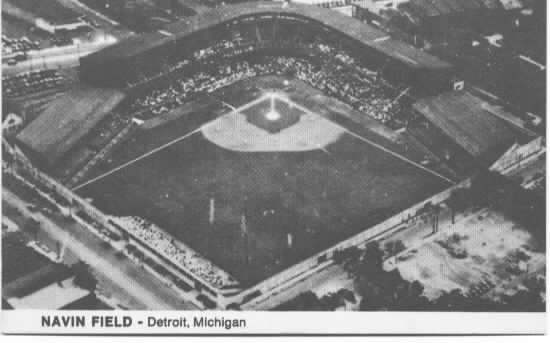
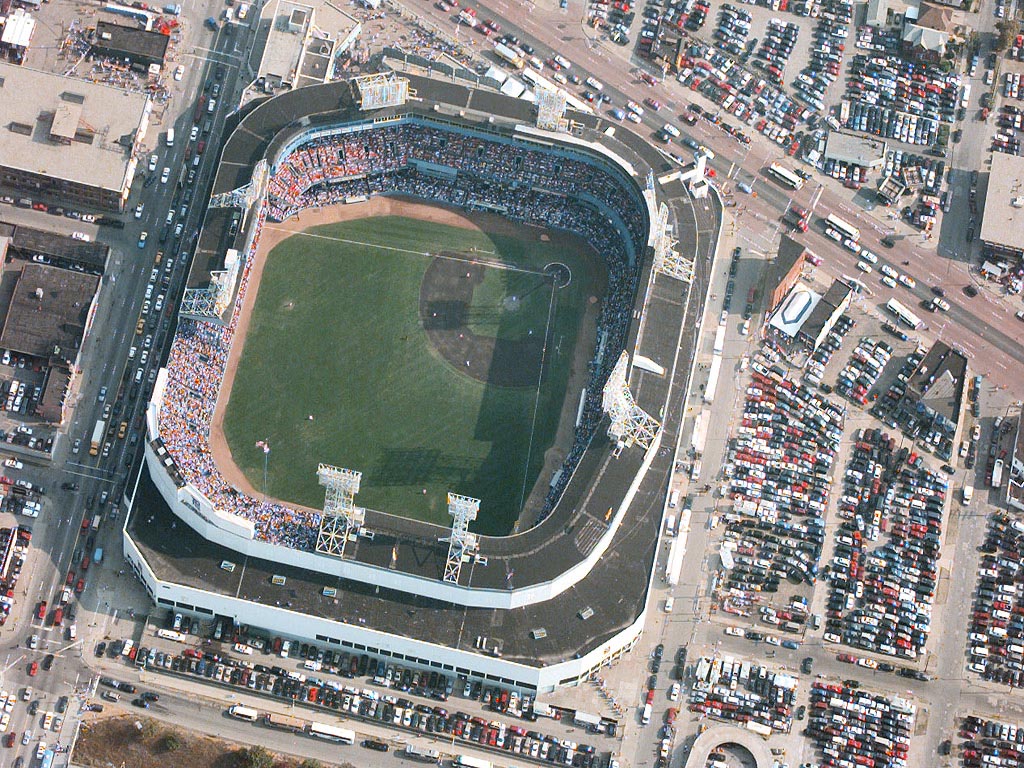
posted by wikipedia brown boy detective at 2:20 PM on April 20, 2012
And according to Tampa Bay's Luke Scott, who can always be counted on for a strongly expressed opinion, it's a dump.
I think it is important, for the sake of context, to point out that this is what Luke Scott's facial hair looks like. I feel it is safe to say Luke Scott is no aesthete.
Go Sox! Please get some pitching help.
posted by dixiecupdrinking at 2:22 PM on April 20, 2012 [4 favorites]
I think it is important, for the sake of context, to point out that this is what Luke Scott's facial hair looks like. I feel it is safe to say Luke Scott is no aesthete.
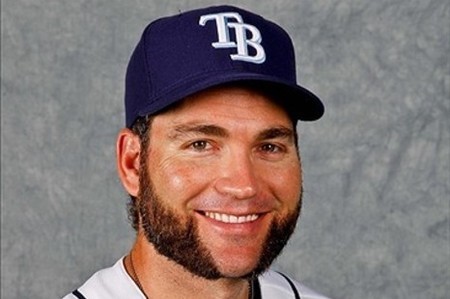
Go Sox! Please get some pitching help.
posted by dixiecupdrinking at 2:22 PM on April 20, 2012 [4 favorites]
I love Fenway for its asymmetry and its longevity, but it's not the greatest place to experience a ball game. I disagree.
posted by incster at 2:29 PM on April 20, 2012 [1 favorite]
posted by incster at 2:29 PM on April 20, 2012 [1 favorite]
I'm not a Red Sox fan, but I envy their legacy, which is owed in large part to Fenway. I hope it (along with Wrigley) stay in active use as long as the game is played.
posted by jabberjaw at 2:34 PM on April 20, 2012
posted by jabberjaw at 2:34 PM on April 20, 2012
The Boston Red Sox didn't build Fenway Park, the Boston Americans did. The Boston Red Sox play in Atlanta now. ;)
posted by Cyclopsis Raptor at 2:41 PM on April 20, 2012 [1 favorite]
posted by Cyclopsis Raptor at 2:41 PM on April 20, 2012 [1 favorite]
For the first time in a gazillion years, resale ticket prices are actually not going up. In fact, somewhere recently the Globe reported that the sellout streak was in jeopardy.
I heard that until very recently, there was no electricity in the bullpen, among other anachronisms at the park. Not a bad idea, it's humbling for some of those multi-zillion-dollar players.
Great post, thanks!
posted by Melismata at 2:44 PM on April 20, 2012
I heard that until very recently, there was no electricity in the bullpen, among other anachronisms at the park. Not a bad idea, it's humbling for some of those multi-zillion-dollar players.
Great post, thanks!
posted by Melismata at 2:44 PM on April 20, 2012
To this day, whenever someone talks about how old Fenway Park is, I can't help but think about what might be lurking in some forgotten corner, silently supporting the operations of the ballpark.
Well, up until a few years ago there was a bowling alley underneath it (candlepin, of course). Sadly it's gone now.
Fenway is my occasionally loud neighbor, but I love her just the way she is. If you want to take the tour for free, come by and give blood on 9/11. I challenge the most cynical bastard in the world to come away from there being grumpy.
If you know nothing about Boston, I think this picture tells a lot. There is a bar on the backside of Fenway Park, and it has a view where you can look out adoringly at the field where the Sox play (You don't need a ticket or to be inside the park to go there. It's open year-round.) During the winter, they've started setting up a hockey field in the middle of Fenway, for a college game. So that's what that photo is — as holy to some as seeing Cardinal Wotija pray in Jerusalem.
(Also, Fenway is apparently home to one MeFite.)
posted by benito.strauss at 2:54 PM on April 20, 2012 [1 favorite]
Well, up until a few years ago there was a bowling alley underneath it (candlepin, of course). Sadly it's gone now.
Fenway is my occasionally loud neighbor, but I love her just the way she is. If you want to take the tour for free, come by and give blood on 9/11. I challenge the most cynical bastard in the world to come away from there being grumpy.
If you know nothing about Boston, I think this picture tells a lot. There is a bar on the backside of Fenway Park, and it has a view where you can look out adoringly at the field where the Sox play (You don't need a ticket or to be inside the park to go there. It's open year-round.) During the winter, they've started setting up a hockey field in the middle of Fenway, for a college game. So that's what that photo is — as holy to some as seeing Cardinal Wotija pray in Jerusalem.
(Also, Fenway is apparently home to one MeFite.)
posted by benito.strauss at 2:54 PM on April 20, 2012 [1 favorite]
I was going to say, if we're going to link a Fenway song...
posted by maryr at 3:23 PM on April 20, 2012
posted by maryr at 3:23 PM on April 20, 2012
I think it is important, for the sake of context, to point out that this is what Luke Scott's facial hair looks like. I feel it is safe to say Luke Scott is no aesthete.
Luke Scott is Liev Schreiber as Sabretooth?
posted by maryr at 3:26 PM on April 20, 2012
Luke Scott is Liev Schreiber as Sabretooth?
posted by maryr at 3:26 PM on April 20, 2012
The Boston Red Sox didn't build Fenway Park, the Boston Americans did. The Boston Red Sox play in Atlanta now. ;)
If you want to be picky, the original National League team used 'Red Stockings' up until 1907, the American League team that is now 'Red Sox' started using the red stocking uniform and name by the 1908 season. Well before The first game at Fenway.
posted by pupdog at 3:27 PM on April 20, 2012
If you want to be picky, the original National League team used 'Red Stockings' up until 1907, the American League team that is now 'Red Sox' started using the red stocking uniform and name by the 1908 season. Well before The first game at Fenway.
posted by pupdog at 3:27 PM on April 20, 2012
I went to two games at Fenway back when I lived in Boston, and yeah, it is a dump, complete with bad hot dogs. And I say that as a Minnesota Twins fan whose formative baseball memories all involve the Metrodome, probably the most septic stadium ever used for baseball (although the tragic tropicana field gives it a good challenge).
posted by MillMan at 4:24 PM on April 20, 2012 [1 favorite]
posted by MillMan at 4:24 PM on April 20, 2012 [1 favorite]
Don't forget the most expensive eight ounce plastic cup of beer in the Major League. And $65 for a sear that my legs cannot fit into without twisting my entire torso. Certainly not going toward upkeep and infrastructure, those dollars.
posted by 1adam12 at 4:33 PM on April 20, 2012
posted by 1adam12 at 4:33 PM on April 20, 2012
And $65 for a sear that my legs cannot fit into without twisting my entire torso. Certainly not going toward upkeep and infrastructure, those dollars.
The Flickr photos linked in the post come with an interesting comment about the seats:
"These seats were installed in 1934. If the Red Sox were to replace them with larger, modern seats, they would lose over 3,000 in capacity. The new seats, in addition to being larger, would be subject to the current fire code, requiring more aisles and leg room. These seats are subject to the 1934 fire code."
posted by anastasiav at 4:39 PM on April 20, 2012
The Flickr photos linked in the post come with an interesting comment about the seats:
"These seats were installed in 1934. If the Red Sox were to replace them with larger, modern seats, they would lose over 3,000 in capacity. The new seats, in addition to being larger, would be subject to the current fire code, requiring more aisles and leg room. These seats are subject to the 1934 fire code."
posted by anastasiav at 4:39 PM on April 20, 2012
If you want to take the tour for free, come by and give blood on 9/11. I challenge the most cynical bastard in the world to come away from there being grumpy.
OK, I'll take that challenge. Two or three years ago, shortly after they installed seating on top of the Green Monster, we paid north of $50 for a family of four to be taken around to the various seating areas in Fenway and told excitedly by the guide how much tickets would cost in that section. No clubhouse tour, no field access, no bullpen or dugout access, no scoreboard access, nothing "behind the scenes" except the press box. Complete waste of money and time. It is a great place to see a game - I've seen many there - but that tour was a gleeful celebration of ownership's monetization of the Sox legend, and I felt like a sucker having paid to join in. Maybe if I'd paid $0 I'd have felt less ripped off, but probably no less dirty.
posted by stupidsexyFlanders at 5:09 PM on April 20, 2012
OK, I'll take that challenge. Two or three years ago, shortly after they installed seating on top of the Green Monster, we paid north of $50 for a family of four to be taken around to the various seating areas in Fenway and told excitedly by the guide how much tickets would cost in that section. No clubhouse tour, no field access, no bullpen or dugout access, no scoreboard access, nothing "behind the scenes" except the press box. Complete waste of money and time. It is a great place to see a game - I've seen many there - but that tour was a gleeful celebration of ownership's monetization of the Sox legend, and I felt like a sucker having paid to join in. Maybe if I'd paid $0 I'd have felt less ripped off, but probably no less dirty.
posted by stupidsexyFlanders at 5:09 PM on April 20, 2012
Everybody's readin' this thread in a Boston accent, right?
posted by jabberjaw at 5:14 PM on April 20, 2012
posted by jabberjaw at 5:14 PM on April 20, 2012
Lyrics
Everyone's so kind and humble
Don't you know that I can see right through it
Keeping all their comments down
You know it ain't a boast if you can do it
And everyone says "Say Hey"
And everyone says "did you see that kid play?"
I've got to give the kid a hand
But there's nothing that he can do better than I can
I'm Ted Fucking Williams!
People say it's hard to like a man
Who doesn't fail and show he's a human
But failure's not a sign of grace
It only means you don't know what you're doing
And everyone says "hey Mick!"
Mantle this, Mantle that it makes me sick
It's just so hard to see
Why do they like him better than me
I'm Ted Fucking Williams!
And everyone says "hey Duke!"
Like everything I did was some kind of fluke
I gotta give the Duke a hand
But there's nothing that he can do better than I can
I'm Ted Fucking Williams!
posted by Mental Wimp at 5:17 PM on April 20, 2012
Everyone's so kind and humble
Don't you know that I can see right through it
Keeping all their comments down
You know it ain't a boast if you can do it
And everyone says "Say Hey"
And everyone says "did you see that kid play?"
I've got to give the kid a hand
But there's nothing that he can do better than I can
I'm Ted Fucking Williams!
People say it's hard to like a man
Who doesn't fail and show he's a human
But failure's not a sign of grace
It only means you don't know what you're doing
And everyone says "hey Mick!"
Mantle this, Mantle that it makes me sick
It's just so hard to see
Why do they like him better than me
I'm Ted Fucking Williams!
And everyone says "hey Duke!"
Like everything I did was some kind of fluke
I gotta give the Duke a hand
But there's nothing that he can do better than I can
I'm Ted Fucking Williams!
posted by Mental Wimp at 5:17 PM on April 20, 2012
my dad took me to Fenway in first grade, to see the Detroit Tigers play the Red Sox. It was my first pro ball game, and my last until the late 90's when a work outing coralled my company at Safeco.
Just since last year, I suddenly had the baseball bit in my brain flip, and am inexplicably totally fascinated by the game now. Last night, I was watching the game at Fenway and realized I could still recognize it by comparing my 38-year memories of that day with what I was seeing on my display.
posted by mwhybark at 5:24 PM on April 20, 2012 [1 favorite]
Just since last year, I suddenly had the baseball bit in my brain flip, and am inexplicably totally fascinated by the game now. Last night, I was watching the game at Fenway and realized I could still recognize it by comparing my 38-year memories of that day with what I was seeing on my display.
posted by mwhybark at 5:24 PM on April 20, 2012 [1 favorite]
Not pictured: Theo Epstein, Terry Francona.
For those unaware, this is in reference to a mild kerfuffle that the manager and GM of the two World Series-winning Sox teams are either too insulted from the winterball events to attend, or simply not invited. The Sox have been frustrating the hell out of me the last several years, in terms of how the upper management seems to be reverting to 80's/90's blowhardian incompetence, and how that is rippling out onto the field with more of the payroll eaten up by busted, overpaid free agents and less focus/camraderie among the players.
... and I'm sure you're all terribly sympathetic to the plight of myself and other Sox fans.
posted by hincandenza at 5:56 PM on April 20, 2012
For those unaware, this is in reference to a mild kerfuffle that the manager and GM of the two World Series-winning Sox teams are either too insulted from the winterball events to attend, or simply not invited. The Sox have been frustrating the hell out of me the last several years, in terms of how the upper management seems to be reverting to 80's/90's blowhardian incompetence, and how that is rippling out onto the field with more of the payroll eaten up by busted, overpaid free agents and less focus/camraderie among the players.
... and I'm sure you're all terribly sympathetic to the plight of myself and other Sox fans.
posted by hincandenza at 5:56 PM on April 20, 2012
There are bad seats, but in the good seats I don't think there is any better place left to experience a Major League baseball game.
posted by caddis at 6:12 PM on April 20, 2012
posted by caddis at 6:12 PM on April 20, 2012
who cares? They lost again.
posted by Lipstick Thespian at 6:21 PM on April 20, 2012
posted by Lipstick Thespian at 6:21 PM on April 20, 2012
stupidsexyFlanders, I should have typed "... come away from that ...." — I meant to specifically refer to the blood-drive day.
I'm not huge into sports, but the park is a great focal point for community. And to see people deal with national trauma (9/11) by giving giving to help others is great. (Though the food they supply afterward is impressive.)
I guess I love the park, like the team, and loathe the management.
posted by benito.strauss at 6:57 PM on April 20, 2012
I'm not huge into sports, but the park is a great focal point for community. And to see people deal with national trauma (9/11) by giving giving to help others is great. (Though the food they supply afterward is impressive.)
I guess I love the park, like the team, and loathe the management.
posted by benito.strauss at 6:57 PM on April 20, 2012
No no no - this is the Fenway song.
I'm trying to remember whether my grandfather ever went to Fenway -- but my parents did, and they took my brother and I, and I am certain that my brother will take my niece and nephew to Red Sox games -- for the four-generations cred alone, I hope they leave Fenway standing.
posted by EmpressCallipygos at 7:18 PM on April 20, 2012 [1 favorite]
I'm trying to remember whether my grandfather ever went to Fenway -- but my parents did, and they took my brother and I, and I am certain that my brother will take my niece and nephew to Red Sox games -- for the four-generations cred alone, I hope they leave Fenway standing.
posted by EmpressCallipygos at 7:18 PM on April 20, 2012 [1 favorite]
Wake up Hal, Tito was there and got a huge ovation. Also, no other GMs were invited.
posted by yerfatma at 8:00 PM on April 20, 2012
posted by yerfatma at 8:00 PM on April 20, 2012
Red Sox fans, real ones, know about Fenway. The seats are tiny, beers are eight bucks each, and you'll be stuck behind a girder. No. You watch listen to the Sox at home, in comfort, while Jerry Remy Joe Castiglione calls out the plays.
If you wannna go see a ballgame, you go to Pawtucket or Newport or the Cape, or if you're in the mood to get stabbed, Brockton or Lowell.
There's something pure about the minor leagues - young players playing as hard as they can, scrapping it out for their chance at the bigs - or seasoned pros settling into an glorious routine, a well-worn and comfortable grace; and managers doing their best with what they've got. The "owners" are there to dick with the players - knock a couple off the roster to accommodate a rehab schedule for a 15-mil-a-year big leaguer, try to "rehab" mother-club flunk-outs, and watch as prime prospects and has-beens fly in and out of their door like moths around a porch light. You could get cynical, but...
...you know...
Tek? Shoppach? Youkilis (Yuuuuuke)?
Totally Paw Sox, Cape Cod League and/or Spinner alums.
Grab a blanket and a cooler, we've got tix "on the grass" at McCoy Stadium!
posted by Slap*Happy at 8:17 PM on April 20, 2012 [2 favorites]
If you wannna go see a ballgame, you go to Pawtucket or Newport or the Cape, or if you're in the mood to get stabbed, Brockton or Lowell.
There's something pure about the minor leagues - young players playing as hard as they can, scrapping it out for their chance at the bigs - or seasoned pros settling into an glorious routine, a well-worn and comfortable grace; and managers doing their best with what they've got. The "owners" are there to dick with the players - knock a couple off the roster to accommodate a rehab schedule for a 15-mil-a-year big leaguer, try to "rehab" mother-club flunk-outs, and watch as prime prospects and has-beens fly in and out of their door like moths around a porch light. You could get cynical, but...
...you know...
Tek? Shoppach? Youkilis (Yuuuuuke)?
Totally Paw Sox, Cape Cod League and/or Spinner alums.
Grab a blanket and a cooler, we've got tix "on the grass" at McCoy Stadium!
posted by Slap*Happy at 8:17 PM on April 20, 2012 [2 favorites]
My dad grew up near Buffalo, NY. My mom's father grew up in Vermont and Massachusetts and was a Red Sox fan, and thus when I had to choose a major league baseball team to root for, that's who I chose. It was 1988. They were doing pretty well. My mom bought "Curse of the Bambino" for my grandpa, but I didn't pay much attention. What could go wrong?
In 1999 I was in England, watching the ALDS with the only other American baseball fan I knew, who was a Yankees fan. "Who the fuck is that?" he cackled, as Rod Beck came out to save the game and instead gave up a game-ending home run.
In 2003 and 2004 I was in Oregon. I suffered through a bitter ALCS loss and then a cathartic World Series win at a time that I wasn't doing so well myself.
In 2007 I was in New York City and enjoying the hell out of watching a great team.
In 2009 I moved to Cambridge and went to Fenway to see a game. It was the first time I had been since 1998 and it was a fairly emotional experience.
The park is getting old and I've rarely sat in a comfortable seat there, and the team is going through a good amount of turmoil, but it was there for me when I was going through rough times, and I am a fan for life.
posted by A dead Quaker at 8:19 PM on April 20, 2012 [2 favorites]
In 1999 I was in England, watching the ALDS with the only other American baseball fan I knew, who was a Yankees fan. "Who the fuck is that?" he cackled, as Rod Beck came out to save the game and instead gave up a game-ending home run.
In 2003 and 2004 I was in Oregon. I suffered through a bitter ALCS loss and then a cathartic World Series win at a time that I wasn't doing so well myself.
In 2007 I was in New York City and enjoying the hell out of watching a great team.
In 2009 I moved to Cambridge and went to Fenway to see a game. It was the first time I had been since 1998 and it was a fairly emotional experience.
The park is getting old and I've rarely sat in a comfortable seat there, and the team is going through a good amount of turmoil, but it was there for me when I was going through rough times, and I am a fan for life.
posted by A dead Quaker at 8:19 PM on April 20, 2012 [2 favorites]
It was a beautiful day to celebrate even though we lost the game. Win or lose, I am a fan of the Boston Red Sox and have been since before Ted Williams went to war. I'd love to have been able to see Fenway Park just once, although I am extremely grateful for the marvel of television which allows me to see the games there. When I started caring about this team, we had only the radio and newspapers. We learned a lot about using our imagination, so I'm not exactly sorry to have had a pre-television childhood. Thank you, Rhaomi, for posting this today.
posted by Anitanola at 8:35 PM on April 20, 2012 [6 favorites]
posted by Anitanola at 8:35 PM on April 20, 2012 [6 favorites]
Everybody's readin' this thread in a Boston accent, right?
"No. Da food'z terruble up deah, and it's wikkit fah ta drive, an dey all tawk funny. Right, Maineiac?"
"Ayuh, I wouldn' drive neah ten miles o' the place, fa sha. Smells bad, an' nowheahs to get any fiddleheads with mah burgah, Rhodey."
posted by Slap*Happy at 9:34 PM on April 20, 2012
"No. Da food'z terruble up deah, and it's wikkit fah ta drive, an dey all tawk funny. Right, Maineiac?"
"Ayuh, I wouldn' drive neah ten miles o' the place, fa sha. Smells bad, an' nowheahs to get any fiddleheads with mah burgah, Rhodey."
posted by Slap*Happy at 9:34 PM on April 20, 2012
I feel weird that as a lifelong, hardcore baseball fan, it wasn't until this very day that I realized I share a birthday with Fenway. This has been the best birthday ever, just for that piece of knowledge.
posted by padraigin at 9:49 PM on April 20, 2012 [2 favorites]
posted by padraigin at 9:49 PM on April 20, 2012 [2 favorites]
Wow, totally missed that Cuddyer post last year. Great pictures. Always liked him, now I like him more. I, too, hoped the Sox would pony up for him in the offseason, but I'm glad they didn't, given the money the Rockies had to pay.
I was at work during the game and the ceremony, so I couldn't watch, but I caught a rebroadcast of the ceremony, which was pretty awesome. The Globe's got a list of everyone who was in attendance and some photos. (Izzy Alcantara!) Millar and Pedro helped set the Guinness World Record for world's largest toast. Seeing Pesky and Doerr wheeled out by Tek and Wake was amazing, but my favorite moment had to be the reception Tito got. He was treated like absolute garbage by the ownership in the offseason, and I completely understood why he was initially reluctant to come, but man, I don't think I've ever heard Fenway louder.
posted by SpiffyRob at 6:32 AM on April 21, 2012
I was at work during the game and the ceremony, so I couldn't watch, but I caught a rebroadcast of the ceremony, which was pretty awesome. The Globe's got a list of everyone who was in attendance and some photos. (Izzy Alcantara!) Millar and Pedro helped set the Guinness World Record for world's largest toast. Seeing Pesky and Doerr wheeled out by Tek and Wake was amazing, but my favorite moment had to be the reception Tito got. He was treated like absolute garbage by the ownership in the offseason, and I completely understood why he was initially reluctant to come, but man, I don't think I've ever heard Fenway louder.
posted by SpiffyRob at 6:32 AM on April 21, 2012
Grab a blanket and a cooler, we've got tix "on the grass" at McCoy Stadium!
My kid and I can walk to the Sox AA Hadlock Field from my house, and it's pretty much the best thing ever. No bad seats, and you get to say you saw the big team's new players play "back in the day".
but I caught a rebroadcast of the ceremony, which was pretty awesome.
Where?? My Tivo screwed up the original broadcast and NESN doesn't seem to be rebroadcasting it. I'd love to be able to see it, somewhere.... (MLB is fanatical about shutting down YT uploads.)
posted by anastasiav at 6:35 AM on April 21, 2012 [1 favorite]
My kid and I can walk to the Sox AA Hadlock Field from my house, and it's pretty much the best thing ever. No bad seats, and you get to say you saw the big team's new players play "back in the day".
but I caught a rebroadcast of the ceremony, which was pretty awesome.
Where?? My Tivo screwed up the original broadcast and NESN doesn't seem to be rebroadcasting it. I'd love to be able to see it, somewhere.... (MLB is fanatical about shutting down YT uploads.)
posted by anastasiav at 6:35 AM on April 21, 2012 [1 favorite]
Oh please. Very few non-residents get stabbed in Lowell.
posted by maryr at 4:08 PM on April 21, 2012 [5 favorites]
posted by maryr at 4:08 PM on April 21, 2012 [5 favorites]
I used to live in Lowell, within earshot of the Stadium. No fun when they had matinee games andI was nursing a hangover.
On the other hand, Larry's Comics made that city worthwhile.
posted by Slap*Happy at 7:27 PM on April 21, 2012
On the other hand, Larry's Comics made that city worthwhile.
posted by Slap*Happy at 7:27 PM on April 21, 2012
I have to say EmpressCallipygos, I love that song. However whenever I think of Boston and Fenway Park, this is the song I think about. It's just stuck that way in my head. As to Lowell, well when I was a smaller evil we lived for a year in the projects there and I don't remember anything about a ball field. I do however remember, bikers, crazy people, some of the worse scares I've ever had in my life. And also some of the best fun. Of course, I was in 4th grade so YMMV.
posted by evilDoug at 8:22 AM on April 22, 2012
posted by evilDoug at 8:22 AM on April 22, 2012
I grew up going to Fenway for ballgames. Once I reached adulthood, I lived in a lot of different cities and went to a lot of different ballparks.
Yeah, the seats at Fenway may be uncomfortable and a lot of the sightlines are terrible. On the other hand, if I'm sitting in the back of the loge box on the third base side, which is where my dad's seats always were, I'm still closer to the field than I am in the front row at Turner Field. (The fact that I've been hit by a ball at Fenway twice may be related.) I didn't realize that warning tracks were supposed to be more than three feet wide until I went to Yankee Stadium.
When I've been to games at other stadiums, the stands are empty until the third inning and people start filing out at the seventh. Boston fans show up before the first inning even starts and will stay until the last pitch, even if it goes deep into extra innings. The level of camaraderie I've experienced is just fantastic. It's worth a bit of uncomfortable seating to experience a game there.
posted by rednikki at 10:45 AM on April 22, 2012 [1 favorite]
Yeah, the seats at Fenway may be uncomfortable and a lot of the sightlines are terrible. On the other hand, if I'm sitting in the back of the loge box on the third base side, which is where my dad's seats always were, I'm still closer to the field than I am in the front row at Turner Field. (The fact that I've been hit by a ball at Fenway twice may be related.) I didn't realize that warning tracks were supposed to be more than three feet wide until I went to Yankee Stadium.
When I've been to games at other stadiums, the stands are empty until the third inning and people start filing out at the seventh. Boston fans show up before the first inning even starts and will stay until the last pitch, even if it goes deep into extra innings. The level of camaraderie I've experienced is just fantastic. It's worth a bit of uncomfortable seating to experience a game there.
posted by rednikki at 10:45 AM on April 22, 2012 [1 favorite]
Fenway songs? How about the explicitly Fenway-motivated "Land of the Glass Pinecones", by Human Sexual Response.
This song is about the littering of smashed beer bottles around Fenway Park in Boston. "Land of the glass pinecones" "They smash on the grass when the wind blows" Referring to how heaps of broken brown glass resembles pinecones.posted by benito.strauss at 3:52 PM on April 22, 2012
Courtesy of Reddit, Red Sox superfan Stephen King's foreword to the Fenway anniversary book:
posted by Rhaomi at 7:07 PM on May 1, 2012 [3 favorites]
I grew up in rural Maine, at a time when kids got their drivers' licenses early. My best friend's big brother got his at 16, and his father offered him a deal. Drive accident free for a year, he said, and you can take the car to Boston and watch the Red Sox play at Fenway Park. He made it through the year, and one day in the late summer of 1959, a bunch of us piled into an old Ford station wagon and make the 100-plus-mile drive to the only ballpark that mattered to kids from New England.Bonus, from The Onion News Network: Red Sox Announce Plans To Return Fenway To Original 1912 Conditions
Not that the Red Sox were such a hot ticket back then; for most of the '50s they wandered in the Big League wilderness, almost always finishing behind the hated Yankees. You could get a seat in the second tier for just a couple bucks (a box seat might have set you back a five-spot), and many fans of what my uncle called "the Dead Sox" might have argued that even 75 cents for a bleacher seat was too much. The 1959 season wasn't any different; the Olde Towne Team finished with a record of 75 wins and 79 losses, 19 games behind the pennant-winning White Sox.
According to the endlessly carnivorous Hub sportswriters, team spirit was low to nonexistent. There was the widely believed (but untrue) anecdote about how, after games at Fenway, 25 players left the park in 25 different taxis. Ted Williams, the greatest player ever to wear a Red Sox uniform, was in the twilight of his career, and average attendance hovered around 13,000 per game (compare that to the last few years, when the Red Sox have sold out the park for more than 700 consecutive games).
But they were what we had, and we loved them. We said howdy to Curt Gowdy when he came crackling over the AM band of our transistor radios, and we listened to him, along with Bob Murphy and Bill Crowley, during games that were televised - in beautiful black and white - on weekend afternoons. We groaned and covered our eyes when cleanup hitter Vic Wertz struck out in clutch situations, and pounded our legs in frustration when yet another Red Sox pitcher - Mike Fornieles, or maybe Murray Wall - gave up a bunch of runs. We waited for the days when Ike Delock or Bill Monbouquette ("Monbo") took the mound. Those were pitchers you could count on, we told each other.
Well, mostly.
Win or lose, we cared. We had to care, because who else were we going to root for? The rich-boy Yankees? Please. If you asked a kid what he wanted for his birthday, or where he'd most like to be on the Fourth of July, you could pretty much count on the answer: Fenway Park. We were country kids, clodhopper farmboys and farmgirls. For us, a trip to Portland, Maine or Portsmouth, N.H., was a big deal. And Fenway? That would have been like a trip to Mecca, or Lourdes, or Notre Dame Cathedral. It was the hardball Nirvana we imagined when we heard Gowdy yelling, "That ball's hit deep! Williams back ... back ... up against the wall ... he leaps ... he's got it! Williams made the catch!" It was the miniature park we saw - blurrily, as if through smeared spectacles - on the tiny 19-inch screens of our TVs. To go there was one of the things I wanted most in the world.
And in the late summer of 1959, I got the chance.
I was 12 years old, and although I'd played plenty of baseball in the potato field across from the one-room school I attended in West Durham, Maine, and had watched a few Babe Ruth League games at the nearest high school, I had never seen a professional playing field. The memory of the first time I did is perfectly clear and still wonderful more than 50 years later.
We drove into the grimy city, and after a certain amount of wandering (we were country kids, remember), we found our way to the Fens, where an elderly gent - he must have been all of 40 - took our 50-cent fee and waved us into the half-filled parking lot under a billboard advertising Optimo Cigars. In those days, Fenway was surrounded by sooty buildings and sinister-looking bars, but as we approached the ticket windows, we could hear the organ and smell roasting peanuts - the best sound and aroma combo ever, in this New England boy's humble opinion.
We wandered around a dark concourse, almost feeling our way. We purchased soda and hot dogs. Today you can buy all sorts of good grub at Fenway, including fruit cups, veggie burgers and clam "chowdah," but in '59 your choices were much more limited: peanuts, popcorn, and hot dogs. The pups cost a dime, and when it came to dressing them up, you had one choice and one choice only: mustard-by-the-post.
Snacks in hand, we walked up the ramp toward a framed square of blue New England sky. And when we came out into the sunshine ... man, my breath caught in my throat. Nothing I'd heard on the radio or seen on television could have prepared me for how preposterously beautiful Fenway Park was on that August day. John Updike called it "a lyric little bandbox of a ballpark," but to me there was nothing little about it. It looked like a gigantic green jewel shining in the afternoon sun. I had loved the Red Sox since I was old enough to wave a souvenir pennant in my chubby little fist, but that was the day, that was the moment, when I fell in love with the park. There is nothing like it, literally nothing, in all of professional sports. We saw the Tigers play that day, and Al Kaline hit a double. I heard the crack of the bat, so much louder than it was when it came through a speaker - so much truer - and saw the ball kick off the center-field wall. I ate my hot dog; I drank my soda; I caught a bag of peanuts; I thought I might have died and gone to heaven.
Since the mid-'80s, I've been a season ticket holder. I've seen some great games and some amazing performances. I've watched Bob "The Steamer" Stanley pop beach balls in the bullpen and commiserated with my daughter when she fell in love with Calvin Schiraldi (mostly, I think, it was the hair). I held my youngest son when he burst into tears after his idol, Oil Can Boyd, lost to the Mets in Game 3 of the 1986 World Series. I was on my feet - and in agony - when Tom Brunansky disappeared from view, chasing Ozzie Guillen's ninth-inning drive on Oct. 3, 1990. One of those Fenway eccentricities - in this case, the way the right-field stands jut out - made it impossible for anyone on the first-base side of the park to see the catch. It wasn't until the bleacher creatures leaped to their feet, roaring in triumph, that we knew Brunansky had indeed made the catch and that the AL East title was ours.
Here's what I'm saying, in case you missed it: There are good Red Sox teams and teams that aren't so good, but our ballpark is always the best. It's unique, and you can't really claim it until you've spent time there yourself, getting used to its agreeable strangeness. When you can talk about Canvas Alley and the Pesky Pole, it's yours. When you've seen your share of weird bounces in the left-field corner and watched the giant flag unfurl over the Green Monster a few times, it's yours. When you've heard the bonk of a line-drive caroming off the tin of that selfsame Green Monster, or watched crazed fans with their rally caps turned around backward pounding on the padding over by the home dugout, it's yours. You've reached the inner circle.
Any guy or gal with a Red Sox T-shirt and a TV can be a resident of Red Sox Nation; we welcome all comers. But once you've been to the park a few times, once you've had a chance to breathe that special air, you become part of the smaller circle - an enchanted circle, in my opinion. Then you can claim your citizenship in Fenway nation. There's no better place on Earth.
posted by Rhaomi at 7:07 PM on May 1, 2012 [3 favorites]
« Older Art will Out | On the Box Newer »
This thread has been archived and is closed to new comments
posted by escabeche at 1:50 PM on April 20, 2012 [1 favorite]