The gun of the fearful
March 3, 2013 11:51 PM Subscribe
The AR-15 is more than a gun. It's a gadget. It's an addiction and the future of firearms manufactures. It's the most wanted gun in America and more than anything it is a symbol of the cycle of fear that drives assault weapon sales.
I said it before and I'll say it again: Jesus! What the hell!
There are some things I simply don't understand...
posted by mazola at 12:07 AM on March 4, 2013
There are some things I simply don't understand...
posted by mazola at 12:07 AM on March 4, 2013
I will never understand the obsession with automatics. If shit has gone so far south that you are counting rate-of-fire in the 'personal assets' tic box then the situation is probably non-survivable.
posted by Slackermagee at 12:17 AM on March 4, 2013 [16 favorites]
posted by Slackermagee at 12:17 AM on March 4, 2013 [16 favorites]
I think the appeal is more total number of rounds than rate of fire, it gives you 30 chances to miss instead of six.
posted by BrotherCaine at 12:21 AM on March 4, 2013 [2 favorites]
posted by BrotherCaine at 12:21 AM on March 4, 2013 [2 favorites]
AR15 advocates state that it is a better weapon for home defence - I strongly disagree. I genuinely believe there would be nothing more terrifying as a home invader than hearing the racking of the pump-action's slide at the top of the stairs and the home owner inviting me up.
Incidentally, regarding the shotgun - firearms blogs have been quick to criticise Joe Biden for his comment about shooting through the door with a shotgun in a home defence scenario, particularly badly timed as it came after the Pistorius shooting in SA. It was a dumb comment unfortunately and doesn't do anything to enamour legislators to ardent 2nd Amendment supporters when all it does is highlight the split between those who regularly use firearms and those who don't. President Obama posing (badly) with a shotgun in staged photos the week before didn't help.
Also - to be clear in nomenclature "Automatic" can mean both semi-auto and full-auto. Lets not get bogged down in terminology later on by confusing the matter. Full auto is functionally illegal* and a bit of a red herring. Semi-automatic as a method of feeding/extraction is okay - magazine size is (imo) the issue.
*1934 NFA covers most of this law - worth being aware of what it covers as the AWB is a different kind of creature mostly affecting aesthetics. Most full-auto weapons used in crimes have been illegally converted from semi-auto weapons.
posted by longbaugh at 12:29 AM on March 4, 2013 [2 favorites]
Incidentally, regarding the shotgun - firearms blogs have been quick to criticise Joe Biden for his comment about shooting through the door with a shotgun in a home defence scenario, particularly badly timed as it came after the Pistorius shooting in SA. It was a dumb comment unfortunately and doesn't do anything to enamour legislators to ardent 2nd Amendment supporters when all it does is highlight the split between those who regularly use firearms and those who don't. President Obama posing (badly) with a shotgun in staged photos the week before didn't help.
Also - to be clear in nomenclature "Automatic" can mean both semi-auto and full-auto. Lets not get bogged down in terminology later on by confusing the matter. Full auto is functionally illegal* and a bit of a red herring. Semi-automatic as a method of feeding/extraction is okay - magazine size is (imo) the issue.
*1934 NFA covers most of this law - worth being aware of what it covers as the AWB is a different kind of creature mostly affecting aesthetics. Most full-auto weapons used in crimes have been illegally converted from semi-auto weapons.
posted by longbaugh at 12:29 AM on March 4, 2013 [2 favorites]
“Download this gun”: 3D-printed semi-automatic fires over 600 rounds - And the Department of Justice says there's nothing illegal about it, either.
posted by homunculus at 12:33 AM on March 4, 2013 [4 favorites]
posted by homunculus at 12:33 AM on March 4, 2013 [4 favorites]
you don't even need a 3D printer to make a gun
the czech have made them out of car parts and old junk
posted by This, of course, alludes to you at 12:36 AM on March 4, 2013 [1 favorite]
the czech have made them out of car parts and old junk
posted by This, of course, alludes to you at 12:36 AM on March 4, 2013 [1 favorite]
Turns out the Cold War never ended.
posted by Doleful Creature at 12:38 AM on March 4, 2013
posted by Doleful Creature at 12:38 AM on March 4, 2013
3-D printing is kind of a dumb distraction in the gun debate.
posted by ryanrs at 12:44 AM on March 4, 2013 [28 favorites]
posted by ryanrs at 12:44 AM on March 4, 2013 [28 favorites]
Department of Justice says there's nothing illegal about it, either.
You can make anything you want. Selling it is a different matter.
Making firearms has been a favorite project for machinists for years, if not the entire thing then at least parts. Personally I don't think I'd be comfortable firing a weapon I had made myself. It would be like that freeway drive I took after the first time I did my own brakes, only without airbags.
posted by Tell Me No Lies at 12:45 AM on March 4, 2013 [1 favorite]
You can make anything you want. Selling it is a different matter.
Making firearms has been a favorite project for machinists for years, if not the entire thing then at least parts. Personally I don't think I'd be comfortable firing a weapon I had made myself. It would be like that freeway drive I took after the first time I did my own brakes, only without airbags.
posted by Tell Me No Lies at 12:45 AM on March 4, 2013 [1 favorite]
AR15 advocates state that it is a better weapon for home defence - I strongly disagree. I genuinely believe there would be nothing more terrifying as a home invader than hearing the racking of the pump-action's slide at the top of the stairs and the home owner inviting me up.
Some folks may mistakenly think, “I want the shot to spread out a lot so that it will make it easier to hit a target with at least some of them.” But this is a bad idea. We want ALL of the buckshot to hit the bad guy, as any that miss him are our responsibility as we are responsible for every projectile that goes down range. As Clint Smith wisely notes, “Every projectile that goes down range has a lawyer tied to it.”
posted by three blind mice at 12:58 AM on March 4, 2013 [5 favorites]
Some folks may mistakenly think, “I want the shot to spread out a lot so that it will make it easier to hit a target with at least some of them.” But this is a bad idea. We want ALL of the buckshot to hit the bad guy, as any that miss him are our responsibility as we are responsible for every projectile that goes down range. As Clint Smith wisely notes, “Every projectile that goes down range has a lawyer tied to it.”
posted by three blind mice at 12:58 AM on March 4, 2013 [5 favorites]
I hope they all stroke them reaaaaaaaaal nice the next time somebody shoots up a school.
posted by GallonOfAlan at 1:01 AM on March 4, 2013 [2 favorites]
posted by GallonOfAlan at 1:01 AM on March 4, 2013 [2 favorites]
“I want the shot to spread out a lot so that it will make it easier to hit a target with at least some of them.” But this is a bad idea. We want ALL of the buckshot to hit the bad guy, as any that miss him are our responsibility as we are responsible for every projectile that goes down range. As Clint Smith wisely notes, “Every projectile that goes down range has a lawyer tied to it.”
At 25ft the spread from a unchoked short barrel 12-gauge firing 00 buckshot is less than 6 inches. For all intents and purposes it would be the same as firing a handful of .38 at a target. The reason you make a stand at the top of stairs or in a doorway is to ensure you have your family secured and that the target is funneled directly into your sights. Hunting burglars through the house with an AR15 is dumb beyond belief in comparison.
posted by longbaugh at 1:11 AM on March 4, 2013 [26 favorites]
At 25ft the spread from a unchoked short barrel 12-gauge firing 00 buckshot is less than 6 inches. For all intents and purposes it would be the same as firing a handful of .38 at a target. The reason you make a stand at the top of stairs or in a doorway is to ensure you have your family secured and that the target is funneled directly into your sights. Hunting burglars through the house with an AR15 is dumb beyond belief in comparison.
posted by longbaugh at 1:11 AM on March 4, 2013 [26 favorites]
Though I would think that all of the projectiles which actually hit someone have lawyers attached too, so it probably doesn't matter lawyers-wise.
posted by XMLicious at 1:13 AM on March 4, 2013
posted by XMLicious at 1:13 AM on March 4, 2013
Shoot birdshot from a rifled slug gun. Cone of lead, fuck yeah!
posted by ryanrs at 1:16 AM on March 4, 2013 [1 favorite]
posted by ryanrs at 1:16 AM on March 4, 2013 [1 favorite]
I hope they all stroke them reaaaaaaaaal nice the next time somebody shoots up a school.
Maybe, maybe not, but I guarantee that the real villains in the world are laughing at you, distracted from things that matter a lot more.
You'd have a much greater impact on school safety if you simply campaigned to require seatbelts in school buses. Even with the really terrible statistics that are kept, it looks like just about as many kids have died in buses as they have to small-arms fire, and many many many many many many more have been injured, often (usually?) preventably.
If you want to talk about gun deaths across all of society, that's an honest way to argue the point. But focusing on schools is confusing yourself; you are deluded by the media into thinking that this is a real, significant threat. They hype up the really super-bizarre thing to make it seem real, present, and right next door, when it was actually some obscure school that you would, nearly always, never have even heard of in real life, much less actually seen or visited. There are hundreds of thousands of schools in this country, yet suddenly this one school feels like it's YOUR school, like those bullets were whizzing by the head of YOUR kids.
In reality, you should be much more afraid of school buses. If you weren't already afraid of them, then if you're all upset and angry about firearms in relation to school safety, you have been misled. The media has successfully captured your attention, through their usual song and dance of horror, and they have profited from it. They made a distant, irrelevant threat seem up close and personal, in much the same way that they make Olympic athletes seem like they're somehow connected to you, and you watched their ads, and came back to consume even more.
Public policy should not be based on fear and spectacle. Focus on the big picture. Look at the numbers, and look at the costs of any policy you propose, because it will absolutely have costs.
Make decisions based on that, on sound reason and good evidence, not on a media circus about an insane kid.
posted by Malor at 1:20 AM on March 4, 2013 [35 favorites]
Maybe, maybe not, but I guarantee that the real villains in the world are laughing at you, distracted from things that matter a lot more.
You'd have a much greater impact on school safety if you simply campaigned to require seatbelts in school buses. Even with the really terrible statistics that are kept, it looks like just about as many kids have died in buses as they have to small-arms fire, and many many many many many many more have been injured, often (usually?) preventably.
If you want to talk about gun deaths across all of society, that's an honest way to argue the point. But focusing on schools is confusing yourself; you are deluded by the media into thinking that this is a real, significant threat. They hype up the really super-bizarre thing to make it seem real, present, and right next door, when it was actually some obscure school that you would, nearly always, never have even heard of in real life, much less actually seen or visited. There are hundreds of thousands of schools in this country, yet suddenly this one school feels like it's YOUR school, like those bullets were whizzing by the head of YOUR kids.
In reality, you should be much more afraid of school buses. If you weren't already afraid of them, then if you're all upset and angry about firearms in relation to school safety, you have been misled. The media has successfully captured your attention, through their usual song and dance of horror, and they have profited from it. They made a distant, irrelevant threat seem up close and personal, in much the same way that they make Olympic athletes seem like they're somehow connected to you, and you watched their ads, and came back to consume even more.
Public policy should not be based on fear and spectacle. Focus on the big picture. Look at the numbers, and look at the costs of any policy you propose, because it will absolutely have costs.
Make decisions based on that, on sound reason and good evidence, not on a media circus about an insane kid.
posted by Malor at 1:20 AM on March 4, 2013 [35 favorites]
It's kind of impractical for home defense
What is 'home defense?'
Put a lock on your door.
posted by colie at 1:32 AM on March 4, 2013 [10 favorites]
What is 'home defense?'
Put a lock on your door.
posted by colie at 1:32 AM on March 4, 2013 [10 favorites]
President Obama posing (badly) with a shotgun
Can someone explain this? I imagine Bruce Willis or Arnold Schwarzenegger pose 'well' with shotguns?
posted by colie at 1:34 AM on March 4, 2013
Can someone explain this? I imagine Bruce Willis or Arnold Schwarzenegger pose 'well' with shotguns?
posted by colie at 1:34 AM on March 4, 2013
Public policy should not be based on fear and spectacle. Focus on the big picture. Look at the numbers...
Politics does not work this way. In a democracy where the person who gets the most votes wins, emotional appeal will never be divorced from policy. It's a bug, not a feature and it can't be designed around.
posted by three blind mice at 1:38 AM on March 4, 2013 [1 favorite]
Politics does not work this way. In a democracy where the person who gets the most votes wins, emotional appeal will never be divorced from policy. It's a bug, not a feature and it can't be designed around.
posted by three blind mice at 1:38 AM on March 4, 2013 [1 favorite]
Even with the really terrible statistics that are kept, it looks like just about as many kids have died in buses as they have to small-arms fire ...
The difference is that school buses are necessary and can be fairly easily made safe, and battlefield assault weapons are neither particularly safe or necessary outside of a combat zone. And it's not like attacks in schools are a particularly isolated incident any more, however vanishingly small your chances of being affected by one are in a country the size of the US.
Not saying people shouldn't defend themselves in places where that is necessary, or hunt, or be in gun clubs, but the pimping of these types of guns is wrong.
posted by GallonOfAlan at 1:48 AM on March 4, 2013 [5 favorites]
The difference is that school buses are necessary and can be fairly easily made safe, and battlefield assault weapons are neither particularly safe or necessary outside of a combat zone. And it's not like attacks in schools are a particularly isolated incident any more, however vanishingly small your chances of being affected by one are in a country the size of the US.
Not saying people shouldn't defend themselves in places where that is necessary, or hunt, or be in gun clubs, but the pimping of these types of guns is wrong.
posted by GallonOfAlan at 1:48 AM on March 4, 2013 [5 favorites]
President Obama posing (badly) with a shotgun
Can someone explain this? I imagine Bruce Willis or Arnold Schwarzenegger pose 'well' with shotguns?
Many shooting enthusiasts think, fairly or not, that they looked either staged or showed an incompetent shooter.
posted by Authorized User at 1:51 AM on March 4, 2013
Can someone explain this? I imagine Bruce Willis or Arnold Schwarzenegger pose 'well' with shotguns?
Many shooting enthusiasts think, fairly or not, that they looked either staged or showed an incompetent shooter.
posted by Authorized User at 1:51 AM on March 4, 2013
President Obama posing (badly) with a shotgun
Can someone explain this? I imagine Bruce Willis or Arnold Schwarzenegger pose 'well' with shotguns?
Check out Something Awful's photoshopping for yuks but basically every pro-gun website criticised the pictures as staged or photoshopped. The main issue is he is firing horizontally when if he was skeet or trap shooting he'd be pointing the weapon upwards. Perhaps he was trying to Cheney one of his aides?
To be honest it doesn't matter if he was firing an AR15 at Muj fighters in Helmand province in full battle-rattle - they'd still criticise him for sticking his elbows out or something stupid.
Bruce Willis and Arnie have both exhibited shit weapons handling in films - Bruce was good in Tears of the Sun however.
posted by longbaugh at 1:56 AM on March 4, 2013
Can someone explain this? I imagine Bruce Willis or Arnold Schwarzenegger pose 'well' with shotguns?
Check out Something Awful's photoshopping for yuks but basically every pro-gun website criticised the pictures as staged or photoshopped. The main issue is he is firing horizontally when if he was skeet or trap shooting he'd be pointing the weapon upwards. Perhaps he was trying to Cheney one of his aides?
To be honest it doesn't matter if he was firing an AR15 at Muj fighters in Helmand province in full battle-rattle - they'd still criticise him for sticking his elbows out or something stupid.
Bruce Willis and Arnie have both exhibited shit weapons handling in films - Bruce was good in Tears of the Sun however.
posted by longbaugh at 1:56 AM on March 4, 2013
every pro-gun website
Now there's a lid I'm not lifting.
posted by colie at 1:59 AM on March 4, 2013 [4 favorites]
Now there's a lid I'm not lifting.
posted by colie at 1:59 AM on March 4, 2013 [4 favorites]
Substitute with "the vast majority of pro-gun websites which longbaugh has visited whilst reading about the story" if you prefer ;)
posted by longbaugh at 2:03 AM on March 4, 2013
posted by longbaugh at 2:03 AM on March 4, 2013
"There are hundreds of thousands of schools in this country, yet suddenly this one school feels like it's YOUR school, like those bullets were whizzing by the head of YOUR kids."
Fucking human beings with their natural inclination for empathy.
posted by bardic at 2:12 AM on March 4, 2013 [10 favorites]
Fucking human beings with their natural inclination for empathy.
posted by bardic at 2:12 AM on March 4, 2013 [10 favorites]
battlefield assault weapons are neither particularly safe or necessary outside of a combat zone.
And the AR-15 isn't a 'battlefield assault weapon' - what with no full automatic fire.
posted by rough ashlar at 2:17 AM on March 4, 2013 [7 favorites]
And the AR-15 isn't a 'battlefield assault weapon' - what with no full automatic fire.
posted by rough ashlar at 2:17 AM on March 4, 2013 [7 favorites]
Automatic fire is overrated.
posted by ryanrs at 2:33 AM on March 4, 2013 [7 favorites]
posted by ryanrs at 2:33 AM on March 4, 2013 [7 favorites]
I actually own (and kinda like) my AR-15. I built most of it from parts I purchased piecemeal, both because it was a good deal cheaper, and because I wanted the experience of actually having put it together. I find the engineering behind firearms very interesting, and I believe that if you own something you should know how to fix and take care of it properly if at all possible. The AR-15, specifically, is a pretty simple device underneath it all, which is a hallmark of most military weapons: the trigger releases the spring-loaded hammer, which impacts one end of the firing pin, setting the round off. Hot gases from the expended round travel back through the gas return tube, push the bolt back, which simultaneously ejects the previous round, recocks the hammer, and pulls another round out of the magazine. There's no complex mechanisms, it's a very simple and easy to care for weapon, and since I put it together, I understand how it works front to back.
Even more potentially eyebrow-raising around these parts, I actually built my AR-15 to intentionally be as close to the current M16 - the M16A4 - as I could legally do in the state of California. On top of being semi-automatic (duh), this means that I don't own any magazines larger than 10 rounds (which I think should be the national standard, no one needs more than 10 rounds for anything except for fighting multiple people who want to kill you at once and if that happens to me then I'm just screwed), and it's fitted with a "bullet button" (a magazine ejector button that requires a tool - specifically, the point of a .223/5.56x45mm round - to eject the magazine). However, it does have a pistol grip, and I intentionally bought the same model of machined aluminum front grip that is issued with the M16A4 on eBay.
Whether or not you personally consider that scary or insane, I did it simply because:
1. I like the look of the gun, I think that as far as modern military weapons go (AKA "black rifles"), it's not as ugly and plastic-y as most of them are. The Heckler & Koch G36, for example, or the Enfield L85A2, both fantastic weapons, both look like they're made out of Tupperware.
2. I shoot purely as a exercise of precision and concentration, I like to see how close I can get the little holes in the paper target and how close I can get them to the bullseye. I don't hunt, I don't look at it as some way to affirm my manhood or act out some revenge/empowerment/heroism/whatever fantasy, it's purely a personal challenge to see how well I can put holes in paper at the right spot. Building a M16A4 clone allows me to use US military marksmanship standards as a benchmark to work towards, and that's always nice to have.
Having read the Wired article, I think he goes somewhat too far in defense of the AR-15. The AR-15 certainly is the go-to gun for crazy 2nd Amendment whackos, power-tripping douchebags, and racist assholes alike - especially with wannabe tough-guys who buy it because it's the gun that the US soldiers use and they want to make their rifles like the ones they read Delta Force use so they can be high-speed/low-drag tactical operators too. I will not debate for one instant that the AR-15 isn't a military weapon (I can't quite say "battle rifle", because that phrase has a specific meaning that the AR-15 doesn't fulfill - specifically a medium-caliber round like .308/7.62x51mm NATO - the semi-auto M14 still occasionally issued is a battle rifle, for example), because it is. It was designed, from the ground up, to be a device for putting hot lead into and through human flesh in a way that kills your target as quickly and efficiently as possible, and if that isn't a military weapon I don't know what is, full-auto or semi-auto. Trying to argue that it's good at anything else is pointless too - it's too weak for stuff like deer unless you shoot them square between the eyes, it's too powerful for small game because the round is designed to tumble on impact and ruins a lot of the meat, and it's vastly overpowered for home defense (that round will go through at least two or three walls before it stops, so I hope your kids sleep under a Kevlar blanket). It's very good at killing people (although that is an issue of eternal debate in the gun community), and that's about all it's good at.
Because of those reasons, and because it's so common, that means that the AR-15 gets a lot of stick for being the gun that the asshole gun nuts all love to have, and for being used in a good amount of tragic events, mass shootings just being one kind of tragedy. However, it's also a great second gun purchase (I think a Ruger 10/22 is the perfect first gun purchase, but that's just me). It's cheap to buy as far as rifles go, cheap to shoot (.223 isn't all that expensive, even in the "FARTBONGO'S GONNA TAKE OUR GUNS" crazy paranoia gripping the gun community at the moment, quality .223 ammo still goes for $0.50 a shot or so, and I've never shot more than 20-30 rounds a visit to the range), and easy to take care of. It's mechanically simple enough that you can understand how it works, and therefore how guns work in general, which makes you a more responsible gun owner, both in terms of safety and in terms of taking care of your guns (which is also a safety factor). The recoil on most of them is very mild, they're pretty accurate, and they're not tricky to shoot.
I think that it is completely fair to make the AR-15 the poster child for assault weapons regulation (now, how I think assault weapons regulation should work is somewhat different from the current theories, but I do think that there should be something put in place). It is, without a doubt, a military weapon that was designed first and foremost to kill other people, and if we want to cut down on ownership of guns that are pretty much only good at killing other humans, then the AR-15 is the one that I would pick to highlight. But it's also rather unfortunate that the rifle is taking the hit for the fact that it's well-designed, cheap, easy to own and shoot and has an appealing-to-some image about it, and therefore is owned by a wide spectrum of vicious asshats. Like all mechanical devices, the AR-15 is just a tool - at its heart, all it does is fling a hunk of lead at high velocity in a precise and repeatable way. That this particular rifle and this particular hunk of lead were intended primarily by the designers for the killing of other human beings is certainly something to remember, but my AR-15 is proof that even though that's the designers' intent - and even when draped in the "evil features" tinsel of a true military-style rifle - all it really does is still just throw lead downrange. Unfortunately, humanity is at least 50% jackass at any given time, and so we can't have all the nice things that we could if we were all rational and considerate of others, so regulation and restriction - or bans, if that's what the American people decide, though probably through constitutional amendment if that's what you really want - are going to be necessary.
Any rifle, even the AR-15, is only as evil, stupid or malicious as the person who's wielding it. But that's kinda my take on guns in general, anyway.
posted by Punkey at 2:53 AM on March 4, 2013 [57 favorites]
Even more potentially eyebrow-raising around these parts, I actually built my AR-15 to intentionally be as close to the current M16 - the M16A4 - as I could legally do in the state of California. On top of being semi-automatic (duh), this means that I don't own any magazines larger than 10 rounds (which I think should be the national standard, no one needs more than 10 rounds for anything except for fighting multiple people who want to kill you at once and if that happens to me then I'm just screwed), and it's fitted with a "bullet button" (a magazine ejector button that requires a tool - specifically, the point of a .223/5.56x45mm round - to eject the magazine). However, it does have a pistol grip, and I intentionally bought the same model of machined aluminum front grip that is issued with the M16A4 on eBay.
Whether or not you personally consider that scary or insane, I did it simply because:
1. I like the look of the gun, I think that as far as modern military weapons go (AKA "black rifles"), it's not as ugly and plastic-y as most of them are. The Heckler & Koch G36, for example, or the Enfield L85A2, both fantastic weapons, both look like they're made out of Tupperware.
2. I shoot purely as a exercise of precision and concentration, I like to see how close I can get the little holes in the paper target and how close I can get them to the bullseye. I don't hunt, I don't look at it as some way to affirm my manhood or act out some revenge/empowerment/heroism/whatever fantasy, it's purely a personal challenge to see how well I can put holes in paper at the right spot. Building a M16A4 clone allows me to use US military marksmanship standards as a benchmark to work towards, and that's always nice to have.
Having read the Wired article, I think he goes somewhat too far in defense of the AR-15. The AR-15 certainly is the go-to gun for crazy 2nd Amendment whackos, power-tripping douchebags, and racist assholes alike - especially with wannabe tough-guys who buy it because it's the gun that the US soldiers use and they want to make their rifles like the ones they read Delta Force use so they can be high-speed/low-drag tactical operators too. I will not debate for one instant that the AR-15 isn't a military weapon (I can't quite say "battle rifle", because that phrase has a specific meaning that the AR-15 doesn't fulfill - specifically a medium-caliber round like .308/7.62x51mm NATO - the semi-auto M14 still occasionally issued is a battle rifle, for example), because it is. It was designed, from the ground up, to be a device for putting hot lead into and through human flesh in a way that kills your target as quickly and efficiently as possible, and if that isn't a military weapon I don't know what is, full-auto or semi-auto. Trying to argue that it's good at anything else is pointless too - it's too weak for stuff like deer unless you shoot them square between the eyes, it's too powerful for small game because the round is designed to tumble on impact and ruins a lot of the meat, and it's vastly overpowered for home defense (that round will go through at least two or three walls before it stops, so I hope your kids sleep under a Kevlar blanket). It's very good at killing people (although that is an issue of eternal debate in the gun community), and that's about all it's good at.
Because of those reasons, and because it's so common, that means that the AR-15 gets a lot of stick for being the gun that the asshole gun nuts all love to have, and for being used in a good amount of tragic events, mass shootings just being one kind of tragedy. However, it's also a great second gun purchase (I think a Ruger 10/22 is the perfect first gun purchase, but that's just me). It's cheap to buy as far as rifles go, cheap to shoot (.223 isn't all that expensive, even in the "FARTBONGO'S GONNA TAKE OUR GUNS" crazy paranoia gripping the gun community at the moment, quality .223 ammo still goes for $0.50 a shot or so, and I've never shot more than 20-30 rounds a visit to the range), and easy to take care of. It's mechanically simple enough that you can understand how it works, and therefore how guns work in general, which makes you a more responsible gun owner, both in terms of safety and in terms of taking care of your guns (which is also a safety factor). The recoil on most of them is very mild, they're pretty accurate, and they're not tricky to shoot.
I think that it is completely fair to make the AR-15 the poster child for assault weapons regulation (now, how I think assault weapons regulation should work is somewhat different from the current theories, but I do think that there should be something put in place). It is, without a doubt, a military weapon that was designed first and foremost to kill other people, and if we want to cut down on ownership of guns that are pretty much only good at killing other humans, then the AR-15 is the one that I would pick to highlight. But it's also rather unfortunate that the rifle is taking the hit for the fact that it's well-designed, cheap, easy to own and shoot and has an appealing-to-some image about it, and therefore is owned by a wide spectrum of vicious asshats. Like all mechanical devices, the AR-15 is just a tool - at its heart, all it does is fling a hunk of lead at high velocity in a precise and repeatable way. That this particular rifle and this particular hunk of lead were intended primarily by the designers for the killing of other human beings is certainly something to remember, but my AR-15 is proof that even though that's the designers' intent - and even when draped in the "evil features" tinsel of a true military-style rifle - all it really does is still just throw lead downrange. Unfortunately, humanity is at least 50% jackass at any given time, and so we can't have all the nice things that we could if we were all rational and considerate of others, so regulation and restriction - or bans, if that's what the American people decide, though probably through constitutional amendment if that's what you really want - are going to be necessary.
Any rifle, even the AR-15, is only as evil, stupid or malicious as the person who's wielding it. But that's kinda my take on guns in general, anyway.
posted by Punkey at 2:53 AM on March 4, 2013 [57 favorites]
Any rifle, even the AR-15, is only as evil, stupid or malicious as the person who's wielding it.
Exactly, and if we're going to (foolishly) pick out specific guns to get all freaked out about, as if that'll ever help anything...why doesn't anyone seem to understand that the vast, vast majority of murder is done with pistols?
It's kind of like how the public only seems to know about "School Shootings" when they happen in white suburbs. There are school shootings constantly all across America. There exist schools in which more students are shot in a year, each year, than in any of the one time events that make it to the television news nationally (This American Life did a pair of episodes on one recently).
Why doesn't anyone pay attention to those shootings? Oh, right. No scary looking gun, no white faces...so it didn't happen and it's not a big problem.
posted by trackofalljades at 3:08 AM on March 4, 2013 [14 favorites]
Exactly, and if we're going to (foolishly) pick out specific guns to get all freaked out about, as if that'll ever help anything...why doesn't anyone seem to understand that the vast, vast majority of murder is done with pistols?
It's kind of like how the public only seems to know about "School Shootings" when they happen in white suburbs. There are school shootings constantly all across America. There exist schools in which more students are shot in a year, each year, than in any of the one time events that make it to the television news nationally (This American Life did a pair of episodes on one recently).
Why doesn't anyone pay attention to those shootings? Oh, right. No scary looking gun, no white faces...so it didn't happen and it's not a big problem.
posted by trackofalljades at 3:08 AM on March 4, 2013 [14 favorites]
*1934 NFA covers most of this law - worth being aware of what it covers as the AWB is a different kind of creature mostly affecting aesthetics. Most full-auto weapons used in crimes have been illegally converted from semi-auto weapons.
Naive question. Is it easier (as one would guess) to convert one of the semi-automatics that were designed as fully automatic (and then altered for the civilian market) back to automatic than it is to convert a random semi-automatic?
posted by hoyland at 3:13 AM on March 4, 2013
Naive question. Is it easier (as one would guess) to convert one of the semi-automatics that were designed as fully automatic (and then altered for the civilian market) back to automatic than it is to convert a random semi-automatic?
posted by hoyland at 3:13 AM on March 4, 2013
hoyland: It depends on how the individual gun works. The actual mechanical difference between a semi-automatic and a fully-automatic weapon is that a semi-automatic weapon doesn't release the hammer or trigger the lock until the trigger is released again, and actions can vary wildly between guns. On the AR-15, there's an additional spring-loaded mechanism and a different bolt carrier that are needed for fully-automatic fire, while an AK-47 requires nothing more than a new trigger group. However, more recent semi-automatic rifles, like a FN SCAR or H&K 416, or actually most of the semi-automatic weapons made in the last 20-30 years, can be next-to-impossible to convert to fully-automatic, despite coming from the factory that way for military purchasers. This is mostly because it's been flat-out illegal to convert a semi-automatic weapon to fully-automatic since the 1980's, so there's been zero incentive to design for it, and most gun manufacturers actually intentionally make it difficult or impossible to do so.
Of course, the gun community is endlessly inventive in their efforts to skirt federal gun law. There's so-called "bump firing" stocks, which let you fire a semi-automatic rifle with the speed of a fully-automatic rifle (YouTube demostration) without any mechanical conversions whatsoever.
posted by Punkey at 3:35 AM on March 4, 2013 [1 favorite]
Of course, the gun community is endlessly inventive in their efforts to skirt federal gun law. There's so-called "bump firing" stocks, which let you fire a semi-automatic rifle with the speed of a fully-automatic rifle (YouTube demostration) without any mechanical conversions whatsoever.
posted by Punkey at 3:35 AM on March 4, 2013 [1 favorite]
trackofalljades: “Why doesn't anyone pay attention to those shootings? Oh, right. No scary looking gun, no white faces...so it didn't happen and it's not a big problem.”
Well – that's a neat neoliberal formulation of it, and for a chunk of the population it's probably true, but there are technical reasons hiding behind it. To be specific: in 2008, the Supreme Court declared suddenly that "the American people have considered the handgun to be the quintessential self-defense weapon," and by that reasoning ruled that any law "banning [handguns] from the home... would fail constitutional muster."
Politicians know this – they know that banning handguns is pretty much impossible for them to accomplish without actually forcing through a repeal of the second amendment. But they know that the public is clamoring for decisive action right now because of the recent tragedies. So they go for what they can accomplish without running afoul of the Supreme Court's interpretation of the second amendment – assault-weapons bans. It's relatively ineffectual, but it looks like they're doing something, and looking like they're doing something is what politicians do best.
And, in their defense, they really can't do anything. As it stands now, handgun bans of any kind are unconstitutional, and will be struck down. There's not really much point in pursuing them, unless we do so by actually repealing the second amendment. And I am starting to think that that isn't such a bad idea, as futile as the attempt might seem politically.
posted by koeselitz at 3:35 AM on March 4, 2013 [3 favorites]
Well – that's a neat neoliberal formulation of it, and for a chunk of the population it's probably true, but there are technical reasons hiding behind it. To be specific: in 2008, the Supreme Court declared suddenly that "the American people have considered the handgun to be the quintessential self-defense weapon," and by that reasoning ruled that any law "banning [handguns] from the home... would fail constitutional muster."
Politicians know this – they know that banning handguns is pretty much impossible for them to accomplish without actually forcing through a repeal of the second amendment. But they know that the public is clamoring for decisive action right now because of the recent tragedies. So they go for what they can accomplish without running afoul of the Supreme Court's interpretation of the second amendment – assault-weapons bans. It's relatively ineffectual, but it looks like they're doing something, and looking like they're doing something is what politicians do best.
And, in their defense, they really can't do anything. As it stands now, handgun bans of any kind are unconstitutional, and will be struck down. There's not really much point in pursuing them, unless we do so by actually repealing the second amendment. And I am starting to think that that isn't such a bad idea, as futile as the attempt might seem politically.
posted by koeselitz at 3:35 AM on March 4, 2013 [3 favorites]
I frigging hate the term "assault weapon" in its modern conventional usage. Any weapon is by definition an assault weapon, if someone uses it to assault someone else. A nuclear warhead is an assault weapon, an F-16 is an assault weapon, an AR-15 is an assault weapon, a butter knife is an assault weapon, hell, my bare hands can be considered assault weapons, in the right circumstances. Its a basically made up term (with origins back to, at best, Hitler) that is effectively used by gun control proponents to confuse the public about semi-automatic firearms that look like fully-automatic firearms. I think the gun control proponents are shooting themselves in the foot (pun! intended!) by not being straightforward with the public and calling a spade a spade.
The gun rights folk, on the other hand, are between a rock and a hard place, because in modern America they can't be honest about their modus operandi. If you're going to be a true, hardcore proponent of the infallibility of the 2nd Amendment, the reason you want access to your arms is to be able to defend yourself from your own government gone awry. There wasn't anything about home defence in there, that was at best an unmentioned afterthought to the founding fathers. There was, however, the pretext of a "well-regulated militia" - literally the balance that the militia could be regulated by the regular public.
What this quite literally implies is that the public should have access to an equal class of personal armament as your average foot soldier (an M16A4), which is already a forgone conclusion in the US, where you can't legally own a fully automatic rifle like the ones our soldiers carry anyway. As such, gun rights activists are searching for the strongest leg to stand on to protect what little they have left.
It also means that if America ever ends up in the positively unimaginable situation that roughly 2/3rds of the Arab states have been in the last few years or will be shortly, there won't be any plausible hope that a revolutionary public will have a snowball's chance in hell of violent revolution. Which happens to be exactly what America was founded on.
posted by allkindsoftime at 3:43 AM on March 4, 2013 [4 favorites]
The gun rights folk, on the other hand, are between a rock and a hard place, because in modern America they can't be honest about their modus operandi. If you're going to be a true, hardcore proponent of the infallibility of the 2nd Amendment, the reason you want access to your arms is to be able to defend yourself from your own government gone awry. There wasn't anything about home defence in there, that was at best an unmentioned afterthought to the founding fathers. There was, however, the pretext of a "well-regulated militia" - literally the balance that the militia could be regulated by the regular public.
What this quite literally implies is that the public should have access to an equal class of personal armament as your average foot soldier (an M16A4), which is already a forgone conclusion in the US, where you can't legally own a fully automatic rifle like the ones our soldiers carry anyway. As such, gun rights activists are searching for the strongest leg to stand on to protect what little they have left.
It also means that if America ever ends up in the positively unimaginable situation that roughly 2/3rds of the Arab states have been in the last few years or will be shortly, there won't be any plausible hope that a revolutionary public will have a snowball's chance in hell of violent revolution. Which happens to be exactly what America was founded on.
posted by allkindsoftime at 3:43 AM on March 4, 2013 [4 favorites]
Hoyland: Full-auto is also something of a derail. It looks awesome in movies, but in real life it just wastes ammo and decreases accuracy. The military (I'm a former infantryman, FWIW) uses fully automatic fire for very specific purposes. If I were to be hunted by a semi-skilled wacko carrying an AR-15 type weapon, I'd actually prefer it to be a fully automatic version, as he would probably empty his weapon a lot faster and hit less of what he's aiming at.
posted by Harald74 at 3:48 AM on March 4, 2013 [7 favorites]
posted by Harald74 at 3:48 AM on March 4, 2013 [7 favorites]
allkindsoftime: I would like to point out that if the US government really does decide to go all al-Assad on our collective asses, our lack of fully-automatic firearms will be absolutely, positively the least of our worries. Unless you're planning on shooting down Predator drones, F-18s, A-10s, and B-52s with that M16, or tackling an M1A1 Abrams with your AK-47. The idea that the 2nd Amendment should provide for citizens to have an adequate defense against our own government went out of date the instant the Maxim gun became a front-line weapon, and became ridiculous when tanks were invented.
posted by Punkey at 3:48 AM on March 4, 2013 [21 favorites]
posted by Punkey at 3:48 AM on March 4, 2013 [21 favorites]
In reality, you should be much more afraid of school buses.
Yes, people can be more and less afraid of things and in a gun thread people will discuss guns. It's not some failure of reason, it's just that this is not a seat-belt thread.
posted by ersatz at 3:49 AM on March 4, 2013 [2 favorites]
Yes, people can be more and less afraid of things and in a gun thread people will discuss guns. It's not some failure of reason, it's just that this is not a seat-belt thread.
posted by ersatz at 3:49 AM on March 4, 2013 [2 favorites]
Malor: “You'd have a much greater impact on school safety if you simply campaigned to require seatbelts in school buses. Even with the really terrible statistics that are kept, it looks like just about as many kids have died in buses as they have to small-arms fire, and many many many many many many more have been injured, often (usually?) preventably... If you want to talk about gun deaths across all of society, that's an honest way to argue the point... There are hundreds of thousands of schools in this country, yet suddenly this one school feels like it's YOUR school, like those bullets were whizzing by the head of YOUR kids... In reality, you should be much more afraid of school buses.”
I take your general point; that is, I agree that "mass shootings" kill very few people every year statistically, and it's a bit silly to bend all policy and all law in service of preventing only "mass shootings" (in schools and otherwise.)
However: I'm pretty sure almost every urban area in the United States sees more gun death than school-bus death. There are almost certainly urban areas where young people are much, much more at risk of gunfire injuries than they are of schoolbus injuries. They are not the areas we're talking about when we talk about "mass shootings," but they are much more important because many more people die from stray bullets and gangland killings and drug deals gone bad in urban areas than from upper-class white kids snapping and bringing an AR-15 to school.
If you want effective gun control to stop the killing on urban streets, it's pretty clear what's needed. Washington, DC saw it, and the mayor, police, and the city council all banded together to push it through. The same thing happened in Chicago. They were local handgun bans, tailored to the area and designed specifically to make it easier for police to get guns off the streets and out of the hands of criminals. The problem? Both of these handgun bans were struck down by the Supreme Court in 2008 and 2010.
So it seems like there's a pretty simple thing people need to campaign for, if they're looking to see gun murders reduced in the urban areas that suffer most from them. People should skip the assault-weapons-ban campaign and the require-seatbelts-in-school-buses campaign and just campaign to repeal the second amendment. Repealing the second amendment would help cities control this violence more than anything else.
allkindsoftime: “The gun rights folk, on the other hand, are between a rock and a hard place, because in modern America they can't be honest about their modus operandi. If you're going to be a true, hardcore proponent of the infallibility of the 2nd Amendment, the reason you want access to your arms is to be able to defend yourself from your own government gone awry. There wasn't anything about home defence in there, that was at best an unmentioned afterthought to the founding fathers. There was, however, the pretext of a 'well-regulated militia' - literally the balance that the militia could be regulated by the regular public.”
This is probably what the gun rights folk generally think, but I want to point out that it's not a very good reading of the second amendment, even from an originalist point of view. There is this perception that the second amendment was all about the right of people to defend themselves against the government, but that's not at all clear; in fact, it seems fairly clear that couldn't be the case. See the part about "well-regulated"? That seems to mean that the government regulates the militias anyway – although the amendment isn't very clearly written at all. One should also note that, until more than a hundred years after the constitution was written, the Bill of Rights was not taken to apply to the states; it only applied to federal law. The states, it was presumed, regulated the militias, and they could pass whatever gun control they damned well pleased, because states were not constrained by the second or any of the ten amendments.
Moreover, that's also not the Supreme Court's current reading of the amendment. Justice Scalia, who is supposed to be an originalist, did some crazy intellectual backflips in DC v Heller in order to declare that the founders secretly intended the second amendment to provide weapons for self-defense, but this was apparently so obvious to them (he argues) that they didn't think they needed to mention it. This seems pretty insane to me, but it was the official opinion of the court.
posted by koeselitz at 3:54 AM on March 4, 2013 [2 favorites]
I take your general point; that is, I agree that "mass shootings" kill very few people every year statistically, and it's a bit silly to bend all policy and all law in service of preventing only "mass shootings" (in schools and otherwise.)
However: I'm pretty sure almost every urban area in the United States sees more gun death than school-bus death. There are almost certainly urban areas where young people are much, much more at risk of gunfire injuries than they are of schoolbus injuries. They are not the areas we're talking about when we talk about "mass shootings," but they are much more important because many more people die from stray bullets and gangland killings and drug deals gone bad in urban areas than from upper-class white kids snapping and bringing an AR-15 to school.
If you want effective gun control to stop the killing on urban streets, it's pretty clear what's needed. Washington, DC saw it, and the mayor, police, and the city council all banded together to push it through. The same thing happened in Chicago. They were local handgun bans, tailored to the area and designed specifically to make it easier for police to get guns off the streets and out of the hands of criminals. The problem? Both of these handgun bans were struck down by the Supreme Court in 2008 and 2010.
So it seems like there's a pretty simple thing people need to campaign for, if they're looking to see gun murders reduced in the urban areas that suffer most from them. People should skip the assault-weapons-ban campaign and the require-seatbelts-in-school-buses campaign and just campaign to repeal the second amendment. Repealing the second amendment would help cities control this violence more than anything else.
allkindsoftime: “The gun rights folk, on the other hand, are between a rock and a hard place, because in modern America they can't be honest about their modus operandi. If you're going to be a true, hardcore proponent of the infallibility of the 2nd Amendment, the reason you want access to your arms is to be able to defend yourself from your own government gone awry. There wasn't anything about home defence in there, that was at best an unmentioned afterthought to the founding fathers. There was, however, the pretext of a 'well-regulated militia' - literally the balance that the militia could be regulated by the regular public.”
This is probably what the gun rights folk generally think, but I want to point out that it's not a very good reading of the second amendment, even from an originalist point of view. There is this perception that the second amendment was all about the right of people to defend themselves against the government, but that's not at all clear; in fact, it seems fairly clear that couldn't be the case. See the part about "well-regulated"? That seems to mean that the government regulates the militias anyway – although the amendment isn't very clearly written at all. One should also note that, until more than a hundred years after the constitution was written, the Bill of Rights was not taken to apply to the states; it only applied to federal law. The states, it was presumed, regulated the militias, and they could pass whatever gun control they damned well pleased, because states were not constrained by the second or any of the ten amendments.
Moreover, that's also not the Supreme Court's current reading of the amendment. Justice Scalia, who is supposed to be an originalist, did some crazy intellectual backflips in DC v Heller in order to declare that the founders secretly intended the second amendment to provide weapons for self-defense, but this was apparently so obvious to them (he argues) that they didn't think they needed to mention it. This seems pretty insane to me, but it was the official opinion of the court.
posted by koeselitz at 3:54 AM on March 4, 2013 [2 favorites]
BTW, I'm from Norway were we have quite a few firearms laying about ourselves, and very few homocides with them. I've been pondering the differences between the US and us for a while now, and you know, except for the whole issue about having a social safety net etc, I think one big difference is that we don't have our firearms close at hand all the time. Guns are supposed to be locked down in a gun safe at all times when not in use (hunting, range shooting). We don't carry guns, concealed or otherwise. Not even our police carry guns in their daily duties. I think this slows down the rate of escalation of conflicts considerably. If you're cut off in traffic, you've just got your middle finger to retaliate with...
posted by Harald74 at 3:59 AM on March 4, 2013 [13 favorites]
posted by Harald74 at 3:59 AM on March 4, 2013 [13 favorites]
President Obama posing (badly) with a shotgun
Can someone explain this?
All matters of poise aside, I'd really like an explanation for why they did this in the first place. I don't need a stupid picture of President Obama holding a stupid gun to relate to him and support his push for sensible gun control, and I doubt the average consumer of NRA conspiracy drivel is going to see this and change their opinion of him.
posted by RonButNotStupid at 4:00 AM on March 4, 2013
Can someone explain this?
All matters of poise aside, I'd really like an explanation for why they did this in the first place. I don't need a stupid picture of President Obama holding a stupid gun to relate to him and support his push for sensible gun control, and I doubt the average consumer of NRA conspiracy drivel is going to see this and change their opinion of him.
posted by RonButNotStupid at 4:00 AM on March 4, 2013
I like the look of the gun, I think that as far as modern military weapons go
This may be larger than what the post is meant to cover, but I think one thing that might not be looked at enough is why there's an interest in the military or weapons in general among American or even modern society. In your own post you've mentioned an interest in both military aesthetics of a weapon and comparing your own marksmanship to military standards. And having been friends and co-workers with people who are military/gun nerds that like to talk about guns and also shoot them, I guess it's safe to say it's a thing. And recently, I remember on the blue someone posting a Cracked article about how movies are controlling our brains. What got me thinking was when the article questioned why people like certain things. Like, why do people (and it's usually guys), like guns and military hardware? We aren't born liking these things, and a person who grew up in a violent or war-like environment would probably have an aversion to them.
The article goes on it's own path, but it already kind of started me on something when it asked "why?", and I had no good answer. Lots of guys can say, "I like guns because their engineering." But, there's a lot of other stuff that's engineered very well, and that you can take a part and put back together at home. There's cars, radios, computers, pocket watches, and mechanical typewriters (and well, remember that Remington manufactured guns and typewriters). The only answer I can think of is that all of us are kind of steeped in the culture, tradition, history, and language of guns. These ideas and influences on an individual level don't really affect us, but over time and with constant explore they do. I mean, I'm definitely not making an argument that media causes gun violence. It's not that direct or simple. But, I think this would kind of explain differences in countries with regards to guns like the US and Japan.
posted by FJT at 4:01 AM on March 4, 2013 [3 favorites]
This may be larger than what the post is meant to cover, but I think one thing that might not be looked at enough is why there's an interest in the military or weapons in general among American or even modern society. In your own post you've mentioned an interest in both military aesthetics of a weapon and comparing your own marksmanship to military standards. And having been friends and co-workers with people who are military/gun nerds that like to talk about guns and also shoot them, I guess it's safe to say it's a thing. And recently, I remember on the blue someone posting a Cracked article about how movies are controlling our brains. What got me thinking was when the article questioned why people like certain things. Like, why do people (and it's usually guys), like guns and military hardware? We aren't born liking these things, and a person who grew up in a violent or war-like environment would probably have an aversion to them.
The article goes on it's own path, but it already kind of started me on something when it asked "why?", and I had no good answer. Lots of guys can say, "I like guns because their engineering." But, there's a lot of other stuff that's engineered very well, and that you can take a part and put back together at home. There's cars, radios, computers, pocket watches, and mechanical typewriters (and well, remember that Remington manufactured guns and typewriters). The only answer I can think of is that all of us are kind of steeped in the culture, tradition, history, and language of guns. These ideas and influences on an individual level don't really affect us, but over time and with constant explore they do. I mean, I'm definitely not making an argument that media causes gun violence. It's not that direct or simple. But, I think this would kind of explain differences in countries with regards to guns like the US and Japan.
posted by FJT at 4:01 AM on March 4, 2013 [3 favorites]
And the AR-15 isn't a 'battlefield assault weapon' - what with no full automatic fire.
A distinction without a difference. I qualified Expert on both the M-14 and M-16, and know something about full-auto firing as a result. The military discourages using full-auto because of experience in Vietnam, where soldiers would empty their M-16 magazines with one pull of the trigger. That takes a very few seconds. Situations where that's a useful thing to do are scarce, and current variants of the M-16 have a 'burst' setting that fires three rounds if you hold the trigger back.
When I finished qualifying with the M-14, I had a buttstock-shaped bruise on my shoulder, because the thing has some serious recoil. (That recoil is why it's pretty much a waste of time to fire the M-14 full-auto, since it takes a lot of muscle to keep the second and subsequent rounds down anywhere near the target.) The M-16 was like shooting a BB gun in contrast. It has a shock-absorber built into the stock, and it's a lot easier to keep it on target. The Ar-15 is the same weapon, minus the multi-round firing options.
Civilians don't need that kind of weapon. Really, they don't. It's a great tool for killing a lot of people in a short time, but that's not something we should encourage or make easy.
posted by Kirth Gerson at 4:04 AM on March 4, 2013 [12 favorites]
A distinction without a difference. I qualified Expert on both the M-14 and M-16, and know something about full-auto firing as a result. The military discourages using full-auto because of experience in Vietnam, where soldiers would empty their M-16 magazines with one pull of the trigger. That takes a very few seconds. Situations where that's a useful thing to do are scarce, and current variants of the M-16 have a 'burst' setting that fires three rounds if you hold the trigger back.
When I finished qualifying with the M-14, I had a buttstock-shaped bruise on my shoulder, because the thing has some serious recoil. (That recoil is why it's pretty much a waste of time to fire the M-14 full-auto, since it takes a lot of muscle to keep the second and subsequent rounds down anywhere near the target.) The M-16 was like shooting a BB gun in contrast. It has a shock-absorber built into the stock, and it's a lot easier to keep it on target. The Ar-15 is the same weapon, minus the multi-round firing options.
Civilians don't need that kind of weapon. Really, they don't. It's a great tool for killing a lot of people in a short time, but that's not something we should encourage or make easy.
posted by Kirth Gerson at 4:04 AM on March 4, 2013 [12 favorites]
RonButNotStupid: “All matters of poise aside, I'd really like an explanation for why they did this in the first place. I don't need a stupid picture of President Obama holding a stupid gun to relate to him and support his push for sensible gun control, and I doubt the average consumer of NRA conspiracy drivel is going to see this and change their opinion of him.”
The right demanded it. Obama mentioned offhand during the campaign that he sometimes goes shooting when he's at Camp David (I think it was Camp David) and Fox News was spouting off for weeks about how if he goes shooting WHY HAVE WE NEVER SEEN PHOTOS? WHERE ARE THE PHOTOS? in this weird implication that it was all a lie. And, inexplicably, in the way this administration seems to like to do things, they actually provided a photo of him shooting (as if the Fox crowd would ever be happy). I don't pretend to understand why anyone in the administration thought that was a great idea, but there you go anyway.
posted by koeselitz at 4:05 AM on March 4, 2013 [2 favorites]
The right demanded it. Obama mentioned offhand during the campaign that he sometimes goes shooting when he's at Camp David (I think it was Camp David) and Fox News was spouting off for weeks about how if he goes shooting WHY HAVE WE NEVER SEEN PHOTOS? WHERE ARE THE PHOTOS? in this weird implication that it was all a lie. And, inexplicably, in the way this administration seems to like to do things, they actually provided a photo of him shooting (as if the Fox crowd would ever be happy). I don't pretend to understand why anyone in the administration thought that was a great idea, but there you go anyway.
posted by koeselitz at 4:05 AM on March 4, 2013 [2 favorites]
(Note that the photo of Obama shooting a gun was released many months ago, before this whole shooting thing became a full-boil topical issue.)
posted by koeselitz at 4:06 AM on March 4, 2013
posted by koeselitz at 4:06 AM on March 4, 2013
Harald74: I'm willing to bet that even with heat-of-the-moment gun homicides removed from the tally, the US has a vastly higher per-capita premeditated gun homicide rate than Norway. I've thought about this a fair bit, and the best answer that I can come up with is that Americans are just more predisposed to murdering people with guns - or just murdering people in general. Call it our do-it-yourself individualistic spirit.
FJT: I use the US military standard because it's the one that pretty much every other marksmanship standard for iron-sighted rifles is based on. I'm too poor to afford what I really wanted, which is a bolt-action .308 caliber rifle. A good bolt-action .308 rifle runs about $800-1000, and you generally spend as much on the scope as you do on the rifle. And actually, I never called the AR-15 an attractive gun - I just said it's not as ugly. It's still a fucking ugly gun - there are no good-looking military rifles in current service, there just aren't. But compared to things like the Tavor, it's not that bad.
posted by Punkey at 4:07 AM on March 4, 2013
FJT: I use the US military standard because it's the one that pretty much every other marksmanship standard for iron-sighted rifles is based on. I'm too poor to afford what I really wanted, which is a bolt-action .308 caliber rifle. A good bolt-action .308 rifle runs about $800-1000, and you generally spend as much on the scope as you do on the rifle. And actually, I never called the AR-15 an attractive gun - I just said it's not as ugly. It's still a fucking ugly gun - there are no good-looking military rifles in current service, there just aren't. But compared to things like the Tavor, it's not that bad.
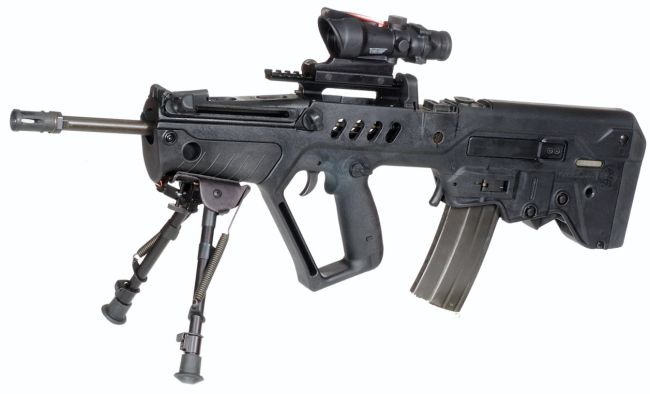
posted by Punkey at 4:07 AM on March 4, 2013
There is a lot of misinformation in this thread (and I'm not even going to address the stupidity of "it's designed to tumble in the target" other than to say, "facepalm").
Leaving aside utterly the question of whether "home defense is a thing you should be concerned about doing, the AR-15 is much more practical than a shotgun. Slide racking is just going to let them know where you are, but the real reason the shotgun is a bad choice is overpenetration. I am on my phone, so I can't really do citations, but this stuff isn't hard to research. A 55 grain 5.56 bullet that fragments significantly on penetration is much, much less likely to penetrate an interior (or, hell, exterior) wall and hurt or kill someone you did not intend to than either a 9mm handgun round or 00 buckshot, which is what you are going to use against a person. Birdshot is not really a choice, as it doesn't have enough penetration to be considered viable against people.
posted by adamdschneider at 4:45 AM on March 4, 2013 [2 favorites]
Leaving aside utterly the question of whether "home defense is a thing you should be concerned about doing, the AR-15 is much more practical than a shotgun. Slide racking is just going to let them know where you are, but the real reason the shotgun is a bad choice is overpenetration. I am on my phone, so I can't really do citations, but this stuff isn't hard to research. A 55 grain 5.56 bullet that fragments significantly on penetration is much, much less likely to penetrate an interior (or, hell, exterior) wall and hurt or kill someone you did not intend to than either a 9mm handgun round or 00 buckshot, which is what you are going to use against a person. Birdshot is not really a choice, as it doesn't have enough penetration to be considered viable against people.
posted by adamdschneider at 4:45 AM on March 4, 2013 [2 favorites]
It also means that if America ever ends up in the positively unimaginable situation that roughly 2/3rds of the Arab states have been in the last few years or will be shortly, there won't be any plausible hope that a revolutionary public will have a snowball's chance in hell of violent revolution. Which happens to be exactly what America was founded on.
A totalitarian America is not going to look like Red Dawn, where there are big groups of soldiers around as survivalist fantasy targets. It will just mean more and more extensive police actions, by an increasingly militarized police force. The only way to oppose that kind of scenario is through political action.
People who say that the reason they need a gun is because they think that they can take on the military are completely delusional.
posted by dubold at 4:59 AM on March 4, 2013 [19 favorites]
A totalitarian America is not going to look like Red Dawn, where there are big groups of soldiers around as survivalist fantasy targets. It will just mean more and more extensive police actions, by an increasingly militarized police force. The only way to oppose that kind of scenario is through political action.
People who say that the reason they need a gun is because they think that they can take on the military are completely delusional.
posted by dubold at 4:59 AM on March 4, 2013 [19 favorites]
I've always considered someone's advocacy of a direct-impingement action to be a sort of litmus test.
Yeah, it's OK if you keep it really well maintained and everything. Still seems like too much compromise for the return.
posted by mikelieman at 5:13 AM on March 4, 2013 [2 favorites]
Yeah, it's OK if you keep it really well maintained and everything. Still seems like too much compromise for the return.
posted by mikelieman at 5:13 AM on March 4, 2013 [2 favorites]
I have to second the VP on his shotgun recommendation for self-defense. I own no weapon and foresee no reason to have one but, should the need arise, I would opt for a 12 gauge riot shotgun perhaps initially loaded with "less lethal" ammunition. No aiming. No skill. No Rambo. But scary...
posted by jim in austin at 5:14 AM on March 4, 2013
posted by jim in austin at 5:14 AM on March 4, 2013
Check out Something Awful's photoshopping for yuks but basically every pro-gun website criticised the pictures as staged or photoshopped. The main issue is he is firing horizontally when if he was skeet or trap shooting he'd be pointing the weapon upwards.
See? Look at this. You can't trust anyone who's "pro-gun" to be honest with you on technical issues. There is the truth that we know as firearms enthusiasts, and then there is the lie we tell to those who aren't "gun people."
In skeet shooting, you have the high house and the low house. Targets from the low house can approach the horizon, especially if you take your time getting a bead on it. Here's a video taken with a camera attached to the shotgun.
If he was shooting sporting clays (different competition than skeet, but often incorrectly called a skeet course or trap course, even by the range or gun club), there are stations that roll the clay pigeons along the ground as well as launch them on eye-level trajectories.
Anyone and everyone familiar with shooting sports knows this. Obama had an awkward grip, but I've seen weirder grips by people who shoot better than I do. "He needs to improve his technique" does not equate to "staged."
You can just take it for granted at this point that you will never receive a straight answer or an honest opinion from the gun-rights crowd on anything technical.
posted by Slap*Happy at 5:21 AM on March 4, 2013 [11 favorites]
See? Look at this. You can't trust anyone who's "pro-gun" to be honest with you on technical issues. There is the truth that we know as firearms enthusiasts, and then there is the lie we tell to those who aren't "gun people."
In skeet shooting, you have the high house and the low house. Targets from the low house can approach the horizon, especially if you take your time getting a bead on it. Here's a video taken with a camera attached to the shotgun.
If he was shooting sporting clays (different competition than skeet, but often incorrectly called a skeet course or trap course, even by the range or gun club), there are stations that roll the clay pigeons along the ground as well as launch them on eye-level trajectories.
Anyone and everyone familiar with shooting sports knows this. Obama had an awkward grip, but I've seen weirder grips by people who shoot better than I do. "He needs to improve his technique" does not equate to "staged."
You can just take it for granted at this point that you will never receive a straight answer or an honest opinion from the gun-rights crowd on anything technical.
posted by Slap*Happy at 5:21 AM on March 4, 2013 [11 favorites]
00 buck has approximately the same energy as a .38 slug if you are having trouble looking it up. My opinion on the benefits of a 12-gauge as a home defence weapon are coloured by the fact that every house I have ever lived in is made of brick and thus overpenetration is of no concern of mine. Were I to live in a place with shoddy walls I would still take the shotgun and load it with expanding frangible slugs.
I see no problem in telling a home invader where I am, and in fact I would happily announce, very loudly, that the individual was welcome to take anything from downstairs as I am covered by insurance but if they set one foot on the stairs I was armed, defending my family on my property and they were going to die violently if they attempted to come upstairs.
The very concept of the castle doctrine implies picking a position to make a stand, your keep as it were. Choosing to hunt an unknown individual with unknown skillsets through a house at night with adrenaline pumping is the very height of stupidity. You might try "slicing the pie" all tacticool into your kitchen and take an iron skillet to the face. Then you're unconscious and without a gun.
Stay upstairs, protect your family and let the intruder know that you are only a threat to them if they approach you. Anything else buys into a stupid Death Wish fantasy that will end badly for someone. I'd rather the person left and I make an insurance claim then see them bleeding out on my carpet when I close my eyes for the rest of my life.
posted by longbaugh at 5:25 AM on March 4, 2013 [20 favorites]
I see no problem in telling a home invader where I am, and in fact I would happily announce, very loudly, that the individual was welcome to take anything from downstairs as I am covered by insurance but if they set one foot on the stairs I was armed, defending my family on my property and they were going to die violently if they attempted to come upstairs.
The very concept of the castle doctrine implies picking a position to make a stand, your keep as it were. Choosing to hunt an unknown individual with unknown skillsets through a house at night with adrenaline pumping is the very height of stupidity. You might try "slicing the pie" all tacticool into your kitchen and take an iron skillet to the face. Then you're unconscious and without a gun.
Stay upstairs, protect your family and let the intruder know that you are only a threat to them if they approach you. Anything else buys into a stupid Death Wish fantasy that will end badly for someone. I'd rather the person left and I make an insurance claim then see them bleeding out on my carpet when I close my eyes for the rest of my life.
posted by longbaugh at 5:25 AM on March 4, 2013 [20 favorites]
If you're going to be a true, hardcore proponent of the infallibility of the 2nd Amendment, the reason you want access to your arms is to be able to defend yourself from your own government gone awry. There wasn't anything about home defence in there, that was at best an unmentioned afterthought to the founding fathers. There was, however, the pretext of a 'well-regulated militia' - literally the balance that the militia could be regulated by the regular public.”
This isn't exactly my area of expertise, but my understanding is that the Founding Fathers were fairly distrustful of standing armies. They had also won a war in which militia played a fairly significant role, so they intended for the defense of the United States to rest on militia. For a number of reasons, though, relying purely on militia for defense is troublesome; some American expeditions were hampered because people would be all, "Uh, dude, I only signed on to defend South Carolina, we're not leaving the state, good luck out there!" Or "Hey, don't worry dude, our state will TOTALLY give you a thousand pounds of food for your military expedition. Oh, oops. Yeah, here's like hundred pounds."
This wasn't unique to the United States; I believe Chinese communist military doctrine post WWII intended to rely on large militias, but ran into a lot of trouble in the Korean War, when it was realized that it was really hard to do combined arms warfare with large infantry militias. (In other words, large infantry militias might kind of work OK defensively in the long run, but aren't particularly good offensively when you need tanks and artillery.)
So anyway, my understanding is that the primary line of defense against 'government gone amok' was intended to be the voting process; this is why the President (an elected civilian official!) was placed as Commander in Chief.
posted by Comrade_robot at 5:39 AM on March 4, 2013 [8 favorites]
This isn't exactly my area of expertise, but my understanding is that the Founding Fathers were fairly distrustful of standing armies. They had also won a war in which militia played a fairly significant role, so they intended for the defense of the United States to rest on militia. For a number of reasons, though, relying purely on militia for defense is troublesome; some American expeditions were hampered because people would be all, "Uh, dude, I only signed on to defend South Carolina, we're not leaving the state, good luck out there!" Or "Hey, don't worry dude, our state will TOTALLY give you a thousand pounds of food for your military expedition. Oh, oops. Yeah, here's like hundred pounds."
This wasn't unique to the United States; I believe Chinese communist military doctrine post WWII intended to rely on large militias, but ran into a lot of trouble in the Korean War, when it was realized that it was really hard to do combined arms warfare with large infantry militias. (In other words, large infantry militias might kind of work OK defensively in the long run, but aren't particularly good offensively when you need tanks and artillery.)
So anyway, my understanding is that the primary line of defense against 'government gone amok' was intended to be the voting process; this is why the President (an elected civilian official!) was placed as Commander in Chief.
posted by Comrade_robot at 5:39 AM on March 4, 2013 [8 favorites]
allkindsoftime: I would like to point out that if the US government really does decide to go all al-Assad on our collective asses, our lack of fully-automatic firearms will be absolutely, positively the least of our worries. Unless you're planning on shooting down Predator drones, F-18s, A-10s, and B-52s with that M16, or tackling an M1A1 Abrams with your AK-47. The idea that the 2nd Amendment should provide for citizens to have an adequate defense against our own government went out of date the instant the Maxim gun became a front-line weapon, and became ridiculous when tanks were invented.
I'm going to try to say this only once, but...you do know we lost Iraq and are losing Afghanistan, right? Not due to their superior weaponry, but because rifles - simple rifles - are pretty fucking common. We've bombed the living bejesus out of them, and we still aren't winning. All of those things you mention are not useful against a revolutionary fighter that is mixed in with the civilian population you are supposed to be trying to protect.
posted by corb at 5:52 AM on March 4, 2013 [6 favorites]
I'm going to try to say this only once, but...you do know we lost Iraq and are losing Afghanistan, right? Not due to their superior weaponry, but because rifles - simple rifles - are pretty fucking common. We've bombed the living bejesus out of them, and we still aren't winning. All of those things you mention are not useful against a revolutionary fighter that is mixed in with the civilian population you are supposed to be trying to protect.
posted by corb at 5:52 AM on March 4, 2013 [6 favorites]
allkindoftime: The idea that the 2nd Amendment should provide for citizens to have an adequate defense against our own government went out of date the instant the Maxim gun became a front-line weapon, and became ridiculous when tanks were invented.
The idea of an armed citizentry defeating an organized military force in the field was just as ridiculous in 1789 and it is today. What the Second Amendment always secured was the posssibility of irregular warfare until the legitimacy of the government is sapped by non-stop bloodshed. You don't need weapon parity for that; in fact, you don't need automatic weapons for that.
The Second Amendment is not obsolete as a lot of gun control adovcates think, but we don't need battlefield weapons to keep it relevant, as the crazies think.
posted by spaltavian at 5:54 AM on March 4, 2013 [5 favorites]
The idea of an armed citizentry defeating an organized military force in the field was just as ridiculous in 1789 and it is today. What the Second Amendment always secured was the posssibility of irregular warfare until the legitimacy of the government is sapped by non-stop bloodshed. You don't need weapon parity for that; in fact, you don't need automatic weapons for that.
The Second Amendment is not obsolete as a lot of gun control adovcates think, but we don't need battlefield weapons to keep it relevant, as the crazies think.
posted by spaltavian at 5:54 AM on March 4, 2013 [5 favorites]
I'm going to try to say this only once, but...you do know we lost Iraq and are losing Afghanistan, right? Not due to their superior weaponry, but because rifles - simple rifles - are pretty fucking common. We've bombed the living bejesus out of them, and we still aren't winning. All of those things you mention are not useful against a revolutionary fighter that is mixed in with the civilian population you are supposed to be trying to protect.
No, we lost Iraq and Afghanistan because we bombed the living bejesus out of them, and did so fairly indiscriminately at times. Things would have gone quite a bit better had we done more to engages with the civilian population regardless of the types or amounts of rifles the revolutionary fighters had.
posted by zombieflanders at 6:02 AM on March 4, 2013 [1 favorite]
No, we lost Iraq and Afghanistan because we bombed the living bejesus out of them, and did so fairly indiscriminately at times. Things would have gone quite a bit better had we done more to engages with the civilian population regardless of the types or amounts of rifles the revolutionary fighters had.
posted by zombieflanders at 6:02 AM on March 4, 2013 [1 favorite]
Automatic fire is overrated.
It's good for making others duck.
This is why it works in teams -- one guys sprays and prays at the bad guys, the others move out of cover to the next cover closer to the objective. Someone else does so while everyone else moves (and the first shooter reloads.)
If you're alone, the only time you should be firing auto is if you need cover to move.
Otherwise? Yes. Very, very overrated. Unless you're talking a large tripod mounted GP machine gun, you're not keeping the sights on target for more than a couple of rounds with automatic fire, and bullets arcing through the sky do little to annoy your enemies.
I frigging hate the term "assault weapon" in its modern conventional usage.
Where it came from: The infantry rifle was originally, like the infantry smoothbore before it, intended for mass fire. This is why weapons like the 1873 and 1903 Springfield Infantry Rifles had sights that could be set for 1000 yards -- you couldn't be very accurate at that range, but you and your 100 company mates could put a lot of rounds into the bad guy and his 100 company mates at that range.
Times changed, tactics changed, and direct, aimed fire became much more important. The long distance suppressive fire role moved to the GP machine gun. Here, accuracy became more important, as well as rate of fire. This was the WWI/WWII battle rifle, and probably the best example of this was the US Rifle, Infantry, M1 (Garand.) Rifleman aimed. Machine guns saturated the area.
But late in the war, the Germans had an idea about combat, esp. urban combat. They realized that what made assaults -- that is, armed movement to take a defined position -- work was volume of fire. This argued for more ammo and auto fire. More ammo was problem, each round takes up X space and weighs Y, and at a certain point, the soldier can't carry any more. If you made the round smaller, though, they could carry more. The other factor was speed -- the more you carried, the slower you were, the heavier your weapon, the slower it was to point at the target. Both, in an assault, were bad.
They took this idea and built the Sturmgewehr 44. "Surmgewher" is literally "Storm Rifle", but in this case, "Storm", means to "storm" a position, or, in the US military nomenclature, an Assault Rifle. It had selectable fire, fired 7.92x22 Kurz (short) rounds, did so out of 30 round magazines, and weighed, loaded, under 12 pounds. Magazines, loaded, weighed just over a pound each. So, for a hair over 40 pounds, you could carry the weapon and 27 magazines -- over 800 rounds.
Compare this to the M1 Garand, which weighed a pound more itself, and fired, semi-auto, .30-06 Springfield rounds, 8 at a time, a clip of which weighed almost a pound and took up about 2/3rds the space of the StG44 magazine. On an military assault, the StG44 armed solider was carrying, for the same weight and space, almost three times the ammo and had autofire.
After the war, the US Army went through a lot of after action research, trying to determine what worked and what didn't. One fast lesson was that automatic weapons at the infantryman level seemed to be a win, so the M14 rifle was developed and issued. But it was big, heavy, and fired a round very similar to the big .30-06 round of the Garand, the 7.62 NATO. Each magazine weighed over a kilogram, the M14 itself was 9 pounds of seasoned wood and steel, and it was one heavy beast to haul around. It didn't point fast, and you couldn't carry a ton of ammo. Accurate? Yes, under 4 MOA, but at 100-200 yards, which was the typical *max* range, it was actually too accurate.
They kept doing research, and they found that the single most important marker of an successful assault was simply rounds fired, and teams that were doing that often started to favor considerably weaker weapons, like the M1A1 (Thompson) and M3/M3A1 (Grease Gun) Submachine guns. These fired pistol ammo, but they fired a lot of it, and you could carry more.
Everyone, looking at this, realized that quantity is a quality of its own, and there was a big move to smaller rounds in auto fire weapons. And, because the weapons built to fire this were basically direct descendants of the StG 44, they were called "assault rifles."
posted by eriko at 6:10 AM on March 4, 2013 [33 favorites]
It's good for making others duck.
This is why it works in teams -- one guys sprays and prays at the bad guys, the others move out of cover to the next cover closer to the objective. Someone else does so while everyone else moves (and the first shooter reloads.)
If you're alone, the only time you should be firing auto is if you need cover to move.
Otherwise? Yes. Very, very overrated. Unless you're talking a large tripod mounted GP machine gun, you're not keeping the sights on target for more than a couple of rounds with automatic fire, and bullets arcing through the sky do little to annoy your enemies.
I frigging hate the term "assault weapon" in its modern conventional usage.
Where it came from: The infantry rifle was originally, like the infantry smoothbore before it, intended for mass fire. This is why weapons like the 1873 and 1903 Springfield Infantry Rifles had sights that could be set for 1000 yards -- you couldn't be very accurate at that range, but you and your 100 company mates could put a lot of rounds into the bad guy and his 100 company mates at that range.
Times changed, tactics changed, and direct, aimed fire became much more important. The long distance suppressive fire role moved to the GP machine gun. Here, accuracy became more important, as well as rate of fire. This was the WWI/WWII battle rifle, and probably the best example of this was the US Rifle, Infantry, M1 (Garand.) Rifleman aimed. Machine guns saturated the area.
But late in the war, the Germans had an idea about combat, esp. urban combat. They realized that what made assaults -- that is, armed movement to take a defined position -- work was volume of fire. This argued for more ammo and auto fire. More ammo was problem, each round takes up X space and weighs Y, and at a certain point, the soldier can't carry any more. If you made the round smaller, though, they could carry more. The other factor was speed -- the more you carried, the slower you were, the heavier your weapon, the slower it was to point at the target. Both, in an assault, were bad.
They took this idea and built the Sturmgewehr 44. "Surmgewher" is literally "Storm Rifle", but in this case, "Storm", means to "storm" a position, or, in the US military nomenclature, an Assault Rifle. It had selectable fire, fired 7.92x22 Kurz (short) rounds, did so out of 30 round magazines, and weighed, loaded, under 12 pounds. Magazines, loaded, weighed just over a pound each. So, for a hair over 40 pounds, you could carry the weapon and 27 magazines -- over 800 rounds.
Compare this to the M1 Garand, which weighed a pound more itself, and fired, semi-auto, .30-06 Springfield rounds, 8 at a time, a clip of which weighed almost a pound and took up about 2/3rds the space of the StG44 magazine. On an military assault, the StG44 armed solider was carrying, for the same weight and space, almost three times the ammo and had autofire.
After the war, the US Army went through a lot of after action research, trying to determine what worked and what didn't. One fast lesson was that automatic weapons at the infantryman level seemed to be a win, so the M14 rifle was developed and issued. But it was big, heavy, and fired a round very similar to the big .30-06 round of the Garand, the 7.62 NATO. Each magazine weighed over a kilogram, the M14 itself was 9 pounds of seasoned wood and steel, and it was one heavy beast to haul around. It didn't point fast, and you couldn't carry a ton of ammo. Accurate? Yes, under 4 MOA, but at 100-200 yards, which was the typical *max* range, it was actually too accurate.
They kept doing research, and they found that the single most important marker of an successful assault was simply rounds fired, and teams that were doing that often started to favor considerably weaker weapons, like the M1A1 (Thompson) and M3/M3A1 (Grease Gun) Submachine guns. These fired pistol ammo, but they fired a lot of it, and you could carry more.
Everyone, looking at this, realized that quantity is a quality of its own, and there was a big move to smaller rounds in auto fire weapons. And, because the weapons built to fire this were basically direct descendants of the StG 44, they were called "assault rifles."
posted by eriko at 6:10 AM on March 4, 2013 [33 favorites]
You can just take it for granted at this point that you will never receive a straight answer or an honest opinion from the gun-rights crowd on anything technical.
This approach to framing the debate (i.e., "No one on the other side of the issue can be trusted") does no one any good, and diminishes Metafilter as a whole.
posted by DWRoelands at 6:24 AM on March 4, 2013 [12 favorites]
This approach to framing the debate (i.e., "No one on the other side of the issue can be trusted") does no one any good, and diminishes Metafilter as a whole.
posted by DWRoelands at 6:24 AM on March 4, 2013 [12 favorites]
This approach to framing the debate (i.e., "No one on the other side of the issue can be trusted") does no one any good, and diminishes Metafilter as a whole.
Hear, hear.
posted by trackofalljades at 6:33 AM on March 4, 2013 [2 favorites]
Hear, hear.
posted by trackofalljades at 6:33 AM on March 4, 2013 [2 favorites]
What does the "AR" in AR-15 stand for?
posted by Ice Cream Socialist at 6:34 AM on March 4, 2013
posted by Ice Cream Socialist at 6:34 AM on March 4, 2013
What does the "AR" in AR-15 stand for?
"ArmaLite Rifle," after the the company that originally designed it.
posted by trackofalljades at 6:38 AM on March 4, 2013
"ArmaLite Rifle," after the the company that originally designed it.
posted by trackofalljades at 6:38 AM on March 4, 2013
Ah cool, thanks. I just didn't read the Wikipedia page carefully enough.
posted by Ice Cream Socialist at 6:42 AM on March 4, 2013
posted by Ice Cream Socialist at 6:42 AM on March 4, 2013
What do the MeFi gun experts think of a .357 handgun for home defense, with fragmenting ammunition like this? Is it likely to get through my indoor or exterior brick walls?
posted by exhilaration at 6:42 AM on March 4, 2013
posted by exhilaration at 6:42 AM on March 4, 2013
I'm going to try to say this only once, but...you do know we lost Iraq and are losing Afghanistan, right? Not due to their superior weaponry, but because rifles - simple rifles - are pretty fucking common. We've bombed the living bejesus out of them, and we still aren't winning. All of those things you mention are not useful against a revolutionary fighter that is mixed in with the civilian population you are supposed to be trying to protect.
The withdrawals in Iraq and Afghanistan aren't due to the rifles and IEDs. It's because the wars are completely unpopular in the US. The failure to "win" is because you can't "win" installing a democracy from the top down.
posted by dubold at 6:48 AM on March 4, 2013 [3 favorites]
The withdrawals in Iraq and Afghanistan aren't due to the rifles and IEDs. It's because the wars are completely unpopular in the US. The failure to "win" is because you can't "win" installing a democracy from the top down.
posted by dubold at 6:48 AM on March 4, 2013 [3 favorites]
People generally buy an AR-15 because of the massive distribution of the NATO round it fires, and the calculated availability and cost during a survival crisis, which is what it is purchased for.
posted by Brian B. at 6:50 AM on March 4, 2013 [1 favorite]
posted by Brian B. at 6:50 AM on March 4, 2013 [1 favorite]
What do the MeFi gun experts think of a .357 handgun for home defense, with fragmenting ammunition like this? Is it likely to get through my indoor or exterior brick walls?
My dad's advice to someone asking him about the best handgun for self defense was always "a sawed-off shotgun"
posted by jquinby at 6:50 AM on March 4, 2013
My dad's advice to someone asking him about the best handgun for self defense was always "a sawed-off shotgun"
posted by jquinby at 6:50 AM on March 4, 2013
The main reason that neither an AR15 nor a shotgun is ideal for home security is that you can not really hold either effectively while you are on the phone to the police.
posted by K.P. at 6:50 AM on March 4, 2013 [2 favorites]
posted by K.P. at 6:50 AM on March 4, 2013 [2 favorites]
According to FBI homicide statistics rifles account for about 5-6 percent of homicides and there has been no rising trend in this statistic from 2007 to 2011 during which the AR has sold like hotcakes.
Mass shootings expected, a military-style weapon is not something that is useful to a civilian criminal. And spree killers kill relatively few people and limiting them to handguns only slightly reduces their lethality.
I just don't see any justification to single out the AR apart from "it says combat on the brochure".
posted by Authorized User at 6:51 AM on March 4, 2013 [4 favorites]
Mass shootings expected, a military-style weapon is not something that is useful to a civilian criminal. And spree killers kill relatively few people and limiting them to handguns only slightly reduces their lethality.
I just don't see any justification to single out the AR apart from "it says combat on the brochure".
posted by Authorized User at 6:51 AM on March 4, 2013 [4 favorites]
. What the Second Amendment always secured was the posssibility of irregular warfare until the legitimacy of the government is sapped by non-stop bloodshed. You don't need weapon parity for that; in fact, you don't need automatic weapons for that.
Yeah, I'd agree with this - but we don't have weapons parity or automatic weapons in AR-15s. They don't have three-round burst or better.
The main reason that neither an AR15 nor a shotgun is ideal for home security is that you can not really hold either effectively while you are on the phone to the police.
The police take five minutes to arrive. Do you really think this is the best solution for protecting yourself?
posted by corb at 6:51 AM on March 4, 2013
Yeah, I'd agree with this - but we don't have weapons parity or automatic weapons in AR-15s. They don't have three-round burst or better.
The main reason that neither an AR15 nor a shotgun is ideal for home security is that you can not really hold either effectively while you are on the phone to the police.
The police take five minutes to arrive. Do you really think this is the best solution for protecting yourself?
posted by corb at 6:51 AM on March 4, 2013
President Obama posing (badly) with a shotgun
Can someone explain this?
It's yet another example that no matter what Obama says, does, doesn't say or doesn't do a certain contingent of America will find outrage. Obama was asked point blank by a right-wing reporter, "Have you ever fired a weapon?" He replied he goes skeet shooting at Camp David. Thus begat the "skeeter", who like the birther automatically assumed the President was lying. Just as in the birth certificate "controversy", the White House released a photo showing Obama shooting a shotgun in some sort of skeet-like event. And just as in the birth certificate "controversy" they claim, among other things, that the photo was fake (they can tell by the pixels), that the photo was staged* or the President wasn't really skeet** shooting because the gun was too horizontal, or they simply nitpick his stance. All of this is proof that Obama's opinion on universal background checks is wrong and/or that he is just trying to distract us with silly photo ops while he personally goes door-to-door to take away our guns.
*Never mind the photos of other presidents shooting at that range in pretty much the same orientation.
**Another example of "you don't have the encyclopedic knowledge of guns that I do, so your opinion can be dismissed out of hand". Practically everyone called the shooting of airborne clay targets "skeet shooting" until Obama mentioned it. Now it matters whether he was skeet shooting vs trap shooting vs something else, and this has a direct bearing on whether his opinion on, e.g. universal background checks is valid. Never mind that the gun-obsessed mess up this terminology as much as the "gun grabbers."
posted by dirigibleman at 6:55 AM on March 4, 2013 [9 favorites]
Can someone explain this?
It's yet another example that no matter what Obama says, does, doesn't say or doesn't do a certain contingent of America will find outrage. Obama was asked point blank by a right-wing reporter, "Have you ever fired a weapon?" He replied he goes skeet shooting at Camp David. Thus begat the "skeeter", who like the birther automatically assumed the President was lying. Just as in the birth certificate "controversy", the White House released a photo showing Obama shooting a shotgun in some sort of skeet-like event. And just as in the birth certificate "controversy" they claim, among other things, that the photo was fake (they can tell by the pixels), that the photo was staged* or the President wasn't really skeet** shooting because the gun was too horizontal, or they simply nitpick his stance. All of this is proof that Obama's opinion on universal background checks is wrong and/or that he is just trying to distract us with silly photo ops while he personally goes door-to-door to take away our guns.
*Never mind the photos of other presidents shooting at that range in pretty much the same orientation.
**Another example of "you don't have the encyclopedic knowledge of guns that I do, so your opinion can be dismissed out of hand". Practically everyone called the shooting of airborne clay targets "skeet shooting" until Obama mentioned it. Now it matters whether he was skeet shooting vs trap shooting vs something else, and this has a direct bearing on whether his opinion on, e.g. universal background checks is valid. Never mind that the gun-obsessed mess up this terminology as much as the "gun grabbers."
posted by dirigibleman at 6:55 AM on March 4, 2013 [9 favorites]
Frangible ammo should always be used indoors imo. The .357 has the added benefit of being able to chamber .38 Special when practicing which is a lot cheaper. Most .357s are revolvers so they are reliable and compact but that leads to the question of do you have kids in the house? I'd rather a longarm as it's less likely a child can piss around with it putting themselves and others in danger.
Regarding calling the cops - that's really the first thing you should do, second you get your family into one room then finally you should get your weapon ready. You do it in this order so you don't end up shooting them through a locked bathroom door.*
Making an announcement to an intruder whilst being recorded will also put you in a much better legal case should it be necessary to shoot them (so long as you follow the directions of the 911 operator and exhibit a modicum of common sense).
*giving him the benefit of the doubt, innocent until proven guilty etc.
posted by longbaugh at 7:05 AM on March 4, 2013
Regarding calling the cops - that's really the first thing you should do, second you get your family into one room then finally you should get your weapon ready. You do it in this order so you don't end up shooting them through a locked bathroom door.*
Making an announcement to an intruder whilst being recorded will also put you in a much better legal case should it be necessary to shoot them (so long as you follow the directions of the 911 operator and exhibit a modicum of common sense).
*giving him the benefit of the doubt, innocent until proven guilty etc.
posted by longbaugh at 7:05 AM on March 4, 2013
I will never, ever understand why it is that gun control advocates are specifically targeting semi-auto rifles to the exclusion of all else. I realize it's because we react to high-profile events more strongly than we do to the background level of violence, but...
Let me put it this way: on your way home from work, you trip over an old tarnished lamp. Upon a quick effort to burnish it, out springs a genie! This is a genie of retroactive historical adjustment. He's also US-centric, and a complete shit, as genies are wont to be. He gives you two choices.
Choice 1: you can eliminate every mass-shooting scenario that has occurred in the last twenty years. Every white guy with a gun who ever went into public and opened fire on more than three people, between 1993 and today, that guy was hit by a bus on his way to wherever he was going, and he never shot anyone. Columbine, Red Lake, Sandy Hook: these are all erased from the history books, and their victims are miraculously alive again.
Choice 2: you can eliminate 5% of the gunshot fatalities caused by pistols last year. 1 out of 20 people who accidentally shot themselves, intentionally shot themselves, or intentionally shot someone else in the year 2012--that person (and let's be honest, they're still all male, but at least they aren't all white anymore) missed himself by six inches, got mental health treatment in time, or got stopped and arrested on the way to the scene of the crime, respectively.
20 years of stopping every spree shooting, or one year of stopping a lousy 5% of day-to-day shootings? Seems like an easy choice, right? I'll just wait here while you go look up which wish would save more lives.
posted by Mayor West at 7:10 AM on March 4, 2013 [8 favorites]
Let me put it this way: on your way home from work, you trip over an old tarnished lamp. Upon a quick effort to burnish it, out springs a genie! This is a genie of retroactive historical adjustment. He's also US-centric, and a complete shit, as genies are wont to be. He gives you two choices.
Choice 1: you can eliminate every mass-shooting scenario that has occurred in the last twenty years. Every white guy with a gun who ever went into public and opened fire on more than three people, between 1993 and today, that guy was hit by a bus on his way to wherever he was going, and he never shot anyone. Columbine, Red Lake, Sandy Hook: these are all erased from the history books, and their victims are miraculously alive again.
Choice 2: you can eliminate 5% of the gunshot fatalities caused by pistols last year. 1 out of 20 people who accidentally shot themselves, intentionally shot themselves, or intentionally shot someone else in the year 2012--that person (and let's be honest, they're still all male, but at least they aren't all white anymore) missed himself by six inches, got mental health treatment in time, or got stopped and arrested on the way to the scene of the crime, respectively.
20 years of stopping every spree shooting, or one year of stopping a lousy 5% of day-to-day shootings? Seems like an easy choice, right? I'll just wait here while you go look up which wish would save more lives.
posted by Mayor West at 7:10 AM on March 4, 2013 [8 favorites]
My dad's advice to someone asking him about the best handgun for self defense was always "a sawed-off shotgun"
Don't do anything illegal if you intend to involve the police at some point. Having said that, handguns will probably find their way into mischief and mayhem at some point in their life cycle, especially suicides, while shotguns can mount a flashlight and can best kill an armed attacker in and around the home without harming your children and neighbors in the process.
posted by Brian B. at 7:13 AM on March 4, 2013
Don't do anything illegal if you intend to involve the police at some point. Having said that, handguns will probably find their way into mischief and mayhem at some point in their life cycle, especially suicides, while shotguns can mount a flashlight and can best kill an armed attacker in and around the home without harming your children and neighbors in the process.
posted by Brian B. at 7:13 AM on March 4, 2013
Regarding calling the cops - that's really the first thing you should do, second you get your family into one room then finally you should get your weapon ready. You do it in this order so you don't end up shooting them through a locked bathroom door.*
I hate to disagree with you, but in this case, absolutely not. Calling the cops - at this present stage of technology - (seriously, why can't you text the fucking cops yet?) is doing nothing but giving away your position and making you more vulnerable.
Also, you should get your weapon - it should /already/ be ready to go - before you grab your family. Otherwise, you have to herd your family back towards the room with the guns, which, as it's almost a dead bet your whole family isn't tactically trained, is going to sound enough like a herd of elephants to once again give away your position.
At any rate, the benefit of a rifle (preferably with an adjustable stock) in this scenario is the ability to aim accurately, hitting only what you wanted to hit, even in the dark. You can be a lot more accurate with a rifle than you can with a handgun - and you can hit from further away, which means you can hit him while he can't hit you or your family well.
posted by corb at 7:15 AM on March 4, 2013
I hate to disagree with you, but in this case, absolutely not. Calling the cops - at this present stage of technology - (seriously, why can't you text the fucking cops yet?) is doing nothing but giving away your position and making you more vulnerable.
Also, you should get your weapon - it should /already/ be ready to go - before you grab your family. Otherwise, you have to herd your family back towards the room with the guns, which, as it's almost a dead bet your whole family isn't tactically trained, is going to sound enough like a herd of elephants to once again give away your position.
At any rate, the benefit of a rifle (preferably with an adjustable stock) in this scenario is the ability to aim accurately, hitting only what you wanted to hit, even in the dark. You can be a lot more accurate with a rifle than you can with a handgun - and you can hit from further away, which means you can hit him while he can't hit you or your family well.
posted by corb at 7:15 AM on March 4, 2013
I think a Ruger 10/22 is the perfect first gun purchase, but that's just me
Nope, not just you. It was my first when I was growing up and is a great rabbit/squirrel/training gun and will be passed on to my kids. Great little .22 LR for the country folk. The rest are all bolt action big game rifles or shotguns for rabbits.
Would I consider an AR15 (not that I own one.. honestly if I wanted a military style weapon for collecting purposes or plinking or for an alternate deer rifle I'd flash back to the golden age and get a M1 Garand or wish my grandfather's from WWII hadn't been destroyed in a house fire) a good home defense weapon?
Nope, not at all, but I don't think focusing on them is productive behavior for anyone wanting to discuss current pro/con gun issues here in the US, but Malor said that way better than I could myself.
The police take five minutes to arrive. Do you really think this is the best solution for protecting yourself?
Damn that's fast. Both my rural and urban experience has been that deputies or sheriffs take much longer than that.
posted by RolandOfEld at 7:16 AM on March 4, 2013 [1 favorite]
Nope, not just you. It was my first when I was growing up and is a great rabbit/squirrel/training gun and will be passed on to my kids. Great little .22 LR for the country folk. The rest are all bolt action big game rifles or shotguns for rabbits.
Would I consider an AR15 (not that I own one.. honestly if I wanted a military style weapon for collecting purposes or plinking or for an alternate deer rifle I'd flash back to the golden age and get a M1 Garand or wish my grandfather's from WWII hadn't been destroyed in a house fire) a good home defense weapon?
Nope, not at all, but I don't think focusing on them is productive behavior for anyone wanting to discuss current pro/con gun issues here in the US, but Malor said that way better than I could myself.
The police take five minutes to arrive. Do you really think this is the best solution for protecting yourself?
Damn that's fast. Both my rural and urban experience has been that deputies or sheriffs take much longer than that.
posted by RolandOfEld at 7:16 AM on March 4, 2013 [1 favorite]
I will never, ever understand why it is that gun control advocates are specifically targeting semi-auto rifles to the exclusion of all else.
koeselitz's post further up-thread answers this pretty well:
posted by quosimosaur at 7:22 AM on March 4, 2013 [2 favorites]
koeselitz's post further up-thread answers this pretty well:
in 2008, the Supreme Court declared suddenly that "the American people have considered the handgun to be the quintessential self-defense weapon," and by that reasoning ruled that any law "banning [handguns] from the home... would fail constitutional muster."It's far from perfect, but a ban on semi-automatic rifles would be a foothold in the argument for further firearms regulation.
Politicians know this – they know that banning handguns is pretty much impossible for them to accomplish without actually forcing through a repeal of the second amendment. But they know that the public is clamoring for decisive action right now because of the recent tragedies. So they go for what they can accomplish without running afoul of the Supreme Court's interpretation of the second amendment – assault-weapons bans.
posted by quosimosaur at 7:22 AM on March 4, 2013 [2 favorites]
Calling the cops - at this present stage of technology - (seriously, why can't you text the fucking cops yet?) is doing nothing but giving away your position and making you more vulnerable.
I'm sure you have ironclad statistics that not calling 911 and shooting the intruder has (a) been more effective than finding a safe place and calling 911, and (b) that this has resulted in less accidental shootings of non-intruders than stopping actual crimes. Right?
Also, you should get your weapon - it should /already/ be ready to go - before you grab your family.
Has this weapon readiness stopped more incidents than caused accidents, either of mistaken identity or lack of awareness of the gun's status?
At any rate, the benefit of a rifle (preferably with an adjustable stock) in this scenario is the ability to aim accurately, hitting only what you wanted to hit, even in the dark. You can be a lot more accurate with a rifle than you can with a handgun - and you can hit from further away, which means you can hit him while he can't hit you or your family well.
This is sounding like one of those "all gun owners are both effectively trained in handling and firing as well as possessed of relatively calm tactical thinking" things that is far from true, probably even in a majority of cases.
posted by zombieflanders at 7:24 AM on March 4, 2013 [3 favorites]
I'm sure you have ironclad statistics that not calling 911 and shooting the intruder has (a) been more effective than finding a safe place and calling 911, and (b) that this has resulted in less accidental shootings of non-intruders than stopping actual crimes. Right?
Also, you should get your weapon - it should /already/ be ready to go - before you grab your family.
Has this weapon readiness stopped more incidents than caused accidents, either of mistaken identity or lack of awareness of the gun's status?
At any rate, the benefit of a rifle (preferably with an adjustable stock) in this scenario is the ability to aim accurately, hitting only what you wanted to hit, even in the dark. You can be a lot more accurate with a rifle than you can with a handgun - and you can hit from further away, which means you can hit him while he can't hit you or your family well.
This is sounding like one of those "all gun owners are both effectively trained in handling and firing as well as possessed of relatively calm tactical thinking" things that is far from true, probably even in a majority of cases.
posted by zombieflanders at 7:24 AM on March 4, 2013 [3 favorites]
The main issue is he is firing horizontally when if he was skeet or trap shooting he'd be pointing the weapon upwards
One of the things that was so bizarre about this particular piece of nonsense is that even if hou're utterly ignorant about skeet shooting or trap shooting you can go on GIS and find images of championship skeet shooters shooting horizontally with a minimum of effort. That didn't stop the nonsense from getting firmly established as "fact" in vast reaches of the right wing echo chamber, however.
posted by yoink at 7:26 AM on March 4, 2013
One of the things that was so bizarre about this particular piece of nonsense is that even if hou're utterly ignorant about skeet shooting or trap shooting you can go on GIS and find images of championship skeet shooters shooting horizontally with a minimum of effort. That didn't stop the nonsense from getting firmly established as "fact" in vast reaches of the right wing echo chamber, however.
posted by yoink at 7:26 AM on March 4, 2013
I would think a beanbag shotgun or something else non-lethal would be best for family protection. Who wants to kill anyone, even an intruder? Spend the rest of your life thinking I killed a human being. With better planning, I could have avoided it.
I mean, what about masks for the family and a canister of tear gas? A stun grenade? Maybe that would have a chance of burning the house down, and they probably aren't on the market, but seriously, all the planning that goes into defending your family and the best you can do is kill intruders? Go wash your hands.
posted by Ice Cream Socialist at 7:28 AM on March 4, 2013 [7 favorites]
I mean, what about masks for the family and a canister of tear gas? A stun grenade? Maybe that would have a chance of burning the house down, and they probably aren't on the market, but seriously, all the planning that goes into defending your family and the best you can do is kill intruders? Go wash your hands.
posted by Ice Cream Socialist at 7:28 AM on March 4, 2013 [7 favorites]
It's far from perfect, but a ban on semi-automatic rifles would be a foothold in the argument for further firearms regulation.
Can't tell if arguing against ban because it would be foothold for potentially frivolous regulation or if arguing for ban because it will serve as the thin end of the wedge for proponents of a backdoor type banning of all firearms altogether.
Either way it's a huge problem with the discussion if either of these are indeed the case.
posted by RolandOfEld at 7:31 AM on March 4, 2013 [1 favorite]
Can't tell if arguing against ban because it would be foothold for potentially frivolous regulation or if arguing for ban because it will serve as the thin end of the wedge for proponents of a backdoor type banning of all firearms altogether.
Either way it's a huge problem with the discussion if either of these are indeed the case.
posted by RolandOfEld at 7:31 AM on March 4, 2013 [1 favorite]
Who wants to kill anyone, even an intruder? Spend the rest of your life thinking I killed a human being. With better planning, I could have avoided it.
I think there is a fundamental disconnect in thinking here.
If someone invaded my house, and I had a firearm, and shot and killed them, that would (assuming I lived in a Castle Doctrine state) be the optimal solution. My family and things are safe. The intruder is dead, and thus I have protected not only myself but others - he will never strike again.
What could possible better planning get me? The police coming in time to avoid any damage to me or my property, and giving the guy maybe five years?
posted by corb at 7:34 AM on March 4, 2013 [3 favorites]
I think there is a fundamental disconnect in thinking here.
If someone invaded my house, and I had a firearm, and shot and killed them, that would (assuming I lived in a Castle Doctrine state) be the optimal solution. My family and things are safe. The intruder is dead, and thus I have protected not only myself but others - he will never strike again.
What could possible better planning get me? The police coming in time to avoid any damage to me or my property, and giving the guy maybe five years?
posted by corb at 7:34 AM on March 4, 2013 [3 favorites]
It's far from perfect, but a ban on semi-automatic rifles would be a foothold in the argument for further firearms regulation.
Except that it would probably not make a noticeable dent in homicide statistics and then those opposing gun control could say that gun control does not help.
posted by Authorized User at 7:35 AM on March 4, 2013 [1 favorite]
Except that it would probably not make a noticeable dent in homicide statistics and then those opposing gun control could say that gun control does not help.
posted by Authorized User at 7:35 AM on March 4, 2013 [1 favorite]
And FWIW, I personally think that legislation requiring all gun owners are both effectively trained in handling and firing (as in, military or LEO levels) as well as possessed of relatively calm tactical thinking should be mandatory. If I have to spend dozens or even hundreds of hours learning how to use a car--something never designed to kill or maim living things or destroy property--then I feel it's fair that gun owners meet a steep metric as well. Imposing extremely strict punishments for using them improperly or while in an altered state like we do with cars would also be a good start.
posted by zombieflanders at 7:35 AM on March 4, 2013 [6 favorites]
posted by zombieflanders at 7:35 AM on March 4, 2013 [6 favorites]
corb: I hate to disagree with you, but in this case, absolutely not. Calling the cops - at this present stage of technology - (seriously, why can't you text the fucking cops yet?) is doing nothing but giving away your position and making you more vulnerable.
In wars, you don't want to give away your position because the other guy wants to kill you. Is this really the case with home invasions? Shouldn't it be enough that you've sealed yourself and other occupants of the house in a defensible room, accessible by a single door, with a phone, and let any invaders know that you've called the police and are pointing a gun at the door?
As I see it, the imperative is to defend your life rather than to apprehend or kill the criminal. Who knows what sort of crazy shit might happen once you start pulling the trigger in panic. I would do my best to steer the situation away from that eventuality, even if that includes communicating with the invaders.
posted by quosimosaur at 7:38 AM on March 4, 2013 [4 favorites]
In wars, you don't want to give away your position because the other guy wants to kill you. Is this really the case with home invasions? Shouldn't it be enough that you've sealed yourself and other occupants of the house in a defensible room, accessible by a single door, with a phone, and let any invaders know that you've called the police and are pointing a gun at the door?
As I see it, the imperative is to defend your life rather than to apprehend or kill the criminal. Who knows what sort of crazy shit might happen once you start pulling the trigger in panic. I would do my best to steer the situation away from that eventuality, even if that includes communicating with the invaders.
posted by quosimosaur at 7:38 AM on March 4, 2013 [4 favorites]
And FWIW, I personally think that legislation requiring all gun owners are both effectively trained in handling and firing (as in, military or LEO levels) as well as possessed of relatively calm tactical thinking should be mandatory. If I have to spend dozens or even hundreds of hours learning how to use a car--something never designed to kill or maim living things or destroy property--then I feel it's fair that gun owners meet a steep metric as well. Imposing extremely strict punishments for using them improperly or while in an altered state like we do with cars would also be a good start.
I would actually agree with a modified version of this.
There are currently no requirements to own a car. But there are requirements to drive them - you need to get a license and prove your ability to drive said car safely.
So there should be no requirements to own a gun - but to carry or shoot one, you should need to get a license and prove your ability to handle said gun safely. And just like a car, you should be able to get a learner's permit - so an adult can show you what to do. And yes, using guns improperly or in an altered state should be punishable. I'd agree with that. The only things I would not extend it to would be having to purchase insurance - which I don't agree on even with cars - or registration - which I also don't agree with even on cars.
posted by corb at 7:47 AM on March 4, 2013 [1 favorite]
I would actually agree with a modified version of this.
There are currently no requirements to own a car. But there are requirements to drive them - you need to get a license and prove your ability to drive said car safely.
So there should be no requirements to own a gun - but to carry or shoot one, you should need to get a license and prove your ability to handle said gun safely. And just like a car, you should be able to get a learner's permit - so an adult can show you what to do. And yes, using guns improperly or in an altered state should be punishable. I'd agree with that. The only things I would not extend it to would be having to purchase insurance - which I don't agree on even with cars - or registration - which I also don't agree with even on cars.
posted by corb at 7:47 AM on March 4, 2013 [1 favorite]
The only thing we're protecting, with all of our firearm purchases in the US, is the profits of arms manufacturers.
posted by orme at 7:50 AM on March 4, 2013 [1 favorite]
posted by orme at 7:50 AM on March 4, 2013 [1 favorite]
I think my mind did this just a little, corb.
posted by zombieflanders at 7:51 AM on March 4, 2013 [1 favorite]
posted by zombieflanders at 7:51 AM on March 4, 2013 [1 favorite]
Yea, zombieflanders I'm with you too on the training IF it can be done in a way so as to not disenfranchise people operating on a tight budget. Otherwise it becomes a 'only the rich have guns' situation pretty quickly.
posted by RolandOfEld at 7:52 AM on March 4, 2013 [2 favorites]
posted by RolandOfEld at 7:52 AM on March 4, 2013 [2 favorites]
I hate this debate. On one had, someone is honestly saying keeping a loaded weapon ready to go in the house is the best way to keep your family safe. On the other hand, someone is honestly saying that I should feel bad if I killed someone who broke into my house and threatened my family.
posted by spaltavian at 7:54 AM on March 4, 2013
posted by spaltavian at 7:54 AM on March 4, 2013
I think there is a fundamental disconnect in thinking here.
Yes, that's absolutely true.
The intruder is dead, and thus I have protected not only myself but others - he will never strike again.
It seems to me that incapacitated and incarcerated should have the same effect. That view presumes imprisonment aiming to rehabilitate before release, but mine is obviously not a "current reality" view of the American mentality. I don't consider anyone's property to be more valuable than anyone's life. And I also think our consciences are too precious to waste. Becoming a killer over anything but an imminent threat to my life or my family's life seems to me to be a frivolous waste of a fragile resource.
Whereas taking measures to ensure an incapacitated but living intruder, to be handed over to agents of the state for punishment and rehabilitation by the civil authorities, sounds like an ideal for which to be striven.
But I agree, there is certainly a disconnect here.
posted by Ice Cream Socialist at 7:54 AM on March 4, 2013 [6 favorites]
Yes, that's absolutely true.
The intruder is dead, and thus I have protected not only myself but others - he will never strike again.
It seems to me that incapacitated and incarcerated should have the same effect. That view presumes imprisonment aiming to rehabilitate before release, but mine is obviously not a "current reality" view of the American mentality. I don't consider anyone's property to be more valuable than anyone's life. And I also think our consciences are too precious to waste. Becoming a killer over anything but an imminent threat to my life or my family's life seems to me to be a frivolous waste of a fragile resource.
Whereas taking measures to ensure an incapacitated but living intruder, to be handed over to agents of the state for punishment and rehabilitation by the civil authorities, sounds like an ideal for which to be striven.
But I agree, there is certainly a disconnect here.
posted by Ice Cream Socialist at 7:54 AM on March 4, 2013 [6 favorites]
all gun owners are both effectively trained in handling and firing (as in, military or LEO levels
Considering the proficiency levels that LEO and military have demonstrated in recent and past high-profile events, this may not be the high bar that you want it to be.
posted by the man of twists and turns at 7:58 AM on March 4, 2013 [5 favorites]
Considering the proficiency levels that LEO and military have demonstrated in recent and past high-profile events, this may not be the high bar that you want it to be.
posted by the man of twists and turns at 7:58 AM on March 4, 2013 [5 favorites]
It is, without a doubt, a military weapon that was designed first and foremost to kill other people, and if we want to cut down on ownership of guns that are pretty much only good at killing other humans, then the AR-15 is the one that I would pick to highlight
Guardian says that there have been 40 million handguns sold in the US since 1998 and they say that 2 to 14 million AR-rifles were sold during the same time.
Now even if ALL rifle homicides were done with AR rifles, and the low-ball figure of 2 million was true, AR-rifles would be proportionally used only as much in homicides than handguns. And neither of these figures is probably accurate. So while you are saying that they are weapons that are only useful for killing people, they are actually used for other purposes more than handguns, which have no real military use whatsoever.
Now unfortunately there are no statistics on what kind of rifles were used in homicides, but on the other hand no-one is actually claiming that ARs kill more people than other guns. They're just saying that they kind of seem scary.
posted by Authorized User at 8:00 AM on March 4, 2013 [2 favorites]
Guardian says that there have been 40 million handguns sold in the US since 1998 and they say that 2 to 14 million AR-rifles were sold during the same time.
Now even if ALL rifle homicides were done with AR rifles, and the low-ball figure of 2 million was true, AR-rifles would be proportionally used only as much in homicides than handguns. And neither of these figures is probably accurate. So while you are saying that they are weapons that are only useful for killing people, they are actually used for other purposes more than handguns, which have no real military use whatsoever.
Now unfortunately there are no statistics on what kind of rifles were used in homicides, but on the other hand no-one is actually claiming that ARs kill more people than other guns. They're just saying that they kind of seem scary.
posted by Authorized User at 8:00 AM on March 4, 2013 [2 favorites]
Yea, zombieflanders I'm with you too on the training IF it can be done in a way so as to not disenfranchise people operating on a tight budget. Otherwise it becomes a 'only the rich have guns' situation pretty quickly.
I'd make it essentially free if I had my druthers, maybe paid for by fines for the aforementioned improper uses or as part of additional mandatory funding for local law enforcement.
posted by zombieflanders at 8:01 AM on March 4, 2013 [2 favorites]
I'd make it essentially free if I had my druthers, maybe paid for by fines for the aforementioned improper uses or as part of additional mandatory funding for local law enforcement.
posted by zombieflanders at 8:01 AM on March 4, 2013 [2 favorites]
There are almost certainly urban areas where young people are much, much more at risk of gunfire injuries than they are of schoolbus injuries. They are not the areas we're talking about when we talk about "mass shootings," but they are much more important because many more people die from stray bullets and gangland killings and drug deals gone bad in urban areas than from upper-class white kids snapping and bringing an AR-15 to school.
Well, then it doesn't make much sense for the pro-gun-control movement to be expending so much effort going after AR-15s, does it? We seem to be on the same page that in actual, rational terms, handguns probably cause more injuries and are used in more crimes than AR-15s (which are expensive, difficult to conceal, etc.), yet there seems to be little effort to do anything about handguns -- it's as though the pro-gun-control folks just threw up their hands after Heller, rather than working within the framework of the law (which provides lots of opportunities for gun control, as long as it's not complete prohibition), and decided to work on prohibiting a different type of gun rather than focusing on what would prevent the most violence or injuries.
If you want to prevent gun violence, going after a specific model or class of rifles -- which are very rarely used in crime, despite being hugely popular -- doesn't make much sense. It's picking a fight with not just the gun manufacturers and the gun lobby and the gun-rights groups, but also a huge swath of Americans who own those guns already (because they're very popular). It doesn't make sense. In fact, it makes the pro-gun-control movement look more like a sort of weird moralistic, prohibitionist crusade rather than a rational one centered around preventing violence.
There are probably a lot of areas where the majority of gun-owners, even AR-15 owners, and typical anti-gun-violence people would agree. But I think the possibility for agreement or cooperation has basically been lost: both sides are in full siege warfare mode now, prepared to give absolutely no ground. If the goal was to start a fight rather than achieve anything, I guess it worked.
By deciding to go after a gun that is important, in rational terms, virtually only as a symbol, the pro-gun-control folks are going to expend a huge amount of political capital on some meaningless laws -- if they're lucky, maybe a reinstatement of the 1994 AWB's magazine restrictions -- they won't prevent another mass shooting and they certainly won't do anything about the far more common types of gun violence, although I suppose they'll let some politicians claim that they "did something." And in doing so they'll have squandered an opportunity for meaningful action.
It's far from perfect, but a ban on semi-automatic rifles would be a foothold in the argument for further firearms regulation.
Real life doesn't work that way. If you could somehow magically ban semi-automatic rifles today, on the justification of preventing gun violence, you'd look pretty stupid when there was still a lot of gun violence next week -- because semi-automatic rifles aren't really used in that many gun crimes. And then, when the hordes of law-abiding gun owners who were fond of their semiauto rifles threw you out of office and reversed the ban, it'd be a very long time before anyone would be likely to listen to you again.
That's the story of the 1994 AWB in a nutshell. It was passed to much fanfare, but had almost no effect on actual criminal behavior. It sure managed to piss a lot of people off, though, and was the last piece of major Federal gun-control legislation that got passed in ... well, almost two decades, now. It didn't work as a stepping-stone to other regulation, because it didn't work. Even Lincoln knew that you can't fool all the people, all of the time.
If you're in favor of more gun control, then you should support gun control that actually reduces gun violence -- which is likely to also be supported by gun owners, at times when the national discourse isn't so poisonous -- rather than sweeping, feel-good laws that are politically expensive to get passed and, when they fail to accomplish much of anything, just solidify gun owners' suspicions of gun control proponents as culture warriors using anti-violence as a handkerchief for other motives.
posted by Kadin2048 at 8:05 AM on March 4, 2013 [10 favorites]
Well, then it doesn't make much sense for the pro-gun-control movement to be expending so much effort going after AR-15s, does it? We seem to be on the same page that in actual, rational terms, handguns probably cause more injuries and are used in more crimes than AR-15s (which are expensive, difficult to conceal, etc.), yet there seems to be little effort to do anything about handguns -- it's as though the pro-gun-control folks just threw up their hands after Heller, rather than working within the framework of the law (which provides lots of opportunities for gun control, as long as it's not complete prohibition), and decided to work on prohibiting a different type of gun rather than focusing on what would prevent the most violence or injuries.
If you want to prevent gun violence, going after a specific model or class of rifles -- which are very rarely used in crime, despite being hugely popular -- doesn't make much sense. It's picking a fight with not just the gun manufacturers and the gun lobby and the gun-rights groups, but also a huge swath of Americans who own those guns already (because they're very popular). It doesn't make sense. In fact, it makes the pro-gun-control movement look more like a sort of weird moralistic, prohibitionist crusade rather than a rational one centered around preventing violence.
There are probably a lot of areas where the majority of gun-owners, even AR-15 owners, and typical anti-gun-violence people would agree. But I think the possibility for agreement or cooperation has basically been lost: both sides are in full siege warfare mode now, prepared to give absolutely no ground. If the goal was to start a fight rather than achieve anything, I guess it worked.
By deciding to go after a gun that is important, in rational terms, virtually only as a symbol, the pro-gun-control folks are going to expend a huge amount of political capital on some meaningless laws -- if they're lucky, maybe a reinstatement of the 1994 AWB's magazine restrictions -- they won't prevent another mass shooting and they certainly won't do anything about the far more common types of gun violence, although I suppose they'll let some politicians claim that they "did something." And in doing so they'll have squandered an opportunity for meaningful action.
It's far from perfect, but a ban on semi-automatic rifles would be a foothold in the argument for further firearms regulation.
Real life doesn't work that way. If you could somehow magically ban semi-automatic rifles today, on the justification of preventing gun violence, you'd look pretty stupid when there was still a lot of gun violence next week -- because semi-automatic rifles aren't really used in that many gun crimes. And then, when the hordes of law-abiding gun owners who were fond of their semiauto rifles threw you out of office and reversed the ban, it'd be a very long time before anyone would be likely to listen to you again.
That's the story of the 1994 AWB in a nutshell. It was passed to much fanfare, but had almost no effect on actual criminal behavior. It sure managed to piss a lot of people off, though, and was the last piece of major Federal gun-control legislation that got passed in ... well, almost two decades, now. It didn't work as a stepping-stone to other regulation, because it didn't work. Even Lincoln knew that you can't fool all the people, all of the time.
If you're in favor of more gun control, then you should support gun control that actually reduces gun violence -- which is likely to also be supported by gun owners, at times when the national discourse isn't so poisonous -- rather than sweeping, feel-good laws that are politically expensive to get passed and, when they fail to accomplish much of anything, just solidify gun owners' suspicions of gun control proponents as culture warriors using anti-violence as a handkerchief for other motives.
posted by Kadin2048 at 8:05 AM on March 4, 2013 [10 favorites]
I think my mind did this just a little, corb.
Heh. See, people can come to a meeting of the minds on this stuff!
Honestly, sometimes I wonder why the current gun control measures suggested to be implemented are as extreme as they are. I don't know if it's through ignorance, or deliberate. The things being pushed for - banning ARs, the most popular kind of gun out there, or registration of all guns, or confiscation, or background checks to sell or trade guns between friends - it's like these are things calculated to make gun owners raring mad.
Yet that makes no logical sense - why would you want to do that? But at the same time, if you're about to propose legislation, why wouldn't you do some research and propose something that everyone can get behind?
I'd make it essentially free if I had my druthers, maybe paid for by fines for the aforementioned improper uses or as part of additional mandatory funding for local law enforcement.
I think that finding people to teach rifle/gun safety would not actually be the hard part. There are people all over the country dying to teach this right now. It's kind of like driving, too - so you can hire a driving instructor, or you can just learn from someone else who knows what they're doing.
I know this might be controversial, but there's a large portion of the NRA that does exactly that. People think of the NRA, they think the NRA-ILA, the lobbying arm. But there's a lot of people that really want, like it's their heart's desire, to teach other people to shoot.
posted by corb at 8:06 AM on March 4, 2013 [3 favorites]
Heh. See, people can come to a meeting of the minds on this stuff!
Honestly, sometimes I wonder why the current gun control measures suggested to be implemented are as extreme as they are. I don't know if it's through ignorance, or deliberate. The things being pushed for - banning ARs, the most popular kind of gun out there, or registration of all guns, or confiscation, or background checks to sell or trade guns between friends - it's like these are things calculated to make gun owners raring mad.
Yet that makes no logical sense - why would you want to do that? But at the same time, if you're about to propose legislation, why wouldn't you do some research and propose something that everyone can get behind?
I'd make it essentially free if I had my druthers, maybe paid for by fines for the aforementioned improper uses or as part of additional mandatory funding for local law enforcement.
I think that finding people to teach rifle/gun safety would not actually be the hard part. There are people all over the country dying to teach this right now. It's kind of like driving, too - so you can hire a driving instructor, or you can just learn from someone else who knows what they're doing.
I know this might be controversial, but there's a large portion of the NRA that does exactly that. People think of the NRA, they think the NRA-ILA, the lobbying arm. But there's a lot of people that really want, like it's their heart's desire, to teach other people to shoot.
posted by corb at 8:06 AM on March 4, 2013 [3 favorites]
spaltavian: On the other hand, someone is honestly saying that I should feel bad if I killed someone who broke into my house and threatened my family.
That's not what I'm saying and I haven't seen anybody else argue that either. My point is that the best way to ensure your own safety and the safety of your family would be to minimise contact with the intruder at all costs. Sealing yourself in a room with a gun and a phone seems to me like the course of action posing the least risk. Furthermore, if you do need to shoot, you are in a prepared and stationary position, and firing in a predetermined direction, in which it is presumably safe to miss your target. I mean, if you really want to talk in terms of worst case scenarios shouldn't the reduction of risk be your overriding concern?
I guess these line of thinking eventually leads to a ban on firearms for purposes of self-defense, as we have in Australia, although this seems less immediately feasible for the US, for various reasons.
Kadin2048: If you're in favor of more gun control, then you should support gun control that actually reduces gun violence
That is a fair point. An assault weapon ban could be justified as niche legislation targeting rampage style killings, but it's true that might harm the greater cause for gun control.
posted by quosimosaur at 8:28 AM on March 4, 2013
That's not what I'm saying and I haven't seen anybody else argue that either. My point is that the best way to ensure your own safety and the safety of your family would be to minimise contact with the intruder at all costs. Sealing yourself in a room with a gun and a phone seems to me like the course of action posing the least risk. Furthermore, if you do need to shoot, you are in a prepared and stationary position, and firing in a predetermined direction, in which it is presumably safe to miss your target. I mean, if you really want to talk in terms of worst case scenarios shouldn't the reduction of risk be your overriding concern?
I guess these line of thinking eventually leads to a ban on firearms for purposes of self-defense, as we have in Australia, although this seems less immediately feasible for the US, for various reasons.
Kadin2048: If you're in favor of more gun control, then you should support gun control that actually reduces gun violence
That is a fair point. An assault weapon ban could be justified as niche legislation targeting rampage style killings, but it's true that might harm the greater cause for gun control.
posted by quosimosaur at 8:28 AM on March 4, 2013
Do the people worried about "revealing their position" think they are going to be invaded by ninja assassins or something? Real life is not a bad action film people.
posted by aspo at 8:34 AM on March 4, 2013 [5 favorites]
posted by aspo at 8:34 AM on March 4, 2013 [5 favorites]
Do the people worried about "revealing their position" think they are going to be invaded by ninja assassins or something? Real life is not a bad action film people.
It could potentially be argued as an edge case I suppose but you don't have to search very hard to find 911 type calls/situations where someone is cowering in a corner and whispering so that an intruder doesn't know they're present or where they're located. So maybe you're getting at something and I'm missing it but yes I can see people being concerned about advertising where they are to an intruder, armed or not.
posted by RolandOfEld at 8:37 AM on March 4, 2013
It could potentially be argued as an edge case I suppose but you don't have to search very hard to find 911 type calls/situations where someone is cowering in a corner and whispering so that an intruder doesn't know they're present or where they're located. So maybe you're getting at something and I'm missing it but yes I can see people being concerned about advertising where they are to an intruder, armed or not.
posted by RolandOfEld at 8:37 AM on March 4, 2013
Having a little experience with firearms, I've found a 12 ga. shotgun, pump, loaded with #4 shot is a very good home-defense weapon. I prefer that Remington shorty, with rifling and a front sight blade (for accuracy when shooting slugs). If you fire those #4's across the room, you will likely put about 20 or 30 holes in somebody, and not run too much risk of taking out your neighbors in the process. I guess I wouldn't try to carry it in the movie theater, though. Also, Joe, I wouldn't take it outside and shoot it into the air.
Anyhow, situational awareness is a better self-defense tool than a pistol.
I used to get a big kick out of shooting automatic weapons: the MA deuce, M-60, M-16. I've even fired LAWS at stuff. Way cool, the concussions and all that. Also, the incoming tracers are somewhat offputting, but very stimulating.
The 2nd Amendment guys are a bit unrealistic in their fears. The idea that you and your buddies will go all Red Dawn on creeping socialistic usurpers is so stupid that I have trouble even figuring out how to write a comment about it. Asymetrical warfare--guerrilla, or insurgent warfare if you prefer--doesn't work like that.
I invite all serious folks to worry more about the electronic dangers: stuff you won't fight with your gun, like oligarchs, let's say. And besides, most of these yahoos think they'll ambush government oppressors in the afternoon, and get back home in time to watch the playoffs on cable. Doesn't work that way. If you bunker up, Seal Team Six or the SWAT guys will have you for breakfast. If you go to the woods, your families will stop bringing tri-tips out to the deer camps and you will get hungry. Your M-16 won't do you any good.
Or maybe you think you can use it to fight off the zombies after the apocalypse--popping them off in droves, mowing them down through the firing slits in the family bunker. Okay, that would work. Make sure you have lots of bullets. Save one for yourself, for when you run out of food, though.
Automatic weapons are fun to shoot. Military folks find them useful. Paramilitary criminal groups use them, too--soldiers of the drug cartels and the like. They aren't necessary, or even particularly useful to insuring a free and sane society. I am not comfortable being around people I don't know, who are armed, with the exception of police officers and soldiers, and even then I get chicken skinned about it.
Passing laws against weapons of this sort is problematic. Think about it: let's make it a crime to mug somebody. To rape them. To assault them. To set fire to their houses. There. Now the problem is fixed. Or, let's make it a crime to smoke weed, do smack, drive while intoxicated. There. All fixed.
Same thing with trying to legislate against owning an AR-15 or similar weapon. The issue at hand is fundamental: morons with guns. How silly is it to mandate magazine capacity, when the problem is morons? As much as I hate to give credence to tea-party logic, the fact is that it's not the gun that's the problem any more than Jim Beam is the problem with substance abusers of that stripe.
This seems to me to be more like, let's say, smoking tobacco. We can't legislate smoking away, but we can promote a saner outlook about smoking. We have come a long way since the 1960s in that respect. Legislation that makes sense-- for example, non-smoking areas in public venues--can happen only when people can agree on certain things. Smokers, like many gun owners, are blind to arguments that threaten their unfettered indulgence.
Violence is the issue, not guns. We will never improve the dangers we now fear by using guns as the red-herring issue. Gun owners fear powerlessness, and we others fear shooters. Yet both these broad groups are threatened by those criminal and disturbed individuals who shoot at us.
Don't let the body count be the guide here. As tragic as it is, it's lower than drunk-driving casualties. You don't have to minimize it, but you shouldn't let it cause you to rant against the tool, rather than the user.
Solution? I dunno. I'll get back to you, but right now I got me a Die Hard sequel all queued up on my DVD. You can check later on, after your next GTA session.
posted by mule98J at 8:37 AM on March 4, 2013
Anyhow, situational awareness is a better self-defense tool than a pistol.
I used to get a big kick out of shooting automatic weapons: the MA deuce, M-60, M-16. I've even fired LAWS at stuff. Way cool, the concussions and all that. Also, the incoming tracers are somewhat offputting, but very stimulating.
The 2nd Amendment guys are a bit unrealistic in their fears. The idea that you and your buddies will go all Red Dawn on creeping socialistic usurpers is so stupid that I have trouble even figuring out how to write a comment about it. Asymetrical warfare--guerrilla, or insurgent warfare if you prefer--doesn't work like that.
I invite all serious folks to worry more about the electronic dangers: stuff you won't fight with your gun, like oligarchs, let's say. And besides, most of these yahoos think they'll ambush government oppressors in the afternoon, and get back home in time to watch the playoffs on cable. Doesn't work that way. If you bunker up, Seal Team Six or the SWAT guys will have you for breakfast. If you go to the woods, your families will stop bringing tri-tips out to the deer camps and you will get hungry. Your M-16 won't do you any good.
Or maybe you think you can use it to fight off the zombies after the apocalypse--popping them off in droves, mowing them down through the firing slits in the family bunker. Okay, that would work. Make sure you have lots of bullets. Save one for yourself, for when you run out of food, though.
Automatic weapons are fun to shoot. Military folks find them useful. Paramilitary criminal groups use them, too--soldiers of the drug cartels and the like. They aren't necessary, or even particularly useful to insuring a free and sane society. I am not comfortable being around people I don't know, who are armed, with the exception of police officers and soldiers, and even then I get chicken skinned about it.
Passing laws against weapons of this sort is problematic. Think about it: let's make it a crime to mug somebody. To rape them. To assault them. To set fire to their houses. There. Now the problem is fixed. Or, let's make it a crime to smoke weed, do smack, drive while intoxicated. There. All fixed.
Same thing with trying to legislate against owning an AR-15 or similar weapon. The issue at hand is fundamental: morons with guns. How silly is it to mandate magazine capacity, when the problem is morons? As much as I hate to give credence to tea-party logic, the fact is that it's not the gun that's the problem any more than Jim Beam is the problem with substance abusers of that stripe.
This seems to me to be more like, let's say, smoking tobacco. We can't legislate smoking away, but we can promote a saner outlook about smoking. We have come a long way since the 1960s in that respect. Legislation that makes sense-- for example, non-smoking areas in public venues--can happen only when people can agree on certain things. Smokers, like many gun owners, are blind to arguments that threaten their unfettered indulgence.
Violence is the issue, not guns. We will never improve the dangers we now fear by using guns as the red-herring issue. Gun owners fear powerlessness, and we others fear shooters. Yet both these broad groups are threatened by those criminal and disturbed individuals who shoot at us.
Don't let the body count be the guide here. As tragic as it is, it's lower than drunk-driving casualties. You don't have to minimize it, but you shouldn't let it cause you to rant against the tool, rather than the user.
Solution? I dunno. I'll get back to you, but right now I got me a Die Hard sequel all queued up on my DVD. You can check later on, after your next GTA session.
posted by mule98J at 8:37 AM on March 4, 2013
I think the same goes for having an intruder in the house and being in hiding with a defensive firearm as well, I think I'd make the call, state something like "intruder, send police, *address*" and drop the phone if I were in that situation, I wouldn't keep chit-chatting, that's for sure.
posted by RolandOfEld at 8:39 AM on March 4, 2013
posted by RolandOfEld at 8:39 AM on March 4, 2013
reminds me of the story:
(caller) There's a dead guy in my living room.
(dispatcher) Are you sure he's dead?
(caller) Hang on. (the sound of two shots being fired)
(caller) Yes. He's dead.
posted by mule98J at 8:44 AM on March 4, 2013 [4 favorites]
(caller) There's a dead guy in my living room.
(dispatcher) Are you sure he's dead?
(caller) Hang on. (the sound of two shots being fired)
(caller) Yes. He's dead.
posted by mule98J at 8:44 AM on March 4, 2013 [4 favorites]
I'll take a Kalashnikov (AK-47) over an AR-15 any day.
But then you are in a different pretend army.
posted by Artw at 8:49 AM on March 4, 2013 [8 favorites]
But then you are in a different pretend army.
posted by Artw at 8:49 AM on March 4, 2013 [8 favorites]
Just... wow. I guess this might be taken as unconstructive, but I just can't bear to mute my language here: it comes across as completely insane to this UK-dwelling dude that anyone would think a gun was necessary, useful, or at all conscionable as a way to "protect" your property, or even yourself and your loved ones. Even in the essentially-fantastical scenario that a) your home gets invaded b) by someone who would approach and attack an alert and well-entrenched homeowner c) and continue after hearing the police had been called d) and was dangerously armed d) but wasn't able liable to outshoot you when you provoke them and e) the circumstances allow you to get your gun and set up this whole scenario and generally be all pro ice and tactical... even then, the idea that it's not just fine, but commendable, to shoot down this hypothetical scumbag rather than disable or capture him, and that you or your family would not be traumatised, and that all this preparation and gun possession isn't going to cause any of the multitude of potential accidents, suicides, or gun-facilitated heat of the moment acts that do, in reality, happen, well... yeah. It's genuinely disturbing and I'm glad as hell I don't live in a country where that kind of thing is accepted.
And I say this as someone from a military and farming family, who has lived in some poor and violent areas, and has, by UK standards, a pretty high level of hands-on experience and studied knowledge of guns.
posted by Drexen at 8:50 AM on March 4, 2013 [21 favorites]
And I say this as someone from a military and farming family, who has lived in some poor and violent areas, and has, by UK standards, a pretty high level of hands-on experience and studied knowledge of guns.
posted by Drexen at 8:50 AM on March 4, 2013 [21 favorites]
quosimosaur : That's not what I'm saying
I didn't think you were. I wasn't responding to you, I was responding to this:
Who wants to kill anyone, even an intruder? Spend the rest of your life thinking I killed a human being. With better planning, I could have avoided it.
quosimosaur :My point is that the best way to ensure your own safety and the safety of your family would be to minimise contact with the intruder at all costs. Sealing yourself in a room with a gun and a phone seems to me like the course of action posing the least risk.
We are in total agreement.
posted by spaltavian at 8:56 AM on March 4, 2013
I didn't think you were. I wasn't responding to you, I was responding to this:
Who wants to kill anyone, even an intruder? Spend the rest of your life thinking I killed a human being. With better planning, I could have avoided it.
quosimosaur :My point is that the best way to ensure your own safety and the safety of your family would be to minimise contact with the intruder at all costs. Sealing yourself in a room with a gun and a phone seems to me like the course of action posing the least risk.
We are in total agreement.
posted by spaltavian at 8:56 AM on March 4, 2013
Guns Don't Kill People, Gun Culture Does
The Fugs - Kill For Peace
posted by Golden Eternity at 9:06 AM on March 4, 2013
The Fugs - Kill For Peace
posted by Golden Eternity at 9:06 AM on March 4, 2013
It often seems that people prepare for events without truly taking the probabilities of things into account; I (vaguely) know a guy who was keeping a handgun on a university campus, which is a felony. One day the cops found it. I'm sure he was thinking that if there was a school shooter, he'd be prepared, but it turned out that the probability for 'cops see your gun, you go to jail and lose your job' was higher than 'school shooter'.
It's like the old saw that if you're interested in self-defense, the last resort is fighting. If you're really worried about the government coming and oppressing you, the first resort is voting. That's the system the Founding Fathers put in place!
I'm reminded of Dee Xtrovert's excellent comment on living in Sarajevo.
But here's the main point: "Preparing" for the disaster really didn't do anyone much good. Those who "prepared" ate a little better for a while. They stayed warmer for a few extra days. They enjoyed the radio for a while longer (via batteries.) But in the end, they ended up hungry, cold and bored too, just like the rest of us. Guns and weapons helped no one directly and were even of little to no use in the defense of Sarajevo, since they were toys compared to the shells, bombs and high-powered armaments of the attacking forces. The worst parts of war were psychological - the fear, anxiety, boredom, loneliness, paranoia, bad dreams. Respite from those things came with sharing food with a neighbor, finding a piece of clothing that would fit someone you knew, commiserating with others in your position, figuring out how to make make-up from brick or french fries from wheat paste and spreading this newly-acquired war knowledge around the mahala.
posted by Comrade_robot at 9:09 AM on March 4, 2013 [14 favorites]
It's like the old saw that if you're interested in self-defense, the last resort is fighting. If you're really worried about the government coming and oppressing you, the first resort is voting. That's the system the Founding Fathers put in place!
I'm reminded of Dee Xtrovert's excellent comment on living in Sarajevo.
But here's the main point: "Preparing" for the disaster really didn't do anyone much good. Those who "prepared" ate a little better for a while. They stayed warmer for a few extra days. They enjoyed the radio for a while longer (via batteries.) But in the end, they ended up hungry, cold and bored too, just like the rest of us. Guns and weapons helped no one directly and were even of little to no use in the defense of Sarajevo, since they were toys compared to the shells, bombs and high-powered armaments of the attacking forces. The worst parts of war were psychological - the fear, anxiety, boredom, loneliness, paranoia, bad dreams. Respite from those things came with sharing food with a neighbor, finding a piece of clothing that would fit someone you knew, commiserating with others in your position, figuring out how to make make-up from brick or french fries from wheat paste and spreading this newly-acquired war knowledge around the mahala.
posted by Comrade_robot at 9:09 AM on March 4, 2013 [14 favorites]
I see a little debate in the thread about the wall penetration of the AR15 vs shotguns etc. There's an excellent website call www.theboxoftruth.com where they actually test out these claims in the field. Here's the relevant page for the test of the AR15 vs. a shotgun loaded with various different kinds of shot. The takeaway is that if you are shooting something that it capable of killing someone then it is going to be able to penetrate four (yes, that's four) interior walls. So if you shoot at a "bad guy" and miss, you'd best have a sense of what lies in the bullet's path in the next three rooms beyond the room you're shooting in. And that's true if you're shooting an AR15 or a shotgun loaded with anything other than birdshot.
posted by yoink at 9:27 AM on March 4, 2013 [3 favorites]
posted by yoink at 9:27 AM on March 4, 2013 [3 favorites]
it comes across as completely insane to this UK-dwelling dude that anyone would think a gun was necessary, useful, or at all conscionable as a way to "protect" your property,
Absolutely.
I also thought MeFi was a safe haven from internet-detailed-gun-spec-wank-off talk, but apparently not.
posted by colie at 9:35 AM on March 4, 2013 [3 favorites]
Absolutely.
I also thought MeFi was a safe haven from internet-detailed-gun-spec-wank-off talk, but apparently not.
posted by colie at 9:35 AM on March 4, 2013 [3 favorites]
The rifle does harm/ it shoots for miles
If a bullet gets you in the arm/ it destroys your insides
posted by klangklangston at 9:43 AM on March 4, 2013 [1 favorite]
If a bullet gets you in the arm/ it destroys your insides
posted by klangklangston at 9:43 AM on March 4, 2013 [1 favorite]
On the other hand, someone is honestly saying that I should feel bad if I killed someone who broke into my house and threatened my family.
I recall a news item from a few years ago. It happened here in New York.
There was a man in his seventies who owned a family business, in some kind of warehouse uptown or in the Bronx, with several employees. One day three masked men came in to rob the place. One or two of them were carrying pistols. The old man had an office above the floor, and apparently the robbers didn't assess him as a threat, but they started pistol-whipping and tying up the employees on the floor.
The old man had an unregistered shotgun his brother had given him 30 years ago, in case something like this happened. Recognizing that the pistol-whipping and the tying up of employees boded more than just a smash-and-grab property crime, and that his employees, some of whom he had hired many years before as teenagers, were in mortal danger, he pulled the shotgun out from behind his desk, walked out of his office, took aim and fired twice, killing two of the robbers and wounding the third such that he made it across the street before collapsing from shock and blood loss, to be apprehended by police arriving on the scene.
What struck me most about this story, aside from the fact that it was remarkable to see a gun used so effectively in indoor defense (hitting only criminals and no employees seemed to me to be pretty lucky), was the old man's take on his actions.
His employees called him a hero, and he understood that they were grateful to him, they were in danger of being killed, and he would have done it no other way. But then he said that a decade or so before all this, his adult son had taken his own life, so he knew from bad days. But that day, when he was called upon to kill two men, was the worst day of his life. He thought he'd never get over it.
That's what I'm talking about. I'm saying I expect you would feel bad, and that it seems to me that if there are non-lethal ways to go about neutralizing intruders, that's what I hope we would strive for, especially in situations in which mere property is at stake.
posted by Ice Cream Socialist at 9:43 AM on March 4, 2013 [10 favorites]
I recall a news item from a few years ago. It happened here in New York.
There was a man in his seventies who owned a family business, in some kind of warehouse uptown or in the Bronx, with several employees. One day three masked men came in to rob the place. One or two of them were carrying pistols. The old man had an office above the floor, and apparently the robbers didn't assess him as a threat, but they started pistol-whipping and tying up the employees on the floor.
The old man had an unregistered shotgun his brother had given him 30 years ago, in case something like this happened. Recognizing that the pistol-whipping and the tying up of employees boded more than just a smash-and-grab property crime, and that his employees, some of whom he had hired many years before as teenagers, were in mortal danger, he pulled the shotgun out from behind his desk, walked out of his office, took aim and fired twice, killing two of the robbers and wounding the third such that he made it across the street before collapsing from shock and blood loss, to be apprehended by police arriving on the scene.
What struck me most about this story, aside from the fact that it was remarkable to see a gun used so effectively in indoor defense (hitting only criminals and no employees seemed to me to be pretty lucky), was the old man's take on his actions.
His employees called him a hero, and he understood that they were grateful to him, they were in danger of being killed, and he would have done it no other way. But then he said that a decade or so before all this, his adult son had taken his own life, so he knew from bad days. But that day, when he was called upon to kill two men, was the worst day of his life. He thought he'd never get over it.
That's what I'm talking about. I'm saying I expect you would feel bad, and that it seems to me that if there are non-lethal ways to go about neutralizing intruders, that's what I hope we would strive for, especially in situations in which mere property is at stake.
posted by Ice Cream Socialist at 9:43 AM on March 4, 2013 [10 favorites]
There was a man in his seventies who owned a family business, in some kind of warehouse uptown or in the Bronx, with several employees.
That's the Blue Flame restaurant supply store, visible if you look east from the 1 train platform at 125th.
posted by one more dead town's last parade at 9:48 AM on March 4, 2013
That's the Blue Flame restaurant supply store, visible if you look east from the 1 train platform at 125th.
posted by one more dead town's last parade at 9:48 AM on March 4, 2013
Ice Cream Socialist, I don't see how you can talk about 2 gunmen threatening employees and talk about how only property's at stake. You're counting on the good will of men who brought guns with the intention to rob based on the threat of death.
posted by Sunburnt at 9:50 AM on March 4, 2013 [4 favorites]
posted by Sunburnt at 9:50 AM on March 4, 2013 [4 favorites]
I also thought MeFi was a safe haven from internet-detailed-gun-spec-wank-off talk, but apparently not.
Is that comment with reference to my comment about theboxoftruth.com? If so, I find that pretty hilarious as my general takeaway from those tests is "holy fucking shit, what kind of moron thinks it's remotely sane to unleash that kind of uncontrolled killing power inside a house!? Especially in the name of "protecting their family"?!?" I think TV and movies give people a wildly unrealistic sense of what guns are capable of (the whole "hide behind the sheetrock wall for cover during a gun battle" nonsense) and that, in turn, gives people a wholly unrealistic sense of how "safe" it is to use a gun to "fight off" an intruder. While the guys at theboxoftruth.com are clearly pro-gun, they're not at all stupid about it and they're dedicated to providing real information about the damage that guns can do.
posted by yoink at 9:50 AM on March 4, 2013 [1 favorite]
Is that comment with reference to my comment about theboxoftruth.com? If so, I find that pretty hilarious as my general takeaway from those tests is "holy fucking shit, what kind of moron thinks it's remotely sane to unleash that kind of uncontrolled killing power inside a house!? Especially in the name of "protecting their family"?!?" I think TV and movies give people a wildly unrealistic sense of what guns are capable of (the whole "hide behind the sheetrock wall for cover during a gun battle" nonsense) and that, in turn, gives people a wholly unrealistic sense of how "safe" it is to use a gun to "fight off" an intruder. While the guys at theboxoftruth.com are clearly pro-gun, they're not at all stupid about it and they're dedicated to providing real information about the damage that guns can do.
posted by yoink at 9:50 AM on March 4, 2013 [1 favorite]
Ice Cream Socialist:That's what I'm talking about. I'm saying I expect you would feel bad,
I wouldn't, but the speculation on my feelings, or any one's feelings, are irrelevant. It's part of the gun debate being about kind of person you are, with chest-beating faux-tough guys on one side and moralists on the other. We waste all this time trying to pass or defeat (largely toothless) gun laws that are more about passing judgement than actual saftey. Guns are too often fetishized or demonized.
Guns are extremely dangerous tools that should be heavily regulated, with many kinds getting an ourtright ban, but when you need one, you really need one. Can we focus on that?
posted by spaltavian at 9:51 AM on March 4, 2013
I wouldn't, but the speculation on my feelings, or any one's feelings, are irrelevant. It's part of the gun debate being about kind of person you are, with chest-beating faux-tough guys on one side and moralists on the other. We waste all this time trying to pass or defeat (largely toothless) gun laws that are more about passing judgement than actual saftey. Guns are too often fetishized or demonized.
Guns are extremely dangerous tools that should be heavily regulated, with many kinds getting an ourtright ban, but when you need one, you really need one. Can we focus on that?
posted by spaltavian at 9:51 AM on March 4, 2013
I hear people saying things about how all the doodads attached to an AR-15 are just cosmetic, but I've never seen any mention of why the military uses very similar looking doodads on their weapons. Surely they make the weapon more lethal in some way, or the military wouldn't use them. Right?
posted by jessssse at 9:57 AM on March 4, 2013
posted by jessssse at 9:57 AM on March 4, 2013
Mod note: Let us not have a throw down about whether or not people should be interested in guns at all, please.
posted by cortex (staff) at 9:59 AM on March 4, 2013
posted by cortex (staff) at 9:59 AM on March 4, 2013
but when you need one, you really need one
As, for example, if you want a really low-failure-rate method of committing suicide. Guns are just great for that.
The problem with arguing about guns and self-defense is that humans are simply bad at thinking in terms of probabilities. We find it a great deal easier to think in terms of narratives. We find the same thing in the arguments about medical procedures that have been shown to be ineffective, or where it has been shown that the risk of complications outweigh the benefits (screening for prostate cancer, for example). We are immensely compelled by the story of a "survivor" ("They screened me for prostate cancer; discovered the cancer; cured the cancer, and now I'm ALL BETTER!!!"), our little minds glaze over at statistical analyses that show that the "survivor" would almost certainly never have been killed by that cancer and that "treating" it exposed him to all kinds of risks that are statistically more troubling than the risk of the cancer ever killing him.
It's the same with guns. It's so easy to conjure up the Hollywood story of "Bad Guys" breaking into your home and you bravely fighting them off with a gun. And there's no doubt that it happens. It happens very, very, very, very rarely, but it happens (of course, most cases of people being "scared off by an armed home defender" will be cases of people being scared off by hearing that there was someone in the home at all and the fact that the person was armed will actually be irrelevant--but that's neither here nor there). What we are incapable of thinking through adequately, though, is the total package of increased and decreased risks associated with bringing that gun into the house. Risk of successful suicide goes shooting up, for example (and death by suicide is a fantastically more likely scenario than death by armed intruder for the vast majority of us); risk of the gun being resorted to in a domestic altercation is also a great deal higher than the risks that the gun is supposed to mitigate; risk of accidental discharge; risk of unintended killing (you shoot at a bad guy and kill your child, or the neighbor's child); risk of the gun being used against you during a robbery; risk of the presence of the gun causing the 'bad guys' to employ lethal force when they otherwise would not have etc. etc. etc.
We're just built in such a way that we cannot adequately weigh those increased risks against the risk we're hoping to mitigate, although clearly any plausible global accounting would tell you that bringing that gun into your house makes you and your family more, not less likely to suffer some kind of grievous firearms-related injury.
posted by yoink at 10:04 AM on March 4, 2013 [5 favorites]
As, for example, if you want a really low-failure-rate method of committing suicide. Guns are just great for that.
The problem with arguing about guns and self-defense is that humans are simply bad at thinking in terms of probabilities. We find it a great deal easier to think in terms of narratives. We find the same thing in the arguments about medical procedures that have been shown to be ineffective, or where it has been shown that the risk of complications outweigh the benefits (screening for prostate cancer, for example). We are immensely compelled by the story of a "survivor" ("They screened me for prostate cancer; discovered the cancer; cured the cancer, and now I'm ALL BETTER!!!"), our little minds glaze over at statistical analyses that show that the "survivor" would almost certainly never have been killed by that cancer and that "treating" it exposed him to all kinds of risks that are statistically more troubling than the risk of the cancer ever killing him.
It's the same with guns. It's so easy to conjure up the Hollywood story of "Bad Guys" breaking into your home and you bravely fighting them off with a gun. And there's no doubt that it happens. It happens very, very, very, very rarely, but it happens (of course, most cases of people being "scared off by an armed home defender" will be cases of people being scared off by hearing that there was someone in the home at all and the fact that the person was armed will actually be irrelevant--but that's neither here nor there). What we are incapable of thinking through adequately, though, is the total package of increased and decreased risks associated with bringing that gun into the house. Risk of successful suicide goes shooting up, for example (and death by suicide is a fantastically more likely scenario than death by armed intruder for the vast majority of us); risk of the gun being resorted to in a domestic altercation is also a great deal higher than the risks that the gun is supposed to mitigate; risk of accidental discharge; risk of unintended killing (you shoot at a bad guy and kill your child, or the neighbor's child); risk of the gun being used against you during a robbery; risk of the presence of the gun causing the 'bad guys' to employ lethal force when they otherwise would not have etc. etc. etc.
We're just built in such a way that we cannot adequately weigh those increased risks against the risk we're hoping to mitigate, although clearly any plausible global accounting would tell you that bringing that gun into your house makes you and your family more, not less likely to suffer some kind of grievous firearms-related injury.
posted by yoink at 10:04 AM on March 4, 2013 [5 favorites]
[Let us not have a throw down about whether or not people should be interested in guns at all, please.]
OK, I'm off.
:-)
posted by colie at 10:07 AM on March 4, 2013
OK, I'm off.
:-)
posted by colie at 10:07 AM on March 4, 2013
I grew up shooting Skeet, so shotguns were the house since I can remember. The 12-gauge shotgun with #4 shot was the home defense weapon of choice in case of hypothetical home invasion. Top of the stairs, shoot anything that comes up because they've already gotten past the dog.
But a quick google came up with this article, "Consider the 20-gauge shotgun". Less kick for smaller people, quite enough back for the buck. Or in this case, #3 shot.
posted by Pirate-Bartender-Zombie-Monkey at 10:08 AM on March 4, 2013
But a quick google came up with this article, "Consider the 20-gauge shotgun". Less kick for smaller people, quite enough back for the buck. Or in this case, #3 shot.
posted by Pirate-Bartender-Zombie-Monkey at 10:08 AM on March 4, 2013
I hear people saying things about how all the doodads attached to an AR-15 are just cosmetic, but I've never seen any mention of why the military uses very similar looking doodads on their weapons. Surely they make the weapon more lethal in some way, or the military wouldn't use them. Right?
The short version is: not really.
The longer version:
It's hard to answer without knowing exactly what you're talking about. But a lot of the items on the weapon do not make the weapon more dangerous in a civilian environment.
For example: a bayonnet lug. Why is it useful on a military weapon? For the (now vanishingly rare) occasion where you are going to be with a lot of fellow soldiers, run out of bullets, and need to engage in hand to hand combat using your rifle. "Fix bayonnets" is an absolutely last ditch effort, only used, essentially, when people are sure a lot of people are going to die. Does it make a civilian weapon any more deadly? Not really, unless you think "attacking someone with a knife on the end of a rifle" is more likely to succeed than other means of hurting someone. There is no sane reason to ban bayonnet lugs, other than talismanic reasons - because they are on military rifles, they seem scarier.
Then let's take barrel shrouds. Some people want to ban them, because they're on military weapons, and people think that they must have some special, extra, death-dealing purpose. They also make the barrel look thicker - and thus scarier. But in reality, they're just there to cool down the barrel. Cooling down the barrel is useful when you're going to be pouring thousands of rounds down it, and it's handy so that you don't burn your hands if you grab it. But that's it. Absolutely zero increase in lethality - but people want to ban it all the same.
Name a feature - it's not necessarily that it's purely cosmetic, but it doesn't make it majorly dangerous, either.
posted by corb at 10:08 AM on March 4, 2013 [3 favorites]
The short version is: not really.
The longer version:
It's hard to answer without knowing exactly what you're talking about. But a lot of the items on the weapon do not make the weapon more dangerous in a civilian environment.
For example: a bayonnet lug. Why is it useful on a military weapon? For the (now vanishingly rare) occasion where you are going to be with a lot of fellow soldiers, run out of bullets, and need to engage in hand to hand combat using your rifle. "Fix bayonnets" is an absolutely last ditch effort, only used, essentially, when people are sure a lot of people are going to die. Does it make a civilian weapon any more deadly? Not really, unless you think "attacking someone with a knife on the end of a rifle" is more likely to succeed than other means of hurting someone. There is no sane reason to ban bayonnet lugs, other than talismanic reasons - because they are on military rifles, they seem scarier.
Then let's take barrel shrouds. Some people want to ban them, because they're on military weapons, and people think that they must have some special, extra, death-dealing purpose. They also make the barrel look thicker - and thus scarier. But in reality, they're just there to cool down the barrel. Cooling down the barrel is useful when you're going to be pouring thousands of rounds down it, and it's handy so that you don't burn your hands if you grab it. But that's it. Absolutely zero increase in lethality - but people want to ban it all the same.
Name a feature - it's not necessarily that it's purely cosmetic, but it doesn't make it majorly dangerous, either.
posted by corb at 10:08 AM on March 4, 2013 [3 favorites]
I don't see how you can talk about 2 gunmen threatening employees and talk about how only property's at stake.
I'm sorry, that's not what I meant, and I wish I had made it more clear. The last sentence was meant to be about the general topic, and what I was trying to write was that in most home invasion situations, what is at stake is property, not life. Most home invaders are looking to steal, not kill, so killing them protects property, not life. Of course, knowing which sort of home invader you're faced with is impossible, which is part of why non-lethal deterrents seem to me to be a better solution.
I wouldn't, but the speculation on my feelings, or any one's feelings, are irrelevant.
My point is that there may be ways of stopping intruders that fall short of killing them, and that I would prefer if American society were focused on the idea of stopping rather than killing intruders.
If you don't think your conscience would twinge when you became a killer, I think that's too bad. I fear there are lots of people out there who think like you do. Like I said upthread, there's a disconnect. I know I couldn't justify killing anyone without remorse. I suspect most chest-thumpers couldn't, either. You may be a special case.
Can we focus on that?
If you want to focus on something other than what I wrote, then why are you writing in response to what I wrote?
posted by Ice Cream Socialist at 10:16 AM on March 4, 2013 [2 favorites]
I'm sorry, that's not what I meant, and I wish I had made it more clear. The last sentence was meant to be about the general topic, and what I was trying to write was that in most home invasion situations, what is at stake is property, not life. Most home invaders are looking to steal, not kill, so killing them protects property, not life. Of course, knowing which sort of home invader you're faced with is impossible, which is part of why non-lethal deterrents seem to me to be a better solution.
I wouldn't, but the speculation on my feelings, or any one's feelings, are irrelevant.
My point is that there may be ways of stopping intruders that fall short of killing them, and that I would prefer if American society were focused on the idea of stopping rather than killing intruders.
If you don't think your conscience would twinge when you became a killer, I think that's too bad. I fear there are lots of people out there who think like you do. Like I said upthread, there's a disconnect. I know I couldn't justify killing anyone without remorse. I suspect most chest-thumpers couldn't, either. You may be a special case.
Can we focus on that?
If you want to focus on something other than what I wrote, then why are you writing in response to what I wrote?
posted by Ice Cream Socialist at 10:16 AM on March 4, 2013 [2 favorites]
The idea of an armed citizentry defeating an organized military force in the field was just as ridiculous in 1789 and it is today.
On the contrary, it's become quite plausible in the past few decades. In 2006 the Hezbollah militia actually did stop Israeli tanks from moving deep into Lebanon. A lightly trained militia armed only with small arms (including RPGs, SAMs and mines/IEDs) can fight a modern military and win, or at least inflict heavy enough casualties to make any attack a Pyrrhic victory.
If American gun nuts were serious about raising a private militia that could resist the US military they'd be campaigning to legalize RPGs. The fact that they're buying assault rifles indicates that they are unserious.
I'd argue that a well regulated militia actually would make a good replacement for the US army. The United States spent 250 billion dollars on the Army alone last year. National guardsmen training two weekends a year could easily defend the homeland against any invasion, however implausible. Soviet armored divisions sweeping south from Canada wouldn't get far. Keep the Marines as an expeditionary force, put the gun nuts to socially beneficial/harmless use and save a quarter trillion.
posted by justsomebodythatyouusedtoknow at 10:27 AM on March 4, 2013 [4 favorites]
On the contrary, it's become quite plausible in the past few decades. In 2006 the Hezbollah militia actually did stop Israeli tanks from moving deep into Lebanon. A lightly trained militia armed only with small arms (including RPGs, SAMs and mines/IEDs) can fight a modern military and win, or at least inflict heavy enough casualties to make any attack a Pyrrhic victory.
If American gun nuts were serious about raising a private militia that could resist the US military they'd be campaigning to legalize RPGs. The fact that they're buying assault rifles indicates that they are unserious.
I'd argue that a well regulated militia actually would make a good replacement for the US army. The United States spent 250 billion dollars on the Army alone last year. National guardsmen training two weekends a year could easily defend the homeland against any invasion, however implausible. Soviet armored divisions sweeping south from Canada wouldn't get far. Keep the Marines as an expeditionary force, put the gun nuts to socially beneficial/harmless use and save a quarter trillion.
posted by justsomebodythatyouusedtoknow at 10:27 AM on March 4, 2013 [4 favorites]
a bayonet lug. Why is it useful on a military weapon?
Bizarre but true: British soldiers made successful bayonet charges in both Iraq and Afghanistan.
posted by justsomebodythatyouusedtoknow at 10:34 AM on March 4, 2013 [1 favorite]
Bizarre but true: British soldiers made successful bayonet charges in both Iraq and Afghanistan.
posted by justsomebodythatyouusedtoknow at 10:34 AM on March 4, 2013 [1 favorite]
> This approach to framing the debate (i.e., "No one on the other side of the issue can be
> trusted") does no one any good, and diminishes Metafilter as a whole.
I'd agree, except that the attitude is so common here on all the hot-button issues that the site has already been diminished, and kept that way, as much as it can be by any single such habit of thought.
posted by jfuller at 10:54 AM on March 4, 2013 [2 favorites]
> trusted") does no one any good, and diminishes Metafilter as a whole.
I'd agree, except that the attitude is so common here on all the hot-button issues that the site has already been diminished, and kept that way, as much as it can be by any single such habit of thought.
posted by jfuller at 10:54 AM on March 4, 2013 [2 favorites]
I'd argue that a well regulated militia actually would make a good replacement for the US army. The United States spent 250 billion dollars on the Army alone last year. National guardsmen training two weekends a year could easily defend the homeland against any invasion, however implausible. Soviet armored divisions sweeping south from Canada wouldn't get far. Keep the Marines as an expeditionary force, put the gun nuts to socially beneficial/harmless use and save a quarter trillion.
In the original Newtown thread, I actually went further than this, by making membership in a militia be a prerequisite for owning and keeping a gun in the first place:
In the original Newtown thread, I actually went further than this, by making membership in a militia be a prerequisite for owning and keeping a gun in the first place:
Seeing as how the Second Amendment confers the right to bear arms to "a well regulated militia," if you absolutely must own a gun, then you are required to join a localized militia under state or federal regulation. This could be the existing National Guard or individual State Defense Forces (both of which are defined as militia under US law), or one created by legislatures. As members of the militia, you are required to register your firearms with them and are subject to federal laws regarding the training, physical and mental competency, and judicial requirements of the applicable militia service. If you fail to meet the requirements of training, or are found to be in violation of the tenets of the militia that would result in a discharge, you are removed from the militia and required to hand over your firearms until such time as you can prove capable of meeting the requirements again.posted by zombieflanders at 10:59 AM on March 4, 2013 [5 favorites]
What this means is: You fail to attend all required courses for basic training and regular annual drills/training with a passing mark, you're out and you hand your firearms over. You fail to meet physical and/or mental competency requirements*, you're out and you hand your firearms over. You cause the injury or death of someone through accidental or intentional misuse, you're out and you hand your firearms over. You commit a serious misdemeanor or felony, you're out and you hand your firearms over. You commit alcohol or legal but controlled substance infractions while in the possession of a weapon, you're out and you hand your firearms over. If you commit a hate crime or are found to be a member of a group regularly advocating violence towards people based on race, religion, nation of origin, perceived gender, gender identity, sexual orientation, or disability, you're out and you hand your firearms over. If you fail to heed the orders of a commanding officer of the militia in the course of being called to or undergoing the duties of the militia, you're out and you hand your firearms over. If you fail to report to any basic duty assignment without a valid medical, judicial, or educational reason (and you can not be fired for militia duty), you're out and you hand your firearms over. If you you are found to have illegally modified your firearms or to have obtained weapons for which you do not have the additional licensure requirements (such as machine guns and Destructive Devices per the NFA), you're out and you hand your firearms over.
Those who are dismissed from militia service for any of the above reasons and have had their firearms confiscated shall be allowed to attempt to rejoin the militia after a set time applicable to their infraction or failure to meet requirements. Anyone dismissed from militia service found purchasing or owning unregistered firearms, or found to have committed any infraction listed above, or operating a firearm not registered to them, is subject to financial and judicial punishment as well as an extension of their period of dismissal. As this is a requirement, any service in the militia is compensated at a rate similar to extant National Guard or SDF rates based on Drill, Annual Training, or Active Duty services at completion. Service benefits, including health care, education, and any retirement (if applicable) are included as long as you serve competently and unless you commit any of the above infractions, at which time they are removed along with your firearms.
* For those with pre-existing physical disabilities, any or all relevant physical requirements will be waived, but no less than annual training and testing on the operation of a firearm will still be required, with provisions for doing so at-home or approved facilities for convenience.
I'd argue that a well regulated militia actually would make a good replacement for the US army.
Well, there was at least one American that would have disagreed with this:
Notwithstanding the militia's dismal performance, some politicians--particularly Southern slaveholders like Madison who relied on the militia for slave control--continued to cling to the notion that the virtuous citizen militia was superior to a professional army. One Southerner who would have found these views laughable if they were not so dangerous was George Washington. "America has almost been amused out of her Liberties" by pro-militia rhetoric, he said: "I solemnly declare I never was witness to a single instance, that can countenance an opinion of Militia or raw Troops being fit for the real business of fighting."
posted by Golden Eternity at 11:05 AM on March 4, 2013
Well, there was at least one American that would have disagreed with this:
Notwithstanding the militia's dismal performance, some politicians--particularly Southern slaveholders like Madison who relied on the militia for slave control--continued to cling to the notion that the virtuous citizen militia was superior to a professional army. One Southerner who would have found these views laughable if they were not so dangerous was George Washington. "America has almost been amused out of her Liberties" by pro-militia rhetoric, he said: "I solemnly declare I never was witness to a single instance, that can countenance an opinion of Militia or raw Troops being fit for the real business of fighting."
posted by Golden Eternity at 11:05 AM on March 4, 2013
As, for example, if you want a really low-failure-rate method of committing suicide. Guns are just great for that.
I don't know if you were trying to be sarcastic or not, but personally I regard this as a pretty legitimate reason for firearms ownership. It's one of those things that we can't really have an upfront discussion about in America, but I've had more than a couple of conversations with people who were pretty blunt about having a gun set aside (i.e. not part of a collection that they want to pass along) for that purpose when the time comes. I guess this probably has more to do with the state of healthcare/eldercare than firearms per se, but I respect that as a decision under the circumstances that our society creates for older people with degenerative health problems, even though I deplore the circumstances that will, I suspect, make it an increasingly popular choice in the future. (Cf. the Korea/Japan thread on the blue earlier today.)
My point is that there may be ways of stopping intruders that fall short of killing them
And every "self-defense in the home" class will discuss those; killing someone is never the goal. But if you're going to own a gun for self-defense purposes, you need to be prepared and trained to use it, and you need to know that if you use it, you may very well kill someone. So it is a possibility worth strongly thinking about. (Some people seem to spend an...unhealthy amount of time thinking about it, though.)
One thing that doesn't get discussed frequently is that most self-defense encounters involving a firearm don't actually involve that firearm being discharged. That is, merely having the gun -- in a lot of cases, anyway -- is enough to cause someone to seriously reconsider their course of action. But in self-defense focused gun safety classes, almost all scenarios are played past this point (even though it's statistically unrealistic) to the point of shooting, because you can't know a priori whether you're going to get that rare crazy person who is going to be willing to call your bluff. From a training standpoint, you need to consider the worst possible scenario; but if you're just talking about how self-defense situations play out in general, actually having someone get shot isn't necessarily part of them.
When I used to help teach such classes, one of the things we used to do, and that I thought was a really good idea, was to play out at least a few scenarios as they tend to actually occur: if you start from the hypothetical "midnight intruder" (you're at home and someone breaks into your house), and go through the typical progression to barricading yourself in the bedroom with the door blocked, on the phone with the police and yelling at the intruder that you have a gun and will shoot them ... then nothing. That's the likely thing that happens next, because they're gone. And then the concern is how to handle the police showing up. That's an under-practiced scenario, IMO, and it's one that happens more often than the same initial scenario played out into an actual shooting.
clearly any plausible global accounting would tell you that bringing that gun into your house makes you and your family more, not less likely to suffer some kind of grievous firearms-related injury.
The numbers for this sort of thing are not necessarily clear, as they inevitably do not account or control for the circumstances which might cause someone to seek out a gun for self-defense in the first place. While people aren't awesome at assessing risks, they're not altogether terrible either; the people who want and think they need a gun enough to go out and spend the (non-trivial) amount of money on one, probably have some underlying reason for doing so, which may or may not apply to a demographically-similar person next door who doesn't and never considered getting a gun. Without some way to do a probably-unethical study (e.g. two people walk into a gun store intending to buy a gun, one of them gets a gun and the other one gets a teddy bear, and five years later we see who ended up better or worse off), I don't think it's really possible to work out, particularly since both sides in the gun-control debate have a vested interest in producing numbers that support one outcome or the other.
posted by Kadin2048 at 11:08 AM on March 4, 2013 [4 favorites]
I don't know if you were trying to be sarcastic or not, but personally I regard this as a pretty legitimate reason for firearms ownership. It's one of those things that we can't really have an upfront discussion about in America, but I've had more than a couple of conversations with people who were pretty blunt about having a gun set aside (i.e. not part of a collection that they want to pass along) for that purpose when the time comes. I guess this probably has more to do with the state of healthcare/eldercare than firearms per se, but I respect that as a decision under the circumstances that our society creates for older people with degenerative health problems, even though I deplore the circumstances that will, I suspect, make it an increasingly popular choice in the future. (Cf. the Korea/Japan thread on the blue earlier today.)
My point is that there may be ways of stopping intruders that fall short of killing them
And every "self-defense in the home" class will discuss those; killing someone is never the goal. But if you're going to own a gun for self-defense purposes, you need to be prepared and trained to use it, and you need to know that if you use it, you may very well kill someone. So it is a possibility worth strongly thinking about. (Some people seem to spend an...unhealthy amount of time thinking about it, though.)
One thing that doesn't get discussed frequently is that most self-defense encounters involving a firearm don't actually involve that firearm being discharged. That is, merely having the gun -- in a lot of cases, anyway -- is enough to cause someone to seriously reconsider their course of action. But in self-defense focused gun safety classes, almost all scenarios are played past this point (even though it's statistically unrealistic) to the point of shooting, because you can't know a priori whether you're going to get that rare crazy person who is going to be willing to call your bluff. From a training standpoint, you need to consider the worst possible scenario; but if you're just talking about how self-defense situations play out in general, actually having someone get shot isn't necessarily part of them.
When I used to help teach such classes, one of the things we used to do, and that I thought was a really good idea, was to play out at least a few scenarios as they tend to actually occur: if you start from the hypothetical "midnight intruder" (you're at home and someone breaks into your house), and go through the typical progression to barricading yourself in the bedroom with the door blocked, on the phone with the police and yelling at the intruder that you have a gun and will shoot them ... then nothing. That's the likely thing that happens next, because they're gone. And then the concern is how to handle the police showing up. That's an under-practiced scenario, IMO, and it's one that happens more often than the same initial scenario played out into an actual shooting.
clearly any plausible global accounting would tell you that bringing that gun into your house makes you and your family more, not less likely to suffer some kind of grievous firearms-related injury.
The numbers for this sort of thing are not necessarily clear, as they inevitably do not account or control for the circumstances which might cause someone to seek out a gun for self-defense in the first place. While people aren't awesome at assessing risks, they're not altogether terrible either; the people who want and think they need a gun enough to go out and spend the (non-trivial) amount of money on one, probably have some underlying reason for doing so, which may or may not apply to a demographically-similar person next door who doesn't and never considered getting a gun. Without some way to do a probably-unethical study (e.g. two people walk into a gun store intending to buy a gun, one of them gets a gun and the other one gets a teddy bear, and five years later we see who ended up better or worse off), I don't think it's really possible to work out, particularly since both sides in the gun-control debate have a vested interest in producing numbers that support one outcome or the other.
posted by Kadin2048 at 11:08 AM on March 4, 2013 [4 favorites]
yoink: "As, for example, if you want a really low-failure-rate method of committing suicide. Guns are just great for that."
Nota bene: this is not really true; the failure rate for suicide via firearm is much, much higher than people think it is. You can put the barrel of a gun in your mouth and pull the trigger and still be alive if it doesn't go to exactly the right place. Talk to an EMT some time; they'll tell you some gruesome stories. Wikipedia places the failure rate of gun suicide at about 10%, which I'll note is already a bit higher than most people realize, but the difference is that, compared to the most prevalent method of attempted suicide (via chemicals) botched gun suicides almost invariably have horrific effects, leaving a person with brain damage or other permanent debilitations. I know living on afterwards isn't really a priority for people committing suicide, but if you try it using a gun, you have to face the possibility that you will live on in one of the most painful ways imaginable.
If I were going to kill myself, I would absolutely not use a gun to do it.
posted by koeselitz at 11:19 AM on March 4, 2013 [1 favorite]
Nota bene: this is not really true; the failure rate for suicide via firearm is much, much higher than people think it is. You can put the barrel of a gun in your mouth and pull the trigger and still be alive if it doesn't go to exactly the right place. Talk to an EMT some time; they'll tell you some gruesome stories. Wikipedia places the failure rate of gun suicide at about 10%, which I'll note is already a bit higher than most people realize, but the difference is that, compared to the most prevalent method of attempted suicide (via chemicals) botched gun suicides almost invariably have horrific effects, leaving a person with brain damage or other permanent debilitations. I know living on afterwards isn't really a priority for people committing suicide, but if you try it using a gun, you have to face the possibility that you will live on in one of the most painful ways imaginable.
If I were going to kill myself, I would absolutely not use a gun to do it.
posted by koeselitz at 11:19 AM on March 4, 2013 [1 favorite]
Nota bene: this is not really true
It's odd that you say that, and then provide a link to a Wikipedia article that explicitly and clearly (and correctly) supports my claim and shows that is is, in fact, true. Guns have a 90% success rate in suicide attempts. They are staggeringly more lethal than, say, drug overdoses, which succeed 3% of the time. To say that they are not 100% successful would be true; but then I never suggested that that was the case.
There is ample evidence to show that having a highly effective suicide device in the house makes the risks of death by suicide significantly higher. That is, the notion that someone in the fit of suicidal despair will determinedly seek out an effective means of suicide is false. People often impulsively attempt suicide with whatever means are at hand. If those means are a gun, they usually succeed. If those means are pills, they usually don't. Bringing a gun into your home makes death by suicide considerably more likely than if that gun is not in your home.
This argument doesn't seem to me to have much to do with questions of the rights and wrongs of euthanasia, by the way. Surely we can agree that even if we think people should have a right to end their lives with dignity and on their own terms, putting a bullet in their brains is not the ideal method of doing this? Any method used for euthanasia should be considerably more than 90% effective and should require far less in the way of deeply traumatic clean-up for the deceased's loved ones.
posted by yoink at 11:36 AM on March 4, 2013
It's odd that you say that, and then provide a link to a Wikipedia article that explicitly and clearly (and correctly) supports my claim and shows that is is, in fact, true. Guns have a 90% success rate in suicide attempts. They are staggeringly more lethal than, say, drug overdoses, which succeed 3% of the time. To say that they are not 100% successful would be true; but then I never suggested that that was the case.
There is ample evidence to show that having a highly effective suicide device in the house makes the risks of death by suicide significantly higher. That is, the notion that someone in the fit of suicidal despair will determinedly seek out an effective means of suicide is false. People often impulsively attempt suicide with whatever means are at hand. If those means are a gun, they usually succeed. If those means are pills, they usually don't. Bringing a gun into your home makes death by suicide considerably more likely than if that gun is not in your home.
This argument doesn't seem to me to have much to do with questions of the rights and wrongs of euthanasia, by the way. Surely we can agree that even if we think people should have a right to end their lives with dignity and on their own terms, putting a bullet in their brains is not the ideal method of doing this? Any method used for euthanasia should be considerably more than 90% effective and should require far less in the way of deeply traumatic clean-up for the deceased's loved ones.
posted by yoink at 11:36 AM on March 4, 2013
"I solemnly declare I never was witness to a single instance, that can countenance an opinion of Militia or raw Troops being fit for the real business of fighting."
We have countenanced militia beating professional soldiers in the 2006 Israeli war in Lebanon and the Soviet war in Afghanistan. We've seen militia inflict significant losses on the American military in Iraq, the Russian military in Chechnya and NATO forces in Afghanistan. Things have changed since 1776.
posted by justsomebodythatyouusedtoknow at 11:36 AM on March 4, 2013 [1 favorite]
We have countenanced militia beating professional soldiers in the 2006 Israeli war in Lebanon and the Soviet war in Afghanistan. We've seen militia inflict significant losses on the American military in Iraq, the Russian military in Chechnya and NATO forces in Afghanistan. Things have changed since 1776.
posted by justsomebodythatyouusedtoknow at 11:36 AM on March 4, 2013 [1 favorite]
Firearms may not be a perfect way to commit suicide, but at 90% successful, they're a hell of a lot better than the next-most popular way, drugs, which are only successful 3% of the time. (And acute liver failure, which is a common failure mode of severe acetaminophen poisoning, ain't much fun either.) So for someone looking to kill themselves, it's probably the best of a bunch of bad options.
Though I understand that in other countries, particularly those where cyanide-based pesticides are still widely available (e.g. India), the success rate of chemical suicide attempts approaches 100%. So I guess that could be one way of decreasing the number of firearms suicides: make more effective ways more easily available. I suspect that's not a political winner, though...
posted by Kadin2048 at 11:37 AM on March 4, 2013 [1 favorite]
Though I understand that in other countries, particularly those where cyanide-based pesticides are still widely available (e.g. India), the success rate of chemical suicide attempts approaches 100%. So I guess that could be one way of decreasing the number of firearms suicides: make more effective ways more easily available. I suspect that's not a political winner, though...
posted by Kadin2048 at 11:37 AM on March 4, 2013 [1 favorite]
FJT: "But, there's a lot of other stuff that's engineered very well, and that you can take a part and put back together at home. There's cars, radios, computers, pocket watches, and mechanical typewriters (and well, remember that Remington manufactured guns and typewriters)."
Radios and computers, while they contain a lot of engineering, they aren't something the home hobbyist with a yearn for mechanical tinkering is going to be able to mess with. Cripes radios are a generally a single IC nowaways, the only thing you can adjust or change with a screw driver is the batteries. Computers aren't much different; there isn't much in the way of mechanical tweaking involved.
Now if you have the large space and buckets of cash that tinkering with a pre-computer controlled automobile involves that can be a good choice. But it's also going to cost you an order of magnitude or even two more compared to even a moderately expensive gun. You need hundreds or thousands of dollars in tools, 1.5 cars worth of covered (or understanding neighbours) space to park a car long term (this is especially problematic in urban areas). You need to buy insurance, smog testing and registration on a monthly basis (say at least a hundred dollars a month for most cars). And then consumables (oil, gas, tires etc.) on a car once the project is complete are way more than ammunition. And you still have those ongoing monthly costs of storage, registration and insurance. Or if you are really crazy you could buy a boat instead of a car.
I suppose pocket watches would be viable but you need good eyesight and very steady nerves and even then you are mostly maintaining rather than tinkering to improve performance. And once you have the working correctly there isn't much skill to be developed using the thing. Ditto for mechanical typewriters minus the keen eyesight.
This isn't to say that gunsmithing is unique but it is definitely on the short list of activities that can be done on the kitchen table to mesh with a physical skill set.
corb: "I hate to disagree with you, but in this case, absolutely not. Calling the cops - at this present stage of technology - (seriously, why can't you text the fucking cops yet?) is doing nothing but giving away your position and making you more vulnerable. "
First off the asynchronous nature of texting slows communication down. Secondly operators want to be able to ask you further questions as the situation develops and they want to be able to hear what is going on if you are unable to communicate. Thirdly part of their job is to call people and coax the correct and clear information out of them; something that is going to be more difficult texting. Listen in on 911 calls and you find the vast majority of people in panic situations need to be prompted several times to provide complete information. They also can tell immediately when someone is no longer in communication. Finally by requiring a voice call they more quickly weed out non emergency calls.
posted by Mitheral at 11:49 AM on March 4, 2013
Radios and computers, while they contain a lot of engineering, they aren't something the home hobbyist with a yearn for mechanical tinkering is going to be able to mess with. Cripes radios are a generally a single IC nowaways, the only thing you can adjust or change with a screw driver is the batteries. Computers aren't much different; there isn't much in the way of mechanical tweaking involved.
Now if you have the large space and buckets of cash that tinkering with a pre-computer controlled automobile involves that can be a good choice. But it's also going to cost you an order of magnitude or even two more compared to even a moderately expensive gun. You need hundreds or thousands of dollars in tools, 1.5 cars worth of covered (or understanding neighbours) space to park a car long term (this is especially problematic in urban areas). You need to buy insurance, smog testing and registration on a monthly basis (say at least a hundred dollars a month for most cars). And then consumables (oil, gas, tires etc.) on a car once the project is complete are way more than ammunition. And you still have those ongoing monthly costs of storage, registration and insurance. Or if you are really crazy you could buy a boat instead of a car.
I suppose pocket watches would be viable but you need good eyesight and very steady nerves and even then you are mostly maintaining rather than tinkering to improve performance. And once you have the working correctly there isn't much skill to be developed using the thing. Ditto for mechanical typewriters minus the keen eyesight.
This isn't to say that gunsmithing is unique but it is definitely on the short list of activities that can be done on the kitchen table to mesh with a physical skill set.
corb: "I hate to disagree with you, but in this case, absolutely not. Calling the cops - at this present stage of technology - (seriously, why can't you text the fucking cops yet?) is doing nothing but giving away your position and making you more vulnerable. "
First off the asynchronous nature of texting slows communication down. Secondly operators want to be able to ask you further questions as the situation develops and they want to be able to hear what is going on if you are unable to communicate. Thirdly part of their job is to call people and coax the correct and clear information out of them; something that is going to be more difficult texting. Listen in on 911 calls and you find the vast majority of people in panic situations need to be prompted several times to provide complete information. They also can tell immediately when someone is no longer in communication. Finally by requiring a voice call they more quickly weed out non emergency calls.
posted by Mitheral at 11:49 AM on March 4, 2013
I hear people saying things about how all the doodads attached to an AR-15 are just cosmetic, but I've never seen any mention of why the military uses very similar looking doodads on their weapons. Surely they make the weapon more lethal in some way, or the military wouldn't use them. Right?
Most of the attachments just make it easier to aim. Common attachments include what is commonly referred to as a "gangsta grip", aiming lasers or lights, or sights and scopes. So if you consider a more accurate rifle to be more lethal, then yeah, the attachments help.
posted by A Bad Catholic at 11:50 AM on March 4, 2013
Most of the attachments just make it easier to aim. Common attachments include what is commonly referred to as a "gangsta grip", aiming lasers or lights, or sights and scopes. So if you consider a more accurate rifle to be more lethal, then yeah, the attachments help.
posted by A Bad Catholic at 11:50 AM on March 4, 2013
We have countenanced militia beating professional soldiers in the 2006 Israeli war in Lebanon and the Soviet war in Afghanistan. We've seen militia inflict significant losses on the American military in Iraq, the Russian military in Chechnya and NATO forces in Afghanistan. Things have changed since 1776.
posted by justsomebodythatyouusedtoknow
Hezbollah was not a lightly trained militia:
After the 2000 withdrawal from Lebanon, the IDF focused on combating undisciplined, low-tech Palestinian militant groups. These militants, unlike Hizbullah, generally operate in small, lightly armed squads (about a dozen men) and lack formal military training. A typical Israeli Army unit could easily outgun and outmaneuver most Palestinian militants. Hizbullah fighters, on the other hand, are well equipped and trained in modern infantry and guerilla tactics.
We've also recently seen the Russians use classical Soviet doctrine to bash their way through the smaller Western trained Georgian army. And who is currently in control of Chechnya?
One of the lessons the Russian military learned from the Russian-Georgian conflict was that they needed a smaller, more professional contract based army. Similarly, while the PRC initially based their doctrine on the concept of people's war, they eventually transitioned to a smaller professional army as well (again, after failures in Korea).
A major drawback to the militia based system is that it requires you to let your enemy rampage around your own country while you wear them down. (The Soviets had to withdraw from Afghanistan, but they held Kabul for a really long time). For a number of reasons, "Let's sucker them into New York City and then fight them there for a few years!" is not a popular solution. Also note that the militia generally takes much higher casualties than the professional soldiers.
It just seems really strange to argue that there is no need for training and equipment, when the rest of the world is going the other way.
posted by Comrade_robot at 12:14 PM on March 4, 2013 [3 favorites]
posted by justsomebodythatyouusedtoknow
Hezbollah was not a lightly trained militia:
After the 2000 withdrawal from Lebanon, the IDF focused on combating undisciplined, low-tech Palestinian militant groups. These militants, unlike Hizbullah, generally operate in small, lightly armed squads (about a dozen men) and lack formal military training. A typical Israeli Army unit could easily outgun and outmaneuver most Palestinian militants. Hizbullah fighters, on the other hand, are well equipped and trained in modern infantry and guerilla tactics.
We've also recently seen the Russians use classical Soviet doctrine to bash their way through the smaller Western trained Georgian army. And who is currently in control of Chechnya?
One of the lessons the Russian military learned from the Russian-Georgian conflict was that they needed a smaller, more professional contract based army. Similarly, while the PRC initially based their doctrine on the concept of people's war, they eventually transitioned to a smaller professional army as well (again, after failures in Korea).
A major drawback to the militia based system is that it requires you to let your enemy rampage around your own country while you wear them down. (The Soviets had to withdraw from Afghanistan, but they held Kabul for a really long time). For a number of reasons, "Let's sucker them into New York City and then fight them there for a few years!" is not a popular solution. Also note that the militia generally takes much higher casualties than the professional soldiers.
It just seems really strange to argue that there is no need for training and equipment, when the rest of the world is going the other way.
posted by Comrade_robot at 12:14 PM on March 4, 2013 [3 favorites]
yoink: "It's odd that you say that, and then provide a link to a Wikipedia article that explicitly and clearly (and correctly) supports my claim and shows that is is, in fact, true. Guns have a 90% success rate in suicide attempts. They are staggeringly more lethal than, say, drug overdoses, which succeed 3% of the time. To say that they are not 100% successful would be true; but then I never suggested that that was the case."
I know it's a bit complex, but it should be noted that suicide by pill is a much more variable affair than suicide by firearm, in the sense that people have much more choice in severity and seem to approach it with varying degrees of seriousness. A good chunk of people try to commit suicide by swallowing a bottle of aspirin. Are those people really trying to kill themselves? I can't really say; but it does seem as though pill-assisted suicide attempts are often a way for people to try to bring difficult matters in their lives to a head.
Really, all I was saying was that I don't think anybody should put a gun to their head and expect to be able to pull the trigger and end it all immediately - because one in ten people who put a gun to their head and pull the trigger actually live to tell the tale, and it isn't pretty. One in ten may not be a huge amount, but it's enough to be a real risk.
posted by koeselitz at 12:22 PM on March 4, 2013
I know it's a bit complex, but it should be noted that suicide by pill is a much more variable affair than suicide by firearm, in the sense that people have much more choice in severity and seem to approach it with varying degrees of seriousness. A good chunk of people try to commit suicide by swallowing a bottle of aspirin. Are those people really trying to kill themselves? I can't really say; but it does seem as though pill-assisted suicide attempts are often a way for people to try to bring difficult matters in their lives to a head.
Really, all I was saying was that I don't think anybody should put a gun to their head and expect to be able to pull the trigger and end it all immediately - because one in ten people who put a gun to their head and pull the trigger actually live to tell the tale, and it isn't pretty. One in ten may not be a huge amount, but it's enough to be a real risk.
posted by koeselitz at 12:22 PM on March 4, 2013
Yeah, messing up a suicide attempt with pills usually means getting your stomach pumped, a seriously bad stomach ache, an expensive hospital stay, and possibly some organ damage. Messing up a suicide attempt with a gun usually means you're missing a significant portion of your face. Not that the fact that suicides are easier with a gun is really a good argument for banning them - why not ban walking across the Golden Gate or the Coronado bridge - but it really is both a nasty way to die and really horrible if you screw it up.
posted by Punkey at 12:27 PM on March 4, 2013
posted by Punkey at 12:27 PM on March 4, 2013
Well, the second amendment says "arms". I'm going to go out on a limb and say that that is excessively broad. I'm wondering what would happen if we, arms control advocates, deliberately set out to stretch that amendment out, way out of all recognition, in an attempt to undermine it?
Is, say, a flamethrower any less of an "arm" than a handgun? How about a bazooka? Shoulder-launched SAR? What is the real legal rationale for banning full auto anyway - surely a tommygun is an "arm" as well? Heck, what about a ballistae? Flaming pitch? Grenade launchers?
posted by newdaddy at 12:33 PM on March 4, 2013 [1 favorite]
Is, say, a flamethrower any less of an "arm" than a handgun? How about a bazooka? Shoulder-launched SAR? What is the real legal rationale for banning full auto anyway - surely a tommygun is an "arm" as well? Heck, what about a ballistae? Flaming pitch? Grenade launchers?
posted by newdaddy at 12:33 PM on March 4, 2013 [1 favorite]
Talking point juxtaposition: we need them to fight an oppressive government / criminals will always be able to get guns.
Well, when I want to become a "criminal" by fighting the government, wouldn't I be able to get a gun then? Lots of people in countries with no 2nd amendment seem to not be having much trouble with that.
posted by ctmf at 12:46 PM on March 4, 2013
Well, when I want to become a "criminal" by fighting the government, wouldn't I be able to get a gun then? Lots of people in countries with no 2nd amendment seem to not be having much trouble with that.
posted by ctmf at 12:46 PM on March 4, 2013
militia...the rest of the world is going the other way.
The world of military technology is polarizing, with ultra-professional armies on the one hand and light infantry/guerrilla militias on the other. If the metric is impact on the battlefield per dollar spent, both are viable models.
Hezbollah was not a lightly trained militia:
Heavily trained compared to amateurs like the Palestinians but lightly trained compared to professional Western soldiers. Not as effective as professional soldiers, but tough enough to act as a serious deterrent at a tiny fraction of the cost.
A major drawback to the militia based system is that it requires you to let your enemy rampage around your own country
Let's be realistic. If what we're talking about is defending the Continental United States, a token force will do.
posted by justsomebodythatyouusedtoknow at 12:49 PM on March 4, 2013
The world of military technology is polarizing, with ultra-professional armies on the one hand and light infantry/guerrilla militias on the other. If the metric is impact on the battlefield per dollar spent, both are viable models.
Hezbollah was not a lightly trained militia:
Heavily trained compared to amateurs like the Palestinians but lightly trained compared to professional Western soldiers. Not as effective as professional soldiers, but tough enough to act as a serious deterrent at a tiny fraction of the cost.
A major drawback to the militia based system is that it requires you to let your enemy rampage around your own country
Let's be realistic. If what we're talking about is defending the Continental United States, a token force will do.
posted by justsomebodythatyouusedtoknow at 12:49 PM on March 4, 2013
newdaddy: "Well, the second amendment says 'arms'. I'm going to go out on a limb and say that that is excessively broad. I'm wondering what would happen if we, arms control advocates, deliberately set out to stretch that amendment out, way out of all recognition, in an attempt to undermine it? Is, say, a flamethrower any less of an 'arm' than a handgun? How about a bazooka? Shoulder-launched SAR? What is the real legal rationale for banning full auto anyway - surely a tommygun is an 'arm' as well? Heck, what about a ballistae? Flaming pitch? Grenade launchers?"
Such an attempt would fail pretty quickly, since the court has already ruled that there are allowable limitations on the second amendment. This is also from DC v Heller:
Such an attempt would fail pretty quickly, since the court has already ruled that there are allowable limitations on the second amendment. This is also from DC v Heller:
Like most rights, the right secured by the Second Amendment is not unlimited. From Blackstone through the 19th-century cases, commentators and courts routinely explained that the right was not a right to keep and carry any weapon whatsoever in any manner whatsoever and for whatever purpose... Miller said, as we have explained, that the sorts of weapons protected were those “in common use at the time.” We think that limitation is fairly supported by the historical tradition of prohibiting the carrying of “dangerous and unusual weapons.”posted by koeselitz at 12:51 PM on March 4, 2013
There was a brief time period that crossed where my grandparents still owned their farm, and my then-boyfriend now-husband had an AR-15. Let me tell you, that's fun gun to shoot. I'm on the gun control fence, but man, I wouldn't want him to give up the AR even though we haven't used it in probably 15 years. You could fire it fast enough that people hearing it thought it was automatic (people not familiar with what an automatic actually sounds like). And, being in the cow pasture when the cows weren't out, with nothing's but miles of wilderness, target "practice" consisted of bringing as much trash to shoot as we could carry.
Thi gun, BTW, was purchased legally during the assault weapon ban. Modified after purchase, it has all the things that made it illegal at the time. Stupid things, like it could have component A or component B and it would be legal, but combined, illegal.
I am pro gun control as long as it's smart gun control. Too many on the left have such a non-understanding of guns that were can't write, or pass proper gun control. Though I am happy to hear this go around we're trying to close the gun show/private sales loophole that let's people sell them without any kind of registry. Also, too few on the left understand the origin of the 2nd amendment, or what it's trying to protect. On the other hand, the right refuses to acknowledge that an important part of the 2nd is being ignored, and the training and respect necessary to have an armed population is just *poof* gone.
Actually, the 2nd amendment really is just a wet, hot mess, isn't it?
posted by [insert clever name here] at 1:18 PM on March 4, 2013
Thi gun, BTW, was purchased legally during the assault weapon ban. Modified after purchase, it has all the things that made it illegal at the time. Stupid things, like it could have component A or component B and it would be legal, but combined, illegal.
I am pro gun control as long as it's smart gun control. Too many on the left have such a non-understanding of guns that were can't write, or pass proper gun control. Though I am happy to hear this go around we're trying to close the gun show/private sales loophole that let's people sell them without any kind of registry. Also, too few on the left understand the origin of the 2nd amendment, or what it's trying to protect. On the other hand, the right refuses to acknowledge that an important part of the 2nd is being ignored, and the training and respect necessary to have an armed population is just *poof* gone.
Actually, the 2nd amendment really is just a wet, hot mess, isn't it?
posted by [insert clever name here] at 1:18 PM on March 4, 2013
[insert clever name here]: "Also, too few on the left understand the origin of the 2nd amendment, or what it's trying to protect... Actually, the 2nd amendment really is just a wet, hot mess, isn't it?"
Indeed. I honestly don't think anybody understands the origin or intention of the 2nd amendment - and I don't believe anybody ever has. People act as though it's coherent, but it isn't. If you read the history, it clearly wasn't even well-understood when it was first ratified. There has never been a single moment in US history when people had any kind of common understanding of what the 2nd amendment means.
posted by koeselitz at 1:48 PM on March 4, 2013 [6 favorites]
Indeed. I honestly don't think anybody understands the origin or intention of the 2nd amendment - and I don't believe anybody ever has. People act as though it's coherent, but it isn't. If you read the history, it clearly wasn't even well-understood when it was first ratified. There has never been a single moment in US history when people had any kind of common understanding of what the 2nd amendment means.
posted by koeselitz at 1:48 PM on March 4, 2013 [6 favorites]
If someone invaded my house, and I had a firearm, and shot and killed them, that would (assuming I lived in a Castle Doctrine state) be the optimal solution.
At the risk of overgeneralizing, this is the kind of thing that scares me most about the pro-gun side -- I feel like the underlying philosophy is that violence is a proper, even noble, solution to various problems, and that devices like assault weapons* are good precisely because they maximize the amount of violence a person can inflict.
* I've heard the various technical discussions too many times; I think eriko's history reinforces what I've always considered the operational definition: they are weapons designed to (a) enter a hostile space and (b) kill lots of people inside.
Also, I can't be the only one who thinks that the people braying the loudest about the value of armed insurrection are the most likely to be the side doing the oppressing, should it ever come to that.
posted by bjrubble at 2:00 PM on March 4, 2013 [3 favorites]
At the risk of overgeneralizing, this is the kind of thing that scares me most about the pro-gun side -- I feel like the underlying philosophy is that violence is a proper, even noble, solution to various problems, and that devices like assault weapons* are good precisely because they maximize the amount of violence a person can inflict.
* I've heard the various technical discussions too many times; I think eriko's history reinforces what I've always considered the operational definition: they are weapons designed to (a) enter a hostile space and (b) kill lots of people inside.
Also, I can't be the only one who thinks that the people braying the loudest about the value of armed insurrection are the most likely to be the side doing the oppressing, should it ever come to that.
posted by bjrubble at 2:00 PM on March 4, 2013 [3 favorites]
Soviet armored divisions sweeping south from Canada wouldn't get far. Keep the Marines as an expeditionary force, put the gun nuts to socially beneficial/harmless use and save a quarter trillion.
The biggest threat to America isn't some Neo-Soviet army invading through Kamchatka like a game of Risk. It's America itself. Americans don't trust their government, they don't trust the media, they don't trust big business, and they don't trust each other. You got a large continental nation with hundreds of different ethnicities and religions, with a large population. If enough stress is placed on it, cracks will show, and if things get bad enough, regional powers will start emerging and vying for control. And a militia will just hasten that.
Look at what China did in the 1800s. They created regional militias separate from the Imperial army to fight rebellions, which worked, but then when shit hit the fan, the armies went with their local generals and provinces and started fighting each other.
I really don't think it's going to cleave so easily between the evil pro-government forces and the good anti-government forces, at least not at first. It's going to splinter into a bunch of "warlords" with the government failing to hold the center together.
posted by FJT at 2:02 PM on March 4, 2013
The biggest threat to America isn't some Neo-Soviet army invading through Kamchatka like a game of Risk. It's America itself. Americans don't trust their government, they don't trust the media, they don't trust big business, and they don't trust each other. You got a large continental nation with hundreds of different ethnicities and religions, with a large population. If enough stress is placed on it, cracks will show, and if things get bad enough, regional powers will start emerging and vying for control. And a militia will just hasten that.
Look at what China did in the 1800s. They created regional militias separate from the Imperial army to fight rebellions, which worked, but then when shit hit the fan, the armies went with their local generals and provinces and started fighting each other.
I really don't think it's going to cleave so easily between the evil pro-government forces and the good anti-government forces, at least not at first. It's going to splinter into a bunch of "warlords" with the government failing to hold the center together.
posted by FJT at 2:02 PM on March 4, 2013
At the risk of overgeneralizing, this is the kind of thing that scares me most about the pro-gun side -- I feel like the underlying philosophy is that violence is a proper, even noble, solution to various problems, and that devices like assault weapons* are good precisely because they maximize the amount of violence a person can inflict.
Well sometimes violence is the proper solution, and sometimes that violence can result in someone's death. It is not an unreasonable assumption that someone who breaks into another's home is also willing to do violence to obtain someone else property or maybe they just mean to do violence themselves. What other option do I have then opposing them with violence? asking them for their intentions? and then trusting them when they say they mean me no harm but just want my TV? I really don't understand this point of view. I have no desire to visit violence on anyone-I am a pretty non confrontational kind of guy but I will not hesitate to protect myself or my family with whatever means i can when threatened.
* I've heard the various technical discussions too many times; I think eriko's history reinforces what I've always considered the operational definition: they are weapons designed to (a) enter a hostile space and (b) kill lots of people inside.
I am not sure what you mean by (a) but i think I get your jist-that is what guns are for. At some time or another ALL guns where military weapons. Most of my hunting rifles were, at one time, issued weapons during world war II. I have rebarrelled them and put different stocks on them but they are still 'military' weapons at the heart. Revolvers were originally invented to handle the problem of reloading black powder weapons quickly for military use. The original 'hand canon' that all guns evolved from were invented to break heavy armored cavalry charges.
Also, I can't be the only one who thinks that the people braying the loudest about the value of armed insurrection are the most likely to be the side doing the oppressing, should it ever come to that.
In my experience most members of the gun culture are pretty live and let live types. They don't have any desire to compel others to live as they see fit, they just want to be left alone. They may hold ideas you find abhorrent but then the reverse is also probably true. I realize this a very commonly held belief among the gun control crowd that gun rights supporters are all little fascists just waiting for the chance to use their guns to impose their will but most of us view gun ownership in exactly the opposite direction. They don't want others to be able to impose their will on us without some means of fighting back.
posted by bartonlong at 2:19 PM on March 4, 2013 [4 favorites]
Well sometimes violence is the proper solution, and sometimes that violence can result in someone's death. It is not an unreasonable assumption that someone who breaks into another's home is also willing to do violence to obtain someone else property or maybe they just mean to do violence themselves. What other option do I have then opposing them with violence? asking them for their intentions? and then trusting them when they say they mean me no harm but just want my TV? I really don't understand this point of view. I have no desire to visit violence on anyone-I am a pretty non confrontational kind of guy but I will not hesitate to protect myself or my family with whatever means i can when threatened.
* I've heard the various technical discussions too many times; I think eriko's history reinforces what I've always considered the operational definition: they are weapons designed to (a) enter a hostile space and (b) kill lots of people inside.
I am not sure what you mean by (a) but i think I get your jist-that is what guns are for. At some time or another ALL guns where military weapons. Most of my hunting rifles were, at one time, issued weapons during world war II. I have rebarrelled them and put different stocks on them but they are still 'military' weapons at the heart. Revolvers were originally invented to handle the problem of reloading black powder weapons quickly for military use. The original 'hand canon' that all guns evolved from were invented to break heavy armored cavalry charges.
Also, I can't be the only one who thinks that the people braying the loudest about the value of armed insurrection are the most likely to be the side doing the oppressing, should it ever come to that.
In my experience most members of the gun culture are pretty live and let live types. They don't have any desire to compel others to live as they see fit, they just want to be left alone. They may hold ideas you find abhorrent but then the reverse is also probably true. I realize this a very commonly held belief among the gun control crowd that gun rights supporters are all little fascists just waiting for the chance to use their guns to impose their will but most of us view gun ownership in exactly the opposite direction. They don't want others to be able to impose their will on us without some means of fighting back.
posted by bartonlong at 2:19 PM on March 4, 2013 [4 favorites]
Seeing as how the Second Amendment confers the right to bear arms to "a well regulated militia," if you absolutely must own a gun, then you are required to join a localized militia under state or federal regulation.
One of the major problems with this, however, is that militias historically have been much more localized than "State/federal."
posted by corb at 2:48 PM on March 4, 2013
One of the major problems with this, however, is that militias historically have been much more localized than "State/federal."
posted by corb at 2:48 PM on March 4, 2013
I honestly don't think anybody understands the origin or intention of the 2nd amendment - and I don't believe anybody ever has.
While true, and as I understand history this on was hotly debated when added, not so much that it was created, but what it meant, how they we're trying to placate different actors (the states, largely) and even the minor details such as punctuation.
The problem rises in that there are two different but related things in the 2nd amendment. The right to bear arms, and the need of a militia to subvert the need of a standing army.
The issue that anti-gun advocates argue is that the right to own guns is contingent on a militia. This couldn't be further from the truth. Many of the founding fathers loved their guns. Were gun-nut level fans of guns. I like to point out that Jefferson advocated taking daily walks with one's firearm. And the idea itself of a right to bear arms comes from much older British law. At the time the second amendment was written, they believed that man had a natural right to own weapons that could protect themselves and their property. The militia played no part in that right.
I'm often torn on the gun issue. I own them, but haven't gone shooting in a number of years. I started to lean away from gun rights when WI passed conceal carry and I realized the people likely to get their CI we're exactly the people I would be afraid to have armed in public. But I'm torn because in generally, I think the Bill of rights is pretty darn good. I don't think the problem is guns, but how we relate to them. But I'm not sure how to fix that.
posted by [insert clever name here] at 2:57 PM on March 4, 2013 [3 favorites]
While true, and as I understand history this on was hotly debated when added, not so much that it was created, but what it meant, how they we're trying to placate different actors (the states, largely) and even the minor details such as punctuation.
The problem rises in that there are two different but related things in the 2nd amendment. The right to bear arms, and the need of a militia to subvert the need of a standing army.
The issue that anti-gun advocates argue is that the right to own guns is contingent on a militia. This couldn't be further from the truth. Many of the founding fathers loved their guns. Were gun-nut level fans of guns. I like to point out that Jefferson advocated taking daily walks with one's firearm. And the idea itself of a right to bear arms comes from much older British law. At the time the second amendment was written, they believed that man had a natural right to own weapons that could protect themselves and their property. The militia played no part in that right.
I'm often torn on the gun issue. I own them, but haven't gone shooting in a number of years. I started to lean away from gun rights when WI passed conceal carry and I realized the people likely to get their CI we're exactly the people I would be afraid to have armed in public. But I'm torn because in generally, I think the Bill of rights is pretty darn good. I don't think the problem is guns, but how we relate to them. But I'm not sure how to fix that.
posted by [insert clever name here] at 2:57 PM on March 4, 2013 [3 favorites]
Echoing Yoink, Drexen and others, the obsession with home defense in this thread strikes me as only slightly less delusional than the idea of defending against the U.S. military. The statistics bear out this intuition.
There's actually no such crime as 'home invasion'. A competent thief will be sure that no one is at home during a b + e. Personal anecdotal evidence indicates that the most likely reason for an intrusion when the owner is home is that the intruder is so drunk that he thinks he is at home. Letting the fucking idiot fall asleep on the nice cozy couch before calling the police might be the best tactical decision (police optional if intruder is recognized as the next door neighbour).
"you don't have to search very hard to find 911 type calls/situations where someone is cowering in a corner and whispering"
I'd have to search pretty hard (well, hard for me, anyway). Now movies...
"I've found a 12 ga. shotgun, pump, loaded with #4 shot is a very good home-defense weapon."
So...you've killed a person in your home, more than once, using a variety of firearms? I hope you have the resources to find a new home.
posted by not_that_epiphanius at 3:10 PM on March 4, 2013 [2 favorites]
There's actually no such crime as 'home invasion'. A competent thief will be sure that no one is at home during a b + e. Personal anecdotal evidence indicates that the most likely reason for an intrusion when the owner is home is that the intruder is so drunk that he thinks he is at home. Letting the fucking idiot fall asleep on the nice cozy couch before calling the police might be the best tactical decision (police optional if intruder is recognized as the next door neighbour).
"you don't have to search very hard to find 911 type calls/situations where someone is cowering in a corner and whispering"
I'd have to search pretty hard (well, hard for me, anyway). Now movies...
"I've found a 12 ga. shotgun, pump, loaded with #4 shot is a very good home-defense weapon."
So...you've killed a person in your home, more than once, using a variety of firearms? I hope you have the resources to find a new home.
posted by not_that_epiphanius at 3:10 PM on March 4, 2013 [2 favorites]
In my experience most members of the gun culture are pretty live and let live types. They don't have any desire to compel others to live as they see fit, they just want to be left alone. They may hold ideas you find abhorrent but then the reverse is also probably true. I realize this a very commonly held belief among the gun control crowd that gun rights supporters are all little fascists just waiting for the chance to use their guns to impose their will but most of us view gun ownership in exactly the opposite direction. They don't want others to be able to impose their will on us without some means of fighting back.
The problem with this (apart from the whole anecdata aspect) is that the groups most worried about, and likely most affected by gun violence are groups that have been oppressed by the people representing the gun rights supporters publicly and/or politically. This includes women and the two largest cultural minority groups (African-Americans and Hispanics), and the other end of the spectrum is occupied by gun owners. That's a problem, not really with gun owners, but with the intertwining of violence and the gun culture of the US.
And yes, there's a strong desire for the ability to fight back against a hypothetical threat, but there's also a very strong undercurrent of conservatism. A majority or plurality of gun owners are white males who identify themselves as being on the rightward side of the political spectrum, and therefore lean towards "freedom for me but not for thee" stances on issues like VRA pre-clearance and affirmative action, gay rights, abortion and contraception, gender equality, and a host of other social issues. This is not a generalization of gun owners as a whole, and quite possibly could be wrong (although I've yet to see any polling disabusing me of that), but it is most definitely reflected by the people that represent them in the government and on TV. Perhaps that representation is part of the problem, but unless the gun rights advocates stop letting the loudest people with the most retrograde social views speak for them, it's hard to tell them apart.
posted by zombieflanders at 3:14 PM on March 4, 2013
The problem with this (apart from the whole anecdata aspect) is that the groups most worried about, and likely most affected by gun violence are groups that have been oppressed by the people representing the gun rights supporters publicly and/or politically. This includes women and the two largest cultural minority groups (African-Americans and Hispanics), and the other end of the spectrum is occupied by gun owners. That's a problem, not really with gun owners, but with the intertwining of violence and the gun culture of the US.
And yes, there's a strong desire for the ability to fight back against a hypothetical threat, but there's also a very strong undercurrent of conservatism. A majority or plurality of gun owners are white males who identify themselves as being on the rightward side of the political spectrum, and therefore lean towards "freedom for me but not for thee" stances on issues like VRA pre-clearance and affirmative action, gay rights, abortion and contraception, gender equality, and a host of other social issues. This is not a generalization of gun owners as a whole, and quite possibly could be wrong (although I've yet to see any polling disabusing me of that), but it is most definitely reflected by the people that represent them in the government and on TV. Perhaps that representation is part of the problem, but unless the gun rights advocates stop letting the loudest people with the most retrograde social views speak for them, it's hard to tell them apart.
posted by zombieflanders at 3:14 PM on March 4, 2013
have explained, that the sorts of weapons protected were those “in common use at the time.”
This seems like a circular and unhelpful definition. If the nation were to ban outright a certain class of weapons, would they then likely fall from common use? Why should what some other bunch of people are owning or using be relevant to the fundamental lawfulness of what I own?
posted by newdaddy at 3:47 PM on March 4, 2013
This seems like a circular and unhelpful definition. If the nation were to ban outright a certain class of weapons, would they then likely fall from common use? Why should what some other bunch of people are owning or using be relevant to the fundamental lawfulness of what I own?
posted by newdaddy at 3:47 PM on March 4, 2013
There's actually no such crime as 'home invasion'.
What?
2
3
etc.
posted by Kirth Gerson at 3:48 PM on March 4, 2013 [1 favorite]
What?
2
3
etc.
posted by Kirth Gerson at 3:48 PM on March 4, 2013 [1 favorite]
the training and respect necessary to have an armed population is just *poof* gone.
The United States has hundreds of thousands of veterans with military training. Marksmanship skills are not in such short supply that gun clubs aiming to train survivalist civilians serve any purpose, not even in a ridiculous Red Dawn scenario.
posted by justsomebodythatyouusedtoknow at 3:54 PM on March 4, 2013
The United States has hundreds of thousands of veterans with military training. Marksmanship skills are not in such short supply that gun clubs aiming to train survivalist civilians serve any purpose, not even in a ridiculous Red Dawn scenario.
posted by justsomebodythatyouusedtoknow at 3:54 PM on March 4, 2013
Well – that's a neat neoliberal formulation of iti do not think that is what 'neoliberal' means
posted by This, of course, alludes to you at 4:57 PM on March 4, 2013
As, for example, if you want a really low-failure-rate method of committing suicide.
also, this bothers me because how is an exit bag okay but a gun isn't
posted by This, of course, alludes to you at 5:14 PM on March 4, 2013
BTW....the demonstration comparing shot and bullet penetration was not persuasive.
To begin with, four sheets of 1/2 inch sheet rock doesn't equal four interior walls of any house. I have managed to get a few pellets of #4 buckshot through a 1/4 inch plywood board, firing from about 25 feet. Rooms in most houses are smaller than 20 feet. Be that as it may, your neighbors will be in less danger if you slay the burglars with #4 shot, than if you spray them with your M-16.
In any case, situational awareness is worth any number of 30-round magazines.
Now, about stopping power. Bull pucky is my rest frequency regarding most of these back-yard commandos. I've seen people fight while wounded. They had no choice, and figured they were going to die anyway. They were usually correct. I saw a boonie rat fighting without a jaw, on account of how it was blown away, but he didn't really have time to feel sorry for himself until after the firefight. A friend of mine was shot dead with a single small hole in his back, no blood. He dropped like a rock, without a sound, and didn't even have time to blink. The weapon used on him was a MAT-49, firing 9mm shorts. All this stuff about sheet rock penetration and Arlee's exploding watermelons is all well and good. Reality, however lives elsewhere.
An intruder with a face full of #4 buckshot may not be fatally wounded, but I believe he would be receptive to negotiations. If not, another dose might either get him to listen to reason or else send him off the the happy hunting ground, in which case the police, when they arrive, can pry his gun from....well, you get the idea. A shotgun loaded with gooseloads will kick your ass if it's a light gun. Regular loads are not so lively, but you do need to practice with the weapon; if you can't handle the kick, of course you shouldn't use it.
Saying all this doesn't mean I encourage anybody to face down an intruder. The best tactic is to call 911 and barricade yourself. Put heavy stuff--your bed, for example--against the door and wait. Sit on the floor behind the bed if you think the intruder may be armed. My argument is against the yahoo who thinks you need maximum firepower for stuff like this. That's simply not true. My choice of a handgun would be a 38 special, loaded with wadcutters. Wadcutters will knock the stuffing out of anyone not wearing body armor, but don't have much penetration, compared to ball ammo. 22 caliber shorts have a lot more penetration than you might think, and strays can be very dangerous.
Still, I don't even own a goddam firearm of any kind anymore. No principal involved, it just turned out that way after we stopped hunting, long, long ago. I used to like to plink. I'm thinking about buying a 22 to take over to the firing range. RedBud is a great shot, and most times she can outshoot me.
posted by mule98J at 5:23 PM on March 4, 2013
To begin with, four sheets of 1/2 inch sheet rock doesn't equal four interior walls of any house. I have managed to get a few pellets of #4 buckshot through a 1/4 inch plywood board, firing from about 25 feet. Rooms in most houses are smaller than 20 feet. Be that as it may, your neighbors will be in less danger if you slay the burglars with #4 shot, than if you spray them with your M-16.
In any case, situational awareness is worth any number of 30-round magazines.
Now, about stopping power. Bull pucky is my rest frequency regarding most of these back-yard commandos. I've seen people fight while wounded. They had no choice, and figured they were going to die anyway. They were usually correct. I saw a boonie rat fighting without a jaw, on account of how it was blown away, but he didn't really have time to feel sorry for himself until after the firefight. A friend of mine was shot dead with a single small hole in his back, no blood. He dropped like a rock, without a sound, and didn't even have time to blink. The weapon used on him was a MAT-49, firing 9mm shorts. All this stuff about sheet rock penetration and Arlee's exploding watermelons is all well and good. Reality, however lives elsewhere.
An intruder with a face full of #4 buckshot may not be fatally wounded, but I believe he would be receptive to negotiations. If not, another dose might either get him to listen to reason or else send him off the the happy hunting ground, in which case the police, when they arrive, can pry his gun from....well, you get the idea. A shotgun loaded with gooseloads will kick your ass if it's a light gun. Regular loads are not so lively, but you do need to practice with the weapon; if you can't handle the kick, of course you shouldn't use it.
Saying all this doesn't mean I encourage anybody to face down an intruder. The best tactic is to call 911 and barricade yourself. Put heavy stuff--your bed, for example--against the door and wait. Sit on the floor behind the bed if you think the intruder may be armed. My argument is against the yahoo who thinks you need maximum firepower for stuff like this. That's simply not true. My choice of a handgun would be a 38 special, loaded with wadcutters. Wadcutters will knock the stuffing out of anyone not wearing body armor, but don't have much penetration, compared to ball ammo. 22 caliber shorts have a lot more penetration than you might think, and strays can be very dangerous.
Still, I don't even own a goddam firearm of any kind anymore. No principal involved, it just turned out that way after we stopped hunting, long, long ago. I used to like to plink. I'm thinking about buying a 22 to take over to the firing range. RedBud is a great shot, and most times she can outshoot me.
posted by mule98J at 5:23 PM on March 4, 2013
AR's. They're what you make of them.
http://www.ar15.com/archive/topic.html?b=10&f=2&t=629779
href="http://www.realguns.com/Commentary/comar137.htm
The gun version of the erector set. So many options the only limit is the owner's imagination. Some of the owners are geniuses. Some are fools. Some are crazy. Do you know anyone who you consider incompetent to drive a vehicle in traffic? I do too. The problem with a tool is the human using it. Worry about that kids. Worry about that a LOT... And remember, that uninformed idiot's vote counts just as much as yours. Maybe there are other things you want to limit access to besides scary looking black rifles?
posted by bert2368 at 5:27 PM on March 4, 2013
http://www.ar15.com/archive/topic.html?b=10&f=2&t=629779
href="http://www.realguns.com/Commentary/comar137.htm
The gun version of the erector set. So many options the only limit is the owner's imagination. Some of the owners are geniuses. Some are fools. Some are crazy. Do you know anyone who you consider incompetent to drive a vehicle in traffic? I do too. The problem with a tool is the human using it. Worry about that kids. Worry about that a LOT... And remember, that uninformed idiot's vote counts just as much as yours. Maybe there are other things you want to limit access to besides scary looking black rifles?
posted by bert2368 at 5:27 PM on March 4, 2013
So...you've killed a person in your home, more than once, using a variety of firearms? I hope you have the resources to find a new home.
posted by not_that_epiphanius at 3:10 PM on March 4 [+][!]
Heh. I didn't see this before I wrote up my response: No, is my answer. I was always the guy kicking down the door. Well, usually I threw a grenade in first. Sometimes I called for artillery or air strikes. Most times, though, home invasion for me was a bunker line or some such. I base my reasoning on experience and common sense. I am willing to kill, but I have a sense of muzzle awareness. I don't want to drift off into snarkville here. I'm glad I know what I know, but at the same time I'd rather not be one of those people who knows stuff like this. There's no big mystery to it, and it carrys a mixed bag of things: I am glad I stood to when I had to. I don't like the images that go with that. You sort of have to take it one version at a time, because the two don't really shake hands.
I've been around too many people who are willing to kill, but don't really keep track of which way they point the goddam weapon, and are really in the dark about what happens when the bullet hits the bone, so to speak. Mostly it's the creepy glint in their eyes that I find offputting. I would love to be able to keep them from having guns of any kind, but I can't figure out a way to make that notion into a reality. As I mentioned, laws in themselves are not going to work.
There's nothing in my house I would kill to defend, except RedBud. Burglars are welcome to all they can load in their car before the cops arrive.
posted by mule98J at 5:44 PM on March 4, 2013 [9 favorites]
posted by not_that_epiphanius at 3:10 PM on March 4 [+][!]
Heh. I didn't see this before I wrote up my response: No, is my answer. I was always the guy kicking down the door. Well, usually I threw a grenade in first. Sometimes I called for artillery or air strikes. Most times, though, home invasion for me was a bunker line or some such. I base my reasoning on experience and common sense. I am willing to kill, but I have a sense of muzzle awareness. I don't want to drift off into snarkville here. I'm glad I know what I know, but at the same time I'd rather not be one of those people who knows stuff like this. There's no big mystery to it, and it carrys a mixed bag of things: I am glad I stood to when I had to. I don't like the images that go with that. You sort of have to take it one version at a time, because the two don't really shake hands.
I've been around too many people who are willing to kill, but don't really keep track of which way they point the goddam weapon, and are really in the dark about what happens when the bullet hits the bone, so to speak. Mostly it's the creepy glint in their eyes that I find offputting. I would love to be able to keep them from having guns of any kind, but I can't figure out a way to make that notion into a reality. As I mentioned, laws in themselves are not going to work.
There's nothing in my house I would kill to defend, except RedBud. Burglars are welcome to all they can load in their car before the cops arrive.
posted by mule98J at 5:44 PM on March 4, 2013 [9 favorites]
You've seen the elephant. People who have not are not likely to understand- Peace be upon you.
posted by bert2368 at 5:48 PM on March 4, 2013 [1 favorite]
posted by bert2368 at 5:48 PM on March 4, 2013 [1 favorite]
also, this bothers me because how is an exit bag okay but a gun isn't
You don't buy an exit bag just as something to "have around the house"--you buy it when you feel you might have some specific reason to want to bring your life to an end. I'm not arguing that you have no right to terminate your life (although it should, obviously, be a decision arrived at with careful deliberation and not in the fit of a probably transient episode of depression). I'm arguing that having a gun in the house is a constant multiplier of the risks of suicidal feelings. If you think you are "protecting your family"--especially if your family includes young teen males--you should think seriously about how wildly more likely a young teen male is to die by suicide than to die by home invasion (unless you live in some very statistically atypical parts of the US).
To begin with, four sheets of 1/2 inch sheet rock doesn't equal four interior walls of any house.
You really didn't pay much attention to the site, did you? It's not "four sheets of 1/2 inch sheet rock"--each wall is a complete wall--with two sheets of sheet rock each. So it is, in fact, exactly equivalent to a normal interior wall in most post-mid-C20th US houses.
posted by yoink at 6:09 PM on March 4, 2013
You don't buy an exit bag just as something to "have around the house"--you buy it when you feel you might have some specific reason to want to bring your life to an end. I'm not arguing that you have no right to terminate your life (although it should, obviously, be a decision arrived at with careful deliberation and not in the fit of a probably transient episode of depression). I'm arguing that having a gun in the house is a constant multiplier of the risks of suicidal feelings. If you think you are "protecting your family"--especially if your family includes young teen males--you should think seriously about how wildly more likely a young teen male is to die by suicide than to die by home invasion (unless you live in some very statistically atypical parts of the US).
To begin with, four sheets of 1/2 inch sheet rock doesn't equal four interior walls of any house.
You really didn't pay much attention to the site, did you? It's not "four sheets of 1/2 inch sheet rock"--each wall is a complete wall--with two sheets of sheet rock each. So it is, in fact, exactly equivalent to a normal interior wall in most post-mid-C20th US houses.
posted by yoink at 6:09 PM on March 4, 2013
No, the real secret to the AR-15′s incredible success is that this rifle is the “personal computer” of the gun world... With only a few simple tools and no gunsmithing expertise, an AR-15 can be heavily modified, or even assembled from scratch, from widely available parts to suit the fancy and fantasy of each individual user.
That Wired article is pretty good.
As, for example, if you want a really low-failure-rate method of committing suicide. Guns are just great for that.
Cheaper and less exposure than trying to get Nembutal out of Mexico.
Personally though, I’d go with a C-4 scarf.
Best home defense is getting to know your neighbors. All the firepower in the world doesn't mean much if you're not home.
Also: CouchBunker!
posted by Smedleyman at 6:23 PM on March 4, 2013 [1 favorite]
That Wired article is pretty good.
As, for example, if you want a really low-failure-rate method of committing suicide. Guns are just great for that.
Cheaper and less exposure than trying to get Nembutal out of Mexico.
Personally though, I’d go with a C-4 scarf.
Best home defense is getting to know your neighbors. All the firepower in the world doesn't mean much if you're not home.
Also: CouchBunker!
posted by Smedleyman at 6:23 PM on March 4, 2013 [1 favorite]
To begin with, four sheets of 1/2 inch sheet rock doesn't equal four interior walls of any house.
...
You really didn't pay much attention to the site, did you? It's not "four sheets of 1/2 inch sheet rock"--each wall is a complete wall--with two sheets of sheet rock each. So it is, in fact, exactly equivalent to a normal interior wall in most post-mid-C20th US houses.
I looked at the page again. I'm sorry, but I don't see where it says that two sheets of rock were used for each wall. It just says four walls. Where'd I go wrong?
Also, the #8 buckshot in his test had nothing to do with the #4 I was talking about.
Finally, even if I accepted your correction about the single/double layers of sheet rock as factual, the point about the neighbors is the one I was making, not fatalities to other household members. Saving live and limb of folks in the guest room is just a bonus.
posted by mule98J at 7:04 PM on March 4, 2013
...
You really didn't pay much attention to the site, did you? It's not "four sheets of 1/2 inch sheet rock"--each wall is a complete wall--with two sheets of sheet rock each. So it is, in fact, exactly equivalent to a normal interior wall in most post-mid-C20th US houses.
I looked at the page again. I'm sorry, but I don't see where it says that two sheets of rock were used for each wall. It just says four walls. Where'd I go wrong?
Also, the #8 buckshot in his test had nothing to do with the #4 I was talking about.
Finally, even if I accepted your correction about the single/double layers of sheet rock as factual, the point about the neighbors is the one I was making, not fatalities to other household members. Saving live and limb of folks in the guest room is just a bonus.
posted by mule98J at 7:04 PM on March 4, 2013
[insert clever name here]: “The issue that anti-gun advocates argue is that the right to own guns is contingent on a militia. This couldn't be further from the truth. Many of the founding fathers loved their guns. Were gun-nut level fans of guns. I like to point out that Jefferson advocated taking daily walks with one's firearm. And the idea itself of a right to bear arms comes from much older British law. At the time the second amendment was written, they believed that man had a natural right to own weapons that could protect themselves and their property. The militia played no part in that right.”
I disagree – I don't think the second amendment confers any right unconnected with a militia. I don't think it matters at all what the founders thought or felt. What matters is the words of the document, and the words of the document seem clear to me: the right is for the sake of, and contingent upon, a "well-regulated militia." We can't just ignore the words of the Constitution because we think the founders screwed up in their phrasing; the document stands, as it was written, until it is changed.
And for more than two hundred years, our entire government, including our Supreme Court, has interpreted the second amendment precisely in this way: up until 2008, the Supreme Court read the amendment consistently as meaning that no right to bear arms was conferred by it outside the context of a well-regulated militia. This wasn't new precedent, either; state and local gun control laws were allowed by the Court all the way back to the early 1800s.
So, in short: the claim that the second amendment confers a universal and absolute right to bear arms, outside the context of a militia, not only flies in the face of the actual document; it goes against two centuries of legislative and judicial precedent. I appreciate that this is an oft-misunderstood fact, and that many of us are taught as schoolchildren that the second amendment simply gives us the right to keep and bear arms, full stop, but that just isn't true. For more than two centuries, our republic has held up just fine without guaranteeing any right to keep and bear arms to citizens. It will certainly not fall apart if we go on not guaranteeing that right.
In 2008, of course, the Supreme Court made that impossible by changing course completely and announcing suddenly that the second amendment does guarantee an unqualified right to keep and bear arms. That precedent, laid down so suddenly, seems to be holding. It doesn't look as if the Court will change its position on this any time soon.
That's why I think the second amendment needs to be repealed. To preserve the state and local autonomy to control guns that characterized this nation from 1791 to 2008, it must be repealed. I don't hold any illusions that it will be, but it would not bother me in the slightest if it were. I don't think the government would go from house to house taking people's guns, and I don't think we'd suddenly see all guns flatly banned by a tyrannical dictatorship. If the second amendment disappeared tomorrow, things would be pretty much the same as they were for the past two centuries.
posted by koeselitz at 8:10 PM on March 4, 2013 [2 favorites]
I disagree – I don't think the second amendment confers any right unconnected with a militia. I don't think it matters at all what the founders thought or felt. What matters is the words of the document, and the words of the document seem clear to me: the right is for the sake of, and contingent upon, a "well-regulated militia." We can't just ignore the words of the Constitution because we think the founders screwed up in their phrasing; the document stands, as it was written, until it is changed.
And for more than two hundred years, our entire government, including our Supreme Court, has interpreted the second amendment precisely in this way: up until 2008, the Supreme Court read the amendment consistently as meaning that no right to bear arms was conferred by it outside the context of a well-regulated militia. This wasn't new precedent, either; state and local gun control laws were allowed by the Court all the way back to the early 1800s.
So, in short: the claim that the second amendment confers a universal and absolute right to bear arms, outside the context of a militia, not only flies in the face of the actual document; it goes against two centuries of legislative and judicial precedent. I appreciate that this is an oft-misunderstood fact, and that many of us are taught as schoolchildren that the second amendment simply gives us the right to keep and bear arms, full stop, but that just isn't true. For more than two centuries, our republic has held up just fine without guaranteeing any right to keep and bear arms to citizens. It will certainly not fall apart if we go on not guaranteeing that right.
In 2008, of course, the Supreme Court made that impossible by changing course completely and announcing suddenly that the second amendment does guarantee an unqualified right to keep and bear arms. That precedent, laid down so suddenly, seems to be holding. It doesn't look as if the Court will change its position on this any time soon.
That's why I think the second amendment needs to be repealed. To preserve the state and local autonomy to control guns that characterized this nation from 1791 to 2008, it must be repealed. I don't hold any illusions that it will be, but it would not bother me in the slightest if it were. I don't think the government would go from house to house taking people's guns, and I don't think we'd suddenly see all guns flatly banned by a tyrannical dictatorship. If the second amendment disappeared tomorrow, things would be pretty much the same as they were for the past two centuries.
posted by koeselitz at 8:10 PM on March 4, 2013 [2 favorites]
Since when does anyone thing an AR-15 is actually a more powerful weapon than a 44 Magnum? A person with a 44 is going to kill you in one well placed shot. A person with an AR-15 still needs a bit of luck.
Recently someone killed a polar bear with a 44 magnum.
posted by MikeWarot at 8:25 PM on March 4, 2013 [1 favorite]
Recently someone killed a polar bear with a 44 magnum.
posted by MikeWarot at 8:25 PM on March 4, 2013 [1 favorite]
C-4 is readily available in the US?
posted by Mitheral at 6:53 PM on 3/4
---------------------------
Well- with a visit to some combination of the auto parts store, drug store, hardware & building supply, the garden/farm supply, the camping and outdoor store, a little time and elbow grease... Yes.
posted by bert2368 at 8:55 PM on March 4, 2013 [1 favorite]
posted by Mitheral at 6:53 PM on 3/4
---------------------------
Well- with a visit to some combination of the auto parts store, drug store, hardware & building supply, the garden/farm supply, the camping and outdoor store, a little time and elbow grease... Yes.
posted by bert2368 at 8:55 PM on March 4, 2013 [1 favorite]
I looked at the page again. I'm sorry, but I don't see where it says that two sheets of rock were used for each wall. It just says four walls. Where'd I go wrong?
A "wall" is not a single piece of sheetrock, as you yourself observed. They built "walls." Try looking at the photos.
posted by yoink at 10:15 PM on March 4, 2013
A "wall" is not a single piece of sheetrock, as you yourself observed. They built "walls." Try looking at the photos.
posted by yoink at 10:15 PM on March 4, 2013
The Wired article and the post aren't about gun control in general but about the appeal of the AR-15 in specific. I don't own guns, but I have the general pop culture fan's love of them as objects and I don't get the love for it. The revolver is a cowboy's weapon, carried and named and personalized like a knight's sword. The shotgun is loud and flashy, the tool of a monster hunter. The rifle or sniper rifle is cool precision. The AR-15 sounds too ugly and practical, like a jeep or an SUV.
posted by Charlemagne In Sweatpants at 10:45 PM on March 4, 2013
posted by Charlemagne In Sweatpants at 10:45 PM on March 4, 2013
To those proposing to do away with the 2nd amendment: To my outsider eyes it seems like national politics in the US is currently pretty much stalemated. Not much of anything gets ratified. Is there even a miniscule chance that something big like a constitutional amendment will get through the process?
posted by Harald74 at 11:37 PM on March 4, 2013
posted by Harald74 at 11:37 PM on March 4, 2013
We have done major changes like that to our constitution before, and in fact it's occurred somewhat frequently over the life of the republic, but it hasn't really happened at all in the past 35 years or so. And the second amendment seems pretty sacrosanct to me. I don't think anyone would touch it. It is not likely to be repealed, given the place of honor that even anti-gun people in the US tend to give it.
posted by koeselitz at 11:40 PM on March 4, 2013
posted by koeselitz at 11:40 PM on March 4, 2013
if you're about to propose legislation, why wouldn't you do some research and propose something that everyone can get behind?
Because every time someone floats a suggestion, gun owners come up with a dozen reasons why it won't work, or is too hard. Those reasons get debunked, but that doesn't stop them putting those same reasons up again next time. And after putting forward a lot of suggestions in a lot of different MeFi threads, I reckon that's because many gun owners (certainly not all) don't actually want sensible gun control because it'd be personally inconvenient for them. But they don't want to look like a selfish arsehole either, for not supporting sensible gun control when people are dying in the streets even on days when there *aren't* spree killers on the loose. So we have the same discussion over and over again.
If gun owners don't want gun control advocates to come up with stupid policies, they're actually going to have to put some effort into talking to politicians and forming lobby groups to sidestep the NRA/arms-manufacturers. Pooh-poohing every suggestion gun control advocates make and laughing at them for getting it wrong, while not ever contributing anything valuable - from over here in Australia it just looks like a way of avoiding responsibility for their lethal property.
posted by harriet vane at 1:21 AM on March 5, 2013 [4 favorites]
Because every time someone floats a suggestion, gun owners come up with a dozen reasons why it won't work, or is too hard. Those reasons get debunked, but that doesn't stop them putting those same reasons up again next time. And after putting forward a lot of suggestions in a lot of different MeFi threads, I reckon that's because many gun owners (certainly not all) don't actually want sensible gun control because it'd be personally inconvenient for them. But they don't want to look like a selfish arsehole either, for not supporting sensible gun control when people are dying in the streets even on days when there *aren't* spree killers on the loose. So we have the same discussion over and over again.
If gun owners don't want gun control advocates to come up with stupid policies, they're actually going to have to put some effort into talking to politicians and forming lobby groups to sidestep the NRA/arms-manufacturers. Pooh-poohing every suggestion gun control advocates make and laughing at them for getting it wrong, while not ever contributing anything valuable - from over here in Australia it just looks like a way of avoiding responsibility for their lethal property.
posted by harriet vane at 1:21 AM on March 5, 2013 [4 favorites]
What other option do I have then opposing them with violence?
The same options open to people who live in other developed nations without keeping guns in their homes: running away (my self-defence teacher said that should always be our first choice, then taught us what to do if we couldn't), hiding and calling the cops, hiding until they leave, threatening them with pepper spray or a knife, or if worst comes to worst, fighting them either with that pepper spray/knife/cricketbat or hand to hand.
Yes, the criminal might be armed; but in societies where guns are heavily regulated, it's actually rare for criminals to have lethal long-distance weapons instead of just a knife or a possibly-dirty syringe. The NRA will tell you otherwise, but the NRA are proven liars so let's just ignore their FUD.
I know it seems hard to believe for people who live in America, but the rest of the developed world copes ok with just these options. Most of us feel that property isn't worth killing or dying for. If it's not a property crime then more violence is called for and acceptable, but at least see if the guy is just gonna grab your wallet and tv before you try something lethal.
Running away or hiding isn't much of an ego-boost compared to shooting at a "home invader" (or useless druggies, as they're called around my hometown). We deal with this by a) remembering that we had a dramatic drop in deaths from gun crime when we brought in these laws and b) realising that it's possible to get ego-boosts and feel secure in ways that don't include keeping a lethal weapon where kids can get at it.
posted by harriet vane at 1:30 AM on March 5, 2013 [2 favorites]
The same options open to people who live in other developed nations without keeping guns in their homes: running away (my self-defence teacher said that should always be our first choice, then taught us what to do if we couldn't), hiding and calling the cops, hiding until they leave, threatening them with pepper spray or a knife, or if worst comes to worst, fighting them either with that pepper spray/knife/cricketbat or hand to hand.
Yes, the criminal might be armed; but in societies where guns are heavily regulated, it's actually rare for criminals to have lethal long-distance weapons instead of just a knife or a possibly-dirty syringe. The NRA will tell you otherwise, but the NRA are proven liars so let's just ignore their FUD.
I know it seems hard to believe for people who live in America, but the rest of the developed world copes ok with just these options. Most of us feel that property isn't worth killing or dying for. If it's not a property crime then more violence is called for and acceptable, but at least see if the guy is just gonna grab your wallet and tv before you try something lethal.
Running away or hiding isn't much of an ego-boost compared to shooting at a "home invader" (or useless druggies, as they're called around my hometown). We deal with this by a) remembering that we had a dramatic drop in deaths from gun crime when we brought in these laws and b) realising that it's possible to get ego-boosts and feel secure in ways that don't include keeping a lethal weapon where kids can get at it.
posted by harriet vane at 1:30 AM on March 5, 2013 [2 favorites]
The AR-15 sounds too ugly and practical, like a jeep or an SUV.
That's an interesting choice of terms, because some people have actually started calling civilian semi-automatic assault rifles "sport utility rifles" in an effort to rebrand them as less scary. It actually is a half-decent analogy. Like SUVs, SURs are actually excessive for what they actually get used for (day-to-day driving/target shooting) not optimal and rarely used for utility use as their counterparts (off-road vehicles/hunting rifles). They are popular because they give people a sense of readiness (I could go off-road/I could win a shootout) and because they actually have their advantages in real-life use (Good driving position and visibility/good ergonomics and accuracy).
Of course the analogy doesn't really carry that far because there really aren't any vehicle equivalent to handguns.
If gun owners don't want gun control advocates to come up with stupid policies, they're actually going to have to put some effort into talking to politicians and forming lobby groups to sidestep the NRA/arms-manufacturers.
The reason a lot of gun-owners are scared of the government taking away their guns is that they honestly believe that that is the only really effective gun control policy.
posted by Authorized User at 1:37 AM on March 5, 2013 [1 favorite]
That's an interesting choice of terms, because some people have actually started calling civilian semi-automatic assault rifles "sport utility rifles" in an effort to rebrand them as less scary. It actually is a half-decent analogy. Like SUVs, SURs are actually excessive for what they actually get used for (day-to-day driving/target shooting) not optimal and rarely used for utility use as their counterparts (off-road vehicles/hunting rifles). They are popular because they give people a sense of readiness (I could go off-road/I could win a shootout) and because they actually have their advantages in real-life use (Good driving position and visibility/good ergonomics and accuracy).
Of course the analogy doesn't really carry that far because there really aren't any vehicle equivalent to handguns.
If gun owners don't want gun control advocates to come up with stupid policies, they're actually going to have to put some effort into talking to politicians and forming lobby groups to sidestep the NRA/arms-manufacturers.
The reason a lot of gun-owners are scared of the government taking away their guns is that they honestly believe that that is the only really effective gun control policy.
posted by Authorized User at 1:37 AM on March 5, 2013 [1 favorite]
re: the appeal of the AR-15, well... it's cos it looks cool, innit? Shotguns are grandpa's gun, handguns look like you're an inner-city crim. The exisiting fetishisation of the military in the USA makes a military-looking gun the go-to option for people who are more interested in fantasy than reality.
When I was into photography, my local group used to call some guys "GAFs" or Gear Acquisition Fetishists (all in good fun, of course). They hardly ever took photos, and when they did it was of whatever random scene they stumbled upon. But oh, the amount of time they spent looking up specs for the latest and greatest cameras! Buying accessories! Buying photo-processing software used to show exactly how sharp the detail was on the picture of their laundry! They gave great advice if you wanted to upgrade, and would sell you their awesome-but-no-longer-cutting-edge camera for a song, and showed up to all the group events; but their hobby wasn't really photography so much as it was cameras. Which is all well and good, and they were a lovely bunch of fellas. But if they'd lived in the US instead of Australia, I reckon a few of them would have been GAFs for guns instead and started a gun-modification club with their AR-15s.
posted by harriet vane at 1:39 AM on March 5, 2013 [2 favorites]
When I was into photography, my local group used to call some guys "GAFs" or Gear Acquisition Fetishists (all in good fun, of course). They hardly ever took photos, and when they did it was of whatever random scene they stumbled upon. But oh, the amount of time they spent looking up specs for the latest and greatest cameras! Buying accessories! Buying photo-processing software used to show exactly how sharp the detail was on the picture of their laundry! They gave great advice if you wanted to upgrade, and would sell you their awesome-but-no-longer-cutting-edge camera for a song, and showed up to all the group events; but their hobby wasn't really photography so much as it was cameras. Which is all well and good, and they were a lovely bunch of fellas. But if they'd lived in the US instead of Australia, I reckon a few of them would have been GAFs for guns instead and started a gun-modification club with their AR-15s.
posted by harriet vane at 1:39 AM on March 5, 2013 [2 favorites]
Authorised User, do you have any proof of that? Anecdotes are fine, I'm not after after a study or anything hardcore. Because I read it's that the NRA whips up frenzy about the government coming to take your guns even when it's not on the agenda, so that fearful gun owners will go out and panic-purchase more guns and ammo. That seems plausible to me since they're basically a front-group for arms-manufacturing lobbyists and "buy soon before they run out" is a well-known tactic that's worked for marketers in other areas.
But the only gun-owners I know are here on MeFi, so I only get a partial picture of the 'grassroots' level. I don't understand why some would think it would be the only effective gun control policy - can you expand a little?
posted by harriet vane at 1:51 AM on March 5, 2013
But the only gun-owners I know are here on MeFi, so I only get a partial picture of the 'grassroots' level. I don't understand why some would think it would be the only effective gun control policy - can you expand a little?
posted by harriet vane at 1:51 AM on March 5, 2013
The reason a lot of gun-owners are scared of the government taking away their guns is that they honestly believe that that is the only really effective gun control policy.
And I would offer that they are in fact, correct. The only way to not have any tragic events is to not have the tools of them available.
But they're missing the point entirely. "Gun Control" is not, and has never been the real goals here. The first real goal is Political Theater. Not *doing something*, but rather be seen to be doing something.
Well, both sides are churning away at maximum RPM, so that goal is met.
And the other goal, goes directly against their confiscation paranoia. And that's compulsory licensing, registration and insurance. **THAT** is where the money is. Consider that NY's SAFE act as an extension of the Sullivan Law to long-guns, and you'll see where the money is and how much is on the table.
posted by mikelieman at 5:05 AM on March 5, 2013
And I would offer that they are in fact, correct. The only way to not have any tragic events is to not have the tools of them available.
But they're missing the point entirely. "Gun Control" is not, and has never been the real goals here. The first real goal is Political Theater. Not *doing something*, but rather be seen to be doing something.
Well, both sides are churning away at maximum RPM, so that goal is met.
And the other goal, goes directly against their confiscation paranoia. And that's compulsory licensing, registration and insurance. **THAT** is where the money is. Consider that NY's SAFE act as an extension of the Sullivan Law to long-guns, and you'll see where the money is and how much is on the table.
posted by mikelieman at 5:05 AM on March 5, 2013
The world of military technology is polarizing, with ultra-professional armies on the one hand and light infantry/guerrilla militias on the other. If the metric is impact on the battlefield per dollar spent, both are viable models.
No, it's really not. Everybody who has the option is going with a smaller, more professional force -- even those people who have ideological reasons for going with large citizen militias. Witness Russia and China. Militias have a lot of drawbacks; by definition, they are not professionals, and as a rule of thumb can only be trusted to do one thing at a time. That is, you can say "Hey, you guys sit here and shoot at anybody who comes through", or you can say "Hey, I need you to all walk over to there." But you can't say "Hey, I need you guys to advance over there while shooting people."
The metric for armies is generally winning, not some vague 'impact on the battlefield per dollar spent'. Your lightly trained, lightly armed infantry are also useless in the open, cannot maneuver, and will die in large numbers the moment they come in contact with a trained, well equipped force. Everybody agrees that the US military will, in the future, be forced to do more with less. Nobody seriously proposes relying on citizen's militias for defense.
Heavily trained compared to amateurs like the Palestinians but lightly trained compared to professional Western soldiers. Not as effective as professional soldiers, but tough enough to act as a serious deterrent at a tiny fraction of the cost.
Your basis for this is what? Are they professional soldiers who spend their time training, or are they dudes who hang out one weekend a month two weeks a year? Make up your mind. Are you saying that trained soldiers are more effective than less trained soldiers? And better equipped soldiers and more effective than poorly equipped soldiers? Man, maybe an army with artillery would be even more effective than an army without artillery.
Let's be realistic. If what we're talking about is defending the Continental United States, a token force will do.
Is your argument that lightly trained lightly armed infantry are perfectly capable of defeating superior opponents, or is your argument that the Continental United States doesn't need an army for defense?
posted by Comrade_robot at 5:21 AM on March 5, 2013
No, it's really not. Everybody who has the option is going with a smaller, more professional force -- even those people who have ideological reasons for going with large citizen militias. Witness Russia and China. Militias have a lot of drawbacks; by definition, they are not professionals, and as a rule of thumb can only be trusted to do one thing at a time. That is, you can say "Hey, you guys sit here and shoot at anybody who comes through", or you can say "Hey, I need you to all walk over to there." But you can't say "Hey, I need you guys to advance over there while shooting people."
The metric for armies is generally winning, not some vague 'impact on the battlefield per dollar spent'. Your lightly trained, lightly armed infantry are also useless in the open, cannot maneuver, and will die in large numbers the moment they come in contact with a trained, well equipped force. Everybody agrees that the US military will, in the future, be forced to do more with less. Nobody seriously proposes relying on citizen's militias for defense.
Heavily trained compared to amateurs like the Palestinians but lightly trained compared to professional Western soldiers. Not as effective as professional soldiers, but tough enough to act as a serious deterrent at a tiny fraction of the cost.
Your basis for this is what? Are they professional soldiers who spend their time training, or are they dudes who hang out one weekend a month two weeks a year? Make up your mind. Are you saying that trained soldiers are more effective than less trained soldiers? And better equipped soldiers and more effective than poorly equipped soldiers? Man, maybe an army with artillery would be even more effective than an army without artillery.
Let's be realistic. If what we're talking about is defending the Continental United States, a token force will do.
Is your argument that lightly trained lightly armed infantry are perfectly capable of defeating superior opponents, or is your argument that the Continental United States doesn't need an army for defense?
posted by Comrade_robot at 5:21 AM on March 5, 2013
So apparently registering dangerous weapons, and requiring background checks to own the same is now extreme, according to some here.
There's a reason why, if you want to drive somewhere, you need both a license and a properly registered vehicle. The license to show that you are a competent driver, and the registration to show that the vehicle has been properly maintained by a competent person. I.e., that it is road worthy and won't harm others.
Cars in the wrong hands in either case can be dangerous weapons. Firearms, which are just and only dangerous weapons, even more so. They need to be properly maintained (e.g. securely stored, not kept 'locked and loaded and ready to go' in the off chance someone breaks into your house) and properly handled. Pretty much the rest of the developed world has gotten this. You can even own a gun in many, if not most. But it's not a right, it's something you have to demonstrate you are capable of doing responsibly. Much like owning or operating a motor vehicle.
posted by Hello, I'm David McGahan at 5:26 AM on March 5, 2013 [3 favorites]
There's a reason why, if you want to drive somewhere, you need both a license and a properly registered vehicle. The license to show that you are a competent driver, and the registration to show that the vehicle has been properly maintained by a competent person. I.e., that it is road worthy and won't harm others.
Cars in the wrong hands in either case can be dangerous weapons. Firearms, which are just and only dangerous weapons, even more so. They need to be properly maintained (e.g. securely stored, not kept 'locked and loaded and ready to go' in the off chance someone breaks into your house) and properly handled. Pretty much the rest of the developed world has gotten this. You can even own a gun in many, if not most. But it's not a right, it's something you have to demonstrate you are capable of doing responsibly. Much like owning or operating a motor vehicle.
posted by Hello, I'm David McGahan at 5:26 AM on March 5, 2013 [3 favorites]
I disagree – I don't think the second amendment confers any right unconnected with a militia. I don't think it matters at all what the founders thought or felt.
You may disagree, but that's not at all how the judicial process works. The spirit of the law figures into many decisions where the precise meaning isn't clear or spelled out. It's why courts look at the Federalist Papers and why the "separation of church and state" exists even though that exact phrase appears no where inthe document. The courts look at the reasoning at the time to understand what was meant so they can apply law in a modern context.
I feel a bit foolish having to explain that. It's so obviously part of how the constitution is interpreted and applied that either I'm being trolled or you're being willfully ignorant because it protects your viewpoint. I'm not saying that to be an ass, I honestly can't see how you'd come to the conclusion that interpreting law isn't about understanding the thinking at the time it was passed.
I've waffled on gun rights, and at my most anti-gun moments read and re-read the second amendment, and I can't find a read of it that that indicates the militia absolutely required for gun ownership. To further confuse matters, it's strangely poorly written and in face the version congress passed is slightly different than the version that the states ratified. Why was this? Why struggle so much and not just clarify from the outset? I sometimes wonder if we won't eventually find a hidden document explaining the second amendment wasn't put there as a test for future generations to ensure we never forget the value of national discourse on difficult topics. It's like the militia is a crazy red herring.
If anything, our government is failing the 2nd amendment by it's standing army in lieu of a militia made up of its people. Not be allowing guns in the hands of it's citizens.
posted by [insert clever name here] at 7:11 AM on March 5, 2013 [2 favorites]
You may disagree, but that's not at all how the judicial process works. The spirit of the law figures into many decisions where the precise meaning isn't clear or spelled out. It's why courts look at the Federalist Papers and why the "separation of church and state" exists even though that exact phrase appears no where inthe document. The courts look at the reasoning at the time to understand what was meant so they can apply law in a modern context.
I feel a bit foolish having to explain that. It's so obviously part of how the constitution is interpreted and applied that either I'm being trolled or you're being willfully ignorant because it protects your viewpoint. I'm not saying that to be an ass, I honestly can't see how you'd come to the conclusion that interpreting law isn't about understanding the thinking at the time it was passed.
I've waffled on gun rights, and at my most anti-gun moments read and re-read the second amendment, and I can't find a read of it that that indicates the militia absolutely required for gun ownership. To further confuse matters, it's strangely poorly written and in face the version congress passed is slightly different than the version that the states ratified. Why was this? Why struggle so much and not just clarify from the outset? I sometimes wonder if we won't eventually find a hidden document explaining the second amendment wasn't put there as a test for future generations to ensure we never forget the value of national discourse on difficult topics. It's like the militia is a crazy red herring.
If anything, our government is failing the 2nd amendment by it's standing army in lieu of a militia made up of its people. Not be allowing guns in the hands of it's citizens.
posted by [insert clever name here] at 7:11 AM on March 5, 2013 [2 favorites]
I honestly can't see how you'd come to the conclusion that interpreting law isn't about understanding the thinking at the time it was passed.
That's a huge bone of contention in modern jurisprudence--try Googling Textualism and Originalism to get a sense of some of the different arguments there. Suffice it to say that what seems obvious to you is not obvious to everyone involved in interpreting the laws.
posted by yoink at 7:53 AM on March 5, 2013
That's a huge bone of contention in modern jurisprudence--try Googling Textualism and Originalism to get a sense of some of the different arguments there. Suffice it to say that what seems obvious to you is not obvious to everyone involved in interpreting the laws.
posted by yoink at 7:53 AM on March 5, 2013
Thieves armed with bear spray rob Vancouver Apple Store
posted by Artw at 8:23 AM on March 5, 2013 [1 favorite]
posted by Artw at 8:23 AM on March 5, 2013 [1 favorite]
Authorised User, do you have any proof of that? Anecdotes are fine, I'm not after after a study or anything hardcore. Because I read it's that the NRA whips up frenzy about the government coming to take your guns even when it's not on the agenda, so that fearful gun owners will go out and panic-purchase more guns and ammo. That seems plausible to me since they're basically a front-group for arms-manufacturing lobbyists and "buy soon before they run out" is a well-known tactic that's worked for marketers in other areas.
Well, it's not that they think banning guns would be effective either, it's just that it's common enough to think that gun control doesn't really work, because criminals will still have access to guns. So the only way to actually get rid of guns in their opinion would be a massively draconian system and even that wouldn't probably work. And they generally see all gun control as a massive slippery slope towards that draconian system. And definitely the NRA whips frenzy by encouraging exactly this kind of thinking.
posted by Authorized User at 8:25 AM on March 5, 2013
Well, it's not that they think banning guns would be effective either, it's just that it's common enough to think that gun control doesn't really work, because criminals will still have access to guns. So the only way to actually get rid of guns in their opinion would be a massively draconian system and even that wouldn't probably work. And they generally see all gun control as a massive slippery slope towards that draconian system. And definitely the NRA whips frenzy by encouraging exactly this kind of thinking.
posted by Authorized User at 8:25 AM on March 5, 2013
"it's just that it's common enough to think that gun control doesn't really work, because criminals will still have access to guns."
Which is a total fallacy and one of the more frustrating things about pro-gun folks. It's like saying that seatbelt laws don't work because people still die in car crashes.
posted by klangklangston at 9:29 AM on March 5, 2013 [7 favorites]
Which is a total fallacy and one of the more frustrating things about pro-gun folks. It's like saying that seatbelt laws don't work because people still die in car crashes.
posted by klangklangston at 9:29 AM on March 5, 2013 [7 favorites]
“Because every time someone floats a suggestion, gun owners come up with a dozen reasons why it won't work, or is too hard.”
Yeah. All gun owners do that All the time Everywhere on Everything.
Opposing a ban does not equal opposing all laws. Universal registration is a good idea. I have a (relative) arsenal. Took me a while. I didn't buy everything at once. I don't know why a non-dealer would buy 30 guns all at once though. I think that's worth knowing though.
But correcting suggestions based on practical realities of usage is different than idealistically and ignorantly throwing political mud at a wall hoping something will stick.
You can't ask someone who's never been near a car their opinion on traffic laws and argue commuter's reasoning is wrong.
Hey, stop signs prevent accidents, let's have a stop sign every 10 feet!
“I wish the art of benefiting men had kept pace with the art of destroying them; for though war has become slow, philanthropy has remained hasty. The most melancholy of human reflections, perhaps, is that, on the whole, it is a question whether the, benevolence of mankind does most good or harm. Great good, no doubt, philanthropy does, but then it also does great evil. It augments so much vice, it multiplies so much suffering, it brings to life such great populations to suffer and to be vicious, that it is open to argument whether it be or be not an evil to the world, and this is entirely because excellent people fancy that they can do much by rapid action — that they will most benefit the world when they most relieve their own feelings; that as soon as an evil is seen "something" ought to be done to stay and prevent it.” - Bagehot
posted by Smedleyman at 11:26 AM on March 5, 2013 [2 favorites]
Yeah. All gun owners do that All the time Everywhere on Everything.
Opposing a ban does not equal opposing all laws. Universal registration is a good idea. I have a (relative) arsenal. Took me a while. I didn't buy everything at once. I don't know why a non-dealer would buy 30 guns all at once though. I think that's worth knowing though.
But correcting suggestions based on practical realities of usage is different than idealistically and ignorantly throwing political mud at a wall hoping something will stick.
You can't ask someone who's never been near a car their opinion on traffic laws and argue commuter's reasoning is wrong.
Hey, stop signs prevent accidents, let's have a stop sign every 10 feet!
“I wish the art of benefiting men had kept pace with the art of destroying them; for though war has become slow, philanthropy has remained hasty. The most melancholy of human reflections, perhaps, is that, on the whole, it is a question whether the, benevolence of mankind does most good or harm. Great good, no doubt, philanthropy does, but then it also does great evil. It augments so much vice, it multiplies so much suffering, it brings to life such great populations to suffer and to be vicious, that it is open to argument whether it be or be not an evil to the world, and this is entirely because excellent people fancy that they can do much by rapid action — that they will most benefit the world when they most relieve their own feelings; that as soon as an evil is seen "something" ought to be done to stay and prevent it.” - Bagehot
posted by Smedleyman at 11:26 AM on March 5, 2013 [2 favorites]
But the only gun-owners I know are here on MeFi, so I only get a partial picture of the 'grassroots' level. I don't understand why some would think it would be the only effective gun control policy - can you expand a little?
posted by harriet vane at 4:51 AM on March 5 [+] [!]
Because short of going door-to-door and confiscating all weapons and ruling that all possession is criminal, there is little possibility of reducing the availability of firearms in the US to a measurable degree in under a century. Even with those policies in place, criminals who know other criminals will have little trouble acquiring weapons (we are talking hundreds of millions of firearms, here), but the recent tide of school shootings might be stemmed since most of the perpetrators were far too anti-social and of privileged birth to actually know career criminals in any capacity. As a percentage of total gun violence the results would be almost negligible, but as a percentage of vote-getting headlines it would be far more significant. Many people who value their firearms for reasons both foolish and wise are intelligent enough to understand that much at a basic level even if they suck at articulating it.
Because most gun-control advocates seem primarily interested in feel-good measures that involve banning weapons as if that somehow makes massive existing stockpiles vanish overnight and ensures no crime will ever be committed with them again.
Because nobody in power is seriously pursuing the only two sane options that don't logically culminate in an outright ban: universal registration and mandatory safety training & licenses similar to operating an automobile. I really want to see intelligent, well-intentioned gun-control advocates pushing those two things; 7-round magazine limits and the like are obnoxious (typically you measure your accuracy with 5-shot groupings, so 10-round magazines are perfect), ineffective (extended magazines are one of the easiest things to acquire black/gray-market, and the sole component your typical mass murderer will have the skill & patience to manufacture in their basement), and look like small steps along the path to total abolition of personal possession of effective means of personal defense.
I don't think that's what most gun-control advocates are necessarily after, but it's still a too-high percentage when paired with the percentage that wouldn't necessarily mind that outcome.
Note that I'm writing this as both a social and fiscal liberal - hell, borderline socialist - in nearly every single other facet of American politics.
posted by Ryvar at 11:52 AM on March 5, 2013 [2 favorites]
posted by harriet vane at 4:51 AM on March 5 [+] [!]
Because short of going door-to-door and confiscating all weapons and ruling that all possession is criminal, there is little possibility of reducing the availability of firearms in the US to a measurable degree in under a century. Even with those policies in place, criminals who know other criminals will have little trouble acquiring weapons (we are talking hundreds of millions of firearms, here), but the recent tide of school shootings might be stemmed since most of the perpetrators were far too anti-social and of privileged birth to actually know career criminals in any capacity. As a percentage of total gun violence the results would be almost negligible, but as a percentage of vote-getting headlines it would be far more significant. Many people who value their firearms for reasons both foolish and wise are intelligent enough to understand that much at a basic level even if they suck at articulating it.
Because most gun-control advocates seem primarily interested in feel-good measures that involve banning weapons as if that somehow makes massive existing stockpiles vanish overnight and ensures no crime will ever be committed with them again.
Because nobody in power is seriously pursuing the only two sane options that don't logically culminate in an outright ban: universal registration and mandatory safety training & licenses similar to operating an automobile. I really want to see intelligent, well-intentioned gun-control advocates pushing those two things; 7-round magazine limits and the like are obnoxious (typically you measure your accuracy with 5-shot groupings, so 10-round magazines are perfect), ineffective (extended magazines are one of the easiest things to acquire black/gray-market, and the sole component your typical mass murderer will have the skill & patience to manufacture in their basement), and look like small steps along the path to total abolition of personal possession of effective means of personal defense.
I don't think that's what most gun-control advocates are necessarily after, but it's still a too-high percentage when paired with the percentage that wouldn't necessarily mind that outcome.
Note that I'm writing this as both a social and fiscal liberal - hell, borderline socialist - in nearly every single other facet of American politics.
posted by Ryvar at 11:52 AM on March 5, 2013 [2 favorites]
me: “I disagree – I don't think the second amendment confers any right unconnected with a militia. I don't think it matters at all what the founders thought or felt.”
[insert clever name here]: You may disagree, but that's not at all how the judicial process works. The spirit of the law figures into many decisions where the precise meaning isn't clear or spelled out. It's why courts look at the Federalist Papers and why the ‘separation of church and state’ exists even though that exact phrase appears no where in the document. The courts look at the reasoning at the time to understand what was meant so they can apply law in a modern context. ¶ I feel a bit foolish having to explain that. It's so obviously part of how the constitution is interpreted and applied that either I'm being trolled or you're being willfully ignorant because it protects your viewpoint. I'm not saying that to be an ass, I honestly can't see how you'd come to the conclusion that interpreting law isn't about understanding the thinking at the time it was passed.”
Well, this is not an obvious part of constitutional interpretation, no. What you're describing seems to be approximately what's called "originalism," and it's not uncontroversial, largely because it's an innovation (although lots of originalists like Scalia will claim it's as old as the hills.) In general, in order to interpret the Constitution, the courts don't look to the Federalist Papers; the Supreme Court might, but it's only in the context of what the precedent is and how the Court has interpreted the Constitution previously. At this point, the Jefferson doctrine is an established part of the interpretation of the first amendment, but that isn't because Jefferson's thoughts are privileged above anyone else's; it's because that's what's been used thus far to interpret and make sense of the Bill of Rights.
To lay out the central problems with originalism as I see them:
It doesn't matter what the founders thought and felt because there is no such thing. I mean – there isn't some monolithic "what the founders thought and felt." They were a very diverse group, with very diverse opinions, who argued incessantly about every aspect of the Constitution. I think the assumption that they agreed wholly about the interpretation of the Constitution is probably quite unwarranted. And furthermore, even if there were some monolithic opinion we could ascribe to all the founders, it would be somewhat foolish for us to believe that we could know what it is. Judges aren't historians or historiographers, as much as Scalia may have such pretensions; and even if they were, historians and historiographers very rarely feel as though they can conclusively and absolutely ascertain the thoughts and feelings of people who lived in the past – particularly if those people lived more than two centuries ago.
This is why, in general, for the past centuries, the Supreme Court has relied first on what the Constitution actually says, and after that on what precedent there has been. In a loose sense, the Federalist Papers can sometimes be thought of as precedent – but not in the sense that they can tell us absolutely what the founders were thinking or feeling. As far as I can tell, Antonin Scalia is pretty much the only prominent justice who's ever gone in for quoting dictionary definitions and contemporary documents in order to try to figure out how the founders might have intended particular words.
I really believe that all we have are the words. Judges shouldn't be historians. They should interpret the words as they appear in the Constitution as best they can; and where the meanings of those words are incoherent or have been lost to time, they have choices they need to make about how to go about reinterpreting the words to make sense. We have hundreds of years of precedent of the court doing just that. I mean, for instance – before incorporation, the Bill of Rights wasn't supposed to apply to the states at all; it only applied to the federal government. So New York, say, could pass a law abridging the freedom of speech or the freedom of religion, and it wouldn't be unconstitutional because the Bill of Rights didn't apply to New York, it only applied to the US government and its legislature. But between 1890 and 1920, the Bill of Rights was reinterpreted to apply to the states, too. The point is that interpretations are not a simple thing, and in many cases have a lot less to do with any intentions the founders may have had and a lot more to do with whatever precedent exists and whatever we have done traditionally.
And, yeah, where the Court can't decide what to do, it should do nothing.
“I've waffled on gun rights, and at my most anti-gun moments read and re-read the second amendment, and I can't find a read of it that that indicates the militia absolutely required for gun ownership. To further confuse matters, it's strangely poorly written and in face the version congress passed is slightly different than the version that the states ratified. Why was this? Why struggle so much and not just clarify from the outset? I sometimes wonder if we won't eventually find a hidden document explaining the second amendment wasn't put there as a test for future generations to ensure we never forget the value of national discourse on difficult topics. It's like the militia is a crazy red herring.”
I agree, pretty much. I mean, it was pretty hasty for me to say that there's any certainty that a militia is a prerequisite in the amendment; at best, it's not really specified. I do think that, where the Constitution fails to specify anything, the legislature and states are free to do what they will; and over our history I think that is pretty much what has happened.
“If anything, our government is failing the 2nd amendment by it's standing army in lieu of a militia made up of its people. Not be allowing guns in the hands of it's citizens.”
Well, I wouldn't say that allowing guns in the hands of citizens is a failure of our government. I only think that states and localities should be able to regulate guns if that's what it takes to control violence in their provinces. Maybe in DC that means banning handguns but keeping rifles legal, as they tried to do before the Supreme Court told them they couldn't.
posted by koeselitz at 11:54 AM on March 5, 2013
[insert clever name here]: You may disagree, but that's not at all how the judicial process works. The spirit of the law figures into many decisions where the precise meaning isn't clear or spelled out. It's why courts look at the Federalist Papers and why the ‘separation of church and state’ exists even though that exact phrase appears no where in the document. The courts look at the reasoning at the time to understand what was meant so they can apply law in a modern context. ¶ I feel a bit foolish having to explain that. It's so obviously part of how the constitution is interpreted and applied that either I'm being trolled or you're being willfully ignorant because it protects your viewpoint. I'm not saying that to be an ass, I honestly can't see how you'd come to the conclusion that interpreting law isn't about understanding the thinking at the time it was passed.”
Well, this is not an obvious part of constitutional interpretation, no. What you're describing seems to be approximately what's called "originalism," and it's not uncontroversial, largely because it's an innovation (although lots of originalists like Scalia will claim it's as old as the hills.) In general, in order to interpret the Constitution, the courts don't look to the Federalist Papers; the Supreme Court might, but it's only in the context of what the precedent is and how the Court has interpreted the Constitution previously. At this point, the Jefferson doctrine is an established part of the interpretation of the first amendment, but that isn't because Jefferson's thoughts are privileged above anyone else's; it's because that's what's been used thus far to interpret and make sense of the Bill of Rights.
To lay out the central problems with originalism as I see them:
It doesn't matter what the founders thought and felt because there is no such thing. I mean – there isn't some monolithic "what the founders thought and felt." They were a very diverse group, with very diverse opinions, who argued incessantly about every aspect of the Constitution. I think the assumption that they agreed wholly about the interpretation of the Constitution is probably quite unwarranted. And furthermore, even if there were some monolithic opinion we could ascribe to all the founders, it would be somewhat foolish for us to believe that we could know what it is. Judges aren't historians or historiographers, as much as Scalia may have such pretensions; and even if they were, historians and historiographers very rarely feel as though they can conclusively and absolutely ascertain the thoughts and feelings of people who lived in the past – particularly if those people lived more than two centuries ago.
This is why, in general, for the past centuries, the Supreme Court has relied first on what the Constitution actually says, and after that on what precedent there has been. In a loose sense, the Federalist Papers can sometimes be thought of as precedent – but not in the sense that they can tell us absolutely what the founders were thinking or feeling. As far as I can tell, Antonin Scalia is pretty much the only prominent justice who's ever gone in for quoting dictionary definitions and contemporary documents in order to try to figure out how the founders might have intended particular words.
I really believe that all we have are the words. Judges shouldn't be historians. They should interpret the words as they appear in the Constitution as best they can; and where the meanings of those words are incoherent or have been lost to time, they have choices they need to make about how to go about reinterpreting the words to make sense. We have hundreds of years of precedent of the court doing just that. I mean, for instance – before incorporation, the Bill of Rights wasn't supposed to apply to the states at all; it only applied to the federal government. So New York, say, could pass a law abridging the freedom of speech or the freedom of religion, and it wouldn't be unconstitutional because the Bill of Rights didn't apply to New York, it only applied to the US government and its legislature. But between 1890 and 1920, the Bill of Rights was reinterpreted to apply to the states, too. The point is that interpretations are not a simple thing, and in many cases have a lot less to do with any intentions the founders may have had and a lot more to do with whatever precedent exists and whatever we have done traditionally.
And, yeah, where the Court can't decide what to do, it should do nothing.
“I've waffled on gun rights, and at my most anti-gun moments read and re-read the second amendment, and I can't find a read of it that that indicates the militia absolutely required for gun ownership. To further confuse matters, it's strangely poorly written and in face the version congress passed is slightly different than the version that the states ratified. Why was this? Why struggle so much and not just clarify from the outset? I sometimes wonder if we won't eventually find a hidden document explaining the second amendment wasn't put there as a test for future generations to ensure we never forget the value of national discourse on difficult topics. It's like the militia is a crazy red herring.”
I agree, pretty much. I mean, it was pretty hasty for me to say that there's any certainty that a militia is a prerequisite in the amendment; at best, it's not really specified. I do think that, where the Constitution fails to specify anything, the legislature and states are free to do what they will; and over our history I think that is pretty much what has happened.
“If anything, our government is failing the 2nd amendment by it's standing army in lieu of a militia made up of its people. Not be allowing guns in the hands of it's citizens.”
Well, I wouldn't say that allowing guns in the hands of citizens is a failure of our government. I only think that states and localities should be able to regulate guns if that's what it takes to control violence in their provinces. Maybe in DC that means banning handguns but keeping rifles legal, as they tried to do before the Supreme Court told them they couldn't.
posted by koeselitz at 11:54 AM on March 5, 2013
Because most gun-control advocates seem primarily interested in feel-good measures that involve banning weapons as if that somehow makes massive existing stockpiles vanish overnight and ensures no crime will ever be committed with them again.
Maybe this is what the press is pointing out, but I doubt this is the case.
Because nobody in power is seriously pursuing the only two sane options that don't logically culminate in an outright ban: universal registration and mandatory safety training & licenses similar to operating an automobile. I really want to see intelligent, well-intentioned gun-control advocates pushing those two things
Same thing here. I don't think there's ever been proposals, at least not at the federal level, that doesn't include either or both of those. But it's not as sexy as "liberals want to ban guns," and it doesn't get reported.
posted by zombieflanders at 11:58 AM on March 5, 2013 [2 favorites]
Maybe this is what the press is pointing out, but I doubt this is the case.
Because nobody in power is seriously pursuing the only two sane options that don't logically culminate in an outright ban: universal registration and mandatory safety training & licenses similar to operating an automobile. I really want to see intelligent, well-intentioned gun-control advocates pushing those two things
Same thing here. I don't think there's ever been proposals, at least not at the federal level, that doesn't include either or both of those. But it's not as sexy as "liberals want to ban guns," and it doesn't get reported.
posted by zombieflanders at 11:58 AM on March 5, 2013 [2 favorites]
“Man, maybe an army with artillery would be even more effective than an army without artillery.”
Entirely possible. What's the objective? Where's the front? Know where to point those artillery pieces? If you don't know who to point them at, they're just more crap you have to lug around.
Attacking the flanks, ambushing, or using sudden concentration of force while suppressing a position is much more effective in forcing a surrender than just indirect fire.
If you can pin them down while you can move you'll win.
One of the objectives in a guerrilla war is to get the other side to overreact. Shell and bomb neighborhoods, etc. That's how you get political power.
Small arms are important for suppression. You pin the other side down for a bit.
In a guerrilla war, do that long enough from an urban area, let the other side start to bring it's heavier arms to bear, then fade.
Then they shoot up/shell/bomb, etc. a neighborhood, factory or chunk of infrastructure and they've done your job for you.
All these arguments presuppose some sort of robotic military force in the U.S. willing to destroy it's own territory.
The Chinese army is not known for it's largesse.
Tank man was holding a couple of shopping bags. He stopped an entire column.
There are so many factors in an armed revolt in the U.S. it's zany to talk about one factor making the difference or not. Small arms can be helpful if used right and where appropriate.
But that's about it. Most people overstate the case.
From the other side too. The U.S. is not going to MOAB its own territory. Military personnel on leave aren't going to go to some magical other place where no one is going to put them on the hook for flattening a neighborhood. Where they going to shop? How about their parents?
Speaking of which, what are they using for money now that they've flattened so much real estate with artillery, drones, F-18s, A-10s, and B-52s and so many people are out of work and there are so many shortages?
In any armed revolution, people die. In one where the U.S. government is willing to whip out strategic bombers we've assumed that the insurgents have some sort of military production and/or ground forces worth interdiction. That denotes a far bigger opposition than some yahoos in the woods trying to live out some fantasy.
Domestic force projection is a complex and tricky business. It's why democide has been such a problem. It's hard to do well without popular support.
posted by Smedleyman at 12:03 PM on March 5, 2013 [1 favorite]
Entirely possible. What's the objective? Where's the front? Know where to point those artillery pieces? If you don't know who to point them at, they're just more crap you have to lug around.
Attacking the flanks, ambushing, or using sudden concentration of force while suppressing a position is much more effective in forcing a surrender than just indirect fire.
If you can pin them down while you can move you'll win.
One of the objectives in a guerrilla war is to get the other side to overreact. Shell and bomb neighborhoods, etc. That's how you get political power.
Small arms are important for suppression. You pin the other side down for a bit.
In a guerrilla war, do that long enough from an urban area, let the other side start to bring it's heavier arms to bear, then fade.
Then they shoot up/shell/bomb, etc. a neighborhood, factory or chunk of infrastructure and they've done your job for you.
All these arguments presuppose some sort of robotic military force in the U.S. willing to destroy it's own territory.
The Chinese army is not known for it's largesse.
Tank man was holding a couple of shopping bags. He stopped an entire column.
There are so many factors in an armed revolt in the U.S. it's zany to talk about one factor making the difference or not. Small arms can be helpful if used right and where appropriate.
But that's about it. Most people overstate the case.
From the other side too. The U.S. is not going to MOAB its own territory. Military personnel on leave aren't going to go to some magical other place where no one is going to put them on the hook for flattening a neighborhood. Where they going to shop? How about their parents?
Speaking of which, what are they using for money now that they've flattened so much real estate with artillery, drones, F-18s, A-10s, and B-52s and so many people are out of work and there are so many shortages?
In any armed revolution, people die. In one where the U.S. government is willing to whip out strategic bombers we've assumed that the insurgents have some sort of military production and/or ground forces worth interdiction. That denotes a far bigger opposition than some yahoos in the woods trying to live out some fantasy.
Domestic force projection is a complex and tricky business. It's why democide has been such a problem. It's hard to do well without popular support.
posted by Smedleyman at 12:03 PM on March 5, 2013 [1 favorite]
"You can't ask someone who's never been near a car their opinion on traffic laws and argue commuter's reasoning is wrong.
Hey, stop signs prevent accidents, let's have a stop sign every 10 feet!"
Actually, if you don't ask any pedestrians or bicyclists what traffic design should look like, you end up with Florida's monstrosities. Even here in LA, that the common metrics for traffic quality are all car-based means that it's hard to get effective reforms through — e.g. by measuring traffic quality by car throughput rather than person/passenger throughput, it distorts regulations to favor cars above other modes.
"Because short of going door-to-door and confiscating all weapons and ruling that all possession is criminal, there is little possibility of reducing the availability of firearms in the US to a measurable degree in under a century."
That's bullshit, honestly. You could do quite a bit with increased registration and background check requirements in terms of reducing availability. You couldn't stop all gun crime, you're right. But that's not necessarily the goal.
"Even with those policies in place, criminals who know other criminals will have little trouble acquiring weapons (we are talking hundreds of millions of firearms, here), but the recent tide of school shootings might be stemmed since most of the perpetrators were far too anti-social and of privileged birth to actually know career criminals in any capacity"
Do you know any criminals? It's actually harder to get a gun than you're positing — it's generally cheaper to buy a legal gun than it is an illegal one, especially if you want it to be even kind of reliable. And simply having a registry of guns would make it easier to track and prosecute people who use guns in crimes. Again, it won't solve everything, but it's nowhere near as dire as you're making out.
"Because nobody in power is seriously pursuing the only two sane options that don't logically culminate in an outright ban: universal registration and mandatory safety training & licenses similar to operating an automobile."
Well, they are, actually. But a combination of the Heller ruling and the paranoid fears of the right wing make passing both of those essentially impossible. So, you're right that too often nominal gun control advocates go for cosmetic, emotional laws — like the assault weapons ban — but that's because it's the only ground they've got where people can be persuaded the other way.
posted by klangklangston at 12:14 PM on March 5, 2013 [4 favorites]
Hey, stop signs prevent accidents, let's have a stop sign every 10 feet!"
Actually, if you don't ask any pedestrians or bicyclists what traffic design should look like, you end up with Florida's monstrosities. Even here in LA, that the common metrics for traffic quality are all car-based means that it's hard to get effective reforms through — e.g. by measuring traffic quality by car throughput rather than person/passenger throughput, it distorts regulations to favor cars above other modes.
"Because short of going door-to-door and confiscating all weapons and ruling that all possession is criminal, there is little possibility of reducing the availability of firearms in the US to a measurable degree in under a century."
That's bullshit, honestly. You could do quite a bit with increased registration and background check requirements in terms of reducing availability. You couldn't stop all gun crime, you're right. But that's not necessarily the goal.
"Even with those policies in place, criminals who know other criminals will have little trouble acquiring weapons (we are talking hundreds of millions of firearms, here), but the recent tide of school shootings might be stemmed since most of the perpetrators were far too anti-social and of privileged birth to actually know career criminals in any capacity"
Do you know any criminals? It's actually harder to get a gun than you're positing — it's generally cheaper to buy a legal gun than it is an illegal one, especially if you want it to be even kind of reliable. And simply having a registry of guns would make it easier to track and prosecute people who use guns in crimes. Again, it won't solve everything, but it's nowhere near as dire as you're making out.
"Because nobody in power is seriously pursuing the only two sane options that don't logically culminate in an outright ban: universal registration and mandatory safety training & licenses similar to operating an automobile."
Well, they are, actually. But a combination of the Heller ruling and the paranoid fears of the right wing make passing both of those essentially impossible. So, you're right that too often nominal gun control advocates go for cosmetic, emotional laws — like the assault weapons ban — but that's because it's the only ground they've got where people can be persuaded the other way.
posted by klangklangston at 12:14 PM on March 5, 2013 [4 favorites]
Actually, if you don't ask any pedestrians or bicyclists what traffic design should look like, you end up with Florida's monstrosities.
Sinkholes?
posted by Smedleyman at 12:34 PM on March 5, 2013
Sinkholes?
posted by Smedleyman at 12:34 PM on March 5, 2013
A history of the Second Amendment in two paintings
The Lost Amendment:
The Lost Amendment:
...no amendment received less attention in the courts in the two centuries following the adoption of the Bill of Rights than the Second, except the Third (which dealt with billeting soldiers in private homes). It used to be known as the “lost amendment,” because hardly anyone ever wrote about it. The assertion that the Second Amendment protects a person’s right to own and carry a gun for self-defense, rather than the people’s right to form militias for the common defense, first became a feature of American political and legal discourse in the wake of the Gun Control Act of 1968, and only gained prominence in the nineteen-seventies.posted by kirkaracha at 7:31 PM on March 5, 2013 [6 favorites]
And simply having a registry of guns would make it easier to track and prosecute people who use guns in crimes.
That's easy to say, but there's evidence to the contrary: Canada's gun registry, which was long the darling of gun control advocates in the US, just got closed down for being widely perceived as ineffective.
posted by Kadin2048 at 10:18 PM on March 5, 2013
That's easy to say, but there's evidence to the contrary: Canada's gun registry, which was long the darling of gun control advocates in the US, just got closed down for being widely perceived as ineffective.
posted by Kadin2048 at 10:18 PM on March 5, 2013
…and also being a bugaboo for Harper's government. Most RCMP supported the registry, and the measures that Harper's government has taken as a substitute are even more ineffective.
(It's also worth noting that the Canadian registry answers some of the fears of gun advocates here: the Canadian gun registry ran some 20 years, and it was never used as a means of mass gun confiscation.)
posted by klangklangston at 11:51 PM on March 5, 2013
(It's also worth noting that the Canadian registry answers some of the fears of gun advocates here: the Canadian gun registry ran some 20 years, and it was never used as a means of mass gun confiscation.)
posted by klangklangston at 11:51 PM on March 5, 2013
Smedley, I didn't say that it was all gun owners all the time. I said it was every time the conversation comes up - that really only takes a couple of gun owners per conversation (or just one NRA astroturfer, if we want to get conspiracy-minded). Don't read offense into things that aren't there.
But correcting suggestions based on practical realities of usage is different than idealistically and ignorantly throwing political mud at a wall hoping something will stick.
If you don't like the idealism and ignorance, then put your knowledge and realism to good use then. Belitting the people who are actually trying to save lives is a waste of time. Maybe they're wrong, but they're a fuckton less evil than the NRA so whose side do you want to be on?
All I've seen from the "these proposed laws are useless" is whining about how gun control would never work because of "reasons" that didn't prevent gun control in the rest of the developed world from working. Practical realities, my arse. Gun-owning-yet-in-favour-of-gun-control people have a lot to offer and yet are missing in action in Washington lobbying, which is where the laws will get made. Why is that?
posted by harriet vane at 1:40 AM on March 6, 2013 [2 favorites]
But correcting suggestions based on practical realities of usage is different than idealistically and ignorantly throwing political mud at a wall hoping something will stick.
If you don't like the idealism and ignorance, then put your knowledge and realism to good use then. Belitting the people who are actually trying to save lives is a waste of time. Maybe they're wrong, but they're a fuckton less evil than the NRA so whose side do you want to be on?
All I've seen from the "these proposed laws are useless" is whining about how gun control would never work because of "reasons" that didn't prevent gun control in the rest of the developed world from working. Practical realities, my arse. Gun-owning-yet-in-favour-of-gun-control people have a lot to offer and yet are missing in action in Washington lobbying, which is where the laws will get made. Why is that?
posted by harriet vane at 1:40 AM on March 6, 2013 [2 favorites]
Thankyou to the people who replied with anecdotes.
Apparently many-not-all gun owners believe that any gun control at all is pointless as well as draconian. And this comes back to their general ignorance of how gun control actually operates in the rest of the world. I blame the NRA and the generally insular nature of the US curriculum, but honestly it's infuriating to see the same nonsense put forward again and again.
FACTS:
Gun control isn't intended to prevent all crimes anywhere.
It's not even intended to prevent all gun crime.
Gun control is to reduce the number of deaths from crime and accidents.
It has a side benefit of reducing the number of deaths from suicides.
Criminals don't end up armed to the teeth while the rest of society cowers in fear.
Sensible laws like registration and closing loopholes have already been put forward, but they get ignored by the media who prefer to regurgitate NRA press releases than actually report on what's really happening. And because the general public is kept in the dark, the NRA can just buy as many senators as they need without interference.
These facts get lost in a fantasy of home invaders and armed insurrection and military fetishisation. And people keep dying because most-not-all gun owners are too damn ignorant of what's actually happening.
It's like the health-care thing all over again. Just enough people in the US assume it's impossible and undesireable, while taking special care not to look at any evidence that comes from outside their borders, that the whole country is held hostage to their fears.
posted by harriet vane at 1:48 AM on March 6, 2013 [4 favorites]
Apparently many-not-all gun owners believe that any gun control at all is pointless as well as draconian. And this comes back to their general ignorance of how gun control actually operates in the rest of the world. I blame the NRA and the generally insular nature of the US curriculum, but honestly it's infuriating to see the same nonsense put forward again and again.
FACTS:
Gun control isn't intended to prevent all crimes anywhere.
It's not even intended to prevent all gun crime.
Gun control is to reduce the number of deaths from crime and accidents.
It has a side benefit of reducing the number of deaths from suicides.
Criminals don't end up armed to the teeth while the rest of society cowers in fear.
Sensible laws like registration and closing loopholes have already been put forward, but they get ignored by the media who prefer to regurgitate NRA press releases than actually report on what's really happening. And because the general public is kept in the dark, the NRA can just buy as many senators as they need without interference.
These facts get lost in a fantasy of home invaders and armed insurrection and military fetishisation. And people keep dying because most-not-all gun owners are too damn ignorant of what's actually happening.
It's like the health-care thing all over again. Just enough people in the US assume it's impossible and undesireable, while taking special care not to look at any evidence that comes from outside their borders, that the whole country is held hostage to their fears.
posted by harriet vane at 1:48 AM on March 6, 2013 [4 favorites]
Because short of going door-to-door and confiscating all weapons and ruling that all possession is criminal, there is little possibility of reducing the availability of firearms in the US to a measurable degree in under a century.
Wrong. That's what they said in Australia, and the UK, and Canada, etc etc etc. They were wrong then and they're wrong now. Reducing the availability of legal guns takes about a decade to show results.
universal registration and mandatory safety training & licenses similar to operating an automobile. I really want to see intelligent, well-intentioned gun-control advocates pushing those two things
They've been suggested heaps of times already, by many different people.
7-round magazine limits and the like are obnoxious (typically you measure your accuracy with 5-shot groupings, so 10-round magazines are perfect)...
So propose a 10-round limit then. It's better than the 30 available at Sandy Hook and similar events.
... ineffective (extended magazines are one of the easiest things to acquire black/gray-market, and the sole component your typical mass murderer will have the skill & patience to manufacture in their basement),...
The black/grey market only works if the killer has connections, it's a damn sight more difficult than going to your local gun-store. And the typical mass murderer is actually pretty fucking incompetent at manufacturing stuff - almost all of them lack the impulse control to work on a complex project due to their psychological impairments. And the majority of deaths that gun control prevents aren't from mass murderers anyway.
... and look like small steps along the path to total abolition of personal possession of effective means of personal defense.
Only if you're paranoid.
posted by harriet vane at 2:02 AM on March 6, 2013 [1 favorite]
Wrong. That's what they said in Australia, and the UK, and Canada, etc etc etc. They were wrong then and they're wrong now. Reducing the availability of legal guns takes about a decade to show results.
universal registration and mandatory safety training & licenses similar to operating an automobile. I really want to see intelligent, well-intentioned gun-control advocates pushing those two things
They've been suggested heaps of times already, by many different people.
7-round magazine limits and the like are obnoxious (typically you measure your accuracy with 5-shot groupings, so 10-round magazines are perfect)...
So propose a 10-round limit then. It's better than the 30 available at Sandy Hook and similar events.
... ineffective (extended magazines are one of the easiest things to acquire black/gray-market, and the sole component your typical mass murderer will have the skill & patience to manufacture in their basement),...
The black/grey market only works if the killer has connections, it's a damn sight more difficult than going to your local gun-store. And the typical mass murderer is actually pretty fucking incompetent at manufacturing stuff - almost all of them lack the impulse control to work on a complex project due to their psychological impairments. And the majority of deaths that gun control prevents aren't from mass murderers anyway.
... and look like small steps along the path to total abolition of personal possession of effective means of personal defense.
Only if you're paranoid.
posted by harriet vane at 2:02 AM on March 6, 2013 [1 favorite]
Wrong. That's what they said in Australia, and the UK, and Canada, etc etc etc. They were wrong then and they're wrong now. Reducing the availability of legal guns takes about a decade to show results.
Sorry for the wall of text, I hope it makes at least some sort of sense.
In the United Kingdom, the first laws to restrict carrying weapons are 200 years old, the first laws for carrying licenses are from 1870, the first restrictions on buying handguns are from 1903 and the first law to require firearm certificates (ie. permits) is from 1920 and these certificates are only valid for a time period of some years. In other words there is a very long history of gun control and practically all guns have been sold with the understanding that the certificate may not be renewed at all. The latest rounds of tightening gun control have worked by changing laws so that existing firearms certificates for certain types of weapons are not renewed. The UK has a very strict set of laws and they have had good results with these laws, however it would take a vast amount of effort to enact a similar system in the US.
In Canada, handguns have been required to be registered since 1934 and firearms certificates have been required for purchase since 1977 and for possession since 1991. The certificates are valid for 5 years. However, long guns have historically not been registered. Since 2001 long guns have also been required to be registered, however this system was widely perceived as expensive and not very effective in decreasing crime although police officers liked it because it gave them advance knowledge of firearms when doing their jobs. Due to lack of political support it was now scrapped. Given the political climate in the US, any registry of weapons of any kind would almost certainly meet a similar fate.
Australia is a more interesting case because while some states have restricted handguns since WWII, in general gun policies have been quite permissive. This changed in the nineties when the federal government and states introduced strict restrictions on firearm purchase and possession. This effort lead to the mandatory buyback of almost 700,000 firearms. Mandatory relinquishing of firearms is pretty much what the paranoid wing of US gun owners are paranoid about so it would be very hard to enact such a program in the US, however sensible it would be.
Now let's take the United States. Given that there exists an extremely strong gun culture and constitutional protections for gun ownerships (however contentious), the road to a system of gun control reminiscent of these other countries is necessarily long and not easy. Any steps taken need to be both politically palatable by not being too expensive nor feel too restricting and should also provided clear results, however hard that is to show.
Current legal attempts at gun control act to either remove from sale the more theoretically dangerous firearms or tightening existing background check restrictions. As has been previously discussed here, the dangerous firearms that would be banned are actually not used in gun violence often and are also widely popular among shooters so that would almost certainly be wasting too much political capital for too little benefit. Tightening background checks is widely popular but the returns there are diminishing.
So, given all this, what should gun control advocates in the US use their limited political capital for? My idea would be to require private sellers to only sell to individuals with certified background checks. This would actually stem the flow of guns into criminal hands, close the gun-show loophole and also provide a framework for the government to maintain some sort of reason in the firearms market. US political buffs, would this be even remotely viable?
posted by Authorized User at 7:31 AM on March 6, 2013 [3 favorites]
Sorry for the wall of text, I hope it makes at least some sort of sense.
In the United Kingdom, the first laws to restrict carrying weapons are 200 years old, the first laws for carrying licenses are from 1870, the first restrictions on buying handguns are from 1903 and the first law to require firearm certificates (ie. permits) is from 1920 and these certificates are only valid for a time period of some years. In other words there is a very long history of gun control and practically all guns have been sold with the understanding that the certificate may not be renewed at all. The latest rounds of tightening gun control have worked by changing laws so that existing firearms certificates for certain types of weapons are not renewed. The UK has a very strict set of laws and they have had good results with these laws, however it would take a vast amount of effort to enact a similar system in the US.
In Canada, handguns have been required to be registered since 1934 and firearms certificates have been required for purchase since 1977 and for possession since 1991. The certificates are valid for 5 years. However, long guns have historically not been registered. Since 2001 long guns have also been required to be registered, however this system was widely perceived as expensive and not very effective in decreasing crime although police officers liked it because it gave them advance knowledge of firearms when doing their jobs. Due to lack of political support it was now scrapped. Given the political climate in the US, any registry of weapons of any kind would almost certainly meet a similar fate.
Australia is a more interesting case because while some states have restricted handguns since WWII, in general gun policies have been quite permissive. This changed in the nineties when the federal government and states introduced strict restrictions on firearm purchase and possession. This effort lead to the mandatory buyback of almost 700,000 firearms. Mandatory relinquishing of firearms is pretty much what the paranoid wing of US gun owners are paranoid about so it would be very hard to enact such a program in the US, however sensible it would be.
Now let's take the United States. Given that there exists an extremely strong gun culture and constitutional protections for gun ownerships (however contentious), the road to a system of gun control reminiscent of these other countries is necessarily long and not easy. Any steps taken need to be both politically palatable by not being too expensive nor feel too restricting and should also provided clear results, however hard that is to show.
Current legal attempts at gun control act to either remove from sale the more theoretically dangerous firearms or tightening existing background check restrictions. As has been previously discussed here, the dangerous firearms that would be banned are actually not used in gun violence often and are also widely popular among shooters so that would almost certainly be wasting too much political capital for too little benefit. Tightening background checks is widely popular but the returns there are diminishing.
So, given all this, what should gun control advocates in the US use their limited political capital for? My idea would be to require private sellers to only sell to individuals with certified background checks. This would actually stem the flow of guns into criminal hands, close the gun-show loophole and also provide a framework for the government to maintain some sort of reason in the firearms market. US political buffs, would this be even remotely viable?
posted by Authorized User at 7:31 AM on March 6, 2013 [3 favorites]
Oh and I guess that is one of the things that Obama is proposing. Sound reasonable to me. Hopefully it will come to be.
posted by Authorized User at 7:44 AM on March 6, 2013
posted by Authorized User at 7:44 AM on March 6, 2013
Oh and I guess that is one of the things that Obama is proposing. Sound reasonable to me. Hopefully it will come to be.
More like 8 of them, plus two bipartisan bills in the Senate. Still likely that the crazies in the House manage to block both of those.
posted by zombieflanders at 8:10 AM on March 6, 2013 [1 favorite]
More like 8 of them, plus two bipartisan bills in the Senate. Still likely that the crazies in the House manage to block both of those.
posted by zombieflanders at 8:10 AM on March 6, 2013 [1 favorite]
Don't read offense into things that aren't there.
My apologies for making it sound personal. I tend to riff on the social implication/reflection of the idea expressed.
Many people think both sides are political monoliths. And indeed, there are parties interested in keeping it that way.
But my attack is on the general idea, as I assumed yours are.
If you don't like the idealism and ignorance, then put your knowledge and realism to good use then.
Thought I made it pretty clear here and it past threads why social programs, universal registration, going after straw purchasers, was better than the proposed ban legislation.
Belitting the people who are actually trying to save lives is a waste of time. Maybe they're wrong, but they're a fuckton less evil than the NRA so whose side do you want to be on?
Again, pretty sure I distance myself, personally, from the NRA. Calling LaPierre a fuckhead, I'd've thought, puts my solidly opposite his camp.
I agree with you that gun owners should differentiate themselves from the NRA's position but there are many firearms groups. As it happens the NRA has a lot of money and political influence and they're the loudest.
This is mostly because they're not interested in guns or shooting. They do have some programs, but most of that is done locally. They're a lobbiest organization.
I've lamented the fact they only pretend to be on the side of gun owners.
But owning a firearm is not - or at least was not - in and of itself a political act. Owning a gun doesn't polarize you into one political mindset or another simply because you have it.
Plenty of liberal gun owners. Plenty of socialist, communist, etc. gun owners.
Not so long ago when Bush was president I saw a guy hang a picture of Bush on a target and fire at it.
Again, the polarization of viewpoints is part of the problem.
I ride motorcycles. Typically the first thing people think of are the Hell's Angels or some other 1% group.
I ride with police officers, teachers, government workers, I've ridden with politicians and military vets.
Owning a motorcycle is similar to owning a gun. There's a visible minority that captures the public eye.
Mostly because they care about talking about it. While most people care about the actual thing. Shooting. Riding. Etc.
Pretty much the same in any "club." The political animals eventually subvert and dominate the reason for organization in favor of organization.
I resent being placed in a position where I have to disassociate myself from the group that captures most of the public attention. Should I have to bring up that I'm not an Outlaw or Hell's Angel every time I talk about riding?
That itself is part of the problem. I minimalize the NRA where I can. I minimalize outlaw bikers where I can. Lots of people say "oh, you ride, eh?" *leer*
There's a reason the outlaw groups are called 1%ers. Same deal with the NRA leadership.
They want the visibility.
So people demand talking about it to those who aren't involved in it. Which gets them involved in it. Which contributes to the divisiveness that makes their position possible in the first place.
If you're not with us, you're against us is not an appealing proposition. Particularly to people who aren't interested in getting political in the first place.
Gun-owning-yet-in-favour-of-gun-control people have a lot to offer and yet are missing in action in Washington lobbying, which is where the laws will get made. Why is that?
Ok, well, if you want to get personal I've given a great deal of advice on this issue to some VIPs. I donate my time and technical expertise to those causes. Mostly in Chicago but I end up in D.C. too. Didn't see you there.
because of "reasons" that didn't prevent gun control in the rest of the developed world from working.
Some ideas being bandied about security and surveillance cameras in high crime/gun usage areas.
I've heard nothing but resistance to those ideas, particularly from folks who are otherwise very pro-control. There are privacy concerns, "it won't work," all the same arguments you've posited as counterproductive coming from gun owners.
In fact, there are people going around destroying video surveillance cameras.
So where's the "actually trying to save lives" position there?
In Chicago, surveillance cameras have, in fact, saved lives and reduced crime where they've been deployed and monitored in a systematic and supported fashion.
But again, same people who say they want to reduce gun violence, oppose practical methods.
This isn't to say I'm all for cameras everywhere. I think it's a dangerous state power and has to be monitored for abuse. Much the same position I have with the state regulating guns. But I think cameras are one tool in a set to strike a balance between saving lives and individual liberties.
Arguing with gun control people in general strikes me as similar in form to arguing with pro-lifers. The objective seems more about demonizing guns than it does finding solutions to the practical issues.
Which is why I bring up practical applications as a rebuke in the same circumstances.
Pro-life, eh? Me too. So why did your group vote to cut funding for adoption services? "uh, well....Jesus is..." uh huh. And why are you against teaching sex education in schools? "Children!? SEX???!?" Uh huh. Family planning, condoms and other birth control methods out too then? "hrumph!"
That is how I see those positions harriet vane. Many gun control arguments pre-suppose a set of conditions that are exclusive in some regards but inclusive in others. (e.g. why do you NEED a gun? Aren't there other ways to protect yourself?
Well, why do you NEED an abortion? Aren't there other ways to protect yourself?)
Pointing out how those conditions are presuppositions isn't the same as opposing the general concept of reducing violence.
I don't know whether I'm pro-choice or pro-life for that reason. I want to reduce the number of abortions. But I don't want the government presupposing they know better whats right for someone's life.
Similarly, I want to reduce gun violence. But I don't want the government to tell me I can't have a gun because someone else did something illegal with one.
Beyond that it depends on how genuinely interested you are in saving lives and protecting liberty.
The people who are not in earnest - f'instance the NRA - are easy to spot.
My idea would be to require private sellers to only sell to individuals with certified background checks. This would actually stem the flow of guns into criminal hands, close the gun-show loophole and also provide a framework for the government to maintain some sort of reason in the firearms market. US political buffs, would this be even remotely viable?
I'm completely on board with that. Politically though, might be a dogfight. Only because of the cash behind the NRA.
We're going to have a big problem because, as I've alluded to, domestic arms are linked to the global military-industrial economy.
The cost for guns right now are astronomical, and yet are selling like hotcakes, merely because of perception.
Like diamonds, the price tag is almost completely arbitrary and is essentially the same kind of theater (I'll explain why someone wants an AR-15 they'll never use if you explain to me why someone wants to wear a rock on their finger).
Arms selling is one of the most lucrative businesses in the world. And they can make 'em faster than they're destroyed.
So, again, damn me for putting the brakes on, but attacking the problem the way it's been attacked - creating scarcity or even the appearance of scarcity - will only (and demonstrably has) drive up costs and demand.
You have to attack the social system. Drive down the demand on that basis. To do that you have to affect people, not the thing.
"Blood Diamond" was a pretty big movie. Last I heard De Beers was still in business and illegal mining and human rights abuses were still going on in Marange.
Lots of people still getting shiny rocks when they get married.
Guns kill people? Ok. Diamonds kill people.
It's not like oil where society would go all to hell if we couldn't get any. Decorative diamonds kill people and it's a luxury purchase.
Same methods to change that is the same way to changing firearm purchases and reducing violence. Eliminate the desire.
posted by Smedleyman at 11:07 AM on March 6, 2013 [4 favorites]
My apologies for making it sound personal. I tend to riff on the social implication/reflection of the idea expressed.
Many people think both sides are political monoliths. And indeed, there are parties interested in keeping it that way.
But my attack is on the general idea, as I assumed yours are.
If you don't like the idealism and ignorance, then put your knowledge and realism to good use then.
Thought I made it pretty clear here and it past threads why social programs, universal registration, going after straw purchasers, was better than the proposed ban legislation.
Belitting the people who are actually trying to save lives is a waste of time. Maybe they're wrong, but they're a fuckton less evil than the NRA so whose side do you want to be on?
Again, pretty sure I distance myself, personally, from the NRA. Calling LaPierre a fuckhead, I'd've thought, puts my solidly opposite his camp.
I agree with you that gun owners should differentiate themselves from the NRA's position but there are many firearms groups. As it happens the NRA has a lot of money and political influence and they're the loudest.
This is mostly because they're not interested in guns or shooting. They do have some programs, but most of that is done locally. They're a lobbiest organization.
I've lamented the fact they only pretend to be on the side of gun owners.
But owning a firearm is not - or at least was not - in and of itself a political act. Owning a gun doesn't polarize you into one political mindset or another simply because you have it.
Plenty of liberal gun owners. Plenty of socialist, communist, etc. gun owners.
Not so long ago when Bush was president I saw a guy hang a picture of Bush on a target and fire at it.
Again, the polarization of viewpoints is part of the problem.
I ride motorcycles. Typically the first thing people think of are the Hell's Angels or some other 1% group.
I ride with police officers, teachers, government workers, I've ridden with politicians and military vets.
Owning a motorcycle is similar to owning a gun. There's a visible minority that captures the public eye.
Mostly because they care about talking about it. While most people care about the actual thing. Shooting. Riding. Etc.
Pretty much the same in any "club." The political animals eventually subvert and dominate the reason for organization in favor of organization.
I resent being placed in a position where I have to disassociate myself from the group that captures most of the public attention. Should I have to bring up that I'm not an Outlaw or Hell's Angel every time I talk about riding?
That itself is part of the problem. I minimalize the NRA where I can. I minimalize outlaw bikers where I can. Lots of people say "oh, you ride, eh?" *leer*
There's a reason the outlaw groups are called 1%ers. Same deal with the NRA leadership.
They want the visibility.
So people demand talking about it to those who aren't involved in it. Which gets them involved in it. Which contributes to the divisiveness that makes their position possible in the first place.
If you're not with us, you're against us is not an appealing proposition. Particularly to people who aren't interested in getting political in the first place.
Gun-owning-yet-in-favour-of-gun-control people have a lot to offer and yet are missing in action in Washington lobbying, which is where the laws will get made. Why is that?
Ok, well, if you want to get personal I've given a great deal of advice on this issue to some VIPs. I donate my time and technical expertise to those causes. Mostly in Chicago but I end up in D.C. too. Didn't see you there.
because of "reasons" that didn't prevent gun control in the rest of the developed world from working.
Some ideas being bandied about security and surveillance cameras in high crime/gun usage areas.
I've heard nothing but resistance to those ideas, particularly from folks who are otherwise very pro-control. There are privacy concerns, "it won't work," all the same arguments you've posited as counterproductive coming from gun owners.
In fact, there are people going around destroying video surveillance cameras.
So where's the "actually trying to save lives" position there?
In Chicago, surveillance cameras have, in fact, saved lives and reduced crime where they've been deployed and monitored in a systematic and supported fashion.
But again, same people who say they want to reduce gun violence, oppose practical methods.
This isn't to say I'm all for cameras everywhere. I think it's a dangerous state power and has to be monitored for abuse. Much the same position I have with the state regulating guns. But I think cameras are one tool in a set to strike a balance between saving lives and individual liberties.
Arguing with gun control people in general strikes me as similar in form to arguing with pro-lifers. The objective seems more about demonizing guns than it does finding solutions to the practical issues.
Which is why I bring up practical applications as a rebuke in the same circumstances.
Pro-life, eh? Me too. So why did your group vote to cut funding for adoption services? "uh, well....Jesus is..." uh huh. And why are you against teaching sex education in schools? "Children!? SEX???!?" Uh huh. Family planning, condoms and other birth control methods out too then? "hrumph!"
That is how I see those positions harriet vane. Many gun control arguments pre-suppose a set of conditions that are exclusive in some regards but inclusive in others. (e.g. why do you NEED a gun? Aren't there other ways to protect yourself?
Well, why do you NEED an abortion? Aren't there other ways to protect yourself?)
Pointing out how those conditions are presuppositions isn't the same as opposing the general concept of reducing violence.
I don't know whether I'm pro-choice or pro-life for that reason. I want to reduce the number of abortions. But I don't want the government presupposing they know better whats right for someone's life.
Similarly, I want to reduce gun violence. But I don't want the government to tell me I can't have a gun because someone else did something illegal with one.
Beyond that it depends on how genuinely interested you are in saving lives and protecting liberty.
The people who are not in earnest - f'instance the NRA - are easy to spot.
My idea would be to require private sellers to only sell to individuals with certified background checks. This would actually stem the flow of guns into criminal hands, close the gun-show loophole and also provide a framework for the government to maintain some sort of reason in the firearms market. US political buffs, would this be even remotely viable?
I'm completely on board with that. Politically though, might be a dogfight. Only because of the cash behind the NRA.
We're going to have a big problem because, as I've alluded to, domestic arms are linked to the global military-industrial economy.
The cost for guns right now are astronomical, and yet are selling like hotcakes, merely because of perception.
Like diamonds, the price tag is almost completely arbitrary and is essentially the same kind of theater (I'll explain why someone wants an AR-15 they'll never use if you explain to me why someone wants to wear a rock on their finger).
Arms selling is one of the most lucrative businesses in the world. And they can make 'em faster than they're destroyed.
So, again, damn me for putting the brakes on, but attacking the problem the way it's been attacked - creating scarcity or even the appearance of scarcity - will only (and demonstrably has) drive up costs and demand.
You have to attack the social system. Drive down the demand on that basis. To do that you have to affect people, not the thing.
"Blood Diamond" was a pretty big movie. Last I heard De Beers was still in business and illegal mining and human rights abuses were still going on in Marange.
Lots of people still getting shiny rocks when they get married.
Guns kill people? Ok. Diamonds kill people.
It's not like oil where society would go all to hell if we couldn't get any. Decorative diamonds kill people and it's a luxury purchase.
Same methods to change that is the same way to changing firearm purchases and reducing violence. Eliminate the desire.
posted by Smedleyman at 11:07 AM on March 6, 2013 [4 favorites]
ineffective (extended magazines are one of the easiest things to acquire black/gray-market, and the sole component your typical mass murderer will have the skill & patience to manufacture in their basement),...
The black/grey market only works if the killer has connections, it's a damn sight more difficult than going to your local gun-store.
Not for extended mags during the previous ban. There was a lovely loophole that allowed pre-ban extended mags to still be sold. You could pop in to any gun store or gun show and buy them in bulk. They were clearly new and just being sold as pre-ban. So yeah, that didn't work.
posted by [insert clever name here] at 3:58 PM on March 6, 2013 [1 favorite]
The black/grey market only works if the killer has connections, it's a damn sight more difficult than going to your local gun-store.
Not for extended mags during the previous ban. There was a lovely loophole that allowed pre-ban extended mags to still be sold. You could pop in to any gun store or gun show and buy them in bulk. They were clearly new and just being sold as pre-ban. So yeah, that didn't work.
posted by [insert clever name here] at 3:58 PM on March 6, 2013 [1 favorite]
klangklangston: "It's also worth noting that the Canadian registry answers some of the fears of gun advocates here: the Canadian gun registry ran some 20 years, and it was never used as a means of mass gun confiscation"
To be fair it was a) already over budget by 10,000% (2 billion vs. 2 million) so expanding the program would have been fiscally unpopular, b) the party that implemented it was soon turfed out of power and the people running things after that campaigned against the registry and promised to turf it as soon as they could (which they pretty well did) and c) thousands of restricted weapons (ownable with a special permit) that were previously registered were turned into prohibited weapons (no longer legal) at the same time the long gun registry was introduced. The pattern of registration leading to confiscation is well established in Canada. The last is an especially sore spot with me because the PPK became prohibited.
posted by Mitheral at 5:09 PM on March 6, 2013
To be fair it was a) already over budget by 10,000% (2 billion vs. 2 million) so expanding the program would have been fiscally unpopular, b) the party that implemented it was soon turfed out of power and the people running things after that campaigned against the registry and promised to turf it as soon as they could (which they pretty well did) and c) thousands of restricted weapons (ownable with a special permit) that were previously registered were turned into prohibited weapons (no longer legal) at the same time the long gun registry was introduced. The pattern of registration leading to confiscation is well established in Canada. The last is an especially sore spot with me because the PPK became prohibited.
posted by Mitheral at 5:09 PM on March 6, 2013
Didn't see you there.
To clarify - humor. Sorry. I do this a lot. I assume people catch these references and without the verbal change in tone it's almost impossible to spot. Gets me in trouble.
It's a Mel Brooks joke. During the run of The Producers: “a Jewish guy got up and stormed out of the theater. He saw me standing at the back with my wife. He said, ‘This is an outrage! I fought in the Second World War!’ I said, ‘You served in the war?’ ”—and here he stops, takes a beat, then pounces on his punch line—“ ‘So did I. I didn’t see you there.’ ”
Brooks was a combat engineer (amongst other things)
posted by Smedleyman at 5:51 PM on March 6, 2013
To clarify - humor. Sorry. I do this a lot. I assume people catch these references and without the verbal change in tone it's almost impossible to spot. Gets me in trouble.
It's a Mel Brooks joke. During the run of The Producers: “a Jewish guy got up and stormed out of the theater. He saw me standing at the back with my wife. He said, ‘This is an outrage! I fought in the Second World War!’ I said, ‘You served in the war?’ ”—and here he stops, takes a beat, then pounces on his punch line—“ ‘So did I. I didn’t see you there.’ ”
Brooks was a combat engineer (amongst other things)
posted by Smedleyman at 5:51 PM on March 6, 2013
Science and gun violence: why is the research so weak? [Part 2]
posted by homunculus at 10:36 AM on March 7, 2013 [1 favorite]
posted by homunculus at 10:36 AM on March 7, 2013 [1 favorite]
Rachel Maddow: Big Tobacco models disinformation, distraction strategy
NRA keeps spotlight and accountability off the gun industry
posted by homunculus at 8:31 PM on March 7, 2013 [2 favorites]
NRA keeps spotlight and accountability off the gun industry
posted by homunculus at 8:31 PM on March 7, 2013 [2 favorites]
Re guns and suicide, a good little piece in the NYT today Suicide with no warning.
According to the piece, "more than 60 percent of gun-related deaths in the United States are suicides."
According to the piece, "more than 60 percent of gun-related deaths in the United States are suicides."
Psychiatrists first started focusing on how much the ready availability of lethal means affected suicide rates after a fortuitous experiment in England. When the country switched its heating from coal to natural gas in the 1970s, suicide rates plummeted, because the fumes were not as deadly; gas has a far lower carbon monoxide content. Sri Lanka developed the highest suicide rate in the world in the 1980s, following the introduction of pesticides on a mass scale. Once the government removed the most toxic compounds, like Paraquat (lethal in 70 percent of cases) suicide rates dropped 50 percent, though the number of attempts dropped by less.posted by yoink at 5:10 PM on March 8, 2013 [1 favorite]
Studies show that once a convenient lethal method is removed, many do not seek other options. “If people go to the Golden Gate Bridge and encounter a barrier, they don’t go to the Bay Bridge and try there,” Dr. Reidenberg said.
INDEED, many people who commit suicide are more momentarily desperate than classically depressed, experts say. In Sri Lanka, “pesticide was often taken after an argument with a parent or a spouse,” said Dr. Gunnell, who studied that epidemic.
Up to 50 percent of people who attempt suicide make the decision to do so within minutes to an hour before they act, studies have found. They may be depressed or have contemplated suicide, “but the final decision comes very quickly, and there’s often ambivalence up to the moment,” Dr. Reidenberg said.
My idea would be to require private sellers to only sell to individuals with certified background checks. This would actually stem the flow of guns into criminal hands, close the gun-show loophole and also provide a framework for the government to maintain some sort of reason in the firearms market. US political buffs, would this be even remotely viable?
I've been mulling this over for a while. You could probably make this fly, if you could meet a couple of conditions:
1. The check can be performed asynchronously (i.e. it's not an on-line validation);
2. The check doesn't cost anything to perform;
3. The check doesn't require the buyer or seller to register themselves with the government, or do the same thing as a side-effect. (Currently illegal for the government to do anyway.)
Basically all objections by gun owners to background checks aren't really objections to the idea of background checks per se, but to one of the those three issues. Most gun owners are okay with the idea of background checks, because they realize that allow crazy or criminally-oriented people to have guns is a Bad Thing, both for the obvious reasons (crime, violence) and because it leads inevitably to more onerous gun control and puts them, the law abiding gun owner, in an untenable position. But so far most of the background check proposals — e.g. expanding requirements to use NICS — fail in one of the three aforementioned ways.
The first issue (asynchronously) comes up because if you can't perform the check asynchronously, then it basically makes gun shows impossible. A fair number of gun owners believe that the background check requirement is really just a ploy by gun-control advocates to shut down gun shows, for no other reason than they think gun-control advocates hate gun culture (which is by extension to hate them, personally) and want to exterminate it. Which is neither here nor there, because there's no reason it has to be an issue: you can make the check asynchronous. There doesn't have to be a threat to gun shows.
The way I'd do it would be by having the prospective buyer go to a website, put in their information, and if they pass the check, print out a page that says they've passed. On the page is a verification code that you can type into the website to check it, and also a 2D barcode (like a QR code), readable with a smartphone. The barcode contains a timestamp that's digitally signed; the reader can check the signature to ensure its validity.* (The signature is only valid for some fixed amount of time, say 24 hours.) Thus at the time of purchase, the seller can either verify online, by typing the code into the website and seeing that it comes up as a pass, or offline, by checking the 2D barcode using a device that verifies the signature. Once the seller has done one or the other and checked the name against ID, s/he conducts the sale normally. The onus would be on them to prove, should there be a problem down the road, that they saw and verified a background check — the easy solution for them is to record the confirmation code on their copy of the bill of sale (no requirement to do so, just like there's currently no requirement in some states to have a bill of sale, but if they don't they absorb the risk just like if they don't do a B.o.S.).
It's not a perfect system (not everyone who deals in guns has a smartphone, but it's a pretty small fraction and getting smaller by the day) but it is significantly better than anything I have seen proposed. You could put whatever databases you wanted to on the other end of the background check lookup: FBI, mental health, domestic violence, whatever. It also doesn't create an implication between the lookup and actually buying anything; lots of people would probably get background check forms printed before going out to a gun show and never end up buying anything, so there's lot of plausible deniability there, alleviating Point 3.
Point 2 is obvious: if the check costs something for either buyers or sellers then it's effectively a transfer tax on all firearms, which is hugely unpalatable to many gun owners. I think many would (perhaps rightly) see it, once created, as easy to increase incrementally and thus become a de facto ban on transfers. (This has historical precedent in the Firearms Act of 1934, which basically did just that to machine guns by way of a very high transfer tax.) But if background checks are a national priority, the relatively small cost of such a system could and should be absorbed by the public, in the same way that other public-safety expenses are. I doubt it would cost very much anyway, at least on the scale of Government Stuff.
If I were seriously trying to get this passed, the sweetener that I'd throw in, which might even get it some reasonable enthusiasm from some parts of the pro-gun world, would be to eliminate the neighboring-states rule at the same time (i.e. today you can by Federal law only purchase guns in your home state or immediately adjacent states), at least for long guns. The rule has never served much purpose anyway, and it tends to irritate exactly the sort of people who frequent gun shows and would be most affected by the new background check system. Its elimination would be greatly outweighed by a background-check system that actually worked.
* N.B. the offline verification thing here is like a stripped-down version of Chaum's old "ecash" proposal, but without the whole blind-signature thing. As such it's pretty well-trod ground as far as the technology goes.
posted by Kadin2048 at 11:40 PM on March 9, 2013 [4 favorites]
I've been mulling this over for a while. You could probably make this fly, if you could meet a couple of conditions:
1. The check can be performed asynchronously (i.e. it's not an on-line validation);
2. The check doesn't cost anything to perform;
3. The check doesn't require the buyer or seller to register themselves with the government, or do the same thing as a side-effect. (Currently illegal for the government to do anyway.)
Basically all objections by gun owners to background checks aren't really objections to the idea of background checks per se, but to one of the those three issues. Most gun owners are okay with the idea of background checks, because they realize that allow crazy or criminally-oriented people to have guns is a Bad Thing, both for the obvious reasons (crime, violence) and because it leads inevitably to more onerous gun control and puts them, the law abiding gun owner, in an untenable position. But so far most of the background check proposals — e.g. expanding requirements to use NICS — fail in one of the three aforementioned ways.
The first issue (asynchronously) comes up because if you can't perform the check asynchronously, then it basically makes gun shows impossible. A fair number of gun owners believe that the background check requirement is really just a ploy by gun-control advocates to shut down gun shows, for no other reason than they think gun-control advocates hate gun culture (which is by extension to hate them, personally) and want to exterminate it. Which is neither here nor there, because there's no reason it has to be an issue: you can make the check asynchronous. There doesn't have to be a threat to gun shows.
The way I'd do it would be by having the prospective buyer go to a website, put in their information, and if they pass the check, print out a page that says they've passed. On the page is a verification code that you can type into the website to check it, and also a 2D barcode (like a QR code), readable with a smartphone. The barcode contains a timestamp that's digitally signed; the reader can check the signature to ensure its validity.* (The signature is only valid for some fixed amount of time, say 24 hours.) Thus at the time of purchase, the seller can either verify online, by typing the code into the website and seeing that it comes up as a pass, or offline, by checking the 2D barcode using a device that verifies the signature. Once the seller has done one or the other and checked the name against ID, s/he conducts the sale normally. The onus would be on them to prove, should there be a problem down the road, that they saw and verified a background check — the easy solution for them is to record the confirmation code on their copy of the bill of sale (no requirement to do so, just like there's currently no requirement in some states to have a bill of sale, but if they don't they absorb the risk just like if they don't do a B.o.S.).
It's not a perfect system (not everyone who deals in guns has a smartphone, but it's a pretty small fraction and getting smaller by the day) but it is significantly better than anything I have seen proposed. You could put whatever databases you wanted to on the other end of the background check lookup: FBI, mental health, domestic violence, whatever. It also doesn't create an implication between the lookup and actually buying anything; lots of people would probably get background check forms printed before going out to a gun show and never end up buying anything, so there's lot of plausible deniability there, alleviating Point 3.
Point 2 is obvious: if the check costs something for either buyers or sellers then it's effectively a transfer tax on all firearms, which is hugely unpalatable to many gun owners. I think many would (perhaps rightly) see it, once created, as easy to increase incrementally and thus become a de facto ban on transfers. (This has historical precedent in the Firearms Act of 1934, which basically did just that to machine guns by way of a very high transfer tax.) But if background checks are a national priority, the relatively small cost of such a system could and should be absorbed by the public, in the same way that other public-safety expenses are. I doubt it would cost very much anyway, at least on the scale of Government Stuff.
If I were seriously trying to get this passed, the sweetener that I'd throw in, which might even get it some reasonable enthusiasm from some parts of the pro-gun world, would be to eliminate the neighboring-states rule at the same time (i.e. today you can by Federal law only purchase guns in your home state or immediately adjacent states), at least for long guns. The rule has never served much purpose anyway, and it tends to irritate exactly the sort of people who frequent gun shows and would be most affected by the new background check system. Its elimination would be greatly outweighed by a background-check system that actually worked.
* N.B. the offline verification thing here is like a stripped-down version of Chaum's old "ecash" proposal, but without the whole blind-signature thing. As such it's pretty well-trod ground as far as the technology goes.
posted by Kadin2048 at 11:40 PM on March 9, 2013 [4 favorites]
The problem with this (apart from the whole anecdata aspect) is that the groups most worried about, and likely most affected by gun violence are groups that have been oppressed by the people representing the gun rights supporters publicly and/or politically. This includes women and the two largest cultural minority groups (African-Americans and Hispanics), and the other end of the spectrum is occupied by gun owners.
This is actually something I'm really interested in. In the 60s and 70s, the groups who were acquiring guns /were/ those historically oppressed groups - who wanted them to protect themselves from an out-of-control government. Some even formed their own what were essentially militias - such as the Black Panthers. Sometime between then and now, the Left as a whole moved away from owning guns, thus ceding the ground to the Right. I'm not sure why that happened (though I have some ideas), but I think that simply because the Left has yielded that ground for the last thirty or forty years does not mean it may never need it some day.
So apparently registering dangerous weapons, and requiring background checks to own the same is now extreme, according to some here.
The reason registering guns is considered extreme and to be avoided is for one reason and one reason only - the threat of confiscation, which is a real threat. When people register firearms, and then the government bans said firearms, they have a handy list to go door-to-door confiscating weapons with. This has happened. Additionally, if an oppressive government does take power, they have a list of everyone who's armed, and who is armed more heavily than others.
I would be very open to listening to anyone from the pro-registration side who could explain how registration could be accomplished while shielding from the threat of confiscation.
posted by corb at 5:45 AM on March 10, 2013
This is actually something I'm really interested in. In the 60s and 70s, the groups who were acquiring guns /were/ those historically oppressed groups - who wanted them to protect themselves from an out-of-control government. Some even formed their own what were essentially militias - such as the Black Panthers. Sometime between then and now, the Left as a whole moved away from owning guns, thus ceding the ground to the Right. I'm not sure why that happened (though I have some ideas), but I think that simply because the Left has yielded that ground for the last thirty or forty years does not mean it may never need it some day.
So apparently registering dangerous weapons, and requiring background checks to own the same is now extreme, according to some here.
The reason registering guns is considered extreme and to be avoided is for one reason and one reason only - the threat of confiscation, which is a real threat. When people register firearms, and then the government bans said firearms, they have a handy list to go door-to-door confiscating weapons with. This has happened. Additionally, if an oppressive government does take power, they have a list of everyone who's armed, and who is armed more heavily than others.
I would be very open to listening to anyone from the pro-registration side who could explain how registration could be accomplished while shielding from the threat of confiscation.
posted by corb at 5:45 AM on March 10, 2013
Also, I would completely support asynchronous, free, non-registration-required universal background checks, with one condition:
1) Everyone must have the ability to gain access to these background checks, without having to register as a gun seller - otherwise, you have the same registration problem and individuals doing private sales won't want to do it.
2) The background checks would be instantaneous: "Are you flagged/have you committed a felony" and would not reveal the details of the pass/fail. (Ie, it wouldn't show on the screen "Mental Health Issues" or "Robbed Someone Ten Years Ago", but just "Approved/Not Approved.")
Except I don't think that would pass - the federal government seems weirdly against regular citizens having access to background checks of other citizens.
posted by corb at 5:56 AM on March 10, 2013
1) Everyone must have the ability to gain access to these background checks, without having to register as a gun seller - otherwise, you have the same registration problem and individuals doing private sales won't want to do it.
2) The background checks would be instantaneous: "Are you flagged/have you committed a felony" and would not reveal the details of the pass/fail. (Ie, it wouldn't show on the screen "Mental Health Issues" or "Robbed Someone Ten Years Ago", but just "Approved/Not Approved.")
Except I don't think that would pass - the federal government seems weirdly against regular citizens having access to background checks of other citizens.
posted by corb at 5:56 AM on March 10, 2013
NRA's silence on UN arms treaty surprises gun control campaigners: Last year, Wayne LaPierre led the charge to kill the world's first Arms Trade Treaty, but this time the NRA may be spread too thin
posted by homunculus at 9:55 AM on March 10, 2013
posted by homunculus at 9:55 AM on March 10, 2013
corb: " the federal government seems weirdly against regular citizens having access to background checks of other citizens."
It's not hard to imagine, especially if the verifiers don't have to register, that a approved background check would become an essential thing in order to rent an apartment or get a job.
posted by Mitheral at 2:58 PM on March 10, 2013
It's not hard to imagine, especially if the verifiers don't have to register, that a approved background check would become an essential thing in order to rent an apartment or get a job.
posted by Mitheral at 2:58 PM on March 10, 2013
"This is actually something I'm really interested in. In the 60s and 70s, the groups who were acquiring guns /were/ those historically oppressed groups - who wanted them to protect themselves from an out-of-control government. Some even formed their own what were essentially militias - such as the Black Panthers. Sometime between then and now, the Left as a whole moved away from owning guns, thus ceding the ground to the Right. I'm not sure why that happened (though I have some ideas), but I think that simply because the Left has yielded that ground for the last thirty or forty years does not mean it may never need it some day. "
While that's a kinda myopic and niche view of gun ownership, I can speak a little to why a lot of the "Left" abandoned violent resistance: They lost, and they alienated a lot of supporters. (That, along with being able to see the long-term toll of gun violence in their communities.)
Groups like the Black Panthers and Weathermen and any number of other leftist militia faced two big obstacles: That the government would murder them illegally (e.g. Fred Hampton) at a level that they couldn't compete with even when armed, and that bombing campaigns run in retaliation didn't actually achieve the objectives that the groups wanted. Nixon didn't pull out of Vietnam because Bill Ayers was bombing ROTC centers. Meanwhile, there was always a schism between pacifists and a lot of the RYM folks who wanted to use force — whether using force gave the demands of the left more credibility is an open question, but they emphatically failed in their broader revolutionary goals.
Meanwhile, quasi-revolutionary groups like Black P. Stone fell into being criminal organizations, and with the rise of crack in the '80s, a lot of the lower-income communities saw gun violence accelerate.
It's pretty instructive to look at leftist revolutionary movements from the '60s and '70s when thinking about the ability of a small armed group to prevent some sort of nebulous tyranny — the story you see again and again is that the government ends up crushing the movement and that mass non-violent protest ends up being the more effective tactic for creating social change. It's not the only tactic, and there will always be some tension, but for the most part the idea that somehow it's guns that keep governments from tyranny is pretty much fantasy.
posted by klangklangston at 3:53 PM on March 10, 2013 [3 favorites]
While that's a kinda myopic and niche view of gun ownership, I can speak a little to why a lot of the "Left" abandoned violent resistance: They lost, and they alienated a lot of supporters. (That, along with being able to see the long-term toll of gun violence in their communities.)
Groups like the Black Panthers and Weathermen and any number of other leftist militia faced two big obstacles: That the government would murder them illegally (e.g. Fred Hampton) at a level that they couldn't compete with even when armed, and that bombing campaigns run in retaliation didn't actually achieve the objectives that the groups wanted. Nixon didn't pull out of Vietnam because Bill Ayers was bombing ROTC centers. Meanwhile, there was always a schism between pacifists and a lot of the RYM folks who wanted to use force — whether using force gave the demands of the left more credibility is an open question, but they emphatically failed in their broader revolutionary goals.
Meanwhile, quasi-revolutionary groups like Black P. Stone fell into being criminal organizations, and with the rise of crack in the '80s, a lot of the lower-income communities saw gun violence accelerate.
It's pretty instructive to look at leftist revolutionary movements from the '60s and '70s when thinking about the ability of a small armed group to prevent some sort of nebulous tyranny — the story you see again and again is that the government ends up crushing the movement and that mass non-violent protest ends up being the more effective tactic for creating social change. It's not the only tactic, and there will always be some tension, but for the most part the idea that somehow it's guns that keep governments from tyranny is pretty much fantasy.
posted by klangklangston at 3:53 PM on March 10, 2013 [3 favorites]
There are those that argue that rifle ownership by the Black Panthers and others contributed to the civil rights struggle not by force, but by foreshadowing what could happen if majority society did not meet more moderate civil rights activists halfway. Being a separate organization, moderate civil rights leaders could wash their hands of them, and negotiate reforms from a non-violence platform. I thought it quite plausible myself, but haven't studied the case in any depth.
posted by Harald74 at 4:42 AM on March 11, 2013 [1 favorite]
posted by Harald74 at 4:42 AM on March 11, 2013 [1 favorite]
That's some of the tension I alluded to. But a lot of it is post hoc justification for a narrative of righteous violence. Like, you can make the argument that the Black Panthers, especially in Oakland, were needed to protect black people from police brutality, and that's why they were armed. Except that self defense doesn't extend to ambushing random cops or shooting your way out of a traffic stop. It certainly doesn't extend to murdering your accountant over irregularities or getting into shootouts at UCLA over who would head the African American studies department. And when Eldridge Cleaver says that the indiscriminate violence and criminality became the hallmarks of the Panthers, it's worth listening to him.
Like any war myths, the Panthers look much better from a distance. People who were there, like Oakland progressive journalist Kate Coleman, tend to say things like, "The Panther fetish of the gun, worshiped by impressionable young black males, maimed hundreds of black citizens in Oakland more surely than any bully cops."
Which is why it's worth being explicitly critical of their myth being used to resist gun control; making Black Panthers or even the Civil Rights movement in general some sort of NRA talking point is a deep perversion of history and the Black Panthers.
posted by klangklangston at 10:15 AM on March 11, 2013 [2 favorites]
Like any war myths, the Panthers look much better from a distance. People who were there, like Oakland progressive journalist Kate Coleman, tend to say things like, "The Panther fetish of the gun, worshiped by impressionable young black males, maimed hundreds of black citizens in Oakland more surely than any bully cops."
Which is why it's worth being explicitly critical of their myth being used to resist gun control; making Black Panthers or even the Civil Rights movement in general some sort of NRA talking point is a deep perversion of history and the Black Panthers.
posted by klangklangston at 10:15 AM on March 11, 2013 [2 favorites]
Harald74, his is something I've heard as well, though - that the prospect of armed resistance of Malcolm X, the Black Panthers, etc, was responsible for the success of civil rights leaders like MLK, as he appeared more reasonable and rational in comparison - essentially shifting the Overton window.
However, klangklangston, I really do appreciate your thoroughly written up narrative. I'm still not sure how you get from there to what appears in many cases a deep-seated loathing of guns - is the argument that a need to distance themselves from more violent resistance groups created such a strong disconnect that the Left voluntarily disarmed themselves even of personal firearms? Not trying to be argumentative, but has anyone written about this? I would absolutely /love/ to read anything about this.
posted by corb at 10:56 AM on March 11, 2013
However, klangklangston, I really do appreciate your thoroughly written up narrative. I'm still not sure how you get from there to what appears in many cases a deep-seated loathing of guns - is the argument that a need to distance themselves from more violent resistance groups created such a strong disconnect that the Left voluntarily disarmed themselves even of personal firearms? Not trying to be argumentative, but has anyone written about this? I would absolutely /love/ to read anything about this.
posted by corb at 10:56 AM on March 11, 2013
corb: Everyone must have the ability to gain access to these background checks, without having to register as a gun seller - otherwise, you have the same registration problem and individuals doing private sales won't want to do it.
That's not hard to do. You basically have the buyer run the background check on themselves and then present a proof-of-pass to the seller. The seller validates this, via a smartphone or by entering a validation code into a website or phone AVR system or something, but all the validation says is something like "John Q. Doe, background check pass, valid until midnight on xx/yy/zz".
So the seller can ensure that the buyer has a clean background check, but doesn't actually have access to the specifics of the check. And the buyer doesn't need to reveal any especially personal information to the seller (e.g. SSN) since the seller isn't really running the check, or at least doesn't have to be.
Private sales can go forward, gun shows can go forward, and I don't think there's any major privacy implication since there's no record created of actual purchases.
There's a potential can of worms in how you get something in your background check fixed, if for some reason you fail and it really don't think that you should ... there's a potential for background checks to become like credit checks: a bureaucratic morass where erroneous paperwork follows you around, Brazil-style. There is no elegant solution to that, unfortunately, since it's a function of whatever databases you plug into the back end of the public-facing system to generate the Pass/Fail result.
posted by Kadin2048 at 11:13 AM on March 11, 2013 [2 favorites]
That's not hard to do. You basically have the buyer run the background check on themselves and then present a proof-of-pass to the seller. The seller validates this, via a smartphone or by entering a validation code into a website or phone AVR system or something, but all the validation says is something like "John Q. Doe, background check pass, valid until midnight on xx/yy/zz".
So the seller can ensure that the buyer has a clean background check, but doesn't actually have access to the specifics of the check. And the buyer doesn't need to reveal any especially personal information to the seller (e.g. SSN) since the seller isn't really running the check, or at least doesn't have to be.
Private sales can go forward, gun shows can go forward, and I don't think there's any major privacy implication since there's no record created of actual purchases.
There's a potential can of worms in how you get something in your background check fixed, if for some reason you fail and it really don't think that you should ... there's a potential for background checks to become like credit checks: a bureaucratic morass where erroneous paperwork follows you around, Brazil-style. There is no elegant solution to that, unfortunately, since it's a function of whatever databases you plug into the back end of the public-facing system to generate the Pass/Fail result.
posted by Kadin2048 at 11:13 AM on March 11, 2013 [2 favorites]
corb: “The reason registering guns is considered extreme and to be avoided is for one reason and one reason only - the threat of confiscation, which is a real threat. When people register firearms, and then the government bans said firearms, they have a handy list to go door-to-door confiscating weapons with. This has happened. Additionally, if an oppressive government does take power, they have a list of everyone who's armed, and who is armed more heavily than others.”
I wonder if there's a point at which preparations for the possibility of an oppressive government taking power become counter-productive to the aims of building a civilized society.
posted by koeselitz at 11:22 AM on March 11, 2013
I wonder if there's a point at which preparations for the possibility of an oppressive government taking power become counter-productive to the aims of building a civilized society.
posted by koeselitz at 11:22 AM on March 11, 2013
To be more clear and direct: I wonder if there's a point at which preparations for the possibility of an oppressive government taking power become counter-productive to the aims of building a free society.
posted by koeselitz at 11:24 AM on March 11, 2013 [1 favorite]
posted by koeselitz at 11:24 AM on March 11, 2013 [1 favorite]
Kadin2048: As long as it's free and self-erasing, you have a system there that I would thoroughly and fully support.
posted by corb at 3:39 PM on March 11, 2013
posted by corb at 3:39 PM on March 11, 2013
Additionally, if an oppressive government does take power, they have a list of everyone who's armed, and who is armed more heavily than others.
Actually, I see that as a perk.
Kadin2048's idea isn't bad. One of the things we're working on in Illinois is the separation of powers in that regard.
So you have, for example, your FOID card which comes from the state. You have confiscation powers from the ATF. The ATF can't (well, can, but it's impractical) do that without local agency cooperation (your local police department and perhaps the county sheriff).
On the other hand, in '04 there were some problems in Chicago with special units (CAGE) confiscating firearms from people who's FOID cards had expired. Which is at best lazy and politically motivated police work.
That's one of the real dangers. Corruption. Local overreach of power. And that's one of the areas where armed resistance can (and demonstrably has) worked.
The catch is if you're disobeying the law as a gun owner, you risk losing that moral high ground of - yes I legally own firearms and I'm resisting unlawful acts.
I see registration as more of a shield in that regard. The greater and more likely threat is going to come from a local tyrant than a massive system.
Although living in Chicago and seeing those politics and and seeing fractious sectarian in-fighting everywhere else has probably colored my perspective.
posted by Smedleyman at 9:15 AM on March 13, 2013
Actually, I see that as a perk.
Kadin2048's idea isn't bad. One of the things we're working on in Illinois is the separation of powers in that regard.
So you have, for example, your FOID card which comes from the state. You have confiscation powers from the ATF. The ATF can't (well, can, but it's impractical) do that without local agency cooperation (your local police department and perhaps the county sheriff).
On the other hand, in '04 there were some problems in Chicago with special units (CAGE) confiscating firearms from people who's FOID cards had expired. Which is at best lazy and politically motivated police work.
That's one of the real dangers. Corruption. Local overreach of power. And that's one of the areas where armed resistance can (and demonstrably has) worked.
The catch is if you're disobeying the law as a gun owner, you risk losing that moral high ground of - yes I legally own firearms and I'm resisting unlawful acts.
I see registration as more of a shield in that regard. The greater and more likely threat is going to come from a local tyrant than a massive system.
Although living in Chicago and seeing those politics and and seeing fractious sectarian in-fighting everywhere else has probably colored my perspective.
posted by Smedleyman at 9:15 AM on March 13, 2013
The Businessweek article neglects a rather obvious point in the differences between gun manufacturers and the NRA — which mainly represents gun owners, and as the article correctly discerns, does not take its marching orders from manufacturers — over background checks: many manufacturers wouldn't mind background checks that basically wipe out the secondary market, for the same reason that video game companies would love to wipe out sales of used games. It means that many more sales on the primary market instead.
Being a gun manufacturer is, in some ways, quite hard. They're a really terrible consumer product from the King Gillette / disposable-razor viewpoint: far from being thrown away, they're well-engineered to the point where they last basically forever, they're expensive enough that owners typically take great care of them, and they hold their value well so they can be easily sold later. That's a manufacturer's nightmare.
Anything that restricts the secondary market could be viewed as shifting sales to the primary market. It's unsurprising that manufacturers, then, would be quietly supportive of schemes that either eliminate or impose costs on used sales, particularly those occurring outside of dealers (where there's at least a chance for a customer to choose a new versus used product). What's interesting is that they're quiet about it: certainly in other industries, manufacturers haven't been exactly coy about their distain for used sales.
posted by Kadin2048 at 9:09 PM on March 14, 2013 [2 favorites]
Being a gun manufacturer is, in some ways, quite hard. They're a really terrible consumer product from the King Gillette / disposable-razor viewpoint: far from being thrown away, they're well-engineered to the point where they last basically forever, they're expensive enough that owners typically take great care of them, and they hold their value well so they can be easily sold later. That's a manufacturer's nightmare.
Anything that restricts the secondary market could be viewed as shifting sales to the primary market. It's unsurprising that manufacturers, then, would be quietly supportive of schemes that either eliminate or impose costs on used sales, particularly those occurring outside of dealers (where there's at least a chance for a customer to choose a new versus used product). What's interesting is that they're quiet about it: certainly in other industries, manufacturers haven't been exactly coy about their distain for used sales.
posted by Kadin2048 at 9:09 PM on March 14, 2013 [2 favorites]
This is odd and interesting:
Budget bill to avoid government shutdown includes ATF prohibition from using data to analyze gun crimes
Pretty much the equivalent of sticking your fingers in your ears and going "nahnahnahnahnahnah"...
posted by Harald74 at 1:53 AM on March 15, 2013 [1 favorite]
Budget bill to avoid government shutdown includes ATF prohibition from using data to analyze gun crimes
Pretty much the equivalent of sticking your fingers in your ears and going "nahnahnahnahnahnah"...
posted by Harald74 at 1:53 AM on March 15, 2013 [1 favorite]
What's interesting is that they're quiet about it: certainly in other industries, manufacturers haven't been exactly coy about their distain for used sales.
Gun manufacturers can't really argue against second hand gun sales, because they are kind of taking the Google tack on all of this - I'm on your side, I think just like you, I share your fears and concerns. Gun owners are some of the most name-brand-loyal owners of any consumer good I know, and that includes Mac users.
But because of a lot of legislation, gun manufacturers can't exactly advertise in most of the same ways other companies do. They're not able to pay moviemakers for product placement, they can't do television advertising, or, in many states, billboards. So the primary way gun manufacturers tend to sell guns is either through word of mouth (but that really happens with great products/customer service only) or through brand-loyalty. "My daddy carried a 1911 and I will carry one too." And if any gun manufacturer started publicly backing anti-gun measures, that would be the death knell for their business.
posted by corb at 6:01 AM on March 15, 2013 [2 favorites]
Gun manufacturers can't really argue against second hand gun sales, because they are kind of taking the Google tack on all of this - I'm on your side, I think just like you, I share your fears and concerns. Gun owners are some of the most name-brand-loyal owners of any consumer good I know, and that includes Mac users.
But because of a lot of legislation, gun manufacturers can't exactly advertise in most of the same ways other companies do. They're not able to pay moviemakers for product placement, they can't do television advertising, or, in many states, billboards. So the primary way gun manufacturers tend to sell guns is either through word of mouth (but that really happens with great products/customer service only) or through brand-loyalty. "My daddy carried a 1911 and I will carry one too." And if any gun manufacturer started publicly backing anti-gun measures, that would be the death knell for their business.
posted by corb at 6:01 AM on March 15, 2013 [2 favorites]
Gunmakers and the NRA Bet Big on Silencers. What Could Go Wrong? The silencer industry says its products are for shooting groundhogs. So why do ads feature military-style gunmen?
posted by homunculus at 10:31 AM on March 19, 2013 [2 favorites]
posted by homunculus at 10:31 AM on March 19, 2013 [2 favorites]
If there is one thing I would love to educate people on, it is that silencers do not magically make guns silent. They make guns from "OMFG damaging to your ears" loud into "Wow, that's pretty loud, but my ears are OK" loud.
As someone who has hearing loss from repeated use of firearms, I sure wish silencers were more accessible and used more commonly.
posted by corb at 1:42 PM on March 19, 2013 [2 favorites]
As someone who has hearing loss from repeated use of firearms, I sure wish silencers were more accessible and used more commonly.
posted by corb at 1:42 PM on March 19, 2013 [2 favorites]
Assault weapons ban now highly unlikely: Senate Democrats won’t even include it in their bill
posted by homunculus at 1:52 PM on March 19, 2013 [1 favorite]
posted by homunculus at 1:52 PM on March 19, 2013 [1 favorite]
It was never meant to be in the bill in the first place. Everybody knew it, it was more or less public knowledge the day it was announced.
posted by zombieflanders at 1:55 PM on March 19, 2013
posted by zombieflanders at 1:55 PM on March 19, 2013
Gun control groups turn focus to ‘riders’ backed by NRA
posted by homunculus at 1:55 PM on March 19, 2013
posted by homunculus at 1:55 PM on March 19, 2013
Here in Norway (and elsewhere in Europe) silencers (or more correctly suppressors) are legal and unlicensed, for pretty much the same reasons that car silencers are. Most hunters use suppressors to protect their own hearing, their hunting companion's hearing, the dog's hearing and to reduce noise pollution during hunting season. Connecting suppressors to crime is a bit of a stretch, and mostly fuelled by Hollywood movies, I suspect.
That being said, the marketing for the suppressors in the linked article is off-putting.
posted by Harald74 at 7:24 AM on March 20, 2013 [3 favorites]
That being said, the marketing for the suppressors in the linked article is off-putting.
posted by Harald74 at 7:24 AM on March 20, 2013 [3 favorites]
There's an interesting piece in that article you posted, homunulus..or rather a link through it, anyway. From the NYT..
posted by corb at 12:06 PM on March 20, 2013
If Mr. Reid considers only the straw purchasing measure, it is likely that senators who favor gun rights will offer a flood of pro-gun amendments, many of them likely to pass the full Senate, which could essentially turn a bill intended to strengthen gun regulations into one that enhances gun rights.Don't amendments also need the 60 votes to prevent them being filibustered? If so, are there really 60 votes in the Senate for increasing gun rights, or is this just fearmongering?
posted by corb at 12:06 PM on March 20, 2013
The increased popularity of suppressors has a lot to do with the increasing problems finding places to shoot where the noise produced isn't a problem. It's relatively easy, if you have a few acres of property, to set up a berm backstop and have a nice, safe place to shoot, but it's really difficult to control the noise. A few hundred bucks for a suppressor (including the $200 NFA excise tax) is cheaper than trying to construct sound barriers or something else that probably won't work very well, and maybe keep your neighbors off your back by reducing the sound just enough that it doesn't drive them nuts.
The MJ article insinuates that somehow, a suppressor would be of use during a mass shooting, which I don't really follow (and they don't explain). If you've ever used or been around a suppressed centerfire rifle -- and I'm going to go out on a limb and guess that the MJ article's author hasn't -- it sort of dulls the sound, it doesn't make it sound like anything but a gunshot.* Indoors, it would still be unmistakable. The only difference would be perhaps slightly less permanent hearing damage for everyone concerned, but that doesn't seem to be a likely consideration for someone plotting a mass shooting. And in doing so it would also make the weapon much larger, which seems like a questionable tradeoff if you're going for mayhem. I could see some crazy person using one in a mass shooting, but only because they're crazy and living out some sort of violent fantasy, not because it's particularly effective.
They seem to be one of those things, like pistol grips and muzzle brakes, that people really get worked up over, even though I don't think they contribute to any real difference in effectiveness of a gun when used in a mass shooting (which is an incredibly rare situation to begin with). Tempest in a teapot.
* In fact, I think a suppressed centerfire rifle actually sounds more like what most people think gunfire sounds like, because what a gun actually sounds like at close range isn't like the movie / video-game SFX of gunfire at all ... it's not a sound so much as it's just pain followed by ringing in your ears.
posted by Kadin2048 at 12:16 PM on March 20, 2013 [1 favorite]
The MJ article insinuates that somehow, a suppressor would be of use during a mass shooting, which I don't really follow (and they don't explain). If you've ever used or been around a suppressed centerfire rifle -- and I'm going to go out on a limb and guess that the MJ article's author hasn't -- it sort of dulls the sound, it doesn't make it sound like anything but a gunshot.* Indoors, it would still be unmistakable. The only difference would be perhaps slightly less permanent hearing damage for everyone concerned, but that doesn't seem to be a likely consideration for someone plotting a mass shooting. And in doing so it would also make the weapon much larger, which seems like a questionable tradeoff if you're going for mayhem. I could see some crazy person using one in a mass shooting, but only because they're crazy and living out some sort of violent fantasy, not because it's particularly effective.
They seem to be one of those things, like pistol grips and muzzle brakes, that people really get worked up over, even though I don't think they contribute to any real difference in effectiveness of a gun when used in a mass shooting (which is an incredibly rare situation to begin with). Tempest in a teapot.
* In fact, I think a suppressed centerfire rifle actually sounds more like what most people think gunfire sounds like, because what a gun actually sounds like at close range isn't like the movie / video-game SFX of gunfire at all ... it's not a sound so much as it's just pain followed by ringing in your ears.
posted by Kadin2048 at 12:16 PM on March 20, 2013 [1 favorite]
Jeez, man, don't people use shooting earmuffs anymore? Or even plugs+muffs, which I've done a couple of times with shotguns and loud pistols?
Anyway, just as a note regarding that NRA Wins bit — the Assault Weapons Ban has always been idiotic, and I say this as a proponent of more gun control. It's based purely on the theater of banning superficial features that don't actually make the gun more deadly, just scarier looking. I could support magazine limits and certainly support required registration and expansion of background checks, but if the purpose of the AWB was to provide leverage to get the more common sense stuff through, that was a poor strategy from the giddyup. Better to argue for something like microstamping of rounds, even though that's pretty unlikely and would only affect new purchasers.
posted by klangklangston at 2:05 PM on March 20, 2013
Anyway, just as a note regarding that NRA Wins bit — the Assault Weapons Ban has always been idiotic, and I say this as a proponent of more gun control. It's based purely on the theater of banning superficial features that don't actually make the gun more deadly, just scarier looking. I could support magazine limits and certainly support required registration and expansion of background checks, but if the purpose of the AWB was to provide leverage to get the more common sense stuff through, that was a poor strategy from the giddyup. Better to argue for something like microstamping of rounds, even though that's pretty unlikely and would only affect new purchasers.
posted by klangklangston at 2:05 PM on March 20, 2013
When I've gone shooting (outside of the military) I use plugs + muffs, because my hearing is already terrible. But it makes it really hard to communicate at a range, because no one can hear anyone. If I owned my own firearms and suppressors were cheap and accessible, I'd spring for one.
Microstamping is a terrible idea though, if only because it would effectively make reloading illegal.
posted by corb at 2:17 PM on March 20, 2013 [1 favorite]
Microstamping is a terrible idea though, if only because it would effectively make reloading illegal.
posted by corb at 2:17 PM on March 20, 2013 [1 favorite]
Wait, do I own more guns than you? ;)
(Though, honestly, since I haven't been in the state my gun is in for some ten years, and have just shot loaners/rentals since then, I'm not pretending like I've got the great American arsenal.)
But yeah, suppressors are another thing that seems scary if you're never around guns, but really makes no difference. The fantasy of the pfft pfft hitman is just Hollywood.
posted by klangklangston at 2:24 PM on March 20, 2013 [1 favorite]
(Though, honestly, since I haven't been in the state my gun is in for some ten years, and have just shot loaners/rentals since then, I'm not pretending like I've got the great American arsenal.)
But yeah, suppressors are another thing that seems scary if you're never around guns, but really makes no difference. The fantasy of the pfft pfft hitman is just Hollywood.
posted by klangklangston at 2:24 PM on March 20, 2013 [1 favorite]
Huh, I have to admit I hadn't given suppressors much thought before, but I see your points that they're not the menace the MoJo article makes them out to be, and I can see how they'd be useful for hunting or for shooting on your own property. I always did hate those earmuffs.
posted by homunculus at 4:58 PM on March 20, 2013
posted by homunculus at 4:58 PM on March 20, 2013
Assault weapons ban shelved. Background checks next? Senate majority leader Harry Reid says he wants to bring a gun bill to the floor that will pass. That means no assault weapons ban and, possibly, no universal background checks, either.
posted by homunculus at 6:22 PM on March 20, 2013
posted by homunculus at 6:22 PM on March 20, 2013
Oh I do plugs+muffs whenever I'm shooting indoors, and sometimes even outdoors with rifles. The only times I've been without were under extenuating circumstances (and once due to some jerk who didn't get the whole range-is-hot / cold concept). The idea that people used to routinely conduct target practice without earpro is just crazy.
As for the proposed AWB 2.0, the consensus opinion trickling out of various media outlets seems to be that it was DOA to begin with and Reid probably knew that he wasn't going to get the votes, but went through the motions up until this point for appearances sake. (I've been waiting for the WaPo to put out a good inside-baseball postmortem but they haven't said much.)
If that's really the case, then the net effect of the whole attempt will have been a very successful marketing campaign for AR-style rifles and to distract from a productive conversation on background checks. Hope the choir-preaching was worth it.
posted by Kadin2048 at 11:35 PM on March 20, 2013
As for the proposed AWB 2.0, the consensus opinion trickling out of various media outlets seems to be that it was DOA to begin with and Reid probably knew that he wasn't going to get the votes, but went through the motions up until this point for appearances sake. (I've been waiting for the WaPo to put out a good inside-baseball postmortem but they haven't said much.)
If that's really the case, then the net effect of the whole attempt will have been a very successful marketing campaign for AR-style rifles and to distract from a productive conversation on background checks. Hope the choir-preaching was worth it.
posted by Kadin2048 at 11:35 PM on March 20, 2013
Wait, do I own more guns than you?
Hah. Well, I was about to say "in-state", but it looks like maybe not! I technically own guns, as in, bought/purchased them off of friends, but since I live in NYC, and they have insanely long waits for permits /and/ all the magazines for all of them are illegal there (pre-ban but how the hell do you /prove/ that?), they still make their homes with said friends. Sometimes I go out of state and go shooting with them, then bid them a woeful goodbye and go back to feeling totally unsafe here. So maybe we're effectively in the /exact same/ boat. ;)
I would be curious to hear from gun control advocates how they feel about national registries, though, and what provision for confiscation concerns they would make. It seems that expanded background checks usually hang up on that provision. (Also the "Bring your friend into the police station to do it" idea)
posted by corb at 4:59 AM on March 21, 2013
Hah. Well, I was about to say "in-state", but it looks like maybe not! I technically own guns, as in, bought/purchased them off of friends, but since I live in NYC, and they have insanely long waits for permits /and/ all the magazines for all of them are illegal there (pre-ban but how the hell do you /prove/ that?), they still make their homes with said friends. Sometimes I go out of state and go shooting with them, then bid them a woeful goodbye and go back to feeling totally unsafe here. So maybe we're effectively in the /exact same/ boat. ;)
I would be curious to hear from gun control advocates how they feel about national registries, though, and what provision for confiscation concerns they would make. It seems that expanded background checks usually hang up on that provision. (Also the "Bring your friend into the police station to do it" idea)
posted by corb at 4:59 AM on March 21, 2013
Here’s what’s holding up a gun bill
As Wonkblog’s Brad Plumer reported, “by the late 1980s, surveys from the Bureau of Justice Statistics found that some 80 percent of those who used guns in crimes bought their weapons from the secondary market.”The GOP’s self-refuting argument on guns
The idea behind universal background checks is to extend the exact same process used when you buy a gun in Wal-Mart to all gun transactions. So, gun shows would now have a booth that does background checks. Private sales between two friends, or two people who decided to make a deal on Craigslist, would require the buyer to complete an online background check. Background checks for everyone!
Democratic Sen. Chuck Schumer and Republican Sen. Tom Coburn have been negotiating this issue, and on most of it they’ve very, very close to a deal. But there’s one sticking point: Record-keeping. Schumer wants a record kept of the background check. Coburn won’t agree to anything of the kind.
The case for record-keeping is twofold. The first argument is compliance. If we’re not keeping records, how can we be sure anybody is complying? Coburn’s argument is that federal agents can conduct stings in which they try to buy guns without completing a background check and then bust sellers who aren’t following the rules. Schumer’s office is skeptical that Congress will appropriate enough money for stings on the scale required to make this work.
The second argument is that the records are needed so law enforcement can trace the history of guns that end up in crimes. “Sales records are required for trace data,” explains Susan Ginsburg, who served as senior adviser for firearms policy coordination during the Clinton Administration. Without it, ”you lose the ability to trace the firearm past the first seller.” California forces the collection of this data, and there’s solid research showing it’s helped investigators trying to track the firearms used in crimes.
The argument against this kind of record-keeping appears to be a bit hazy. There’s a principles-based claim, which is that gun ownership is a constitutional right and, therefore, onerous burdens on law-abiding citizens are simply wrong. That’s a bit hard to square with the fact that most gun sales go through exactly this process today and that guns are perfectly easy to get.
Prominent Republicans will admit, off the record, that they’re catering to fear and paranoia that the NRA has whipped up about the creation of a national gun registry that would, eventually, be used to take away everyone’s guns. Democrats protest that the government wouldn’t be collecting any of this information, much less storing it. Instead, gun shops and private dealers would collect and keep this information, just as they do now — the feds wouldn’t access any of it unless they were investigating a crime.
The argument that we don’t need expanded background checks because “criminals don’t respect the law,” i.e., they won’t submit themselves to a background check, is a common one among the “gun rights” crowd. But this argument is self-refuting. It is actually an argument for expanding background checks, not against it. Here’s why: The loophole in the background check law — which the new proposal would close — is actually a leading reason why those who are prohibited from having guns are able to continue not “respecting the law.” The loophole in the law is a key reason they are able to get guns while not submitting themselves to background checks under the current system.posted by zombieflanders at 7:55 AM on March 21, 2013 [2 favorites]
If the loophole were closed — and private sales were subjected to a background check, which law enforcement officials and other experts believe will severely limit the ability of criminals and/or traffickers to get guns — it would, in the view of those experts, become a lot harder for criminals not to “respect the law.” That is an outcome Boehner presumably wants. The fact that criminals don’t “respect the law” is why we need expanded background checks in the first place.
The broader point here is that there’s no coherent policy argument against expanding background checks. That’s why Boehner accidentally admitted that background checks are good policy. That’s why the argument that we should not tighten up the law because criminals don’t obey laws is self-undermining. And that’s why opponents continually resort to the false claim that expanding background checks will create a “national gun registry,” when the law explicitly prohibits that outcome.
Opposition to keeping records of sales — which are currently kept by gun sellers and would not create any national registry — is currently the excuse Senate Republicans are using to withhold support for this proposal, despite its extraordinarily broad public support.
Private sales are one of the things that I think non-gun owners understand the absolute least. The "gun show" thing has been hyped up so much that people seem to believe that individuals get most of their firearms not purchased in a store or from a company from "private gun dealers." But they don't understand the culture of guns, and thus, what gun sales really look like.
Because guns in many cases serve as relatively liquid investments as well as simply protection, private gun sales tend to look more like this:
*phone call from friend A*
Friend A: "Hey man, coming up on hard times. Thinking of selling some guns to pay my mortgage this month."
Friend B: "Ah, I'm really sorry to hear that. Which ones?"
Friend A: "Oh, maybe one of my ARs, the shotgun, maybe some pistols."
Friend B: "Well, if you want to find a home for that shotgun, I'll definitely take it off your hands, you know I've wanted that forever."
None of the laws proposed would protect these kinds of sales. Under many proposed ideas, it would force Friend A and Friend B to create, make, and keep paperwork about this transaction, even though it's the type that would normally be conducted with a handshake.
posted by corb at 8:13 AM on March 21, 2013
Because guns in many cases serve as relatively liquid investments as well as simply protection, private gun sales tend to look more like this:
*phone call from friend A*
Friend A: "Hey man, coming up on hard times. Thinking of selling some guns to pay my mortgage this month."
Friend B: "Ah, I'm really sorry to hear that. Which ones?"
Friend A: "Oh, maybe one of my ARs, the shotgun, maybe some pistols."
Friend B: "Well, if you want to find a home for that shotgun, I'll definitely take it off your hands, you know I've wanted that forever."
None of the laws proposed would protect these kinds of sales. Under many proposed ideas, it would force Friend A and Friend B to create, make, and keep paperwork about this transaction, even though it's the type that would normally be conducted with a handshake.
posted by corb at 8:13 AM on March 21, 2013
None of the laws proposed would protect these kinds of sales. Under many proposed ideas, it would force Friend A and Friend B to create, make, and keep paperwork about this transaction, even though it's the type that would normally be conducted with a handshake.
If these laws would help prevent suicides, homicides, and children from being shot to death at their elementary school, it seems to me like a small price to pay. I realize the gun culture argument is that we need more guns not less to stop crime, or whatever. I hope we can at least allow the government to do solid statistical analysis of violence and means to prevent it.
posted by Golden Eternity at 8:30 AM on March 21, 2013
If these laws would help prevent suicides, homicides, and children from being shot to death at their elementary school, it seems to me like a small price to pay. I realize the gun culture argument is that we need more guns not less to stop crime, or whatever. I hope we can at least allow the government to do solid statistical analysis of violence and means to prevent it.
posted by Golden Eternity at 8:30 AM on March 21, 2013
The "gun show" thing has been hyped up so much that people seem to believe that individuals get most of their firearms not purchased in a store or from a company from "private gun dealers." But they don't understand the culture of guns, and thus, what gun sales really look like.
You would have had a point, had any of the links said anything of the sort.
None of the laws proposed would protect these kinds of sales. Under many proposed ideas, it would force Friend A and Friend B to create, make, and keep paperwork about this transaction, even though it's the type that would normally be conducted with a handshake.
And? What if Friend B has a violent crime history or is mentally ill?
This is just a repeat of the exact argument that the articles mention as the horribly onerous conditions that everybody else who sells guns has to go through and has not presented a problem in gun sales. It's already been explicitly stated that the government does not keep the records or have access to them unless they are tracking a weapon used by a criminal. What you want to do, apparently, is make background checks utterly meaningless for actual law enforcement. These are exactly the kinds of laws meant to stop criminals from gaining access to weapons, which guns-rights advocates claim is what they really care about, but then you come up with ever more tendentious hypotheticals as to why not.
I hope we can at least allow the government to do solid statistical analysis of violence and means to prevent it.
Well, that's the thing. There's no complaint when there's a proposal for research into gun violence be entirely defunded, but once an idea that has solid research supporting the proposed law (as the universal background check does), the banner must be raised.
posted by zombieflanders at 8:38 AM on March 21, 2013 [1 favorite]
You would have had a point, had any of the links said anything of the sort.
None of the laws proposed would protect these kinds of sales. Under many proposed ideas, it would force Friend A and Friend B to create, make, and keep paperwork about this transaction, even though it's the type that would normally be conducted with a handshake.
And? What if Friend B has a violent crime history or is mentally ill?
This is just a repeat of the exact argument that the articles mention as the horribly onerous conditions that everybody else who sells guns has to go through and has not presented a problem in gun sales. It's already been explicitly stated that the government does not keep the records or have access to them unless they are tracking a weapon used by a criminal. What you want to do, apparently, is make background checks utterly meaningless for actual law enforcement. These are exactly the kinds of laws meant to stop criminals from gaining access to weapons, which guns-rights advocates claim is what they really care about, but then you come up with ever more tendentious hypotheticals as to why not.
I hope we can at least allow the government to do solid statistical analysis of violence and means to prevent it.
Well, that's the thing. There's no complaint when there's a proposal for research into gun violence be entirely defunded, but once an idea that has solid research supporting the proposed law (as the universal background check does), the banner must be raised.
posted by zombieflanders at 8:38 AM on March 21, 2013 [1 favorite]
And? What if Friend B has a violent crime history or is mentally ill?
I've already stated that I support background checks if you can do them from home, get no more information than "x person passes" or "y person passes" and no records are required to be made of the transaction.
People make a big deal of tracking a weapon used by a criminal back to its root. Why? At that point, they've already committed the crime, what is finding out where the gun came from going to do?
posted by corb at 9:09 AM on March 21, 2013
I've already stated that I support background checks if you can do them from home, get no more information than "x person passes" or "y person passes" and no records are required to be made of the transaction.
People make a big deal of tracking a weapon used by a criminal back to its root. Why? At that point, they've already committed the crime, what is finding out where the gun came from going to do?
posted by corb at 9:09 AM on March 21, 2013
People make a big deal of tracking a weapon used by a criminal back to its root. Why? At that point, they've already committed the crime, what is finding out where the gun came from going to do?
Maybe this could help stop guns from being sold or trafficked illegally, particularly into inner cities. I've heard some cities, Chicago and New York(?), have problems with illegal guns coming across borders from nearby areas (Indiana and Vermont) with looser gun laws. Seems to me tracking guns might help reduce the black market.
posted by Golden Eternity at 9:25 AM on March 21, 2013
Maybe this could help stop guns from being sold or trafficked illegally, particularly into inner cities. I've heard some cities, Chicago and New York(?), have problems with illegal guns coming across borders from nearby areas (Indiana and Vermont) with looser gun laws. Seems to me tracking guns might help reduce the black market.
posted by Golden Eternity at 9:25 AM on March 21, 2013
People make a big deal of tracking a weapon used by a criminal back to its root. Why? At that point, they've already committed the crime, what is finding out where the gun came from going to do?
It's to see how criminals are gaining access to weapons. If you're going to make a stink about how banning guns only means criminals will have them, isn't the next best thing seeing how they're obtaining them and curtailing that? If there's someone who's selling them to people they shouldn't, then you go after them. If there's someone trafficking (which there is also legislation for), you go after them. If there's someone losing guns or having them stolen--assuming their excuse is legitimate, which is almost as bad--you close that opening. If the guns are being imported illegally, you go after the countries and suppliers involved.
posted by zombieflanders at 9:30 AM on March 21, 2013 [1 favorite]
It's to see how criminals are gaining access to weapons. If you're going to make a stink about how banning guns only means criminals will have them, isn't the next best thing seeing how they're obtaining them and curtailing that? If there's someone who's selling them to people they shouldn't, then you go after them. If there's someone trafficking (which there is also legislation for), you go after them. If there's someone losing guns or having them stolen--assuming their excuse is legitimate, which is almost as bad--you close that opening. If the guns are being imported illegally, you go after the countries and suppliers involved.
posted by zombieflanders at 9:30 AM on March 21, 2013 [1 favorite]
The "gun show" thing has been hyped up so much that people seem to believe that individuals get most of their firearms not purchased in a store or from a company from "private gun dealers." But they don't understand the culture of guns, and thus, what gun sales really look like.
You would have had a point, had any of the links said anything of the sort.
You just said about two comments up that
As Wonkblog’s Brad Plumer reported, “by the late 1980s, surveys from the Bureau of Justice Statistics found that some 80 percent of those who used guns in crimes bought their weapons from the secondary market.”
which is pretty much what that appears to be in response to.
From reading Schumers bill on universal background checks it could be read to make things like me and a friend are out hunting, one of our guns breaks and we start using the backup gun the other guy brought. That now constitutes an illegal transfer and we are looking at a Federal Felony. Admittedly this is someone convoluted reading of the bill but ATF or various police agencies never, ever use ambiguous gun law language to harass a law abiding citizen do they? (it seems that several times a year the NYPD arrests some guy who is transporting his personal firearm through NYC despite the provisions of the FOPA act). Furthermore without any history of gun registries in this country how the hell to you enforce universal background checks meaningfully?
If they would propose a simple "all transactions involving a firearm at a gunshow (or other commercial venue) must involve a background check through a licensed FFL" that I fully, wholeheartedly support, it would be easily enforceable and might do some good. Here in Oregon we have something similar and the gun shows work just fine.
Most transactions among friends involve a pretty good knowledge of the individual. I have refused to sell a gun and/or even take someone out shooting because I had doubts about their history, background, or psychological makeup. I don't know anyone else that owns guns that feel any different or treat the buyer of any guns they are selling any different. I would personally LOVE to have some way to do a quick background check for selling any gun or buying any gun to make sure it wasn't a gun that wasn't stolen (and pretty much why i only buy through an FFL or from a known, trusted friend).
Maybe this could help stop guns from being sold or trafficked illegally, particularly into inner cities. I've heard some cities, Chicago and New York(?), have problems with illegal guns coming across borders from nearby areas (Indiana and Vermont) with looser gun laws. Seems to me tracking guns might help reduce the black market.
The only piece of legislation that looks like it might make it through the congress is one that strengthens the federal laws about straw purchasing and is specifically aimed at this problem.
posted by bartonlong at 9:37 AM on March 21, 2013 [1 favorite]
You would have had a point, had any of the links said anything of the sort.
You just said about two comments up that
As Wonkblog’s Brad Plumer reported, “by the late 1980s, surveys from the Bureau of Justice Statistics found that some 80 percent of those who used guns in crimes bought their weapons from the secondary market.”
which is pretty much what that appears to be in response to.
From reading Schumers bill on universal background checks it could be read to make things like me and a friend are out hunting, one of our guns breaks and we start using the backup gun the other guy brought. That now constitutes an illegal transfer and we are looking at a Federal Felony. Admittedly this is someone convoluted reading of the bill but ATF or various police agencies never, ever use ambiguous gun law language to harass a law abiding citizen do they? (it seems that several times a year the NYPD arrests some guy who is transporting his personal firearm through NYC despite the provisions of the FOPA act). Furthermore without any history of gun registries in this country how the hell to you enforce universal background checks meaningfully?
If they would propose a simple "all transactions involving a firearm at a gunshow (or other commercial venue) must involve a background check through a licensed FFL" that I fully, wholeheartedly support, it would be easily enforceable and might do some good. Here in Oregon we have something similar and the gun shows work just fine.
Most transactions among friends involve a pretty good knowledge of the individual. I have refused to sell a gun and/or even take someone out shooting because I had doubts about their history, background, or psychological makeup. I don't know anyone else that owns guns that feel any different or treat the buyer of any guns they are selling any different. I would personally LOVE to have some way to do a quick background check for selling any gun or buying any gun to make sure it wasn't a gun that wasn't stolen (and pretty much why i only buy through an FFL or from a known, trusted friend).
Maybe this could help stop guns from being sold or trafficked illegally, particularly into inner cities. I've heard some cities, Chicago and New York(?), have problems with illegal guns coming across borders from nearby areas (Indiana and Vermont) with looser gun laws. Seems to me tracking guns might help reduce the black market.
The only piece of legislation that looks like it might make it through the congress is one that strengthens the federal laws about straw purchasing and is specifically aimed at this problem.
posted by bartonlong at 9:37 AM on March 21, 2013 [1 favorite]
You just said about two comments up that...which is pretty much what that appears to be in response to.
Unless corb was conflating where individuals get most of their firearms with where criminals get most of their firearms, no it's not.
From reading Schumers bill on universal background checks it could be read to make things like me and a friend are out hunting, one of our guns breaks and we start using the backup gun the other guy brought. That now constitutes an illegal transfer and we are looking at a Federal Felony.
First of all, Schumer's bill is a placeholder because of Coburn backing out on the bipartisan talks, so there's that to contend with. And second, there is absolutely nothing that says anything remotely like what you're talking about, unless money changes hands because you are taking ownership of the weapon.
Admittedly this is someone convoluted reading of the bill but ATF or various police agencies never, ever use ambiguous gun law language to harass a law abiding citizen do they?
Oh, please, that's not a "convoluted reading," that's a straight up paranoid lie, because you're entirely redefining commerce by refusing to assume the aforementioned reasons of (a) purchasing and (b) commission of a crime.
Furthermore without any history of gun registries in this country how the hell to you enforce universal background checks meaningfully?
You're kidding me, right? You do it the same way we've been enforcing background checks via retailers without gun registries for several decades, bolstered by the tightening of the background check system as Obama put forth in the executive actions around it:
Unless corb was conflating where individuals get most of their firearms with where criminals get most of their firearms, no it's not.
From reading Schumers bill on universal background checks it could be read to make things like me and a friend are out hunting, one of our guns breaks and we start using the backup gun the other guy brought. That now constitutes an illegal transfer and we are looking at a Federal Felony.
First of all, Schumer's bill is a placeholder because of Coburn backing out on the bipartisan talks, so there's that to contend with. And second, there is absolutely nothing that says anything remotely like what you're talking about, unless money changes hands because you are taking ownership of the weapon.
Admittedly this is someone convoluted reading of the bill but ATF or various police agencies never, ever use ambiguous gun law language to harass a law abiding citizen do they?
Oh, please, that's not a "convoluted reading," that's a straight up paranoid lie, because you're entirely redefining commerce by refusing to assume the aforementioned reasons of (a) purchasing and (b) commission of a crime.
Furthermore without any history of gun registries in this country how the hell to you enforce universal background checks meaningfully?
You're kidding me, right? You do it the same way we've been enforcing background checks via retailers without gun registries for several decades, bolstered by the tightening of the background check system as Obama put forth in the executive actions around it:
Issue a Presidential Memorandum to require federal agencies to make relevant data available to the federal background check system.posted by zombieflanders at 10:20 AM on March 21, 2013 [1 favorite]
Address unnecessary legal barriers, particularly relating to the Health Insurance Portability and Accountability Act, that may prevent states from making information available to the background check system.
Improve incentives for states to share information with the background check system.
Direct the Attorney General to review categories of individuals prohibited from having a gun to make sure dangerous people are not slipping through the cracks.
Propose rulemaking to give law enforcement the ability to run a full background check on an individual before returning a seized gun.
Publish a letter from ATF to federally licensed gun dealers providing guidance on how to run background checks for private sellers.
Issue a Presidential Memorandum to require federal law enforcement to trace guns recovered in criminal investigations.
Release a DOJ report analyzing information on lost and stolen guns and make itwidely available to law enforcement.
"People make a big deal of tracking a weapon used by a criminal back to its root. Why? At that point, they've already committed the crime, what is finding out where the gun came from going to do?"
Because often, the gun can be identified before the criminal can. Or it can provide evidence linking multiple criminals.
"Because guns in many cases serve as relatively liquid investments as well as simply protection, private gun sales tend to look more like this:
*phone call from friend A*
Friend A: "Hey man, coming up on hard times. Thinking of selling some guns to pay my mortgage this month."
Friend B: "Ah, I'm really sorry to hear that. Which ones?"
Friend A: "Oh, maybe one of my ARs, the shotgun, maybe some pistols."
Friend B: "Well, if you want to find a home for that shotgun, I'll definitely take it off your hands, you know I've wanted that forever."
None of the laws proposed would protect these kinds of sales. Under many proposed ideas, it would force Friend A and Friend B to create, make, and keep paperwork about this transaction, even though it's the type that would normally be conducted with a handshake."
Pro-tip, having known several people who have illegally purchased guns: That's pretty much exactly what a criminal gun transaction looks like.
And given that if you're selling a car like that, you have to do some paperwork with registering the title and etc., I have no real problem with the friends having to do the same amount of work with a gun.
"Well, I was about to say "in-state", but it looks like maybe not! I technically own guns, as in, bought/purchased them off of friends, but since I live in NYC, and they have insanely long waits for permits /and/ all the magazines for all of them are illegal there (pre-ban but how the hell do you /prove/ that?), they still make their homes with said friends. Sometimes I go out of state and go shooting with them, then bid them a woeful goodbye and go back to feeling totally unsafe here. So maybe we're effectively in the /exact same/ boat. ;)"
Yeah, mine is up at my aunt's farm, which is fine, because it's not very much fun to shoot anyway (.357 short barrel revolver). Even when I've been up there to shoot, I almost never use it — I inherited it from my grandfather when died, and kinda wish he had kept any of his other guns rather than that one when he moved to Florida. I like the target pistol they have up there more, and the best is the handful of rifles, including an M1 from WWII that's lots of fun (though often I'd rather fire off a lot of .22s for the same price as just a handful of 30-ought).
posted by klangklangston at 10:32 AM on March 21, 2013 [1 favorite]
Because often, the gun can be identified before the criminal can. Or it can provide evidence linking multiple criminals.
"Because guns in many cases serve as relatively liquid investments as well as simply protection, private gun sales tend to look more like this:
*phone call from friend A*
Friend A: "Hey man, coming up on hard times. Thinking of selling some guns to pay my mortgage this month."
Friend B: "Ah, I'm really sorry to hear that. Which ones?"
Friend A: "Oh, maybe one of my ARs, the shotgun, maybe some pistols."
Friend B: "Well, if you want to find a home for that shotgun, I'll definitely take it off your hands, you know I've wanted that forever."
None of the laws proposed would protect these kinds of sales. Under many proposed ideas, it would force Friend A and Friend B to create, make, and keep paperwork about this transaction, even though it's the type that would normally be conducted with a handshake."
Pro-tip, having known several people who have illegally purchased guns: That's pretty much exactly what a criminal gun transaction looks like.
And given that if you're selling a car like that, you have to do some paperwork with registering the title and etc., I have no real problem with the friends having to do the same amount of work with a gun.
"Well, I was about to say "in-state", but it looks like maybe not! I technically own guns, as in, bought/purchased them off of friends, but since I live in NYC, and they have insanely long waits for permits /and/ all the magazines for all of them are illegal there (pre-ban but how the hell do you /prove/ that?), they still make their homes with said friends. Sometimes I go out of state and go shooting with them, then bid them a woeful goodbye and go back to feeling totally unsafe here. So maybe we're effectively in the /exact same/ boat. ;)"
Yeah, mine is up at my aunt's farm, which is fine, because it's not very much fun to shoot anyway (.357 short barrel revolver). Even when I've been up there to shoot, I almost never use it — I inherited it from my grandfather when died, and kinda wish he had kept any of his other guns rather than that one when he moved to Florida. I like the target pistol they have up there more, and the best is the handful of rifles, including an M1 from WWII that's lots of fun (though often I'd rather fire off a lot of .22s for the same price as just a handful of 30-ought).
posted by klangklangston at 10:32 AM on March 21, 2013 [1 favorite]
Many of the proposals you offer also come along with a lot of side effects you may not be considering, zombieflanders.
For example, the right to privacy is not an "unnecessesary legal barrier", but a fundamental right and one of the only things that allows people to be honest with their health practitioner at all.
In addition, background checks have only ever prevented people /purchasing/ firearms. There is a huge difference between a prohibition on acquiring property, and outright theft of property. If someone acquired a gun legally, it is their legal property and should not be taken from them without cause. And I somehow doubt the police are willing to pay fair market value on guns in the middle of a gun spike. The most I've ever seen them offer is $200, even on guns worth thousands.
posted by corb at 10:33 AM on March 21, 2013
For example, the right to privacy is not an "unnecessesary legal barrier", but a fundamental right and one of the only things that allows people to be honest with their health practitioner at all.
In addition, background checks have only ever prevented people /purchasing/ firearms. There is a huge difference between a prohibition on acquiring property, and outright theft of property. If someone acquired a gun legally, it is their legal property and should not be taken from them without cause. And I somehow doubt the police are willing to pay fair market value on guns in the middle of a gun spike. The most I've ever seen them offer is $200, even on guns worth thousands.
posted by corb at 10:33 AM on March 21, 2013
For example, the right to privacy is not an "unnecessesary legal barrier", but a fundamental right and one of the only things that allows people to be honest with their health practitioner at all.
Which is a red herring, because the part that you conveniently left out deals with how the states provide the data. From Obama's full statement (PDF):
In addition, background checks have only ever prevented people /purchasing/ firearms. There is a huge difference between a prohibition on acquiring property, and outright theft of property. If someone acquired a gun legally, it is their legal property and should not be taken from them without cause.
Okay...where is anyone saying background checks would ever be used to take legally-purchased guns? If the seller didn't have the qualifications to sell it, it's not legal. If the buyer didn't meet the qualifications (in the legislation, mental health and criminal background) to buy it, it's not legal. The whole point of background checks is, as you said, to prevent people who can not legally buy or sell guns from doing that.
And I somehow doubt the police are willing to pay fair market value on guns in the middle of a gun spike. The most I've ever seen them offer is $200, even on guns worth thousands.
I don't even have any idea what this has to do with any of the legislation I'm talking about. At no point has confiscation of legal weapons ever been mentioned.
posted by zombieflanders at 10:53 AM on March 21, 2013
Which is a red herring, because the part that you conveniently left out deals with how the states provide the data. From Obama's full statement (PDF):
Some states have cited concerns about restrictions under the Health Insurance Portability and Accountability Act as a reason not to share relevant information on people prohibited from gun ownership for mental health reasons. The Administration will begin the regulatory process to remove any needless barriers, starting by gathering information about the scope and extent of the problem.HIPAA already allows exceptions for those whose mental health presents a potential danger to themselves or others. This proposal codifies that as it specifically relates to gun purchases.
In addition, background checks have only ever prevented people /purchasing/ firearms. There is a huge difference between a prohibition on acquiring property, and outright theft of property. If someone acquired a gun legally, it is their legal property and should not be taken from them without cause.
Okay...where is anyone saying background checks would ever be used to take legally-purchased guns? If the seller didn't have the qualifications to sell it, it's not legal. If the buyer didn't meet the qualifications (in the legislation, mental health and criminal background) to buy it, it's not legal. The whole point of background checks is, as you said, to prevent people who can not legally buy or sell guns from doing that.
And I somehow doubt the police are willing to pay fair market value on guns in the middle of a gun spike. The most I've ever seen them offer is $200, even on guns worth thousands.
I don't even have any idea what this has to do with any of the legislation I'm talking about. At no point has confiscation of legal weapons ever been mentioned.
posted by zombieflanders at 10:53 AM on March 21, 2013
I like the target pistol they have up there more, and the best is the handful of rifles, including an M1 from WWII that's lots of fun (though often I'd rather fire off a lot of .22s for the same price as just a handful of 30-ought).
Yeah, especially recently. I don't know if you've been into a range in the last few months, but it would make you blanch to see the prices they're putting on ammo these days now that everyone's stockpiling. It's made me into a .22 convert, where I never was before.
Okay...where is anyone saying background checks would ever be used to take legally-purchased guns? If the seller didn't have the qualifications to sell it, it's not legal.
Above, you quoted "Propose rulemaking to give law enforcement the ability to run a full background check on an individual before returning a seized gun." I assumed that meant that they would not return said gun if the background check came back bad, but if that was not what you meant, I apologize.
However, I don't think there are any qualifications (afaik) on who may legally /sell/ firearms, though that may be one that varies by state. Unless you mean "somewhere in the chain, the firearm was illegal", in which case I think it becomes much more complex, but purchasers should not be penalized.
posted by corb at 11:19 AM on March 21, 2013
Yeah, especially recently. I don't know if you've been into a range in the last few months, but it would make you blanch to see the prices they're putting on ammo these days now that everyone's stockpiling. It's made me into a .22 convert, where I never was before.
Okay...where is anyone saying background checks would ever be used to take legally-purchased guns? If the seller didn't have the qualifications to sell it, it's not legal.
Above, you quoted "Propose rulemaking to give law enforcement the ability to run a full background check on an individual before returning a seized gun." I assumed that meant that they would not return said gun if the background check came back bad, but if that was not what you meant, I apologize.
However, I don't think there are any qualifications (afaik) on who may legally /sell/ firearms, though that may be one that varies by state. Unless you mean "somewhere in the chain, the firearm was illegal", in which case I think it becomes much more complex, but purchasers should not be penalized.
posted by corb at 11:19 AM on March 21, 2013
Above, you quoted "Propose rulemaking to give law enforcement the ability to run a full background check on an individual before returning a seized gun." I assumed that meant that they would not return said gun if the background check came back bad, but if that was not what you meant, I apologize.
I'm a little confused. The language from the full statement I linked above states:
However, I don't think there are any qualifications (afaik) on who may legally /sell/ firearms, though that may be one that varies by state.
I wasn't really thinking of qualifications for selling firearms in general, but selling firearms to someone either without conducting the background check or knowing that they would otherwise not be allowed to purchase the firearm for mental health or criminal reasons.
Unless you mean "somewhere in the chain, the firearm was illegal", in which case I think it becomes much more complex, but purchasers should not be penalized.
Unless, of course, they knowingly purchased firearms illegally.
posted by zombieflanders at 11:35 AM on March 21, 2013
I'm a little confused. The language from the full statement I linked above states:
Law enforcement should never be put in the position of unknowingly returning a gun to an individual who is prohibited from having it. Currently, when law enforcement must return firearms seized as part of an investigation, they do not have the ability to conduct a full background check on the owner. The Administration will propose regulations to ensure that law enforcement has access to the database needed for complete background checks.Seems clear to me that this is a situation where the gun was found with someone who was not the owner in the commission of a crime and therefore seized as part of the investigation. But since the owner could potentially also not be legally allowed to own it, this is a double-check measure to ensure that.
However, I don't think there are any qualifications (afaik) on who may legally /sell/ firearms, though that may be one that varies by state.
I wasn't really thinking of qualifications for selling firearms in general, but selling firearms to someone either without conducting the background check or knowing that they would otherwise not be allowed to purchase the firearm for mental health or criminal reasons.
Unless you mean "somewhere in the chain, the firearm was illegal", in which case I think it becomes much more complex, but purchasers should not be penalized.
Unless, of course, they knowingly purchased firearms illegally.
posted by zombieflanders at 11:35 AM on March 21, 2013
I guess what I'm saying is: let's suppose police seize guns as part of another investigation. (Say, they saw pot through the window or something: I don't want to get bogged down in the specifics.) Let's say they have the ability to do a background check, and it comes up that the person fails it.
The problem is that the background check system changes as new information enters. Let's suppose the person purchased or inherited the gun in 2000, but committed a felony in 2004. He would fail a 2013 background check in order to get the gun returned to him, but it still would have been legal at the time of purchase.
Why defend the rights so hard of people that I may not want having guns in the first place? One of the same reasons I have a lot of problems with these laws in the first place - they are ex post facto laws, making things illegal now that were not illegal at the time of acquisition, and leaving people with few options.
posted by corb at 11:44 AM on March 21, 2013
The problem is that the background check system changes as new information enters. Let's suppose the person purchased or inherited the gun in 2000, but committed a felony in 2004. He would fail a 2013 background check in order to get the gun returned to him, but it still would have been legal at the time of purchase.
Why defend the rights so hard of people that I may not want having guns in the first place? One of the same reasons I have a lot of problems with these laws in the first place - they are ex post facto laws, making things illegal now that were not illegal at the time of acquisition, and leaving people with few options.
posted by corb at 11:44 AM on March 21, 2013
I guess what I'm saying is: let's suppose police seize guns as part of another investigation. (Say, they saw pot through the window or something: I don't want to get bogged down in the specifics.) Let's say they have the ability to do a background check, and it comes up that the person fails it.
The problem is that the background check system changes as new information enters. Let's suppose the person purchased or inherited the gun in 2000, but committed a felony in 2004. He would fail a 2013 background check in order to get the gun returned to him, but it still would have been legal at the time of purchase.
Federal law already prohibits possession of firearms for someone who has committed certain felonies, so in this hypothetical instance that felon gave up their legal rights to own that firearm (as well as voting, holding office, etc) at the time they committed the felony. Some states have the ability to restore all civil rights to a convicted felon, which as of 1986 can cover gun rights. The same goes for those with mental health, where most states have laws outlawing possession by someone that presents a danger to themselves and others.
This data would be covered under Obama's executive actions for improving the information states share with the background check system, which is why I pointed out their importance in providing it, not just for HIPAA, but for situations exactly like this.
Why defend the rights so hard of people that I may not want having guns in the first place? One of the same reasons I have a lot of problems with these laws in the first place - they are ex post facto laws, making things illegal now that were not illegal at the time of acquisition, and leaving people with few options.
That's the nature of laws since the beginning of their institution: they change and people must change with them. There are plentiful examples of ex post facto bans in US history (see also: slavery), but the miracle of the system is that it works the other way, as well (see also: gay marriage). And as I pointed out, there are already ex-ex post facto laws that address those concerns in place.
posted by zombieflanders at 12:15 PM on March 21, 2013
The problem is that the background check system changes as new information enters. Let's suppose the person purchased or inherited the gun in 2000, but committed a felony in 2004. He would fail a 2013 background check in order to get the gun returned to him, but it still would have been legal at the time of purchase.
Federal law already prohibits possession of firearms for someone who has committed certain felonies, so in this hypothetical instance that felon gave up their legal rights to own that firearm (as well as voting, holding office, etc) at the time they committed the felony. Some states have the ability to restore all civil rights to a convicted felon, which as of 1986 can cover gun rights. The same goes for those with mental health, where most states have laws outlawing possession by someone that presents a danger to themselves and others.
This data would be covered under Obama's executive actions for improving the information states share with the background check system, which is why I pointed out their importance in providing it, not just for HIPAA, but for situations exactly like this.
Why defend the rights so hard of people that I may not want having guns in the first place? One of the same reasons I have a lot of problems with these laws in the first place - they are ex post facto laws, making things illegal now that were not illegal at the time of acquisition, and leaving people with few options.
That's the nature of laws since the beginning of their institution: they change and people must change with them. There are plentiful examples of ex post facto bans in US history (see also: slavery), but the miracle of the system is that it works the other way, as well (see also: gay marriage). And as I pointed out, there are already ex-ex post facto laws that address those concerns in place.
posted by zombieflanders at 12:15 PM on March 21, 2013
"Yeah, especially recently. I don't know if you've been into a range in the last few months, but it would make you blanch to see the prices they're putting on ammo these days now that everyone's stockpiling. It's made me into a .22 convert, where I never was before. "
Nah, the LA ranges are all pretty insane on the ammo costs already (30¢ for .22 reloaded), so I tend to do it only when I'm back in the midwest. (Though I've got a buddy who's still churning through the massive amount of Ukranian 556 he bought after the Bosnian war — honestly, the threat of a house fire worries me more than a mass shooting with that much ammo. He doesn't have sprinklers and if his place ever catches, it's just going to explode. It's just cases and cases in his den.)
I tend to prefer outdoor ranges too, though that's mostly because it's hard to find indoor ones with the space for good rifle shooting. But most of the ranges here are indoors.
posted by klangklangston at 12:32 PM on March 21, 2013
Nah, the LA ranges are all pretty insane on the ammo costs already (30¢ for .22 reloaded), so I tend to do it only when I'm back in the midwest. (Though I've got a buddy who's still churning through the massive amount of Ukranian 556 he bought after the Bosnian war — honestly, the threat of a house fire worries me more than a mass shooting with that much ammo. He doesn't have sprinklers and if his place ever catches, it's just going to explode. It's just cases and cases in his den.)
I tend to prefer outdoor ranges too, though that's mostly because it's hard to find indoor ones with the space for good rifle shooting. But most of the ranges here are indoors.
posted by klangklangston at 12:32 PM on March 21, 2013
"The problem is that the background check system changes as new information enters. Let's suppose the person purchased or inherited the gun in 2000, but committed a felony in 2004. He would fail a 2013 background check in order to get the gun returned to him, but it still would have been legal at the time of purchase.
Why defend the rights so hard of people that I may not want having guns in the first place? One of the same reasons I have a lot of problems with these laws in the first place - they are ex post facto laws, making things illegal now that were not illegal at the time of acquisition, and leaving people with few options."
Yes, but when you commit a felony, you give up your right to own a gun. It doesn't matter if the gun was legal when he bought it — he's got to get rid of it because he's proven that he can't be trusted to obey the rules that keep the rest of us safe. Your right to drive a car can be revoked even if you bought the car before your DUI.
posted by klangklangston at 12:35 PM on March 21, 2013
Why defend the rights so hard of people that I may not want having guns in the first place? One of the same reasons I have a lot of problems with these laws in the first place - they are ex post facto laws, making things illegal now that were not illegal at the time of acquisition, and leaving people with few options."
Yes, but when you commit a felony, you give up your right to own a gun. It doesn't matter if the gun was legal when he bought it — he's got to get rid of it because he's proven that he can't be trusted to obey the rules that keep the rest of us safe. Your right to drive a car can be revoked even if you bought the car before your DUI.
posted by klangklangston at 12:35 PM on March 21, 2013
Judge in Louisiana Says People Convicted of Violent Crimes Can Own and Carry Guns
posted by homunculus at 1:02 PM on March 21, 2013
posted by homunculus at 1:02 PM on March 21, 2013
Yes, but when you commit a felony, you give up your right to own a gun. It doesn't matter if the gun was legal when he bought it — he's got to get rid of it because he's proven that he can't be trusted to obey the rules that keep the rest of us safe. Your right to drive a car can be revoked even if you bought the car before your DUI.
Actually, thanks - I know it wasn't your intention to do so, but I think you just coalesced my thinking for me as to why it bothers me and reads as really different. In the DUI example, they'll take away the license (I think, I haven't actually gotten a DUI, so I can't say for sure) but I don't think they take away the physical car itself. That can still sit at home, in your driveway, maybe waiting for your daughter to turn 16 and need it, or you to get your license back, or for you to be able to sell it.
There doesn't seem to be anything comparable for guns - it's more like "you can't even own this or have it in your house." And sure, Felon A may have proved he is Bad With Guns, but maybe Felon's Wife is fine with them. (This case comes to mind)
Nah, the LA ranges are all pretty insane on the ammo costs already (30¢ for .22 reloaded), so I tend to do it only when I'm back in the midwest.
Oof. LA is I think one of the few jurisdictions actually pricier and more difficult than NYC. You have my sympathies. (Also, on the reloaded: I hear from a friend that brass and powder are starting to go way up too, people are spooked.)
posted by corb at 1:26 PM on March 21, 2013
Actually, thanks - I know it wasn't your intention to do so, but I think you just coalesced my thinking for me as to why it bothers me and reads as really different. In the DUI example, they'll take away the license (I think, I haven't actually gotten a DUI, so I can't say for sure) but I don't think they take away the physical car itself. That can still sit at home, in your driveway, maybe waiting for your daughter to turn 16 and need it, or you to get your license back, or for you to be able to sell it.
There doesn't seem to be anything comparable for guns - it's more like "you can't even own this or have it in your house." And sure, Felon A may have proved he is Bad With Guns, but maybe Felon's Wife is fine with them. (This case comes to mind)
Nah, the LA ranges are all pretty insane on the ammo costs already (30¢ for .22 reloaded), so I tend to do it only when I'm back in the midwest.
Oof. LA is I think one of the few jurisdictions actually pricier and more difficult than NYC. You have my sympathies. (Also, on the reloaded: I hear from a friend that brass and powder are starting to go way up too, people are spooked.)
posted by corb at 1:26 PM on March 21, 2013
I don't think they take away the physical car itself.
It depends: Having Your Car Impounded After A DUI. California.
posted by the man of twists and turns at 1:46 PM on March 21, 2013
It depends: Having Your Car Impounded After A DUI. California.
posted by the man of twists and turns at 1:46 PM on March 21, 2013
Actually, thanks - I know it wasn't your intention to do so, but I think you just coalesced my thinking for me as to why it bothers me and reads as really different. In the DUI example, they'll take away the license (I think, I haven't actually gotten a DUI, so I can't say for sure) but I don't think they take away the physical car itself. That can still sit at home, in your driveway, maybe waiting for your daughter to turn 16 and need it, or you to get your license back, or for you to be able to sell it.
There doesn't seem to be anything comparable for guns - it's more like "you can't even own this or have it in your house."
Actually, most states have DUI/DWI forfeiture laws.
posted by zombieflanders at 1:48 PM on March 21, 2013
There doesn't seem to be anything comparable for guns - it's more like "you can't even own this or have it in your house."
Actually, most states have DUI/DWI forfeiture laws.
posted by zombieflanders at 1:48 PM on March 21, 2013
And by "this case", I mean the case I totally forgot to link in, which happened in California, where a husband's guns were taken because his wife spent two days in a mental hospital.
posted by corb at 1:48 PM on March 21, 2013
posted by corb at 1:48 PM on March 21, 2013
Also: wow, guys, that.....also really bothers me! Anyone have more details of that? What if it's not actually your car but someone else in the family's?
posted by corb at 1:50 PM on March 21, 2013
posted by corb at 1:50 PM on March 21, 2013
NRA-Driven Gun Provisions Pass Along With Spending Bill
posted by homunculus at 1:13 PM on March 22, 2013
posted by homunculus at 1:13 PM on March 22, 2013
Here is the NRA version of the spending bill riders and their rationale for them.
posted by bartonlong at 4:35 PM on March 22, 2013 [1 favorite]
posted by bartonlong at 4:35 PM on March 22, 2013 [1 favorite]
NRA Robocalls In Newtown Spark Outrage From Local Gun Control Group
posted by homunculus at 1:02 PM on March 23, 2013
posted by homunculus at 1:02 PM on March 23, 2013
Fox: Americans Need Assault Weapons To Protect Themselves From An Iranian Invasion, Al Qaeda
posted by homunculus at 1:04 PM on March 23, 2013 [1 favorite]
posted by homunculus at 1:04 PM on March 23, 2013 [1 favorite]
Fox: Americans Need Assault Weapons To Protect Themselves From An Iranian Invasion, Al Qaeda
That really should have been an Onion article.
posted by BrotherCaine at 5:05 PM on March 23, 2013 [1 favorite]
That really should have been an Onion article.
posted by BrotherCaine at 5:05 PM on March 23, 2013 [1 favorite]
on the topic of gun related items that should be onion articles:
The assault weapons and (completely arbitrary) magazine limit ban rushed through the NY state legislature is a really good example of what happens when you let people who don't understand or even have any technical knowledge of a item or the use around it pass feel good legislation. Oregon and Washington introduced assault weapon legislation that would give the police the right to enter anyone's home who owned an 'assault weapon' without a warrant or even probably cause to make sure they were stored safely without any definition of what stored safely meant or regard for the 4th amendment. And now NY is encouraging its citizen to inform on others for owning guns . NOT commuting crimes with guns, not for providing information regarding an actual crime that involves a victim but just telling the state where someone might have done the unthinkable and loaded an ammunition magazine with 8 rounds...
This is why I don't trust anyone who tells me that the anti gun legislation is just a place holder or that the law won't be used against law abiding citizens. The universal background check thing that Schumer is pushing is pretty much designed to harass and intimidate law abiding citizens. Otherwise what is the possible reason for criminalizing taking too long to report your property stolen (as if a person who owns guns legally is NOT going to call the police when a theft is discovered?) or just going on vacation for too long? or giving a gun to a friend to go hunting with? or letting someone else shoot your gun (in your presence) at a 'non authorized' range? (really, read the bill, despite the claim made upthread, it makes all these things a Federal Felony). A simple law like if you sell gun in a commercial venue it must go through a background check would work just fine and be supported by most gun owners. In fact that is pretty much the NRA's position on this thing.
posted by bartonlong at 1:38 PM on March 24, 2013 [1 favorite]
The assault weapons and (completely arbitrary) magazine limit ban rushed through the NY state legislature is a really good example of what happens when you let people who don't understand or even have any technical knowledge of a item or the use around it pass feel good legislation. Oregon and Washington introduced assault weapon legislation that would give the police the right to enter anyone's home who owned an 'assault weapon' without a warrant or even probably cause to make sure they were stored safely without any definition of what stored safely meant or regard for the 4th amendment. And now NY is encouraging its citizen to inform on others for owning guns . NOT commuting crimes with guns, not for providing information regarding an actual crime that involves a victim but just telling the state where someone might have done the unthinkable and loaded an ammunition magazine with 8 rounds...
This is why I don't trust anyone who tells me that the anti gun legislation is just a place holder or that the law won't be used against law abiding citizens. The universal background check thing that Schumer is pushing is pretty much designed to harass and intimidate law abiding citizens. Otherwise what is the possible reason for criminalizing taking too long to report your property stolen (as if a person who owns guns legally is NOT going to call the police when a theft is discovered?) or just going on vacation for too long? or giving a gun to a friend to go hunting with? or letting someone else shoot your gun (in your presence) at a 'non authorized' range? (really, read the bill, despite the claim made upthread, it makes all these things a Federal Felony). A simple law like if you sell gun in a commercial venue it must go through a background check would work just fine and be supported by most gun owners. In fact that is pretty much the NRA's position on this thing.
posted by bartonlong at 1:38 PM on March 24, 2013 [1 favorite]
The NRA Reaps Its Own Whirlwind in Facing Bloomberg
posted by homunculus at 12:57 PM on March 25, 2013
posted by homunculus at 12:57 PM on March 25, 2013
I don't really see what that last article adds to the conversation, homunculus. Maybe you'd like to enlighten us on why you decided to drop that one in?
I mean, I could write a profanity-laden opinion piece on what I think of LaPierre or Bloomberg, but I don't know what the value of it would be. But you posted that one, so clearly you must think it adds something.
On the whole I think this discussion has been pretty civil, so I'm not sure why shitting in the punchbowl at this point is warranted.
posted by Kadin2048 at 3:05 PM on March 25, 2013 [1 favorite]
I mean, I could write a profanity-laden opinion piece on what I think of LaPierre or Bloomberg, but I don't know what the value of it would be. But you posted that one, so clearly you must think it adds something.
On the whole I think this discussion has been pretty civil, so I'm not sure why shitting in the punchbowl at this point is warranted.
posted by Kadin2048 at 3:05 PM on March 25, 2013 [1 favorite]
With His $12M Ad Blitz, Bloomberg Is Finally The Opponent The NRA Needed
posted by homunculus at 4:59 PM on March 25, 2013
posted by homunculus at 4:59 PM on March 25, 2013
Kadin2048, I posted it because I find the Bloomberg vs. LaPierre media battle interesting and ironic. I also posted it because I thought it was an entertaining rant, but then I'm easily amused. It didn't occur to me that anyone would be insulted by it. If the mods want to delete it, I have no objection.
posted by homunculus at 5:01 PM on March 25, 2013
posted by homunculus at 5:01 PM on March 25, 2013
A proposal to study how violent video games may be affecting the minds of youngsters has stalled: Sources say it's the victim of the $67 billion gaming industry, which has increasing clout in Washington
posted by homunculus at 8:57 PM on March 25, 2013
posted by homunculus at 8:57 PM on March 25, 2013
The ATF Has Yet to Be Convinced That 3D-Printed Guns Compare to the Real Thing
posted by homunculus at 8:58 PM on March 25, 2013
posted by homunculus at 8:58 PM on March 25, 2013
The Daily Show: Gun Ctrl Alt Delete - Al Madrigal investigates America's biggest gun-related health threat.
posted by homunculus at 1:00 PM on March 26, 2013
posted by homunculus at 1:00 PM on March 26, 2013
I do kind of wonder sometimes if the ear protection required for guns might contribute to less awareness / more accidents than if we had silencers. It's a major factor in why I don't go shooting with my buddies more often. I want to be able to listen to music in my eighties.
posted by BrotherCaine at 7:17 PM on March 27, 2013 [2 favorites]
posted by BrotherCaine at 7:17 PM on March 27, 2013 [2 favorites]
Not sure if you're saying that some shooters have accidents because they're wearing ear pro and can't hear well, or because they haven't been wearing ear pro and can't hear well. Or, I suppose, it could be both...
posted by Kirth Gerson at 4:51 AM on March 28, 2013
posted by Kirth Gerson at 4:51 AM on March 28, 2013
Newtown massacre: 155 bullets in five minutes. New details emerge from the investigation into the shooting that left 20 young children dead
posted by homunculus at 11:14 AM on March 28, 2013 [1 favorite]
posted by homunculus at 11:14 AM on March 28, 2013 [1 favorite]
Rubio joins group threatening to filibuster gun control legislation
posted by homunculus at 1:40 PM on March 28, 2013
posted by homunculus at 1:40 PM on March 28, 2013
From the salon article:
A loaded 12-gauge shotgun was found in the glove compartment of the Honda Civic Lanza drove to the school with two magazines containing 70 rounds of Winchester 12-gauge shotgun rounds.
There is no part of this that can be right. Maybe they found the shotgun in the trunk (and there is some TV coverage that seems to show this). But I am not aware of any shotgun magazines that take 35 rounds apiece. There are some drum magazine for some shotguns but usually they are limited to 10 or 12 rounds usually (this is do they physical size and weight of shotgun rounds) but its possible, and most shotguns have a fixed tubular magazine not something that is removable or changeable without disassembling the firearm. Maybe they meant bandoleers of shotgun shells (which do usually hold 30-40 rounds).
I have read several articles on the released documents and they all show severe problems with the technical details about the type of firearms (it appears the guns still at the home were WWII surplus British rifles-which until the past few years were very cheap on the market, about $100). And 6 firearms do not constitute an arsenal (an arsenal is where guns are made, not where they are stored-that is an armory). 6 guns is a totally normal number of guns for a gun owning family and not really worthy of note, and all of them where very, very normal types of guns for anyone who owns guns. A lot of gun owners keep used targets around when they do a particularly noteworthy bit of shooting and have the NRA certificate to match from that shooting session.
Now that may all come across as technical nitpicking but that seems to be a very popular critic of any posted article on metafilter and since so much of the pending gun control legislation is based on those 'nitpicky' technical details it is very, very important to understand them to actually understand what is going on with the legislation and the gun control debate. Sloppy, technically illiterate reporting does not help this at all.
There was an article a few days/week ago about the huge spreadsheet the shooter had compiled that pretty much showed he really, really wanted to be the 'winner' of that particular group of individuals and had been planning this for a while. I believe one police officer said it read like a PHD dissertation of mass killers. In the face of this kind of determination it is questionable that any gun control legislation short of a complete ban and confiscation of guns (and maybe bomb making material) would have made a difference for this particular instance.
Of course why the mother thought it was ok for her obviously disturbed son to have access to the firearms is a mystery and may always be.
posted by bartonlong at 2:01 PM on March 28, 2013 [2 favorites]
A loaded 12-gauge shotgun was found in the glove compartment of the Honda Civic Lanza drove to the school with two magazines containing 70 rounds of Winchester 12-gauge shotgun rounds.
There is no part of this that can be right. Maybe they found the shotgun in the trunk (and there is some TV coverage that seems to show this). But I am not aware of any shotgun magazines that take 35 rounds apiece. There are some drum magazine for some shotguns but usually they are limited to 10 or 12 rounds usually (this is do they physical size and weight of shotgun rounds) but its possible, and most shotguns have a fixed tubular magazine not something that is removable or changeable without disassembling the firearm. Maybe they meant bandoleers of shotgun shells (which do usually hold 30-40 rounds).
I have read several articles on the released documents and they all show severe problems with the technical details about the type of firearms (it appears the guns still at the home were WWII surplus British rifles-which until the past few years were very cheap on the market, about $100). And 6 firearms do not constitute an arsenal (an arsenal is where guns are made, not where they are stored-that is an armory). 6 guns is a totally normal number of guns for a gun owning family and not really worthy of note, and all of them where very, very normal types of guns for anyone who owns guns. A lot of gun owners keep used targets around when they do a particularly noteworthy bit of shooting and have the NRA certificate to match from that shooting session.
Now that may all come across as technical nitpicking but that seems to be a very popular critic of any posted article on metafilter and since so much of the pending gun control legislation is based on those 'nitpicky' technical details it is very, very important to understand them to actually understand what is going on with the legislation and the gun control debate. Sloppy, technically illiterate reporting does not help this at all.
There was an article a few days/week ago about the huge spreadsheet the shooter had compiled that pretty much showed he really, really wanted to be the 'winner' of that particular group of individuals and had been planning this for a while. I believe one police officer said it read like a PHD dissertation of mass killers. In the face of this kind of determination it is questionable that any gun control legislation short of a complete ban and confiscation of guns (and maybe bomb making material) would have made a difference for this particular instance.
Of course why the mother thought it was ok for her obviously disturbed son to have access to the firearms is a mystery and may always be.
posted by bartonlong at 2:01 PM on March 28, 2013 [2 favorites]
In the glove compartment?!? I wonder if they meant map pockets.
posted by Mitheral at 4:20 PM on March 28, 2013
posted by Mitheral at 4:20 PM on March 28, 2013
Yeah, that doesn't make sense. I assumed they really meant the shotgun was in the trunk with more ammo and didn't think much of it, but it is sloppy and I should have picked a better article. It looks like Salon got that from an AP article hosted at Fox News; you'd think someone along the way would have caught that.
That AP article also makes it sound like Lanza only had three 30-round magazines for the Bushmaster, which doesn't add up to 154 bullets. But that's the most important detail: that the whole massacre took only 5 minutes and he fired 154 bullets in that time. That's pretty horrifying to contemplate. This article says the police recovered 10 30-round magazines for the Bushmaster, three of which had still had 30 rounds in them (that's probably what the AP was focusing on), which does account for all the bullets. All it says about the shotgun is that it was in the car.
posted by homunculus at 5:53 PM on March 28, 2013
That AP article also makes it sound like Lanza only had three 30-round magazines for the Bushmaster, which doesn't add up to 154 bullets. But that's the most important detail: that the whole massacre took only 5 minutes and he fired 154 bullets in that time. That's pretty horrifying to contemplate. This article says the police recovered 10 30-round magazines for the Bushmaster, three of which had still had 30 rounds in them (that's probably what the AP was focusing on), which does account for all the bullets. All it says about the shotgun is that it was in the car.
posted by homunculus at 5:53 PM on March 28, 2013
What the shooter did is pretty horrifying. I don't think there really is any question of that. The newtown shooting is remarkable in the high mortality count. Most mass shooting have far more wounded than fatalities, while this shooting was almost all fatalities (or maybe all). I kinda hate knowing this stuff, but i have followed this one pretty closely and learned more about others since it has fueled up something I do feel strongly about (civilian gun ownership).
The problem being the proposed legislation now being pushed wouldn't have stopped any of it. The only one that might matter is magazine limits (which isn't currently in the senate bill). My thoughts on that are if we could magically reduce all magazines to 10 rounds (or whatever arbitrary limit sounds good) it might have taken him marginally longer, although five minutes to shoot that many rounds isn't all that remarkable, it is about one round every two seconds which you can do with a lever action or pump action rifle/shotgun. Reloading does take a little longer but I am no expert and I can easily fire a round every two seconds with reloading for a lever action (I have never tried to measure how fast I can fire and reload a pump action shotgun-after 5 rounds my shoulder is sore enough I don't want to fire anymore) and several models of those hold 15+ rounds. I will admit it takes more skill to do it than reloading a magazine in an AR, but it doesn't take any longer to reload a 10 round than a 30 round, just takes more magazines. And he shoot 3 magazines dry (empty) but only partial on 3 more and didn't touch the other 3. Lee Harvey Oswald did about the same for firing rate with a clunky bolt action (he didn't reload and I don't think you could reload that rifle very fast).
OH, and as for schumers universal background check bill, it wasn't a place holder. The exact language made it into the bill Reid is introducing into the senate.
posted by bartonlong at 6:37 PM on March 28, 2013
The problem being the proposed legislation now being pushed wouldn't have stopped any of it. The only one that might matter is magazine limits (which isn't currently in the senate bill). My thoughts on that are if we could magically reduce all magazines to 10 rounds (or whatever arbitrary limit sounds good) it might have taken him marginally longer, although five minutes to shoot that many rounds isn't all that remarkable, it is about one round every two seconds which you can do with a lever action or pump action rifle/shotgun. Reloading does take a little longer but I am no expert and I can easily fire a round every two seconds with reloading for a lever action (I have never tried to measure how fast I can fire and reload a pump action shotgun-after 5 rounds my shoulder is sore enough I don't want to fire anymore) and several models of those hold 15+ rounds. I will admit it takes more skill to do it than reloading a magazine in an AR, but it doesn't take any longer to reload a 10 round than a 30 round, just takes more magazines. And he shoot 3 magazines dry (empty) but only partial on 3 more and didn't touch the other 3. Lee Harvey Oswald did about the same for firing rate with a clunky bolt action (he didn't reload and I don't think you could reload that rifle very fast).
OH, and as for schumers universal background check bill, it wasn't a place holder. The exact language made it into the bill Reid is introducing into the senate.
posted by bartonlong at 6:37 PM on March 28, 2013
"And 6 firearms do not constitute an arsenal (an arsenal is where guns are made, not where they are stored-that is an armory)."
I'm only being pedantic since you raised the pedant flag: arsenal |ˈärs(ə)-nl|
noun
a collection of weapons and military equipment stored by a country, person, or group: Britain's nuclear arsenal.
• a place where weapons and military equipment are stored or made.
• an array of resources available for a certain purpose: an arsenal of computers at our disposal.
Six guns are an arsenal, in that they're a collection of weapons stored by a person.
And while six guns may be a normal number (I haven't been able to find the median number for gun owners, and the per capita number is an absurd 88 guns per person), 1400 rounds of ammunition isn't a normal amount.
All that said, I haven't seen anything in the gun control proposals that would have kept Lanza away from the guns. It seems a little fucked up to just admit that if you want to have unfettered access to guns, you have to be willing to accept that 20 elementary schoolers are just gonna get gunned down every so often though.
posted by klangklangston at 6:39 PM on March 28, 2013
I'm only being pedantic since you raised the pedant flag: arsenal |ˈärs(ə)-nl|
noun
a collection of weapons and military equipment stored by a country, person, or group: Britain's nuclear arsenal.
• a place where weapons and military equipment are stored or made.
• an array of resources available for a certain purpose: an arsenal of computers at our disposal.
Six guns are an arsenal, in that they're a collection of weapons stored by a person.
And while six guns may be a normal number (I haven't been able to find the median number for gun owners, and the per capita number is an absurd 88 guns per person), 1400 rounds of ammunition isn't a normal amount.
All that said, I haven't seen anything in the gun control proposals that would have kept Lanza away from the guns. It seems a little fucked up to just admit that if you want to have unfettered access to guns, you have to be willing to accept that 20 elementary schoolers are just gonna get gunned down every so often though.
posted by klangklangston at 6:39 PM on March 28, 2013
"Of course why the mother thought it was ok for her obviously disturbed son to have access to the firearms is a mystery and may always be."
FREEDOM!
posted by klangklangston at 6:40 PM on March 28, 2013
FREEDOM!
posted by klangklangston at 6:40 PM on March 28, 2013
6 guns for a hunter or target shooter is maybe a little high but not unusually so and that is around here in Canada where availability of cheap handguns is limited.
Your average all around hunter for example might have a .22 for rabbit, squirrel and target shooting; a deer rifle; a moose/elk/bear rifle and a shotgun for birds. So you are up to four without even trying. And that doesn't consider you might want two different deer rifles (one for bush work and another for more open areas) or a couple different shotguns (a quail gun is going to be light for canada geese and vice versa for example). Obviously not everyone hunts such a wide range and I know a lot of people who only own say a .308 or 30-30 and use it for deer and elk but 6 isn't a stands out number.
No one would think it was crazy for a fisherman to own a half dozen rods or an athlete to own a variety of shoes or rackets and guns in this regard aren't any different. I own a pair of work boots, a pair of dress shoes and a pair of running shoes and that basically covers me for anything I need but I know lots of people who have separate hiking, biking, running, basketball, softball, and tennis shoes plus several pairs of dress shoes.
1400 rounds of ammunition is trivial; especially if one of the guns you own is a .22. .22 ammunition is commonly bought in bricks of 500 and you can easy'll go through a few hundred shooting at targets in a day. And it's cheap entertainment; a couple hundred rounds of .22lr is less than a movie.
posted by Mitheral at 8:39 PM on March 28, 2013
Your average all around hunter for example might have a .22 for rabbit, squirrel and target shooting; a deer rifle; a moose/elk/bear rifle and a shotgun for birds. So you are up to four without even trying. And that doesn't consider you might want two different deer rifles (one for bush work and another for more open areas) or a couple different shotguns (a quail gun is going to be light for canada geese and vice versa for example). Obviously not everyone hunts such a wide range and I know a lot of people who only own say a .308 or 30-30 and use it for deer and elk but 6 isn't a stands out number.
No one would think it was crazy for a fisherman to own a half dozen rods or an athlete to own a variety of shoes or rackets and guns in this regard aren't any different. I own a pair of work boots, a pair of dress shoes and a pair of running shoes and that basically covers me for anything I need but I know lots of people who have separate hiking, biking, running, basketball, softball, and tennis shoes plus several pairs of dress shoes.
1400 rounds of ammunition is trivial; especially if one of the guns you own is a .22. .22 ammunition is commonly bought in bricks of 500 and you can easy'll go through a few hundred shooting at targets in a day. And it's cheap entertainment; a couple hundred rounds of .22lr is less than a movie.
posted by Mitheral at 8:39 PM on March 28, 2013
"1400 rounds of ammunition is trivial; especially if one of the guns you own is a .22. .22 ammunition is commonly bought in bricks of 500 and you can easy'll go through a few hundred shooting at targets in a day. And it's cheap entertainment; a couple hundred rounds of .22lr is less than a movie."
Maybe my perception of 1400 rounds as a lot comes from a very different price point out here. That's several hundred dollars worth here, but from taking a quick look online, it looks like you could get that much .22 for about $100 from some discount shops. At the ranges near me, it'd be about $450.
posted by klangklangston at 9:22 PM on March 28, 2013
Maybe my perception of 1400 rounds as a lot comes from a very different price point out here. That's several hundred dollars worth here, but from taking a quick look online, it looks like you could get that much .22 for about $100 from some discount shops. At the ranges near me, it'd be about $450.
posted by klangklangston at 9:22 PM on March 28, 2013
Buying ammo at shooting ranges is generally pretty expensive; that's like judging the price of beer based on what you pay at a baseball stadium. Not that long ago, you could walk into Dick's Sporting Goods or Wal-Mart and get 500-round loose boxes of .22LR and 100-round boxes of .45ACP plinking ammo for like $50 and $25-30 respectively. Not great stuff, but workable.
It's not like a thousand rounds of ammo, even centerfire rifle stuff, takes up that much space. It's heavy as hell, but that doesn't really matter if you're just stacking it up in a closet somewhere. A 500-round box of .223 Remington is only about the size of a shoebox, and that's not even super-dense packaging because it has interior 20-rd boxes.
I know lots of people who could easily have 2000+ rounds of ammunition sitting around, mostly in large bulk packs purchased for economy's sake, or because they picked up a few boxes whenever they saw it on sale and have acquired it faster than they shoot it.
posted by Kadin2048 at 10:16 PM on March 28, 2013 [2 favorites]
It's not like a thousand rounds of ammo, even centerfire rifle stuff, takes up that much space. It's heavy as hell, but that doesn't really matter if you're just stacking it up in a closet somewhere. A 500-round box of .223 Remington is only about the size of a shoebox, and that's not even super-dense packaging because it has interior 20-rd boxes.
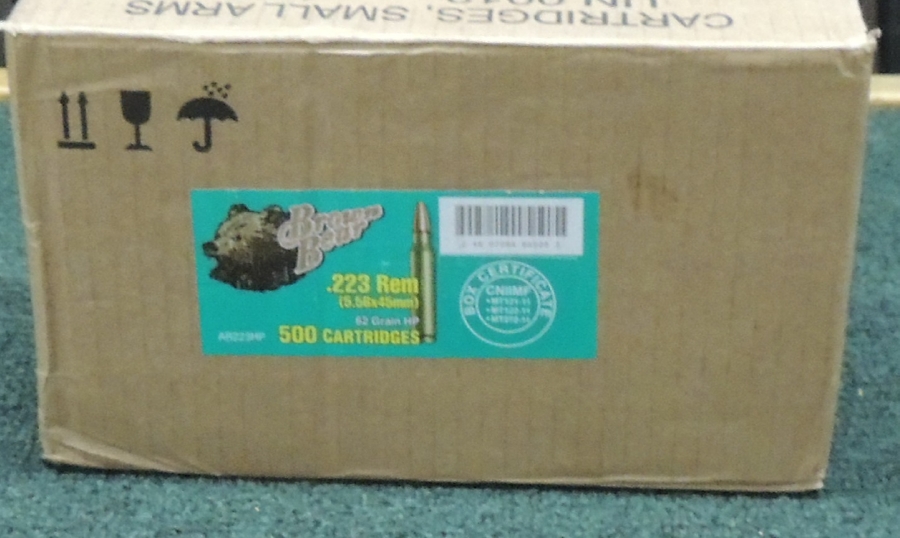
I know lots of people who could easily have 2000+ rounds of ammunition sitting around, mostly in large bulk packs purchased for economy's sake, or because they picked up a few boxes whenever they saw it on sale and have acquired it faster than they shoot it.
posted by Kadin2048 at 10:16 PM on March 28, 2013 [2 favorites]
Since we're picking nits:
...it doesn't take any longer to reload a 10 round than a 30 round, just takes more magazines.
So it takes 3 times as long to reload the weapon with 30 rounds.
...one round every two seconds which you can do with a lever action or pump action rifle/shotgun.
Except that every time you lever or pump, you lose your sight picture and have to re-aim. Same thing with a bolt-action. This is the big advantage the AR-15 has as a killing machine, when combined with the near-trivial recoil it produces. You can keep your sights on a target and put aimed bullets into it as fast as you can pull the trigger. As I said above, this is not a capability that the citizenry needs.
posted by Kirth Gerson at 4:23 AM on March 29, 2013 [1 favorite]
...it doesn't take any longer to reload a 10 round than a 30 round, just takes more magazines.
So it takes 3 times as long to reload the weapon with 30 rounds.
...one round every two seconds which you can do with a lever action or pump action rifle/shotgun.
Except that every time you lever or pump, you lose your sight picture and have to re-aim. Same thing with a bolt-action. This is the big advantage the AR-15 has as a killing machine, when combined with the near-trivial recoil it produces. You can keep your sights on a target and put aimed bullets into it as fast as you can pull the trigger. As I said above, this is not a capability that the citizenry needs.
posted by Kirth Gerson at 4:23 AM on March 29, 2013 [1 favorite]
So it takes 3 times as long to reload the weapon with 30 rounds.
The only situation that this matters in is one where you're actively engaged in a firefight with other people who are shooting back at you; i.e. once the police actually arrive. Many mass shooting don't last that long, and the ones that do are typically over very quickly once the police show up in any event. The police are so much better at taking down shooters than shooters are at not getting shot that the issue of reloading doesn't really enter into it very much.
It's extremely hard to see how magazine limits might have affected the outcome of any recent shooting incident.
Again, the pro-gun-control lobby has fastened onto an issue of minimal real-world importance but which substantially affects and inconveniences lots of law abiding people — in the case of a magazine capacity ban, by making cheap military surplus magazines illegal — which seems like a really self-defeating prospect.
As I said upthread, most gun owners would support narrowly-tailored policies that make a meaningful difference in terms of preventing gun crime, but neither the proposed (and now basically stalled) model- and feature-specific bans along with magazine capacity bans come close to that. At best they seem more like "philosophical" bans based on someone's (in particular, someone who doesn't know a lot about firearms) a priori idea of what ought to exist or be available, rather than any practical issues. That doesn't seem like a good way to craft legislation, and certainly not a good way to achieve compromise on a divisive and controversial issue.
posted by Kadin2048 at 7:41 AM on March 29, 2013 [1 favorite]
The only situation that this matters in is one where you're actively engaged in a firefight with other people who are shooting back at you; i.e. once the police actually arrive. Many mass shooting don't last that long, and the ones that do are typically over very quickly once the police show up in any event. The police are so much better at taking down shooters than shooters are at not getting shot that the issue of reloading doesn't really enter into it very much.
It's extremely hard to see how magazine limits might have affected the outcome of any recent shooting incident.
Again, the pro-gun-control lobby has fastened onto an issue of minimal real-world importance but which substantially affects and inconveniences lots of law abiding people — in the case of a magazine capacity ban, by making cheap military surplus magazines illegal — which seems like a really self-defeating prospect.
As I said upthread, most gun owners would support narrowly-tailored policies that make a meaningful difference in terms of preventing gun crime, but neither the proposed (and now basically stalled) model- and feature-specific bans along with magazine capacity bans come close to that. At best they seem more like "philosophical" bans based on someone's (in particular, someone who doesn't know a lot about firearms) a priori idea of what ought to exist or be available, rather than any practical issues. That doesn't seem like a good way to craft legislation, and certainly not a good way to achieve compromise on a divisive and controversial issue.
posted by Kadin2048 at 7:41 AM on March 29, 2013 [1 favorite]
Moms demonstrate for gun control, armed men stage counter-protest in Indiana
Men With Loaded Rifles Intimidate Moms Gathered At Gun Safety Rally
Classy.
posted by homunculus at 4:31 PM on March 29, 2013 [2 favorites]
Men With Loaded Rifles Intimidate Moms Gathered At Gun Safety Rally
Classy.
posted by homunculus at 4:31 PM on March 29, 2013 [2 favorites]
Except that every time you lever or pump, you lose your sight picture and have to re-aim. Same thing with a bolt-action. This is the big advantage the AR-15 has as a killing machine, when combined with the near-trivial recoil it produces. You can keep your sights on a target and put aimed bullets into it as fast as you can pull the trigger. As I said above, this is not a capability that the citizenry needs.
Actually you don't loose the sight picture or need to take the weapon off your shoulder for a lever or pump action (you do for most bolt actions), that is pretty much why those types of rifles have remained popular-rapid follow up shots without the finicky reliability of semi autos. The recoil of all rifles (except .22 rimfires) means you are going to have to realign the sights for follow up shots with whatever your target is but that is not 'losing the sight picture'.
As far as what the citienry needs, that is not how this country works.
That is a totally inappropriate question. The proper questions are:
Where does the government get the power for infringing upon this right?
What justification does the government have for infringing upon this right?
Where is the evidence that this infringement will be a net benefit?
It seems metafilter is great about asking these questions about any other right except the right to bear arms (and some of them aren't even enumerated constitutional rights). I have come to the conclusion that gun owners, like wal mart shoppers, are ok to be bigoted about here on metafilter.
posted by bartonlong at 4:53 PM on March 31, 2013 [2 favorites]
Actually you don't loose the sight picture or need to take the weapon off your shoulder for a lever or pump action (you do for most bolt actions), that is pretty much why those types of rifles have remained popular-rapid follow up shots without the finicky reliability of semi autos. The recoil of all rifles (except .22 rimfires) means you are going to have to realign the sights for follow up shots with whatever your target is but that is not 'losing the sight picture'.
As far as what the citienry needs, that is not how this country works.
That is a totally inappropriate question. The proper questions are:
Where does the government get the power for infringing upon this right?
What justification does the government have for infringing upon this right?
Where is the evidence that this infringement will be a net benefit?
It seems metafilter is great about asking these questions about any other right except the right to bear arms (and some of them aren't even enumerated constitutional rights). I have come to the conclusion that gun owners, like wal mart shoppers, are ok to be bigoted about here on metafilter.
posted by bartonlong at 4:53 PM on March 31, 2013 [2 favorites]
Heh. Yes, I'd say the majority of Mefites hold "Human rights" and "the right ti bear arms" to be in two different categories of things.
posted by Artw at 5:07 PM on March 31, 2013 [2 favorites]
posted by Artw at 5:07 PM on March 31, 2013 [2 favorites]
In other news, New York State just basically un-passed their magazine capacity ban. (Big file, search for "S 265.37 Unlawful possession of certain ammunition feeding devices.")
My interpretation of the changes is that it's now legal to have a magazine of any capacity, but you can't load more than seven rounds into it legally.
posted by Kadin2048 at 11:14 AM on April 1, 2013 [2 favorites]
My interpretation of the changes is that it's now legal to have a magazine of any capacity, but you can't load more than seven rounds into it legally.
posted by Kadin2048 at 11:14 AM on April 1, 2013 [2 favorites]
Bullseye from 1,000 yards: Shooting the $17,000 Linux-powered rifle. ARM CPUs, lasers, and Wi-Fi make firing this weapon an experience like no other.
posted by homunculus at 3:31 PM on April 1, 2013
posted by homunculus at 3:31 PM on April 1, 2013
Connecticut Gun Laws: State Reaches Deal On Post-Newtown-Shooting Proposal
posted by homunculus at 5:33 PM on April 1, 2013
posted by homunculus at 5:33 PM on April 1, 2013
Prosecutors will seek death against James Holmes in Aurora theater attack
posted by homunculus at 5:40 PM on April 1, 2013
posted by homunculus at 5:40 PM on April 1, 2013
Heh. Yes, I'd say the majority of Mefites hold "Human rights" and "the right ti bear arms" to be in two different categories of things.
For me, the right to bear arms isn't an intrinsic human right, but I think living in a nation of laws is, and while the 2nd amendment is on the books I'd like it respected to the same degree that I like free speech and privacy respected. I'm aware that none of those rights are respected very well.
posted by BrotherCaine at 6:11 PM on April 1, 2013 [1 favorite]
For me, the right to bear arms isn't an intrinsic human right, but I think living in a nation of laws is, and while the 2nd amendment is on the books I'd like it respected to the same degree that I like free speech and privacy respected. I'm aware that none of those rights are respected very well.
posted by BrotherCaine at 6:11 PM on April 1, 2013 [1 favorite]
Well, BrotherCaine, I'm going to go into politically untenable--and maybe crazy-person--territory and say that, unlike speech and privacy, I'm not convinced the 2nd amendment even needs to be in there.
I'm not pushing to strike it or anything just yet, but I'm thinking about it. I'm wondering, would we be any worse off without the 2nd amendment? Would we really? I'm not convinced that's critical to our protection in the same way as I am your examples of free speech and privacy rights, not to mention due process of law, the right not to be tortured, etc.
I think Artw's deceptively succinct remark nailed it.
posted by ctmf at 10:07 PM on April 1, 2013 [2 favorites]
I'm not pushing to strike it or anything just yet, but I'm thinking about it. I'm wondering, would we be any worse off without the 2nd amendment? Would we really? I'm not convinced that's critical to our protection in the same way as I am your examples of free speech and privacy rights, not to mention due process of law, the right not to be tortured, etc.
I think Artw's deceptively succinct remark nailed it.
posted by ctmf at 10:07 PM on April 1, 2013 [2 favorites]
bartonlong: “It seems metafilter is great about asking these questions about any other right except the right to bear arms (and some of them aren't even enumerated constitutional rights).”
Until five years ago, there was no "right to bear arms" enumerated by the constitution. Technically, no such right exists now, except by a pleasant fiction purveyed by probably the second most flawed Supreme Court decision in history. I explained this above, but I'm willing to go over it again.
First of all, the Second Amendment is a part of what is generally called the Bill of Rights. Contrary to popular belief, these first ten amendments were not actually intended to apply to the States; they were originally intended only to limit Federal law. In other words, states were constitutionally allowed to pass laws abridging the freedom of speech, or the freedom of religion, et cetera. This initial policy shifted over the following century and a half in a process known as incorporation. The trouble is – it's pretty clear that the second amendment never was incorporated, and there's legal precedent indicating that the states are still held to be quite free to abridge whatever "right to bear arms" the second amendment might guarantee.
(It's worth pointing out, again, that the second amendment does not clearly enumerate any right at all. It doesn't make it clear that citizens are free under federal law to bear arms for any purpose other than to be part of a "well-regulated" militia. But since that's a well-known conundrum, I won't spend much time on it.)
In any case, it should be noted that, over and over again throughout history, the Supreme Court consistently indicated that states have the right to abridge citizens' freedom to bear arms as much and in whatever way they choose. Gun control was not questioned; it was allowed, and absolutely. It was limited only by the fact that there was some controversy over whether the federal government was allowed to impose gun control; but since the federal government had its hands full with other things and didn't really feel inclined to anyway, that wasn't a problem.
This is how the history went. Any mythology which describes a long-standing and well-regarded traditional "right to bear arms" is just that: a mythology which doesn't accord with how it happened. States were quite happily enacting gun control back into the 18th century, with nary a whisper of disagreement from the federal courts.
But five years ago, in the infamous and frightfully irrational "DC v Heller," the Supreme Court (in an opinion written by Justice Antonin Scalia) declared unilaterally that the Constitution guarantees a right to bear arms, and that this specifically means a right to bear handguns – not assault rifles (the decision was clear on that) or tanks or bombs or anything else, but only handguns, because, as the Court proclaimed, handguns are the weapon of choice of the American people for self-defense. The Court made this decision not based on any precedent (it actually explicitly discarded precedent) but on a weird piece of gymnastics by which it decided that the "right to bear arms" in the second amendment was concerned with the danger that the homes of frontier Americans might be burglarized, and was intended to guarantee them a right to handguns. In making this decision, based on such flimsy support and a disavowal of precedent, the Court threw away what was actually a perfectly legitimate gun control law in DC – and, it should be noted, it did so pointlessly, since in its briefs DC had already agreed to allow completely handguns for personal safety, and therefore the basis of the lawsuit had dissolved before it began. The Court did this even though the decision was written by a man who claims to be a judicial conservative, that is, who claims that the best course of action when in doubt is for the Court to refuse to interfere in the affairs of individual states.
So this is an overview of the facts we're talking about when we talk about the very, very short history of the "constitutionally guaranteed right to bear arms."
As I said, I mentioned all this above. I'm very happy to talk about it, but nobody seemed to want to. What's odd is that so many people seem to want to cry "foul" and claim, as you just did, that Metafilter hates talking about gun rights – and yet when we try to actually talk about gun rights, we get ignored.
posted by koeselitz at 10:37 PM on April 1, 2013 [3 favorites]
Until five years ago, there was no "right to bear arms" enumerated by the constitution. Technically, no such right exists now, except by a pleasant fiction purveyed by probably the second most flawed Supreme Court decision in history. I explained this above, but I'm willing to go over it again.
First of all, the Second Amendment is a part of what is generally called the Bill of Rights. Contrary to popular belief, these first ten amendments were not actually intended to apply to the States; they were originally intended only to limit Federal law. In other words, states were constitutionally allowed to pass laws abridging the freedom of speech, or the freedom of religion, et cetera. This initial policy shifted over the following century and a half in a process known as incorporation. The trouble is – it's pretty clear that the second amendment never was incorporated, and there's legal precedent indicating that the states are still held to be quite free to abridge whatever "right to bear arms" the second amendment might guarantee.
(It's worth pointing out, again, that the second amendment does not clearly enumerate any right at all. It doesn't make it clear that citizens are free under federal law to bear arms for any purpose other than to be part of a "well-regulated" militia. But since that's a well-known conundrum, I won't spend much time on it.)
In any case, it should be noted that, over and over again throughout history, the Supreme Court consistently indicated that states have the right to abridge citizens' freedom to bear arms as much and in whatever way they choose. Gun control was not questioned; it was allowed, and absolutely. It was limited only by the fact that there was some controversy over whether the federal government was allowed to impose gun control; but since the federal government had its hands full with other things and didn't really feel inclined to anyway, that wasn't a problem.
This is how the history went. Any mythology which describes a long-standing and well-regarded traditional "right to bear arms" is just that: a mythology which doesn't accord with how it happened. States were quite happily enacting gun control back into the 18th century, with nary a whisper of disagreement from the federal courts.
But five years ago, in the infamous and frightfully irrational "DC v Heller," the Supreme Court (in an opinion written by Justice Antonin Scalia) declared unilaterally that the Constitution guarantees a right to bear arms, and that this specifically means a right to bear handguns – not assault rifles (the decision was clear on that) or tanks or bombs or anything else, but only handguns, because, as the Court proclaimed, handguns are the weapon of choice of the American people for self-defense. The Court made this decision not based on any precedent (it actually explicitly discarded precedent) but on a weird piece of gymnastics by which it decided that the "right to bear arms" in the second amendment was concerned with the danger that the homes of frontier Americans might be burglarized, and was intended to guarantee them a right to handguns. In making this decision, based on such flimsy support and a disavowal of precedent, the Court threw away what was actually a perfectly legitimate gun control law in DC – and, it should be noted, it did so pointlessly, since in its briefs DC had already agreed to allow completely handguns for personal safety, and therefore the basis of the lawsuit had dissolved before it began. The Court did this even though the decision was written by a man who claims to be a judicial conservative, that is, who claims that the best course of action when in doubt is for the Court to refuse to interfere in the affairs of individual states.
So this is an overview of the facts we're talking about when we talk about the very, very short history of the "constitutionally guaranteed right to bear arms."
As I said, I mentioned all this above. I'm very happy to talk about it, but nobody seemed to want to. What's odd is that so many people seem to want to cry "foul" and claim, as you just did, that Metafilter hates talking about gun rights – and yet when we try to actually talk about gun rights, we get ignored.
posted by koeselitz at 10:37 PM on April 1, 2013 [3 favorites]
In Oakland, Trying to Stop Violence Before It Starts
In East Oakland, as in many rough city neighborhoods across the country, gun-related crimes happen daily. Citywide, police recorded an average of 11 gun incidents a day last year, from armed robberies to killings.posted by Golden Eternity at 8:38 AM on April 2, 2013 [1 favorite]
Upshaw runs a new network of neighborhood elders called Men of Influence. The group seeks to connect with Oakland youth and prevent violence before it can start, both by mediating disputes and serving as role models to the often fatherless kids.
And he is looking for others to join him -- men who know the streets, men who’ve gone to jail. Most importantly: Men who do not snitch.
What Could Go Wrong With The NRA's New Plan?
posted by homunculus at 12:59 PM on April 2, 2013 [1 favorite]
posted by homunculus at 12:59 PM on April 2, 2013 [1 favorite]
I'm not convinced the 2nd amendment even needs to be in there.
Agreed, but while it is, even ambiguously, I have to support it as long as I want to live under the Constitution. Which is a great document even considering it's many flaws. I'm going to argue that we'd definitely be better off with reversing or at least clarifying the second amendment, and I think the latter unlike the former may be politically achievable some time this millennium. Of course, we could also hope to stack a more progressive SCOTUS to reverse the decision. I'm not 100% sure that's going to happen though. There has been some argument before that the trend with appointees to SCOTUS is towards liberalism in judicial opinion, but I'm not sure it's the kind of liberalism that always favors collective over individual rights.
Koeselitz, are you really going to argue we should throw incorporation of the first amendment under the bus to avoid incorporating the second? Isn't that the implication of letting the Cruikshank decision stand? If we go further down the rabbit hole of re-examining incorporation we'd also be looking at Roe v. Wade, school segregation, etc... As for Cruikshank's opinion on the second amendment:
the aforementioned Cruikshank, and United States v. Miller. In the Miller opinion they reference the decision in Sonzinsky v. United States also applying to the NFA which in it's decision includes the statement:
In the Miller decision itself I'd argue that they deliberately did not address the question of whether firearm's rights are individual or collective, instead using an analysis of historical treatment of what constituted arms at the time period of the drafting of the second amendment to render as narrow an opinion as possible. I'd also argue that if the defense had shown up the court would probably have been forced to make a broader ruling by arguments presented. Given that the defense did not show up and the opinion was fairly narrow, DC v. Heller can be argued to be the first time that the Supreme court (not the state courts or lower federal courts mind you) directly addressed the question of whether the right to bear arms is collective or individual.
I'd be happy to entertain a discussion of which decisions by district & appelate federal courts and/or Blackstone's Commentaries should have applied as precedent, but it'll have to wait for the next thread, because I can't afford the time to research it right now. I do think the narrative is not as clear cut as either side of the debate would like to make it out to be though.
on a weird piece of gymnastics by which it decided that the "right to bear arms" in the second amendment was concerned with the danger that the homes of frontier Americans might be burglarized
While this does smack of some bizarre and desperate nostalgia for a time when men were men or something, it is necessary to go to a historical examination if the Court wants to set any limit on the right to bear arms the way they are currently stating it.
To quote from Robertson v Baldwin:
It appears there is some precedent for the idea that the limitations on rights must be found in legal precedent or custom predating the Constitution.
Personally, I think you are correct from a pure logic standpoint that if any modern weapons are allowed (semi-auto handguns), then the door would be open to sniper and assault rifles. I guess the other option though is to look at the weapons available at the time period of the drafting to seek some kind of limitation, but then we'd probably be seeing similar gyrations of logic to avoid allowing mortars.
posted by BrotherCaine at 4:47 PM on April 2, 2013 [3 favorites]
Agreed, but while it is, even ambiguously, I have to support it as long as I want to live under the Constitution. Which is a great document even considering it's many flaws. I'm going to argue that we'd definitely be better off with reversing or at least clarifying the second amendment, and I think the latter unlike the former may be politically achievable some time this millennium. Of course, we could also hope to stack a more progressive SCOTUS to reverse the decision. I'm not 100% sure that's going to happen though. There has been some argument before that the trend with appointees to SCOTUS is towards liberalism in judicial opinion, but I'm not sure it's the kind of liberalism that always favors collective over individual rights.
Koeselitz, are you really going to argue we should throw incorporation of the first amendment under the bus to avoid incorporating the second? Isn't that the implication of letting the Cruikshank decision stand? If we go further down the rabbit hole of re-examining incorporation we'd also be looking at Roe v. Wade, school segregation, etc... As for Cruikshank's opinion on the second amendment:
The right to bear arms is not granted by the Constitution; neither is it in any manner dependent upon that instrument for its existence. The Second Amendments means no more than that it shall not be infringed by Congress, and has no other effect than to restrict the powers of the National Government.As for DC v. Heller, of course SCOTUS made a unilateral decision. That's what they've done since Marbury v. Madison, and we can all probably agree that that's usually a good thing; please don't say activist judges or even imply it. As for their disavowal of precedent, the precedents available were Presser v. Illinois:
We think it clear that there are no sections under consideration, which only forbid bodies of men to associate together as military organizations, or to drill or parade with arms in cities and towns unless authorized by law, do not infringe the right of the people to keep and bear arms.
the aforementioned Cruikshank, and United States v. Miller. In the Miller opinion they reference the decision in Sonzinsky v. United States also applying to the NFA which in it's decision includes the statement:
Courts may not inquire into the motives of Congress in exercising its powers; they will not undertake, by collateral inquiry as to the measure of the regulatory effect of a tax, to ascribe to Congress an attempt, under the guise of taxation, to exercise another power denied by the Federal Constitution. P. 300 U. S. 513.This implies to me that they either support the second amendment interpretation that you reject, or are at least trying to sidestep the question.
In the Miller decision itself I'd argue that they deliberately did not address the question of whether firearm's rights are individual or collective, instead using an analysis of historical treatment of what constituted arms at the time period of the drafting of the second amendment to render as narrow an opinion as possible. I'd also argue that if the defense had shown up the court would probably have been forced to make a broader ruling by arguments presented. Given that the defense did not show up and the opinion was fairly narrow, DC v. Heller can be argued to be the first time that the Supreme court (not the state courts or lower federal courts mind you) directly addressed the question of whether the right to bear arms is collective or individual.
I'd be happy to entertain a discussion of which decisions by district & appelate federal courts and/or Blackstone's Commentaries should have applied as precedent, but it'll have to wait for the next thread, because I can't afford the time to research it right now. I do think the narrative is not as clear cut as either side of the debate would like to make it out to be though.
on a weird piece of gymnastics by which it decided that the "right to bear arms" in the second amendment was concerned with the danger that the homes of frontier Americans might be burglarized
While this does smack of some bizarre and desperate nostalgia for a time when men were men or something, it is necessary to go to a historical examination if the Court wants to set any limit on the right to bear arms the way they are currently stating it.
To quote from Robertson v Baldwin:
The law is perfectly well settled that the first ten amendments to the Constitution, commonly known as the "Bill of Rights," were not intended to lay down any novel principles of government, but simply to embody certain guaranties and immunities which we had inherited from our English ancestors, and which had, from time immemorial, been subject to certain well recognized exceptions arising from the necessities of the case. In incorporating these principles into the fundamental law, there was no intention of disregarding the exceptions, which continued to be recognized as if they had been formally expressed. Thus, the freedom of speech and of the press (Art. I) does not permit the publication of libels, blasphemous or indecent articles, or other publications injurious to public morals or private reputation; the right of the people to keep and bear arms (Art. II) is not infringed by laws prohibiting the carrying of concealed weapons;
It appears there is some precedent for the idea that the limitations on rights must be found in legal precedent or custom predating the Constitution.
Personally, I think you are correct from a pure logic standpoint that if any modern weapons are allowed (semi-auto handguns), then the door would be open to sniper and assault rifles. I guess the other option though is to look at the weapons available at the time period of the drafting to seek some kind of limitation, but then we'd probably be seeing similar gyrations of logic to avoid allowing mortars.
posted by BrotherCaine at 4:47 PM on April 2, 2013 [3 favorites]
States were quite happily enacting gun control back into the 18th century, with nary a whisper of disagreement from the federal courts
I forgot to address this; from Missouri v. Jenkins:
posted by BrotherCaine at 5:10 PM on April 2, 2013 [1 favorite]
I forgot to address this; from Missouri v. Jenkins:
Of course, "[t]he denial of a writ of certiorari imports no expression of opinion upon the merits of the case, as the bar has been told many times." United States v. Carver, 260 U. S. 482, 490 (1923).
posted by BrotherCaine at 5:10 PM on April 2, 2013 [1 favorite]
I'm not sure where the superfluous apostrophes are coming from today, but I apologize deeply.
posted by BrotherCaine at 5:12 PM on April 2, 2013
posted by BrotherCaine at 5:12 PM on April 2, 2013
BrotherCaine - thanks for the thoughtful responses. I'll put some thinking into it tomorrow - sadly I'm several beers in right now, but I find this very interesting.
posted by koeselitz at 6:19 PM on April 2, 2013
posted by koeselitz at 6:19 PM on April 2, 2013
Personally, I think you are correct from a pure logic standpoint that if any modern weapons are allowed (semi-auto handguns), then the door would be open to sniper and assault rifles. I guess the other option though is to look at the weapons available at the time period of the drafting to seek some kind of limitation, but then we'd probably be seeing similar gyrations of logic to avoid allowing mortars.
The meaning of Arms in the second amendment is generally considered to reference those available to and in regular (well-regulated) use of the individual soldier that he would be expected to provide, maintain and supply for militia service. This would be limited to personal (sword, hatchet, bayonet, tomahawk, the modern equivalent of a handgun really) and small arms (some type of long arm-usually a rifle or musket-modern equivalent would be rifle or shotgun). Things like artillery (mortars, howitzers, rocket launchers, and grenades) are not really classified as something each soldier is responsible for, they are part of a larger army organization or provided by that same larger army as needed for each use similar to ammunition.
It is a rare gun rights supporters who will say the second amendment applies to anything other than arms the individual would be expected to provide for militia mustering. I don't think the NRA or even the GOA is clamoring for things like grenades or RPGs to be included and regularly available to the individual. They are available, at great expense and trouble, to be owned as destructive devices under the terms of the 1934 NFA.
As such I kinda view gun control activists saying does it include stuff like this as a bit of strawman since the other side isn't actually claiming it does. Some of the extremists do but then there are also extremists on the other side who want complete civilian disarmament (including some on previous threads here) despite the claims no-one is proposing that.
oh, and the difference between a sniper rifle and a hunting rifle is mostly a matter of marketing, not of function. In Vietnam most american snipers used unmodified Winchester model 70 rifles, and the first purpose built sniper rifle for the marine corps was a (slightly modified) Remington 700. Both are probably the best selling bolt action hunting rifles in the US for many, many decades (going by the amount in used gun racks at gun stores).
posted by bartonlong at 6:54 PM on April 2, 2013 [2 favorites]
The meaning of Arms in the second amendment is generally considered to reference those available to and in regular (well-regulated) use of the individual soldier that he would be expected to provide, maintain and supply for militia service. This would be limited to personal (sword, hatchet, bayonet, tomahawk, the modern equivalent of a handgun really) and small arms (some type of long arm-usually a rifle or musket-modern equivalent would be rifle or shotgun). Things like artillery (mortars, howitzers, rocket launchers, and grenades) are not really classified as something each soldier is responsible for, they are part of a larger army organization or provided by that same larger army as needed for each use similar to ammunition.
It is a rare gun rights supporters who will say the second amendment applies to anything other than arms the individual would be expected to provide for militia mustering. I don't think the NRA or even the GOA is clamoring for things like grenades or RPGs to be included and regularly available to the individual. They are available, at great expense and trouble, to be owned as destructive devices under the terms of the 1934 NFA.
As such I kinda view gun control activists saying does it include stuff like this as a bit of strawman since the other side isn't actually claiming it does. Some of the extremists do but then there are also extremists on the other side who want complete civilian disarmament (including some on previous threads here) despite the claims no-one is proposing that.
oh, and the difference between a sniper rifle and a hunting rifle is mostly a matter of marketing, not of function. In Vietnam most american snipers used unmodified Winchester model 70 rifles, and the first purpose built sniper rifle for the marine corps was a (slightly modified) Remington 700. Both are probably the best selling bolt action hunting rifles in the US for many, many decades (going by the amount in used gun racks at gun stores).
posted by bartonlong at 6:54 PM on April 2, 2013 [2 favorites]
comparing Uk/England Murder rates with the US This statistic is often cited as an example of the benefits to disarming a civilian populace.
posted by bartonlong at 7:22 PM on April 2, 2013
posted by bartonlong at 7:22 PM on April 2, 2013
veracity of the 40% of gun sales do not go through a background check number often cited in needing a 'universal' background check. For the record I am in favor of background checks when the gun is sold commercially and would support the current senate bill if that is all it did.
posted by bartonlong at 7:24 PM on April 2, 2013
posted by bartonlong at 7:24 PM on April 2, 2013
comparing Uk/England Murder rates with the US This statistic is often cited as an example of the benefits to disarming a civilian populace.
posted by bartonlong 9 minutes ago [+]
The UK and the US are not in any way comparable.
posted by koeselitz 7 minutes ago [+]
Clearly not by this guy.
posted by Artw at 7:32 PM on April 2, 2013 [1 favorite]
posted by bartonlong 9 minutes ago [+]
The UK and the US are not in any way comparable.
posted by koeselitz 7 minutes ago [+]
Clearly not by this guy.
posted by Artw at 7:32 PM on April 2, 2013 [1 favorite]
The meaning of Arms in the second amendment is generally considered to reference those available to and in regular (well-regulated) use of the individual soldier that he would be expected to provide, maintain and supply for militia service.
I stand corrected.
I am a little curious though about the history of who purchased and owned the weapons that went on merchantmen and privateers. Were any of those weapons cannons, and were they allowed to be purchased by individuals before issuance of letters of marque and reprisal? Also, were there private individuals who funded the arming of revolutionary militias, and were they allowed to purchase weapons that would normally be considered the purview of the continental army only? I'm not much of a historian of military logistics. I would guess there was some kind of state oversight, and or swearing in of officers as agents of the state, but I don't know much about it.
I grant that there's no practical technical distinction between weapons for shooting people and for shooting animals.
For the record I am in favor of background checks when the gun is sold commercially and would support the current senate bill if that is all it did.
Why not background checks for private sales assuming it could be done quickly and non-onerously by the individuals involved?
posted by BrotherCaine at 7:58 PM on April 2, 2013
I stand corrected.
I am a little curious though about the history of who purchased and owned the weapons that went on merchantmen and privateers. Were any of those weapons cannons, and were they allowed to be purchased by individuals before issuance of letters of marque and reprisal? Also, were there private individuals who funded the arming of revolutionary militias, and were they allowed to purchase weapons that would normally be considered the purview of the continental army only? I'm not much of a historian of military logistics. I would guess there was some kind of state oversight, and or swearing in of officers as agents of the state, but I don't know much about it.
I grant that there's no practical technical distinction between weapons for shooting people and for shooting animals.
For the record I am in favor of background checks when the gun is sold commercially and would support the current senate bill if that is all it did.
Why not background checks for private sales assuming it could be done quickly and non-onerously by the individuals involved?
posted by BrotherCaine at 7:58 PM on April 2, 2013
Why not background checks for private sales assuming it could be done quickly and non-onerously by the individuals involved?
I would count that as a commercial transaction and would have no problem with it.
these are the parts of the bill I don't like:
The universal background check thing that Schumer is pushing is pretty much designed to harass and intimidate law abiding citizens. Otherwise what is the possible reason for criminalizing taking too long to report your property stolen (as if a person who owns guns legally is NOT going to call the police when a theft is discovered?) or just going on vacation for too long? or giving a gun to a friend to go hunting with? or letting someone else shoot your gun (in your presence) at a 'non authorized' range? (really, read the bill, despite the claim made upthread, it makes all these things a Federal Felony). A simple law like if you sell gun in a commercial venue it must go through a background check would work just fine and be supported by most gun owners. In fact that is pretty much the NRA's position on this thing.
posted by bartonlong at 4:27 PM on April 3, 2013 [1 favorite]
I would count that as a commercial transaction and would have no problem with it.
these are the parts of the bill I don't like:
The universal background check thing that Schumer is pushing is pretty much designed to harass and intimidate law abiding citizens. Otherwise what is the possible reason for criminalizing taking too long to report your property stolen (as if a person who owns guns legally is NOT going to call the police when a theft is discovered?) or just going on vacation for too long? or giving a gun to a friend to go hunting with? or letting someone else shoot your gun (in your presence) at a 'non authorized' range? (really, read the bill, despite the claim made upthread, it makes all these things a Federal Felony). A simple law like if you sell gun in a commercial venue it must go through a background check would work just fine and be supported by most gun owners. In fact that is pretty much the NRA's position on this thing.
posted by bartonlong at 4:27 PM on April 3, 2013 [1 favorite]
« Older “The tea was really bitter” | "A law should serve the people, but it didn't... Newer »
This thread has been archived and is closed to new comments
posted by longbaugh at 12:07 AM on March 4, 2013 [1 favorite]