Let's Get Lost - Chet Baker documentary
March 11, 2012 10:03 AM Subscribe
Let's Get Lost - Chet Baker documentary by Bruce Weber 120 min
There will never be another you A remembrance of Chet Baker by Bruce Weber
See also chetbakertribute.com
I had borrowed a friend's portable record player to check out some 78's I have, and while rummaging through boxes of records, happened across a vinyl album of the soundtrack to this movie. On that, the older, ravaged Baker sings My One and Only Love. Still sublime, after he had gone through by then, he was. It led me to listen to Chet Baker Sings early this morning. Which left me cloud hidden, whereabouts unknown.
There will never be another you A remembrance of Chet Baker by Bruce Weber
See also chetbakertribute.com
I had borrowed a friend's portable record player to check out some 78's I have, and while rummaging through boxes of records, happened across a vinyl album of the soundtrack to this movie. On that, the older, ravaged Baker sings My One and Only Love. Still sublime, after he had gone through by then, he was. It led me to listen to Chet Baker Sings early this morning. Which left me cloud hidden, whereabouts unknown.
You can buy the dvd in the UK. I have it on laser disc.
posted by Ideefixe at 10:22 AM on March 11, 2012
posted by Ideefixe at 10:22 AM on March 11, 2012
I love Chet Baker's voice. In 'Let's Get Lost' his intonation sounds just kind of flat and weird but in a way that totally, totally wins me over.
posted by shakespeherian at 10:55 AM on March 11, 2012
posted by shakespeherian at 10:55 AM on March 11, 2012
His voice is like a tenor sax. I've been mulling over the idea of making a fpp about Chet, but wasn't sure how it'd go over. Thanks.
posted by crunchland at 10:58 AM on March 11, 2012
posted by crunchland at 10:58 AM on March 11, 2012
Love that documentary. The combination of extremely stylized Bruce Weber aesthetic, and the sad Chet Baker story, really pack a punch.
posted by jayder at 11:18 AM on March 11, 2012 [1 favorite]
posted by jayder at 11:18 AM on March 11, 2012 [1 favorite]
read the book and it was very depressing to see a guy with a gift screw over so many people with his very bad drug addiction
posted by Postroad at 11:58 AM on March 11, 2012
posted by Postroad at 11:58 AM on March 11, 2012
See also Chet Baker Lost And Found A site devoted to the late great jazz trumpet
posted by y2karl at 12:13 PM on March 11, 2012
posted by y2karl at 12:13 PM on March 11, 2012
I have loved Chet Baker's music since I was a little girl, but I can't think of him as anything but Addiction. In my head, he's exactly a vampire; a pretty face and great talent used to facilitate a monster's needs.
posted by small_ruminant at 1:28 PM on March 11, 2012 [1 favorite]
posted by small_ruminant at 1:28 PM on March 11, 2012 [1 favorite]
Mouse over the portfolio at William Claxton.com and click on Chet Baker for more pictures of the young and beautiful Chet. And speaking of young and beautiful, Claxton was once married to Peggy Moffitt. Man, talk about iconic...
In my head, he's exactly a vampire; a pretty face and great talent used to facilitate a monster's needs.
Not in mine.
posted by y2karl at 3:01 PM on March 11, 2012
In my head, he's exactly a vampire; a pretty face and great talent used to facilitate a monster's needs.
Not in mine.
posted by y2karl at 3:01 PM on March 11, 2012
The story about Chet in Paris, while he was attempting to get his fix, and getting beat up so badly, he lost his ability to play the trumpet, is pretty much a tragedy of mythological proportions.
posted by crunchland at 3:11 PM on March 11, 2012 [1 favorite]
posted by crunchland at 3:11 PM on March 11, 2012 [1 favorite]
Yet he learned to play with dentures -- no mean feat in itself -- and the man behind chetbakertribute.com takes issue with the concept that his trumpet playing or singing were ever diminished:
Chet Baker spent most of the sixties in Europe, recording infrequently and getting in to trouble frequently. He made some very notable recordings in the early part of the decade (such as the Prestige recordings from 1965), sometimes switching to flugelhorn. But the late sixties found him recording some dreadful music, and eventually he had given up playing after losing most of his upper teeth. Years of drug use had taken their toll on Chet's teeth, and in July of 1966 he was attacked, and his teeth were damaged further.and cites the YouTube clips from the Japanese The Complete Tokyo Concert laser disc for examples, such as My Funny Valentine, as proof his powers were improved rather than impaired.posted by y2karl at 3:35 PM on March 11, 2012 [2 favorites]
In the early 1970's, Chet Baker began to learn how to play with dentures. Beginning in 1974, Chet recorded and toured regularly, mostly in Europe. Despite the effects of age, drugs and false teeth, he actually improved in those later years. Chet's performances in the eighties were unpredictable. Sometimes he would show up and perform the best gig of his career. Sometimes he would show up and perform poorly. Sometimes he wouldn't even show up.
Chet Baker's turbulent life came to a bizarre and tragic end on May 13, 1988 in Amsterdam. Chet fell from the open window of his hotel room, hitting the concrete two stories below.
It can be argued that Chet was at his musical peak when he died in 1988. Indeed some of his best recordings came from 1986 and 1987.
David Wilcox, "Chet Baker's Unsung Swan Song" (aka "My Old Addiction"). I was originally only familiar with the cover on k.d. lang's Drag, but I love this version as well, and it's heartbreaking to think of Baker doing his own cover, accompanying himself on trumpet.
posted by Halloween Jack at 6:32 PM on March 11, 2012
posted by Halloween Jack at 6:32 PM on March 11, 2012
More photos of the man, young and old, at Purnev Literary Magazine's Hall of Fan: Chet Baker.
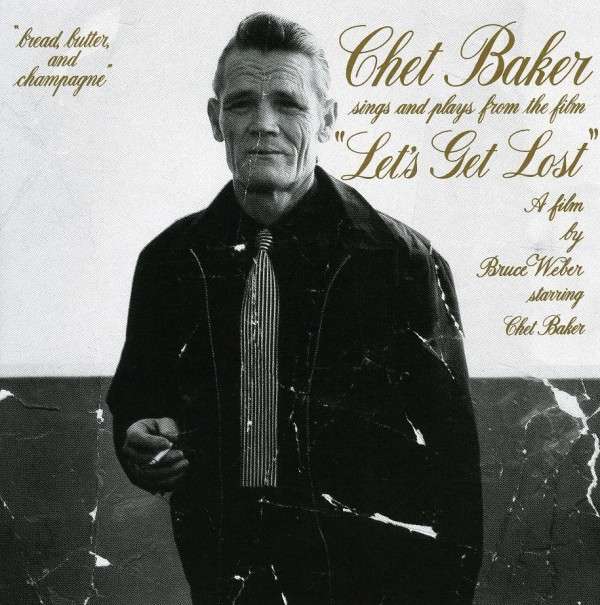
And speaking of photos, this was the image on the cover of the Let's Get Lost soundtrack lp.
See also
Jerry Jazz Musician - Chet Baker widow Carol Baker interview
Jerry Jazz Musician - Chet Baker biographer Jeroen de Valk interview
Jerry Jazz Musician - Chet Baker biographer James Gavin interview
posted by y2karl at 8:46 PM on March 11, 2012
And speaking of photos, this was the image on the cover of the Let's Get Lost soundtrack lp.
See also
Jerry Jazz Musician - Chet Baker widow Carol Baker interview
Jerry Jazz Musician - Chet Baker biographer Jeroen de Valk interview
Jerry Jazz Musician - Chet Baker biographer James Gavin interview
posted by y2karl at 8:46 PM on March 11, 2012
Loved this movie the first time around.
Drugs and art and pain have been interlocked all through history.
I wonder, in this age of Prozac and "treatment centers", if we will ever again have a Van Gogh, a Billie Holiday, a Nijinsky or a Chet Baker. When great art springs from a hunger, a need, a driving force than can be quelled with treatment, or detoxed away by whitecoats, when genius can be "treated," where can we turn for a balm for our own pain? Pills?
Thanks for posting.
posted by kinnakeet at 6:14 AM on March 12, 2012
Drugs and art and pain have been interlocked all through history.
I wonder, in this age of Prozac and "treatment centers", if we will ever again have a Van Gogh, a Billie Holiday, a Nijinsky or a Chet Baker. When great art springs from a hunger, a need, a driving force than can be quelled with treatment, or detoxed away by whitecoats, when genius can be "treated," where can we turn for a balm for our own pain? Pills?
Thanks for posting.
posted by kinnakeet at 6:14 AM on March 12, 2012
...The enduring fascination of “Let’s Get Lost,” the reason it remains powerful even now, when every value it represents is gone, is that it’s among the few movies that deal with the mysterious, complicated emotional transactions involved in the creation of pop culture — and with the ambiguous process by which performers generate desire. Mr. Baker isn’t so much the subject of this picture as its pretext: He’s the front man for Mr. Weber’s meditations on image making and its discontents.posted by y2karl at 8:27 AM on March 12, 2012
If you want the true story of Chet Baker, you’d do better to look up James Gavin’s superb, harrowing 2002 biography, “Deep in a Dream: The Long Night of Chet Baker,” where you can also find, in the words of a pianist named Hal Galper, perhaps the most perceptive review of Mr. Weber’s slippery movie. “I though it was great,” Mr. Galper says, “because it was so jive. Everybody’s lying, including Chet. You couldn’t have wanted a more honest reflection of him.” That’s “Let’s Get Lost,” to the life: the greatest jive movie, or maybe the jivest great movie, ever made.A Jazzman So Cool You Want Him Frozen at His Peak
By Terrence Rafferty, New York Times, June 3, 2007
See also
posted by y2karl at 8:45 AM on March 12, 2012 [2 favorites]
...Girlfriends, colleagues, his estranged wife and mother remain dazzled, even as they reel off the ways he had let them down. Far less starry-eyed is Ruth Young, the brainy, acid-tongued jazz singer who lived with Baker from 1973 through 1982. Mr. Weber outfitted her to look like a jazz groupie of the 50's, with dangling earrings, a blonde chignon and a skimpy black cocktail dress. But she slices through the myth by quoting one of Baker's favorite songs, ''My Foolish Heart,'' about the ''line between love and fascination'' that an infatuated lover can't see.Chet Baker: The Monster In The Celebrity Machine by James Gavin
''Love and fascination: you said it, baby,'' remarks Ms. Young. ''That's the mystique. But that isn't necessarily real. And that's what takes a long, long time to figure out.''
...Even after months of dealing with Baker's drug problems and demands for money, Mr. Weber was still spellbound. Before their last interview, Baker had made no secret that he was out of drugs and in severe withdrawal. On camera, Mr. Weber tells him how hard it is to see him looking so ill.
''Well, Bruce, you want me to level with you and tell you the truth,'' Baker says, annoyed. ''But in doing that, it only creates pain on your part.'' Having to live up to the fantasies of others, Baker says, ''is a big drag.'' It was almost as if this object of so many daydreams saw himself more clearly than anyone around him.
posted by y2karl at 8:45 AM on March 12, 2012 [2 favorites]
I wonder, in this age of Prozac and "treatment centers", if we will ever again have a Van Gogh, a Billie Holiday, a Nijinsky or a Chet Baker. When great art springs from a hunger, a need, a driving force than can be quelled with treatment, or detoxed away by whitecoats, when genius can be "treated," where can we turn for a balm for our own pain? Pills?
Drugs and mental illness doesn't create gifts. It cuts them short.
posted by kagredon at 7:33 PM on March 12, 2012
Drugs and mental illness doesn't create gifts. It cuts them short.
posted by kagredon at 7:33 PM on March 12, 2012
Drugs and mental illness doesn't create gifts. It cuts them short.
He may have been an addict and a monster, but, from the record, it would appear that neither drugs nor mental illness cut Chet Baker's gifts or life short.
Ahem:
and...
posted by y2karl at 9:35 AM on March 13, 2012
He may have been an addict and a monster, but, from the record, it would appear that neither drugs nor mental illness cut Chet Baker's gifts or life short.
Ahem:
Later, he stated he started 'using' when he was in big professional and personal problems, which was untrue. He was already a junkie at the height of his fame.Jerome De Valk, Chet Baker biographer
and...
My tastes had moved forward about a decade, and now I was fascinated by the 1950s, which seemed so cool and sophisticated to me at my young age. The gigantic repression of that time, sexual and otherwise, gradually began to interest me too. At the time, I owned only two Chet Baker albums. One of them, which may still be my favorite, is Chet, a set of instrumental ballads with Bill Evans. I thought it was the best "make out" music I had ever heard, even though I hadn't started making out yet! I found this music to be incredibly slow and sexy and hot - not cool, as everyone called him. When Chet made that album in the late '50s, he was virtually a gutter junkie, and that surely helped break down his cool veneer. But I still wasn't a great aficionado, I must admit. I knew the cliches of his life story: that he was a beautiful but tarnished golden boy from the 50's with an androgynous singing voice that people debated about violently, and that a lot of people didn't take him seriously as a trumpeter, either. I had a vague sense that he was extremely out of favor in the United States and had become as famous for his drug habit as he was for his music.James Gavin, Chet Baker biographer
...In Norman Mailer's 1957 essay called "The White Negro," you point out how Mailer "glorified the American existentialist - the hipster, who understood America was headed for doom," and whose response to that was, in Mailer's words, "to live with death as immediate danger, to divorce oneself from society, to exist without roots, to set out on that uncharted journey with the rebellious imperatives of the self." Could it be said this was Baker's epitaph?
Absolutely! Except that I don't think that Chet Baker had any grand, worldly scheme in mind. This was a man who, as far as I know, didn't read the newspaper, didn't watch the TV news, who only cared about getting what he needed. I don't think he thought of himself as any kind of revolutionary; he just wanted to escape from pressure, from responsibility, maybe from his own anger. I think he wanted the love and approval of his father and never got it. I think he longed to escape the pressure his mother had put upon him from the day he was born -- this perfect little angel child who was supposed to solve all her problems. Near the end of their relationship, Chet said to Ruth Young in a rage, "Don't hang your life up on me!" A lot of people had hung their lives up on Chet Baker, and he couldn't stand it. Why wouldn't he have wanted to stay as high as he could? But let us not forget that, although Chet was called weak all his life, he was very strong, because how many people have survived such a life as long as he did? He made it to 58, which is a miracle. There are many times he should have died. I really dig the fact that he checked out only when he was ready to. He probably could have lasted a few years longer, but he decided it was time to bale. I wouldn't call this weakness.
posted by y2karl at 9:35 AM on March 13, 2012
Also from Gavin:
Indeed.
posted by y2karl at 9:54 AM on March 13, 2012 [1 favorite]
...The Europeans revered Chet at a time when America had tossed him aside, with Chet's cooperation, of course. Here in the States in the '60s, '70s, and '80s, Chet was looked down upon as a burn-out who had destroyed his gifts, thrown his life away. There was a very nice review of my book in the Toronto Star. The subtitle reads, "What a waste his life was." That was and is the American attitude toward Chet. It really annoys me, as it did him, because how can you call a guy a waste when he's recorded 150 albums and almost never stopped playing? That attitude reveals something quite unflattering about America. In Europe, Chet felt embraced, because most people didn't treat him with disapproval -- even when he deserved it. I think it was the pianist Enrico Pieranunzi who said in my book that in Italy, Chet was looked upon as a great artist with a great problem. Europe is filled with people who proudly view themselves as patrons of the arts. Helping a needy artist is a noble act there. Even when Chet was at his frailest -- especially when he was at his frailest -- the Europeans were extremely touched by the pain he revealed so nakedly. Even if he had only tatters of his former technique, this outpouring of the soul touched everyone's hearts. The Europeans loved him for it....how can you call a guy a waste when he's recorded 150 albums and almost never stopped playing?
Indeed.
posted by y2karl at 9:54 AM on March 13, 2012 [1 favorite]
« Older “It's a war created by illusions,” | Tiffany sold me the car....y'know, I scared her on... Newer »
This thread has been archived and is closed to new comments
posted by cherryflute at 10:11 AM on March 11, 2012