Mmm, nipple fruit ...
February 19, 2006 1:29 PM Subscribe
Seed Savers Exchange is a non-profit company that preserves and sells an amazing variety of heirloom seeds, including seeds for fractal-like romanesco broccoli, all-blue potatoes, near-black tomatoes, and what could well be the most garish veg ever. Nipple fruit, unfortunately, is solely ornamental.
Hey, they rule and I have their T-shirt and I went to their farm!
posted by thirteenkiller at 1:42 PM on February 19, 2006
posted by thirteenkiller at 1:42 PM on February 19, 2006
Nice post! I bought some blue potatos at a farmers market a couple of years ago. They were...odd...but delicious.
posted by 327.ca at 1:49 PM on February 19, 2006
posted by 327.ca at 1:49 PM on February 19, 2006
http://www.seedsavers.org/prodinfo.asp?number=1256
:)
posted by Tryptophan-5ht at 1:52 PM on February 19, 2006
:)
posted by Tryptophan-5ht at 1:52 PM on February 19, 2006
This is a great post and I hope there'll be more on this subject.
This season I plan to try market gardening (meaning to sell what I grow). One of the few ways a small grower can make any money is to grow exotic or otherwise hard-to-find fruits/veggies. I've bookmarked Seed Savers . . . thanks!
posted by Marygwen at 1:54 PM on February 19, 2006
This season I plan to try market gardening (meaning to sell what I grow). One of the few ways a small grower can make any money is to grow exotic or otherwise hard-to-find fruits/veggies. I've bookmarked Seed Savers . . . thanks!
posted by Marygwen at 1:54 PM on February 19, 2006
Nice find! Thanks for sharing it. The strangely colored tomatoes look like they'd make a conversation-starting pico de gallo. I might have to pick up some seed packs.
posted by kryptondog at 2:07 PM on February 19, 2006
posted by kryptondog at 2:07 PM on February 19, 2006
Maybe this will be the thing that gets me growing my own vegetables . . .
posted by Medieval Maven at 2:12 PM on February 19, 2006
posted by Medieval Maven at 2:12 PM on February 19, 2006
I've been searching for heirloom tomato seeds, to no avail. This is absolutely perfect timing. I was ready to give up looking online.
posted by mathowie at 2:15 PM on February 19, 2006
posted by mathowie at 2:15 PM on February 19, 2006
I saw some of that romanesco broccoli in Bologna a couple of years ago and thought it was great. I almost want to take up vegetable gardening just to grow some.
posted by TedW at 2:15 PM on February 19, 2006
posted by TedW at 2:15 PM on February 19, 2006
First-time poster, please be gentle.
Heirloom gardening is emerging as a grassroots response to the corporate monopoly over agriculture
OK, I'll be gentle. Why the heck does heirloom gardening have to be a "response to corporate monopoly?"
Why can't heirloom gardening just be about tasty, homegrown fruits and veggies? I loves me my heirloom tomatoes. But I don't need to feel like I'm sticking it to the Man with every bite.
posted by frogan at 2:38 PM on February 19, 2006
Heirloom gardening is emerging as a grassroots response to the corporate monopoly over agriculture
OK, I'll be gentle. Why the heck does heirloom gardening have to be a "response to corporate monopoly?"
Why can't heirloom gardening just be about tasty, homegrown fruits and veggies? I loves me my heirloom tomatoes. But I don't need to feel like I'm sticking it to the Man with every bite.
posted by frogan at 2:38 PM on February 19, 2006
Why can't heirloom gardening just be about tasty, homegrown fruits and veggies?
In which way is growing your own vegetables pro-"the man"? It's like the indie rock of horticulture.
posted by public at 2:49 PM on February 19, 2006
In which way is growing your own vegetables pro-"the man"? It's like the indie rock of horticulture.
posted by public at 2:49 PM on February 19, 2006
Good post, and excellent timing. Seed Savers is great. I bought some Russian tomatoes from them a few seasons ago.
I also like Seeds of Change certified organic for seeds. I'm taking a Master Gardener course right now, and Seeds of Change's catalog has drool all over it. Unfortunately, I won't be able to have anything in the ground this year, but damn if I won't be ready next season.
Yes, only drool.
posted by terrapin at 2:55 PM on February 19, 2006
I also like Seeds of Change certified organic for seeds. I'm taking a Master Gardener course right now, and Seeds of Change's catalog has drool all over it. Unfortunately, I won't be able to have anything in the ground this year, but damn if I won't be ready next season.
Yes, only drool.
posted by terrapin at 2:55 PM on February 19, 2006
Awesome post, thanks! My Mom's backyard won't know what hit it.
posted by saladin at 3:03 PM on February 19, 2006
posted by saladin at 3:03 PM on February 19, 2006
This is great. I'm a near carnivore normally but when I'm home I love me some fresh garden vegetables. Store bought vegetables are tasteless. I may try growing some tomatoes indoors. What does 58 days from transplant (for example) mean?
posted by substrate at 3:13 PM on February 19, 2006
posted by substrate at 3:13 PM on February 19, 2006
If you're Australasian, we have a companion organisation, Diggers Club, which works closely with Seed Savers of the USA (and was in fact the saviour of the five colour chard, I believe). For Victorians, there are two open gardens and nurseries, one (Heronswood) on the mornington peninsula, and the other near Ballarat. Both stunning in season.
One problem I have with Diggers though, is that their permaculture principles don't actually give a shit about the natural environment. If a plant is highly useful for human purposes, they dont seem to care that it's an environmental weed. So they're in one sense selfish hippies - if it feels good, do it type of vibe. I strongly suspect that this deep anthropocentrism is inherent in permaculture however, not a particular failing of this company.
posted by wilful at 3:13 PM on February 19, 2006
One problem I have with Diggers though, is that their permaculture principles don't actually give a shit about the natural environment. If a plant is highly useful for human purposes, they dont seem to care that it's an environmental weed. So they're in one sense selfish hippies - if it feels good, do it type of vibe. I strongly suspect that this deep anthropocentrism is inherent in permaculture however, not a particular failing of this company.
posted by wilful at 3:13 PM on February 19, 2006

Black semen tomatoes?
Incidentally, I'd love to grow heirloom tomatoes. For those of you who've done it, how difficult is it?
posted by ColdChef at 4:02 PM on February 19, 2006
Incidentally, I'd love to grow heirloom tomatoes. For those of you who've done it, how difficult is it?
posted by ColdChef at 4:02 PM on February 19, 2006
btw, Tryptophan-5ht, I know what you're thinking. Be careful with the green fairy.
posted by shoepal at 4:06 PM on February 19, 2006
posted by shoepal at 4:06 PM on February 19, 2006
I had a chance to eat some romanesco fairly recently, and they're damn good. They don't taste fractal, but still.
bcveen, no need to beg for mercy. This post is, like romanesco, damn good.
posted by brundlefly at 4:16 PM on February 19, 2006
bcveen, no need to beg for mercy. This post is, like romanesco, damn good.
posted by brundlefly at 4:16 PM on February 19, 2006
Southern Exposure
Abundant Life
posted by weretable and the undead chairs at 4:20 PM on February 19, 2006
Abundant Life
posted by weretable and the undead chairs at 4:20 PM on February 19, 2006
Thanks bcveen, I was planning on ordering from seeds of change this week having forgotten about seedsavers. Now I have more options. Yeah!
ColdChef -- I've found that the needs of heirlooms aren't much different from regular tomatos. Last year I did green zebra by seed and rutgers heirloom by seedling, growing both in containers on a full sun exposure. They were very easy growers with minimal care.
posted by tidecat at 4:28 PM on February 19, 2006
ColdChef -- I've found that the needs of heirlooms aren't much different from regular tomatos. Last year I did green zebra by seed and rutgers heirloom by seedling, growing both in containers on a full sun exposure. They were very easy growers with minimal care.
posted by tidecat at 4:28 PM on February 19, 2006
Nipple fruit, unfortunately, is solely ornamental.
Like tits on a...? Oh, nevermind.
posted by brundlefly at 4:30 PM on February 19, 2006
Like tits on a...? Oh, nevermind.
posted by brundlefly at 4:30 PM on February 19, 2006
Great. I've sent a link to this thread to my wife. She's been wanting to do some gardening and this may be the impetus she is looking for.
Thanks.
posted by ColdChef at 4:32 PM on February 19, 2006
Thanks.
posted by ColdChef at 4:32 PM on February 19, 2006
In which way is growing your own vegetables pro-"the man"? It's like the indie rock of horticulture.
Not sure if you misread my point or what. I was asking the respondent why can't indie rock (in this case, growing your own vegetables) just be indie rock for its own sake?
Why is it that some people must feel that "Mmm, tomatoes" has to also include "Fuck those whores from Monsanto and ConAgra"?
posted by frogan at 4:32 PM on February 19, 2006
Not sure if you misread my point or what. I was asking the respondent why can't indie rock (in this case, growing your own vegetables) just be indie rock for its own sake?
Why is it that some people must feel that "Mmm, tomatoes" has to also include "Fuck those whores from Monsanto and ConAgra"?
posted by frogan at 4:32 PM on February 19, 2006
Delightful post bcveen, for first time or any time. :) LOL, had to see the nipple fruit and sho nuff it looks like nipples. The black tomatoes and rainbow chard are amazing. In a time when there is a Terminator seed patent (which I learned about just today on MetaFilter), heirloom gardening sounds like a sane and important grassroots response.
posted by nickyskye at 4:39 PM on February 19, 2006
posted by nickyskye at 4:39 PM on February 19, 2006
What does 58 days from transplant (for example) mean?
The plant will start to bear fruit (or flowers if it's ornamental) 58 days from transplant (this assuming you plant in lil' pots & transplant a week or two after they've sprouted--which in many cases is necessary due to a growing season limited by cold weather, and also because growing in pots is "gentler").
Why is it that some people must feel that "Mmm, tomatoes" has to also include "Fuck those whores from Monsanto and ConAgra"?
With large-scale commercial farming being such a dominant force--to the extent of successfully lobbing to have the guidelines for organic certification significantly watered down, & genetic modification of seeds that are potentially ecologically disasterous if they crossbreed with wild seeds, & with terminator genes that prevent farmers from saving their own seeds to re-use next season (thus creating a dependency upon commercial seeds), backyard/"indie rock" gardening is inherently at least slightly radical. Even if individual gardners don't see it that way.
posted by soviet sleepover at 4:47 PM on February 19, 2006
The plant will start to bear fruit (or flowers if it's ornamental) 58 days from transplant (this assuming you plant in lil' pots & transplant a week or two after they've sprouted--which in many cases is necessary due to a growing season limited by cold weather, and also because growing in pots is "gentler").
Why is it that some people must feel that "Mmm, tomatoes" has to also include "Fuck those whores from Monsanto and ConAgra"?
With large-scale commercial farming being such a dominant force--to the extent of successfully lobbing to have the guidelines for organic certification significantly watered down, & genetic modification of seeds that are potentially ecologically disasterous if they crossbreed with wild seeds, & with terminator genes that prevent farmers from saving their own seeds to re-use next season (thus creating a dependency upon commercial seeds), backyard/"indie rock" gardening is inherently at least slightly radical. Even if individual gardners don't see it that way.
posted by soviet sleepover at 4:47 PM on February 19, 2006
The black crim tomatoes I tried to grow were a disaster, didn't get anywhere with them. Still, it was a bad year for everyone. However, the amish paste were excellent, a really good variety.
Diggers Club has quite a number of tomato varieties. And their selection of warty gourds and pumpkins is quite extraordinary.
posted by wilful at 5:02 PM on February 19, 2006
Diggers Club has quite a number of tomato varieties. And their selection of warty gourds and pumpkins is quite extraordinary.
posted by wilful at 5:02 PM on February 19, 2006
Mother’s Sustainable Seeds Honor Roll. My favorite source for heirloom seeds is Amishland Heirloom Seeds. The essential book for the heirloom gardener is Seed to Seed: Seed Saving and Growing Techniques for Vegetable Gardeners. Bioneer and one of the founders of Seeds of Change, Kenny Asusbel wrote a good book called Seeds of Change: The Living Treasure. If you get a chance, don't pass up hearing him speak or meeting him. Seeding the Future
posted by roboto at 5:20 PM on February 19, 2006
posted by roboto at 5:20 PM on February 19, 2006
Hmmmmmm, looks like it might be time to see if I can scrounge up a rototiller for the overgrown gardeny bit in the backyard this spring (depending on temperature - right now it's 19 degrees, with a perceptible temp of 8. And that's warm, compared to the way it's been lately...). Luckily, I have a skilled grandmother very close to home. grin
posted by Samizdata at 5:26 PM on February 19, 2006
posted by Samizdata at 5:26 PM on February 19, 2006
Why can't heirloom gardening just be about tasty, homegrown fruits and veggies? I loves me my heirloom tomatoes. But I don't need to feel like I'm sticking it to the Man with every bite.
Oh, it certainly can, and for a lot of people, I imagine it is entirely apolitical, simply about growing "tasty, homegrown" veggies. I would never belittle that, and that's why I decided to include the political bit as a postscript instead of the FPP, an optional bit of info for the interested.
But for many, it's also about helping, in some small measure, to preserve agricultural biodiversity, improve food security, and just basically, to keep generations of careful plant husbandry from going to waste. At one time, for example, there were grown in the US more than 7000 varieties of apples, and now there remain less than a thousand. Many see that as a tragic (and possibly dangerous) impoverishment of our agricultural heritage.
As I said, for the latter group, I think it (like guerilla gardening or much of "indie" music) is largely a symbolic effort. Of course, I'd personally love to rip up all these lawns out here in suburbia and fill them with produce. Then we'd be getting somewhere ...
posted by bcveen at 5:28 PM on February 19, 2006 [1 favorite]
Oh, it certainly can, and for a lot of people, I imagine it is entirely apolitical, simply about growing "tasty, homegrown" veggies. I would never belittle that, and that's why I decided to include the political bit as a postscript instead of the FPP, an optional bit of info for the interested.
But for many, it's also about helping, in some small measure, to preserve agricultural biodiversity, improve food security, and just basically, to keep generations of careful plant husbandry from going to waste. At one time, for example, there were grown in the US more than 7000 varieties of apples, and now there remain less than a thousand. Many see that as a tragic (and possibly dangerous) impoverishment of our agricultural heritage.
As I said, for the latter group, I think it (like guerilla gardening or much of "indie" music) is largely a symbolic effort. Of course, I'd personally love to rip up all these lawns out here in suburbia and fill them with produce. Then we'd be getting somewhere ...
posted by bcveen at 5:28 PM on February 19, 2006 [1 favorite]
Great post, even if it does remind me that there are still several months left of bland winter "tomatoes".
posted by mikepop at 5:54 PM on February 19, 2006
posted by mikepop at 5:54 PM on February 19, 2006
The original post reminded me of Luther Burbank and his experiments. In surfing around I came across an heirloom tree site with fruit I'd never heard of, plumcots and pluots.
posted by nickyskye at 6:12 PM on February 19, 2006
posted by nickyskye at 6:12 PM on February 19, 2006
Here in New Zealand I get great jollies from Koanga Gardens. I particularly recommend the Port Albert cucumber, the Guernsey Island Tomatoes, and the purple beans.
posted by i_am_joe's_spleen at 6:23 PM on February 19, 2006
posted by i_am_joe's_spleen at 6:23 PM on February 19, 2006
Wow. Reading up on the link. They're based in my old home town (Decorah, Iowa). Thats kinda neat.
posted by hal9k at 7:32 PM on February 19, 2006
posted by hal9k at 7:32 PM on February 19, 2006
Most everything I grown at my heirloom vegetable farm comes from Seed Savers Exchange, with the rest coming from sources already mentioned here.
My customers come to me for many reasons, but the heirloom varieties I grow are one of the biggest. I've had to do a lot of education to get passers-by of my market booth informed of the many benefits of heirloom varieties, but once they try, they are hooked. See the "newsletters" portion of my farm's site for some of that education.
I also had to build a web app to both help me manage my seed purchases, transplants, and harvests and keep my customers up-to-date with what I was growing. I just spoke at a farming conference last week on my efforts to share that app with other growers. I'll be posting it to MeFi Projects later this week.
As you can gather, this is a subject that is near and dear to my heart, and something important enough to drive me to action.
posted by ewagoner at 7:32 PM on February 19, 2006
My customers come to me for many reasons, but the heirloom varieties I grow are one of the biggest. I've had to do a lot of education to get passers-by of my market booth informed of the many benefits of heirloom varieties, but once they try, they are hooked. See the "newsletters" portion of my farm's site for some of that education.
I also had to build a web app to both help me manage my seed purchases, transplants, and harvests and keep my customers up-to-date with what I was growing. I just spoke at a farming conference last week on my efforts to share that app with other growers. I'll be posting it to MeFi Projects later this week.
As you can gather, this is a subject that is near and dear to my heart, and something important enough to drive me to action.
posted by ewagoner at 7:32 PM on February 19, 2006
Native Seeds/SEARCH (Southwestern Endangered Aridland Resource Clearing House). NS/S in particular emphasizes the cultural history and practices associated with each heirloom species they grow.
posted by Tufa at 7:50 PM on February 19, 2006
posted by Tufa at 7:50 PM on February 19, 2006
I don't much care to grow anything, but this is still a fantastic post, and flagged as such.
Even so, some of those watermelon varieties almost make me think about breaking ground...
posted by Ynoxas at 8:09 PM on February 19, 2006
Even so, some of those watermelon varieties almost make me think about breaking ground...
posted by Ynoxas at 8:09 PM on February 19, 2006
These are very good, I just thought I would mention it. You rarely see them offered (true to form anyway) and they are a real treat.
posted by weretable and the undead chairs at 8:19 PM on February 19, 2006
posted by weretable and the undead chairs at 8:19 PM on February 19, 2006
Those are quite good, weretable. I used to make chocolate-covered physalis when I was living in the UK, where they're a lot more common. If anyone hasn't had them, they're slightly tart with a sweet aroma somewhere between butterscotch and toffee.
posted by bcveen at 9:13 PM on February 19, 2006
posted by bcveen at 9:13 PM on February 19, 2006
Samizdata, re: the rototiller, they actually compact the soil. There's no substitute for double-digging, though your sore muscles may not agree. :)
posted by soviet sleepover at 9:59 PM on February 19, 2006
posted by soviet sleepover at 9:59 PM on February 19, 2006
Great site, thanks bcveen. I'm going to order a few things including some bushy/determinate tomatoes (staking didn't work out last year, some plants grew to eight feet tall!). Hopefully these are virus resistant. My last crop got verticulum wilt from whiteflies I believe and they all died :(
posted by NorthernSky at 10:31 PM on February 19, 2006
posted by NorthernSky at 10:31 PM on February 19, 2006
The great thing about SeedSavers is that on the back of every packet of seeds there are instructions for harvesting and preserving seeds for next year. That will become especially important if companies like Monsanto make good on their threats to bioengineer death plants that must be bought new every year.
I've bought seeds from SeedSavers, and have been very pleased with their quality and customer service. Their catalog (free, by the way) is fun to read just for the stories that accompany their plants. They have beans that were carried on the Trail of Tears, plants brought over from Poland, all kinds of fun little anecdotes.
I'm glad to see them getting a plug.
posted by Jatayu das at 3:54 AM on February 20, 2006
I've bought seeds from SeedSavers, and have been very pleased with their quality and customer service. Their catalog (free, by the way) is fun to read just for the stories that accompany their plants. They have beans that were carried on the Trail of Tears, plants brought over from Poland, all kinds of fun little anecdotes.
I'm glad to see them getting a plug.
posted by Jatayu das at 3:54 AM on February 20, 2006
Why is it that some people must feel that "Mmm, tomatoes" has to also include "Fuck those whores from Monsanto and ConAgra"?
Because these two, some of the weight behind GATT and TRIPS, and involved in the WTO rules, are helping to criminalize farmers around the globe.
Stolen Harvest
posted by eustatic at 5:34 AM on February 20, 2006
Because these two, some of the weight behind GATT and TRIPS, and involved in the WTO rules, are helping to criminalize farmers around the globe.
Stolen Harvest
posted by eustatic at 5:34 AM on February 20, 2006
ewagoner, looks like a nice operation, do you deliver to NYC?
posted by StickyCarpet at 5:39 AM on February 20, 2006
posted by StickyCarpet at 5:39 AM on February 20, 2006
StickyCarpet: "ewagoner, looks like a nice operation, do you deliver to NYC?"
I'm way down near Athens, GA, so... nope. Much of what I grow wouldn't survive the journey, so shipping's right out as well.
That's another thing about heirlooms. They've been bred over the years for many characteristics, but the ability to be shipped is almost never one of them. Turns out, the things that make something easily shippable (for a tomato, for example, that'd be thick skins, firm flesh, low moisture) also make it less tasty and less nutritious. A great many modern varieties, whether they're genetically engineered or bred the old fashioned way, were bred to be shipped.
Anyway, there are a great many farms similar to mine near NYC. You'll find them at Local Harvest.
posted by ewagoner at 6:49 AM on February 20, 2006
I'm way down near Athens, GA, so... nope. Much of what I grow wouldn't survive the journey, so shipping's right out as well.
That's another thing about heirlooms. They've been bred over the years for many characteristics, but the ability to be shipped is almost never one of them. Turns out, the things that make something easily shippable (for a tomato, for example, that'd be thick skins, firm flesh, low moisture) also make it less tasty and less nutritious. A great many modern varieties, whether they're genetically engineered or bred the old fashioned way, were bred to be shipped.
Anyway, there are a great many farms similar to mine near NYC. You'll find them at Local Harvest.
posted by ewagoner at 6:49 AM on February 20, 2006
I might have to make the drive to Athens just to visit the Green Market that sells your stuff, ewagoner. Looks good!
posted by TedW at 8:29 AM on February 20, 2006
posted by TedW at 8:29 AM on February 20, 2006
bcveen writes "But for many, it's also about helping, in some small measure, to preserve agricultural biodiversity, improve food security, and just basically, to keep generations of careful plant husbandry from going to waste."
We're doing nothing but heirloom plants in our vegetable garden this year. We got our seeds from Vegetable Seeds UK who despite their name are in Oregon. It's half about "whoa, purple carrots, that's cool" and half about perserving biodiversity. And I admit ~10% about sticking it to the man, I hate the sameness of commercial farming.
posted by Mitheral at 8:59 AM on February 20, 2006
We're doing nothing but heirloom plants in our vegetable garden this year. We got our seeds from Vegetable Seeds UK who despite their name are in Oregon. It's half about "whoa, purple carrots, that's cool" and half about perserving biodiversity. And I admit ~10% about sticking it to the man, I hate the sameness of commercial farming.
posted by Mitheral at 8:59 AM on February 20, 2006
Yummy!
Late last summer, I reclaimed something in the order of 1400 sq ft of gravel driveway back into my yard. A portion of this will be our new garden plot. Time to start planning our garden and aquiring seeds so we can start them inside.
It will be wonderful to work our own patch of earth (new topsoil there) and to start teaching our three year old about these life cycles and where food comes from and all of that!
posted by raedyn at 9:02 AM on February 20, 2006
Late last summer, I reclaimed something in the order of 1400 sq ft of gravel driveway back into my yard. A portion of this will be our new garden plot. Time to start planning our garden and aquiring seeds so we can start them inside.
It will be wonderful to work our own patch of earth (new topsoil there) and to start teaching our three year old about these life cycles and where food comes from and all of that!
posted by raedyn at 9:02 AM on February 20, 2006
Already have the seeds from them, and have been looking at my 6th generation brandywine seeds.
Might I suggest a Mehu-Liisa Steam Juicer 10L combined with a champion 2000+ commerical model juicer for the tomato processing? avoids all that nasty burnt taste and you get a yellow liquid perfect for drink'n and making soup in the winter. (Also note the new USDA notes that hot water baths are not good enough for tomato juice - they now want you to pressure cook 'em)
And www.canninglids.com for reuseable tattler lids.
Still need to finish building this years seed starting frames. Next year - waterproofing the lightbulbs, for nothing rots electronic stuff faster than the 'greenhouse' environment.
Now - any resources for sugar-fodder beets? I need 'em for the yeast to feed the still to justify my $35 still-permit fee.
posted by rough ashlar at 10:44 AM on February 20, 2006
Might I suggest a Mehu-Liisa Steam Juicer 10L combined with a champion 2000+ commerical model juicer for the tomato processing? avoids all that nasty burnt taste and you get a yellow liquid perfect for drink'n and making soup in the winter. (Also note the new USDA notes that hot water baths are not good enough for tomato juice - they now want you to pressure cook 'em)
And www.canninglids.com for reuseable tattler lids.
Still need to finish building this years seed starting frames. Next year - waterproofing the lightbulbs, for nothing rots electronic stuff faster than the 'greenhouse' environment.
Now - any resources for sugar-fodder beets? I need 'em for the yeast to feed the still to justify my $35 still-permit fee.
posted by rough ashlar at 10:44 AM on February 20, 2006
omg Mitheral, PURPLE carrots?! Amazing.This I had to see.
posted by nickyskye at 10:59 AM on February 20, 2006
posted by nickyskye at 10:59 AM on February 20, 2006
Hooray for bcveen! Excellent first post, and excellent subject matter--though admittedly I'm biased. I lurrrve SSE. I have about 30 of their seed packets at home right now: about 1/3 tomatoes of various pretty colors, 1/3 culinary herbs, and 1/3 other random veggies. I have about 25 of their seeds germinating in two grow-kits in my backyard right now, so they'll be ready to transplant next month.
(And for those who think SSE is all crunchy-indie, you oughtta read Baker Creek's seed catalog. Man, those guys are out there...)
Also note the new USDA notes that hot water baths are not good enough for tomato juice - they now want you to pressure cook 'em
But isn't that just because so many of the newer commercial hybrid tomato varieties are high-sugar/low-acid, so the acid is no longer high enough to keep the juice (or canned tomatoes) bacteria-free? Kinda proves the point of sticking with the heirloom varieties.
posted by Asparagirl at 11:10 AM on February 20, 2006
(And for those who think SSE is all crunchy-indie, you oughtta read Baker Creek's seed catalog. Man, those guys are out there...)
Also note the new USDA notes that hot water baths are not good enough for tomato juice - they now want you to pressure cook 'em
But isn't that just because so many of the newer commercial hybrid tomato varieties are high-sugar/low-acid, so the acid is no longer high enough to keep the juice (or canned tomatoes) bacteria-free? Kinda proves the point of sticking with the heirloom varieties.
posted by Asparagirl at 11:10 AM on February 20, 2006
nickyskye: "omg Mitheral, PURPLE carrots?! Amazing."
Here's a bit on carrots from one of my old newsletter:
Here's a bit on carrots from one of my old newsletter:
This week’s featured vegetable is one you won’t find at the grocery store, but once was found in every English garden: the white carrot, Daucus carota. Our white carrots (the Kuttiger variety) are not some new-fangled specimen, but are rather one of the original two types of carrots, known across Asia and Europe for thousands of years. And, the familiar orange carrot isn’t one of the two.posted by ewagoner at 11:19 AM on February 20, 2006
The history of the carrot is long and interesting. There’s too much to print here, but the online World Carrot Museum is an excellent resource. Carrots originated along the ancient silk road through central Asia. They came in two colors: a red/purple variety rich in anthocyanins and a yellow/white variety without the pigments. The Greeks and Romans were big fans of both types, but when the Roman Empire fell, carrots disappeared from Europe. Later, when the trade routes opened back up after the crusades, carrots once again became a European staple food. The French and Germans preferred the dark colors, but the English adopted the white variety as their own. The wildflower Queen Anne’s Lace, found across England and the US, is actually the same species as carrots, but escaped captivity and returned to its more wild state. It wasn’t until a Dutchman successfully crossed the two varieties in the late 1600’s for a festival (orange is Holland’s national color) that we had orange carrots -- and now one rarely sees the other older varieties.
nickyskye writes "omg Mitheral, PURPLE carrots?!"
Apparently purple is a carrot's natural colour, the orange we're used to is a specially selected freak.
posted by Mitheral at 11:42 AM on February 20, 2006
Apparently purple is a carrot's natural colour, the orange we're used to is a specially selected freak.
posted by Mitheral at 11:42 AM on February 20, 2006
Or ya, what ewagoner said. (Bloody distracted preview)
posted by Mitheral at 11:45 AM on February 20, 2006
posted by Mitheral at 11:45 AM on February 20, 2006
oh wow, ewagoner and Mitheral, way cool! Gee, I never knew that about carrots (one of my fav veggies) being originally purple. A carrot museum, who woulda thunk?
Asparagirl, Googling Baker's Creek I came across that site owner, Jere Gettle's photography of heirloom veggies. I've always enjoyed the visuals of fruit and veggie stands in different parts of the world.
posted by nickyskye at 12:29 PM on February 20, 2006
Asparagirl, Googling Baker's Creek I came across that site owner, Jere Gettle's photography of heirloom veggies. I've always enjoyed the visuals of fruit and veggie stands in different parts of the world.

posted by nickyskye at 12:29 PM on February 20, 2006
hey carrot-guys:
Do purple carrots still have beta-carotene, or is that unique to orange carrots?
Or, maybe ask the broader question, do these varieties of vegetables, sometimes markedly different in visual aspects, vary significantly in the nutrional aspect as well?
posted by Ynoxas at 1:35 PM on February 20, 2006
Do purple carrots still have beta-carotene, or is that unique to orange carrots?
Or, maybe ask the broader question, do these varieties of vegetables, sometimes markedly different in visual aspects, vary significantly in the nutrional aspect as well?
posted by Ynoxas at 1:35 PM on February 20, 2006
"These are very good, I just thought I would mention it. You rarely see them offered (true to form anyway) and they are a real treat.
posted by weretable and the undead chairs at 2:19 PM AEST on February 20 [!] Ground cherry?? Better known in much of the world as a cape gooseberry. Quite easy to grow, and tasty.
posted by wilful at 2:57 PM on February 20, 2006
posted by weretable and the undead chairs at 2:19 PM AEST on February 20 [!] Ground cherry?? Better known in much of the world as a cape gooseberry. Quite easy to grow, and tasty.
posted by wilful at 2:57 PM on February 20, 2006
Ground cherry pie is the best of all pies! I prefer the Lancaster county variety!
posted by roboto at 3:19 PM on February 20, 2006
posted by roboto at 3:19 PM on February 20, 2006
Another great source for heirloom veggie seeds is Baker Creek Seeds. An amazing range of varieties, from all over the world.
stickycarpet -- Try Just Food and see if there's a CSA (community supported agriculture) site near you. Buy a share in the spring and then pick up the goods once a week, June through October. The farmers are all local, so the produce is super-fresh as well as organic. Coming up with the lump sum payment (around $450, iirc) can be a stretch, but I know my CSA allows payments over two or three months. Probably not worth it if you don't cook often but if you do, it's a fantastic deal. Plus, all the money goes to the farmer directly, which I like.
posted by vetiver at 4:00 PM on February 20, 2006
stickycarpet -- Try Just Food and see if there's a CSA (community supported agriculture) site near you. Buy a share in the spring and then pick up the goods once a week, June through October. The farmers are all local, so the produce is super-fresh as well as organic. Coming up with the lump sum payment (around $450, iirc) can be a stretch, but I know my CSA allows payments over two or three months. Probably not worth it if you don't cook often but if you do, it's a fantastic deal. Plus, all the money goes to the farmer directly, which I like.
posted by vetiver at 4:00 PM on February 20, 2006
Way cool vetiver, there's a CSA from that site right where I live in Hell's Kitchen. Great tip. I'm going to inform a local community activist organisation, HCC, and get the word out.
posted by nickyskye at 4:41 PM on February 20, 2006
posted by nickyskye at 4:41 PM on February 20, 2006
oh dear, I just got this "nature gone bad" email with silly naughty carrot humor.
posted by nickyskye at 5:11 PM on February 20, 2006
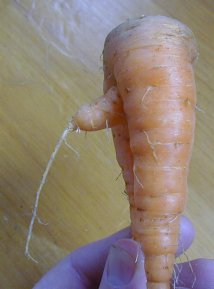
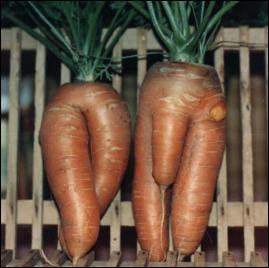
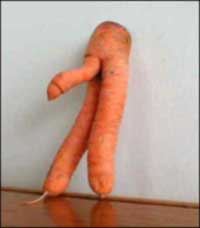
posted by nickyskye at 5:11 PM on February 20, 2006
ewagoner: "I also had to build a web app to both help me manage my seed purchases, transplants, and harvests and keep my customers up-to-date with what I was growing. I just spoke at a farming conference last week on my efforts to share that app with other growers. I'll be posting it to MeFi Projects later this week."
Here it is.
posted by ewagoner at 11:52 AM on February 22, 2006
Here it is.
posted by ewagoner at 11:52 AM on February 22, 2006
« Older all kinds of stuff | That joke never gets old, dad! Newer »
This thread has been archived and is closed to new comments
posted by bcveen at 1:29 PM on February 19, 2006