Seeing Males Together: When It Was OK to Show Affection
March 17, 2007 3:43 PM Subscribe
1909 > 1920
One of the Guys
When It Was OK to Show Affection
Seeing Males Together: Brokeback Mountain and Picturing Men


One of the Guys
When It Was OK to Show Affection
Seeing Males Together: Brokeback Mountain and Picturing Men
Heheh, "When it was OK to show Affection" is definitely an interesting link. Kudos.
posted by Phire at 3:56 PM on March 17, 2007
posted by Phire at 3:56 PM on March 17, 2007
Interesting article and I'll agree about sexuality being way more murky a proposition than many people would have you believe. But the photographs don't seem that odd or revolutionary to me. The whole phobia about man-on-man body contact must be confined to a very insecure subset of males in my observation. Anectdotal, sure, but me and my friends generally greet eachother with backslaps, bear hugs, and 'soul brother handshakes' and we don't have any problem about brotherly arms over the shoulder etc. and most men I see around neighborhood bars arent that much different, and I'm not talking New Age males here. These are fairly self-consciously masculine guys. Not neccessarily sayin the author's wrong per se, just that it's news to me.
posted by jonmc at 4:00 PM on March 17, 2007
posted by jonmc at 4:00 PM on March 17, 2007
y2karl - anytime anyone talks about their academic career at Cal State anyplace - except possibly San Luis Obispo - just skip it.
posted by nj_subgenius at 4:02 PM on March 17, 2007
posted by nj_subgenius at 4:02 PM on March 17, 2007
Fascinating stuff. The change in the way men have expressed affection throughout the years has always frustrated historians - witness the endless debates about Lincoln's sexuality. I can't even count the number of times I've slept on a hard wood floor rather than share a bed with a male friend, and anyone who knows me will attest that I'm just about as comfortable with my sexuality as one could get.
Great links, good reads.
posted by Banky_Edwards at 4:05 PM on March 17, 2007
Great links, good reads.
posted by Banky_Edwards at 4:05 PM on March 17, 2007
So, jon, you walk down the street with the guys holding hands or with your arms around each other often ?
posted by y2karl at 4:10 PM on March 17, 2007
posted by y2karl at 4:10 PM on March 17, 2007
A couple of years ago I was looking at photos of a Montana sports team from the early 1900's and was amazed at the pose-- the boys all lined up, scooted in close with their hands on each other's waists.
I guarantee you that just as many guys secretly loved it then as they would now. So many social changes have developed as a way to limit same-sex contact. For example, at the turn of the century schools used to have all-girl dances, and it was not thought improper for a girl to have "crushes" on her schoolmates. It was assumed she'd either grow into attachments to men or become a spinster-- and many of these spinsters paired up and had deep, lifelong relationships that were assumed by outsiders to be blameless and inviolate.
At some point people became aware that there was often more to this; it basically coincided with the birth of psychology and a growing public interest in psychological diagnosis and treatment. Hence all sorts of changes to protect developing young people from base urges and unhealthy attachments that had no place in a functional, fruitful sexually monochromatic world.
I wonder what those early champions of psychological and moral health would think if they could see what the backlash against their ideas has led to.
posted by hermitosis at 4:12 PM on March 17, 2007 [6 favorites]
I guarantee you that just as many guys secretly loved it then as they would now. So many social changes have developed as a way to limit same-sex contact. For example, at the turn of the century schools used to have all-girl dances, and it was not thought improper for a girl to have "crushes" on her schoolmates. It was assumed she'd either grow into attachments to men or become a spinster-- and many of these spinsters paired up and had deep, lifelong relationships that were assumed by outsiders to be blameless and inviolate.
At some point people became aware that there was often more to this; it basically coincided with the birth of psychology and a growing public interest in psychological diagnosis and treatment. Hence all sorts of changes to protect developing young people from base urges and unhealthy attachments that had no place in a functional, fruitful sexually monochromatic world.
I wonder what those early champions of psychological and moral health would think if they could see what the backlash against their ideas has led to.
posted by hermitosis at 4:12 PM on March 17, 2007 [6 favorites]
not generally with the handholding, no. I'm not starting ana rgument karl, just offering observations.
posted by jonmc at 4:14 PM on March 17, 2007
posted by jonmc at 4:14 PM on March 17, 2007
At some point people became aware that there was often more to this; it basically coincided with the birth of psychology and a growing public interest in psychological diagnosis and treatment. Hence all sorts of changes to protect developing young people from base urges and unhealthy attachments that had no place in a functional, fruitful sexually monochromatic world.
I wonder what those early champions of psychological and moral health would think if they could see what the backlash against their ideas has led to.
I'd never seen this connection before. What an irony. Thanks so much for pointing it out.
posted by grobstein at 4:21 PM on March 17, 2007
I wonder what those early champions of psychological and moral health would think if they could see what the backlash against their ideas has led to.
I'd never seen this connection before. What an irony. Thanks so much for pointing it out.
posted by grobstein at 4:21 PM on March 17, 2007
"me and my friends generally greet eachother with backslaps, bear hugs, and 'soul brother handshakes' and we don't have any problem about brotherly arms over the shoulder etc."
Fag.
posted by mr_crash_davis at 4:22 PM on March 17, 2007
Fag.
posted by mr_crash_davis at 4:22 PM on March 17, 2007
repressed males circa 1961 (2nd picture on left)
more repression, same source
wilmington, ma 1962
why is the latin club playing with dolls?
1953 engineering club afraid to touch?
it's unbelievable how many old yearbooks are out there ... and from what i've seen so far ... not to mention what i remember ... i think he's exaggerating a bit
posted by pyramid termite at 4:29 PM on March 17, 2007
more repression, same source
wilmington, ma 1962
why is the latin club playing with dolls?

1953 engineering club afraid to touch?

it's unbelievable how many old yearbooks are out there ... and from what i've seen so far ... not to mention what i remember ... i think he's exaggerating a bit
posted by pyramid termite at 4:29 PM on March 17, 2007
grobstein, I learned a ton about this in both Gay Old Girls and Odd Girls and Twilight Lovers, which I read as part of my research for a play I wrote on the subject.
posted by hermitosis at 4:31 PM on March 17, 2007
posted by hermitosis at 4:31 PM on March 17, 2007
i think he's exaggerating a bit
That's more or less what I was getting at, pyramid. Sure, I don't walk down the street holding hands with my male freinds, but I don't hold hands with my female friends either. That's for my wife alone.
I recall that one of the articles said that males felt the need to clown around when expressing affection for eachother. I don't neccessarily see that as some kind of evasive manuever. Among guys (and women too from what I've seen) goofery and good natured ribbing, etc, is a big part of expressing affection and friendship.
posted by jonmc at 4:36 PM on March 17, 2007
That's more or less what I was getting at, pyramid. Sure, I don't walk down the street holding hands with my male freinds, but I don't hold hands with my female friends either. That's for my wife alone.
I recall that one of the articles said that males felt the need to clown around when expressing affection for eachother. I don't neccessarily see that as some kind of evasive manuever. Among guys (and women too from what I've seen) goofery and good natured ribbing, etc, is a big part of expressing affection and friendship.
posted by jonmc at 4:36 PM on March 17, 2007
In such, Ibson provides photographic evidence for what Michele Foucault has described as the changing meaning of homosexuality from the sodomite (which was viewed as a temporary aberration) to the homosexual as a species.
That's something to chew on. It's true that in the past in western societies (and even currently in very many others), 'gay contact' didn't mean a trait of the person per se, just something they may have engaged in. This is actually the view of those who wish to "cure teh gay". I'm thinking that, despite the steadfast ideological stance we may take saying homosexuality just 'is', it may be true that there are 'straight' people who've engaged in physical intimacy with another man (not necessarily penetrative)? I guess it comes down to the idea that everyone's on a spectrum, gay/straight/bi aren't discrete containers.
(I'm also reminded of with a biographer of Katherine Hepburn (William J. Mann) on Politically Direct who said that although she had relationships with women, 'lesbian' relationships isn't exactly the right way to describe them because the word's modern semantics don't map backwards...)
posted by Firas at 4:38 PM on March 17, 2007
That's something to chew on. It's true that in the past in western societies (and even currently in very many others), 'gay contact' didn't mean a trait of the person per se, just something they may have engaged in. This is actually the view of those who wish to "cure teh gay". I'm thinking that, despite the steadfast ideological stance we may take saying homosexuality just 'is', it may be true that there are 'straight' people who've engaged in physical intimacy with another man (not necessarily penetrative)? I guess it comes down to the idea that everyone's on a spectrum, gay/straight/bi aren't discrete containers.
(I'm also reminded of with a biographer of Katherine Hepburn (William J. Mann) on Politically Direct who said that although she had relationships with women, 'lesbian' relationships isn't exactly the right way to describe them because the word's modern semantics don't map backwards...)
posted by Firas at 4:38 PM on March 17, 2007
In India, it is quite normal for guys to walk down the street holding hands, or with arms around each others shoulders.
"Heterosexual" PDA (public display of affection) is severely frowned upon, though.
(so much so that the police have been known to take potshots at couples canoodling in parks)
posted by UbuRoivas at 4:40 PM on March 17, 2007
"Heterosexual" PDA (public display of affection) is severely frowned upon, though.
(so much so that the police have been known to take potshots at couples canoodling in parks)
posted by UbuRoivas at 4:40 PM on March 17, 2007
gay/straight/bi aren't discrete containers.
I thought that was (in psychological terms) kind of generally accepted wisdom at this point, fundies and homophobes notwithstanding.
posted by jonmc at 4:40 PM on March 17, 2007
I thought that was (in psychological terms) kind of generally accepted wisdom at this point, fundies and homophobes notwithstanding.
posted by jonmc at 4:40 PM on March 17, 2007
Or maybe I'm reading "temporary aberration" wrong; a temporary aberration in the genetic line or temporary in an individual's behavior?
posted by Firas at 4:40 PM on March 17, 2007
posted by Firas at 4:40 PM on March 17, 2007
UbuRoivas: right! In Arab countries guys kiss each other on the cheek for friendship as openly as opposite-sex couples do in southern american cultures; a provincial person from either would probably be rather taken aback on observing the almost-opposite norm in the other. Social constructs: gotta love 'em.
posted by Firas at 4:44 PM on March 17, 2007 [1 favorite]
posted by Firas at 4:44 PM on March 17, 2007 [1 favorite]
Here's an interesting video about men holding hands in Syria. It's considered a sign of friendship rather than a display of sexual attraction.
posted by inconsequentialist at 4:47 PM on March 17, 2007
posted by inconsequentialist at 4:47 PM on March 17, 2007
Portrait of two men with umbrella, c. 1890 and Two men in bathing costumes, c. 1890


from Dear Friends: American Photographs of Men Together 1848-1918
posted by y2karl at 4:50 PM on March 17, 2007 [1 favorite]
Firas: the biologists would probably argue that the gay gene was just much more widely spread back then.
The quote from Foucault:
posted by kolophon at 4:52 PM on March 17, 2007
The quote from Foucault:
"The sodomite was a recidivist, but the homosexual is now a species."I couldn't find a full source on the net.
"The homosexual of the 19th century became a person: a"past, a history and an adolescence, a personality, a life style; also a morphology, with an indiscreet anatomy and possibly a mystical physiology. Nothing of his full personality escapes his sexuality."
posted by kolophon at 4:52 PM on March 17, 2007
When I was in semi-rural Turkey a few years ago this was by far the most striking thing: the men touched, sat on each other's laps, walked down the street holding each other's waist or shoulders, kissed each other to say hello and goodbye. It was amazing, the totally easy camaraderie. These were straight dudes, actively trying to pick up foreign tourist women, and they weren't even the tiniest bit embarrassed or selfconscious about touching their male friends. Picture the way female friends can touch each other, dance together, walk holding hands, huddle up together giggling, etc in the US - that's what it was with these guys. My impression was that homosexuality is SO out of the realm of permissibility in Turkey that it wouldn't even occur to them to be worried about anyone calling them "gay" or whatever.
posted by LobsterMitten at 4:54 PM on March 17, 2007 [1 favorite]
posted by LobsterMitten at 4:54 PM on March 17, 2007 [1 favorite]
1953 engineering club afraid to touch?
So, they have their arms around each other, are looking into each other's eyes and and their faces show expressions of open affection towards each other ?
posted by y2karl at 4:56 PM on March 17, 2007
So, they have their arms around each other, are looking into each other's eyes and and their faces show expressions of open affection towards each other ?
posted by y2karl at 4:56 PM on March 17, 2007
It is statistically known that well over half of ALL American males participate in some form of sexual experimentation with another male in their youth. Most of them never fess up about it.
I hesitate to remind people of this statistic, because then we'll probably have to deal with the urgent chorus of members of the vocal minority. But it is a fact in our culture that most young males do this at some point.
If displays of affection, not just backslapping and shoulder-punching etc., were (still) seen as normal and commonplace, I doubt this would be the case. Instead, males have no outlet for these feelings and I bet most wind up entering into sexual territory simply for the lack of a known grey area, or a very natural curiosity about exploring taboos.
It's infuriating to think of all those innocent hand-holding men back then who would be quite indignant if they knew they'd wrongly be assumed to be lovers by the men of a hundred years later-- most ofwhom have actually exchanged furtive handjobs (or more) at one point or another.
posted by hermitosis at 4:56 PM on March 17, 2007
I hesitate to remind people of this statistic, because then we'll probably have to deal with the urgent chorus of members of the vocal minority. But it is a fact in our culture that most young males do this at some point.
If displays of affection, not just backslapping and shoulder-punching etc., were (still) seen as normal and commonplace, I doubt this would be the case. Instead, males have no outlet for these feelings and I bet most wind up entering into sexual territory simply for the lack of a known grey area, or a very natural curiosity about exploring taboos.
It's infuriating to think of all those innocent hand-holding men back then who would be quite indignant if they knew they'd wrongly be assumed to be lovers by the men of a hundred years later-- most ofwhom have actually exchanged furtive handjobs (or more) at one point or another.
posted by hermitosis at 4:56 PM on March 17, 2007
another wonderful source of those vintage pictures with literally thousands of scans is dcwooten's flickr account. Especially the "vintage affection" set.
posted by kolophon at 4:59 PM on March 17, 2007
posted by kolophon at 4:59 PM on March 17, 2007
And with more outlets for nonsexual male affection, would straight met get into as much trouble as they do?
On the other hand, I wonder how many marriages this actually saves.
posted by hermitosis at 5:01 PM on March 17, 2007
On the other hand, I wonder how many marriages this actually saves.
posted by hermitosis at 5:01 PM on March 17, 2007
Yes - true about Syria & Turkey (the latter to a lesser extent, I feel).
I can't recall what the men did in Iran, but I think it was probably similar.
posted by UbuRoivas at 5:07 PM on March 17, 2007
I can't recall what the men did in Iran, but I think it was probably similar.
posted by UbuRoivas at 5:07 PM on March 17, 2007
If displays of affection, not just backslapping and shoulder-punching etc.
hermitosis, I'm saying that backslaping, bearhugs, shoulderpunching etc. are displays of affection, not neccessatily homophobic evasions, although that might be the case for some.
posted by jonmc at 5:08 PM on March 17, 2007
hermitosis, I'm saying that backslaping, bearhugs, shoulderpunching etc. are displays of affection, not neccessatily homophobic evasions, although that might be the case for some.
posted by jonmc at 5:08 PM on March 17, 2007
hermitosis: I have read that the numbers of men who had some sort of same-sex contact in their youth has actually dropped dramatically since the 70s.
posted by kolophon at 5:09 PM on March 17, 2007
posted by kolophon at 5:09 PM on March 17, 2007
I bet most wind up entering into sexual territory simply for the lack of a known grey area, or a very natural curiosity about exploring taboos.
or possibly just plain horniness for any sexual contact. just a theory.
posted by jonmc at 5:10 PM on March 17, 2007
or possibly just plain horniness for any sexual contact. just a theory.
posted by jonmc at 5:10 PM on March 17, 2007
I recall that one of the articles said that males felt the need to clown around when expressing affection for eachother. I don't neccessarily see that as some kind of evasive manuever.
In the 19th Century, friends of the same sex, men and women, used to touch and sincerely--not jokingly--speak to and of each other in language no one would ever use today. Surviving letters from the time are full of florid expressions of passion and longing uttered with total sincerity and deep feeling. That just does not happen anymore. There is a difference between then and now. I think that is inarguable.
posted by y2karl at 5:19 PM on March 17, 2007
“As a third Boston High School student was arraigned in the assault of a Moroccan girl by classmates who thought she was gay, a relative of the alleged victim yesterday said the child was terrified about returning to school alone... The girl told police last week that she had been attacked while riding an MBTA train by six teenagers who believed she was a lesbian because she followed a custom common in her homeland: holding hands with another girl.”from Quotes about Friendship
— Francie Latour, Boston Globe, February 2, 2000
In the 19th Century, friends of the same sex, men and women, used to touch and sincerely--not jokingly--speak to and of each other in language no one would ever use today. Surviving letters from the time are full of florid expressions of passion and longing uttered with total sincerity and deep feeling. That just does not happen anymore. There is a difference between then and now. I think that is inarguable.
posted by y2karl at 5:19 PM on March 17, 2007
jon, I'm not knocking your favorite flavor of man-love. I'm just saying that while affectionate, it doesn't really convey the sincere tenderness that the olde tyme men had effortless access to, as is so plain in the photos-- not in general, at least.
posted by hermitosis at 5:19 PM on March 17, 2007
posted by hermitosis at 5:19 PM on March 17, 2007
I have read that the numbers of men who had some sort of same-sex contact in their youth has actually dropped dramatically since the 70s.
I dont necessarily doubt this, although I do wonder: does this merely reflect a more close-mouthed (har har) or homophobic attitude in our culture? Are people more paranoid about revealing these details? Have studies been performed as diligently? I don't know.
I wonder how it fits in with the statistics of how many "out" gay teenagers there are now, compared to the 70's.
posted by hermitosis at 5:23 PM on March 17, 2007
I dont necessarily doubt this, although I do wonder: does this merely reflect a more close-mouthed (har har) or homophobic attitude in our culture? Are people more paranoid about revealing these details? Have studies been performed as diligently? I don't know.
I wonder how it fits in with the statistics of how many "out" gay teenagers there are now, compared to the 70's.
posted by hermitosis at 5:23 PM on March 17, 2007
Does LGBTTTIQQA need to include yet another subgroup, SISYFAGs*? From hermitosis's link:
*Self-Identifying as Straight Yet Fooling Around with Guys
posted by rob511 at 5:25 PM on March 17, 2007
Nearly one in 10 men who say they're straight have sex only with other men, a New York City survey finds. And 70% of those straight-identified men having sex with men are married....Heh, they said annals.
In fact, 10% of all married men in this survey report same-sex behavior during the past year.In nearly every study of sexual behavior, the percentage of men who report sex with men is higher than the percentage of men who report being gay....
The findings appear in the Sept. 19 [2006] issue of the Annals of Internal Medicine.
*Self-Identifying as Straight Yet Fooling Around with Guys
posted by rob511 at 5:25 PM on March 17, 2007
I know you weren't, but some of the articles eemed to be saying that. As far as your 'flavor' observation, that's pretty on-target. Some people like tender expressions of affection, some people(straight or gay, male or female) like it more rough and jocular. It's all good. I even wrote about ambiguity in affection the other day.
olde tyme men
Now you're conjuring up images of those handlebar mustachioed guys on the big bicycle on Family Guy. Dirty pool, man.
posted by jonmc at 5:27 PM on March 17, 2007
olde tyme men
Now you're conjuring up images of those handlebar mustachioed guys on the big bicycle on Family Guy. Dirty pool, man.
posted by jonmc at 5:27 PM on March 17, 2007
jonmc: interestingly, I think in some cultures (eg. Afghanistan) where homosexuality is unthinkably taboo, but heterosexuality is also repressed, this particular behavior you're talking about (male homosexual contact for want of any sexual contact) creates a strange buffer-zone of tolerance for things like pederasty or sodomy. So: although gay sexuality is completely out of the question, straight sexuality is repressed, which leads to a traditional prevailance of non-intimate gay sex...
LobsterMitten: I think you have it, when it comes to eg. the Mideast and India etc.: it's not that 'gayness' is ok therefore male physical contact is ok, it's that homosexuality is so taboo that it doesn't realistically occur as a possibility for a 'normal' person. But I think even if that weren't the case the male physical contact would be be considered ok, because it's a sign of friendship rather than sexuality, as with girls in the US. That is to say, the notion that X behavior signifies Y sexuality is artificial, being cut out of whole cloth by society.
y2karl: regarding letters, I think you'll also find correspondence between siblings that seems almost incestously affectionate when the language (and/or even the actual affections) are viewed through today's lenses.
posted by Firas at 5:37 PM on March 17, 2007
LobsterMitten: I think you have it, when it comes to eg. the Mideast and India etc.: it's not that 'gayness' is ok therefore male physical contact is ok, it's that homosexuality is so taboo that it doesn't realistically occur as a possibility for a 'normal' person. But I think even if that weren't the case the male physical contact would be be considered ok, because it's a sign of friendship rather than sexuality, as with girls in the US. That is to say, the notion that X behavior signifies Y sexuality is artificial, being cut out of whole cloth by society.
y2karl: regarding letters, I think you'll also find correspondence between siblings that seems almost incestously affectionate when the language (and/or even the actual affections) are viewed through today's lenses.
posted by Firas at 5:37 PM on March 17, 2007
For some not very well thought through anecdotal evidence, I'd say you can observe this change taking place right now in China.
In the big "modern" cities you men interact physically in ways you'd recognise in the West, but out in the sticks, especially among the rural underclass, I've seen hand-holding and hugging like LobsterMitten describes in Turkey, usually younger lands of the ne'er-do-well type hanging around town with no so much to do. Maybe even more so in non-Han parts of the country.
posted by Abiezer at 5:40 PM on March 17, 2007
In the big "modern" cities you men interact physically in ways you'd recognise in the West, but out in the sticks, especially among the rural underclass, I've seen hand-holding and hugging like LobsterMitten describes in Turkey, usually younger lands of the ne'er-do-well type hanging around town with no so much to do. Maybe even more so in non-Han parts of the country.
posted by Abiezer at 5:40 PM on March 17, 2007
I think backslaps, bearhugs and soul-brother hand shakes are exactly the kind of "safe"male touching that points out the issue. Each of those has a degree of machismo attached to it. It's all done with gusto! :-)
Traveling overseas it always surprises and delights me to see men touching men and holding hands and just being way less self-conscious about it. But in a much softer, more gentle way.
Yes men touch men in america but it's almost always with a degree of roughness. It's always seemed to me that he message is "yeah, i'm touching you, ya big lug, luv ya...but NOT gay! harharhar"
As a man, when I walk around with my arm over the shoulder of one of my best male friends, people stop and look at us sometimes or even honk their horns. I feel self-conscious about it - but have to just say "fuck 'em" and do what I want to do anyway. And I live in Berkeley.
posted by django_z at 5:41 PM on March 17, 2007
Traveling overseas it always surprises and delights me to see men touching men and holding hands and just being way less self-conscious about it. But in a much softer, more gentle way.
Yes men touch men in america but it's almost always with a degree of roughness. It's always seemed to me that he message is "yeah, i'm touching you, ya big lug, luv ya...but NOT gay! harharhar"
As a man, when I walk around with my arm over the shoulder of one of my best male friends, people stop and look at us sometimes or even honk their horns. I feel self-conscious about it - but have to just say "fuck 'em" and do what I want to do anyway. And I live in Berkeley.
posted by django_z at 5:41 PM on March 17, 2007
pyramid termite, those first two links seem to prove the point, if anything. men are increasingly expected to work out the need for physical contact with eachother through "manly" things like the wrestling in that first picture. "i'm touching you, sure, but more importantly, i'm dominating someone, or learning how to."
and those guys in the second picture are allowed to get all femme-y because it's camp, it's not the norm - it's entertainment. the fact that they're being feminine is obviously being played for laughs.
intimate contact among males in a context of training in how to hurt eachother - or expression of "the feminine" in a stereotypical and borderline misogynist spectacle - doesn't really seem relevant.
posted by poweredbybeard at 5:49 PM on March 17, 2007
and those guys in the second picture are allowed to get all femme-y because it's camp, it's not the norm - it's entertainment. the fact that they're being feminine is obviously being played for laughs.
intimate contact among males in a context of training in how to hurt eachother - or expression of "the feminine" in a stereotypical and borderline misogynist spectacle - doesn't really seem relevant.
posted by poweredbybeard at 5:49 PM on March 17, 2007
So I'm tempted to make a generalization like the following: the societal sanctioning of public, non-sexual expressions of affection between men is predicated upon an implicit agreement that homosexual acts are wrong. So long as everyone agrees that "teh gay" is a bad thing, then there's no risk that physical expressions of affection between men might be interpreted the wrong way.
posted by treepour at 5:50 PM on March 17, 2007
posted by treepour at 5:50 PM on March 17, 2007
So...unless a straight guy likes holding hands with his friends, he's some kind of homophobe? If he shows affection with backslaps and bearhugs, he's a closet case? That's a bit of a leap.
posted by jonmc at 5:53 PM on March 17, 2007
posted by jonmc at 5:53 PM on March 17, 2007
I've never, ever see two male friends go see any kind of show and leave an empty seat between them. Maybe that happens in other parts of America, but not San Diego.
posted by Citizen Premier at 5:59 PM on March 17, 2007
posted by Citizen Premier at 5:59 PM on March 17, 2007
Very interesting. I was just watching (old) basketball with my boyfriend today and we were discussing the ways in which sports is one of the last places it is not uncommon to see men grabbing one another's asses, hugging genuinely, &c., and speculating that this may be why men like sports the way they do (even if they wouldn't admit it). And I can't tell you how often the men on my swim team grab one another's man boobs in a loving yet teasing way.
posted by dame at 6:00 PM on March 17, 2007 [1 favorite]
posted by dame at 6:00 PM on March 17, 2007 [1 favorite]
And John Ameachi did say NBA locker rooms were the most flamboyant places he's ever been.
I wonder that so many of the vintage shots are of soldiers. Id there something about being man-only that makes it more okay?
posted by dame at 6:04 PM on March 17, 2007
I wonder that so many of the vintage shots are of soldiers. Id there something about being man-only that makes it more okay?
posted by dame at 6:04 PM on March 17, 2007
Hmm...Jonmc, you're using bearhugs, backslaps, and hand shakes as examples of how intimate and touchy-feely people are in NY...while from a Japanese perspective, those are examples of the kind of limitation of physical contact we're talking about. It's as if, bad analogy, someone were to point out that in one's town, black people weren't killed for dating white people, but merely beaten, as an example of how one's town wasn't racist.
posted by Bugbread at 6:05 PM on March 17, 2007
posted by Bugbread at 6:05 PM on March 17, 2007
Is there any correlation between the decline in same-sex physical affection, and the rise of Protestant capitalism? What would happen if the workers were encouraged in their feelings for one another? Is male hand-holding inimical to the individual pursuit of capital? Perhaps male physical affection is retained in those rural and Middle Eastern locales mentioned above because reciprocal personal loyalty is still the key to power and survival in those cultures.
There must be a 1930s German theorist with something to say about this.
posted by i_am_joe's_spleen at 6:18 PM on March 17, 2007 [2 favorites]
There must be a 1930s German theorist with something to say about this.
posted by i_am_joe's_spleen at 6:18 PM on March 17, 2007 [2 favorites]
dame, that's curious in light of the fact that sports and the military are two of the most ferociously homophobic specialized cultures out there. I think treepour might have a point in observing the general cross-cultural tendency (men touching other men is ok as long as they agree that being intimate is really, really wrong. When there's a danger of being misinterpreted as actually homosexual, people start being distant). A big theory like that is always tenuous but it does seem to have some truth to it.
The thing I'd point out as a counter-example to that is again the case of women in the US; there's a possibility that women may be lesbian but it doesn't limit the acceptability of their physical contact. I think the two factors are not really predictive of the other (ie. whether it's ok for people of a particular sex within a culture to touch each other won't automatically let you know whether the culture is gay-friendly or homophobic.)
It's strange, men being 'womanly' has been a jeer-factor in any place or nation, at any time in history (Mercutio: "The pox of such antic, lisping, affecting fantasticoes.... these fashion-mongers, these perdona-mi's"). Not sure how much of that is tied to the 'womanly man = teh gayz!' factor. They do sort of overlap from time to time.
posted by Firas at 6:25 PM on March 17, 2007
The thing I'd point out as a counter-example to that is again the case of women in the US; there's a possibility that women may be lesbian but it doesn't limit the acceptability of their physical contact. I think the two factors are not really predictive of the other (ie. whether it's ok for people of a particular sex within a culture to touch each other won't automatically let you know whether the culture is gay-friendly or homophobic.)
It's strange, men being 'womanly' has been a jeer-factor in any place or nation, at any time in history (Mercutio: "The pox of such antic, lisping, affecting fantasticoes.... these fashion-mongers, these perdona-mi's"). Not sure how much of that is tied to the 'womanly man = teh gayz!' factor. They do sort of overlap from time to time.
posted by Firas at 6:25 PM on March 17, 2007
The thing that distinguishes the bear-hug, back-slap type of physical contact is not only that it's gruff, but also that it's brief. Hug, step back. The guys in Turkey would just lean against each other when standing around, etc. They did some rough and tumble type stuff too, so it's not that all their touching was gentle -- it's that they were touching each other much more constantly than would be ok in the US.
posted by LobsterMitten at 6:35 PM on March 17, 2007
posted by LobsterMitten at 6:35 PM on March 17, 2007
intimate contact among males in a context of training in how to hurt eachother - or expression of "the feminine" in a stereotypical and borderline misogynist spectacle - doesn't really seem relevant.
it's merely anecdotal evidence ... however, the main thesis here also seems to be based on anecdotal evidence
i disagree that the first link is a case of domination at all ... this is sheer playfulness
and sure, the 2nd link's playing it for laughs ... but the 3 guys with cigars in the fpp link aren't?
the 1900 niles mi football team
university of chicago
iowa state normal school
i notice a mixture of stiffness and looseness in all of these ... but they're clearly the predecents of the poses you find in 50s era photographs
how much of this is due to photographic techniques and tradition? ... which wasn't as well established in 1900 as it was in 1950 ... does team size have anything to do with this? ...
the thing is he could be falling prey to a sort of confirmation bias here ... or neglecting other social or even technical explanations
i'm certainly not seeing any statistical data ... and yeah, i think generalizations like this are pretty dodgy without it
posted by pyramid termite at 6:41 PM on March 17, 2007
it's merely anecdotal evidence ... however, the main thesis here also seems to be based on anecdotal evidence
i disagree that the first link is a case of domination at all ... this is sheer playfulness
and sure, the 2nd link's playing it for laughs ... but the 3 guys with cigars in the fpp link aren't?
the 1900 niles mi football team

university of chicago

iowa state normal school
i notice a mixture of stiffness and looseness in all of these ... but they're clearly the predecents of the poses you find in 50s era photographs

how much of this is due to photographic techniques and tradition? ... which wasn't as well established in 1900 as it was in 1950 ... does team size have anything to do with this? ...
the thing is he could be falling prey to a sort of confirmation bias here ... or neglecting other social or even technical explanations
i'm certainly not seeing any statistical data ... and yeah, i think generalizations like this are pretty dodgy without it
posted by pyramid termite at 6:41 PM on March 17, 2007
You can see the same sort of easy male physical affection, hand-holding, arms around shoulders and so forth, in Indonesia too. It's really quite sweet.
posted by Wolof at 6:44 PM on March 17, 2007
posted by Wolof at 6:44 PM on March 17, 2007
i notice a mixture of stiffness and looseness in all of these ... but they're clearly the predecents of the poses you find in 50s era photographs
Well, except for the tiny detail that, in your samples, those young men are sitting in fairly relaxed poses, are in relaxed physical contact and many have their hands on each other, which is a far far cry from each boy-with-both-hands-on his-own-knees of the Egyptian statuary stiff 1952 team photograph in One of the Guys.
And I rather doubt you can find photographs comparable to Portrait of two men with umbrella or Two men in bathing costumes in any high school yearbook.
posted by y2karl at 7:06 PM on March 17, 2007
Well, except for the tiny detail that, in your samples, those young men are sitting in fairly relaxed poses, are in relaxed physical contact and many have their hands on each other, which is a far far cry from each boy-with-both-hands-on his-own-knees of the Egyptian statuary stiff 1952 team photograph in One of the Guys.
And I rather doubt you can find photographs comparable to Portrait of two men with umbrella or Two men in bathing costumes in any high school yearbook.
posted by y2karl at 7:06 PM on March 17, 2007
it's unbelievable how many old yearbooks are out there ... and from what i've seen so far ... not to mention what i remember ... i think he's exaggerating a bit
The book Picturing Men does not cover the period after 1950 (according to the articles), so most of these yearbook photos are irrelevant to Ibson's argument.
posted by jonp72 at 7:17 PM on March 17, 2007
The book Picturing Men does not cover the period after 1950 (according to the articles), so most of these yearbook photos are irrelevant to Ibson's argument.
posted by jonp72 at 7:17 PM on March 17, 2007
This isn't exagerating at all. Men from other cultures, such as North Africa, touch each other like this. A few years ago, I lived in the Somalian neighbourhood, and the men would greet each other in the local coffee shop with hugs and kisses, would walk around holding hands or with arms around shoulders. The only other place I had seen that kind of fraternity among men was in the gay ghetto - it was fascinating to watch. It made me very aware of the way that body language is cultural.
posted by jb at 7:17 PM on March 17, 2007 [1 favorite]
posted by jb at 7:17 PM on March 17, 2007 [1 favorite]
however, the main thesis here also seems to be based on anecdotal evidence
So, these photographs Ibson and Dietrich have collected are anecdotal evidence ? I would think records of physical events is a more accurate description.
posted by y2karl at 7:27 PM on March 17, 2007
So, these photographs Ibson and Dietrich have collected are anecdotal evidence ? I would think records of physical events is a more accurate description.
posted by y2karl at 7:27 PM on March 17, 2007
The authors definitely seem to be overstating the case. Look at the celebrations after any football goal: you get great piles of men cheerfully hugging and kissing.
Also, I wonder if ecstasy has had a significant impact on straight male displays of affection. Most of the blokes I know (straight, gay or otherwise) are all very touchy-feely with each other, but then we did spend a decade or so lying around in drugged up heaps declaring undying friend-love for each other. Clothing and hairstyles aside, all my group photos of mates look just like the 'vintage affection' set kolophon linked to.
posted by jack_mo at 7:30 PM on March 17, 2007
Also, I wonder if ecstasy has had a significant impact on straight male displays of affection. Most of the blokes I know (straight, gay or otherwise) are all very touchy-feely with each other, but then we did spend a decade or so lying around in drugged up heaps declaring undying friend-love for each other. Clothing and hairstyles aside, all my group photos of mates look just like the 'vintage affection' set kolophon linked to.
posted by jack_mo at 7:30 PM on March 17, 2007
Egyptian statuary stiff 1952 team
Well, the 1920 team to be sure, and their arms are folded at that--but those kids in the 1952 photo are sure keeping their hand to themselves.
posted by y2karl at 7:34 PM on March 17, 2007
Well, the 1920 team to be sure, and their arms are folded at that--but those kids in the 1952 photo are sure keeping their hand to themselves.
posted by y2karl at 7:34 PM on March 17, 2007
those young men are sitting in fairly relaxed poses, are in relaxed physical contact and many have their hands on each other
in the front row ... they're not in the back rows
also - what kind of uniforms are they wearing compared to the 50s teams? ... the more modern the uniforms get ... the less relaxing they are
And I rather doubt you can find photographs comparable to Portrait of two men with umbrella or Two men in bathing costumes in any high school yearbook.
if i did, would that be proof of something ... or just a case of cherry picking the data? ... did he find those two pictures in high school yearbooks? ... did i find those pictures of COLLEGE teams in high school yearbooks?
do we know that these photographs are actually representative of their times?
by the way, anyone can find photographs on the net to explore this further with some actual data rather than just giving us more opinions ... we can actually investigate this ourselves and think about what we find instead of just accepting what we're presented with and offering off the cuff statements
but i guess that's too much work
So, these photographs Ibson and Dietrich have collected are anecdotal evidence ?
a photograph is a record of a particular moment in time
an anecdote is what? ... a record of a particular moment in time
what percentage of photographs does he possess in a given time period that depicts this behavior and how does that compare to other time periods?
considering that most photographs from any time period get lost if you wait long enough, are we even going to be able to come to certain conclusions on this?
i think this is pretty subjective ... and i think he's exaggerated his findings
posted by pyramid termite at 7:35 PM on March 17, 2007 [1 favorite]
in the front row ... they're not in the back rows
also - what kind of uniforms are they wearing compared to the 50s teams? ... the more modern the uniforms get ... the less relaxing they are
And I rather doubt you can find photographs comparable to Portrait of two men with umbrella or Two men in bathing costumes in any high school yearbook.
if i did, would that be proof of something ... or just a case of cherry picking the data? ... did he find those two pictures in high school yearbooks? ... did i find those pictures of COLLEGE teams in high school yearbooks?
do we know that these photographs are actually representative of their times?
by the way, anyone can find photographs on the net to explore this further with some actual data rather than just giving us more opinions ... we can actually investigate this ourselves and think about what we find instead of just accepting what we're presented with and offering off the cuff statements
but i guess that's too much work
So, these photographs Ibson and Dietrich have collected are anecdotal evidence ?
a photograph is a record of a particular moment in time
an anecdote is what? ... a record of a particular moment in time
what percentage of photographs does he possess in a given time period that depicts this behavior and how does that compare to other time periods?
considering that most photographs from any time period get lost if you wait long enough, are we even going to be able to come to certain conclusions on this?
i think this is pretty subjective ... and i think he's exaggerated his findings
posted by pyramid termite at 7:35 PM on March 17, 2007 [1 favorite]
Also, I wonder if ecstasy has had a significant impact on straight male displays of affection.
That is an interesting thought. Ecstasy as in MDMA was in rather short supply in the 1950's in my recollection.
But the pendulum swings. I think the point of the articles was that what we take for granted is not the way things have always been. I find that inarguable but your mileage may vary.
posted by y2karl at 7:41 PM on March 17, 2007 [1 favorite]
That is an interesting thought. Ecstasy as in MDMA was in rather short supply in the 1950's in my recollection.
But the pendulum swings. I think the point of the articles was that what we take for granted is not the way things have always been. I find that inarguable but your mileage may vary.
posted by y2karl at 7:41 PM on March 17, 2007 [1 favorite]
Come to think of it, ecstasy of any sort was in rather short supply in the 1950's. Else why would we have had, you know, the 60's, man ? Think about it.
Oh, god, I had a girlfriend in the '60's who always used to say Think about it. God, did that--and her also frequent Dig it, man!--ever give me the urge to kill...
posted by y2karl at 7:47 PM on March 17, 2007
Oh, god, I had a girlfriend in the '60's who always used to say Think about it. God, did that--and her also frequent Dig it, man!--ever give me the urge to kill...
posted by y2karl at 7:47 PM on March 17, 2007
jonmc: So...unless a straight guy likes holding hands with his friends, he's some kind of homophobe? If he shows affection with backslaps and bearhugs, he's a closet case? That's a bit of a leap.
Not sure if you're responding to me, but if so, this isn't the leap I was trying to make.
It seems to me that there are certainly physical, non-sexual expressions of genuine affection between straight guys. Or between guys in general. As a gay man, e.g., I don't intend every hug given to another gay man as a sexual gesture. But I'm also wondering whether a general weakening of the societal taboo against homosexuality makes it, somewhat paradoxically, less "safe" for straight guys to express such affection.
posted by treepour at 7:55 PM on March 17, 2007
Not sure if you're responding to me, but if so, this isn't the leap I was trying to make.
It seems to me that there are certainly physical, non-sexual expressions of genuine affection between straight guys. Or between guys in general. As a gay man, e.g., I don't intend every hug given to another gay man as a sexual gesture. But I'm also wondering whether a general weakening of the societal taboo against homosexuality makes it, somewhat paradoxically, less "safe" for straight guys to express such affection.
posted by treepour at 7:55 PM on March 17, 2007
treepour: I was more responding t django z, but fair enough.
posted by jonmc at 8:00 PM on March 17, 2007
posted by jonmc at 8:00 PM on March 17, 2007
Some people here seem to have progressed farther, but I know my own mind is still pretty screwed up by homophobia. I'm a guy who likes girls myself, but I like to think of myself as really progressive -- I have absolutely no problem with people being gay -- and yet if one of my straight male friends accidentally brushes my foot with his, there's something in me that screams in panic. It's not even like I'd have a problem if a friend "came out of the closet." Part of it is just that I'm paranoid and tend to look for hidden agendas where there are none. Hell, I read the same things into girls' body language -- does that mean she likes me? does she want me to mack on her? -- the only difference is I'm interested in girls.
So the subconscious homophobic superego pressures do exist, I can vouch for that. One thing I realized after reading the articles, though, was that as far as I know, the kinds of intimacy described there between friends of the same gender has also fallen out of vogue with friends of the opposite gender. While some of the girls I've been friends with have favored me with some intimacy -- notably the lesbians -- it's a small percentage. And if they're a friend's girlfriend, woah, don't even think about going beyond a little hand-to-back action. Compare that to Europe where men and women greet each other by kissing?
There's a lot of space between Americans and Canadians (myself) in general these days, I think.
posted by Riovanes at 8:04 PM on March 17, 2007 [1 favorite]
dcwooten's flickr stream is awesome, and some of the comments on the pictures in the vintage affection set touch on the same points as this discussion. See here, here, here...etc. There's even microfiction.
posted by pinespree at 8:28 PM on March 17, 2007
posted by pinespree at 8:28 PM on March 17, 2007
What I found in many muslim cultures is that men are encouraged to spend most of their time with men & women spend most of their time with women. Often a husband and wife have never even really been alone together before they were married. Many marriages are still arranged and sometimes they don't even really know eachother despite having been married for years. Especially when it comes to members of the opposite sex who are unmarried, physical contact (in public or not) is haram.
Men can show all sorts of affection with no worries. In places like Egypt homosexuality is VERY against the law, though... ironic since the culture constantly encourages people to have far stronger attachments to members of their own sex. In Cairo people are arrested & jailed by the Sex Police for being gay.
posted by miss lynnster at 8:59 PM on March 17, 2007
Men can show all sorts of affection with no worries. In places like Egypt homosexuality is VERY against the law, though... ironic since the culture constantly encourages people to have far stronger attachments to members of their own sex. In Cairo people are arrested & jailed by the Sex Police for being gay.
posted by miss lynnster at 8:59 PM on March 17, 2007
And hot off the Google search come...
From the late 1800s: Sitting in lap, arm around shoulders, hand on leg,
From the early 1900s: sitting together on a romantic moon, hand on leg, arm around shoulder
and also from the 1900's all come from Male Couples Scrapbook -- The Wonderful World of Bri.
Here are sample pages from Affectionate Men: A Photographic History of a Century of Male Couples
Romantic Friendship: Not Just a Code Word for Gay
All these came via Dusk Peterson's page Friendship and Romantic Friendship: Stories and History.
posted by y2karl at 9:00 PM on March 17, 2007 [1 favorite]
From the late 1800s: Sitting in lap, arm around shoulders, hand on leg,

From the early 1900s: sitting together on a romantic moon, hand on leg, arm around shoulder

and also from the 1900's all come from Male Couples Scrapbook -- The Wonderful World of Bri.

Here are sample pages from Affectionate Men: A Photographic History of a Century of Male Couples
Romantic Friendship: Not Just a Code Word for Gay
All these came via Dusk Peterson's page Friendship and Romantic Friendship: Stories and History.
posted by y2karl at 9:00 PM on March 17, 2007 [1 favorite]
Really interesting stuff. It's such a shame that guys are so afraid to touch each other in the United States. I believe fear is the real component here.
I'm a heterosexual male from Los Angeles, California. I noticed that there are all kinds of things you can't do with guys here that you might be able to do elsewhere.
While it's not directly touching, you cannot speak to the guy next to you at the urinal - not even if everyone's been drinking - and not even if it's an obvious joke that you're trying to tell. I think that people are afraid that you're some gay out on the prowl. Same thing on LA's Metro. Guys think that you're either trying to rob them, sell them something, or hit on them.
I'm not trying to be that "but in Canada" guy ... buuut, I was relieved that in Vancouver, straight guys were having friendly, non-profane conversations in the men's room.
Even when guys hug out here it always has to be some big "tough guy" hug where you have to make it a rough thing, you know, like if you just did a touchdown and you hugged your teammates. I'll bet that if you went to hug a guy and yelled "YEAH!" it would be completely normal. The back slapping and roughness is a sign that the huggers want to display some kind of affection, but don't want it to look gay - either to the person being hugged or anyone that might be watching.
Last December I was at a little ravey dance party and I went outside to get away from the noise and hang around a little fire pit. I saw a friend I hadn't seen for a while, put my arm around him and asked how he was doing. We were catching up and talking when this one idiot started asking us if we "were fags". He then went to say that he "hated fags" and that he didn't like how we were standing when he was talking to us because he felt that we were pointing our dicks at him. Ok, that guy was just crazy, but I wonder how many people feel that way and don't say it. I disengaged while my friend wanted to examine the guy's thoughts and later ended up getting punched in the mouth.
It's a shame, too, because I like hugging my friends and other people. My whole family is Argentinian and over there guys do all sorts of stuff that might be considered gay to American eyes. It's perfectly acceptable for two sober heterosexual guys to walk down the street with their arms around each other. You can touch a guy's shoulder when you're speaking to him. All guys greet each other with a kiss on the cheek and all guys greet their dads this way.
Still, though, I don't think these differing norms are supposed to make sense in any way. When I was in Turkey or India, I saw guys walking around holding hands or even just holding pinkies, and it looked weird to me. Worse, considering how much the typical guy in those places hates homosexuality. Oh well, it's pretty acceptable to wrestle out here or watch sweaty MMA fighters crawl all over each other and not be considered gay in any way. Again, I don't think it's supposed to make perfect, logical sense, but it is interesting to see these different behaviors and try and find their social causes.
I just want to be able to hug my friends and be close to them. What is wrong with everybody?
posted by redteam at 9:54 PM on March 17, 2007 [1 favorite]
I'm a heterosexual male from Los Angeles, California. I noticed that there are all kinds of things you can't do with guys here that you might be able to do elsewhere.
While it's not directly touching, you cannot speak to the guy next to you at the urinal - not even if everyone's been drinking - and not even if it's an obvious joke that you're trying to tell. I think that people are afraid that you're some gay out on the prowl. Same thing on LA's Metro. Guys think that you're either trying to rob them, sell them something, or hit on them.
I'm not trying to be that "but in Canada" guy ... buuut, I was relieved that in Vancouver, straight guys were having friendly, non-profane conversations in the men's room.
Even when guys hug out here it always has to be some big "tough guy" hug where you have to make it a rough thing, you know, like if you just did a touchdown and you hugged your teammates. I'll bet that if you went to hug a guy and yelled "YEAH!" it would be completely normal. The back slapping and roughness is a sign that the huggers want to display some kind of affection, but don't want it to look gay - either to the person being hugged or anyone that might be watching.
Last December I was at a little ravey dance party and I went outside to get away from the noise and hang around a little fire pit. I saw a friend I hadn't seen for a while, put my arm around him and asked how he was doing. We were catching up and talking when this one idiot started asking us if we "were fags". He then went to say that he "hated fags" and that he didn't like how we were standing when he was talking to us because he felt that we were pointing our dicks at him. Ok, that guy was just crazy, but I wonder how many people feel that way and don't say it. I disengaged while my friend wanted to examine the guy's thoughts and later ended up getting punched in the mouth.
It's a shame, too, because I like hugging my friends and other people. My whole family is Argentinian and over there guys do all sorts of stuff that might be considered gay to American eyes. It's perfectly acceptable for two sober heterosexual guys to walk down the street with their arms around each other. You can touch a guy's shoulder when you're speaking to him. All guys greet each other with a kiss on the cheek and all guys greet their dads this way.
Still, though, I don't think these differing norms are supposed to make sense in any way. When I was in Turkey or India, I saw guys walking around holding hands or even just holding pinkies, and it looked weird to me. Worse, considering how much the typical guy in those places hates homosexuality. Oh well, it's pretty acceptable to wrestle out here or watch sweaty MMA fighters crawl all over each other and not be considered gay in any way. Again, I don't think it's supposed to make perfect, logical sense, but it is interesting to see these different behaviors and try and find their social causes.
I just want to be able to hug my friends and be close to them. What is wrong with everybody?
posted by redteam at 9:54 PM on March 17, 2007 [1 favorite]
y2karl, your links from midnight EDT are not working for me.
posted by LobsterMitten at 11:33 PM on March 17, 2007
posted by LobsterMitten at 11:33 PM on March 17, 2007
redteam:I don't think it's supposed to make perfect, logical sense
I think this an important thing to keep in mind. We shouldn't be expecting flawless internal logic from intimacy and affection.
And just to throw a wrench into the "homophobic cultures breed homosocial affection" theory, here's my own set of anecdotes as a Canadian (by way of Chicago) in Paris, France.
In France, "la bise" (one kiss on each cheek) is a standard and pretty platonic greeting for male+female and female+female interaction. If two men are related or they haven't seen each other for a long time (even a 2-week vacation counts), men will kiss each other as well. On the other hand, most other forms of body contact are pretty taboo. Even putting your hand on someone's shoulder while talking to them is seen as invasive and/or suggestive. In particular, nobody hugs. Only sexual partners hug (usually while making out in public), and possibly close family relations.
When it comes to young men in the club scene (where I do most of my research), a lot of this goes out the window. Ironically, at the same time that many of them are literally throwing themselves at any and all women on the dancefloor, they are also hugging each other, wrapping their arms around each other, dancing facing each other, and even mimicking sexual contact in ways that would most North American men would not even joke about. One of my contacts here in the scene, every time I see him at a club, he holds my head with both his hands, presses himself against me, and gives me the most manly lip-to-cheek non-air-kiss I can imagine. And then he's macking on the cute blonde girl next to him. With his closer male friends, they kiss on the lips.
At the same time, sexual mores in France are pretty lax. There's a general "whatever you do at home is your deal" attitude, especially among most young people. Gayness is so much not a big deal here, that it's easy for me as a North American to suspect that it's somehow being ignored.
So, at least in the case of Paris France, there seems to be an example of a situation where men can be very affectionate without a heavy taboo on homosexuality as a disinfectant for the perceived contagion of gayness. At the same time, it seems to be age or generation-specific, and restricted to certain spaces of leisure and escape. So there ya go. It's 7:44 am and I still haven't slept, so I'm off to bed.
posted by LMGM at 11:45 PM on March 17, 2007 [1 favorite]
I think this an important thing to keep in mind. We shouldn't be expecting flawless internal logic from intimacy and affection.
And just to throw a wrench into the "homophobic cultures breed homosocial affection" theory, here's my own set of anecdotes as a Canadian (by way of Chicago) in Paris, France.
In France, "la bise" (one kiss on each cheek) is a standard and pretty platonic greeting for male+female and female+female interaction. If two men are related or they haven't seen each other for a long time (even a 2-week vacation counts), men will kiss each other as well. On the other hand, most other forms of body contact are pretty taboo. Even putting your hand on someone's shoulder while talking to them is seen as invasive and/or suggestive. In particular, nobody hugs. Only sexual partners hug (usually while making out in public), and possibly close family relations.
When it comes to young men in the club scene (where I do most of my research), a lot of this goes out the window. Ironically, at the same time that many of them are literally throwing themselves at any and all women on the dancefloor, they are also hugging each other, wrapping their arms around each other, dancing facing each other, and even mimicking sexual contact in ways that would most North American men would not even joke about. One of my contacts here in the scene, every time I see him at a club, he holds my head with both his hands, presses himself against me, and gives me the most manly lip-to-cheek non-air-kiss I can imagine. And then he's macking on the cute blonde girl next to him. With his closer male friends, they kiss on the lips.
At the same time, sexual mores in France are pretty lax. There's a general "whatever you do at home is your deal" attitude, especially among most young people. Gayness is so much not a big deal here, that it's easy for me as a North American to suspect that it's somehow being ignored.
So, at least in the case of Paris France, there seems to be an example of a situation where men can be very affectionate without a heavy taboo on homosexuality as a disinfectant for the perceived contagion of gayness. At the same time, it seems to be age or generation-specific, and restricted to certain spaces of leisure and escape. So there ya go. It's 7:44 am and I still haven't slept, so I'm off to bed.
posted by LMGM at 11:45 PM on March 17, 2007 [1 favorite]
They are working for me on this so 20th Century Model T here but I must admit I did Coralize my links so as to spare on bandwidth.
So maybe, from those URLs, take the .nyud.net:8090 out.
So then
http://web.archive.org.nyud.net:8090/web/20020313152257/webcom.com/bri/vgc1900b.jpg
minus the
.nyud.net:8090
and you get
http://web.archive.org/web/20020313152257/webcom.com/bri/vgc1900b.jpg
If that works, do the same with the rest. Otherwise, I have no idea. It works both ways for me.
posted by y2karl at 12:10 AM on March 18, 2007
So maybe, from those URLs, take the .nyud.net:8090 out.
So then
http://web.archive.org.nyud.net:8090/web/20020313152257/webcom.com/bri/vgc1900b.jpg
minus the
.nyud.net:8090
and you get
http://web.archive.org/web/20020313152257/webcom.com/bri/vgc1900b.jpg

If that works, do the same with the rest. Otherwise, I have no idea. It works both ways for me.
posted by y2karl at 12:10 AM on March 18, 2007
Three brief anecdotes to add:
1. I have a group of male friends (here in the USA) that DO leave the interval seat in between them when they go to the movies. Ostensibly, it's so they each have two armrests. But when they speak of it - as in reminding each other to leave the empty seat - they call it the "fag seat".
2. In much of North Africa, men show the kind of close physical affection that has been described above. In Tunisia, it is not entirely uncommon to see men at the beach leaning on each other, chatting together, guys on the street holding hands, and of course they kiss when greeting.
3. In France, which has had a tradtition of men kissing when they greet, I knew one older fellow - early 50s -who completely bucked that norm. One day I went to kiss him hello and he told me "men don't do that!" Though he was French and I'm not, I knew he was most certainly wrong, since I'd encountered literally hundreds of Frenchmen who did kiss when they greeted.
I asked his wife, an American, whether it was something special with him. "Yes," she said, "he's a chauvinist" (a rather more loaded expression in French than in English). So there is some cultural variation there even among middle-aged Frenchmen.
posted by darkstar at 1:11 AM on March 18, 2007
1. I have a group of male friends (here in the USA) that DO leave the interval seat in between them when they go to the movies. Ostensibly, it's so they each have two armrests. But when they speak of it - as in reminding each other to leave the empty seat - they call it the "fag seat".
2. In much of North Africa, men show the kind of close physical affection that has been described above. In Tunisia, it is not entirely uncommon to see men at the beach leaning on each other, chatting together, guys on the street holding hands, and of course they kiss when greeting.
3. In France, which has had a tradtition of men kissing when they greet, I knew one older fellow - early 50s -who completely bucked that norm. One day I went to kiss him hello and he told me "men don't do that!" Though he was French and I'm not, I knew he was most certainly wrong, since I'd encountered literally hundreds of Frenchmen who did kiss when they greeted.
I asked his wife, an American, whether it was something special with him. "Yes," she said, "he's a chauvinist" (a rather more loaded expression in French than in English). So there is some cultural variation there even among middle-aged Frenchmen.
posted by darkstar at 1:11 AM on March 18, 2007
Excellent post, thanks!
Those who doubt the validity of the posted articles are clearly too young to remember America before the '70s, when things started loosening up with the increasing success of feminism and the beginning of gay activism. It's absolutely ridiculous to suggest that there's been no change, that men have always been comfortable touching each other, that any evidence to the contrary is just "anecdotal" or "subjective." You might as well claim racism is a myth. I grew up in the '50s and '60s, and I can tell you that no male I knew would have been comfortable touching another male except in the licensed context of sports. My father, who grew up in the '20s and '30s, was even more uncomfortable, and didn't learn to hug his own sons until old age. You can live in a fantasyland if you like; I realize reality can be a difficult place.
posted by languagehat at 6:03 AM on March 18, 2007 [1 favorite]
Those who doubt the validity of the posted articles are clearly too young to remember America before the '70s, when things started loosening up with the increasing success of feminism and the beginning of gay activism. It's absolutely ridiculous to suggest that there's been no change, that men have always been comfortable touching each other, that any evidence to the contrary is just "anecdotal" or "subjective." You might as well claim racism is a myth. I grew up in the '50s and '60s, and I can tell you that no male I knew would have been comfortable touching another male except in the licensed context of sports. My father, who grew up in the '20s and '30s, was even more uncomfortable, and didn't learn to hug his own sons until old age. You can live in a fantasyland if you like; I realize reality can be a difficult place.
posted by languagehat at 6:03 AM on March 18, 2007 [1 favorite]
Those who doubt the validity of the posted articles are clearly too young to remember America before the '70s,
nope, try again
posted by pyramid termite at 6:42 AM on March 18, 2007
nope, try again
posted by pyramid termite at 6:42 AM on March 18, 2007
Well, I was giving you the benefit of the doubt.
posted by languagehat at 6:59 AM on March 18, 2007
posted by languagehat at 6:59 AM on March 18, 2007
--off topic -- I clicked on the first link and it tried to print to my printer. I didn't click on any of the other links. Apparently, I'm the only one this happens to.
posted by BillsR100 at 7:10 AM on March 18, 2007
posted by BillsR100 at 7:10 AM on March 18, 2007
I'm surprised no one's mentioned Susan Faludi's studies of modern American masculinity. Her exploration of the Citadel, especially, was fascinating. She was trying to figure out -- among other things -- where the deep hostility against allowing women to join the Citadel originated. When she investigated the Citadel, she found an environment in which intimacy between men flourished. Men were comfortable acting out a vast range of roles with each other, carving out a space for domestic (even maternal) behaviors, all within the purview of acceptable, heterosexual masculinity.
Part of the reason the men felt so comfortable with this arrangement, Faludi surmised, was that largely apart from women, they could imagine femininity as this extremely limited set of behaviors. They were taught that women were universally in need of the most basic protections from men -- that umbrellas should be held above their heads for them as they crossed the street in rainstorms, etc. Shannon Faulkner threatened the stereotypes the cadets cultivated while they were away from their mothers and sisters, and they hated her for it. By acting out all these behaviors they'd previously coded as masculine, Faulkner was threatening the realm of behaviors the men imagined they had all to themselves.
A lot of you have sort of voiced this thought already in this thread: maybe non-sexual intimacy between men flourishes in direct proportion to the repression of other gender roles. The more repressive a society is towards women and gays, the more free the men can be to act out a range of behaviors. I wonder if we could track the waning of affectionate behavior between men in America to the rise of feminism and GLBT rights?
posted by grrarrgh00 at 8:27 AM on March 18, 2007 [2 favorites]
Part of the reason the men felt so comfortable with this arrangement, Faludi surmised, was that largely apart from women, they could imagine femininity as this extremely limited set of behaviors. They were taught that women were universally in need of the most basic protections from men -- that umbrellas should be held above their heads for them as they crossed the street in rainstorms, etc. Shannon Faulkner threatened the stereotypes the cadets cultivated while they were away from their mothers and sisters, and they hated her for it. By acting out all these behaviors they'd previously coded as masculine, Faulkner was threatening the realm of behaviors the men imagined they had all to themselves.
A lot of you have sort of voiced this thought already in this thread: maybe non-sexual intimacy between men flourishes in direct proportion to the repression of other gender roles. The more repressive a society is towards women and gays, the more free the men can be to act out a range of behaviors. I wonder if we could track the waning of affectionate behavior between men in America to the rise of feminism and GLBT rights?
posted by grrarrgh00 at 8:27 AM on March 18, 2007 [2 favorites]
I wonder if we could track the waning of affectionate behavior between men in America to the rise of feminism and GLBT rights?
No, you've got it exactly backward. The men at the Citadel are desperately trying to preserve the state of affairs that existed before the rise of feminism and gay rights.
posted by languagehat at 8:42 AM on March 18, 2007
No, you've got it exactly backward. The men at the Citadel are desperately trying to preserve the state of affairs that existed before the rise of feminism and gay rights.
posted by languagehat at 8:42 AM on March 18, 2007
Interesting post, y2karl. I remember sitting in a piazza in Florence when I was in my early 20s and seeing lots of guys walking hand in hand or arm in arm. I asked a friend if they were gay and he replied that not only were the guys not gay, they would probably have punched me for suggesting it. They were friends. In that moment, I lost the illusion that America was the most liberated country on Earth as far as social behavior goes.
So where does the shared warmth that those guys holding hands go? It goes into a million sublimated forms, from locker-room towel-snapping to the buddy movies and picaresque tales (from Stand By Me to On the Road) that endlessly fascinate American audiences. It's hard for many people now -- even gay ones -- to understand what could have possessed Shakespeare to write sonnets praising the beauty of his younger friend W.H., or Jack Kerouac to feel such intense affection and comradeship for his best friend Neal Cassady, without the authors "really" being gay, resulting in endless controversies and outings and rebuttals. My own opinion -- an informed one in Kerouac's case -- is that both writers were bisexual, but I also think that's beside the point. Both writers were in touch with a very passionate feeling for their friends which included emotions that nowadays would be called something like a "man-crush."
In the late 19th century, the gay poet Walt Whitman used the word "adhesiveness" to describe these feelings, as distinct from "amativeness" or heterosexual romantic love. He borrowed these terms from phrenology, the precursor to modern neurology. Now regarded as pseudoscientific kitsch, phrenology (literally, "mind-study") was derived from the theories of a Viennese physician, Franz Joseph Gall, and his disciple J.G Spurzheim. Phrenologists were convinced that the brain was the organ of the mind (the heart and liver were still in the running), and that the mind was composed of discrete innate faculties, each of which had a particular seat or "organ" in the cerebral cortex.
One of these faculties was "adhesiveness," which a student of Gall and Spurzheim's described as "the propensity to attach ourselves to inanimate beings; to plants, flowers, fruits, medals [sic], coins, pictures; to study, riding, walking, swimming; to insects, cats, dogs, parrots, monkies [sic], men, women, and children. Combined with the organs of firmness and benevolence, it makes a sincere friend; combined with amativeness and ideality, a romantic lover." ("Amativeness" was the phrenological term for what we would call sexual love, particularly heterosexual love.)
Whitman believed that adhesiveness between men was the foundation of true democracy, and an antidote to the competitiveness and fear that is so widespread between people (particularly men) in American society. In an essay called "Democratic Vistas," he wrote:
posted by digaman at 9:18 AM on March 18, 2007 [3 favorites]
So where does the shared warmth that those guys holding hands go? It goes into a million sublimated forms, from locker-room towel-snapping to the buddy movies and picaresque tales (from Stand By Me to On the Road) that endlessly fascinate American audiences. It's hard for many people now -- even gay ones -- to understand what could have possessed Shakespeare to write sonnets praising the beauty of his younger friend W.H., or Jack Kerouac to feel such intense affection and comradeship for his best friend Neal Cassady, without the authors "really" being gay, resulting in endless controversies and outings and rebuttals. My own opinion -- an informed one in Kerouac's case -- is that both writers were bisexual, but I also think that's beside the point. Both writers were in touch with a very passionate feeling for their friends which included emotions that nowadays would be called something like a "man-crush."
In the late 19th century, the gay poet Walt Whitman used the word "adhesiveness" to describe these feelings, as distinct from "amativeness" or heterosexual romantic love. He borrowed these terms from phrenology, the precursor to modern neurology. Now regarded as pseudoscientific kitsch, phrenology (literally, "mind-study") was derived from the theories of a Viennese physician, Franz Joseph Gall, and his disciple J.G Spurzheim. Phrenologists were convinced that the brain was the organ of the mind (the heart and liver were still in the running), and that the mind was composed of discrete innate faculties, each of which had a particular seat or "organ" in the cerebral cortex.
One of these faculties was "adhesiveness," which a student of Gall and Spurzheim's described as "the propensity to attach ourselves to inanimate beings; to plants, flowers, fruits, medals [sic], coins, pictures; to study, riding, walking, swimming; to insects, cats, dogs, parrots, monkies [sic], men, women, and children. Combined with the organs of firmness and benevolence, it makes a sincere friend; combined with amativeness and ideality, a romantic lover." ("Amativeness" was the phrenological term for what we would call sexual love, particularly heterosexual love.)
Whitman believed that adhesiveness between men was the foundation of true democracy, and an antidote to the competitiveness and fear that is so widespread between people (particularly men) in American society. In an essay called "Democratic Vistas," he wrote:
Intense and loving comradeship, the personal and passionate attachment of man to man — which, hard to define, underlies the lessons and ideals of the profound saviours of every land and age, and which seems to promise, when thoroughly developed, cultivated, and recognized in manners and literature, the most substantial hope and safety of the future of these states will then be fully expressed.By now, the word "adhesiveness" is as forgotten as phrenology itself -- but the emotion remains near the heart of the masculine soul, looking for safe and reciprocated outlets, with no adequate name of its own.
It is to the development, identification and general prevalence of that fervid comradeship (the adhesive love, at least rivaling the amative love hitherto possessing imaginative literature, if not going beyond it) that I look for the counter-balance and offset of our materialistic and vulgar American democracy and for the spiritualization thereof. Many will say it is a dream and will not follow my inferences: but I confidentially expect a time when there will be seen running through it like a half-hid warp through all the myriad audible and visible worldly interests of America, threads of manly friendship, fond and loving, pure and sweet, strong and life-long, carried to degrees hitherto unknown, not only giving tone to individual character and making it unprecedentedly emotional, muscular, heroic and refined, but having the deepest relation to general politics. I say democracy infers such loving comradeship as its most inevitable twin or counterpart, without which it will be incomplete, in vain and incapable of perpetuating itself.
posted by digaman at 9:18 AM on March 18, 2007 [3 favorites]
BillsR100 it tried to print on my computer too.
posted by miss lynnster at 9:48 AM on March 18, 2007
posted by miss lynnster at 9:48 AM on March 18, 2007
No, you've got it exactly backward. The men at the Citadel are desperately trying to preserve the state of affairs that existed before the rise of feminism and gay rights.
I don't think you're disagreeing. Faludi was saying exactly that.
posted by Snyder at 12:18 PM on March 18, 2007
I don't think you're disagreeing. Faludi was saying exactly that.
posted by Snyder at 12:18 PM on March 18, 2007
languagehat, I'm a little confused by your wording.
You say that "if anyone doubts the validity of the posted articles, then they must be too young" to recall more restricted attitudes toward showing male physical affection.
Doesn't this actually fly in the face of the linked articles, themselves? The articles are arguing that pre-1950s, there was much LESS restriction on such attitudes, contrary to your position.
It seems to me that, based on the content of the articles, doubting the validity of the articles posted would therefore place in the position of doubting that there were less restricted attitudes in the past. And that would place one IN LINE with your conclusions.
However, it sounds like you're saying that people that doubt the articles linked are NOT in line with your own conclusions.
/me is a little confused...
posted by darkstar at 2:01 PM on March 18, 2007
You say that "if anyone doubts the validity of the posted articles, then they must be too young" to recall more restricted attitudes toward showing male physical affection.
Doesn't this actually fly in the face of the linked articles, themselves? The articles are arguing that pre-1950s, there was much LESS restriction on such attitudes, contrary to your position.
It seems to me that, based on the content of the articles, doubting the validity of the articles posted would therefore place in the position of doubting that there were less restricted attitudes in the past. And that would place one IN LINE with your conclusions.
However, it sounds like you're saying that people that doubt the articles linked are NOT in line with your own conclusions.
/me is a little confused...
posted by darkstar at 2:01 PM on March 18, 2007
darkstar: you're right.
The Picturing Men guy is saying:
"Between 1900 and 1959, the general tendency was for men to get less comfortable with physical contact with other men."
The pop-theory developed in this thread is that:
"Given the cultural contexts in which men seem to be comfortable with touching other men, it seems that if being gay was completely out of the question then the culture tends to be more comfortable about men having more physical contact with other men." It's probably a wrong theory because of the examples of men in France (which is gay-friendly yet open to men touching each other) etc.
I think languagehat's arguing about what happened between 1950 and 2000—that gay rights, feminism etc. contributed to men getting more comfortable with physical contact. I think the general notion of the thread's commentors has been that (in the US) men really haven't gotten to be as comfortable with mutual physical contact as they used to be pre 1920s and/or are in other cultures.
posted by Firas at 3:09 PM on March 18, 2007
The Picturing Men guy is saying:
"Between 1900 and 1959, the general tendency was for men to get less comfortable with physical contact with other men."
The pop-theory developed in this thread is that:
"Given the cultural contexts in which men seem to be comfortable with touching other men, it seems that if being gay was completely out of the question then the culture tends to be more comfortable about men having more physical contact with other men." It's probably a wrong theory because of the examples of men in France (which is gay-friendly yet open to men touching each other) etc.
I think languagehat's arguing about what happened between 1950 and 2000—that gay rights, feminism etc. contributed to men getting more comfortable with physical contact. I think the general notion of the thread's commentors has been that (in the US) men really haven't gotten to be as comfortable with mutual physical contact as they used to be pre 1920s and/or are in other cultures.
posted by Firas at 3:09 PM on March 18, 2007
I think languagehat's arguing about what happened between 1950 and 2000—that gay rights, feminism etc. contributed to men getting more comfortable with physical contact.
Exactly (though I'd place the beginning of the change well after 1950), and thanks for rephrasing it for me—I don't seem to be expressing myself very well today.
posted by languagehat at 4:04 PM on March 18, 2007
Exactly (though I'd place the beginning of the change well after 1950), and thanks for rephrasing it for me—I don't seem to be expressing myself very well today.
posted by languagehat at 4:04 PM on March 18, 2007
I will definitely agree that (even, or possibly especially if one of them is gay) it's both difficult and culturally frowned upon for two men to show affection. I think that's unfortunate for all of the male friendships whose members restrict themselves to hyper-machoism in leiu of real affection. Sigh.
posted by Zephyrial at 6:34 PM on March 18, 2007
posted by Zephyrial at 6:34 PM on March 18, 2007
The articles are arguing that pre-1950s, there was much LESS restriction on such attitudes, contrary to your position.
Ibson writes:
It is simply impossible to make assumptions about the sexuality or relationships of the men in the photographs from the turn of the century--as in 19th to 20th--but that one can note quite easily that, apart from photographs of men in war time, pictures of men touching each other in relaxed poses or making affectionate eye contact pretty much disappear by the beginning of the 1930s. That much seems self evident.
These photograph collections resonated with me because they are part of a theme to me--which is that there are fewer and fewer communal spaces or communal interactions in life. We are more and more alone and apart even when we are together in public.
There are many reasons for this but one thing that I ponder upon that it really seems as if each technological advance in consumer electronics seems to reinforce physical social isolation. People surf the web, email and IM on laptops and PDAs in cybercafes and text and talk on the cellphones in checkout lines and movie theaters. A coffee shop with wireless is not exactly a place where one can strike up a conversation with a stranger, even one not listening to his or her Ipod. I am at ease making small talk with strangers but the opportunity to do so seems to have diminished year by year and day by day at what seems like an exponential rate. The are fewer and fewer opportunities in life to actually talk to people in my experience. This troubles me no end. But it's not quite on topic, so pardon the derail.
posted by y2karl at 8:14 PM on March 18, 2007
Ibson writes:
...my own documentation of the lost world has been with everyday photographs of two or more American men together...Eric Anderson writes:
Official athletic team portraits were once especially common scenes of closeness among males, with teammates sometimes lying atop each other. ...the earliest snapshots also often showed males, boys and men alike, posing very close together, obviously delighting in one another’s company...
With a distancing and stiffness of pose in team portraits, the first widespread signal of a change, males began slowly but quite surely to move apart in photographs as the twentieth century progressed... The contrast between earlier and later poses of men together in photographs is striking, charting an increasing discomfort with closeness to each other’s bodies. The practice of males having their studio portraits taken together, once such a common token of association, was by comparison virtually extinct by the 1930s.
The closeness of old, and even studio portraits of men together, survived, however, even thrived, in the military, particularly in wartime. So common were poses of obviously tender affection between servicemen during the Second World War, and so extensive was men’s participation in that war, that one can speak of no less than a widespread revival during those years of romantic friendships among men.
...Ibson’s collection shows that as American culture increasingly became aware of homosexuality, and particularly the notion of the homosexual as a distinct kind of person, that the resultant fear of being thought “one of those” (homophobia) put a wedge in-between the intimacy that men once used to cherish as the ultimate – fraternal bonding.That conclusion may be a matter of debate but the photographic evidence is compelling.
It is simply impossible to make assumptions about the sexuality or relationships of the men in the photographs from the turn of the century--as in 19th to 20th--but that one can note quite easily that, apart from photographs of men in war time, pictures of men touching each other in relaxed poses or making affectionate eye contact pretty much disappear by the beginning of the 1930s. That much seems self evident.
These photograph collections resonated with me because they are part of a theme to me--which is that there are fewer and fewer communal spaces or communal interactions in life. We are more and more alone and apart even when we are together in public.
There are many reasons for this but one thing that I ponder upon that it really seems as if each technological advance in consumer electronics seems to reinforce physical social isolation. People surf the web, email and IM on laptops and PDAs in cybercafes and text and talk on the cellphones in checkout lines and movie theaters. A coffee shop with wireless is not exactly a place where one can strike up a conversation with a stranger, even one not listening to his or her Ipod. I am at ease making small talk with strangers but the opportunity to do so seems to have diminished year by year and day by day at what seems like an exponential rate. The are fewer and fewer opportunities in life to actually talk to people in my experience. This troubles me no end. But it's not quite on topic, so pardon the derail.
posted by y2karl at 8:14 PM on March 18, 2007
Living in India, it used to charm me that men of all ages felt relaxed about draping an arm around their male friends or relatives. It was especially delightful to see policemen or soldiers standing together holding hands or with fingers loosely interlocked. Innocently human, so nice.
As a kid growing up in the 50's and 60's I don't remember men hugging as much as they do these days. Cheek kissing if they were European but not hugging, which seems pretty common now in the West.
It's always been a nice surprise around Italian people to be physically touched by either gender during a conversation as part of emphasasing a point, usually lightly on the thigh, upper arm or shoulder.
One word for same gender camaraderie is homosocial.
posted by nickyskye at 10:13 PM on March 18, 2007
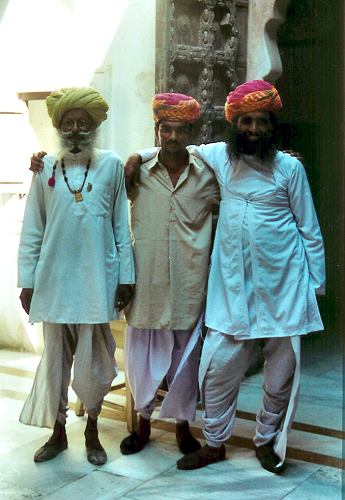

As a kid growing up in the 50's and 60's I don't remember men hugging as much as they do these days. Cheek kissing if they were European but not hugging, which seems pretty common now in the West.
It's always been a nice surprise around Italian people to be physically touched by either gender during a conversation as part of emphasasing a point, usually lightly on the thigh, upper arm or shoulder.
One word for same gender camaraderie is homosocial.
posted by nickyskye at 10:13 PM on March 18, 2007
"One word for same gender camaraderie is homosocial."
And this whole time I thought it meant a gay get-together ;)
Does "bonhomie" imply male homosociality?
I sometimes wonder if just the mere awareness of gays or the possibility of encountering a gay man in American society ruined it for us affectionate heteros. Like if I stand too close to someone when speaking to them, or try to be friendly with a touch to the shoulder or something, that could be interpreted as possibly gay, because it is known that there are gays around ... you know ... out there.
Maybe if homosexuals had stayed very underground and the knowledge of their existence was not widespread, there would be almost no possibility of a gesture being interpreted as gay or as a homoerotic advance.
That's just a thought, though. I much prefer a society where homosexuality is widely accepted and not feared or hated.
I also wonder how the acceptance of affectionate gestures among females fits into this. How do they get away with it? Are gay men really that disgusting? Does the fact that baby girls are breastfed by a woman make it acceptable? Is it that only women are allowed to be affectionate towards men (that men are only allowed to receive affection from women)?
posted by redteam at 2:30 AM on March 19, 2007
And this whole time I thought it meant a gay get-together ;)
Does "bonhomie" imply male homosociality?
I sometimes wonder if just the mere awareness of gays or the possibility of encountering a gay man in American society ruined it for us affectionate heteros. Like if I stand too close to someone when speaking to them, or try to be friendly with a touch to the shoulder or something, that could be interpreted as possibly gay, because it is known that there are gays around ... you know ... out there.
Maybe if homosexuals had stayed very underground and the knowledge of their existence was not widespread, there would be almost no possibility of a gesture being interpreted as gay or as a homoerotic advance.
That's just a thought, though. I much prefer a society where homosexuality is widely accepted and not feared or hated.
I also wonder how the acceptance of affectionate gestures among females fits into this. How do they get away with it? Are gay men really that disgusting? Does the fact that baby girls are breastfed by a woman make it acceptable? Is it that only women are allowed to be affectionate towards men (that men are only allowed to receive affection from women)?
posted by redteam at 2:30 AM on March 19, 2007
redteam, I think you'll have to take into account the fact that women is not just a sex, it's a gender.
I think your point about "women are allowed to be more affectionate", nay, expected to be more emotional/sensitive does address the issue.
This is what I was thinking about when I was saying that 'womanliness' has always been looked down upon—that is to say, you can define womanly in different ways, but I can't think of a single culture where the 'fairer sensations' were celebrated in men. The Victorian-ish gender role of the heart going pitter-patter, swooning, cravings, &c. being ok with women but not with men sort of has parallels everywhere. Men are resilient, tame their women and march off to war. Women are gentle, childrearing, affectionate, and decorate the house. There is an 'alpha' female just like there's an 'alpha' male, but the power they weild is usually thought of in different ways (knights vs. courtesans.)
I'm not sure how to explain why "Adam and Steve" is more threatening to anti-gay types than "Janice and Eve". I guess within a patriarchical sort of construct, men doing something is seen as more affirmative? I don't know. I don't think it's coz men's bodies are always seen as disgusting; eg. the Greeks were fine with making big sculptures of it and fetishing its shapes and curves.
I'm not really up on my "complete cross-cultural history of sexuality and gender-role perception", but it's a meaty sort of subject. And with every norm (eg. promiscous men are studs, promiscous women are whores) you end up with a sort of chicken-and-egg problem with what's tracable to our primate brain's social tendencies, what's a totally artificial construct, and what has actual ongoing biological reasons.
posted by Firas at 4:03 PM on March 19, 2007
I think your point about "women are allowed to be more affectionate", nay, expected to be more emotional/sensitive does address the issue.
This is what I was thinking about when I was saying that 'womanliness' has always been looked down upon—that is to say, you can define womanly in different ways, but I can't think of a single culture where the 'fairer sensations' were celebrated in men. The Victorian-ish gender role of the heart going pitter-patter, swooning, cravings, &c. being ok with women but not with men sort of has parallels everywhere. Men are resilient, tame their women and march off to war. Women are gentle, childrearing, affectionate, and decorate the house. There is an 'alpha' female just like there's an 'alpha' male, but the power they weild is usually thought of in different ways (knights vs. courtesans.)
I'm not sure how to explain why "Adam and Steve" is more threatening to anti-gay types than "Janice and Eve". I guess within a patriarchical sort of construct, men doing something is seen as more affirmative? I don't know. I don't think it's coz men's bodies are always seen as disgusting; eg. the Greeks were fine with making big sculptures of it and fetishing its shapes and curves.
I'm not really up on my "complete cross-cultural history of sexuality and gender-role perception", but it's a meaty sort of subject. And with every norm (eg. promiscous men are studs, promiscous women are whores) you end up with a sort of chicken-and-egg problem with what's tracable to our primate brain's social tendencies, what's a totally artificial construct, and what has actual ongoing biological reasons.
posted by Firas at 4:03 PM on March 19, 2007
I don't think an 'answer' is even possible when it comes to this macro-psychology/sociology stuff. Who the hell knows? There's so many "well, but"s and "although consider"s and so on, just with defining what is, nevermind working backwards and trying to decide what caused it.
posted by Firas at 4:28 PM on March 19, 2007
posted by Firas at 4:28 PM on March 19, 2007
jonmc - sorry to be responding so late. I did not mean to imply that bear hugs and backslaps indicate homophobes, nor that one had to hold your male friend's hands. Just think there is a qualitative difference between the two types of touching that is relevant and interesting. And I believe that was the point of the post.
posted by django_z at 1:35 AM on March 20, 2007
posted by django_z at 1:35 AM on March 20, 2007
redteam : "I also wonder how the acceptance of affectionate gestures among females fits into this. How do they get away with it? Are gay men really that disgusting? Does the fact that baby girls are breastfed by a woman make it acceptable? Is it that only women are allowed to be affectionate towards men (that men are only allowed to receive affection from women)?"
I think it's just a belief that women are naturally affectionate and touchy-feely, and that men aren't. Thus, a woman touching a friend is not a sign of homosexuality, just a sign that the woman is a regular woman. A man being touchy-feely is seen as a man being "girly", and thus homosexual.
posted by Bugbread at 8:55 AM on March 20, 2007
I think it's just a belief that women are naturally affectionate and touchy-feely, and that men aren't. Thus, a woman touching a friend is not a sign of homosexuality, just a sign that the woman is a regular woman. A man being touchy-feely is seen as a man being "girly", and thus homosexual.
posted by Bugbread at 8:55 AM on March 20, 2007
« Older Sláinte! As you slide down the banisters of... | Urgent pet food recall, deaths Newer »
This thread has been archived and is closed to new comments
posted by jouke at 3:50 PM on March 17, 2007 [1 favorite]