A Personal Journey with Martin Scorsese Through American Movies
September 24, 2009 9:16 AM Subscribe
"I can only talk about what has moved me or intrigued me," says filmmaker Martin Scorsese at the beginning of this four-hour documentary about his passion for U.S. cinema. "I can't really be objective here." Hallelujah! A Personal Journey with Martin Scorsese Through American Movies is the perfect antidote to the forced and artificial doctrine of the American Film Institute's so-called 100 best films. The AFI's English cousin, the British Film Institute, did a brilliant thing in enlisting Scorsese--probably the most famous student of cinema in the U.S.--to open up and speak at length for this project about the history of artistic survival among Hollywood directors. Scorsese takes a highly intuitive and heartfelt approach in describing how a number of filmmakers--some famous and some forgotten--carefully layered their visions into their work, often against the great resistance or eccentric whims of powerful producers. Film clips are plentiful, but they are also more than window dressing for nostalgia buffs." Part 1 1::
2::
3::
4::
5::
6::
7::
8
Part 2 1::
2::
3::
4::
5::
6::
7::
8
Part 3 1::
2::
3::
4::
5::
6::
7::
8
And as a bonus, Scorsese's overview of Italian cinema in another 4 hour documentary, My Voyage To Italy.
1::2::3::4::5::6::7::8::9::10::11::12::13::14::15::16::17::18::19::20::21::22::23::24::25
"This survey of Italian cinema by Martin Scorsese is a worthwhile follow-up to his 1995 documentary A Personal Journey Through American Movies. Packed with insight and film clips, Voyage covers Italian cinema from World War II through the early '60s, the time that the young Scorsese watched these films before starting his career. The heart of the documentary is the Neo-Realism movement--not the lightest of genres, but Scorsese's passion helps considerably. He introduces us to his family and Sicilian ancestors via photos and home movies allowing us to understand how powerfully these films affected him and his family. He talks about how he saw the films, often through inferior prints on television, and calls out details to observe. The filmmaker spends upwards of 15 minutes on a single film, with the bulk of the history centering on five powerhouse directors: Roberto Rossellini (Open City), Vittorio De Sica (The Bicycle Thief), Luchino Visconti (Senso), Federico Fellini (8-1/2), and Michelangelo Antonioni(L'Avventura).
Scorsese's four-hour-plus survey should come with a college credit for film history. He examines the major films but also spends time on films that may be hard to find on home video (at least at this time): Rossellini's six-part Paisan, a heart-breaking look at the last days of the war; De Sica's episodic The Gold of Naples; Fellini's atypical I Vitelloni, which was a major influence on Scorsese's own Mean Streets; Antonioni's Eclipse with its radical ending; and Rossellini's Voyage to Italy, an examination of a marriage that failed worldwide as a film but was a touchstone for the French New Wave movement. The final results are not as accessible as Personal Journey but, at worst, a viewer will have working knowledge of more than 20 Italian films (and be able to cheat their way through a discussion). At best, these are four hours that will end too soon and leave you hungry to view these films that have fueled Scorsese's cinematic vision." --Doug Thomas
And as a bonus, Scorsese's overview of Italian cinema in another 4 hour documentary, My Voyage To Italy.
1::2::3::4::5::6::7::8::9::10::11::12::13::14::15::16::17::18::19::20::21::22::23::24::25
"This survey of Italian cinema by Martin Scorsese is a worthwhile follow-up to his 1995 documentary A Personal Journey Through American Movies. Packed with insight and film clips, Voyage covers Italian cinema from World War II through the early '60s, the time that the young Scorsese watched these films before starting his career. The heart of the documentary is the Neo-Realism movement--not the lightest of genres, but Scorsese's passion helps considerably. He introduces us to his family and Sicilian ancestors via photos and home movies allowing us to understand how powerfully these films affected him and his family. He talks about how he saw the films, often through inferior prints on television, and calls out details to observe. The filmmaker spends upwards of 15 minutes on a single film, with the bulk of the history centering on five powerhouse directors: Roberto Rossellini (Open City), Vittorio De Sica (The Bicycle Thief), Luchino Visconti (Senso), Federico Fellini (8-1/2), and Michelangelo Antonioni(L'Avventura).
Scorsese's four-hour-plus survey should come with a college credit for film history. He examines the major films but also spends time on films that may be hard to find on home video (at least at this time): Rossellini's six-part Paisan, a heart-breaking look at the last days of the war; De Sica's episodic The Gold of Naples; Fellini's atypical I Vitelloni, which was a major influence on Scorsese's own Mean Streets; Antonioni's Eclipse with its radical ending; and Rossellini's Voyage to Italy, an examination of a marriage that failed worldwide as a film but was a touchstone for the French New Wave movement. The final results are not as accessible as Personal Journey but, at worst, a viewer will have working knowledge of more than 20 Italian films (and be able to cheat their way through a discussion). At best, these are four hours that will end too soon and leave you hungry to view these films that have fueled Scorsese's cinematic vision." --Doug Thomas
Thank God if figured out how to get my XBox to play YouTube so I don't have to watch this on my PC. And thanks vronsky -- really excited to watch this at home sometime soon.
(And I say this is someone who also totally enjoys the AFI's cheesy 100 best specials as well.)
posted by MCMikeNamara at 9:35 AM on September 24, 2009
(And I say this is someone who also totally enjoys the AFI's cheesy 100 best specials as well.)
posted by MCMikeNamara at 9:35 AM on September 24, 2009
You're breaking my balls.
posted by porn in the woods at 9:43 AM on September 24, 2009
posted by porn in the woods at 9:43 AM on September 24, 2009
My brother had the "Personal Journey" documentary on laserdisc and I remember watching it years ago. It is wonderful, I'm really glad this is available online now. You can go through that thing and compile a wonderful list of movies to watch. A lot of things you won't find on more highbrow "must see" lists.
posted by marxchivist at 9:43 AM on September 24, 2009
posted by marxchivist at 9:43 AM on September 24, 2009
He makes the best films! He makes the best films! If I ever meet him, I'm gonna grab his neck and just shake him and say, "Thank you! Thank you for making such excellent movies!" Then I'd twist his nose all the way around and rip off one of his ears and throw it, like a, like a, like a Frisbee! I wanna chew his lips off and grab his head and suck out one of his eyes and chew on it and spit it out in his face, and say "Thank you! Thank you! Thank you for all of your films!" Then I'd pick him up by the hair, swing him over my head a few times, and throw him across the room, and kick all his teeth in, and then stomp on his face forty or fifty times, 'cause he makes the best films! He makes the best films I've ever seen in my life! I love him! I love him!
posted by mr_crash_davis mark II: Jazz Odyssey at 9:43 AM on September 24, 2009 [5 favorites]
posted by mr_crash_davis mark II: Jazz Odyssey at 9:43 AM on September 24, 2009 [5 favorites]
Martin Scorcese, and I don't know how common this knowledge is, directed the music video for Michael Jackson's Bad. If there must be a Jackson biopic (and you know that there will be), I hope that Scorcese will be the one to direct it. He's a fantastic director, he's shown that he can effectively manage biopics, and he had working experience with Jackson.
Also, filming the story of a tiny, effeminate white dude will give him another opportunity to work with Leonardo DiCaprio, which he seems to enjoy.
posted by Parasite Unseen at 9:47 AM on September 24, 2009 [2 favorites]
Also, filming the story of a tiny, effeminate white dude will give him another opportunity to work with Leonardo DiCaprio, which he seems to enjoy.
posted by Parasite Unseen at 9:47 AM on September 24, 2009 [2 favorites]
Let me understand this humannaire, cause, ya know maybe it's me, I'm a little fucked up maybe, but I'm funny how? I mean funny like I'm a clown, I amuse you? I make you laugh, I'm here to fuckin' amuse you? What do you mean funny, funny how? How am I funny?
posted by vronsky at 9:57 AM on September 24, 2009 [5 favorites]
posted by vronsky at 9:57 AM on September 24, 2009 [5 favorites]
Use this greasemonkey script to download the mp4 version, which you can then maybe stitch together with some fancy script, or just make a playlist in vlc or w/e.
posted by CharlesV42 at 10:01 AM on September 24, 2009
posted by CharlesV42 at 10:01 AM on September 24, 2009
edit: that'll get you the flv. for the mp4, try this one.
posted by CharlesV42 at 10:03 AM on September 24, 2009
posted by CharlesV42 at 10:03 AM on September 24, 2009
If someone could direct me to some form of this movie that had been made somehow available by some kind of, I don't know, distributed or peer to peer file sharing system then, you know, that might not be too bad.
posted by Jofus at 10:30 AM on September 24, 2009
posted by Jofus at 10:30 AM on September 24, 2009
Oh god this is so good.
posted by Potomac Avenue at 10:46 AM on September 24, 2009
posted by Potomac Avenue at 10:46 AM on September 24, 2009
You too good for this movie? It's a good movie. You know vronsky, you make me laugh. You see, I watch movies all over this neighborhood, left and right streamed from everybody, I never buy a DVD. So, I can't stream no movies from nobody no more, right? So who would that leave me to stream movies from but you? I stream from you, because you're the only jerk-off around here who I can stream from without payin' for a DVD, right? You know, 'cause that's what you are, that's what I think of you: a jerk-off. You're a fucking jerk-off! You're laughing 'cause you're a jerk-off. I'll tell 'ya something else, TCM's Scorsese on Scorsese is also excellent: 1:: 2:: 3:: 4:: 5:: 6:: 7:: 8:: 9::
posted by carsonb at 11:05 AM on September 24, 2009 [3 favorites]
posted by carsonb at 11:05 AM on September 24, 2009 [3 favorites]
Oh yeahs carsonb? Where do you get the stones to disrespect me like this? I'll sees your Scorsese on Scorsese and do you'se one better by linking dis here documentary -- American Boy: A Profile of Steven Prince.
(a 1978 documentary directed by Martin Scorsese. Its subject is Scorsese's friend Steven Prince, best known for his small role as Easy Andy, the gun salesman in Taxi Driver. Prince is a raconteur telling wild stories about his life as an ex-drug addict and a road manager for Neil Diamond. Scorsese intersperses home movies of Prince as a child as he talks about his family. When talking of his years as a heroin addict, Prince tells a story about injecting adrenaline into the heart of a woman who overdosed, with the help of a medical dictionary and a Magic Marker.)
posted by vronsky at 11:44 AM on September 24, 2009 [1 favorite]
(a 1978 documentary directed by Martin Scorsese. Its subject is Scorsese's friend Steven Prince, best known for his small role as Easy Andy, the gun salesman in Taxi Driver. Prince is a raconteur telling wild stories about his life as an ex-drug addict and a road manager for Neil Diamond. Scorsese intersperses home movies of Prince as a child as he talks about his family. When talking of his years as a heroin addict, Prince tells a story about injecting adrenaline into the heart of a woman who overdosed, with the help of a medical dictionary and a Magic Marker.)
posted by vronsky at 11:44 AM on September 24, 2009 [1 favorite]
I've always loved Scorsese, but lately, I've been loving him even more.
posted by scody at 11:50 AM on September 24, 2009
posted by scody at 11:50 AM on September 24, 2009
I love Marrty as much as the next film geek but does anyone agree, that, well, he's got somehow neutered over the past decade? His work has been watered down? I'm not refering to the violence or anything, just the style and passion, the taking risks that shone through even with the likes of 'Kundun'?
Maybe it's just me. Regardless the two documentaries above are amongst the best I've seen on film ever - insightful, knowledgeable, brimming with passion.
posted by Mintyblonde at 12:18 PM on September 24, 2009
Maybe it's just me. Regardless the two documentaries above are amongst the best I've seen on film ever - insightful, knowledgeable, brimming with passion.
posted by Mintyblonde at 12:18 PM on September 24, 2009
Mintyblonde: I love Marrty as much as the next film geek but does anyone agree, that, well, he's got somehow neutered over the past decade?
I was going to protest by citing the much-underappreciated Bringing Out the Dead but I see that it is now a decade old.
posted by shakespeherian at 12:32 PM on September 24, 2009
I was going to protest by citing the much-underappreciated Bringing Out the Dead but I see that it is now a decade old.
posted by shakespeherian at 12:32 PM on September 24, 2009
Thoughts so far: I need to watch more musicals.
posted by Potomac Avenue at 1:21 PM on September 24, 2009
posted by Potomac Avenue at 1:21 PM on September 24, 2009
Fantastic post, vronsky. You've been on point—even more than usual—as of late. Thanks for sharing such great stuff!
posted by defenestration at 1:51 PM on September 24, 2009
posted by defenestration at 1:51 PM on September 24, 2009
I love Marrty as much as the next film geek but does anyone agree, that, well, he's got somehow neutered over the past decade? His work has been watered down? I'm not refering to the violence or anything, just the style and passion, the taking risks that shone through even with the likes of 'Kundun'?
I blame Leo.
posted by Sys Rq at 2:45 PM on September 24, 2009
I blame Leo.
posted by Sys Rq at 2:45 PM on September 24, 2009
You know, how you tell a story.
posted by flapjax at midnite at 4:08 PM on September 24, 2009
posted by flapjax at midnite at 4:08 PM on September 24, 2009
I thought The Aviator was a heck of a lot better than Gangs of New York, eeesh.
posted by stinkycheese at 4:46 PM on September 24, 2009
posted by stinkycheese at 4:46 PM on September 24, 2009
"does anyone agree, that, well, he's got somehow neutered over the past decade? His work has been watered down?"
Oh I don't think neutered is even a strong enough word for it Mintyblonde. More like brain dead. Artistically spent. He deserves his reputation as a master for a handful of his early films without question, and these documentaries are truly excellent, but his recent output had done nothing but harm his reputation. But judging from the last twenty years American cinema seems to be an exhausted art form in general. When you consider the great masterpieces, and truly amazing acting, that came out of Hollywood from its beginning up through the seventies it is a bit mind boggling that all we are left with is George Clooney and Brad Pitt as our stars and dimwits like Tarantino as our auteurs.
Check out the eye patches! in clips 1-5, 2-7, and 3-2.
also I love that scene with Richard Boone and Randolph Scott in 1-4. Boone was one of the greatest bad guys ever.
two commercials Scorsese directed for Armani in the 80s - Emporio Armani, perfume.
Thanks defenestration :)
posted by vronsky at 5:52 PM on September 24, 2009
Oh I don't think neutered is even a strong enough word for it Mintyblonde. More like brain dead. Artistically spent. He deserves his reputation as a master for a handful of his early films without question, and these documentaries are truly excellent, but his recent output had done nothing but harm his reputation. But judging from the last twenty years American cinema seems to be an exhausted art form in general. When you consider the great masterpieces, and truly amazing acting, that came out of Hollywood from its beginning up through the seventies it is a bit mind boggling that all we are left with is George Clooney and Brad Pitt as our stars and dimwits like Tarantino as our auteurs.
Check out the eye patches! in clips 1-5, 2-7, and 3-2.
also I love that scene with Richard Boone and Randolph Scott in 1-4. Boone was one of the greatest bad guys ever.
two commercials Scorsese directed for Armani in the 80s - Emporio Armani, perfume.
Thanks defenestration :)
posted by vronsky at 5:52 PM on September 24, 2009
Check out the eye patches!
I noticed that too: three directors (Fritz Lang, Nicholas Ray, and I forget the other one) are wearing them during their interviews. At first I thought it was due to staring into cameras al those years, but upon googling found that it might just be coincidence. Anyone have another take (pun intended) on this?
posted by HP LaserJet P10006 at 6:43 PM on September 24, 2009
I noticed that too: three directors (Fritz Lang, Nicholas Ray, and I forget the other one) are wearing them during their interviews. At first I thought it was due to staring into cameras al those years, but upon googling found that it might just be coincidence. Anyone have another take (pun intended) on this?
posted by HP LaserJet P10006 at 6:43 PM on September 24, 2009
John Ford.
I just read a website last month that listed 5 great directors with eye patches but can't find it now.
posted by vronsky at 7:06 PM on September 24, 2009
I just read a website last month that listed 5 great directors with eye patches but can't find it now.
posted by vronsky at 7:06 PM on September 24, 2009

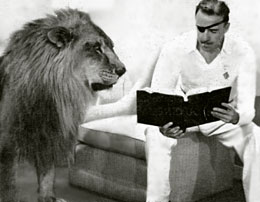
Well one or two would be coincidence, but four or five makes me think directors from those years began wearing them b/c they spent a lot of time on set squinting into the viewfinders of cameras--and the eye patch made this easier. Still a curious little fact, whatever the reason.
posted by HP LaserJet P10006 at 7:22 PM on September 24, 2009
posted by HP LaserJet P10006 at 7:22 PM on September 24, 2009
Probably due to primitive medical care back in the day HP. If you have ever been to a third world country one of the first things you notice is how many blind people, cripples, amputees etc. there are.
great Avedon photo of Ford with patch.
posted by vronsky at 7:38 PM on September 24, 2009
great Avedon photo of Ford with patch.

posted by vronsky at 7:38 PM on September 24, 2009

Eye-patch or not, the John Ford interview in Part 1 Clip 5 is the most beautifully cantankerous thing I've ever seen.
(This is great, vronsky.)
posted by HeroZero at 2:41 AM on September 25, 2009
(This is great, vronsky.)
posted by HeroZero at 2:41 AM on September 25, 2009
HeroZero -- That segment is from Peter Bogdonavich's great documentary Directed by John Ford which I will post in its entirety as soon as someone uploads it to youtube.
posted by vronsky at 8:33 PM on September 25, 2009
posted by vronsky at 8:33 PM on September 25, 2009
« Older Damn, there's too much static. | The Wisdom of Salmon Newer »
This thread has been archived and is closed to new comments
posted by humannaire at 9:19 AM on September 24, 2009 [3 favorites]