Window to Dell Decline
June 29, 2010 4:17 AM Subscribe
Window to Dell Decline: The "Dell Model" became synonymous with efficiency, outsourcing and tight inventories, and was taught at the Harvard Business School and other top-notch management schools as a paragon of business smarts and outthinking the competition. For the last seven years, the company has been plagued by serious problems, including misreading the desires of its customers, poor customer service, suspect product quality and improper accounting. Documents recently unsealed in a three-year-old lawsuit And Reported In The NYTimes show Dell employees went out of their way to conceal serious hardware problems. "They were fixing bad computers with bad computers and were misleading customers at the same time..."
I knew it!
My company has all Dell machines, and decided that to "save money" they would forego our annual lifecycle of out-of-warranty equipment last summer.
As a result, I have a gigantic pile right next to me of garbage that no longer works. Leaking capacitors, random bluescreens, dying hard drives, bum power supplies... These machines are all only two or three years old.
Meanwhile, another department has some HP/Compaq D530 desktops in high-importance areas, which have been there since I started working there 4 years ago, and are running perfectly.
...I no longer tell people to just get a Dell when they ask me what kind of computer they should buy.
posted by Jinkeez at 4:34 AM on June 29, 2010 [7 favorites]
My company has all Dell machines, and decided that to "save money" they would forego our annual lifecycle of out-of-warranty equipment last summer.
As a result, I have a gigantic pile right next to me of garbage that no longer works. Leaking capacitors, random bluescreens, dying hard drives, bum power supplies... These machines are all only two or three years old.
Meanwhile, another department has some HP/Compaq D530 desktops in high-importance areas, which have been there since I started working there 4 years ago, and are running perfectly.
...I no longer tell people to just get a Dell when they ask me what kind of computer they should buy.
posted by Jinkeez at 4:34 AM on June 29, 2010 [7 favorites]
Shut it down and give the money back to the shareholders.
posted by Kinbote at 4:34 AM on June 29, 2010 [35 favorites]
posted by Kinbote at 4:34 AM on June 29, 2010 [35 favorites]
LOL
posted by R. Mutt at 4:36 AM on June 29, 2010 [1 favorite]
posted by R. Mutt at 4:36 AM on June 29, 2010 [1 favorite]
For those of you, like me, surprised by the scale of damage that can be wrought be innocuous-looking electronic components - Wikipedia has some more information on "Capacitor Plague".
posted by rongorongo at 4:39 AM on June 29, 2010 [4 favorites]
posted by rongorongo at 4:39 AM on June 29, 2010 [4 favorites]
Prioritizing Cost Cuts Over Quality Leads To Low Prices, Lower Quality
The only question is, what time should we have the film?
posted by DU at 4:40 AM on June 29, 2010 [8 favorites]
The only question is, what time should we have the film?
posted by DU at 4:40 AM on June 29, 2010 [8 favorites]
I no longer tell people to just get a Dell when they ask me what kind of computer they should buy.
You actually told people to do that? God save us all.
posted by WalterMitty at 4:45 AM on June 29, 2010 [2 favorites]
You actually told people to do that? God save us all.
posted by WalterMitty at 4:45 AM on June 29, 2010 [2 favorites]
Ten years ago Dell, IBM, HP, Compaq, Sun and Apple faced the same challenge. The technology had become a commodity and low cost compeitors were killing their margins. Dell choose to use his companies market share and scale to be the lowest cost provider, effectively killing competitors. IBM chose to exit the business and sold their pc division to Lenovo and focus on services and servers with a strong emphasis on open source. Sun never could figure it out . HP and Compact merged to try to mirror Dell's strategy. Apple released osx and ituness to reshape the digital experience. The focus on design and user interface was the winner. Instead of building the cheapest clone, Apple stayed out of that market and became the premium experience. The escaped the commodity trap. The result is that today while Apple has 12.5% marketshare in PCs, they take in half of the total profit.
I this stems from the mac and PC cultures. The PC culture has always been about copying someone elses thing at a lower cost. Dell was a copy of Compaq which got it's start copying the IBM pc, which itself was just IBMs attempt to use the off the shelf components to copy the Mac and other pc makers (commodore, atari, Tandy, etc).
posted by humanfont at 4:46 AM on June 29, 2010 [23 favorites]
I this stems from the mac and PC cultures. The PC culture has always been about copying someone elses thing at a lower cost. Dell was a copy of Compaq which got it's start copying the IBM pc, which itself was just IBMs attempt to use the off the shelf components to copy the Mac and other pc makers (commodore, atari, Tandy, etc).
posted by humanfont at 4:46 AM on June 29, 2010 [23 favorites]
You actually told people to do that? God save us all.
Up until 2003 or so they were pretty reliable machines and bargain basement prices. If they were getting a desktop who cared about the warranty because you pull the thing apart, replace the part and you're on your way.
Now everyone buys laptops and Dell are dodgy.
I don't even know who to recommend for PC laptops these days. Toshiba if you're willing to pay for a decent quality PC laptop?
posted by Talez at 4:52 AM on June 29, 2010 [2 favorites]
Up until 2003 or so they were pretty reliable machines and bargain basement prices. If they were getting a desktop who cared about the warranty because you pull the thing apart, replace the part and you're on your way.
Now everyone buys laptops and Dell are dodgy.
I don't even know who to recommend for PC laptops these days. Toshiba if you're willing to pay for a decent quality PC laptop?
posted by Talez at 4:52 AM on June 29, 2010 [2 favorites]
My wife recently bought a Dell and not 3 weeks after she got it the speakers just stopped, uh, speaking. Anecdotal, perhaps.
posted by GilloD at 5:01 AM on June 29, 2010
posted by GilloD at 5:01 AM on June 29, 2010
Lenovo makes a pretty solid laptop.
posted by Comrade_robot at 5:18 AM on June 29, 2010 [4 favorites]
posted by Comrade_robot at 5:18 AM on June 29, 2010 [4 favorites]
In Austin, lots of people work for Dell. I've never known anyone who worked there to be anything but miserable in their job, regardless of department, and I'd be hard-pressed to think of any other big corporation whose white-collar employees seem so uniformly beaten down. Terrible company culture goes a long way toward making terrible machines.
posted by freshwater_pr0n at 5:22 AM on June 29, 2010 [5 favorites]
posted by freshwater_pr0n at 5:22 AM on June 29, 2010 [5 favorites]
I recently bought a Sony VAIO laptop with an i3 chip. It was really cheap, but it works just fine.
posted by KokuRyu at 5:23 AM on June 29, 2010 [1 favorite]
posted by KokuRyu at 5:23 AM on June 29, 2010 [1 favorite]
I say we dust off, nuke the site from orbit.
It's the olnly way to be sure.
posted by spirit72 at 5:25 AM on June 29, 2010 [5 favorites]
It's the olnly way to be sure.
posted by spirit72 at 5:25 AM on June 29, 2010 [5 favorites]
Last year when I was uncertain how much longer my company would keep going I interviewed for a position at Dell, a fairly senior software position. I thought it was close to a lock, I had skills uniquely aligned with the position and spent all day meeting the folks all up the management chain and thought it went well.
And I never heard one word back from them. Not even in response to my "Thank you for meeting with me" email. To me this is unheard of, every other time I would get a typical rejection letter. It's just rude to not send some sort of reply. And it's not just me, afterwards I spoke to a friend who had the same experience with them, he's now at Apple.
If that's how they treat people I'm not surprised they're having issues. I don't care that I didn't get the job, frankly I didn't feel like selling my house in this market and moving, though I like Austin. But geesh be professional about it.
posted by beowulf573 at 5:31 AM on June 29, 2010 [3 favorites]
And I never heard one word back from them. Not even in response to my "Thank you for meeting with me" email. To me this is unheard of, every other time I would get a typical rejection letter. It's just rude to not send some sort of reply. And it's not just me, afterwards I spoke to a friend who had the same experience with them, he's now at Apple.
If that's how they treat people I'm not surprised they're having issues. I don't care that I didn't get the job, frankly I didn't feel like selling my house in this market and moving, though I like Austin. But geesh be professional about it.
posted by beowulf573 at 5:31 AM on June 29, 2010 [3 favorites]
> I no longer tell people to just get a Dell when they ask me what kind of computer they should buy.
I always tell people NOT to get a Dell.
posted by thermonuclear.jive.turkey at 5:36 AM on June 29, 2010
I always tell people NOT to get a Dell.
posted by thermonuclear.jive.turkey at 5:36 AM on June 29, 2010
Interesting timing. My 2003 Dell 4550 desktop just died a mysterious death. Hangs at boot-up...but diagnostic lights say all is fine. Up until now it was a fine...if a little slow...machine. And 7 years of service is not bad, I guess. Still pissed though.
posted by punkfloyd at 5:49 AM on June 29, 2010
posted by punkfloyd at 5:49 AM on June 29, 2010
Sorry...meant to add that this post has convinced me not to get another Dell. I was seriously thinking of doing just that today.
posted by punkfloyd at 5:50 AM on June 29, 2010 [1 favorite]
posted by punkfloyd at 5:50 AM on June 29, 2010 [1 favorite]
I just set up my new Dell last night -- even though this isn't entirely news to me. Unless you want to get a Mac, or build your own, or go with one of the neon-lights-liquid-cooling gaming PCs, it's hard to find a reliable place to get a computer. (I ruled out all of those options for lack of money and time, after my iMac went down in flames taking a lot of un-backed-up data with it).
My previous Dell was the only computer I ever had that never gave me any hardware trouble. Which is just anecdotal, but I'll take my chances.
posted by Jeanne at 6:03 AM on June 29, 2010
My previous Dell was the only computer I ever had that never gave me any hardware trouble. Which is just anecdotal, but I'll take my chances.
posted by Jeanne at 6:03 AM on June 29, 2010
I'm typing this on a 9+ year old Dell Inspiron 8200 laptop. When I bought it in 2001 it was a monster - 1.6GHz processor, 512MB (yes!) RAM, 40GB hard disk, and an absolutely stunning 1600x1200 LCD panel driven by a GeForce 4 Go graphics controller.
After some initial teething troubles with a faulty stick of RAM, it's been rock solid since. So I have recommended Dell laptops to a few people.
But Dell has indeed lost the plot now. Having seen the trouble that the last person who bought a Dell laptop on my recommendation has had with it (faulty display panel, two faulty motherboards so far, and still seeing occasional failures to start) and having found out that local technicians who subcontract to Dell for customer service get AU$17.50/hour and don't get paid for travel time, I've stopped doing that.
Dell desktops are quite neatly put together, but the quality of their guts has never been spectacular and they're nonstandard enough (bizarre case metalwork, odd-shaped power supplies) that fixing them is often expensive. I've never enjoyed working on them and have never recommended one.
These days, if I want quick, cheap, pre-configured commodity boxes, I buy Acer (from a reseller I've had nothing but good experiences with). Single machines I put together myself from commodity parts. Comparable Dell boxes no longer cost any less, so why put up with their spotty build quality and frankly dreadful service?
posted by flabdablet at 6:10 AM on June 29, 2010 [4 favorites]
After some initial teething troubles with a faulty stick of RAM, it's been rock solid since. So I have recommended Dell laptops to a few people.
But Dell has indeed lost the plot now. Having seen the trouble that the last person who bought a Dell laptop on my recommendation has had with it (faulty display panel, two faulty motherboards so far, and still seeing occasional failures to start) and having found out that local technicians who subcontract to Dell for customer service get AU$17.50/hour and don't get paid for travel time, I've stopped doing that.
Dell desktops are quite neatly put together, but the quality of their guts has never been spectacular and they're nonstandard enough (bizarre case metalwork, odd-shaped power supplies) that fixing them is often expensive. I've never enjoyed working on them and have never recommended one.
These days, if I want quick, cheap, pre-configured commodity boxes, I buy Acer (from a reseller I've had nothing but good experiences with). Single machines I put together myself from commodity parts. Comparable Dell boxes no longer cost any less, so why put up with their spotty build quality and frankly dreadful service?
posted by flabdablet at 6:10 AM on June 29, 2010 [4 favorites]
I worked at Dell for nearly 10 years. I got the job right out of college when I was in my early 20s and had just moved to Austin. I started in customer care. Decent pay, excellent benefits. Paid vacation and sick time. Back in 2000, Dell was getting top ratings in Consumer Reports for their service. I liked resolving peoples' issues. I was bright, had drive, and knew what management was looking for in terms of performance. I interviewed a lot within the organization and almost never stayed in the same position for more than 6-8 months. I was upwardly mobile.
Aside from the semi-regular layoffs (a culling of the herd really), it was a good work environment (depending on your boss). Most managers understood and promoted work/life balance. Then, while reviewing e-mails back and forth between customers and agents looking for call drivers, I noticed that I kept seeing the same odd phrase being repeated: "Please do the needful..." That was when we first started outsourcing low-level services (order cancellation/modification, catalog signup/removal, etc) to India. That's not to say that agents (and management) in India are not as capable of resolving a customer's issue as an American agent, but it does mark (for me) the point where there was a significant shift in focus from customer satisfaction to cost management. I sat in on a meeting where it was decided not to publish a particular number for a department responsible for resolving a specific billing issue, because, you know, people might actually pick up the phone and call them, and we lose $2.47 or whatever on every call to that department.
I was tasked with helping design policies and procedures for a service offering that was highly promoted by our marketing department that, when actually used by the customer, was not profitable. co$t of using service > $elling price of service.
I eventually went to India several times to start up call centers there, train the agents, help front-line managers oversee their teams, and act as a jack-of-all trades when it came to how the business was run. I helped in the transition of lots of back-end processes from the US to India (Dude, you're getting outsourced). Because I had worked in so many departments, I had a lot of contacts; if I didn't know how to take care of an internal customer's request, I knew who could. I took pride in my work, and I felt valuable. Again, this was mostly due to who my managers were at the time. They were fucking awesome, and worked with me a lot to develop my professional persona that I enact when I'm on the clock.
As time went on, and more and more layoffs occurred, things became a little more stressful. There were less people to do the work that needed to be done. You'd send an e-mail to employee X in department Y to handle an issue, the way you've done so for the past four months, only to have it suddenly bounce back one day because they'd been laid off the previous evening. You can understand that, but people would be laid off, people in charge of processes and procedures critical to the operations of their department and nobody would have a clue as to how they did their job. For a lot of internal jobs there, the processes were cultural. There was no play book, so to speak.
During all of this, our customers were revolting against "having to speak to a damn foreigner". If customers aren't willing to troubleshoot with someone because they have a slight accent, then they're just going to have to live with a broken computer. Unfortunately, they're going to misdirect their satisfaction when it comes time to fill out that e-mailed survey. This means the company's reputation starts taking a deeper dive. Customers now have a self-fulfilling prophecy of poor support from Dell. Plus, shit, 90% of customer calls are Windows/software issues, not hardware failures.
After narrowly missing several layoffs, I wiggled myself into my dream job: I had work that was necessary to the function of the department. The department was necessary to the function of the company. I could work from home. My boss did not micro-manage. My coworkers were cool and available via e-mail or chat when I needed them. I was on a global team.
When I got an e-mail from my boss's boss asking me to write a manual on how to do my job, I saw the writing on the wall. The end was near, but I went into ostrich mode and ignored the looming threat. After all, I had avoided being laid off for nine years. I'm invincible, and the company will fall apart without me. So when I had that uncomfortable conversation with my boss and the HR rep in the little room with the stack of laptops in the corner and the bag of badges, it came as a bit more of a surprise than it should have.
I knew it was a good thing for me. I always talked about going back to school or looking for another career path, but I knew if someone didn't kick me in the ass I'd never do it myself (I have a big aversion to change). I was paid well at Dell, so the loss of income is still sorely missed, but my life is together and We Have A Plan on what to do now, and I see the light at the end of the tunnel.
But when I left, I mean, when the company chose to pursue an involuntary separation with me nobody I talked to liked their job. Everyone felt trapped. Too much work and not enough people to do it. Do more with less. Constant re-orgs, shifting managers and departments around, until someone in upper management would get sniped by a head hunter from another Fortune 500 company, and their replacement would again shift managers and departments around. Wash. Rinse. Repeat.
So..........I don't even know what I'm saying. Sorry for making this post more about me than the decline of Dell. It was once a great company, with an awesome corporate culture, and kick ass service philosophies.
posted by spikeleemajortomdickandharryconnickjrmints at 6:13 AM on June 29, 2010 [290 favorites]
Aside from the semi-regular layoffs (a culling of the herd really), it was a good work environment (depending on your boss). Most managers understood and promoted work/life balance. Then, while reviewing e-mails back and forth between customers and agents looking for call drivers, I noticed that I kept seeing the same odd phrase being repeated: "Please do the needful..." That was when we first started outsourcing low-level services (order cancellation/modification, catalog signup/removal, etc) to India. That's not to say that agents (and management) in India are not as capable of resolving a customer's issue as an American agent, but it does mark (for me) the point where there was a significant shift in focus from customer satisfaction to cost management. I sat in on a meeting where it was decided not to publish a particular number for a department responsible for resolving a specific billing issue, because, you know, people might actually pick up the phone and call them, and we lose $2.47 or whatever on every call to that department.
I was tasked with helping design policies and procedures for a service offering that was highly promoted by our marketing department that, when actually used by the customer, was not profitable. co$t of using service > $elling price of service.
I eventually went to India several times to start up call centers there, train the agents, help front-line managers oversee their teams, and act as a jack-of-all trades when it came to how the business was run. I helped in the transition of lots of back-end processes from the US to India (Dude, you're getting outsourced). Because I had worked in so many departments, I had a lot of contacts; if I didn't know how to take care of an internal customer's request, I knew who could. I took pride in my work, and I felt valuable. Again, this was mostly due to who my managers were at the time. They were fucking awesome, and worked with me a lot to develop my professional persona that I enact when I'm on the clock.
As time went on, and more and more layoffs occurred, things became a little more stressful. There were less people to do the work that needed to be done. You'd send an e-mail to employee X in department Y to handle an issue, the way you've done so for the past four months, only to have it suddenly bounce back one day because they'd been laid off the previous evening. You can understand that, but people would be laid off, people in charge of processes and procedures critical to the operations of their department and nobody would have a clue as to how they did their job. For a lot of internal jobs there, the processes were cultural. There was no play book, so to speak.
During all of this, our customers were revolting against "having to speak to a damn foreigner". If customers aren't willing to troubleshoot with someone because they have a slight accent, then they're just going to have to live with a broken computer. Unfortunately, they're going to misdirect their satisfaction when it comes time to fill out that e-mailed survey. This means the company's reputation starts taking a deeper dive. Customers now have a self-fulfilling prophecy of poor support from Dell. Plus, shit, 90% of customer calls are Windows/software issues, not hardware failures.
After narrowly missing several layoffs, I wiggled myself into my dream job: I had work that was necessary to the function of the department. The department was necessary to the function of the company. I could work from home. My boss did not micro-manage. My coworkers were cool and available via e-mail or chat when I needed them. I was on a global team.
When I got an e-mail from my boss's boss asking me to write a manual on how to do my job, I saw the writing on the wall. The end was near, but I went into ostrich mode and ignored the looming threat. After all, I had avoided being laid off for nine years. I'm invincible, and the company will fall apart without me. So when I had that uncomfortable conversation with my boss and the HR rep in the little room with the stack of laptops in the corner and the bag of badges, it came as a bit more of a surprise than it should have.
I knew it was a good thing for me. I always talked about going back to school or looking for another career path, but I knew if someone didn't kick me in the ass I'd never do it myself (I have a big aversion to change). I was paid well at Dell, so the loss of income is still sorely missed, but my life is together and We Have A Plan on what to do now, and I see the light at the end of the tunnel.
But when I left, I mean, when the company chose to pursue an involuntary separation with me nobody I talked to liked their job. Everyone felt trapped. Too much work and not enough people to do it. Do more with less. Constant re-orgs, shifting managers and departments around, until someone in upper management would get sniped by a head hunter from another Fortune 500 company, and their replacement would again shift managers and departments around. Wash. Rinse. Repeat.
So..........I don't even know what I'm saying. Sorry for making this post more about me than the decline of Dell. It was once a great company, with an awesome corporate culture, and kick ass service philosophies.
posted by spikeleemajortomdickandharryconnickjrmints at 6:13 AM on June 29, 2010 [290 favorites]
But, to be fair, it's pretty rare to find a Socket 478-vintage computer that doesn't suffer to some extent from capacitor plague. Those bad caps were like a computer industry version of potato blight.
posted by flabdablet at 6:17 AM on June 29, 2010 [10 favorites]
posted by flabdablet at 6:17 AM on June 29, 2010 [10 favorites]
Dell actually once was the go-to manufacturer for people who wanted desktops and didn't want to learn to build their own PCs. What else would we have recommended: Compaq, with the SoftPaq partition? Gateway? The dreadful eMachines, the Yugo of the desktop world? Freakin' Packard Bell?
Their decline has everything to do with the bottom line. Even their support is tied into the bottom line in weird ways. Back when Dell first started trying to control costs, they would source some cheap junk and have different lines of cheap junk in a given model of computer based on the latest price. So you could have a certain model and some of the hardware would still vary in places you did not specify — hence support relentlessly asking for your service tag (which would key to what your PC was actually made with) instead of your model number.
The race to the bottom (line) gives you lousy components and then, ah, leaking capacitors. Yes, that's now part of our standard training for those who have to pop the hood on malfing machines. "See any swollen capacitors drooling out brown gunk?" We have an entire line of one model which seems to die because of this very issue on the motherboard. Over and over.
And, now that a major market leader has gone down the tubes, where do we look? If you aren't building your own PCs and other people's PCs, it's hard just to keep up. My last attempt left me with a machine that, sometimes, won't boot after a powerdown ... until I pop the CMOS battery out and back in. Disconnected everything from the board? Yup. Flashed the BIOS? Yup. Got a new CMOS battery? Yup. Check the voltage on the relevant leads? Yup. Look up the value from my port 80h card? Yup. And I'm left wondering, did I just get a weird board or am I hopelessly behind? That's where the impulse to turn to someone who will put it all together for me comes in, especially when I am considering something odd like a dual proc, four core setup.
The industry is ripe for someone to do this right.
posted by adipocere at 6:21 AM on June 29, 2010 [3 favorites]
Their decline has everything to do with the bottom line. Even their support is tied into the bottom line in weird ways. Back when Dell first started trying to control costs, they would source some cheap junk and have different lines of cheap junk in a given model of computer based on the latest price. So you could have a certain model and some of the hardware would still vary in places you did not specify — hence support relentlessly asking for your service tag (which would key to what your PC was actually made with) instead of your model number.
The race to the bottom (line) gives you lousy components and then, ah, leaking capacitors. Yes, that's now part of our standard training for those who have to pop the hood on malfing machines. "See any swollen capacitors drooling out brown gunk?" We have an entire line of one model which seems to die because of this very issue on the motherboard. Over and over.
And, now that a major market leader has gone down the tubes, where do we look? If you aren't building your own PCs and other people's PCs, it's hard just to keep up. My last attempt left me with a machine that, sometimes, won't boot after a powerdown ... until I pop the CMOS battery out and back in. Disconnected everything from the board? Yup. Flashed the BIOS? Yup. Got a new CMOS battery? Yup. Check the voltage on the relevant leads? Yup. Look up the value from my port 80h card? Yup. And I'm left wondering, did I just get a weird board or am I hopelessly behind? That's where the impulse to turn to someone who will put it all together for me comes in, especially when I am considering something odd like a dual proc, four core setup.
The industry is ripe for someone to do this right.
posted by adipocere at 6:21 AM on June 29, 2010 [3 favorites]
A couple of years ago, the capacitors blew on two of the computers at work. I looked up the problem and found a description of it on Dell's website and determined there was another computer prone to the same problem. I contacted Dell about it and they sent a guy out to replace the motherboards, no fuss.
posted by wobh at 6:23 AM on June 29, 2010
posted by wobh at 6:23 AM on June 29, 2010
Back when Dell first started trying to control costs, they would source some cheap junk and have different lines of cheap junk in a given model of computer based on the latest price.
This. Look at how often the price of a particular configuration changes in a 60 day period. A lot of that has to do with marketing, however, with the cost going up by $30 but now you get free shipping. Or the cost going down $150 but the $200 mail-in-rebate promotion has ended. But a lot has to do with the zero-inventory model, where the price of a particular component will vary from the component's manufacturer or supplier, and thus will affect the price of the computer. It's almost like gasoline price fluctuation.
posted by spikeleemajortomdickandharryconnickjrmints at 6:28 AM on June 29, 2010 [1 favorite]
This. Look at how often the price of a particular configuration changes in a 60 day period. A lot of that has to do with marketing, however, with the cost going up by $30 but now you get free shipping. Or the cost going down $150 but the $200 mail-in-rebate promotion has ended. But a lot has to do with the zero-inventory model, where the price of a particular component will vary from the component's manufacturer or supplier, and thus will affect the price of the computer. It's almost like gasoline price fluctuation.
posted by spikeleemajortomdickandharryconnickjrmints at 6:28 AM on June 29, 2010 [1 favorite]
What kills me is that it's been nearly 10 years since Apple released the Titanium PowerBook G4, and nobody in the PC industry has had any success producing a machine of similar quality, size, and price.
Lenovo's laptops used to be pretty decent, although they were always expensive, and even they've been taking a slide over the past few years.
posted by schmod at 6:33 AM on June 29, 2010
Lenovo's laptops used to be pretty decent, although they were always expensive, and even they've been taking a slide over the past few years.
posted by schmod at 6:33 AM on June 29, 2010
You actually told people to do that? God save us all.
Up until 2003 or so they were pretty reliable machines and bargain basement prices. If they were getting a desktop who cared about the warranty because you pull the thing apart, replace the part and you're on your way.
Now everyone buys laptops and Dell are dodgy.
I don't even know who to recommend for PC laptops these days. Toshiba if you're willing to pay for a decent quality PC laptop?
Hehe, Exactly! I have people asking me what kind of computer they should buy all the time, and it used to be that Dell was a fairly reliable, moderately priced, above-average-quality system that was easy to service or upgrade. Thus, the quickest and easiest way to answer the age-old question was just, "Dell is pretty good, get a Dell."
Nowadays, the answer starts with "Stay away from Dell!"
posted by Jinkeez at 6:51 AM on June 29, 2010
Up until 2003 or so they were pretty reliable machines and bargain basement prices. If they were getting a desktop who cared about the warranty because you pull the thing apart, replace the part and you're on your way.
Now everyone buys laptops and Dell are dodgy.
I don't even know who to recommend for PC laptops these days. Toshiba if you're willing to pay for a decent quality PC laptop?
Hehe, Exactly! I have people asking me what kind of computer they should buy all the time, and it used to be that Dell was a fairly reliable, moderately priced, above-average-quality system that was easy to service or upgrade. Thus, the quickest and easiest way to answer the age-old question was just, "Dell is pretty good, get a Dell."
Nowadays, the answer starts with "Stay away from Dell!"
posted by Jinkeez at 6:51 AM on June 29, 2010
I this stems from the mac and PC cultures. The PC culture has always been about copying someone elses thing at a lower cost.
This would be true if Dell's problem is reliance on commodity hardware. But it isn't. Dell makes all kinds of proprietary tweaks to motherboard layouts, power supplies, etc. that make it impossible for you to just swap out a dell part for something you bought from newegg. The commodity hardware you buy from places like newegg actually holds up very well.
The PC "culture" is it's strength. It means that every market segment can get exactly the computer it wants without getting anything it doesn't want. Mac is all about control. Apple will tell you what machine to buy. And if you aren't happy with what they've told you, it isn't their mistake, you're just not an apple person.
Dell's problems are just that - their problems. HP's don't have this horrendous reputation, nor do the legions of white-box and home brew machines.
What kills me is that it's been nearly 10 years since Apple released the Titanium PowerBook G4, and nobody in the PC industry has had any success producing a machine of similar quality, size, and price.
First of all, a $400 laptop from Tiger Direct will have better performance than any 10 year old laptop from apple, so I'm not sure what you are trying to compare here. And ironically, I have a 12 year old laptop from dell that still works fine.
posted by Pastabagel at 6:52 AM on June 29, 2010 [7 favorites]
This would be true if Dell's problem is reliance on commodity hardware. But it isn't. Dell makes all kinds of proprietary tweaks to motherboard layouts, power supplies, etc. that make it impossible for you to just swap out a dell part for something you bought from newegg. The commodity hardware you buy from places like newegg actually holds up very well.
The PC "culture" is it's strength. It means that every market segment can get exactly the computer it wants without getting anything it doesn't want. Mac is all about control. Apple will tell you what machine to buy. And if you aren't happy with what they've told you, it isn't their mistake, you're just not an apple person.
Dell's problems are just that - their problems. HP's don't have this horrendous reputation, nor do the legions of white-box and home brew machines.
What kills me is that it's been nearly 10 years since Apple released the Titanium PowerBook G4, and nobody in the PC industry has had any success producing a machine of similar quality, size, and price.
First of all, a $400 laptop from Tiger Direct will have better performance than any 10 year old laptop from apple, so I'm not sure what you are trying to compare here. And ironically, I have a 12 year old laptop from dell that still works fine.
posted by Pastabagel at 6:52 AM on June 29, 2010 [7 favorites]
I work in the PC industry, and let me tell you: Almost the entire consumer PC "manufacturing" industry is a scam, especially the American companies. First off, as one might infer from the NY Times article, these companies don't manufacture any of their own parts -- or usually even assemble their own computers. Instead they rely on other companies, usually "budget" Chinese ones to do all the work.
Also, the problem with short-lived and unreliable computers certainly hasn't been limited to Dell in the years 2003 to 2005. Perhaps people noticed the HP/Compaq/nVidia fiasco? Several lines of laptops reliably failed in about two years because of an overheating GPU (graphics processing unit) on the motherboard. And don't even get me started about Gateway. There's a reason they were bought out by Acer. After 2005, Dell also continued to experience problems. The video cards on their extremely pricey XPS series laptops reliably failed within a fairly short period of time, especially when used as intended as gaming computers, and the XPS 1330 could easily go through a motherboard a year if a consumer wanted to keep getting it repaired.
Then there's also the Seagate firmware issue. Seagate is a hard drive manufacturer many PC companies use. An entire line of Seagate's consumer grade hard drives over the course of about a year reliably failed to the point of all data being completely unrecoverable unless taken to a data recovery specialist (to the tune of $1,000+).
Dell's budget gaming computers also reliably have overheating issues.
The list really goes on and on...
It's easy to blame the computer companies, but in a way, they're just responding to consumer demand. People wanted to be able to buy cheap desktops for $300 and laptops for $400. Now they can, and they really get what they pay for.
If I were in the market for a new computer, I'd make my own desktop (or have someone knowledgeable make it) or buy a fairly pricey laptop that I knew had ceramic capacitors, no heat problems, and a reputable manufacturer's solid state hard drive.
posted by GnomeChompsky at 6:57 AM on June 29, 2010 [9 favorites]
Also, the problem with short-lived and unreliable computers certainly hasn't been limited to Dell in the years 2003 to 2005. Perhaps people noticed the HP/Compaq/nVidia fiasco? Several lines of laptops reliably failed in about two years because of an overheating GPU (graphics processing unit) on the motherboard. And don't even get me started about Gateway. There's a reason they were bought out by Acer. After 2005, Dell also continued to experience problems. The video cards on their extremely pricey XPS series laptops reliably failed within a fairly short period of time, especially when used as intended as gaming computers, and the XPS 1330 could easily go through a motherboard a year if a consumer wanted to keep getting it repaired.
Then there's also the Seagate firmware issue. Seagate is a hard drive manufacturer many PC companies use. An entire line of Seagate's consumer grade hard drives over the course of about a year reliably failed to the point of all data being completely unrecoverable unless taken to a data recovery specialist (to the tune of $1,000+).
Dell's budget gaming computers also reliably have overheating issues.
The list really goes on and on...
It's easy to blame the computer companies, but in a way, they're just responding to consumer demand. People wanted to be able to buy cheap desktops for $300 and laptops for $400. Now they can, and they really get what they pay for.
If I were in the market for a new computer, I'd make my own desktop (or have someone knowledgeable make it) or buy a fairly pricey laptop that I knew had ceramic capacitors, no heat problems, and a reputable manufacturer's solid state hard drive.
posted by GnomeChompsky at 6:57 AM on June 29, 2010 [9 favorites]
If they were getting a desktop who cared about the warranty because you pull the thing apart, replace the part and you're on your way.
I always assumed that Dell desktop machines would suffer the same problems with part replacement that I had with every Gateway I ever dealt with in college - you can't actually replace important parts like the mobo, PSU, or graphics card without serious alteration to the case mountings (I liked tin snips, but gardening shears would do in a pinch). Maybe Dell computers shipped with a more universal case than Gateway did?
posted by muddgirl at 6:58 AM on June 29, 2010
I always assumed that Dell desktop machines would suffer the same problems with part replacement that I had with every Gateway I ever dealt with in college - you can't actually replace important parts like the mobo, PSU, or graphics card without serious alteration to the case mountings (I liked tin snips, but gardening shears would do in a pinch). Maybe Dell computers shipped with a more universal case than Gateway did?
posted by muddgirl at 6:58 AM on June 29, 2010
That's where the impulse to turn to someone who will put it all together for me comes in, especially when I am considering something odd like a dual proc, four core setup. [...] The industry is ripe for someone to do this right.
Microcenter is the best widely-available option I've found: you choose all of your parts, they do the actual building and trouble-shooting and hand it over without an OS or with one, if requested. It's great when you don't have the time or energy to deal yourself, and though it's of course not as cheap as doing it at home, it's reasonably affordable. The people that I've interacted with in their build/repair departments (in several cities) have generally been knowledgeable. However, there aren't that many places with Microcenter stores, and I'm somewhat at a loss for what to recommend to family members who just want to walk into a store and walk out with a reliable desktop that they can use for the next 4-6 years without worrying too much.
posted by ubersturm at 7:00 AM on June 29, 2010 [3 favorites]
Microcenter is the best widely-available option I've found: you choose all of your parts, they do the actual building and trouble-shooting and hand it over without an OS or with one, if requested. It's great when you don't have the time or energy to deal yourself, and though it's of course not as cheap as doing it at home, it's reasonably affordable. The people that I've interacted with in their build/repair departments (in several cities) have generally been knowledgeable. However, there aren't that many places with Microcenter stores, and I'm somewhat at a loss for what to recommend to family members who just want to walk into a store and walk out with a reliable desktop that they can use for the next 4-6 years without worrying too much.
posted by ubersturm at 7:00 AM on June 29, 2010 [3 favorites]
the IBM pc, which itself was just IBMs attempt to use the off the shelf components to copy the Mac and other pc makers
I know the reality distortion field is strong and everything but the first PC went on sale in August 1981 and the first Macintosh went on sale in January 1984.
posted by Rhomboid at 7:00 AM on June 29, 2010 [40 favorites]
I know the reality distortion field is strong and everything but the first PC went on sale in August 1981 and the first Macintosh went on sale in January 1984.
posted by Rhomboid at 7:00 AM on June 29, 2010 [40 favorites]
So who is the reliable guy for a standard business desktop with on-site warranty? I've heard that HP isn't much better, and Sony and Toshiba don't make standard business desktops. Is anyone left?
posted by unreason at 7:13 AM on June 29, 2010
posted by unreason at 7:13 AM on June 29, 2010
Several lines of laptops reliably failed in about two years because of an overheating GPU (graphics processing unit) on the motherboard.
Yup, I have this line of models and my HP laptop gets hot enough to cook on. The license, etc, sticks on the bottom melted off, the VGA port on the side gets too hot to touch. Sometimes the keyboard gets too hot to touch. The CD drive melted and stopped working and the wireless card is on the outs. The motherboard, et al, has already been replaced once.
So, American laptops are just no good then. Duly noted. It's a shame that "Buy American" now means" "Buy the worst cheapest shit stuff made in other countries." I'm due for a affordable, functional laptop, what non-American laptop should I buy that will work for more than a year?
posted by fuq at 7:14 AM on June 29, 2010
Yup, I have this line of models and my HP laptop gets hot enough to cook on. The license, etc, sticks on the bottom melted off, the VGA port on the side gets too hot to touch. Sometimes the keyboard gets too hot to touch. The CD drive melted and stopped working and the wireless card is on the outs. The motherboard, et al, has already been replaced once.
So, American laptops are just no good then. Duly noted. It's a shame that "Buy American" now means" "Buy the worst cheapest shit stuff made in other countries." I'm due for a affordable, functional laptop, what non-American laptop should I buy that will work for more than a year?
posted by fuq at 7:14 AM on June 29, 2010
I know the reality distortion field is strong and everything but the first PC went on sale in August 1981 and the first Macintosh went on sale in January 1984.
He means the Apple II, which was made by Mac in 1977, years before they made MAC, i-Pod or iTouch.
posted by bonaldi at 7:24 AM on June 29, 2010 [9 favorites]
He means the Apple II, which was made by Mac in 1977, years before they made MAC, i-Pod or iTouch.
posted by bonaldi at 7:24 AM on June 29, 2010 [9 favorites]
The trouble with racing to the bottom is that you eventually get there.
posted by LastOfHisKind at 7:29 AM on June 29, 2010 [18 favorites]
posted by LastOfHisKind at 7:29 AM on June 29, 2010 [18 favorites]
No, the Apple ][ was made by Apple. The word Macintosh as it relates to computing did not exist prior to 1984.
posted by Rhomboid at 7:29 AM on June 29, 2010 [4 favorites]
posted by Rhomboid at 7:29 AM on June 29, 2010 [4 favorites]
The PC "culture" is it's strength. It means that every market segment can get exactly the computer it wants without getting anything it doesn't want. Mac is all about control. Apple will tell you what machine to buy. And if you aren't happy with what they've told you, it isn't their mistake, you're just not an apple person.
They offer a limited number of models, that basically cover all the price points you can imagine without making it overly complex to choose your computer. Even singular PC manufacturers make it impossible to tell what you're buying and you're almost always making some kind of compromise when you do.
It's not good->better->best for the PC industry (like I said, even within one manufacturer). I think that's crap.
Unless, you mean, you wanted a pink laptop.
posted by Napierzaza at 7:30 AM on June 29, 2010 [1 favorite]
They offer a limited number of models, that basically cover all the price points you can imagine without making it overly complex to choose your computer. Even singular PC manufacturers make it impossible to tell what you're buying and you're almost always making some kind of compromise when you do.
It's not good->better->best for the PC industry (like I said, even within one manufacturer). I think that's crap.
Unless, you mean, you wanted a pink laptop.
posted by Napierzaza at 7:30 AM on June 29, 2010 [1 favorite]
It's easy to blame the computer companies, but in a way, they're just responding to consumer demand. People wanted to be able to buy cheap desktops for $300 and laptops for $400. Now they can, and they really get what they pay for.
That's just bad ethics. People will always take a cheaper computer. It's up to the company to try and work within the costs of making a good product and what people will pay. Apple took the high road and make reliable computers with excellent customer service. That costs more money. The should just plainly not be offering PCs of lower quality.
However, I feel that these companies make bad product, then rely on marketing to make up for their low-reliability and quality. MS doesn't make Vista work, they write a huge check to Jerry Seinfeld to appeal to us.
PC manufacturers try to make things cheap on the front end but a nightmare if you want it to work in the long term without losing data or having it put up for repairs continually. I had a friend who got a pro-sumer laptop and whenever it was being serviced it was measured in months. Apple's service is measured in days.
posted by Napierzaza at 7:36 AM on June 29, 2010 [3 favorites]
That's just bad ethics. People will always take a cheaper computer. It's up to the company to try and work within the costs of making a good product and what people will pay. Apple took the high road and make reliable computers with excellent customer service. That costs more money. The should just plainly not be offering PCs of lower quality.
However, I feel that these companies make bad product, then rely on marketing to make up for their low-reliability and quality. MS doesn't make Vista work, they write a huge check to Jerry Seinfeld to appeal to us.
PC manufacturers try to make things cheap on the front end but a nightmare if you want it to work in the long term without losing data or having it put up for repairs continually. I had a friend who got a pro-sumer laptop and whenever it was being serviced it was measured in months. Apple's service is measured in days.
posted by Napierzaza at 7:36 AM on June 29, 2010 [3 favorites]
Apple stayed out of that market and became the premium experience. The escaped the commodity trap. The result is that today while Apple has 12.5% marketshare in PCs, they take in half of the total profit.
You make a somewhat valid point, but your numbers are wrong. To quote a Macworld article: "According to a Business Insider article, the banking giant has aggregated numbers from the top ten PC makers in the world and determined that, while Apple only commands 7 percent of overall revenues in the PC market, its products account for 35 percent of the operating profits."
I'd also note that if you spend $1,500 to $2,000 on a quality PC, you can get just as premium of an experience as you would with a Mac, depending on what kind of experience you're looking for (e.g. I'd much rather game on a PC, would much rather do music/multimedia editing on a Mac).
In any case, Apple certainly produces a quality product and has developed an elite, well-respected brand. The result? As profit margins show, consumers end up paying way too much for their products. (Anyone notice Apple's huge mark-ups on the latest iPhones?)
posted by GnomeChompsky at 7:36 AM on June 29, 2010 [6 favorites]
You make a somewhat valid point, but your numbers are wrong. To quote a Macworld article: "According to a Business Insider article, the banking giant has aggregated numbers from the top ten PC makers in the world and determined that, while Apple only commands 7 percent of overall revenues in the PC market, its products account for 35 percent of the operating profits."
I'd also note that if you spend $1,500 to $2,000 on a quality PC, you can get just as premium of an experience as you would with a Mac, depending on what kind of experience you're looking for (e.g. I'd much rather game on a PC, would much rather do music/multimedia editing on a Mac).
In any case, Apple certainly produces a quality product and has developed an elite, well-respected brand. The result? As profit margins show, consumers end up paying way too much for their products. (Anyone notice Apple's huge mark-ups on the latest iPhones?)
posted by GnomeChompsky at 7:36 AM on June 29, 2010 [6 favorites]
No, the Apple ][ was made by Apple. The word Macintosh as it relates to computing did not exist prior to 1984.
Er, yes. Nor did they ever make a MAC, an i-Pod or an iTouch. oh, what's the use?
posted by bonaldi at 7:40 AM on June 29, 2010 [4 favorites]
Er, yes. Nor did they ever make a MAC, an i-Pod or an iTouch. oh, what's the use?
posted by bonaldi at 7:40 AM on June 29, 2010 [4 favorites]
First of all, a $400 laptop from Tiger Direct will have better performance than any 10 year old laptop from apple, so I'm not sure what you are trying to compare here.
I think the point is that comparing a mint-condition PowerBook G4 to a brand new Windows laptop, the build quality (not the specs, the actual materials, layout, etc.) of the PowerBook knocks the socks off of the cheap plastic PCs.
I am actually doing a reinstall on a PowerBook G4 right now, after upgrading the hard drive for my neighbor. The system is beat to hell. It's missing 5 (or more) case screws. It's been dropped several times - heck, at one point the back corner of the case was dented enough to make it impossible to get the power cord plugged in until I bent it back into place with pliers.
Despite all that, everything important still works. Everything. All the ports, all the buttons, no problems. The only thing I can't fix is the backlight on the keyboard - that's no major loss, not worth replacing the keyboard to get it going again. The thing is solid. It doesn't creak and bend when you pick it up. The battery doesn't wiggle around in its socket. And Apple has simply gotten better since then. My 2007-era MacBook Pro is built on the same basic body plan as the PowerBook, and it's the first laptop I have EVER owned that doesn't feel like a dated pile of crap once it hits more than a year old. I've never owned a laptop before that didn't start to piss me off in various ways well before the 3 year mark, that didn't start to feel slow and crufty. My wife's new MacBook is even better - the unibody case is a work of genius. There's nothing to break off, crack, bend, etc. - It's slick.
From what I can see, all schmod is saying is that Apple had this figured out 10 years ago, and the PC laptop manufacturers are still making the same poorly-constructed systems they've always made.
posted by caution live frogs at 7:44 AM on June 29, 2010 [5 favorites]
I think the point is that comparing a mint-condition PowerBook G4 to a brand new Windows laptop, the build quality (not the specs, the actual materials, layout, etc.) of the PowerBook knocks the socks off of the cheap plastic PCs.
I am actually doing a reinstall on a PowerBook G4 right now, after upgrading the hard drive for my neighbor. The system is beat to hell. It's missing 5 (or more) case screws. It's been dropped several times - heck, at one point the back corner of the case was dented enough to make it impossible to get the power cord plugged in until I bent it back into place with pliers.
Despite all that, everything important still works. Everything. All the ports, all the buttons, no problems. The only thing I can't fix is the backlight on the keyboard - that's no major loss, not worth replacing the keyboard to get it going again. The thing is solid. It doesn't creak and bend when you pick it up. The battery doesn't wiggle around in its socket. And Apple has simply gotten better since then. My 2007-era MacBook Pro is built on the same basic body plan as the PowerBook, and it's the first laptop I have EVER owned that doesn't feel like a dated pile of crap once it hits more than a year old. I've never owned a laptop before that didn't start to piss me off in various ways well before the 3 year mark, that didn't start to feel slow and crufty. My wife's new MacBook is even better - the unibody case is a work of genius. There's nothing to break off, crack, bend, etc. - It's slick.
From what I can see, all schmod is saying is that Apple had this figured out 10 years ago, and the PC laptop manufacturers are still making the same poorly-constructed systems they've always made.
posted by caution live frogs at 7:44 AM on June 29, 2010 [5 favorites]
Phew! For a second there, I thought this thread wouldn't be another Apple vs. everyone else thread. Thanks for fixing that guys!
posted by fungible at 7:46 AM on June 29, 2010 [6 favorites]
posted by fungible at 7:46 AM on June 29, 2010 [6 favorites]
Dell was a copy of Compaq which got it's start copying the IBM pc, which itself was just IBMs attempt to use the off the shelf components to copy the Mac and other pc makers (commodore, atari, Tandy, etc).
Err, the PC predates the mac.
Dell has been garbage for quite some time. The capacitor plague was the last straw for a lot of people, but I find it disingenuous to use this as a huge indictment against the open culture of the PC platform.
I also disagree that the premium pricing leads to better hardware or experience. Capacitor plague hit the iMac G5 line. The difference between Dell and Apple is that Dell would either send me the part or send someone out, but when I called Apple about a bad board on a G5 I was told it was covered but when I asked when they could come by and fix it, the tech practically laughed in my face. Then I asked if I could just ship it and he laughed again. I had to lug this G5 monster to the closest Apple store and drop it off. That's not service or customer support, that's a garbage policy of a "premium" computer maker pissing on its customers.
Not to mention, bragging about Apple selling 12% of computers but making half the profits is like bragging you just got ripped off. There's no shortage of great PC makers out there right now. HP and Lenovo build Apple quality machines for almost half the price. The PC industry does all the legwork for Apple. They build out new interfaces, standards, etc and Apple just picks and chooses what it likes and shoves them in a pretty box. When Apple picks hardware it almost always picks a loser - PowerPC, Firewire, DisplayPort, one button mouse/trackpad, etc.
posted by damn dirty ape at 7:55 AM on June 29, 2010 [7 favorites]
Err, the PC predates the mac.
Dell has been garbage for quite some time. The capacitor plague was the last straw for a lot of people, but I find it disingenuous to use this as a huge indictment against the open culture of the PC platform.
I also disagree that the premium pricing leads to better hardware or experience. Capacitor plague hit the iMac G5 line. The difference between Dell and Apple is that Dell would either send me the part or send someone out, but when I called Apple about a bad board on a G5 I was told it was covered but when I asked when they could come by and fix it, the tech practically laughed in my face. Then I asked if I could just ship it and he laughed again. I had to lug this G5 monster to the closest Apple store and drop it off. That's not service or customer support, that's a garbage policy of a "premium" computer maker pissing on its customers.
Not to mention, bragging about Apple selling 12% of computers but making half the profits is like bragging you just got ripped off. There's no shortage of great PC makers out there right now. HP and Lenovo build Apple quality machines for almost half the price. The PC industry does all the legwork for Apple. They build out new interfaces, standards, etc and Apple just picks and chooses what it likes and shoves them in a pretty box. When Apple picks hardware it almost always picks a loser - PowerPC, Firewire, DisplayPort, one button mouse/trackpad, etc.
posted by damn dirty ape at 7:55 AM on June 29, 2010 [7 favorites]
That's just bad ethics. People will always take a cheaper computer.
I certainly don't appreciate companies making crap-tastic products, but I have to wonder about your bad ethics comment. Is it bad ethics to produce a product, provide a 1-year warranty, and have the product last 50% to 100% past the warranty period? I mean, if I bought a car with a 5 year warranty and it lasted for 7.5 or 10 years, I'd be satisfied enough if not thrilled (though maybe even thrilled with 10 years depending on how much driving I did).
Also, I'd sadly note that capitalism isn't about ethics. It's about responding to market demand. There is a demand for very cheap computers. People get what they pay for. There is also a demand for reliable computers -- and, again, a market for them is there where people get what they pay for. Frankly, there may have been some unethical (even illegal) marketing in the mid-'00s revolving around computer reliability, but in more recent years I haven't seen any marketing campaigns highlighting the longevity of $300 desktops or $400 laptops.
It seems to me that by now most people in the market for electronics should be aware that there are cheap, unreliable devices, and then there are more expensive, more reliable ones. I mean, seriously, isn't that common sense? It used to make me angry, but then I realized that these companies aren't ripping me off. They're making fairly narrow margins on these cheap electronics, and I know what I'm buying. If I want something better, I just have to be willing to pay for it.
posted by GnomeChompsky at 7:56 AM on June 29, 2010 [2 favorites]
I certainly don't appreciate companies making crap-tastic products, but I have to wonder about your bad ethics comment. Is it bad ethics to produce a product, provide a 1-year warranty, and have the product last 50% to 100% past the warranty period? I mean, if I bought a car with a 5 year warranty and it lasted for 7.5 or 10 years, I'd be satisfied enough if not thrilled (though maybe even thrilled with 10 years depending on how much driving I did).
Also, I'd sadly note that capitalism isn't about ethics. It's about responding to market demand. There is a demand for very cheap computers. People get what they pay for. There is also a demand for reliable computers -- and, again, a market for them is there where people get what they pay for. Frankly, there may have been some unethical (even illegal) marketing in the mid-'00s revolving around computer reliability, but in more recent years I haven't seen any marketing campaigns highlighting the longevity of $300 desktops or $400 laptops.
It seems to me that by now most people in the market for electronics should be aware that there are cheap, unreliable devices, and then there are more expensive, more reliable ones. I mean, seriously, isn't that common sense? It used to make me angry, but then I realized that these companies aren't ripping me off. They're making fairly narrow margins on these cheap electronics, and I know what I'm buying. If I want something better, I just have to be willing to pay for it.
posted by GnomeChompsky at 7:56 AM on June 29, 2010 [2 favorites]
I've know IT guys who would secretly mark malfunctioning laptops and computers before sending them back to Dell for replacement. Dell would swear up and down they were sending them a new one as a replacement. When the IT guy would check the computer they got back, sure enough, there was the secret mark.
posted by eviltwin at 8:02 AM on June 29, 2010 [6 favorites]
posted by eviltwin at 8:02 AM on June 29, 2010 [6 favorites]
The difference between Dell and Apple is that Dell would either send me the part or send someone out, but when I called Apple about a bad board on a G5 I was told it was covered but when I asked when they could come by and fix it, the tech practically laughed in my face. Then I asked if I could just ship it and he laughed again. I had to lug this G5 monster to the closest Apple store and drop it off. That's not service or customer support, that's a garbage policy of a "premium" computer maker pissing on its customers.
This flies in the face of common sense. Apple always does very well in customer satisfaction surveys, and those are very good indicators of quality. For example, President Bush enjoyed huge approval ratings - he was tremendously popular. Noone could possibly argue that he got such tremendous support because he was providing a crap product; that wouldn't make any sense at all.
posted by Pogo_Fuzzybutt at 8:05 AM on June 29, 2010 [3 favorites]
This flies in the face of common sense. Apple always does very well in customer satisfaction surveys, and those are very good indicators of quality. For example, President Bush enjoyed huge approval ratings - he was tremendously popular. Noone could possibly argue that he got such tremendous support because he was providing a crap product; that wouldn't make any sense at all.
posted by Pogo_Fuzzybutt at 8:05 AM on June 29, 2010 [3 favorites]
I've found my Fujitsu laptop to be pretty reliable, other than having to replace a noisy CPU fan several years into its life. It was pretty expensive as compared to other laptops, but the build quality is much better than the two Toshiba bargain laptops that preceded it.
posted by JDHarper at 8:05 AM on June 29, 2010
posted by JDHarper at 8:05 AM on June 29, 2010
During all of this, our customers were revolting against "having to speak to a damn foreigner". If customers aren't willing to troubleshoot with someone because they have a slight accent, then they're just going to have to live with a broken computer. Unfortunately, they're going to misdirect their satisfaction when it comes time to fill out that e-mailed survey.
In my experience, it's rarely about refusing to troubleshoot with someone "because they have a slight accent." They're least-cost call center staffers, not more expensive fluent English speakers; so, the accent is usually heavy, but more important than that is the grammar is often incomprehensible. Yet more important than this is that is they are working from scripts and KB's, not skill and experience, because once they have skills, they have no reason to stay in a lower-paying level 1 call center job. Even more important than this is that they are managed to a standard that makes short call times more important than real resolutions. Worse still, they may be ordered to conceal known issues or be evasive about solutions that are money-losers for the company, in favor of pushing sales that have no great likelihood of solving the problem. This is compounded by email satisfaction surveys that resolutely refuse to recognize satisfaction categories like "I couldn't understand a single sentence he said," or "she wouldn't work with me, really, she just kept pushing me to order a restore DVD."
So, now that you no longer work for Dell, are you still defending this culture out of reflex, the way that people get fired and still find themselves saying that they were "resource actioned," or do you actually think your description is a more accurate one?
posted by tyllwin at 8:10 AM on June 29, 2010 [13 favorites]
In my experience, it's rarely about refusing to troubleshoot with someone "because they have a slight accent." They're least-cost call center staffers, not more expensive fluent English speakers; so, the accent is usually heavy, but more important than that is the grammar is often incomprehensible. Yet more important than this is that is they are working from scripts and KB's, not skill and experience, because once they have skills, they have no reason to stay in a lower-paying level 1 call center job. Even more important than this is that they are managed to a standard that makes short call times more important than real resolutions. Worse still, they may be ordered to conceal known issues or be evasive about solutions that are money-losers for the company, in favor of pushing sales that have no great likelihood of solving the problem. This is compounded by email satisfaction surveys that resolutely refuse to recognize satisfaction categories like "I couldn't understand a single sentence he said," or "she wouldn't work with me, really, she just kept pushing me to order a restore DVD."
So, now that you no longer work for Dell, are you still defending this culture out of reflex, the way that people get fired and still find themselves saying that they were "resource actioned," or do you actually think your description is a more accurate one?
posted by tyllwin at 8:10 AM on June 29, 2010 [13 favorites]
This fact has been obvious to college students whose schools arrange deals with Dell for cheap student laptops, nobody's machine made it more than 2 years without a serious hardware failure.
posted by edbles at 8:15 AM on June 29, 2010 [2 favorites]
posted by edbles at 8:15 AM on June 29, 2010 [2 favorites]
GnomeChompsky, how can you find out if a computer has ceramic caps?
posted by fleetmouse at 8:15 AM on June 29, 2010
posted by fleetmouse at 8:15 AM on June 29, 2010
(Yeah, good point fungible. Sorry about that.)
For years when buying stuff for work (education, research) we bought Dells, primarily because they were fairly easy to work on and because the alternatives (HP, Compaq, Gateway) were usually crappier.
I quickly came to two conclusions: First, that "identical" Dell models ordered at the same time would very often act completely differently, for no real reason, and second that I didn't trust any Dell to work until I had reformatted the hard drive and reinstalled the operating system, leaving out all the proprietary Dell crap they usually tried to shoehorn in.
The last time I actually recommended a Dell system was in 2004, when our lab purchased one to run a data acquisition rig. The hard drive failed on it shortly after we received the system. I asked for a replacement, and they sent one. The replacement lasted about two weeks. From what I could tell, the original drive was just screwed up - it was a Seagate drive, and the disk utilities I had showed that it was reporting itself as a different size than it actually was, there were sectors that didn't exist that it claimed were there, and even a reformat didn't fix it. The replacement was a Quantum, and it was pretty clear from the bad sectors listed on the defrag map that the read head was grinding chunks out of the platter.
The third drive they sent was a Western Digital, because I called them, stayed on the line until I was connected with a person, and told them that they had caused us some major losses of time and data, and explained in no uncertain terms that any drive they sent would be immediately returned for replacement unless it was a WD. (I'd had zero problems with WD drives at that point. I still haven't ever had a problem with one.)
As far as I know that machine is still working, but who knows, my lab might have replaced it by now.
The sad thing is the really old Dells were good machines. My Linux box is a PowerEdge 1300, still going strong. My old lab runs a webserver I set up on a Dell Pentium 133 system, and even that ancient thing runs fine. They had (and still have) good documentation for obsolete systems, their downloads are not nearly as frustrating as HP or IBM or etc., and unlike a lot of companies they made good efforts to keep releasing software and firmware updates for systems well past their warranty expiration dates. That's what sold me on the company in the first place. They threw away all of that good will and good reputation for short-term profit gains. It's a major waste.
posted by caution live frogs at 8:18 AM on June 29, 2010 [1 favorite]
For years when buying stuff for work (education, research) we bought Dells, primarily because they were fairly easy to work on and because the alternatives (HP, Compaq, Gateway) were usually crappier.
I quickly came to two conclusions: First, that "identical" Dell models ordered at the same time would very often act completely differently, for no real reason, and second that I didn't trust any Dell to work until I had reformatted the hard drive and reinstalled the operating system, leaving out all the proprietary Dell crap they usually tried to shoehorn in.
The last time I actually recommended a Dell system was in 2004, when our lab purchased one to run a data acquisition rig. The hard drive failed on it shortly after we received the system. I asked for a replacement, and they sent one. The replacement lasted about two weeks. From what I could tell, the original drive was just screwed up - it was a Seagate drive, and the disk utilities I had showed that it was reporting itself as a different size than it actually was, there were sectors that didn't exist that it claimed were there, and even a reformat didn't fix it. The replacement was a Quantum, and it was pretty clear from the bad sectors listed on the defrag map that the read head was grinding chunks out of the platter.
The third drive they sent was a Western Digital, because I called them, stayed on the line until I was connected with a person, and told them that they had caused us some major losses of time and data, and explained in no uncertain terms that any drive they sent would be immediately returned for replacement unless it was a WD. (I'd had zero problems with WD drives at that point. I still haven't ever had a problem with one.)
As far as I know that machine is still working, but who knows, my lab might have replaced it by now.
The sad thing is the really old Dells were good machines. My Linux box is a PowerEdge 1300, still going strong. My old lab runs a webserver I set up on a Dell Pentium 133 system, and even that ancient thing runs fine. They had (and still have) good documentation for obsolete systems, their downloads are not nearly as frustrating as HP or IBM or etc., and unlike a lot of companies they made good efforts to keep releasing software and firmware updates for systems well past their warranty expiration dates. That's what sold me on the company in the first place. They threw away all of that good will and good reputation for short-term profit gains. It's a major waste.
posted by caution live frogs at 8:18 AM on June 29, 2010 [1 favorite]
Yet more important than this is that is they are working from scripts and KB's, not skill and experience, because once they have skills, they have no reason to stay in a lower-paying level 1 call center job. Even more important than this is that they are managed to a standard that makes short call times more important than real resolutions. Worse still, they may be ordered to conceal known issues or be evasive about solutions that are money-losers for the company, in favor of pushing sales that have no great likelihood of solving the problem.
And the worst part is, due to their scripts and a a desire to keep calls short and a desire to save money on warranty returns, PC call center scripts always ends at the same circle: "This is a software issue", and Microsoft's call center script ends at the opposite circle: "This is a hardware issue."
Now that we've switched to Ubuntu, at least we can be reasonably sure that it's always a software issue...
posted by muddgirl at 8:21 AM on June 29, 2010 [8 favorites]
And the worst part is, due to their scripts and a a desire to keep calls short and a desire to save money on warranty returns, PC call center scripts always ends at the same circle: "This is a software issue", and Microsoft's call center script ends at the opposite circle: "This is a hardware issue."
Now that we've switched to Ubuntu, at least we can be reasonably sure that it's always a software issue...
posted by muddgirl at 8:21 AM on June 29, 2010 [8 favorites]
Napierzaza: "The PC "culture" is it's strength. It means that every market segment can get exactly the computer it wants without getting anything it doesn't want. Mac is all about control. Apple will tell you what machine to buy. And if you aren't happy with what they've told you, it isn't their mistake, you're just not an apple person.
They offer a limited number of models, that basically cover all the price points you can imagine without making it overly complex to choose your computer. Even singular PC manufacturers make it impossible to tell what you're buying and you're almost always making some kind of compromise when you do.
It's not good->better->best for the PC industry (like I said, even within one manufacturer). I think that's crap.
Unless, you mean, you wanted a pink laptop."
Apple doesn't have a standard, reasonably priced desktop that's appropriate for mainstream corporate and small/home office users. The last work desktop I bought (yeah, a Dell, still working fine) cost $300 and could be used with independently sourced dual monitors. The only Apple model that can do that is the Pro, which is a very nice computer but crazily overengineered for someone with my needs. I would've paid a 50% premium, even 100% more to get a better built and supported Apple system, the way many people do with Macbooks. But I won't pay 500% more.
posted by aerotive at 8:26 AM on June 29, 2010 [2 favorites]
Dell PCs were never really for me, but I've sworn by Dell LCDs for years. Except this last one I bought, a 2405FPW, which has pretty bad burn-in problems. The streaks go away after 10-20 minutes, not permanent, but it's still pretty awful. Who makes great LCDs now other than Apple?
posted by Nelson at 8:26 AM on June 29, 2010
posted by Nelson at 8:26 AM on June 29, 2010
I have a running-daily Dell desktop from 1997 that is as slow and heavy and big as a tank, nothing kills it, solid machine.
posted by stbalbach at 8:28 AM on June 29, 2010
posted by stbalbach at 8:28 AM on June 29, 2010
This story reads like a textbook example of what happens when everything in a business gets tied to the bottom line, and there is no minimum level set, below which product quality or customer service is not allowed to fall.
If customers aren't willing to troubleshoot with someone because they have a slight accent, then they're just going to have to live with a broken computer
How dare a customer want to be able to clearly understand a tech when they are trying to troubleshoot an issue over an often crappy connection, amirite?
Plus, shit, 90% of customer calls are Windows/software issues, not hardware failures.
This illustrates an even more vexing problem with PC customer service. See, in consumer's mind, if the computer came with Windows installed, then that's part of the computer. Bluntly, if your product comes with Windows installed, you better damn well be prepared to handle Windows service issues. And any issues involving the other crap you bundle onto your machines before they leave your factory. You put it there...you support it. This isn't to say you couldn't have a direct line to MS, which you can seamlessly pass-off customers to when they call you for help. But, if you know they are going to call you, you really should take a step to make their experience with you as positive as possible.
posted by Thorzdad at 8:28 AM on June 29, 2010 [10 favorites]
If customers aren't willing to troubleshoot with someone because they have a slight accent, then they're just going to have to live with a broken computer
How dare a customer want to be able to clearly understand a tech when they are trying to troubleshoot an issue over an often crappy connection, amirite?
Plus, shit, 90% of customer calls are Windows/software issues, not hardware failures.
This illustrates an even more vexing problem with PC customer service. See, in consumer's mind, if the computer came with Windows installed, then that's part of the computer. Bluntly, if your product comes with Windows installed, you better damn well be prepared to handle Windows service issues. And any issues involving the other crap you bundle onto your machines before they leave your factory. You put it there...you support it. This isn't to say you couldn't have a direct line to MS, which you can seamlessly pass-off customers to when they call you for help. But, if you know they are going to call you, you really should take a step to make their experience with you as positive as possible.
posted by Thorzdad at 8:28 AM on June 29, 2010 [10 favorites]
I didn't trust any Dell to work until I had reformatted the hard drive and reinstalled the operating system, leaving out all the proprietary Dell crap they usually tried to shoehorn in.
I use the (Dell) PC-decrapifier.
I just ordered a few 17" Studios with a quad core i7. The machines were ~30% cheaper than any other i7 laptop I could find. I quickly found out that one was not 100% stable so I changed the processor power management settings to 95% "maximum processor state".
Now it's 100% stable for heavy tasks and I'm very satisfied.
Maybe I have low standards.
posted by Akeem at 8:32 AM on June 29, 2010 [1 favorite]
I use the (Dell) PC-decrapifier.
I just ordered a few 17" Studios with a quad core i7. The machines were ~30% cheaper than any other i7 laptop I could find. I quickly found out that one was not 100% stable so I changed the processor power management settings to 95% "maximum processor state".
Now it's 100% stable for heavy tasks and I'm very satisfied.
Maybe I have low standards.
posted by Akeem at 8:32 AM on June 29, 2010 [1 favorite]
GnomeChompsky: "Also, I'd sadly note that capitalism isn't about ethics. It's about responding to market demand. "
Alright, everyone together now: "Eponysterical." Very good.
posted by l33tpolicywonk at 8:34 AM on June 29, 2010
Alright, everyone together now: "Eponysterical." Very good.
posted by l33tpolicywonk at 8:34 AM on June 29, 2010
Fleetmouse, sadly there's no easy way to know what kind of caps a computer's motherboard has. It's not typically noted in a system's specs that the seller provides. Your best bet is to try using some Google-fu, reading reviews, or searching for an image of the system's motherboard and looking for yourself.
The silver cylinders here are ceramic capacitors, and these are electrostatic capacitors. Note the solid, metallic appearance of the ceramic ones versus the plastic film and the scoring along the top of the electrostatic ones.
posted by GnomeChompsky at 8:36 AM on June 29, 2010 [3 favorites]
The silver cylinders here are ceramic capacitors, and these are electrostatic capacitors. Note the solid, metallic appearance of the ceramic ones versus the plastic film and the scoring along the top of the electrostatic ones.
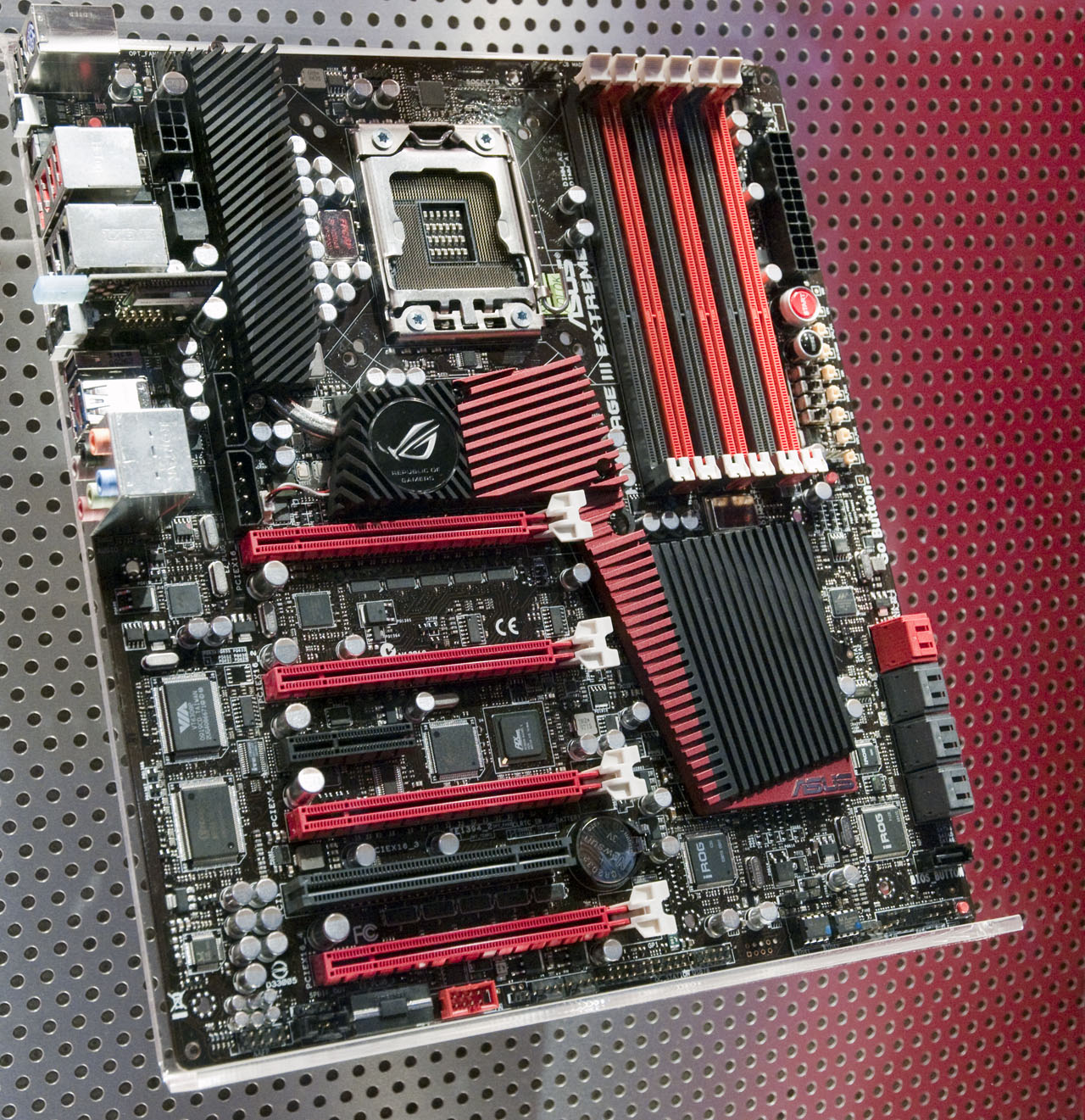
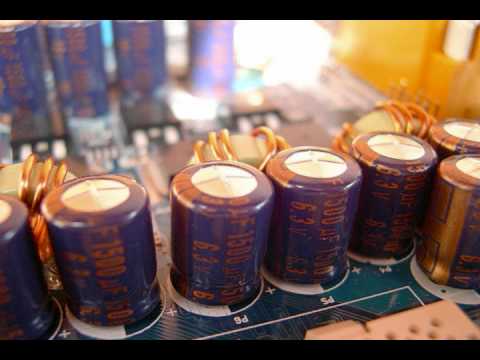
posted by GnomeChompsky at 8:36 AM on June 29, 2010 [3 favorites]
l33tpolicywonk, why is it funny that someone with a takeoff of Noam Chomsky's name would consider is sad that capitalism isn't about ethics? Chomsky is known for his anti-capitalism and is widely considered something of a libertarian socialist.
posted by GnomeChompsky at 8:39 AM on June 29, 2010
posted by GnomeChompsky at 8:39 AM on June 29, 2010
Nthing the old Dell experience. Used to be very good. Crapware irritation. Disenchantment with Dell.
Things is...as bad as they are, they aren't as bad as Compaq or HP (IMHO).
posted by Xoebe at 8:42 AM on June 29, 2010 [1 favorite]
Things is...as bad as they are, they aren't as bad as Compaq or HP (IMHO).
posted by Xoebe at 8:42 AM on June 29, 2010 [1 favorite]
When Apple picks hardware it almost always picks a loser - PowerPC, Firewire, DisplayPort, one button mouse/trackpad, etc.
I recently upgraded to a low end macbook pro and my favorite feature by far is the giant buttonless trackpad. By far my favorite track pad ever. I also wish Apple had stuck with firewire.
Not to interrupt your 3 paragraph rant why apple sucks in a thread about why Dell sucks.
posted by justgary at 8:43 AM on June 29, 2010 [1 favorite]
I recently upgraded to a low end macbook pro and my favorite feature by far is the giant buttonless trackpad. By far my favorite track pad ever. I also wish Apple had stuck with firewire.
Not to interrupt your 3 paragraph rant why apple sucks in a thread about why Dell sucks.
posted by justgary at 8:43 AM on June 29, 2010 [1 favorite]
"See any swollen capacitors drooling out brown gunk?" We have an entire line of one model which seems to die because of this very issue on the motherboard. Over and over.
Dell Optiplex GX270.
Well, I've seen a lot of those with that problem.
posted by krinklyfig at 8:45 AM on June 29, 2010 [2 favorites]
Dell Optiplex GX270.
Well, I've seen a lot of those with that problem.
posted by krinklyfig at 8:45 AM on June 29, 2010 [2 favorites]
I also wish Apple had stuck with firewire.
I priced some iMacs and Macbook Pros just yesterday, and they all have Firewire 800 ... which is exactly what I need, so a Mac is my next music production machine, without a doubt. I'm sick of fighting with it, and the PC side is a moving target in a bad way.
posted by krinklyfig at 8:50 AM on June 29, 2010 [2 favorites]
I priced some iMacs and Macbook Pros just yesterday, and they all have Firewire 800 ... which is exactly what I need, so a Mac is my next music production machine, without a doubt. I'm sick of fighting with it, and the PC side is a moving target in a bad way.
posted by krinklyfig at 8:50 AM on June 29, 2010 [2 favorites]
I got a consumer Dell desktop in 2002, and never had a serious problem with it. It was, in fact, the basis for the computer I'm using right now. I've replaced pretty much every piece of it, of course, except for the original 40 gig hard drive, but it kind of blows my mind that that thing's still operational.
posted by Caduceus at 8:52 AM on June 29, 2010
posted by Caduceus at 8:52 AM on June 29, 2010
Fleetmouse, sadly there's no easy way to know what kind of caps a computer's motherboard has. It's not typically noted in a system's specs that the seller provides. Your best bet is to try using some Google-fu, reading reviews, or searching for an image of the system's motherboard and looking for yourself.
I build my own ... The last couple motherboards I've owned had ceramic caps, and purportedly high quality, but the problems with mass manufacturing are still present. I haven't had a truly solid motherboard in a long time.
posted by krinklyfig at 8:52 AM on June 29, 2010
I build my own ... The last couple motherboards I've owned had ceramic caps, and purportedly high quality, but the problems with mass manufacturing are still present. I haven't had a truly solid motherboard in a long time.
posted by krinklyfig at 8:52 AM on June 29, 2010
My two year old dell desktop doesn't use any proprietary parts. I've built several machines over the years and went with a Dell the last time becuase I couldn't even buy the parts seperately for that price. Not even no-name brands.
But I've seen almost all of the new dell laptops here in the office come and go. Meanwhile my 5+ year old d610 won't die.
posted by Big_B at 8:55 AM on June 29, 2010
But I've seen almost all of the new dell laptops here in the office come and go. Meanwhile my 5+ year old d610 won't die.
posted by Big_B at 8:55 AM on June 29, 2010
In 2005, I had an iMac G5 that was hit with the capacitor problem. Called Apple, and they express-shipped me a replacement midplane (system board) along with great instructions on how to swap everything out.
~45 minutes later I had a working system again. Threw the old midplane in the box that the new one had arrived in, and called DHL who came to my door to pick it up for return.
Dell *used* to be that easy to deal with for us corporate IT types. When I was in my company's Austin office, I'd pick up the phone, call the corporate support number, and be on the phone to someone in Round Rock just down the road. "Hey, i have .. three bad 18G hard drives, from systems X, Y, and Z, part number Q and S." and they'd say "Sorry about that, the replacement drives will be there tomorrow."
Nowdays, I have to go through a script with someone who barely speaks English and waste lots of my time in order to get replacement parts, instead of just telling them "I know what I'm doing, this is broke, send me a new part".
posted by mrbill at 8:57 AM on June 29, 2010 [1 favorite]
~45 minutes later I had a working system again. Threw the old midplane in the box that the new one had arrived in, and called DHL who came to my door to pick it up for return.
Dell *used* to be that easy to deal with for us corporate IT types. When I was in my company's Austin office, I'd pick up the phone, call the corporate support number, and be on the phone to someone in Round Rock just down the road. "Hey, i have .. three bad 18G hard drives, from systems X, Y, and Z, part number Q and S." and they'd say "Sorry about that, the replacement drives will be there tomorrow."
Nowdays, I have to go through a script with someone who barely speaks English and waste lots of my time in order to get replacement parts, instead of just telling them "I know what I'm doing, this is broke, send me a new part".
posted by mrbill at 8:57 AM on June 29, 2010 [1 favorite]
I would tend to agree, krinklyfig, that no matter what you buy, you're not going to find consumer motherboards today that are likely to last 10 (or maybe even 5) years down the road, no matter how high quality you purchase. Part of the problem is indeed mass manufacturing and outsourcing to countries with lower QC. Another part of the problem, though, is simply the load being placed on today's motherboards. It's much greater than that of 7-10 years ago (a era's whose computers are often still functional today).
posted by GnomeChompsky at 8:58 AM on June 29, 2010
posted by GnomeChompsky at 8:58 AM on June 29, 2010
I don't get the giant trackpad love. I like my smallish trackpad and actually wish it was smaller. I have my sensitivity and acceleration turned up so it's less like fingerpainting a mural and more like interacting with a precision pointing device. I also love having two buttons and they both see an equal amount of use so maybe I'll never be happy.
posted by fuq at 9:05 AM on June 29, 2010
posted by fuq at 9:05 AM on June 29, 2010
Does Dell's quality decline extend to displays? I bought a Dell UltraSharp 2209WA 22" monitor a few months ago after doing a lot of research online, and have been really happy with it.
posted by oulipian at 9:07 AM on June 29, 2010
posted by oulipian at 9:07 AM on June 29, 2010
LCDs are a lot harder to screw up than PC motherboards (though still certainly possible). That said, I haven't experienced any problems endemic to Dell LCDs.
posted by GnomeChompsky at 9:11 AM on June 29, 2010
posted by GnomeChompsky at 9:11 AM on June 29, 2010
I priced some iMacs and Macbook Pros just yesterday, and they all have Firewire 800 ... which is exactly what I need, so a Mac is my next music production machine, without a doubt. I'm sick of fighting with it, and the PC side is a moving target in a bad way.
True. I was thinking of firewire support being dropped from the ipod etc.
posted by justgary at 9:16 AM on June 29, 2010
True. I was thinking of firewire support being dropped from the ipod etc.
posted by justgary at 9:16 AM on June 29, 2010
I should say that I've got several Dell's that are doing fine. I've got a pair of PowerEdge SC420 that have been running constantly for years without a problem. And my wife's old Inspiron laptop is still chugging away, we'll probably give it to her parents now that I've replaced it. And my Dell flatpanel is 5+ years old and still looks great.
But it would take a lot of money or a great job to convince me to go work for them now.
posted by beowulf573 at 9:22 AM on June 29, 2010
But it would take a lot of money or a great job to convince me to go work for them now.
posted by beowulf573 at 9:22 AM on June 29, 2010
I have a Dell 24 inch LCD and the fricking power button broke! The plastic tab that flexes when the button is pushed snapped. So now the button rotates freely but will only work when the little '|' in the power symbol is vertical. sometimes I have to waste 30 seconds to a minute trying to spin the power button around so I can turn off my screen.
posted by kuatto at 9:23 AM on June 29, 2010
posted by kuatto at 9:23 AM on June 29, 2010
I worked for Dell for 2 years in sales -- first in home sales then in business -- and maybe later when I have more energy I'll describe it a bit. Suffice to say for now that while the pay was great, I was never more miserable in my life. I was for a while suicidal -- and I'm not exaggerating at all when I say that. Despite getting laid off and not really liking the company, I have remained sort of loyal to the brand. My current laptop is a Dell, and it doesn't give me much in the way of problems, besides the blu-ray drive crapping out (replaced next day) and software problems that I think are more the fault of MS. I think for my next computer, though, I probably will not buy another one.
posted by Saxon Kane at 9:25 AM on June 29, 2010
posted by Saxon Kane at 9:25 AM on June 29, 2010
Dell is kinda fucked. The desktop business where they had competitive advantage is essentially dead and everyone who makes laptops has essentially copied and improved the Dell desktop business model. Net result is Dell had to cut costs like crazy to try to get back to their old profitability levels because that is what mgmt and investors are anchored on. So not only do they make their ownership experience worse in every way they piss away tons of money buying shit they hope will somehow return them to the glory days.
Michael Dell should just take the whole thing private hopefully earn something like a treasury return on the invested capital and use that cashflow to buy higher return businesses. Or he should just sell or close it.
posted by JPD at 9:38 AM on June 29, 2010
Michael Dell should just take the whole thing private hopefully earn something like a treasury return on the invested capital and use that cashflow to buy higher return businesses. Or he should just sell or close it.
posted by JPD at 9:38 AM on June 29, 2010
But, to be fair, it's pretty rare to find a Socket 478-vintage computer that doesn't suffer to some extent from capacitor plague. Those bad caps were like a computer industry version of potato blight.
True, but not all blown electrolytic caps are from Cap Plague, which is caused by faulty electrolyte in the cap. Many of them are blown because of overheating -- sometimes, because they aren't getting the cooling they need, but more often, because the Equivalent Series Resistance of that cap is too high, and thus, they cook -- so many of these failures are failures of design, not bad components.
The Apple iMac G5 and Dell Optiplex 270, however, were both cap plague -- they specified the right capacitors, and the labels said they were the correct ones, but the bum electrolyte caused them to fail.
The silver cylinders here are ceramic capacitors, and these are electrostatic capacitors.
Nope. The silver cylinders are almost all aluminum electrolytic caps. We use them because nothing else of anywhere near reasonable cost gives us as much capacitance in as little space. Note the black stripe on one side of the top. That's the polarity mark, because electrolytic caps are very decidedly polar. Run current through the wrong way and they fail, spectacularly.
And, because the world isn't annoying enough, the negative lead on a electrolytic cap will be marked, but the positive lead of a tantalum cap (which is also an electrolytic cap) is marked, and as an electrolytic cap, will also fail annoyingly quickly and loudly when installed backwards.
Ceramics are measured in picofarads, with the exception of the largest, which are in single digit nanofarads. Tantalum caps often reach double digit microfarads. Aluminum electrolytic caps easily run 5 digit microfarads. Nothing, other than electrolytics, can handle the combination of large capacitance and high voltage capacity at a reasonable cost, so motherboards are chock full of them to help smooth the various power busses on the system, with the largest usually near the power input and on-board power regulators.
posted by eriko at 9:49 AM on June 29, 2010 [5 favorites]
True, but not all blown electrolytic caps are from Cap Plague, which is caused by faulty electrolyte in the cap. Many of them are blown because of overheating -- sometimes, because they aren't getting the cooling they need, but more often, because the Equivalent Series Resistance of that cap is too high, and thus, they cook -- so many of these failures are failures of design, not bad components.
The Apple iMac G5 and Dell Optiplex 270, however, were both cap plague -- they specified the right capacitors, and the labels said they were the correct ones, but the bum electrolyte caused them to fail.
The silver cylinders here are ceramic capacitors, and these are electrostatic capacitors.
Nope. The silver cylinders are almost all aluminum electrolytic caps. We use them because nothing else of anywhere near reasonable cost gives us as much capacitance in as little space. Note the black stripe on one side of the top. That's the polarity mark, because electrolytic caps are very decidedly polar. Run current through the wrong way and they fail, spectacularly.
And, because the world isn't annoying enough, the negative lead on a electrolytic cap will be marked, but the positive lead of a tantalum cap (which is also an electrolytic cap) is marked, and as an electrolytic cap, will also fail annoyingly quickly and loudly when installed backwards.
Ceramics are measured in picofarads, with the exception of the largest, which are in single digit nanofarads. Tantalum caps often reach double digit microfarads. Aluminum electrolytic caps easily run 5 digit microfarads. Nothing, other than electrolytics, can handle the combination of large capacitance and high voltage capacity at a reasonable cost, so motherboards are chock full of them to help smooth the various power busses on the system, with the largest usually near the power input and on-board power regulators.
posted by eriko at 9:49 AM on June 29, 2010 [5 favorites]
You know that $20000 Apple that can only support a negative-one-button mouse? I can build an equivalent PC for $3.78, and that includes the cost of a legal license of Windows.
I worked in tech support for about five years and had to deal with Dell, HP, IBM and other PC makers on numerous occasions. They are all big on making you go through the 45-minute long phone script when you already know what needs to be fixed and you don't have those 45 minutes to waste doing this pointless dance.
One time we were trying to support a 1997 Dell server that had a software RAID 3 arrangement that had hard drive problems and the tech suggested we reinstall Windows NT after the new drives come in. Except that by reinstalling Windows NT we would lose all the days we had spent setting the thing up in the first place. Almost anything from any PC manufacturer that isn't costing more than $3000 (to buy spare parts, at least, so you can get up and running quickly) is built atop a shaky foundation of cheap, shoddy hardware components and cheap, shoddy Windows.
Dell's laptop build quality is uniformly horrible, but they're not the only guilty parties. Almost every PC laptop, to a fault, with the possible exception of a Panasonic Toughbook, is flimsy. A plastic frame that bends when you pick it up? Ridiculous. Case pieces that don't fit together? A given. Things coming loose or poking out? Count on it. Toshiba tries to make up for it by coating various bits and pieces in shiny chrome, but they're not fooling anyone. I don't know why people pay money for this stuff.
The way PC desktops and laptops are built, they are not built to last, and the brazenness of it shows an incredible disrespect for the average consumer.
You get what you pay for. Dell raced to the bottom and took its customers along for the proverbial ride. HP and the others followed suit, for the most part.
posted by Blazecock Pileon at 9:50 AM on June 29, 2010 [4 favorites]
I worked in tech support for about five years and had to deal with Dell, HP, IBM and other PC makers on numerous occasions. They are all big on making you go through the 45-minute long phone script when you already know what needs to be fixed and you don't have those 45 minutes to waste doing this pointless dance.
One time we were trying to support a 1997 Dell server that had a software RAID 3 arrangement that had hard drive problems and the tech suggested we reinstall Windows NT after the new drives come in. Except that by reinstalling Windows NT we would lose all the days we had spent setting the thing up in the first place. Almost anything from any PC manufacturer that isn't costing more than $3000 (to buy spare parts, at least, so you can get up and running quickly) is built atop a shaky foundation of cheap, shoddy hardware components and cheap, shoddy Windows.
Dell's laptop build quality is uniformly horrible, but they're not the only guilty parties. Almost every PC laptop, to a fault, with the possible exception of a Panasonic Toughbook, is flimsy. A plastic frame that bends when you pick it up? Ridiculous. Case pieces that don't fit together? A given. Things coming loose or poking out? Count on it. Toshiba tries to make up for it by coating various bits and pieces in shiny chrome, but they're not fooling anyone. I don't know why people pay money for this stuff.
The way PC desktops and laptops are built, they are not built to last, and the brazenness of it shows an incredible disrespect for the average consumer.
You get what you pay for. Dell raced to the bottom and took its customers along for the proverbial ride. HP and the others followed suit, for the most part.
posted by Blazecock Pileon at 9:50 AM on June 29, 2010 [4 favorites]
I no longer tell people to just get a Dell when they ask me what kind of computer they should buy.
I have a dell laptop from 1999 that originally sold me on the company. I was telecommuting, knocked a whole cup of coffee into it, and they had it fixed and back to me, without any grief about 'water damage isn't covered'. A few months later, I broke the hinge for the LCD doing something equally stupid, and again, they just fixed it, no questions asked. That laptop is still running. Same with the next inspiron I bought; another box that has gone thru some hard times and come thru with flying colors. They really did use to make and support their machines the right way.
posted by nomisxid at 9:59 AM on June 29, 2010
I have a dell laptop from 1999 that originally sold me on the company. I was telecommuting, knocked a whole cup of coffee into it, and they had it fixed and back to me, without any grief about 'water damage isn't covered'. A few months later, I broke the hinge for the LCD doing something equally stupid, and again, they just fixed it, no questions asked. That laptop is still running. Same with the next inspiron I bought; another box that has gone thru some hard times and come thru with flying colors. They really did use to make and support their machines the right way.
posted by nomisxid at 9:59 AM on June 29, 2010
He means the Apple II, which was made by Mac in 1977, years before they made MAC, i-Pod or iTouch.
Pitch-perfect trollfecta for the win.
posted by rokusan at 10:01 AM on June 29, 2010 [5 favorites]
Pitch-perfect trollfecta for the win.
posted by rokusan at 10:01 AM on June 29, 2010 [5 favorites]
I took spikeleemajortomdickandharryconnickjrmints' comment above, changed the perspective to my own and the company name to the one that employs me and am now wondering when the axe will fall.
I am thinking soon.
posted by longbaugh at 10:14 AM on June 29, 2010 [3 favorites]
I am thinking soon.
posted by longbaugh at 10:14 AM on June 29, 2010 [3 favorites]
I would tend to agree, krinklyfig, that no matter what you buy, you're not going to find consumer motherboards today that are likely to last 10 (or maybe even 5) years down the road, no matter how high quality you purchase.
I completely disagree. Anecdotal but in all the years I've had desktops not a single one has come anywhere near to not lasting 5 to 10 years, if not longer. Easily over 5 years (my current box is over 6 years old, though not a Dell, but an ASUS motherboard). The only reason to upgrade is new technology, speed, and operating systems that take advantage of it. There are some nice motherboards with USB3, SATA 3, and room for gigs and gigs of RAM, not to mention faster bus speeds but I use my current box in heavy production close to every day (weekends are often much lighter). I don't see any evidence that ASUS, MSI or GIGABYTE and the like are having a great decline in quality. I don't think computers have ever been reliable as they are now.
What hasn't lasted for me are hard drives, at times and I had one video card blow out.
Wouldn't touch a Dell personally for a desktop, though my parents' Dell has been fine for a number of years as well. Love their higher end monitors (I make sure to get the panels that are true 24-bit) but panels are used by a number of manufacturers. My 20" LCD is over 6 years old and my 30" just a few months, but then I just bought it a few months ago.
posted by juiceCake at 10:40 AM on June 29, 2010
I completely disagree. Anecdotal but in all the years I've had desktops not a single one has come anywhere near to not lasting 5 to 10 years, if not longer. Easily over 5 years (my current box is over 6 years old, though not a Dell, but an ASUS motherboard). The only reason to upgrade is new technology, speed, and operating systems that take advantage of it. There are some nice motherboards with USB3, SATA 3, and room for gigs and gigs of RAM, not to mention faster bus speeds but I use my current box in heavy production close to every day (weekends are often much lighter). I don't see any evidence that ASUS, MSI or GIGABYTE and the like are having a great decline in quality. I don't think computers have ever been reliable as they are now.
What hasn't lasted for me are hard drives, at times and I had one video card blow out.
Wouldn't touch a Dell personally for a desktop, though my parents' Dell has been fine for a number of years as well. Love their higher end monitors (I make sure to get the panels that are true 24-bit) but panels are used by a number of manufacturers. My 20" LCD is over 6 years old and my 30" just a few months, but then I just bought it a few months ago.
posted by juiceCake at 10:40 AM on June 29, 2010
I'm just going to link to a comment I made on the Green in Jan. about my experiences with two Dell laptops (short form: very happy customer).
posted by longdaysjourney at 10:40 AM on June 29, 2010
posted by longdaysjourney at 10:40 AM on June 29, 2010
I've purchased several Dell machines as a part of my job over the last 5+ years. I've had problems with some, severe problems with a few, but I find the lack of response on the question of what other vendor to go with rather telling.
posted by bullitt 5 at 10:40 AM on June 29, 2010
posted by bullitt 5 at 10:40 AM on June 29, 2010
The PC industry does all the legwork for Apple. They build out new interfaces, standards, etc and Apple just picks and chooses what it likes and shoves them in a pretty box. When Apple picks hardware it almost always picks a loser - PowerPC, Firewire, DisplayPort, one button mouse/trackpad, etc.
Wow, you've got that exactly backwards. Not only did Apple predate the modern PC industry (the Apple ][ came out just a few months after the Commodore PET, and Apple is the only still-existing personal computer manufacturer from that era), but it introduced quite a few things--GUI interface, mouse, 3.5" floppy, USB--that it did not develop in-house, but was the first major manufacturer to market and distribute in a form that actually worked. Once Apple had provided proof of functionality, then you had your PC manufacturers and Microsoft and the like coming in with their me-too products.
Has Apple occasionally embraced a port or type of hardware that didn't pan out? Sure, but that's because it's been willing to take that risk.
posted by Halloween Jack at 10:41 AM on June 29, 2010 [7 favorites]
Wow, you've got that exactly backwards. Not only did Apple predate the modern PC industry (the Apple ][ came out just a few months after the Commodore PET, and Apple is the only still-existing personal computer manufacturer from that era), but it introduced quite a few things--GUI interface, mouse, 3.5" floppy, USB--that it did not develop in-house, but was the first major manufacturer to market and distribute in a form that actually worked. Once Apple had provided proof of functionality, then you had your PC manufacturers and Microsoft and the like coming in with their me-too products.
Has Apple occasionally embraced a port or type of hardware that didn't pan out? Sure, but that's because it's been willing to take that risk.
posted by Halloween Jack at 10:41 AM on June 29, 2010 [7 favorites]
How can you "introduce" something that you didn't develop in-house? Is this like how the we were somehow "introduced" into the world of mp3s with the release of the ipod?
posted by Big_B at 10:48 AM on June 29, 2010 [3 favorites]
posted by Big_B at 10:48 AM on June 29, 2010 [3 favorites]
So, now that you no longer work for Dell, are you still defending this culture out of reflex, the way that people get fired and still find themselves saying that they were "resource actioned," or do you actually think your description is a more accurate one?
As with any large population: it depends. I've listened to calls where the customer was just unwilling to troubleshoot because the agent had a slight accent, even though they were totally intelligible and held a masters degree in engineering (you can't throw a rock in Bangalore without hitting an engineer in the head). I've also listened to calls where the agent definitely shouldn't be talking to customers on the phone (due to their thick accent). And I've heard agents, but in the US and abroad, rush customers to a "resolution" that doesn't fix the problem and serves only to get the customer off the line. I'm not defending anything.
Bluntly, if your product comes with Windows installed, you better damn well be prepared to handle Windows service issues
Totally. And customers had this expectation. Some customers, however, wanted to skip straight to having a component or system replaced, when in reality they're going to run into the same issue down the line. Does this mean the customer is at fault? Not at all. More than anything, it means that agents need to know Windows guts inside and out to troubleshoot those odd configuration and conflict issues.
posted by spikeleemajortomdickandharryconnickjrmints at 10:50 AM on June 29, 2010
As with any large population: it depends. I've listened to calls where the customer was just unwilling to troubleshoot because the agent had a slight accent, even though they were totally intelligible and held a masters degree in engineering (you can't throw a rock in Bangalore without hitting an engineer in the head). I've also listened to calls where the agent definitely shouldn't be talking to customers on the phone (due to their thick accent). And I've heard agents, but in the US and abroad, rush customers to a "resolution" that doesn't fix the problem and serves only to get the customer off the line. I'm not defending anything.
Bluntly, if your product comes with Windows installed, you better damn well be prepared to handle Windows service issues
Totally. And customers had this expectation. Some customers, however, wanted to skip straight to having a component or system replaced, when in reality they're going to run into the same issue down the line. Does this mean the customer is at fault? Not at all. More than anything, it means that agents need to know Windows guts inside and out to troubleshoot those odd configuration and conflict issues.
posted by spikeleemajortomdickandharryconnickjrmints at 10:50 AM on June 29, 2010
Apple doesn't have a standard, reasonably priced desktop that's appropriate for mainstream corporate and small/home office users. The last work desktop I bought (yeah, a Dell, still working fine) cost $300 and could be used with independently sourced dual monitors. The only Apple model that can do that is the Pro, which is a very nice computer but crazily overengineered for someone with my needs. I would've paid a 50% premium, even 100% more to get a better built and supported Apple system, the way many people do with Macbooks. But I won't pay 500% more.They don't?
posted by aerotive at 10:26 AM on June 29 [1 favorite +] [!]
They who's making these $500-600 Mac minis?
My last few systems have been G4 Quicksilver tower -> Macbook Pro (1st gen) -> Mac mini 2009. I use them mostly for video editing (FCP/After Effects/Photoshop mostly), VJ/DJing (Traktor/various video players), and of course goddamn Civilization 4.
The mini has given me the least trouble out of all of these (except for the inaccessible memory slots, which problem no longer exists with the newest rev). It runs two big, independent monitors with no problem whatsoever (I usually have one 1920x1080 and one 1600x1200 hooked up). Its rendering is fast enough for my needs, definitely faster than the last machine I used (especially impressive when you consider that I moved from early 2006's fastest possible Mac to early 2009's bottom-of-the-barrel machine). When I need to switch locations for a client or for live video stuff it fits easily into my gear bag - and the new model's even teensier.
Best of all, it's the least laggy with Civilization IV of any system I've used (it is well known in Science that just as data expands to fill data storage capacity, the processing needs of Civ expand at or greater than the pace of Moore's Law, which is why Civ 1 ran smooth on my Power Mac 7100 in 1994 but in 2004 it was all I could do to not doze off between turns playing Civ 3/4 on my G4 tower).
Perhaps, as the Dead Milkmen said, your store could use some fixin'? ;)
But hey, to stay on topic - my last 9-5 job used Dells exclusively. Within a few months of hiring on my (non-IT) job was about 50% keeping the Dells running, 'cause they were utterly shambolic in their performace and general well-being; it was like depending on a crew of toughened roustabouts only to discover they were all actually Shane MacGowan. Even their cases were yuck; the casings themselves were made of a plastic best described as 'grossbuckets' and they collected dust, hair, and munge like a court-ordered air-treatment machine at a crazy cat lady's house.
posted by jtron at 10:55 AM on June 29, 2010 [11 favorites]
jtron, I don't think Mac minis have been $500 for a while now. I don't think they're even $600, except for particularly large values of $600 that include $700.
They are nice machine, run great, etc, but they've increased in price at some point.
posted by boo_radley at 11:01 AM on June 29, 2010
They are nice machine, run great, etc, but they've increased in price at some point.
posted by boo_radley at 11:01 AM on June 29, 2010
How can you "introduce" something that you didn't develop in-house?
Because it doesn't matter how many cool toys you come up with in your skunkworks if they never see the light of day, or if you introduce them in a form that's either too expensive or otherwise impractical to use. (See Xerox PARC for the prime example of this; Xerox could have been Apple if they'd taken the risks, and had the same regard for the average user, that Apple had.) Sure, you knew about MP3s well before the iPod, and so did I, but until the iPod came out MP3 players were pretty much hobbyists' gadgets, the same way that personal computers before the Apple ][ (including the Apple I, actually) were. Lots of people challenged what Apple did, complaining about this or that function not being present, but their taking the risk and collecting the rewards forced others to elevate their game.
posted by Halloween Jack at 11:03 AM on June 29, 2010
Because it doesn't matter how many cool toys you come up with in your skunkworks if they never see the light of day, or if you introduce them in a form that's either too expensive or otherwise impractical to use. (See Xerox PARC for the prime example of this; Xerox could have been Apple if they'd taken the risks, and had the same regard for the average user, that Apple had.) Sure, you knew about MP3s well before the iPod, and so did I, but until the iPod came out MP3 players were pretty much hobbyists' gadgets, the same way that personal computers before the Apple ][ (including the Apple I, actually) were. Lots of people challenged what Apple did, complaining about this or that function not being present, but their taking the risk and collecting the rewards forced others to elevate their game.
posted by Halloween Jack at 11:03 AM on June 29, 2010
(checks Apple site)
Huh, new model lists at $699. Pretty sure I paid between 500 and 600 for mine last year, though. Either way, the point stands - it's an inexpensive desktop that does the things aerotive put in the province of Mac Pro-only.
posted by jtron at 11:03 AM on June 29, 2010 [1 favorite]
Huh, new model lists at $699. Pretty sure I paid between 500 and 600 for mine last year, though. Either way, the point stands - it's an inexpensive desktop that does the things aerotive put in the province of Mac Pro-only.
posted by jtron at 11:03 AM on June 29, 2010 [1 favorite]
Believe me, I'm just as surprised as you are.
posted by boo_radley at 11:06 AM on June 29, 2010
posted by boo_radley at 11:06 AM on June 29, 2010
GnomeChompsky: "l33tpolicywonk, why is it funny that someone with a takeoff of Noam Chomsky's name would consider is sad that capitalism isn't about ethics? Chomsky is known for his anti-capitalism and is widely considered something of a libertarian socialist."
I thought the correspondence between the two was the novel part, not the least of which because I was watching The Corporation while reading the comment. FWIW, I think yours is the favorite user name I've seen in quite some time.
posted by l33tpolicywonk at 11:08 AM on June 29, 2010
I thought the correspondence between the two was the novel part, not the least of which because I was watching The Corporation while reading the comment. FWIW, I think yours is the favorite user name I've seen in quite some time.
posted by l33tpolicywonk at 11:08 AM on June 29, 2010
Either way, the point stands - it's an inexpensive desktop
A $700 computer ($750 here in Canada, before tax) that does not include a monitor, mouse, or keyboard, is hardly an "an inexpensive desktop" by any stretch of the imagination. Oh, and that only gets you 2GB of RAM. Apple boggles the mind.
posted by oulipian at 11:14 AM on June 29, 2010 [4 favorites]
A $700 computer ($750 here in Canada, before tax) that does not include a monitor, mouse, or keyboard, is hardly an "an inexpensive desktop" by any stretch of the imagination. Oh, and that only gets you 2GB of RAM. Apple boggles the mind.
posted by oulipian at 11:14 AM on June 29, 2010 [4 favorites]
humanfont: "Apple released osx and ituness to reshape the digital experience."
ISWYDT
As usual in threads such as this, many people write to disparage their crappy systems that have had issues, but more people also write to big up their amazing, flawless systems. Generally, the largest and grossly unrepresentative sample comes from Apple owners, whose laptops and desktops apparently are imbued with some kind of magical reality distortion force that repels wear and tear and seems more suitable to deity-inscribed tablets than mere PCs. That this is something special and unique to Apple as an article of faith and not, as one might suspect, a factor of the premium price paid for these PCs relative to lower-end systems.
A skeptic might say that, if an original design manufacturer such as Foxconn can run its assembly lines to mix and match bundles of the same components to run off machines that get branded at the end of their assembly as "HP", "Apple" or "Dell" (and are then marketed as such by generally US-based corporations that increasingly resemble channel marketers rather than hardware manufacturers), then the real issue with the end-user's quality perception is not so much the manufacturing quality but rather the service tier within which the purchaser has been triaged. There is also a large element of confirmation bias at play.
For the record, my 12-year-old Compaq E700 laptop continues to chug away as a torrent/usenet/emule downloader. It has been on 24x7 for roughly the last eight years or so, using all original equipment including hard disk. It's still running flawlessly (under XP!) and, to date, has moved over 80 TB. No, I don't think it has capacitor issues.
posted by meehawl at 11:26 AM on June 29, 2010 [6 favorites]
ISWYDT

As usual in threads such as this, many people write to disparage their crappy systems that have had issues, but more people also write to big up their amazing, flawless systems. Generally, the largest and grossly unrepresentative sample comes from Apple owners, whose laptops and desktops apparently are imbued with some kind of magical reality distortion force that repels wear and tear and seems more suitable to deity-inscribed tablets than mere PCs. That this is something special and unique to Apple as an article of faith and not, as one might suspect, a factor of the premium price paid for these PCs relative to lower-end systems.
A skeptic might say that, if an original design manufacturer such as Foxconn can run its assembly lines to mix and match bundles of the same components to run off machines that get branded at the end of their assembly as "HP", "Apple" or "Dell" (and are then marketed as such by generally US-based corporations that increasingly resemble channel marketers rather than hardware manufacturers), then the real issue with the end-user's quality perception is not so much the manufacturing quality but rather the service tier within which the purchaser has been triaged. There is also a large element of confirmation bias at play.
For the record, my 12-year-old Compaq E700 laptop continues to chug away as a torrent/usenet/emule downloader. It has been on 24x7 for roughly the last eight years or so, using all original equipment including hard disk. It's still running flawlessly (under XP!) and, to date, has moved over 80 TB. No, I don't think it has capacitor issues.
posted by meehawl at 11:26 AM on June 29, 2010 [6 favorites]
I've always preferred PCs. Maybe it's just bad luck, but it seems whenever I have to use a Mac I end up getting really frustrated with how it lags and that pinwheel that never ceases to foil my progress. Sure, PCs get the blue screen sometimes, but the Macs I've used haven't performed any better than the PCs I've used. Also, I used a Macbook Air a couple times and thought the design was awful.
I had an IBM thinkpad from 2000-2008, and I only replaced it because the internet had become too powerful for it. It never stopped working and I never got a virus on it. Now I have a Lenovo laptop that I'm happy with. Also, in terms of the premium market, Maingear has some quality stuff, and the one I have has served me very well.
All I'm saying is that while Dell may indeed suck at this point, it is still possible to have a great PC.
posted by wondermouse at 11:27 AM on June 29, 2010
I had an IBM thinkpad from 2000-2008, and I only replaced it because the internet had become too powerful for it. It never stopped working and I never got a virus on it. Now I have a Lenovo laptop that I'm happy with. Also, in terms of the premium market, Maingear has some quality stuff, and the one I have has served me very well.
All I'm saying is that while Dell may indeed suck at this point, it is still possible to have a great PC.
posted by wondermouse at 11:27 AM on June 29, 2010
A $700 computer ($750 here in Canada, before tax) that does not include a monitor, mouse, or keyboard, is hardly an "an inexpensive desktop" by any stretch of the imagination.
On the other hand, it's hardly the $10000 system that people make out most Macs to cost, either.
posted by Blazecock Pileon at 11:29 AM on June 29, 2010 [1 favorite]
On the other hand, it's hardly the $10000 system that people make out most Macs to cost, either.
posted by Blazecock Pileon at 11:29 AM on June 29, 2010 [1 favorite]
until the iPod came out MP3 players were pretty much hobbyists' gadgets
Huh?
You compare this situation to personal computers before the Apple ][ ?
posted by Durn Bronzefist at 11:33 AM on June 29, 2010
Huh?
You compare this situation to personal computers before the Apple ][ ?
posted by Durn Bronzefist at 11:33 AM on June 29, 2010
Ha. I vaguely remember the Dell case study, I think, from an undergrad class where they forced us to buy the HBS case studies. HA.
Does HBS throw out case studies that no longer work?
posted by anniecat at 11:37 AM on June 29, 2010 [1 favorite]
Does HBS throw out case studies that no longer work?
posted by anniecat at 11:37 AM on June 29, 2010 [1 favorite]
Generally, the largest and grossly unrepresentative sample comes from Apple owners, whose laptops and desktops apparently are imbued with some kind of magical reality distortion force that repels wear and tear and seems more suitable to deity-inscribed tablets than mere PCs.
For the sake of balance, then, let me add that my Macbook Pro was one of the biggest lemons it's ever been my misfortune to use or own*, and I've resolved to never buy another first-generation Mac or other Apple product again**.
* every component except the screen and the... chassis? body? whatever - has been replaced at least once, and it's currently sitting unused 'cause I need to drop a couple hundred on a new logic board as this one can't self-regulate its heat problems and shuts down after about five minutes use (the techs at the store told me I'd need $1200 in fixes - "HAW HAW HAW" to quote Jack Chick). Also, this mini replaces the one I initially bought, which had Random Shutdown Syndrome in a way the Apple techs couldn't fix.
** except for the Magic Mouse, that thing is awesome
posted by jtron at 11:46 AM on June 29, 2010 [1 favorite]
For the sake of balance, then, let me add that my Macbook Pro was one of the biggest lemons it's ever been my misfortune to use or own*, and I've resolved to never buy another first-generation Mac or other Apple product again**.
* every component except the screen and the... chassis? body? whatever - has been replaced at least once, and it's currently sitting unused 'cause I need to drop a couple hundred on a new logic board as this one can't self-regulate its heat problems and shuts down after about five minutes use (the techs at the store told me I'd need $1200 in fixes - "HAW HAW HAW" to quote Jack Chick). Also, this mini replaces the one I initially bought, which had Random Shutdown Syndrome in a way the Apple techs couldn't fix.
** except for the Magic Mouse, that thing is awesome
posted by jtron at 11:46 AM on June 29, 2010 [1 favorite]
In my experience, it's rarely about refusing to troubleshoot with someone "because they have a slight accent." They're least-cost call center staffers, not more expensive fluent English speakers; so, the accent is usually heavy, but more important than that is the grammar is often incomprehensible.
Not to derail, but I was trying to listen to this couple with this deep Virginia accent this weekend talk to their kids. It took me awhile to realize they were speaking English. I still couldn't make out what they were saying exactly. I think Indian call centers do a hell of a better job than a lot of people who speak English in the US.
The best call center experience I have had is reordering contact lenses from 1-800-CONTACTS (haven't done it in a long time). When I used to order by phone, I got the impression that it was staffed by Mormon students from Brigham Young. Very friendly, patient, and pleasant. Real nice kids.
posted by anniecat at 11:47 AM on June 29, 2010
Not to derail, but I was trying to listen to this couple with this deep Virginia accent this weekend talk to their kids. It took me awhile to realize they were speaking English. I still couldn't make out what they were saying exactly. I think Indian call centers do a hell of a better job than a lot of people who speak English in the US.
The best call center experience I have had is reordering contact lenses from 1-800-CONTACTS (haven't done it in a long time). When I used to order by phone, I got the impression that it was staffed by Mormon students from Brigham Young. Very friendly, patient, and pleasant. Real nice kids.
posted by anniecat at 11:47 AM on June 29, 2010
There are 80 instances of the world Apple in this thread.
Resistance is futile.
posted by Brandon Blatcher at 12:22 PM on June 29, 2010 [3 favorites]
Resistance is futile.
posted by Brandon Blatcher at 12:22 PM on June 29, 2010 [3 favorites]
anniecat, I feel the same way about Charles Schwab. The people who answer the phones and handle my requests are competent, efficient, and polite.
posted by spikeleemajortomdickandharryconnickjrmints at 12:27 PM on June 29, 2010
posted by spikeleemajortomdickandharryconnickjrmints at 12:27 PM on June 29, 2010
I sense some IT snobbery-- you know, "dissing [insert popular thing*] makes you sound smarter" (*Windows Vista, Netgear, Apple, etc)
I think Dell did the right thing when faced with a massive multi-year supply issue. According to the NYTimes article, they agreed to extend warranties on affected machines and fix computers as they break. Would a recall (and the ensuing HUGE backup of repairs) have been less disruptive than waiting for a computer to break?
Me, I've got to pick my battles in life. If this had happened in 1999, I'd have been fishing through receipts from small, family-owned computer shops I found from Pricewatch. It'd be a craps shoot whether they'd cuss me out over the phone for asking to return something, send all calls straight to voicemail, or have a disconnected number. Maybe they'd direct me right to the manufacturer's website. Good luck calling Taiwan, or getting an answer from that mailto form. And over 1 year old? There's no way I'd get anyone to even listen to a tech problem. Now, I have a 5 minute chat support conversation with Dell in a language vaguely reminiscent of English, and they send someone on site with a new part to replace broken bits within one business day.*
(* They offer different 'default' warranty plans and service levels based on which small business/home/education subsite you order from. Now THAT is a Dell scam.)
Giant corporations exist. Yes, they want to make money for their shareholders. This lawsuit seems to be more of a "minor hassle" on the scale of consumer protection interests.
posted by Gable Oak at 12:33 PM on June 29, 2010
I think Dell did the right thing when faced with a massive multi-year supply issue. According to the NYTimes article, they agreed to extend warranties on affected machines and fix computers as they break. Would a recall (and the ensuing HUGE backup of repairs) have been less disruptive than waiting for a computer to break?
Me, I've got to pick my battles in life. If this had happened in 1999, I'd have been fishing through receipts from small, family-owned computer shops I found from Pricewatch. It'd be a craps shoot whether they'd cuss me out over the phone for asking to return something, send all calls straight to voicemail, or have a disconnected number. Maybe they'd direct me right to the manufacturer's website. Good luck calling Taiwan, or getting an answer from that mailto form. And over 1 year old? There's no way I'd get anyone to even listen to a tech problem. Now, I have a 5 minute chat support conversation with Dell in a language vaguely reminiscent of English, and they send someone on site with a new part to replace broken bits within one business day.*
(* They offer different 'default' warranty plans and service levels based on which small business/home/education subsite you order from. Now THAT is a Dell scam.)
Giant corporations exist. Yes, they want to make money for their shareholders. This lawsuit seems to be more of a "minor hassle" on the scale of consumer protection interests.
posted by Gable Oak at 12:33 PM on June 29, 2010
The University I used to work at used Dells almost exclusively. I think they still do. It's a damn shame.
I got a laptop on a 50% student discount, though, so I guess it wasn't all bad. Five years later the thing still works beautifully.
posted by kafziel at 12:35 PM on June 29, 2010
I got a laptop on a 50% student discount, though, so I guess it wasn't all bad. Five years later the thing still works beautifully.
posted by kafziel at 12:35 PM on June 29, 2010
From what I can see, all schmod is saying is that Apple had this figured out 10 years ago, and the PC laptop manufacturers are still making the same poorly-constructed systems they've always made.
posted by caution live frogs
Ooh. Can I hire you to follow me around the internet, and elaborate my poorly dashed-off comments? You pretty much nailed it.
This worries me, not because I'm an apple fan, but because nobody in the industry is willing to even bother competing with Apple, which is in turn reinforcing some of Apple's more, erm.. evil tendencies.
I love that Apple's obsessive about quality (even though motherboard failures and the like seem more common since the Intel switchover). However, I could care less for things like the most recent Mac Mini update, where Apple made the (already very tiny) machine even smaller, but jacked up the price by a third, and didn't really bump up any of the other specs. These actions seem to indicate that the company is starting to take its customers for granted, which is a very, very dangerous road for a company to go down.
Similarly, the 13" Macbook Pro's got a rather anemic-by-2010-standards processor. This wouldn't happen if they had a decent competitor -- Microsoft more or less leveled the playing field with Windows 7, but so far none of the hardware manufacturers have come to bat.
posted by schmod at 12:47 PM on June 29, 2010
posted by caution live frogs
Ooh. Can I hire you to follow me around the internet, and elaborate my poorly dashed-off comments? You pretty much nailed it.
This worries me, not because I'm an apple fan, but because nobody in the industry is willing to even bother competing with Apple, which is in turn reinforcing some of Apple's more, erm.. evil tendencies.
I love that Apple's obsessive about quality (even though motherboard failures and the like seem more common since the Intel switchover). However, I could care less for things like the most recent Mac Mini update, where Apple made the (already very tiny) machine even smaller, but jacked up the price by a third, and didn't really bump up any of the other specs. These actions seem to indicate that the company is starting to take its customers for granted, which is a very, very dangerous road for a company to go down.
Similarly, the 13" Macbook Pro's got a rather anemic-by-2010-standards processor. This wouldn't happen if they had a decent competitor -- Microsoft more or less leveled the playing field with Windows 7, but so far none of the hardware manufacturers have come to bat.
posted by schmod at 12:47 PM on June 29, 2010
Now, I have a 5 minute chat support conversation with Dell in a language vaguely reminiscent of English, and they send someone on site with a new part to replace broken bits within one business day.
I guess for the past 10 years or so I've thought of my computer the way I think of my car - either it's easy enough for me to diagnose and fix (in which case I find out if the individual part is under warranty or it's cheap enough to buy a new one), or I take it to a local egghead, or it's a laptop and I just replace it for a better model that's cheaper. This is for personal computing, of course, but I suspect that our professional IT department doesn't even try to repair broken computers any more, unless there's some specific hardware configuration that needs to be preserved.
Heck, even laptops are becoming easier to self-repair. The hardest part is cracking the case, and after the first time there's a lot less fear about breaking something.
posted by muddgirl at 12:51 PM on June 29, 2010
I guess for the past 10 years or so I've thought of my computer the way I think of my car - either it's easy enough for me to diagnose and fix (in which case I find out if the individual part is under warranty or it's cheap enough to buy a new one), or I take it to a local egghead, or it's a laptop and I just replace it for a better model that's cheaper. This is for personal computing, of course, but I suspect that our professional IT department doesn't even try to repair broken computers any more, unless there's some specific hardware configuration that needs to be preserved.
Heck, even laptops are becoming easier to self-repair. The hardest part is cracking the case, and after the first time there's a lot less fear about breaking something.
posted by muddgirl at 12:51 PM on June 29, 2010
Halloween Jack: "(See Xerox PARC for the prime example of this; Xerox could have been Apple if they'd taken the risks, and had the same regard for the average user, that Apple had.)"
Xerox got pre-IPO shares in Apple. In some sense they were Apple. Xerox did the research and they farmed the development out to Apple. Their technology did see the light of day. In fact, this is pretty much all Apple does. They don't have a research arm that I can see. Instead their biggest successes occur when they buy rights to innovations / patents / technology from other companies, polish up the rough edges, and turn them into products for American consumers. To say that the only thing that matters is shipping products neglects the symbiotic roles Xerox PARC, 1.8" hard drives, SoundJam, Fingerworks and CMU's mach microkernel play.
But the earlier point about USB seems contrary to my understanding of history. As I recall, Apple was dead against USB in favor of Firewire, which was both faster and had higher royalties owed to Apple.
posted by pwnguin at 12:53 PM on June 29, 2010 [2 favorites]
Xerox got pre-IPO shares in Apple. In some sense they were Apple. Xerox did the research and they farmed the development out to Apple. Their technology did see the light of day. In fact, this is pretty much all Apple does. They don't have a research arm that I can see. Instead their biggest successes occur when they buy rights to innovations / patents / technology from other companies, polish up the rough edges, and turn them into products for American consumers. To say that the only thing that matters is shipping products neglects the symbiotic roles Xerox PARC, 1.8" hard drives, SoundJam, Fingerworks and CMU's mach microkernel play.
But the earlier point about USB seems contrary to my understanding of history. As I recall, Apple was dead against USB in favor of Firewire, which was both faster and had higher royalties owed to Apple.
posted by pwnguin at 12:53 PM on June 29, 2010 [2 favorites]
We're mostly an Apple household, but we have our PCs, and I must say, the one Dell we had was rock solid. A bottom of the heap super cheap Inspiron 1100 - $750 in 2003, chugging along, unbreakable. We had a whole raft of Toshiba, HP and such come and go, but the Dell kept on ticking. Everytime I needed to get on windows xp, I'd break it out. It had been hanging around so long, I grew sick just looking at it, but it refused to die, so I didn't have the heart to throw it out. Finally, a couple of months ago, we gave it away to a friend, and it's chugging away for him so far.
With Apple we've been very lucky too. The mini has been on 24/7 bittorrent duty for years now, and I only had to break it open twice - once to put in a bigger capacity HDD, and once when dust bunnies caused it to overheat. My 12" iBook still gets used almost daily. I'm over the moon with my 27" i7 iMac - best computer I've ever had.
Now my brother in law is coming to visit, and we have an idea to give him a new laptop to take back to Europe. I was thinking Dell, until this thread. Now I don't know what to do - it has to be a PC - so maybe Toshiba? Any ideas?
posted by VikingSword at 12:53 PM on June 29, 2010
With Apple we've been very lucky too. The mini has been on 24/7 bittorrent duty for years now, and I only had to break it open twice - once to put in a bigger capacity HDD, and once when dust bunnies caused it to overheat. My 12" iBook still gets used almost daily. I'm over the moon with my 27" i7 iMac - best computer I've ever had.
Now my brother in law is coming to visit, and we have an idea to give him a new laptop to take back to Europe. I was thinking Dell, until this thread. Now I don't know what to do - it has to be a PC - so maybe Toshiba? Any ideas?
posted by VikingSword at 12:53 PM on June 29, 2010
Pretty sure I paid between 500 and 600 for mine last year, though.
They price bumped them last month, when they went to the smaller case design. Really straying away from the original plan of a cheap headless mac.
posted by zabuni at 12:54 PM on June 29, 2010 [1 favorite]
They price bumped them last month, when they went to the smaller case design. Really straying away from the original plan of a cheap headless mac.
posted by zabuni at 12:54 PM on June 29, 2010 [1 favorite]
Now I don't know what to do - it has to be a PC - so maybe Toshiba? Any ideas?
No love for Acer laptops in this thread? We've had a couple generations of them without problems, and they're one of the few on offer in these parts with international warantees, which might suit your situation.
posted by Durn Bronzefist at 1:03 PM on June 29, 2010
No love for Acer laptops in this thread? We've had a couple generations of them without problems, and they're one of the few on offer in these parts with international warantees, which might suit your situation.
posted by Durn Bronzefist at 1:03 PM on June 29, 2010
schmod: "Similarly, the 13" Macbook Pro's got a rather anemic-by-2010-standards processor. This wouldn't happen if they had a decent competitor -- Microsoft more or less leveled the playing field with Windows 7, but so far none of the hardware manufacturers have come to bat."
You know, there is customer stratification. You spend $450 for an i3 laptop in Walmart or Tiger Direct, there really isn't anything left over for niceties such as individual customer support or genius bars or lighter components or nicer screens. If you avoid the cheaper consumer/disposable lines from HP or (even!) Dell and get spendy with them for Mac-equivalent prices, you get Mac-equivalent (or frequently newer/faster/more capacious) hardware fit and finish with similar higher-spec'd battery, lower weights, brushed metal cases, etc. One bonus though is that you usually either get or have available better service contracts with many more tiers available than extended warranties for Apple such as AppleCare (depending on how much handholding or limited downtime you want).
I think the main impact of this story is that Dell was systematically shafting even many of its mid-tier SME customers who thought they were getting premium service, but were in fact getting repeatedly fucked.
posted by meehawl at 1:07 PM on June 29, 2010
You know, there is customer stratification. You spend $450 for an i3 laptop in Walmart or Tiger Direct, there really isn't anything left over for niceties such as individual customer support or genius bars or lighter components or nicer screens. If you avoid the cheaper consumer/disposable lines from HP or (even!) Dell and get spendy with them for Mac-equivalent prices, you get Mac-equivalent (or frequently newer/faster/more capacious) hardware fit and finish with similar higher-spec'd battery, lower weights, brushed metal cases, etc. One bonus though is that you usually either get or have available better service contracts with many more tiers available than extended warranties for Apple such as AppleCare (depending on how much handholding or limited downtime you want).
I think the main impact of this story is that Dell was systematically shafting even many of its mid-tier SME customers who thought they were getting premium service, but were in fact getting repeatedly fucked.
posted by meehawl at 1:07 PM on June 29, 2010
Durn - I liked my old Acer Ferrari. My in-laws are using it now. It makes me smile to think of my barely-computer-literate father-in-law using a shiny black and red carbon-fiber machine with a giant Ferrari logo on the front.
Still didn't hold up as well as I expected it to - the battery life went downhill really fast. Other than that (and the trackpad, which broke on me but works well enough sometimes for unknown reasons) the Acer was a good machine. If my funding had allowed me to buy another Acer, I might not be using a Mac right now.
And schmod, whattaya mean the Macs are having motherboard failures? I mean, mine is in the shop with the second logic board failure in two weeks, but heck that's more because the first repair didn't actually address the problem than because two boards actually went bad. At least they're not charging me, which is great because my warranty ran out between repair one and repair two.
posted by caution live frogs at 1:19 PM on June 29, 2010
Still didn't hold up as well as I expected it to - the battery life went downhill really fast. Other than that (and the trackpad, which broke on me but works well enough sometimes for unknown reasons) the Acer was a good machine. If my funding had allowed me to buy another Acer, I might not be using a Mac right now.
And schmod, whattaya mean the Macs are having motherboard failures? I mean, mine is in the shop with the second logic board failure in two weeks, but heck that's more because the first repair didn't actually address the problem than because two boards actually went bad. At least they're not charging me, which is great because my warranty ran out between repair one and repair two.
posted by caution live frogs at 1:19 PM on June 29, 2010
Thanks DB, I'm not any kind of authority on PCs, but the reason I preliminarily stayed away from Acer is that I saw somewhere (Consumer Reports?) that they were dead last in quality. I'm happy to reconsider though.
posted by VikingSword at 1:19 PM on June 29, 2010
posted by VikingSword at 1:19 PM on June 29, 2010
Fascinating, VS. Will have a gander at Consumer Reports to see what they're saying, and what particularly are the problems with them.
posted by Durn Bronzefist at 1:36 PM on June 29, 2010
posted by Durn Bronzefist at 1:36 PM on June 29, 2010
Well, this prompted me to actually revisit CR, and I see on their website, that when it comes to brand reliability, Acer is NOT the last, hardly - that honor belongs to Lenovo(!) tied with Dell at 21% ("percentage of brands that have ever been repaired or had a serious problem"). Acer is at 19%, though to be fair CR states: "Differences of fewer than 3 points aren't meaningful." The best is Toshiba at 16% (still high, seems to me).
posted by VikingSword at 2:03 PM on June 29, 2010
posted by VikingSword at 2:03 PM on June 29, 2010
That's quite the load of BS about there being no usable personal computers before the Apple II - Commodore always had something cheaper and better, up until the 90's.
It is also pretty revisionist history to say that Apple farmed out GUI development to Xerox, which had been working on the GUI long before Apple existed. My understanding is that Jobs & company visited PARC, saw a working Xerox Star, and decided to make the Lisa graphical.
posted by rfs at 2:10 PM on June 29, 2010
It is also pretty revisionist history to say that Apple farmed out GUI development to Xerox, which had been working on the GUI long before Apple existed. My understanding is that Jobs & company visited PARC, saw a working Xerox Star, and decided to make the Lisa graphical.
posted by rfs at 2:10 PM on June 29, 2010
The only reason we have Dell computers at work is because we're required to, our hotel chain has made a deal with them. I hate their service and avoid them whenever possible.
posted by Fizz at 2:12 PM on June 29, 2010
posted by Fizz at 2:12 PM on June 29, 2010
5 years of IT experience has taught me that the hinge on your HP laptop will break in about 6 months, you can beat a ThinkPad to shit and it will cost me $20 to replace the single part that does break, your Dell will crumble in your hands after a year, and every other Taiwanese brand (Toshiba, Acer, et al) will have a failed motherboard after 2 years. There's a reason I only purchase ThinkPads (not ThinkCenter's, the Lenovo POS line) from now on.
posted by msbutah at 2:28 PM on June 29, 2010 [3 favorites]
posted by msbutah at 2:28 PM on June 29, 2010 [3 favorites]
^boo_radley:jtron, I don't think Mac minis have been $500 for a while now. I don't think they're even $600, except for particularly large values of $600 that include $700.
2006. I purchased this machine in 2006, before the 2008 crash, to replace a Green G4 Tower after a daughtercard update hosed that desktop, Subsequently, I've added extra RAM a new optical drive (after 2 years, the original died) and 2-1/2 Terabytes of external storage.
I still covet the 24" screen of the current Dual-Core iMac and the new, 2nd Gen. Mac Mini, but this machine is still chugging happily along 5 years after I pruchased it. The laptop in the other room still needs replacing/updating, but this Mini could probably serve me until 2015.
posted by vhsiv at 2:42 PM on June 29, 2010
2006. I purchased this machine in 2006, before the 2008 crash, to replace a Green G4 Tower after a daughtercard update hosed that desktop, Subsequently, I've added extra RAM a new optical drive (after 2 years, the original died) and 2-1/2 Terabytes of external storage.
I still covet the 24" screen of the current Dual-Core iMac and the new, 2nd Gen. Mac Mini, but this machine is still chugging happily along 5 years after I pruchased it. The laptop in the other room still needs replacing/updating, but this Mini could probably serve me until 2015.
posted by vhsiv at 2:42 PM on June 29, 2010
Whatever happened to that (thought he was cute back them but don't know what I'd think of him now that like all connoisseurs my taste has improved) Dell Guy? The annoying one from the commercials?
Sorry...I swear when I have more money I'll be coming here asking all you guys serious computer help question. Now I just see Dell and I think of the box under my actual working computer that spins so loud when you turn it on that it makes the cats cry.
posted by MCMikeNamara at 3:04 PM on June 29, 2010
Sorry...I swear when I have more money I'll be coming here asking all you guys serious computer help question. Now I just see Dell and I think of the box under my actual working computer that spins so loud when you turn it on that it makes the cats cry.
posted by MCMikeNamara at 3:04 PM on June 29, 2010
it introduced quite a few things--GUI interface, mouse, 3.5" floppy, USB--that it did not develop in-house, but was the first major manufacturer to market and distribute in a form that actually worked.
USB was designed by Microsoft and Intel; Win95 had limited USB support with OSR2.1 (August 1997) and complete support with Win98 (June 98), and PC hardware had the physical ports since 96. But Apple released the iMac in August 1998 so I guess that means they introduced it, along with air and water and sex and the planet Venus which they were also responsible for.
posted by Rhomboid at 3:09 PM on June 29, 2010 [6 favorites]
USB was designed by Microsoft and Intel; Win95 had limited USB support with OSR2.1 (August 1997) and complete support with Win98 (June 98), and PC hardware had the physical ports since 96. But Apple released the iMac in August 1998 so I guess that means they introduced it, along with air and water and sex and the planet Venus which they were also responsible for.
posted by Rhomboid at 3:09 PM on June 29, 2010 [6 favorites]
I was at Dell from 1993-2003. Back in the beginning it was all about making money, but also having the best products and the best service. I was proud to work there back in the day when no one outside Austin heard of Dell and it was fun to go from #7 to #1. But my last year or so was different. I was told to keep talking about the famous quality and service and support but that wasn't true anymore. I decided to go elsewhere before I was told to leave.
I learned a lot while at Dell. I really admired the tenacity of keeping non-essential costs down. We'd joke that near the end of the quarter, you couldn't order office supplies and there'd be shortages of toilet paper in order to post the best numbers. But at a certain point product quality and good customer service stopped being essential costs. It took a long time for Dell to get an image of being a quality brand, but the pissed it away pretty quickly.
Calls were sent offshore because customers hated being online for over an hour and they didn't want to pay for quality tech support. In the consumer division the advertised price points were so low that the only way to make money on the config was with the bounty from AOL and/or MSN, Comcast, Real Player, Music Match. Customers that bought on Dell's inhouse financing were more profitable. At the time, the near religious fervor for the power of Dell's model would cure all ills was somewhat nauseating. For desktops Dell had a clear advantage for a while. But HP/CPQ after it was distracted by the merger, did catch up. Meanwhile, the price delta between notebooks and desktops was shrinking and Dell's magic model didn't work at all since everyone uses the same ODMs in Asia for manufacturing. To keep the revenue and margin growing at the fantasy levels they cut corners.
posted by birdherder at 3:10 PM on June 29, 2010 [2 favorites]
I learned a lot while at Dell. I really admired the tenacity of keeping non-essential costs down. We'd joke that near the end of the quarter, you couldn't order office supplies and there'd be shortages of toilet paper in order to post the best numbers. But at a certain point product quality and good customer service stopped being essential costs. It took a long time for Dell to get an image of being a quality brand, but the pissed it away pretty quickly.
Calls were sent offshore because customers hated being online for over an hour and they didn't want to pay for quality tech support. In the consumer division the advertised price points were so low that the only way to make money on the config was with the bounty from AOL and/or MSN, Comcast, Real Player, Music Match. Customers that bought on Dell's inhouse financing were more profitable. At the time, the near religious fervor for the power of Dell's model would cure all ills was somewhat nauseating. For desktops Dell had a clear advantage for a while. But HP/CPQ after it was distracted by the merger, did catch up. Meanwhile, the price delta between notebooks and desktops was shrinking and Dell's magic model didn't work at all since everyone uses the same ODMs in Asia for manufacturing. To keep the revenue and margin growing at the fantasy levels they cut corners.
posted by birdherder at 3:10 PM on June 29, 2010 [2 favorites]
USB was designed by Intel engineer Ajay Bhatt.
Windows 98 had USB support, but it was up to PC manufacturers to provide BIOS support for USB as well, which was not a given when Windoes 98 SE was at market.
Apple is certainly responsible for everyone using USB keyboards, mice and all kinds of USB peripherals on almost computers today. If it was up to Microsoft, we'd probably all still be using PS/2 or RS-232 for plugging things in.
posted by Blazecock Pileon at 3:17 PM on June 29, 2010
Windows 98 had USB support, but it was up to PC manufacturers to provide BIOS support for USB as well, which was not a given when Windoes 98 SE was at market.
Apple is certainly responsible for everyone using USB keyboards, mice and all kinds of USB peripherals on almost computers today. If it was up to Microsoft, we'd probably all still be using PS/2 or RS-232 for plugging things in.
posted by Blazecock Pileon at 3:17 PM on June 29, 2010
Gosh - this couldn't have been better timed; I've been looking at various machines recently to get hold of a modern box to set up as a dedicated MythTV backend, and some of the Dell packages looked like a temptingly cost-effective way of doing so - certainly a fair amount cheaper than building a similar machine myself. I'd also subscribed to their newsletter in order to keep an eye on their discounts, and have found myself getting tempted by the Alienware laptops... time to walk away and think again.
And rather than add more noise to the pro-Apple side of things - which I could do, having switched a number of years back - I'll actually point out that I've still got some old Amiga computers that are going strong; not necessarily in use regularly - and certainly not 24/7 like some machines that have been mentioned - can't say the same about all of the floppy disks, though :)
posted by Chunder at 3:19 PM on June 29, 2010
And rather than add more noise to the pro-Apple side of things - which I could do, having switched a number of years back - I'll actually point out that I've still got some old Amiga computers that are going strong; not necessarily in use regularly - and certainly not 24/7 like some machines that have been mentioned - can't say the same about all of the floppy disks, though :)
posted by Chunder at 3:19 PM on June 29, 2010
I'm thinking that someone should point out here that people in India do speak English fluently and natively, it's just a different dialect from US English.
posted by hydropsyche at 3:46 PM on June 29, 2010 [8 favorites]
posted by hydropsyche at 3:46 PM on June 29, 2010 [8 favorites]
I swear there's a plague of cheap ass capacitors.
A few months ago I repaired my four-year-old broken DVD player by replacing a blown capacitor (I found the solution after googling the symptoms). The odd thing is, I had a exactly the right replacement on hand after ordering a bunch to fix another piece of consumer electronics that failed the same way. In each case the replacement cap was bigger than what it replaced, even though they supposedly had the same specs. Greedy bastards.
posted by exogenous at 3:49 PM on June 29, 2010
A few months ago I repaired my four-year-old broken DVD player by replacing a blown capacitor (I found the solution after googling the symptoms). The odd thing is, I had a exactly the right replacement on hand after ordering a bunch to fix another piece of consumer electronics that failed the same way. In each case the replacement cap was bigger than what it replaced, even though they supposedly had the same specs. Greedy bastards.
posted by exogenous at 3:49 PM on June 29, 2010
USB was designed by Intel engineer Ajay Bhatt.
Maybe scroll down the wikipedia article a little next time.
If it was up to Microsoft, we'd probably all still be using PS/2 or RS-232 for plugging things in.
Nonsense. In addition to being a member of the USB Working Group, the Microsoft hardware division was actively lobbying for USB by releasing all of its products as USB with PS/2 adapters, such as the IntelliMouse optical line in 1998 (which by the way I still have and it still works great 12 years later as my primary mouse.) Why would they go to all that trouble of collaborating on USB and pushing USB hardware if they wanted to keep PS/2 around?
posted by Rhomboid at 3:50 PM on June 29, 2010 [2 favorites]
Maybe scroll down the wikipedia article a little next time.
If it was up to Microsoft, we'd probably all still be using PS/2 or RS-232 for plugging things in.
Nonsense. In addition to being a member of the USB Working Group, the Microsoft hardware division was actively lobbying for USB by releasing all of its products as USB with PS/2 adapters, such as the IntelliMouse optical line in 1998 (which by the way I still have and it still works great 12 years later as my primary mouse.) Why would they go to all that trouble of collaborating on USB and pushing USB hardware if they wanted to keep PS/2 around?
posted by Rhomboid at 3:50 PM on June 29, 2010 [2 favorites]
spikeleemajortomdickandharryconnickjrmints: During all of this, our customers were revolting against "having to speak to a damn foreigner". If customers aren't willing to troubleshoot with someone because they have a slight accent, then they're just going to have to live with a broken computer.
Now they offer the service of paying an annual fee to get access to a US/Canada based help line. Over 100$, as I understand it, but I could be mistaken.
posted by paisley henosis at 3:52 PM on June 29, 2010
Now they offer the service of paying an annual fee to get access to a US/Canada based help line. Over 100$, as I understand it, but I could be mistaken.
posted by paisley henosis at 3:52 PM on June 29, 2010
Whatever happened to that (thought he was cute back them but don't know what I'd think of him now that like all connoisseurs my taste has improved) Dell Guy? The annoying one from the commercials?
The actor that played the "Dell dude" was taking time renewing his contract. While I was doing pre-production work in Vancouver for his spot, I started getting a bunch of emails if I saw the Smoking Gun yet. There I found out the actor got busted in NYC buying pot from an undercover cop. Then the emails from management started coming across the wire. Do we fire him since Dell has a zero tolerance drug policy? Or since he hasn't been convicted stick with him. Eventually Michael Dell said he had to go. Sadly for him, his deal was rescinded (even if it was renewed there was a "morals clause") and we moved on. The campaign was on its last legs anyway. I'd get fan emails that went from everyone loving him to people hating him. The campaign would be referenced by shows like Leno and Letterman, TRL, and SNL in a good light, but then the character would become the butt of jokes.
The moral to the story is don't buy drugs (while being totally conspicuous wearing a tuxedo jacket and kilt) in plain view on the street known for undercover cop stings. Especially in NYC where you can get your drugs delivered.
The last I heard he was tending bar in Manhattan.
posted by birdherder at 4:04 PM on June 29, 2010 [3 favorites]
The actor that played the "Dell dude" was taking time renewing his contract. While I was doing pre-production work in Vancouver for his spot, I started getting a bunch of emails if I saw the Smoking Gun yet. There I found out the actor got busted in NYC buying pot from an undercover cop. Then the emails from management started coming across the wire. Do we fire him since Dell has a zero tolerance drug policy? Or since he hasn't been convicted stick with him. Eventually Michael Dell said he had to go. Sadly for him, his deal was rescinded (even if it was renewed there was a "morals clause") and we moved on. The campaign was on its last legs anyway. I'd get fan emails that went from everyone loving him to people hating him. The campaign would be referenced by shows like Leno and Letterman, TRL, and SNL in a good light, but then the character would become the butt of jokes.
The moral to the story is don't buy drugs (while being totally conspicuous wearing a tuxedo jacket and kilt) in plain view on the street known for undercover cop stings. Especially in NYC where you can get your drugs delivered.
The last I heard he was tending bar in Manhattan.
posted by birdherder at 4:04 PM on June 29, 2010 [3 favorites]
Apple is certainly responsible for everyone using USB keyboards, mice and all kinds of USB peripherals on almost computers today. If it was up to Microsoft, we'd probably all still be using PS/2 or RS-232 for plugging things in.
In an alternate universe sure. Apple is certainly not responsible for my use of a USB keyboard or anything USB. Nor is Microsoft. I thank Apple for Firewire for DV work and initially external HDs but have moved on to eSATA for external hard drives and have had eSATA on my PC for years. Apple is no different than any other company in using standard parts created by a myriad of manufacturers and their influence in the USB space is extremely overstated. An influence? Absolutely, but I'm afraid had Microsoft "decided" to go against it's own interests in supporting and helping to develop the USB standard and had all the hardware manufacturers, who you know, actually implement it, like wise done so, Apple's use of it would be about as influential as NuBus on standard PCs.
posted by juiceCake at 4:06 PM on June 29, 2010
In an alternate universe sure. Apple is certainly not responsible for my use of a USB keyboard or anything USB. Nor is Microsoft. I thank Apple for Firewire for DV work and initially external HDs but have moved on to eSATA for external hard drives and have had eSATA on my PC for years. Apple is no different than any other company in using standard parts created by a myriad of manufacturers and their influence in the USB space is extremely overstated. An influence? Absolutely, but I'm afraid had Microsoft "decided" to go against it's own interests in supporting and helping to develop the USB standard and had all the hardware manufacturers, who you know, actually implement it, like wise done so, Apple's use of it would be about as influential as NuBus on standard PCs.
posted by juiceCake at 4:06 PM on June 29, 2010
Whatever happened to that (thought he was cute back them but don't know what I'd think of him now that like all connoisseurs my taste has improved) Dell Guy? The annoying one from the commercials?
Steven. I met him.
He was being herded around the campus by someone dressed in a giant reindeer costume and his handler, who was getting people to have their picture taken with him while shaking his hand. He looked really, really uncomfortable. He's making a zillion dollars saying "Dude! You're getting a Dell!" and here's hundreds and hundreds of people in a cube farm just trying to go about their day and get the hell home.
Anyway, he got busted buying a tiny bag of pot in New York and Dell immediately ended their relationship with him.
posted by spikeleemajortomdickandharryconnickjrmints at 4:08 PM on June 29, 2010 [3 favorites]
Steven. I met him.
He was being herded around the campus by someone dressed in a giant reindeer costume and his handler, who was getting people to have their picture taken with him while shaking his hand. He looked really, really uncomfortable. He's making a zillion dollars saying "Dude! You're getting a Dell!" and here's hundreds and hundreds of people in a cube farm just trying to go about their day and get the hell home.
Anyway, he got busted buying a tiny bag of pot in New York and Dell immediately ended their relationship with him.
posted by spikeleemajortomdickandharryconnickjrmints at 4:08 PM on June 29, 2010 [3 favorites]
Maybe scroll down the wikipedia article a little next time.
Maybe read it next time.
posted by Blazecock Pileon at 4:10 PM on June 29, 2010
Maybe read it next time.
posted by Blazecock Pileon at 4:10 PM on June 29, 2010
An influence? Absolutely
Until the Apple iMac was released, every computer manufacturer and peripheral maker was sitting on the fence about USB, playing a chicken-or-egg game. The USB-only iMac was the catalyst for its adoption and why you and I use it for all kinds of devices today.
posted by Blazecock Pileon at 4:14 PM on June 29, 2010 [3 favorites]
Until the Apple iMac was released, every computer manufacturer and peripheral maker was sitting on the fence about USB, playing a chicken-or-egg game. The USB-only iMac was the catalyst for its adoption and why you and I use it for all kinds of devices today.
posted by Blazecock Pileon at 4:14 PM on June 29, 2010 [3 favorites]
I don't see any evidence that ASUS, MSI or GIGABYTE and the like are having a great decline in quality.
My current motherboard is a Gigabyte. The list of complaints on Newegg for this motherboard has grown a lot since I bought it, although reviews were favorable at the time. My last motherboard was an Asus. Same thing happened - great reviews in the beginning, but it developed problems a couple years in, and my experience was not unique by any means for that model.
posted by krinklyfig at 4:18 PM on June 29, 2010
My current motherboard is a Gigabyte. The list of complaints on Newegg for this motherboard has grown a lot since I bought it, although reviews were favorable at the time. My last motherboard was an Asus. Same thing happened - great reviews in the beginning, but it developed problems a couple years in, and my experience was not unique by any means for that model.
posted by krinklyfig at 4:18 PM on June 29, 2010
We had a whole raft of Toshiba, HP and such come and go, but the Dell kept on ticking.
Sometimes you get lucky. All those brands have the same types of issues, but you get good ones and bad ones. The problem isn't so much that a Dell/HP/Toshiba won't last ten years, as you'll get some like that, but that a larger and larger percentage of them won't last even two years. It's more about the rate of failure than the ideal lifespan.
Sony used to be pretty good about using better parts, but they often are overpriced. I ordered a Vaio laptop last year for a client that was not of the same quality of the one it was replacing, even though they were roughly in the same relative performance area and price. The gaming brands usually use good stuff, although they're pretty excessive and typically very expensive (and not everyone needs water cooling). Not only that, but Alienware is owned by Dell since 2006.
posted by krinklyfig at 4:30 PM on June 29, 2010
Sometimes you get lucky. All those brands have the same types of issues, but you get good ones and bad ones. The problem isn't so much that a Dell/HP/Toshiba won't last ten years, as you'll get some like that, but that a larger and larger percentage of them won't last even two years. It's more about the rate of failure than the ideal lifespan.
Sony used to be pretty good about using better parts, but they often are overpriced. I ordered a Vaio laptop last year for a client that was not of the same quality of the one it was replacing, even though they were roughly in the same relative performance area and price. The gaming brands usually use good stuff, although they're pretty excessive and typically very expensive (and not everyone needs water cooling). Not only that, but Alienware is owned by Dell since 2006.
posted by krinklyfig at 4:30 PM on June 29, 2010
I have an HP laptop that I use occasionally, but my desktop is something I put together myself, with dual quad-core CPUs and 12 gigs of ram :) If I was going to buy a laptop today, I would go with HP, Asus or or Acer. Lenovo sounds nice, but they're pretty expensive, usually. But it's not something I pay that much attention too, there's a good chance I'd just go with whatever was cheapest with the given specs.
(Actually now that I think about it, my HP laptop didn't work right away, and I had to get the RAM swapped out at Best Buy the same day. It was especially frustrating since the reason I bought it was because my old desktop died and I needed to burn some Knoppix CDs to try to repair the windows install. I ended up using the laptop for a while, then getting the components for the desktop)
I've only ever bought one desktop whole. My first one, a Pentium-75 (which, later on a different motherboard years later I was able to over clock to 133, heh) with 4mb of RAM. I had it all through highschool but did lots of upgrades to it later on. Since then I've been putting together desktops, but it seems like these days it's pretty much gone (back, in a sense) to being a hobbyist thing. Most PCs sold are laptops, which means going back to caring about brand names and whatnot.
---
Apple is certainly responsible for everyone using USB keyboards, mice and all kinds of USB peripherals on almost computers today. If it was up to Microsoft, we'd probably all still be using PS/2 or RS-232 for plugging things in.
Yes, this is the ONLY LOGICAL INTERPRETATION OF REALITY. Jesus dude that was like 15 years ago. Why would anyone still be using PS/2 keyboards even if apple Hadn't switched first? It isn't even like the keyboards were unavailable at the time, and it actually happened pretty naturally over a long time (somewhat annoyingly) Do you seriously think no one would have had the idea to make a USB keyboard if apple hadn't?
posted by delmoi at 4:32 PM on June 29, 2010 [3 favorites]
(Actually now that I think about it, my HP laptop didn't work right away, and I had to get the RAM swapped out at Best Buy the same day. It was especially frustrating since the reason I bought it was because my old desktop died and I needed to burn some Knoppix CDs to try to repair the windows install. I ended up using the laptop for a while, then getting the components for the desktop)
I've only ever bought one desktop whole. My first one, a Pentium-75 (which, later on a different motherboard years later I was able to over clock to 133, heh) with 4mb of RAM. I had it all through highschool but did lots of upgrades to it later on. Since then I've been putting together desktops, but it seems like these days it's pretty much gone (back, in a sense) to being a hobbyist thing. Most PCs sold are laptops, which means going back to caring about brand names and whatnot.
I recently bought a Sony VAIO laptop with an i3 chip. It was really cheap, but it works just fine.I have a Sony laptop that I got in 2000. It still works although I never use it. But Sony annoys me as a company. Their PCs look really nice, but they're way over priced and their corporate ethics are at the bottom of the barrel, IMO. I wouldn't want to support them.
---
Apple is certainly responsible for everyone using USB keyboards, mice and all kinds of USB peripherals on almost computers today. If it was up to Microsoft, we'd probably all still be using PS/2 or RS-232 for plugging things in.
Yes, this is the ONLY LOGICAL INTERPRETATION OF REALITY. Jesus dude that was like 15 years ago. Why would anyone still be using PS/2 keyboards even if apple Hadn't switched first? It isn't even like the keyboards were unavailable at the time, and it actually happened pretty naturally over a long time (somewhat annoyingly) Do you seriously think no one would have had the idea to make a USB keyboard if apple hadn't?
Apple took the high road and make reliable computers with excellent customer service. That costs more money. The should just plainly not be offering PCs of lower quality ... However, I feel that these companies make bad product, then rely on marketing to make up for their low-reliability and quality. MS doesn't make Vista work, they write a huge check to Jerry Seinfeld to appeal to us.Apple, of course, does not rely on advertising and PR at all!
Dell PCs were never really for me, but I've sworn by Dell LCDs for years. Except this last one I bought, a 2405FPW, which has pretty bad burn-in problems. The streaks go away after 10-20 minutes, not permanent, but it's still pretty awful. Who makes great LCDs now other than Apple?Apple and Dell don't actually make LCD panels, just the cases. The actual panels are usually made by Samsung or someone like that.
posted by delmoi at 4:32 PM on June 29, 2010 [3 favorites]
Anyway, he [dell kid] got busted buying a tiny bag of pot in New York and Dell immediately ended their relationship with him.
I actually remember hearing about that. here's the guy's (surprisingly comprehensive) Wikipedia article.
posted by delmoi at 4:36 PM on June 29, 2010
I actually remember hearing about that. here's the guy's (surprisingly comprehensive) Wikipedia article.
posted by delmoi at 4:36 PM on June 29, 2010
He looked really, really uncomfortable.
HA! I remember my boss asking me why he was in the bathroom so long and wondered aloud if he was getting high. I said I wouldn't doubt it.
I totally forgot about that reindeer costume. Fortunately, I wasn't wearing that, but I was in that group of people that had to herd him around that day.
posted by birdherder at 4:37 PM on June 29, 2010
HA! I remember my boss asking me why he was in the bathroom so long and wondered aloud if he was getting high. I said I wouldn't doubt it.
I totally forgot about that reindeer costume. Fortunately, I wasn't wearing that, but I was in that group of people that had to herd him around that day.
posted by birdherder at 4:37 PM on June 29, 2010
Wouldn't touch a Dell personally for a desktop, though my parents' Dell has been fine for a number of years as well. Love their higher end monitors (I make sure to get the panels that are true 24-bit) but panels are used by a number of manufacturers.
As is the case with their computers, their monitors are just rebranded and manufactured by someone else. I believe a lot of the LCDs are ViewSonic, and their flat-screen CRTs were Sony Trinitron.
posted by krinklyfig at 4:38 PM on June 29, 2010
As is the case with their computers, their monitors are just rebranded and manufactured by someone else. I believe a lot of the LCDs are ViewSonic, and their flat-screen CRTs were Sony Trinitron.
posted by krinklyfig at 4:38 PM on June 29, 2010
Maybe scroll down the wikipedia article a little next time.
Maybe read it next time.
Listen, I just edited the article and now USB was invented by Alan Turing, so no more arguing.
posted by oulipian at 4:42 PM on June 29, 2010 [11 favorites]
Maybe read it next time.
Listen, I just edited the article and now USB was invented by Alan Turing, so no more arguing.
posted by oulipian at 4:42 PM on June 29, 2010 [11 favorites]
I refused to offer my father tech support if he bought another Dell. He got an iMac and now he never needs tech support! There is no contest, IMO, in terms of hardware, software, or customer service, between Apple and Dell.
Also that fucking Lollipop commercial is clearly a sign of the apocalypse, it's so bad. It makes me angry every time it's on.
posted by theredpen at 5:28 PM on June 29, 2010 [2 favorites]
Also that fucking Lollipop commercial is clearly a sign of the apocalypse, it's so bad. It makes me angry every time it's on.
posted by theredpen at 5:28 PM on June 29, 2010 [2 favorites]
It was two [Packard] Dells that pushed me into building my own some years ago.
posted by carping demon at 5:37 PM on June 29, 2010
posted by carping demon at 5:37 PM on June 29, 2010
As is the case with their computers, their monitors are just rebranded and manufactured by someone else. I believe a lot of the LCDs are ViewSonic, and their flat-screen CRTs were Sony Trinitron.
I could be wrong, but I somehow recall that the 2007WFP series Dell flat panels used the exact same panel as the Apple cinema display of the same model year - at a considerable discount.
posted by generichuman at 5:38 PM on June 29, 2010 [1 favorite]
I could be wrong, but I somehow recall that the 2007WFP series Dell flat panels used the exact same panel as the Apple cinema display of the same model year - at a considerable discount.
posted by generichuman at 5:38 PM on June 29, 2010 [1 favorite]
I've been fixin' on computers for a living for quite some time now, and have seen a lot of these issues.
I still buy and recommend Dell Optiplex desktops and Latitude notebooks. I would also recommend the HP/Compaq/Deskpro line of desktops. (The consumer branded stuff I've seen has been garbage.) And Proliant servers.
The biggest reason for this is that I have *NEVER* had an issue getting warranty support on a Dell. For my work stuff, I just order a part and it shows up next day. For my personal stuff, I call them and say "my service tag is zbc123 and I need a [x]" and they send it right out, with a return tag in the box. Nobody has *EVER* told me "oh, you have to reimage it before we can troubleshoot" like so many of the other places. On the rare occasions where I've had Dells that were completely dead, the troubleshooting people went out of their way to send me extra parts- "really? dead? we'll send you a motherboard and a processor. do you think you might need memory too?"
HP (Compaq) used to be just as good, but they have been getting crappy lately. Slow shipping, trumping up reasons to chargeback for "abused" parts, etc.
The second reason is that when they fail, they fail in "easy" ways. Part X is broken, replace it and back in action. This is opposed to all the other brands I've seen, where failures are weird, not repeatable and good luck calling ASUS for a warranty replacement that will show up overnight. Further, Dell and HP have fairly robust troubleshooting software.
The third reason is that in spite of what everyone says, there is very little crapware on these machines. Little stupid applets for the buttons, sure. But it's nothing at all like you see on the Best Buy computers.
In aggregate, over the years, the failure rates of various components has been pretty even across the various manufacturers.
The capacitor plague isn't necessarily Dell's problem. I believe it was Foxconn who manufactured ALL the machines with the issue across many of the brands. The biggest issue was that the P4 processors of that era just took too much power, and their onboard VRM controllers wore out the caps and mosfets. Their failure was that they didn't over engineer their boards. A shame, but they shouldn't have had to. P4s just kind of sucked.
Another issue was some bad Seagate drives. Not Dell's fault. Even with that, Seagates have been more reliable for me than the rest.
I've personally replaced over 100 HP L1706 monitors that also had capacitor issues, all under warranty. These were manufactured in 2007-ish, and I blame HP a lot more for than than I do Dell. By that time, they should have known better than to not over engineer and not check up on their suppliers.
Oh, and the damned Lenovo R60s with the dead batteries. Hundreds of the little fuckers. All of them started dying after about a year. Everyone loves their Thinkpads, but damn, those things like to break in strange ways.
Computer buying advice: you get what you pay for, if you are lucky.
posted by gjc at 6:06 PM on June 29, 2010 [2 favorites]
I still buy and recommend Dell Optiplex desktops and Latitude notebooks. I would also recommend the HP/Compaq/Deskpro line of desktops. (The consumer branded stuff I've seen has been garbage.) And Proliant servers.
The biggest reason for this is that I have *NEVER* had an issue getting warranty support on a Dell. For my work stuff, I just order a part and it shows up next day. For my personal stuff, I call them and say "my service tag is zbc123 and I need a [x]" and they send it right out, with a return tag in the box. Nobody has *EVER* told me "oh, you have to reimage it before we can troubleshoot" like so many of the other places. On the rare occasions where I've had Dells that were completely dead, the troubleshooting people went out of their way to send me extra parts- "really? dead? we'll send you a motherboard and a processor. do you think you might need memory too?"
HP (Compaq) used to be just as good, but they have been getting crappy lately. Slow shipping, trumping up reasons to chargeback for "abused" parts, etc.
The second reason is that when they fail, they fail in "easy" ways. Part X is broken, replace it and back in action. This is opposed to all the other brands I've seen, where failures are weird, not repeatable and good luck calling ASUS for a warranty replacement that will show up overnight. Further, Dell and HP have fairly robust troubleshooting software.
The third reason is that in spite of what everyone says, there is very little crapware on these machines. Little stupid applets for the buttons, sure. But it's nothing at all like you see on the Best Buy computers.
In aggregate, over the years, the failure rates of various components has been pretty even across the various manufacturers.
The capacitor plague isn't necessarily Dell's problem. I believe it was Foxconn who manufactured ALL the machines with the issue across many of the brands. The biggest issue was that the P4 processors of that era just took too much power, and their onboard VRM controllers wore out the caps and mosfets. Their failure was that they didn't over engineer their boards. A shame, but they shouldn't have had to. P4s just kind of sucked.
Another issue was some bad Seagate drives. Not Dell's fault. Even with that, Seagates have been more reliable for me than the rest.
I've personally replaced over 100 HP L1706 monitors that also had capacitor issues, all under warranty. These were manufactured in 2007-ish, and I blame HP a lot more for than than I do Dell. By that time, they should have known better than to not over engineer and not check up on their suppliers.
Oh, and the damned Lenovo R60s with the dead batteries. Hundreds of the little fuckers. All of them started dying after about a year. Everyone loves their Thinkpads, but damn, those things like to break in strange ways.
Computer buying advice: you get what you pay for, if you are lucky.
posted by gjc at 6:06 PM on June 29, 2010 [2 favorites]
It was two [Packard] Dells that pushed me into building my own some years ago.
Packard Bell and Dell are two different companies.
posted by gjc at 6:07 PM on June 29, 2010
Packard Bell and Dell are two different companies.
posted by gjc at 6:07 PM on June 29, 2010
Apple is certainly responsible for everyone using USB keyboards, mice and all kinds of USB peripherals on almost computers today. If it was up to Microsoft, we'd probably all still be using PS/2 or RS-232 for plugging things in.
Microsoft doesn't make computers.
And Microsoft supported USB in Windows 95 OSR 2b, sometime in 1997. Before Apple.
posted by gjc at 6:11 PM on June 29, 2010 [2 favorites]
Microsoft doesn't make computers.
And Microsoft supported USB in Windows 95 OSR 2b, sometime in 1997. Before Apple.
posted by gjc at 6:11 PM on June 29, 2010 [2 favorites]
Yes, this is the ONLY LOGICAL INTERPRETATION OF REALITY.
Haters gotta hate.
posted by Brandon Blatcher at 6:11 PM on June 29, 2010 [1 favorite]
Haters gotta hate.
posted by Brandon Blatcher at 6:11 PM on June 29, 2010 [1 favorite]
Some high school friends of mine worked at Dell shipping to earn a few extra bucks before college. Their idea of staying entertained whilst doing their job was to throw boxed Dell computers into stacks on their way to distribution.
I'm not at all surprised this is happening.
posted by spamguy at 6:38 PM on June 29, 2010 [2 favorites]
I'm not at all surprised this is happening.
posted by spamguy at 6:38 PM on June 29, 2010 [2 favorites]
Ooh, is this my chance to share my ridiculous Dell story? I had quite the experience with them back in January, when I placed an order with an expected ship date a couple of weeks out. The week the system was targeted to ship I received an email telling me the ship date had been postponed by another week. Several days later I received an automated call from Dell informing me that shipping was delayed yet again and they were required by law to give me the opportunity to cancel my order. In fact, if I didn't specifically call the number they provided then my order would be automatically cancelled.
I decided to call Dell and see if they could explain the delays. It took me thirty minutes and three different support techs to find someone who could only tell me that the deal I'd gotten had been very popular and they were still trying to catch up with the demand. I told him I wasn't sure if I wanted to cancel or not, and confirmed that unless I called back to say otherwise then my order would still be cancelled. I never called back.
I checked my order status the next day and it didn't change to show that the order was cancelled. I checked the day after that and still no change. I called the support line again and waited twenty minutes or so to be told that the cancellation was still processing and that my order would definitely be cancelled. I waited a few more days and my order status still didn't change. By then I'd nearly reached the new ship date, so I decided that maybe this was a sign that I should just hold on a little longer.
Just before the next ship date, I received another automated call telling me that the order had been delayed and they were required by law to allow me the opportunity to cancel. This call was different from the first, so rather than giving me a number to call to avoid cancellation, this time I got a "press 1 to cancel the order" option. Obviously, I pressed 1.
Surprise, surprise, my order never cancelled. I called and spent a long time on hold again and then made it VERY clear that I wanted to cancel my order. I was assured my order was cancelled. I then spent a few more days waiting for my order status to change to cancelled. Before it did, I received another phone call from Dell. This time it was a human, but she wasn't calling about my requested cancellation. She was calling to let me know that my order had been delayed again and that Dell was required by law to give me the option to cancel my order. It was only at this point that I found someone, finally, who was actually capable of cancelling my order.
posted by des at 6:55 PM on June 29, 2010 [4 favorites]
I decided to call Dell and see if they could explain the delays. It took me thirty minutes and three different support techs to find someone who could only tell me that the deal I'd gotten had been very popular and they were still trying to catch up with the demand. I told him I wasn't sure if I wanted to cancel or not, and confirmed that unless I called back to say otherwise then my order would still be cancelled. I never called back.
I checked my order status the next day and it didn't change to show that the order was cancelled. I checked the day after that and still no change. I called the support line again and waited twenty minutes or so to be told that the cancellation was still processing and that my order would definitely be cancelled. I waited a few more days and my order status still didn't change. By then I'd nearly reached the new ship date, so I decided that maybe this was a sign that I should just hold on a little longer.
Just before the next ship date, I received another automated call telling me that the order had been delayed and they were required by law to allow me the opportunity to cancel. This call was different from the first, so rather than giving me a number to call to avoid cancellation, this time I got a "press 1 to cancel the order" option. Obviously, I pressed 1.
Surprise, surprise, my order never cancelled. I called and spent a long time on hold again and then made it VERY clear that I wanted to cancel my order. I was assured my order was cancelled. I then spent a few more days waiting for my order status to change to cancelled. Before it did, I received another phone call from Dell. This time it was a human, but she wasn't calling about my requested cancellation. She was calling to let me know that my order had been delayed again and that Dell was required by law to give me the option to cancel my order. It was only at this point that I found someone, finally, who was actually capable of cancelling my order.
posted by des at 6:55 PM on June 29, 2010 [4 favorites]
An entire line of Seagate's consumer grade hard drives over the course of about a year reliably failed to the point of all data being completely unrecoverable unless taken to a data recovery specialist (to the tune of $1,000+).
If you're talking about the auto-bricking fault that first appeared on Brarracuda 7200 500GB drives with SD15 firmware: If you're not game to tackle it yourself, Seagate will fix it for free. They send you a UPS label, you pack the drive and have it picked up, they unbrick the drive, reflash the firmware and ship it back to you. I shipped one just yesterday.
posted by flabdablet at 7:35 PM on June 29, 2010 [1 favorite]
If you're talking about the auto-bricking fault that first appeared on Brarracuda 7200 500GB drives with SD15 firmware: If you're not game to tackle it yourself, Seagate will fix it for free. They send you a UPS label, you pack the drive and have it picked up, they unbrick the drive, reflash the firmware and ship it back to you. I shipped one just yesterday.
posted by flabdablet at 7:35 PM on June 29, 2010 [1 favorite]
Grr, I hate hate hate my Dell. I've had to replace the keyboard three times, the speakers twice, the power cord three times, and the motherboard once. Also, the hinge died on one side so it just flops open and doesn't sit up like a regular laptop.
I've not used it since February. I can't wait to destroy it. I've been fantasizing for years about throwing it out a window.
posted by Put the kettle on at 8:05 PM on June 29, 2010 [1 favorite]
I've not used it since February. I can't wait to destroy it. I've been fantasizing for years about throwing it out a window.
posted by Put the kettle on at 8:05 PM on June 29, 2010 [1 favorite]
I hear a song... a song I have heard for nearly 30 years. (I have been in the computer arena since 1977; yes, before there were "home computers".)
Apples and Macs are wonderful. You can take out half of their parts and they still out perform anything around.
IBM could not possibly know how to do anything.
Apple is responsible for all the discoveries and innovations in the computer market for the last 50 years.
Microsoft is only in business to steal the ideas from Apple and suck the life blood from all the people in the universe. They are very evil.
Give it a rest. This Apple vs. PC thing is [like] religion, people. If you believe in one, then the other is blasphemy. Spare me.
You will never convince a PC follower to use a Mac. You will never convince a Mac follower to use a PC.
Just get off it, will ya?
Tongue firmly planted in cheek.
Everyone makes mistakes of some kind.
Mine was crafting this post.
posted by Drasher at 8:08 PM on June 29, 2010 [1 favorite]
Apples and Macs are wonderful. You can take out half of their parts and they still out perform anything around.
IBM could not possibly know how to do anything.
Apple is responsible for all the discoveries and innovations in the computer market for the last 50 years.
Microsoft is only in business to steal the ideas from Apple and suck the life blood from all the people in the universe. They are very evil.
Give it a rest. This Apple vs. PC thing is [like] religion, people. If you believe in one, then the other is blasphemy. Spare me.
You will never convince a PC follower to use a Mac. You will never convince a Mac follower to use a PC.
Just get off it, will ya?
Tongue firmly planted in cheek.
Everyone makes mistakes of some kind.
Mine was crafting this post.
posted by Drasher at 8:08 PM on June 29, 2010 [1 favorite]
I have a Mac Powerbook Duo 230 from 1992 that still runs perfectly.
Nearly every other mac I have owned since is still running too, and that's about a dozen.
You get what you pay for, same as anything else. Macs aren't too expensive, commodity pcs are cheap crap.
posted by fourcheesemac at 8:46 PM on June 29, 2010
Nearly every other mac I have owned since is still running too, and that's about a dozen.
You get what you pay for, same as anything else. Macs aren't too expensive, commodity pcs are cheap crap.
posted by fourcheesemac at 8:46 PM on June 29, 2010
Dell has pulled some freaky shit on PCs I had to make work, but the pièce de résistance has to be this intentional hard drive weirdness:
If you clone that magic MBR onto a new drive and boot that MBR, then you've passed on the curse to a new drive.
That's what I did by performing a whole-disk clone instead of cloning partitions. The final kicker is that I didn't actually get a whole disk clone, because no cloning tools are HPA-aware (meaning they can't see that section of the drive). With some manual intervention you can grab it all, but the tools won't do it automatically; they believe the value reported by the controller.
There are ways to unwind that mess, but figuring it out is no damn fun. Thinking about this still makes me a little angry.
caution live frogs, is there any chance you hit something related to this? If so, you've got my sympathy.
posted by NortonDC at 9:08 PM on June 29, 2010 [2 favorites]
1) At first-ever power on, the BIOS reads the drive's correct and full capacity from a persistent firmware register on the drive's integrated controller.Dell machine's with *certain generations* of MediaDirect have this code in the MBR. If you don't have a magic version of MediaDirect, or if your machine is wiped before that magic MBR executes, then this doesn't affect your drive.
2) The Master Boot Record (MBR) loads, and the MBR runs code setting an untrue, smaller value for the drive's capacity on the drive controller and stores it in the controller's persistent firmware. For the remainder of that power-on session, BIOS and OS both see the drive as having the smaller capacity. This is done to hide special code or data. And boy does it work.
3) For future on/off power cycles, the BIOS reads the incorrect small value from the controller before the MBR code even runs.
4) Swap that drive with a larger drive, say 2X. Upon booting, the BIOS sees an empty drive of size 2X.
5) Clone the 1X disk's MBR to the 2X drive.
5) First boot of the 2X drive with the copied MBR: in the BIOS, before the MBR's first loading, BIOS still sees a drive of 2X capacity.
6) The old MBR from the 1X drive loads, and it runs code setting the drive's capacity reading on the controller to 1X (minus the size of 1X's hidden data). For the remainder of that power-on session, BIOS and OS both see the drive as having the smaller capacity.
7) For future power cycles, the BIOS reads the incorrect small value inherited from the 1X drive from the controller before the MBR code even runs.
If you clone that magic MBR onto a new drive and boot that MBR, then you've passed on the curse to a new drive.
That's what I did by performing a whole-disk clone instead of cloning partitions. The final kicker is that I didn't actually get a whole disk clone, because no cloning tools are HPA-aware (meaning they can't see that section of the drive). With some manual intervention you can grab it all, but the tools won't do it automatically; they believe the value reported by the controller.
There are ways to unwind that mess, but figuring it out is no damn fun. Thinking about this still makes me a little angry.
caution live frogs, is there any chance you hit something related to this? If so, you've got my sympathy.
posted by NortonDC at 9:08 PM on June 29, 2010 [2 favorites]
fourcheesemac: "I have a Mac Powerbook Duo 230 from 1992 that still runs perfectly. Nearly every other mac I have owned since is still running too, and that's about a dozen".
For pity's sake virtualise these ancient beasts and make friends once again with your power bill.
posted by meehawl at 9:25 PM on June 29, 2010
For pity's sake virtualise these ancient beasts and make friends once again with your power bill.
posted by meehawl at 9:25 PM on June 29, 2010
The one positive thing I have to say about Dell is that their warranty service appears, based on my experience, to be absolutely top-notch. My old Inspiron 6000 had some hardware issues- most notably, the power cords that went with that model tended to die every six months or so. Thanks to the warranty support, I had a replacement within two days every time it happened. Then, April 30 of 2008 (I know precisely when it happened, because it was the day before my last paper for my first semester of grad school was due), it died. It wouldn't boot, and on the rare occasions it would boot, it would devolve to a BSOD almost instantly. I set it aside for a week, recreated the massive, foolishly not-backed-up paper, and when I was done, got on chat support. Inside of fifteen minutes I had authorization to send it in, and in less than a week it came back with a new mobo, new keyboard, new processor, and new video card- what a friend of mine who works at Dell calls the "We have no fucking idea" package.
Their computers might not be great, but I've got nothing bad at all to say about their warranty support, and that alone is what's kept me recommending them to people- it might break, but they'll fix the shit out of it.
posted by Pope Guilty at 9:50 PM on June 29, 2010
Their computers might not be great, but I've got nothing bad at all to say about their warranty support, and that alone is what's kept me recommending them to people- it might break, but they'll fix the shit out of it.
posted by Pope Guilty at 9:50 PM on June 29, 2010
Apple is certainly responsible for everyone using USB keyboards, mice and all kinds of USB peripherals on almost computers today. If it was up to Microsoft, we'd probably all still be using PS/2 or RS-232 for plugging things in.
Total nonsense. Microsoft and Intel were the dominant members of the USB Working Group that produced the first USB specification. Apple was nowhere to be found. This was years before Apple introduced its first USB mouse, the reviled hockey puck that was so despised that it spawned an industry providing ADB to USB adapters so people could use the older non-USB Apple mice. Contrary to popular belief, Microsoft has a very successful hardware division that produced, at least in the early years, more USB keyboards and mice than anyone else in the world. They still produce tens of millions per year.
Apple, with its small volumes and closed hardware and software, had little to no influence on the adoption of USB. It was the open hardware PC platform with thousands of independent USB device suppliers that made USB successful.
posted by JackFlash at 12:15 AM on June 30, 2010 [5 favorites]
Total nonsense. Microsoft and Intel were the dominant members of the USB Working Group that produced the first USB specification. Apple was nowhere to be found. This was years before Apple introduced its first USB mouse, the reviled hockey puck that was so despised that it spawned an industry providing ADB to USB adapters so people could use the older non-USB Apple mice. Contrary to popular belief, Microsoft has a very successful hardware division that produced, at least in the early years, more USB keyboards and mice than anyone else in the world. They still produce tens of millions per year.
Apple, with its small volumes and closed hardware and software, had little to no influence on the adoption of USB. It was the open hardware PC platform with thousands of independent USB device suppliers that made USB successful.
posted by JackFlash at 12:15 AM on June 30, 2010 [5 favorites]
schmod wrote: "This worries me, not because I'm an apple fan, but because nobody in the industry is willing to even bother competing with Apple, which is in turn reinforcing some of Apple's more, erm.. evil tendencies."
That's just not true. As others have remarked: Lenovo (at least with regard to laptops). Thinkpads, based on my experience, are as reliable as ever and the service is still excellent. If there's a repair place nearby, I can take it there. If there isn't, they'll send me a box to put the laptop in and give back to the delivery guy, and if I don't like that, they'll overnight me the parts to fix it myself.
Also, they have one of the easiest processes for removing all the crapware, since the software on the recovery partition will let you reimage the drive and select what, if any, of the preinstalled software you'd like.
Also, you can get a better spec'd Lenovo for less money. Of course, you can get a similarly spec'd no name laptop at maybe 60% of the cost of the Lenovo. ;)
And what other laptop can you extend the manufacturer's warranty after the original warranty has run out?
posted by wierdo at 12:29 AM on June 30, 2010
That's just not true. As others have remarked: Lenovo (at least with regard to laptops). Thinkpads, based on my experience, are as reliable as ever and the service is still excellent. If there's a repair place nearby, I can take it there. If there isn't, they'll send me a box to put the laptop in and give back to the delivery guy, and if I don't like that, they'll overnight me the parts to fix it myself.
Also, they have one of the easiest processes for removing all the crapware, since the software on the recovery partition will let you reimage the drive and select what, if any, of the preinstalled software you'd like.
Also, you can get a better spec'd Lenovo for less money. Of course, you can get a similarly spec'd no name laptop at maybe 60% of the cost of the Lenovo. ;)
And what other laptop can you extend the manufacturer's warranty after the original warranty has run out?
posted by wierdo at 12:29 AM on June 30, 2010
Instead [Apple's] biggest successes occur when they buy rights to innovations / patents / technology from other companies, polish up the rough edges, and turn them into products for American consumers.
That is a noble and valuable service!
posted by ryanrs at 2:00 AM on June 30, 2010
That is a noble and valuable service!
posted by ryanrs at 2:00 AM on June 30, 2010
NortonDC- I think that is the Host Protected Area. It looks like that's how they implement the "instant on media" program. I wouldn't have done it that way. But I bet it was in response to people deleting the partition that the media direct program was on and then complaining that it didn't work any more.
And yes, cloning the MBR from one drive to another will always cause issues unless the cloning software is smart enough to rewrite it with the correct data for the new sized drive.
posted by gjc at 5:01 AM on June 30, 2010
And yes, cloning the MBR from one drive to another will always cause issues unless the cloning software is smart enough to rewrite it with the correct data for the new sized drive.
posted by gjc at 5:01 AM on June 30, 2010
Oh, also. Are you sure it isn't bad sectors getting remapped and causing the capacity to decrease? It seems plausible that if the HPA is in use, the automatic reallocation routine would have to decrease size in order to do its work.
posted by gjc at 5:08 AM on June 30, 2010
posted by gjc at 5:08 AM on June 30, 2010
If you're talking about the auto-bricking fault that first appeared on Brarracuda 7200 500GB drives with SD15 firmware: If you're not game to tackle it yourself, Seagate will fix it for free.
Yep, I had one conk out with that last year; Metafilter (and Seagate) saved my data!
posted by ArmyOfKittens at 7:13 AM on June 30, 2010
Yep, I had one conk out with that last year; Metafilter (and Seagate) saved my data!
posted by ArmyOfKittens at 7:13 AM on June 30, 2010
For pity's sake virtualise these ancient beasts and make friends once again with your power bill.
Easier said than done: the best you can do with them is emulate them, and none of the emulators are robust, yet.
posted by bonaldi at 7:39 AM on June 30, 2010
Easier said than done: the best you can do with them is emulate them, and none of the emulators are robust, yet.
posted by bonaldi at 7:39 AM on June 30, 2010
gjc, it definitely is the HPA, and I'm all spun up on that technology now, but it was an unwelcome education to have Clonezilla's default settings result in my new drive being truncated to the usable capacity of the old drive. The tools and info on how unscrew that pooch are out there on the net, but if you don't really know why you're facing this issue, then there are lots of dead ends to explore before reaching the dimly lit nooks that explain it and provide the right tools.
My wife and I have (originally) identical laptops, and after the pain of figuring out HPA with my laptop I eradicated the HPA from her's when upgrading her to Windows 7. Subsequently she got a new drive* and that whole-disk cloning operation with the exact same physical copy of Clonezilla was silky smooth. Clonezilla dropped the image on the new drive, an old Linux live disk let me resize the partition to encompass the entire drive, and Windows gave no complaint beyond running chkdsk on first boot. It was a dream compared to my situation, and the physical hardware was identical.
*Her new laptop drive was Western Digital, 320 GB, 7200 RPM, 16 MB cache, for under $50, delivered. Amazing. At least to me.
posted by NortonDC at 9:06 AM on June 30, 2010
My wife and I have (originally) identical laptops, and after the pain of figuring out HPA with my laptop I eradicated the HPA from her's when upgrading her to Windows 7. Subsequently she got a new drive* and that whole-disk cloning operation with the exact same physical copy of Clonezilla was silky smooth. Clonezilla dropped the image on the new drive, an old Linux live disk let me resize the partition to encompass the entire drive, and Windows gave no complaint beyond running chkdsk on first boot. It was a dream compared to my situation, and the physical hardware was identical.
*Her new laptop drive was Western Digital, 320 GB, 7200 RPM, 16 MB cache, for under $50, delivered. Amazing. At least to me.
posted by NortonDC at 9:06 AM on June 30, 2010
Similarly, the 13" Macbook Pro's got a rather anemic-by-2010-standards processor. This wouldn't happen if they had a decent competitor -- Microsoft more or less leveled the playing field with Windows 7, but so far none of the hardware manufacturers have come to bat.
The netbook is dead. The market has spoken!
Anyway, it's one of those products for which MS didn't know how to find or develop a market for a new type of computing device. Apple is really good at that. MS is really terrible at it, at least on the consumer end. They can work with manufacturers and they do. It's just that they don't know how to make people want a netbook. I'm sure they'll still be around for a long while, but the tiny keyboard isn't that practical, to be honest. A thin, lightweight laptop makes more sense than a miniature laptop.
posted by krinklyfig at 9:51 AM on June 30, 2010
The netbook is dead. The market has spoken!
Anyway, it's one of those products for which MS didn't know how to find or develop a market for a new type of computing device. Apple is really good at that. MS is really terrible at it, at least on the consumer end. They can work with manufacturers and they do. It's just that they don't know how to make people want a netbook. I'm sure they'll still be around for a long while, but the tiny keyboard isn't that practical, to be honest. A thin, lightweight laptop makes more sense than a miniature laptop.
posted by krinklyfig at 9:51 AM on June 30, 2010
Dell, those Fawkers.
Circa '02, I saved and scrimped to buy a brandy new Inspiron laptop with a big screen and accelerated graphics. Was so excited to place the order.
Didn't work right out of the box, severe video problems. The support person (I think they were still doing support based in America at that point) told me they were just...just....on the cusp....of developing and releasing a new video driver which would solve the problem and make it run even faster.
Support managed to stall me with the tale of the magical driver "just around the corner" until I realized I was outside of the 30 day or whatever period when I could return the laptop for a refund.
A revised driver came out months later, it wasn't magical but at least made the laptop useable albeit with poor gaming video performance compared to other laptops at the time.
NEVAH FORGET and never bought another Dell PC.
posted by de void at 9:57 AM on June 30, 2010
Circa '02, I saved and scrimped to buy a brandy new Inspiron laptop with a big screen and accelerated graphics. Was so excited to place the order.
Didn't work right out of the box, severe video problems. The support person (I think they were still doing support based in America at that point) told me they were just...just....on the cusp....of developing and releasing a new video driver which would solve the problem and make it run even faster.
Support managed to stall me with the tale of the magical driver "just around the corner" until I realized I was outside of the 30 day or whatever period when I could return the laptop for a refund.
A revised driver came out months later, it wasn't magical but at least made the laptop useable albeit with poor gaming video performance compared to other laptops at the time.
NEVAH FORGET and never bought another Dell PC.
posted by de void at 9:57 AM on June 30, 2010
We're a Dell house here and honestly I couldn't be happier. Its probably because we shell out the cash for the $1000 Latitudes that last forever and pay for the customer support where they do that nice thing with their tongue that feels so good.
The telling thing here is that a $900 Dell Latitude has the same specs as some $400 Dell from Best Buy. It all comes down to getting what you pay for.
posted by charred husk at 10:39 AM on June 30, 2010
The telling thing here is that a $900 Dell Latitude has the same specs as some $400 Dell from Best Buy. It all comes down to getting what you pay for.
posted by charred husk at 10:39 AM on June 30, 2010
Apple, with its small volumes and closed hardware and software, had little to no influence on the adoption of USB
Yours and other related statements shows a stunning lack of knowledge about computing history. Microsoft did not invent or develop USB: an Intel engineer did. Apple's USB-only iMac did get manufacturers off the fence about supporting USB, because at that time PC manufacturers did not provide full or any support of USB hardware in the BIOS, and manufacturers were still mostly using serial and parallel connections for peripherals. These are facts, no matter how much haters want to hate.
posted by Blazecock Pileon at 10:54 AM on June 30, 2010 [1 favorite]
Yours and other related statements shows a stunning lack of knowledge about computing history. Microsoft did not invent or develop USB: an Intel engineer did. Apple's USB-only iMac did get manufacturers off the fence about supporting USB, because at that time PC manufacturers did not provide full or any support of USB hardware in the BIOS, and manufacturers were still mostly using serial and parallel connections for peripherals. These are facts, no matter how much haters want to hate.
posted by Blazecock Pileon at 10:54 AM on June 30, 2010 [1 favorite]
jtron: "
They who's making these $500-600 Mac minis?
My last few systems have been G4 Quicksilver tower -> Macbook Pro (1st gen) -> Mac mini 2009. I use them mostly for video editing (FCP/After Effects/Photoshop mostly), VJ/DJing (Traktor/various video players), and of course goddamn Civilization 4.
The mini has given me the least trouble out of all of these (except for the inaccessible memory slots, which problem no longer exists with the newest rev). It runs two big, independent monitors with no problem whatsoever (I usually have one 1920x1080 and one 1600x1200 hooked up). Its rendering is fast enough for my needs, definitely faster than the last machine I used (especially impressive when you consider that I moved from early 2006's fastest possible Mac to early 2009's bottom-of-the-barrel machine). When I need to switch locations for a client or for live video stuff it fits easily into my gear bag - and the new model's even teensier.
Best of all, it's the least laggy with Civilization IV of any system I've used (it is well known in Science that just as data expands to fill data storage capacity, the processing needs of Civ expand at or greater than the pace of Moore's Law, which is why Civ 1 ran smooth on my Power Mac 7100 in 1994 but in 2004 it was all I could do to not doze off between turns playing Civ 3/4 on my G4 tower).
Perhaps, as the Dead Milkmen said, your store could use some fixin'? ;)
But hey, to stay on topic - my last 9-5 job used Dells exclusively. Within a few months of hiring on my (non-IT) job was about 50% keeping the Dells running, 'cause they were utterly shambolic in their performace and general well-being; it was like depending on a crew of toughened roustabouts only to discover they were all actually Shane MacGowan. Even their cases were yuck; the casings themselves were made of a plastic best described as 'grossbuckets' and they collected dust, hair, and munge like a court-ordered air-treatment machine at a crazy cat lady's house."
You're right I forgot about the mMini being able to run two monitors, but it's too slow, not very customizable, and not very expandable. It's a big jump from the Mini to the Pro. Too big in my opinion.
posted by aerotive at 11:01 AM on June 30, 2010
Apple doesn't have a standard, reasonably priced desktop that's appropriate for mainstream corporate and small/home office users. The last work desktop I bought (yeah, a Dell, still working fine) cost $300 and could be used with independently sourced dual monitors. The only Apple model that can do that is the Pro, which is a very nice computer but crazily overengineered for someone with my needs. I would've paid a 50% premium, even 100% more to get a better built and supported Apple system, the way many people do with Macbooks. But I won't pay 500% more.They don't?
posted by aerotive at 10:26 AM on June 29 [1 favorite +] [!]
They who's making these $500-600 Mac minis?
My last few systems have been G4 Quicksilver tower -> Macbook Pro (1st gen) -> Mac mini 2009. I use them mostly for video editing (FCP/After Effects/Photoshop mostly), VJ/DJing (Traktor/various video players), and of course goddamn Civilization 4.
The mini has given me the least trouble out of all of these (except for the inaccessible memory slots, which problem no longer exists with the newest rev). It runs two big, independent monitors with no problem whatsoever (I usually have one 1920x1080 and one 1600x1200 hooked up). Its rendering is fast enough for my needs, definitely faster than the last machine I used (especially impressive when you consider that I moved from early 2006's fastest possible Mac to early 2009's bottom-of-the-barrel machine). When I need to switch locations for a client or for live video stuff it fits easily into my gear bag - and the new model's even teensier.
Best of all, it's the least laggy with Civilization IV of any system I've used (it is well known in Science that just as data expands to fill data storage capacity, the processing needs of Civ expand at or greater than the pace of Moore's Law, which is why Civ 1 ran smooth on my Power Mac 7100 in 1994 but in 2004 it was all I could do to not doze off between turns playing Civ 3/4 on my G4 tower).
Perhaps, as the Dead Milkmen said, your store could use some fixin'? ;)
But hey, to stay on topic - my last 9-5 job used Dells exclusively. Within a few months of hiring on my (non-IT) job was about 50% keeping the Dells running, 'cause they were utterly shambolic in their performace and general well-being; it was like depending on a crew of toughened roustabouts only to discover they were all actually Shane MacGowan. Even their cases were yuck; the casings themselves were made of a plastic best described as 'grossbuckets' and they collected dust, hair, and munge like a court-ordered air-treatment machine at a crazy cat lady's house."
You're right I forgot about the mMini being able to run two monitors, but it's too slow, not very customizable, and not very expandable. It's a big jump from the Mini to the Pro. Too big in my opinion.
posted by aerotive at 11:01 AM on June 30, 2010
BP: "Apple's USB-only iMac did get manufacturers off the fence about supporting USB, because at that time PC manufacturers did not provide full or any support of USB hardware in the BIOS"
That's just false:
posted by NortonDC at 11:49 AM on June 30, 2010 [2 favorites]
That's just false:
(June 30, 1997) - SUPERMICRO Computer today announced four new PC 98-ready motherboards designed to increase system performance, reliability and ease of use. [...]http://www.supermicro.com/newsroom/pressreleases/1997/press063097.cfm
ACPI/PC 98 features include ACPI OnNow power management, with a slow blinking LED to indicate the system is in the sleep state, BIOS boot support for the USB (Universal Serial Bus) keyboard, and real time clock wake-up alarm.
posted by NortonDC at 11:49 AM on June 30, 2010 [2 favorites]
For pity's sake virtualise these ancient beasts and make friends once again with your power bill.
I don't use any of them. Once a year I boot up the Duo to see if it is still running (System 6.03). The rest generally have failures caused by hard use (abuse) -- broken keyboards and the like. But having owned about 15 personal Macs since 1988 (and having bought countless others for labs and departments wherever I've been working) I've had exactly two that were lemons subject to internal component failures that shouldn't have happened. Friends have had a few more. They're hardly perfect.
I've never understood why the price of a computer was a moral issue. Anti-Apple screeds usually mock Apple users for paying too much. Sure, you could mock the BMW driver for paying too much when s/he could have had a Kia or something. They both do the job of getting from one place to another just fine. One is probably way over-engineered for most drivers' needs and priced accordingly. But some of us like driving over-engineered cars.
posted by fourcheesemac at 12:18 PM on June 30, 2010
I don't use any of them. Once a year I boot up the Duo to see if it is still running (System 6.03). The rest generally have failures caused by hard use (abuse) -- broken keyboards and the like. But having owned about 15 personal Macs since 1988 (and having bought countless others for labs and departments wherever I've been working) I've had exactly two that were lemons subject to internal component failures that shouldn't have happened. Friends have had a few more. They're hardly perfect.
I've never understood why the price of a computer was a moral issue. Anti-Apple screeds usually mock Apple users for paying too much. Sure, you could mock the BMW driver for paying too much when s/he could have had a Kia or something. They both do the job of getting from one place to another just fine. One is probably way over-engineered for most drivers' needs and priced accordingly. But some of us like driving over-engineered cars.
posted by fourcheesemac at 12:18 PM on June 30, 2010
Yours and other related statements shows a stunning lack of knowledge about computing history. Microsoft did not invent or develop USB: an Intel engineer did. Apple's USB-only iMac did get manufacturers off the fence about supporting USB, because at that time PC manufacturers did not provide full or any support of USB hardware in the BIOS, and manufacturers were still mostly using serial and parallel connections for peripherals. These are facts, no matter how much haters want to hate.That's just ridiculous. I don't know what you mean by 'BIOS' support, but if you mean simply having bioses recognize USB keyboards and mice, that's not necessary for them to work. The first machine I used a USB mouse with didn't recognize it until windows was finished booting.
The other things are completely subjective statements, for example:
* Apple's USB-only iMac did get manufacturers off the fence about supporting USBThat's a totally subjective statement, with no way to either prove or disprove.
* Microsoft did not invent or develop USB: an Intel engineer did.Of course back then people talked about "Wintel" PCs, whether it was Intel or Microsoft, it wasn't Apple. And Microsoft supported USB pretty quckly. And again, you don't need BIOS support for USB keyboards to use a USB keyboard. You just need for the port itself to work, and software will handle the rest. Not having USB keyboard support just means that you can't navigate the bios setup screen with one.
And look, the other thing is that you seem to be confusing "having old ports" with "not supporting USB". Of course PCs had old ports on them, for years after USB came out. In fact, I just checked and my current motherboard still supports PS/2 Connectors. The reason is backwards compatibility, not lack of support.
And anyway, the point is you don't need "BIOS Support" for USB Keyboards and mice specifically in order to use them, you just need BIOS support for the ports themselves, and obviously every motherboard with USB ports would have support for those ports.
I don't know why you seem so intent on taking relatively minor things and making a huge case out of them. A couple months ago you insisted that no one used the term "smartphone" before the iPhone came out, even in the face of dozens of citations from multiple users of the word "Smartphone" being used prior to the first iPhone being released.
But I have to say it's really kind of pointless. It's one thing to say, "well, macs are currently better then PCs", but to insist that technology from the 1990s that's present in both today are somehow only popular because of Apple is, well, why does it even matter?
The whole reason this started was because one person listed USB an Apple innovation, someone else said it was devoped by Intel and Microsoft, and then you came in claming that it was all Intel and that Apple was the reason everyone else adopted it, which is absurd.
posted by delmoi at 1:29 PM on June 30, 2010
Microsoft did not invent or develop USB: an Intel engineer did.
And before that engineer developed the first implementation of USB in silicon, it existed as a design spec. And how did that design spec come to exist? A bunch of companies with stakes in the PC industry who were tired with the pitiful state of peripheral connectivity got together and formed a consortium to develop a specification that they could all agree upon and get behind to support in their respective lines. Microsoft was a founding member of that group. No Working Group = no USB. A lone engineer does not bring a spec to market. You can let the reality distortion field tell you whatever you want, but to try to twist that into implying that Microsoft was not fully part of developing USB from an idea into industry standard is simply laughable.
Apple's USB-only iMac did get manufacturers off the fence about supporting USB, because at that time PC manufacturers did not provide full or any support of USB hardware in the BIOS, and manufacturers were still mostly using serial and parallel connections for peripherals. These are facts, no matter how much haters want to hate.
The error you are making is causally linking Apple's release of the iMac with improved USB support in PCs. Again, no matter what you might wish was the reality, Microsoft was a huge backer of USB and was pushing the PC industry in that direction -- and remember this was when MS was king of the shitpile and had all the cards. It was going there regardless of what Apple and it's pathetic 4% market share was doing at the time. I don't think that even the biggest Apple fanboy can say with a straight face that Apple in 1998 was firing on all cylinders the way it is today -- those were the dark ages.
posted by Rhomboid at 2:02 PM on June 30, 2010 [1 favorite]
And before that engineer developed the first implementation of USB in silicon, it existed as a design spec. And how did that design spec come to exist? A bunch of companies with stakes in the PC industry who were tired with the pitiful state of peripheral connectivity got together and formed a consortium to develop a specification that they could all agree upon and get behind to support in their respective lines. Microsoft was a founding member of that group. No Working Group = no USB. A lone engineer does not bring a spec to market. You can let the reality distortion field tell you whatever you want, but to try to twist that into implying that Microsoft was not fully part of developing USB from an idea into industry standard is simply laughable.
Apple's USB-only iMac did get manufacturers off the fence about supporting USB, because at that time PC manufacturers did not provide full or any support of USB hardware in the BIOS, and manufacturers were still mostly using serial and parallel connections for peripherals. These are facts, no matter how much haters want to hate.
The error you are making is causally linking Apple's release of the iMac with improved USB support in PCs. Again, no matter what you might wish was the reality, Microsoft was a huge backer of USB and was pushing the PC industry in that direction -- and remember this was when MS was king of the shitpile and had all the cards. It was going there regardless of what Apple and it's pathetic 4% market share was doing at the time. I don't think that even the biggest Apple fanboy can say with a straight face that Apple in 1998 was firing on all cylinders the way it is today -- those were the dark ages.
posted by Rhomboid at 2:02 PM on June 30, 2010 [1 favorite]
I'm not fully clear why this matters a damn, but just for the record:
this was when MS was king of the shitpile and had all the cards. It was going there regardless of what Apple and it's pathetic 4% market share was doing at the time. I don't think that even the biggest Apple fanboy can say with a straight face that Apple in 1998 was firing on all cylinders the way it is today -- those were the dark ages.
You forget the realities of those times. Microsoft and Intel together couldn't get USB going because they were stuck in a vicious cycle: peripheral manufacturers weren't making any USB devices, so consumers continued to need legacy ports, so they kept buying legacy peripherals, so there was no demand for USB PCs or peripherals, so peripheral manufacturers weren't making any USB devices ...
PC margins are far too slim, even then, for manufacturers to experiment with novelty like that. You shove out USB when no-one wants or needs it, you'll go bust. Apple was weeks away from going bust; it had nothing to lose. Even so, when the iMac came out it was roundly criticised for having no floppy and for having USB-only connections.
Then it took off in a big way -- it sold like hotcakes. Peripheral manufacturers fell over themselves to make peripherals for it, particularly because people buying iMacs couldn't use any of their existing kit. (They also took the chance to make them in the same plastic colours: you surely remember this.)
This 1998 thread from misc.invest.stocks spells it out pretty clearly. In 1998 USB was a dud, until the success of the USB-only iMac prodded peripheral manufacturers into making USB devices, and USB exploded after that.
Did Apple invent it? Nope. Did they popularise it? Yep.
posted by bonaldi at 2:52 PM on June 30, 2010 [1 favorite]
this was when MS was king of the shitpile and had all the cards. It was going there regardless of what Apple and it's pathetic 4% market share was doing at the time. I don't think that even the biggest Apple fanboy can say with a straight face that Apple in 1998 was firing on all cylinders the way it is today -- those were the dark ages.
You forget the realities of those times. Microsoft and Intel together couldn't get USB going because they were stuck in a vicious cycle: peripheral manufacturers weren't making any USB devices, so consumers continued to need legacy ports, so they kept buying legacy peripherals, so there was no demand for USB PCs or peripherals, so peripheral manufacturers weren't making any USB devices ...
PC margins are far too slim, even then, for manufacturers to experiment with novelty like that. You shove out USB when no-one wants or needs it, you'll go bust. Apple was weeks away from going bust; it had nothing to lose. Even so, when the iMac came out it was roundly criticised for having no floppy and for having USB-only connections.
Then it took off in a big way -- it sold like hotcakes. Peripheral manufacturers fell over themselves to make peripherals for it, particularly because people buying iMacs couldn't use any of their existing kit. (They also took the chance to make them in the same plastic colours: you surely remember this.)
This 1998 thread from misc.invest.stocks spells it out pretty clearly. In 1998 USB was a dud, until the success of the USB-only iMac prodded peripheral manufacturers into making USB devices, and USB exploded after that.
Did Apple invent it? Nope. Did they popularise it? Yep.
posted by bonaldi at 2:52 PM on June 30, 2010 [1 favorite]
Oh, I just thought of a good illustration as to how completely terrible my Dell is.
Several months ago, my then-boyfriend and I went through a phase of downloading and playing like every old DOS game we could think of. This was after I introduced him to The Last Express, my favorite game of all time, ever. He suggested I try Prince of Persia, an earlier game by Jordan Mechner, who created The Last Express. So we each downloaded it on our respective computers and proceeded to play it.
He was sailing along, jumping over spikes and shit, fencing with skeletons, whereas my computer would load the game, allow me to start running, and then hang whenever I tried to run or jump or fight someone. I was used to this happening with my computer, so I said to him, 'Well, your computer has that super-fancy graphics card and everything, mine's just really slow.'
Then he pointed out to me that my laptop should certainly have enough juice in it to run a freakin' DOS GAME from 1989. And then I realized how sad it was that I had become used to this terrible, terrible machine.
posted by Put the kettle on at 2:59 PM on June 30, 2010 [1 favorite]
Several months ago, my then-boyfriend and I went through a phase of downloading and playing like every old DOS game we could think of. This was after I introduced him to The Last Express, my favorite game of all time, ever. He suggested I try Prince of Persia, an earlier game by Jordan Mechner, who created The Last Express. So we each downloaded it on our respective computers and proceeded to play it.
He was sailing along, jumping over spikes and shit, fencing with skeletons, whereas my computer would load the game, allow me to start running, and then hang whenever I tried to run or jump or fight someone. I was used to this happening with my computer, so I said to him, 'Well, your computer has that super-fancy graphics card and everything, mine's just really slow.'
Then he pointed out to me that my laptop should certainly have enough juice in it to run a freakin' DOS GAME from 1989. And then I realized how sad it was that I had become used to this terrible, terrible machine.
posted by Put the kettle on at 2:59 PM on June 30, 2010 [1 favorite]
so peripheral manufacturers weren't making any USB devices ...
What the what? Microsoft's hardware division was selling millions of keyboards and mice at that time and they were all USB. (With a PS/2 adapter of course.)
As to the chicken and egg thing, PC gaming was a huge motivation for USB. The old 'joystick game port' was a piece of shit that hadn't changed from the original PC design and was limited to two analog channels and two buttons for each of two joysticks. Anyone who wanted to create an accurate joystick that wasn't analog or one that had more than 4 buttons had to come up with a proprietary protocol to tunnel digital signals over the analog game port. It was a mess, and USB was just what the gaming industry needed for all those new fancy 6-axis joysticks and game pads and steering wheels and racing pedals and mice with numerous buttons.
PC margins are far too slim, even then, for manufacturers to experiment with novelty like that.
USB was a standard feature on nearly every PC by the end of 1998. Heck, the motherboard I bought in 1996 had USB (although it was just headers) even though it wasn't able to be used then.
posted by Rhomboid at 3:20 PM on June 30, 2010 [2 favorites]
What the what? Microsoft's hardware division was selling millions of keyboards and mice at that time and they were all USB. (With a PS/2 adapter of course.)
As to the chicken and egg thing, PC gaming was a huge motivation for USB. The old 'joystick game port' was a piece of shit that hadn't changed from the original PC design and was limited to two analog channels and two buttons for each of two joysticks. Anyone who wanted to create an accurate joystick that wasn't analog or one that had more than 4 buttons had to come up with a proprietary protocol to tunnel digital signals over the analog game port. It was a mess, and USB was just what the gaming industry needed for all those new fancy 6-axis joysticks and game pads and steering wheels and racing pedals and mice with numerous buttons.
PC margins are far too slim, even then, for manufacturers to experiment with novelty like that.
USB was a standard feature on nearly every PC by the end of 1998. Heck, the motherboard I bought in 1996 had USB (although it was just headers) even though it wasn't able to be used then.
posted by Rhomboid at 3:20 PM on June 30, 2010 [2 favorites]
What are you guys talking about? Has this become yet another PC vs. Mac battle? Give it a rest.
I'd just like to say that I am typing this on my Dell, which I bought at the very beginning of 2004 for $240 (sans monitor). I could hardly believe how cheap it was, especially considering I was getting a P4 2.4ghz machine (which I thought was sweet). Over the years I've upgraded it about as far as it will go, and I have to say I'm very satisfied.
But I think 2004 must have been near the end of the era where Dell's business model was to sell insanely cheap PC's and make money on volume.
Anyway, I'm happy with this thing. I believe Dell's become a bad company since. And so when this computer blows up, I'll buy something on New Egg. The End.
posted by boghead at 3:27 PM on June 30, 2010
I'd just like to say that I am typing this on my Dell, which I bought at the very beginning of 2004 for $240 (sans monitor). I could hardly believe how cheap it was, especially considering I was getting a P4 2.4ghz machine (which I thought was sweet). Over the years I've upgraded it about as far as it will go, and I have to say I'm very satisfied.
But I think 2004 must have been near the end of the era where Dell's business model was to sell insanely cheap PC's and make money on volume.
Anyway, I'm happy with this thing. I believe Dell's become a bad company since. And so when this computer blows up, I'll buy something on New Egg. The End.
posted by boghead at 3:27 PM on June 30, 2010
What the what? Microsoft's hardware division was selling millions of keyboards and mice at that time and they were all USB.
The answer's in your sentence: they might have been USB cables, but might as well have been PS/2 since every one came with an adaptor stuck on. The world was still parallel, serial and PS/2. Either way, it was printers and the like that really drove the switch to USB. And they weren't getting made in USB at the time.
Seriously, look at any review of the original iMac. USB is always mentioned as an issue, because you couldn't buy any peripherals. Even if you wanted to replace the infamous hockey puck you were looking at a $50 outlay.
The iMac created a large market of consumers who wanted peripherals, and couldn't find any for sale. Manufacturers racing to fill that need in shiny blue plastic fashion led to mass USB adoption far, far more than *joysticks*.
(On the margins thing I meant peripheral manufacturers, sorry. A USB port on a motherboard is useless without something to plug into it.)
posted by bonaldi at 3:32 PM on June 30, 2010
The answer's in your sentence: they might have been USB cables, but might as well have been PS/2 since every one came with an adaptor stuck on. The world was still parallel, serial and PS/2. Either way, it was printers and the like that really drove the switch to USB. And they weren't getting made in USB at the time.
Seriously, look at any review of the original iMac. USB is always mentioned as an issue, because you couldn't buy any peripherals. Even if you wanted to replace the infamous hockey puck you were looking at a $50 outlay.
The iMac created a large market of consumers who wanted peripherals, and couldn't find any for sale. Manufacturers racing to fill that need in shiny blue plastic fashion led to mass USB adoption far, far more than *joysticks*.
(On the margins thing I meant peripheral manufacturers, sorry. A USB port on a motherboard is useless without something to plug into it.)
posted by bonaldi at 3:32 PM on June 30, 2010
Intel and Microsoft were writing the USB specification in 1994, four years before the iMac was announced. I know the people involved. Apple was not a participant. Microsoft had already designed, manufactured and sold millions of USB keyboards and mice before the iMac was even released. In fact, I did some USB consulting for them at the time to help them get their manufacturing systems going. I also helped several other major peripheral manufacturers make the transition from PS2 to USB, well before the iMac came out. Microsoft and Intel had made very clear to peripheral manufacturers the direction they were going. Nobody wanted to be left behind and nobody was waiting for Apple.
posted by JackFlash at 3:34 PM on June 30, 2010 [3 favorites]
posted by JackFlash at 3:34 PM on June 30, 2010 [3 favorites]
Blazecock Pileon wrote: "Yours and other related statements shows a stunning lack of knowledge about computing history. Microsoft did not invent or develop USB: an Intel engineer did. Apple's USB-only iMac did get manufacturers off the fence about supporting USB, because at that time PC manufacturers did not provide full or any support of USB hardware in the BIOS, and manufacturers were still mostly using serial and parallel connections for peripherals. These are facts, no matter how much haters want to hate."
That's just not true. Prior to even Windows 98 being released the BIOS on most boards we bought had USB keyboard/mouse support. It was required for PC98 compliance, so it got done. Microsoft did, on rare occasion, wield their market power to force the industry forward. USB is one shining example of that.
posted by wierdo at 3:37 PM on June 30, 2010
That's just not true. Prior to even Windows 98 being released the BIOS on most boards we bought had USB keyboard/mouse support. It was required for PC98 compliance, so it got done. Microsoft did, on rare occasion, wield their market power to force the industry forward. USB is one shining example of that.
posted by wierdo at 3:37 PM on June 30, 2010
I also helped several other major peripheral manufacturers make the transition from PS2 to USB, well before the iMac came out.
Windows got full USB support in June 98; two months before the iMac arrived. This is "well before"?
Every iMac review from 1998 mentions the difficulty of finding peripherals in USB: you couldn't even get a USB floppy drive at launch. This is "nobody wanted to be left behind"?
As for motherboard support, weirdo: peripherals are everything here. Those motherboards all also had parallel and serial, and so peripheral manufacturers had absolutely no reason to change what they were doing. Would have been suicide for a PC maker to drop those ports then. Hell, even now more PCs have them that don't.
This is like dealing with fanboys, really.
posted by bonaldi at 3:42 PM on June 30, 2010 [1 favorite]
Windows got full USB support in June 98; two months before the iMac arrived. This is "well before"?
Every iMac review from 1998 mentions the difficulty of finding peripherals in USB: you couldn't even get a USB floppy drive at launch. This is "nobody wanted to be left behind"?
As for motherboard support, weirdo: peripherals are everything here. Those motherboards all also had parallel and serial, and so peripheral manufacturers had absolutely no reason to change what they were doing. Would have been suicide for a PC maker to drop those ports then. Hell, even now more PCs have them that don't.
This is like dealing with fanboys, really.
posted by bonaldi at 3:42 PM on June 30, 2010 [1 favorite]
This is like dealing with fanboys, really.
Seriously. Thanks for being another voice of reason, bonaldi.
posted by Blazecock Pileon at 4:05 PM on June 30, 2010
Seriously. Thanks for being another voice of reason, bonaldi.
posted by Blazecock Pileon at 4:05 PM on June 30, 2010
fourcheesemac: "You could mock the BMW driver for paying too much when s/he could have had a Kia or something."
Unless Bayerische Motoren Werke's strategy has changed recently, I don't think it uses all the same manufacturing plant or components as are used to make Kias. For brand-name PCs this is not the case. PCs from HP, Acer, Dell and Apple all roll out of the same Foxconn (and Compal, and Quanta) factories. In many cases, the branded machines that these ODMs release betray their origins by being virtually identical (or only very slightly modified) from the ODMs' reference design models occasionally found for sale through minor channels.
The mere fact that you can hackintosh some specific models of PC with virtually zero effort should tell you something about the less-than-magic pixie dust that inside a Mac's casing.
posted by meehawl at 4:15 PM on June 30, 2010
Unless Bayerische Motoren Werke's strategy has changed recently, I don't think it uses all the same manufacturing plant or components as are used to make Kias. For brand-name PCs this is not the case. PCs from HP, Acer, Dell and Apple all roll out of the same Foxconn (and Compal, and Quanta) factories. In many cases, the branded machines that these ODMs release betray their origins by being virtually identical (or only very slightly modified) from the ODMs' reference design models occasionally found for sale through minor channels.
The mere fact that you can hackintosh some specific models of PC with virtually zero effort should tell you something about the less-than-magic pixie dust that inside a Mac's casing.
posted by meehawl at 4:15 PM on June 30, 2010
The iMac created a large market of consumers who wanted peripherals, and couldn't find any for sale. Manufacturers racing to fill that need in shiny blue plastic fashion led to mass USB adoption far, far more than *joysticks*.
The iMac sold 800k units in the first 5 months -- which is a lot, don't get me wrong. But your 'large market' is 800k. Worldwide in 1998 there were 337 million personal computers. If even one in a hundred PC owners at the time wanted a joystick that's still a greater demand than every single iMac owner wanting a new mouse.
It is not being a fanboy to call out simply untrue bullshit. I have no love for Microsoft and I don't even use their operating system.
posted by Rhomboid at 4:20 PM on June 30, 2010 [1 favorite]
The iMac sold 800k units in the first 5 months -- which is a lot, don't get me wrong. But your 'large market' is 800k. Worldwide in 1998 there were 337 million personal computers. If even one in a hundred PC owners at the time wanted a joystick that's still a greater demand than every single iMac owner wanting a new mouse.
It is not being a fanboy to call out simply untrue bullshit. I have no love for Microsoft and I don't even use their operating system.
posted by Rhomboid at 4:20 PM on June 30, 2010 [1 favorite]
bonaldi wrote: "As for motherboard support, weirdo: peripherals are everything here. Those motherboards all also had parallel and serial, and so peripheral manufacturers had absolutely no reason to change what they were doing. Would have been suicide for a PC maker to drop those ports then. Hell, even now more PCs have them that don't."
Yeah, it's just too bad then that USB mice, keyboards, and joysticks were all in my possession during that time period. I must have been dreaming when I needed to make USB work on a Windows 95 OSR2 machine because some damn fool had bought a USB mouse. You are right, though, there weren't yet any widespread USB mass storage devices that I'm aware of. Makes sense, since original USB wasn't originally designed for such a thing, topping out at 11Mbps.
I like how you've shifted the goalposts, too. Now it's not that Apple invented USB, or was first to use it, but that they provided the push to peripheral makers needed to start making USB devices. And that USB devices that had backwards compatibility for those without USB capability somehow invalidates their existence.
posted by wierdo at 4:23 PM on June 30, 2010
Yeah, it's just too bad then that USB mice, keyboards, and joysticks were all in my possession during that time period. I must have been dreaming when I needed to make USB work on a Windows 95 OSR2 machine because some damn fool had bought a USB mouse. You are right, though, there weren't yet any widespread USB mass storage devices that I'm aware of. Makes sense, since original USB wasn't originally designed for such a thing, topping out at 11Mbps.
I like how you've shifted the goalposts, too. Now it's not that Apple invented USB, or was first to use it, but that they provided the push to peripheral makers needed to start making USB devices. And that USB devices that had backwards compatibility for those without USB capability somehow invalidates their existence.
posted by wierdo at 4:23 PM on June 30, 2010
Microsoft had already designed, manufactured and sold millions of USB keyboards and mice before the iMac was even released.
These were PS/2 peripherals, with USB converters thrown in for early adopters. BIOS support was so spotty that KVM makers couldn't reliably start supporting USB for several years afterwards. To be fair, Microsoft wasn't the only one hedging its bets — Sun Microsystems had its own thing going on, too.
posted by Blazecock Pileon at 4:25 PM on June 30, 2010
These were PS/2 peripherals, with USB converters thrown in for early adopters. BIOS support was so spotty that KVM makers couldn't reliably start supporting USB for several years afterwards. To be fair, Microsoft wasn't the only one hedging its bets — Sun Microsystems had its own thing going on, too.
posted by Blazecock Pileon at 4:25 PM on June 30, 2010
BP, you misremember. They were USB peripherals with a little adapter that let you plug them into a PS/2 port.
posted by wierdo at 4:26 PM on June 30, 2010 [1 favorite]
posted by wierdo at 4:26 PM on June 30, 2010 [1 favorite]
I like how you've shifted the goalposts, too. Now it's not that Apple invented USB, or was first to use it
No one ever said anything of the kind. Bonaldi is not shifting any goalposts.
posted by Blazecock Pileon at 4:27 PM on June 30, 2010
No one ever said anything of the kind. Bonaldi is not shifting any goalposts.
posted by Blazecock Pileon at 4:27 PM on June 30, 2010
Sorry, BP. You're right, it was Halloween Jack who said they didn't invent it, they just made it work.
You and bonaldi have only claimed they popularized it, which I also disagree with. As was already mentioned, iMac sales were paltry compared to PCs. Both came with USB ports, and PC users wanted USB because it meant that if you accidentally forgot to plug in your mouse before turning on your computer you weren't mouseless until you rebooted. ;)
posted by wierdo at 4:35 PM on June 30, 2010
You and bonaldi have only claimed they popularized it, which I also disagree with. As was already mentioned, iMac sales were paltry compared to PCs. Both came with USB ports, and PC users wanted USB because it meant that if you accidentally forgot to plug in your mouse before turning on your computer you weren't mouseless until you rebooted. ;)
posted by wierdo at 4:35 PM on June 30, 2010
Not to mention that the PS/2 port was so shoddily designed that you could easily fry the motherboard if you tried to plug in the mouse when the computer was running.
posted by Rhomboid at 4:37 PM on June 30, 2010
posted by Rhomboid at 4:37 PM on June 30, 2010
If even one in a hundred PC owners at the time wanted a joystick that's still a greater demand than every single iMac owner wanting a new mouse.
That's not a straight comparison: as always with PC figures, it includes all the machines used in businesses, or in embedded fashion like pos units. One in a hundred of that market demanding a USB joystick would be amazing.
Also: it's not mice so much as it is printers. 800,000 new customers in five months all wanting to buy a printer and nobody selling one that works on their machine? That's a much, much surer bet for Epson than a new technology on a minority of motherboards in the installed base and with hardly any OS support, other than on a just-launched version of Windows.
The iMac had USB, ethernet, irDA and modem. That's it. It's a hugely different market proposition than a PC with all the traditional ports plus some new-fangled thing.
I like how you've shifted the goalposts, too.
I haven't moved any! I'm just pointing out that the iMac definitely had a role in the popularity of USB, particularly the speed of its uptake. I didn't claim they invented it, nor has anyone that I can see. But to deny them any role in USB's success is the same as claiming manufacturers all just suddenly decided to make things translucent blue in 1999 and Apple had nothing to do with that either: bizarre and contrary to the facts.
posted by bonaldi at 4:40 PM on June 30, 2010
That's not a straight comparison: as always with PC figures, it includes all the machines used in businesses, or in embedded fashion like pos units. One in a hundred of that market demanding a USB joystick would be amazing.
Also: it's not mice so much as it is printers. 800,000 new customers in five months all wanting to buy a printer and nobody selling one that works on their machine? That's a much, much surer bet for Epson than a new technology on a minority of motherboards in the installed base and with hardly any OS support, other than on a just-launched version of Windows.
The iMac had USB, ethernet, irDA and modem. That's it. It's a hugely different market proposition than a PC with all the traditional ports plus some new-fangled thing.
I like how you've shifted the goalposts, too.
I haven't moved any! I'm just pointing out that the iMac definitely had a role in the popularity of USB, particularly the speed of its uptake. I didn't claim they invented it, nor has anyone that I can see. But to deny them any role in USB's success is the same as claiming manufacturers all just suddenly decided to make things translucent blue in 1999 and Apple had nothing to do with that either: bizarre and contrary to the facts.
posted by bonaldi at 4:40 PM on June 30, 2010
I haven't moved any! I'm just pointing out that the iMac definitely had a role in the popularity of USB
No, the claim was:
posted by Rhomboid at 5:02 PM on June 30, 2010
No, the claim was:
Apple is certainly responsible for everyone using USB keyboards, mice and all kinds of USB peripherals on almost computers today. If it was up to Microsoft, we'd probably all still be using PS/2 or RS-232 for plugging things in.Now you're softening it to just "the iMac played a role". The industry was moving to USB regardless of Apple, for the numerous reasons already pointed out. The iMac may indeed have been one brick in that foundation, but its influence was not anywhere near what the claim makes it out to be, which is a case of post hoc ergo propter hoc; the notion that Microsoft would have rather not moved to USB flies in the face of every fact of history.
posted by Rhomboid at 5:02 PM on June 30, 2010
The whole USB thing is kinda funny anyway. Apple clearly bears much of the responsibility for the popularization of both personal computing in general and the GUI. IBM would have been perfectly happy to keep selling only mainframes and midrange computers. Those are much bigger accomplishments, to my mind.
posted by wierdo at 5:10 PM on June 30, 2010
posted by wierdo at 5:10 PM on June 30, 2010
The mere fact that you can hackintosh some specific models of PC with virtually zero effort should tell you something about the less-than-magic pixie dust that inside a Mac's casing.
I take it you haven't tried one of these wonderful machines? It still doesn't work quite right a lot of the time. I've done it.
Just being snarky -- I fully concede that for equivalent money you can buy equivalent quality on the PC side, because, as you say, at root these are commodity components. However, they come in different grades, and are adopted in diverse phases of innovation based largely on cost. That is, you spend more and you get a more robust power supply or hard drive or closer tolerances or faster chips or whatever. Design also matters, at the electronic and physical levels, for the longevity and reliability of the machine -- well designed air circulation can save your ass. There's a Dell in my life (a friend for whom I do tech stuff) that runs so hot, respite its roaring fans, that it sometimes shuts down if its chugging through too many downloads at once or you've got two applications running, even with 2GB of RAM running XP in a family room setting. Oh, in the Arctic. The ambient temperatures never get too hot. It was just badly designed from the form factor on up and consequently wasn't really worth its very low price.
I guess my experience -- and I have quantified this as a total cost of ownership parameter in more than one proposal to fund the various labs I've passed through -- is simply that *you get what you pay for,* pretty straightforwardly, with hardware relative to class or function. The thing is, Apple has rarely built a computer that was not robust enough to handle a relatively demanding level of use and to run the current generation of software for the platform with reasonable reliability and efficiency. Again, not perfect. They've made some bad machines (the cube was a heat disaster, for example, and the early G4 iBooks were flimsy and had major problems with heat and bad logic boards, which Apple handled relatively well in my experience of the situation). But when you buy one, you usually know what you're getting (if you don't buy RevA of anything, always a smart policy with Apple, though less so lately, ,. . . er, too bad lefties with a 4G iPhone!). The components are generally well engineered and decent to good quality stuff and generally designed to go together well. It can get a little walled-garden (seen Apple's RAM prices?) and there is no doubt a "premium," but historically the brand has stood for something many people believe is worth the premium (which actually isn't one if you use their machines to their capacity and place a certain value on user experience, resale value, and length of service).
They make good hardware, or they have at many points, certainly including now. I'm an enlightened consumer. I could build my own PCs if I wanted to , and I have built several, plus worked on hardware from many manufacturers. Changing a power supply or a motherboard is not a mystery to me. I say all this not to credential myself, but to suggest that some of us, at least, pay the "premium" for Apple gear -- for which we are sometimes mocked as dilettantes and suckers -- because we've done the math and the soldering enough to decide that the price of Apple gear (or more expensive PC gear) is *worth it* for our needs and relative to our resources.
posted by fourcheesemac at 5:21 PM on June 30, 2010
I take it you haven't tried one of these wonderful machines? It still doesn't work quite right a lot of the time. I've done it.
Just being snarky -- I fully concede that for equivalent money you can buy equivalent quality on the PC side, because, as you say, at root these are commodity components. However, they come in different grades, and are adopted in diverse phases of innovation based largely on cost. That is, you spend more and you get a more robust power supply or hard drive or closer tolerances or faster chips or whatever. Design also matters, at the electronic and physical levels, for the longevity and reliability of the machine -- well designed air circulation can save your ass. There's a Dell in my life (a friend for whom I do tech stuff) that runs so hot, respite its roaring fans, that it sometimes shuts down if its chugging through too many downloads at once or you've got two applications running, even with 2GB of RAM running XP in a family room setting. Oh, in the Arctic. The ambient temperatures never get too hot. It was just badly designed from the form factor on up and consequently wasn't really worth its very low price.
I guess my experience -- and I have quantified this as a total cost of ownership parameter in more than one proposal to fund the various labs I've passed through -- is simply that *you get what you pay for,* pretty straightforwardly, with hardware relative to class or function. The thing is, Apple has rarely built a computer that was not robust enough to handle a relatively demanding level of use and to run the current generation of software for the platform with reasonable reliability and efficiency. Again, not perfect. They've made some bad machines (the cube was a heat disaster, for example, and the early G4 iBooks were flimsy and had major problems with heat and bad logic boards, which Apple handled relatively well in my experience of the situation). But when you buy one, you usually know what you're getting (if you don't buy RevA of anything, always a smart policy with Apple, though less so lately, ,. . . er, too bad lefties with a 4G iPhone!). The components are generally well engineered and decent to good quality stuff and generally designed to go together well. It can get a little walled-garden (seen Apple's RAM prices?) and there is no doubt a "premium," but historically the brand has stood for something many people believe is worth the premium (which actually isn't one if you use their machines to their capacity and place a certain value on user experience, resale value, and length of service).
They make good hardware, or they have at many points, certainly including now. I'm an enlightened consumer. I could build my own PCs if I wanted to , and I have built several, plus worked on hardware from many manufacturers. Changing a power supply or a motherboard is not a mystery to me. I say all this not to credential myself, but to suggest that some of us, at least, pay the "premium" for Apple gear -- for which we are sometimes mocked as dilettantes and suckers -- because we've done the math and the soldering enough to decide that the price of Apple gear (or more expensive PC gear) is *worth it* for our needs and relative to our resources.
posted by fourcheesemac at 5:21 PM on June 30, 2010
Apple is certainly responsible for everyone using USB keyboards, mice and all kinds of USB peripherals on almost computers today. If it was up to Microsoft, we'd probably all still be using PS/2 or RS-232 for plugging things in.
This was the original claim and it is objectively false. First, Microsoft, together with Intel, was the creator and promoter of the USB specification. Nothing new that Intel introduced was done without the close cooperation of Microsoft. These were the days of Wintel. So the claim that "If it was up to Microsoft, we'd probably all still be using PS/2 or RS-232 for plugging things in" is just wrong. Without Microsoft, USB would have gotten nowhere. Microsoft was a key developer and heavy promoter of USB.
Second is the claim that Apple is responsible for everyone using USB. This also is objectively false. I worked with some of the biggest USB vendors, including Microsoft, Logitech, Keytronics and NMB. All of them were designing and manufacturing USB products before the iMac so the cause and effect are backwards. 1998 was a big year for USB because Win98 was released with native USB support and Intel and the other chipset vendors included USB silicon in their chipsets for the PC98 platform. All of the vendors were planning for this over a year in advance. Suddenly there were hundreds of millions of USB capable PCs on the market. Apple with their 800K were nearly invisible to the vendors I worked with. None of them wanted to fight over slivers of that 800K. Remember that Apple was on life-support at the time. In fact they may not have survived without the $150 million that Microsoft dumped into Apple in 1997. The reason you couldn't get printers for the iMac is no vendor wanted to spend the money to write drivers for such a small and tentative market segment at the time. You may not have a concept of the tiny margins and huge volumes these peripheral vendors depend on. A piece of 800K is just not worth it to them. They need to sell tens of millions just to break even.
So attributing the fact that 1998 was a breakout year for USB to the iMac is like the rooster attributing the sunrise to its crowing. To the contrary, all of the USB peripheral vendors were planning for the Win98 release long before.
Apple has done lots of innovative stuff, but USB wasn't one of them. They were a follower, not a leader with USB.
posted by JackFlash at 5:27 PM on June 30, 2010 [4 favorites]
This was the original claim and it is objectively false. First, Microsoft, together with Intel, was the creator and promoter of the USB specification. Nothing new that Intel introduced was done without the close cooperation of Microsoft. These were the days of Wintel. So the claim that "If it was up to Microsoft, we'd probably all still be using PS/2 or RS-232 for plugging things in" is just wrong. Without Microsoft, USB would have gotten nowhere. Microsoft was a key developer and heavy promoter of USB.
Second is the claim that Apple is responsible for everyone using USB. This also is objectively false. I worked with some of the biggest USB vendors, including Microsoft, Logitech, Keytronics and NMB. All of them were designing and manufacturing USB products before the iMac so the cause and effect are backwards. 1998 was a big year for USB because Win98 was released with native USB support and Intel and the other chipset vendors included USB silicon in their chipsets for the PC98 platform. All of the vendors were planning for this over a year in advance. Suddenly there were hundreds of millions of USB capable PCs on the market. Apple with their 800K were nearly invisible to the vendors I worked with. None of them wanted to fight over slivers of that 800K. Remember that Apple was on life-support at the time. In fact they may not have survived without the $150 million that Microsoft dumped into Apple in 1997. The reason you couldn't get printers for the iMac is no vendor wanted to spend the money to write drivers for such a small and tentative market segment at the time. You may not have a concept of the tiny margins and huge volumes these peripheral vendors depend on. A piece of 800K is just not worth it to them. They need to sell tens of millions just to break even.
So attributing the fact that 1998 was a breakout year for USB to the iMac is like the rooster attributing the sunrise to its crowing. To the contrary, all of the USB peripheral vendors were planning for the Win98 release long before.
Apple has done lots of innovative stuff, but USB wasn't one of them. They were a follower, not a leader with USB.
posted by JackFlash at 5:27 PM on June 30, 2010 [4 favorites]
Now you're softening it to just "the iMac played a role".
i'm not going to defend a claim I didn't and wouldn't make. I'm happy with the "iMac played a role" because that is exactly what I wanted to point out, against the chorus of "it was totally irrelevant". We can trade all night about how big the role was, but I'm pretty sure it was bigger than joysticks.
I agree with weirdo though that this is an especially puzzling fight, as I said earlier. I think you can defend Apple on it, but there are better things to laud it for, especially in a thread about Dell build quality. We should just shut this down and give the proceeds to matt.
Fourcheesemac: iPhone 4 is classic Apple Rev A: wasn't tested in the wild enough, obvious flaws appear in first few days. Am curious to see if the white model has a fix when it arrives.
posted by bonaldi at 5:34 PM on June 30, 2010
i'm not going to defend a claim I didn't and wouldn't make. I'm happy with the "iMac played a role" because that is exactly what I wanted to point out, against the chorus of "it was totally irrelevant". We can trade all night about how big the role was, but I'm pretty sure it was bigger than joysticks.
I agree with weirdo though that this is an especially puzzling fight, as I said earlier. I think you can defend Apple on it, but there are better things to laud it for, especially in a thread about Dell build quality. We should just shut this down and give the proceeds to matt.
Fourcheesemac: iPhone 4 is classic Apple Rev A: wasn't tested in the wild enough, obvious flaws appear in first few days. Am curious to see if the white model has a fix when it arrives.
posted by bonaldi at 5:34 PM on June 30, 2010
Jack: 1999 was the breakout year for USB, not 98. And since the iMac didn't appear till Aug 98 and didn't get its 800k until 99 it couldn't have been discounted by the manufacturers you were working with in 98 and before.
Fact remains that in 1998 USB was nowhere in peripherals, and by the end of the year there was a whole segment devoted to iMac-compatible and iMac-complementary USB peripherals. Logitech released a blue USB floppy drive, which is utterly useless outside the iMac, back then. The picture you paint of an utterly insignificant market simply doesn't stand up.
posted by bonaldi at 5:41 PM on June 30, 2010
Fact remains that in 1998 USB was nowhere in peripherals, and by the end of the year there was a whole segment devoted to iMac-compatible and iMac-complementary USB peripherals. Logitech released a blue USB floppy drive, which is utterly useless outside the iMac, back then. The picture you paint of an utterly insignificant market simply doesn't stand up.
posted by bonaldi at 5:41 PM on June 30, 2010
bonaldi: "By the end of the year there was a whole segment devoted to iMac-compatible and iMac-complementary USB peripherals."
That is not necessarily the sign of a robust market leader, but of a captive population of consumers with realistically nowhere else to go (or little knowledge of how to get there).
See also: iTunes App Store.
posted by meehawl at 5:48 PM on June 30, 2010
That is not necessarily the sign of a robust market leader, but of a captive population of consumers with realistically nowhere else to go (or little knowledge of how to get there).
See also: iTunes App Store.
posted by meehawl at 5:48 PM on June 30, 2010
Agreed: and just as that population led the way in mobile apps like nothing before it, so the 1998 one did with buying USB peripherals. Neither iMac nor iPhone were market-leaders nor needed to be to have outsize ramifications. (Though far less with USB than with mobile apps)
Putting the success of USB entirely on Intel/Microsoft is a bit (only a bit) like saying you could buy apps for WinMobile and Symbian therefore they were responsible for the App Store's success.
Anyway, this is unquestionable derail now. Will leave alone from here.
posted by bonaldi at 6:12 PM on June 30, 2010
Putting the success of USB entirely on Intel/Microsoft is a bit (only a bit) like saying you could buy apps for WinMobile and Symbian therefore they were responsible for the App Store's success.
Anyway, this is unquestionable derail now. Will leave alone from here.
posted by bonaldi at 6:12 PM on June 30, 2010
So wait. Just want to be clear on the derail here. Apple is awesome because they put a new, way cheaper to manufacture, barely used port on their machine and simultaneously took the old ports away. But Wintel is dumb because they dared to install both, first? How dare they.
I guess Intel processors were teh suck right up until Apple decided they weren't, right?
posted by gjc at 6:30 PM on June 30, 2010
I guess Intel processors were teh suck right up until Apple decided they weren't, right?
posted by gjc at 6:30 PM on June 30, 2010
Nonsense. In addition to being a member of the USB Working Group, the Microsoft hardware division was actively lobbying for USB by releasing all of its products as USB with PS/2 adapters, such as the IntelliMouse optical line in 1998
Nonsense. The orignal Intelimouse was made in 1996, the first optical in 1998, the first USB optical in one in late 1999 -- the original Optical Intellimouse was serial/PS2, not USB/PS2.
I owned all of them, the first because, wow, SCROLL WHEEL ROCKS, the second because "TIRED OF CLEANING MOUSE BALLS" and the third because "I WANT THIS MOUSE ON MY IMAC!!!"
It's the one piece of Microsoft I remain true too -- Indeed, in the crossing the streams moment, I'm using my IBM based (but built by Unicomp) keyboard and Microsoft mouse on my Apple iMac.
Suck it, haters.
posted by eriko at 8:28 PM on June 30, 2010 [1 favorite]
Nonsense. The orignal Intelimouse was made in 1996, the first optical in 1998, the first USB optical in one in late 1999 -- the original Optical Intellimouse was serial/PS2, not USB/PS2.
I owned all of them, the first because, wow, SCROLL WHEEL ROCKS, the second because "TIRED OF CLEANING MOUSE BALLS" and the third because "I WANT THIS MOUSE ON MY IMAC!!!"
It's the one piece of Microsoft I remain true too -- Indeed, in the crossing the streams moment, I'm using my IBM based (but built by Unicomp) keyboard and Microsoft mouse on my Apple iMac.
Suck it, haters.
posted by eriko at 8:28 PM on June 30, 2010 [1 favorite]
I guess Intel processors were teh suck right up until Apple decided they weren't, right?
Shit I don't know. We like G5s because they're more awesome than NetBurst and we're stupid mindless fanboys. We like Intel Core CPUs because they're more awesome than G5 and we're stupid mindless fanboys. If we had stuck with PPC we would have been stupid mindless fanboys.
It's like those segments on Fox News that The Daily Show puts up when we're stupid because we stick to our convictions and stupid if we abandon our convictions and choose the most sensible option.
posted by Talez at 8:30 PM on June 30, 2010 [1 favorite]
Shit I don't know. We like G5s because they're more awesome than NetBurst and we're stupid mindless fanboys. We like Intel Core CPUs because they're more awesome than G5 and we're stupid mindless fanboys. If we had stuck with PPC we would have been stupid mindless fanboys.
It's like those segments on Fox News that The Daily Show puts up when we're stupid because we stick to our convictions and stupid if we abandon our convictions and choose the most sensible option.
posted by Talez at 8:30 PM on June 30, 2010 [1 favorite]
Oh man, I had the original Intellimouse Optical for years. I adored the form factor. Then it died in 2008 or so (ten years out of a mouse ain't bad) and I went with an MX 518, which is also quite fine.
Shit I don't know. We like G5s because they're more awesome than NetBurst and we're stupid mindless fanboys. We like Intel Core CPUs because they're more awesome than G5 and we're stupid mindless fanboys. If we had stuck with PPC we would have been stupid mindless fanboys.
Well, no, people call Apple fanboys mindless fanboys because things suck until Apple does them and everything good has to somehow be Apple's work.
posted by Pope Guilty at 9:35 PM on June 30, 2010 [1 favorite]
Shit I don't know. We like G5s because they're more awesome than NetBurst and we're stupid mindless fanboys. We like Intel Core CPUs because they're more awesome than G5 and we're stupid mindless fanboys. If we had stuck with PPC we would have been stupid mindless fanboys.
Well, no, people call Apple fanboys mindless fanboys because things suck until Apple does them and everything good has to somehow be Apple's work.
posted by Pope Guilty at 9:35 PM on June 30, 2010 [1 favorite]
I guess Intel processors were teh suck right up until Apple decided they weren't, right?
Yes, in fact. Apple transitioned to Intel chips at the same time Intel moved away from the crazy-hot, hyper pipelined Netburst architecture. Apple's move to Intel chips didn't drive the abandonment of Netburst, but those two events did coincide in time. So the statement you mock is true.
posted by ryanrs at 10:20 PM on June 30, 2010
Yes, in fact. Apple transitioned to Intel chips at the same time Intel moved away from the crazy-hot, hyper pipelined Netburst architecture. Apple's move to Intel chips didn't drive the abandonment of Netburst, but those two events did coincide in time. So the statement you mock is true.
posted by ryanrs at 10:20 PM on June 30, 2010
First, Microsoft, together with Intel, was the creator and promoter of the USB specification.
This statement is objectively false. Intel's Ajay Bhatt was the creator of USB and Microsoft was just one of seven companies that contributed to its development (source).
Apple has done a lot of stuff wrong in its past, but its historical impact on what people use today is undeniable.
posted by Blazecock Pileon at 10:43 PM on June 30, 2010
This statement is objectively false. Intel's Ajay Bhatt was the creator of USB and Microsoft was just one of seven companies that contributed to its development (source).
Apple has done a lot of stuff wrong in its past, but its historical impact on what people use today is undeniable.
posted by Blazecock Pileon at 10:43 PM on June 30, 2010
Pileon, your "source" is very helpful, just not for your Apple-centric view of USB and its adoption.
According to your link:
Thanks for pointing to the historical record, Pileon! But personally, I'm still waiting for you to address your blunder about BIOS support of USB in PCs well before the iMac.
posted by NortonDC at 7:36 AM on July 1, 2010 [4 favorites]
According to your link:
Along with other companies, Intel and Microsoft began work on USB in 1994, with Apple nowhere to be found.20 million units, versus 0.8 million units a year later. So, even ignoring the year of difference, the PC industry moved 25 times the USB product that Apple did with the iMac.
By 1995, three years prior to the iMac, 340 companies were already official members of the USB Implementors Forum, and Intel produced the first USB chips.
1996 saw the first introduction of USB products, two years prior to the iMac.
"USB PC shipments were estimated at 20 million units in 1997," the year before the iMac shipped the first of 0.8 million units.
Thanks for pointing to the historical record, Pileon! But personally, I'm still waiting for you to address your blunder about BIOS support of USB in PCs well before the iMac.
posted by NortonDC at 7:36 AM on July 1, 2010 [4 favorites]
Seriously. Thanks for being another voice of reason, bonaldi.
Because throwing out the term fanboy is the voice of reason. Jesus fucking Christ. Hilarious and sad.
posted by juiceCake at 8:56 AM on July 1, 2010
Because throwing out the term fanboy is the voice of reason. Jesus fucking Christ. Hilarious and sad.
posted by juiceCake at 8:56 AM on July 1, 2010
Ajay Bhatt, along with Bala Cadambi and a few others, came up with the concept for USB, but the actual specification, as I said, was written as a joint effort primarily between Intel and Microsoft with a few PC makers along for the ride. Apple was not even involved. Microsoft was directly involved in the specification starting with version 0.7 released in 1994. Microsoft heavily promoted USB as a replacement for PS/2 and RS-232 years before the iMac appeared. Millions of USB devices were sold before the iMac appeared. USB devices were already quite popular before the iMac appeared. Your statement "If it was up to Microsoft, we'd probably all still be using PS/2 or RS-232 for plugging things in" is incorrect. Apple took the USB specification handed to them by Intel and Microsoft for their USB implementation.
posted by JackFlash at 9:18 AM on July 1, 2010 [2 favorites]
posted by JackFlash at 9:18 AM on July 1, 2010 [2 favorites]
USB3, on the other hand, obviously came out of Roswell. No Earth technology could possibly be capable of making a shitty printer cable transfer data reliably at five billion bits per second.
posted by flabdablet at 10:08 AM on July 1, 2010 [2 favorites]
posted by flabdablet at 10:08 AM on July 1, 2010 [2 favorites]
I'm still waiting for you to address your blunder about BIOS support of USB in PCs
There is no blunder: USB BIOS support in Windows PCs remained spotty even in 1997, and this affected booting Windows PCs. I know this for a fact because I had to explain to Windows and Mac PC end users why we had to bring a few sets of keyboards and mice around with us on repair jobs.
This was the point in time when legacy ports were on the way out, but by no means were PS/2 and serial in the rear-view mirror — if anything we were still dealing with this issue for at least another few years until the popular appeal of the iMac helped USB become an accepted standard.
posted by Blazecock Pileon at 12:40 PM on July 1, 2010
There is no blunder: USB BIOS support in Windows PCs remained spotty even in 1997, and this affected booting Windows PCs. I know this for a fact because I had to explain to Windows and Mac PC end users why we had to bring a few sets of keyboards and mice around with us on repair jobs.
This was the point in time when legacy ports were on the way out, but by no means were PS/2 and serial in the rear-view mirror — if anything we were still dealing with this issue for at least another few years until the popular appeal of the iMac helped USB become an accepted standard.
posted by Blazecock Pileon at 12:40 PM on July 1, 2010
Pileon - "Apple's USB-only iMac did get manufacturers off the fence about supporting USB, because at that time PC manufacturers did not provide full or any support of USB hardware in the BIOS"
That's you saying, among other things, that PC manufacturers provided no support of USB hardware in the BIOS. I've documented that that is a false statement, a blunder if one is to be charitable about it.
Your last post is you pretending you haven't been caught spreading falsehoods. It's ugly.
posted by NortonDC at 12:52 PM on July 1, 2010
That's you saying, among other things, that PC manufacturers provided no support of USB hardware in the BIOS. I've documented that that is a false statement, a blunder if one is to be charitable about it.
Your last post is you pretending you haven't been caught spreading falsehoods. It's ugly.
posted by NortonDC at 12:52 PM on July 1, 2010
No, you're deliberately misreading it, which is ugly. I was saying there wasn't uniform support for USB in the BIOS and that's absolutely true.
posted by Blazecock Pileon at 7:01 PM on July 1, 2010
posted by Blazecock Pileon at 7:01 PM on July 1, 2010
That's what one part of it says. Congratulations. Now, what does the "any support" part of your assertion say?
posted by NortonDC at 7:27 PM on July 1, 2010
posted by NortonDC at 7:27 PM on July 1, 2010
The way I read "PC manufacturers did not provide full or any support of USB hardware in the BIOS" is that some PC manufacturers did not provide full support for USB hardware in the BIOS, and some did not provide any. Further, I don't see how a link to a single press release from a single PC manufacturer counts as a refutation of this assertion.
Your last post is you pretending you haven't been caught spreading falsehoods. It's ugly.
#16
It is now pitch dark. If you proceed you will likely fall into a pit.
posted by flabdablet at 8:16 PM on July 1, 2010
Your last post is you pretending you haven't been caught spreading falsehoods. It's ugly.
#16
It is now pitch dark. If you proceed you will likely fall into a pit.
posted by flabdablet at 8:16 PM on July 1, 2010
If you come home from a store and announce that "The store didn't have eggs or milk," then most English speakers will conclude that the store lacked both products. I'm reading Blazecock Pileon's statement in the same light, as an assertion that the PC industry lacked both full support of USB hardware in BIOS and it lacked any support of USB hardware in BIOS.
For now at least, I don't buy the "some" you're inserting, flabdablet. Blazecock Pileon's making an assertion, without caveat, about the entirety of PC manufacturers. That's why one counterexample (among the many available) invalidates it.
"I was saying there wasn't uniform support for USB in the BIOS and that's absolutely true." BIOSs across the industry, BIOSs across manufacturers, or BIOS of individual models? If models, then know that there certainly were models with uniform USB support in the BIOS. If industry or manufacturers, then since the iMac was Apple's first PC with USB built in, this also describes Apple upon the introduction of the iMac, so how does it differentiate Apple from the rest of the PC industry?
posted by NortonDC at 9:17 PM on July 1, 2010
For now at least, I don't buy the "some" you're inserting, flabdablet. Blazecock Pileon's making an assertion, without caveat, about the entirety of PC manufacturers. That's why one counterexample (among the many available) invalidates it.
"I was saying there wasn't uniform support for USB in the BIOS and that's absolutely true." BIOSs across the industry, BIOSs across manufacturers, or BIOS of individual models? If models, then know that there certainly were models with uniform USB support in the BIOS. If industry or manufacturers, then since the iMac was Apple's first PC with USB built in, this also describes Apple upon the introduction of the iMac, so how does it differentiate Apple from the rest of the PC industry?
posted by NortonDC at 9:17 PM on July 1, 2010
#117
Something you're carrying won't fit through the tunnel with you. You'd best take inventory and drop something.
posted by flabdablet at 9:51 PM on July 1, 2010
Something you're carrying won't fit through the tunnel with you. You'd best take inventory and drop something.
posted by flabdablet at 9:51 PM on July 1, 2010
Meh. I think my meaning was reasonably understandable from the context of the discussion, and if not, then my clarification should make this 100% clear to you. In any case, it's not something I'm going to get too upset over. I was not saying that all PC makers did not fully support USB, just some, but if you need to keep beating that dead horse, to be a jerk and read my comment that way, NortonDC, please go right ahead.
posted by Blazecock Pileon at 10:03 PM on July 1, 2010
posted by Blazecock Pileon at 10:03 PM on July 1, 2010
Man, I can't wait for the next thread about computers that somehow ends up being about fanboys and their personal, persistent defense of Apple.
posted by Nelson at 7:15 AM on July 2, 2010 [2 favorites]
posted by Nelson at 7:15 AM on July 2, 2010 [2 favorites]
*downloads scheduling app, makes plans for next thread*
posted by Brandon Blatcher at 8:44 AM on July 2, 2010 [1 favorite]
posted by Brandon Blatcher at 8:44 AM on July 2, 2010 [1 favorite]
Pileon: "I was not saying that all PC makers did not fully support USB, just some"
Really? Which? Because all the major PC players were all over USB before the iMac appeared:
By the way, those listed companies were the top 5 PC makers in Q3 1998, globally and in the US, and they accounted for the strait-up majority of the US PC market at the time.
So I'm still left wondering which PC makers you are referring to, and how that would make this statement true: "at that time PC manufacturers did not provide full or any support of USB hardware in the BIOS."
posted by NortonDC at 11:57 AM on July 2, 2010
Really? Which? Because all the major PC players were all over USB before the iMac appeared:
Compaq - 1997And those aren't introduction dates, they're just handy examples.
IBM - February 11, 1998
Dell - January 30, 1998
HP - February 14, 1998
Gateway - March 1, 1998
By the way, those listed companies were the top 5 PC makers in Q3 1998, globally and in the US, and they accounted for the strait-up majority of the US PC market at the time.
So I'm still left wondering which PC makers you are referring to, and how that would make this statement true: "at that time PC manufacturers did not provide full or any support of USB hardware in the BIOS."
posted by NortonDC at 11:57 AM on July 2, 2010
Man, I can't wait for the next thread about computers that somehow ends up being about haters and their personal, persistent hatred of Apple.
posted by Blazecock Pileon at 12:35 PM on July 2, 2010
posted by Blazecock Pileon at 12:35 PM on July 2, 2010
That's about what I figured. Run along.
posted by NortonDC at 12:40 PM on July 2, 2010 [1 favorite]
posted by NortonDC at 12:40 PM on July 2, 2010 [1 favorite]
That's about what I figured. Run along.
Having USB ports didn't always mean you could boot up a computer with a USB keyboard and mouse attached. But I'm sure you knew that already.
posted by Blazecock Pileon at 12:45 PM on July 2, 2010
Having USB ports didn't always mean you could boot up a computer with a USB keyboard and mouse attached. But I'm sure you knew that already.
posted by Blazecock Pileon at 12:45 PM on July 2, 2010
I like how you moved the goalposts from 1997 to 1998, as well. Clever.
posted by Blazecock Pileon at 12:47 PM on July 2, 2010
posted by Blazecock Pileon at 12:47 PM on July 2, 2010
... really? You say "Nobody had done it by August 1998", and showing the majority of manufacturers having done it by 1997 is "moving the goalposts"? Are you just incapable of having a good-faith argument?
posted by kafziel at 12:59 PM on July 2, 2010
posted by kafziel at 12:59 PM on July 2, 2010
Because all the major PC players were all over USB before the iMac appeared
For some reason I really dig reading PC reviews and adverts from over a decade ago. How things change :)
Dell will always be, to me, the company that made my dad's PC that I sneezed hot chocolate all over, and then blamed my brother.
posted by ArmyOfKittens at 1:09 PM on July 2, 2010
For some reason I really dig reading PC reviews and adverts from over a decade ago. How things change :)
Dell will always be, to me, the company that made my dad's PC that I sneezed hot chocolate all over, and then blamed my brother.
posted by ArmyOfKittens at 1:09 PM on July 2, 2010
You say "Nobody had done it by August 1998"
Nowhere in this thread will the reader find that phrase or anything like it.
You should not be accusing anyone of bad faith argumentation.
posted by Blazecock Pileon at 1:10 PM on July 2, 2010
Nowhere in this thread will the reader find that phrase or anything like it.
You should not be accusing anyone of bad faith argumentation.
posted by Blazecock Pileon at 1:10 PM on July 2, 2010
"Apple's USB-only iMac did get manufacturers off the fence about supporting USB, because at that time PC manufacturers did not provide full or any support of USB hardware in the BIOS"
Yes, you did. Claiming you never said something and you meant something completely different doesn't work so well when people can just scroll up.
posted by kafziel at 1:14 PM on July 2, 2010
Yes, you did. Claiming you never said something and you meant something completely different doesn't work so well when people can just scroll up.
posted by kafziel at 1:14 PM on July 2, 2010
You say "Nobody had done it by August 1998"
Again, nowhere in this thread will the reader find that phrase or anything like it.
posted by Blazecock Pileon at 1:27 PM on July 2, 2010
Again, nowhere in this thread will the reader find that phrase or anything like it.
posted by Blazecock Pileon at 1:27 PM on July 2, 2010
"Are you just incapable of having a good-faith argument?"
Have you figured it out, kafziel? He knows. We all know. Sometimes making it obvious is useful for the community.
posted by NortonDC at 2:21 PM on July 2, 2010
Have you figured it out, kafziel? He knows. We all know. Sometimes making it obvious is useful for the community.
posted by NortonDC at 2:21 PM on July 2, 2010
NortonDC's main problem is that he thinks posting a few links contradicts the knowledge of people who worked to set up and repair workstations in the late 90s. It's not the only act of bad faith on his part, but it is certainly worth pointing out.
posted by Blazecock Pileon at 2:56 PM on July 2, 2010
posted by Blazecock Pileon at 2:56 PM on July 2, 2010
Having USB ports didn't always mean you could boot up a computer with a USB keyboard and mouse attached.
I'll note emphatically that this fact was never addressed and leave NortonDC and kafziel to their rhetorical games.
posted by Blazecock Pileon at 3:00 PM on July 2, 2010
I'll note emphatically that this fact was never addressed and leave NortonDC and kafziel to their rhetorical games.
posted by Blazecock Pileon at 3:00 PM on July 2, 2010
Blazecock, seriously, what's wrong with you? In another thread you said no one used the phrase "Smartphone" to mean a phone you could run programs on until the iPhone came out. People dug up numerous references to the term before the first iPhone was released.
Now you're saying that if it wasn't for Apple, no one would be using USB, despite the fact that numerous references have been showing showing that millions of PCs had shipped with the year before the iMac. That millions of keyboards and mice had been shipped and so on. It might have been true that some bioses didn't work well with USB keyboards, but that's not the question.
(And someone brought up USB external floppy drives. That particular peripheral would have been pretty useless for most PC users because PCs all came with internal floppy drives)
I realize people don't like to be told their wrong, but damn.
posted by delmoi at 3:55 PM on July 2, 2010
Now you're saying that if it wasn't for Apple, no one would be using USB, despite the fact that numerous references have been showing showing that millions of PCs had shipped with the year before the iMac. That millions of keyboards and mice had been shipped and so on. It might have been true that some bioses didn't work well with USB keyboards, but that's not the question.
(And someone brought up USB external floppy drives. That particular peripheral would have been pretty useless for most PC users because PCs all came with internal floppy drives)
I realize people don't like to be told their wrong, but damn.
posted by delmoi at 3:55 PM on July 2, 2010
(And someone brought up USB external floppy drives. That particular peripheral would have been pretty useless for most PC users because PCs all came with internal floppy drives)
That was *why* it was brought up. The contention was that the iMac market was far too small for peripheral manufacturers to bother with, and hence the iMac could have played no part in them throwing their weight behind USB. The USB floppy drives, which were pretty useless on PCs, is a perfect counter-factual to that.
I'm not getting back into the rest of it. It is worth noting, though, while you're all throwing around stats that there's a massive, massive difference between a PC shipping with a USB port on the motherboard and PC shipping with only USB on the motherboard.
Ports and interfaces have come and gone, even with tonnes of support behind them. To really break through takes a host of factors. To absolutely discount the appearance at a crucial juncture of a million mostly home users all needing peripherals and with no alternative to USB as playing any part in USB's success doesn't seem totally plausible.
If you want to argue about degrees of influence that's a different thing, but I don't think that's what's going on.
(Also: believing they played a part doesn't necessarily need to be a pro-Apple thing. I hate USB, and vastly prefer FireWire -- it's shitty that my 2002 iPod transfers music quicker than my 2010 iPod can. I'm still sore at Apple over that.)
posted by bonaldi at 4:36 PM on July 2, 2010
That was *why* it was brought up. The contention was that the iMac market was far too small for peripheral manufacturers to bother with, and hence the iMac could have played no part in them throwing their weight behind USB. The USB floppy drives, which were pretty useless on PCs, is a perfect counter-factual to that.
I'm not getting back into the rest of it. It is worth noting, though, while you're all throwing around stats that there's a massive, massive difference between a PC shipping with a USB port on the motherboard and PC shipping with only USB on the motherboard.
Ports and interfaces have come and gone, even with tonnes of support behind them. To really break through takes a host of factors. To absolutely discount the appearance at a crucial juncture of a million mostly home users all needing peripherals and with no alternative to USB as playing any part in USB's success doesn't seem totally plausible.
If you want to argue about degrees of influence that's a different thing, but I don't think that's what's going on.
(Also: believing they played a part doesn't necessarily need to be a pro-Apple thing. I hate USB, and vastly prefer FireWire -- it's shitty that my 2002 iPod transfers music quicker than my 2010 iPod can. I'm still sore at Apple over that.)
posted by bonaldi at 4:36 PM on July 2, 2010
I realize people don't like to be told their wrong, but damn.
My mistake was to assume that NortonDC and others actually knew what "BIOS support" meant (assuming they are acting in good faith and reading the comment fairly, which I no longer believe).
BIOS support means low-level hardware functionality that lets you use USB peripherals from the moment you flip the power switch on the workstation.
I tried repeatedly in this thread to make this distinction clear when mentioning the BIOS/boot issue — for example, why several keyboard and mouse types were necessary to bring to repair jobs — and I regret not explaining this more clearly for less technically-minded people, when I had the opportunity.
Having a USB port didn't always guarantee this important feature. Most PCs at that time were still dependent on legacy ports — even if Windows 98 SE (released in mid-1999) had added more complete USB peripheral support when it finished booting, you may have still had to use a PS/2 keyboard and mouse to boot your workstation, let alone be able to use a USB drive or other USB peripheral to boot.
PC makers' uneven dependency on legacy ports complicated imaging, headless booting, and KVM usage, to name a few examples. This dependency was due to the firmware (or "BIOS") of the workstation.
From a support perspective — the point of view that I was coming to this thread from — having boot ("BIOS") support for USB was useful and I was trying and doing a poor job of describing the state of it at the tail end of the 90s.
posted by Blazecock Pileon at 4:39 PM on July 2, 2010
My mistake was to assume that NortonDC and others actually knew what "BIOS support" meant (assuming they are acting in good faith and reading the comment fairly, which I no longer believe).
BIOS support means low-level hardware functionality that lets you use USB peripherals from the moment you flip the power switch on the workstation.
I tried repeatedly in this thread to make this distinction clear when mentioning the BIOS/boot issue — for example, why several keyboard and mouse types were necessary to bring to repair jobs — and I regret not explaining this more clearly for less technically-minded people, when I had the opportunity.
Having a USB port didn't always guarantee this important feature. Most PCs at that time were still dependent on legacy ports — even if Windows 98 SE (released in mid-1999) had added more complete USB peripheral support when it finished booting, you may have still had to use a PS/2 keyboard and mouse to boot your workstation, let alone be able to use a USB drive or other USB peripheral to boot.
PC makers' uneven dependency on legacy ports complicated imaging, headless booting, and KVM usage, to name a few examples. This dependency was due to the firmware (or "BIOS") of the workstation.
From a support perspective — the point of view that I was coming to this thread from — having boot ("BIOS") support for USB was useful and I was trying and doing a poor job of describing the state of it at the tail end of the 90s.
posted by Blazecock Pileon at 4:39 PM on July 2, 2010
Well, BP, the main problem is that you're just wrong. Many, although not all, new PCs had BIOS support for USB keyboards and mice in 1998 and probably by late 1997. I know the twenty pretty generic Pentium MMX-based machines I installed in January 1998 did, since I had to go into the BIOS anyway to screw with the PnP IRQ allocations on each and every one of them.
Fucking ISA network cards...
Yes, there was a time, thanks to legacy hardware, where it was necessary to carry around a PS/2 keyboard. Hell, some of my clients still have computers that don't have USB support. As in no ports. That's because they've had the same computer running some DOS program since I was in high school.
I'd love to know more about these motherboards that had USB ports but had no BIOS support.
posted by wierdo at 8:10 PM on July 2, 2010
Fucking ISA network cards...
Yes, there was a time, thanks to legacy hardware, where it was necessary to carry around a PS/2 keyboard. Hell, some of my clients still have computers that don't have USB support. As in no ports. That's because they've had the same computer running some DOS program since I was in high school.
I'd love to know more about these motherboards that had USB ports but had no BIOS support.
posted by wierdo at 8:10 PM on July 2, 2010
Well, BP, the main problem is that you're just wrong.
This Ask Metafilter question asks about how to boot a computer from USB, when the computer's BIOS does not support USB booting. The solution provided requires a software workaround. Granted, the question doesn't specify what year the Gateway comes from, but it is a Windows 98-generation machine, which would place it either in 1998 or 1999, depending on which version of Windows 98.
posted by Blazecock Pileon at 10:16 PM on July 2, 2010
This Ask Metafilter question asks about how to boot a computer from USB, when the computer's BIOS does not support USB booting. The solution provided requires a software workaround. Granted, the question doesn't specify what year the Gateway comes from, but it is a Windows 98-generation machine, which would place it either in 1998 or 1999, depending on which version of Windows 98.
posted by Blazecock Pileon at 10:16 PM on July 2, 2010
I think part of the problem is a misunderstanding of the PC market. PC motherboards generally support old standards for a looooong time. You can still get server boards with PCI card support. I mean this brand new motherboard still has PS/2 ports. And that's just the very first motherboard on Newegg's "motherboard" page. A brand new AM3 socket board that supports upto 16gb of memory.
Apple might have been the first home computer that had only USB ports on it, but, uh, who really cares?
posted by delmoi at 10:16 PM on July 2, 2010
Apple might have been the first home computer that had only USB ports on it, but, uh, who really cares?
That was *why* it was brought up. The contention was that the iMac market was far too small for peripheral manufacturers to bother with, and hence the iMac could have played no part in them throwing their weight behind USB. The USB floppy drives, which were pretty useless on PCs, is a perfect counter-factual to that.No one made that claim. The original claim was that if "Microsoft had it's way" we'd all still be using RS232 and parallel ports for devices. That, clearly, is wrong. It's also probably wrong to say that. The only counterclaim being made is that that is wrong and that PCs were well on their way to adding USB ports, and peripheral makers were well on their way to making USB peripherals.
posted by delmoi at 10:16 PM on July 2, 2010
Ports and interfaces have come and gone, even with tonnes of support behind them. To really break through takes a host of factors.
Yeah. One good example is FireWire, which Apple actually did back. It probably didn't help that there were all kinds of argument about using the name, with Sony going on it's "iLink" tangent, etc.
posted by delmoi at 10:20 PM on July 2, 2010
Yeah. One good example is FireWire, which Apple actually did back. It probably didn't help that there were all kinds of argument about using the name, with Sony going on it's "iLink" tangent, etc.
posted by delmoi at 10:20 PM on July 2, 2010
That was a much more honest and precise comment, Blazecock. Thank you for that. Spend less time underestimating the technical and historical knowledge of people that disagree with you and you could really be on to something.
However, your comment doesn't make the case for any special status for Apple in regards to USB adoption. Not that one can't be made, just that you're not getting there.
First off, you're the one that set the only the only temporal "goalpost" that we're discussing, the introduction of the iMac. Your statement ("Apple's USB-only iMac did get manufacturers off the fence about supporting USB, because at that time PC manufacturers did not provide full or any support of USB hardware in the BIOS") refers to "that time" in connection with the iMac. "That time" indicates a specific time. The combination of iMac and USB indicates that the specific time is the beginning of the iMac's time, since the other comparably prominent point in iMac time, its end, is unknown, and it most likely will have no bearing on USB uptake.
So a reasonable reader seems likely to interpret your "that time" as the introduction of the iMac, August 15 1998. That's the goalpost, and you set it.
Secondly, I'll be charitable again and ignore what you actually said the PC industry lacked and address what you now say you meant, that "BIOS support means low-level hardware functionality that lets you use USB peripherals from the moment you flip the power switch on the workstation." No, not really. That's what BIOS support of USB peripherals means. BIOS support of USB could mean that, but it could also mean that the BIOS is aware of the ports and can control them. Either of those would qualify as BIOS support for USB to me.
But I'll be even more charitable and ignore that.
So then, even if we run with your terminology, it still doesn't help your case. The first link I posted in the whole thread documents that by 1997 there were PCs with "BIOS boot support for the USB (Universal Serial Bus) keyboard." That's a year ahead of your goalpost.
Was that level of USB support universal in x86 PCs? No. And you know what? It wasn't universal in Macs at your goalpost either. At "that time," and into 1999, Apple was selling systems that required different and incompatible keyboards, USB keyboards and ADB keyboards. So even if you were dealing exclusively new Macs, you'd have to do exactly what you bemoaned about x86 PCs, namely cart around different keyboards for different Macintosh PCs, at and beyond your goalpost. (And that's ignoring the installed base, which might hurt the case for Apple more since it has a rep as having slower product replacement, meaning more years of needing ABD and USB keyboards. But we don't need to get into that to assess your reasoning.)
Even with all those allowances, you're not making a case for the iMac having been the prime motivator in the uptake of USB. Especially not a case that can overcome the charitably assessed 25:1 ratio of USB PC to USB iMac sales. Remember that that ratio compares 1997 USB x86 sales to 1998 iMac sales. The data we have puts 1998 USB x86 sales at somewhere between 1997's 25:1 ratio and 1999's 125:1 ratio. And that's going by the link that you provided.
And BP, you know that questions of BIOS support for USB have fuckall to do with the OS. So drop the references to Windows 98. Especially since Windows 95 supported USB in August, 1997, a year ahead of your goalpost.
posted by NortonDC at 10:30 PM on July 2, 2010 [3 favorites]
However, your comment doesn't make the case for any special status for Apple in regards to USB adoption. Not that one can't be made, just that you're not getting there.
First off, you're the one that set the only the only temporal "goalpost" that we're discussing, the introduction of the iMac. Your statement ("Apple's USB-only iMac did get manufacturers off the fence about supporting USB, because at that time PC manufacturers did not provide full or any support of USB hardware in the BIOS") refers to "that time" in connection with the iMac. "That time" indicates a specific time. The combination of iMac and USB indicates that the specific time is the beginning of the iMac's time, since the other comparably prominent point in iMac time, its end, is unknown, and it most likely will have no bearing on USB uptake.
So a reasonable reader seems likely to interpret your "that time" as the introduction of the iMac, August 15 1998. That's the goalpost, and you set it.
Secondly, I'll be charitable again and ignore what you actually said the PC industry lacked and address what you now say you meant, that "BIOS support means low-level hardware functionality that lets you use USB peripherals from the moment you flip the power switch on the workstation." No, not really. That's what BIOS support of USB peripherals means. BIOS support of USB could mean that, but it could also mean that the BIOS is aware of the ports and can control them. Either of those would qualify as BIOS support for USB to me.
But I'll be even more charitable and ignore that.
So then, even if we run with your terminology, it still doesn't help your case. The first link I posted in the whole thread documents that by 1997 there were PCs with "BIOS boot support for the USB (Universal Serial Bus) keyboard." That's a year ahead of your goalpost.
Was that level of USB support universal in x86 PCs? No. And you know what? It wasn't universal in Macs at your goalpost either. At "that time," and into 1999, Apple was selling systems that required different and incompatible keyboards, USB keyboards and ADB keyboards. So even if you were dealing exclusively new Macs, you'd have to do exactly what you bemoaned about x86 PCs, namely cart around different keyboards for different Macintosh PCs, at and beyond your goalpost. (And that's ignoring the installed base, which might hurt the case for Apple more since it has a rep as having slower product replacement, meaning more years of needing ABD and USB keyboards. But we don't need to get into that to assess your reasoning.)
Even with all those allowances, you're not making a case for the iMac having been the prime motivator in the uptake of USB. Especially not a case that can overcome the charitably assessed 25:1 ratio of USB PC to USB iMac sales. Remember that that ratio compares 1997 USB x86 sales to 1998 iMac sales. The data we have puts 1998 USB x86 sales at somewhere between 1997's 25:1 ratio and 1999's 125:1 ratio. And that's going by the link that you provided.
And BP, you know that questions of BIOS support for USB have fuckall to do with the OS. So drop the references to Windows 98. Especially since Windows 95 supported USB in August, 1997, a year ahead of your goalpost.
posted by NortonDC at 10:30 PM on July 2, 2010 [3 favorites]
you know that questions of BIOS support for USB have fuckall to do with the OS. So drop the references to Windows 98.
References to pre-installs of Windows 98 or 98 SE date a machine in question to 1998 or 1999.
Since the timing of my claims is apparently a major and bitter point of contention, I think it is important to note in the example I cited what the machine was running, as it corroborates the level of USB support with an informed guess about the year in which the computer was manufactured.
The first link I posted in the whole thread documents that by 1997 there were PCs with "BIOS boot support for the USB (Universal Serial Bus) keyboard." That's a year ahead of your goalpost.
A major manufacturer (Gateway) making a workstation that does not fully support USB in BIOS by the time of Windows 98 or Windows 98 SE is actually year or two years after "my goalpost". By the way, this was really someone else's "goalpost", possibly yours, and which was 1997, not 1998, as someone else claimed, which was probably mentioned by another user entirely. I don't think it matters a whole lot, but I'm happy to drop a marker around 1997 or 1998 as it doesn't disprove my point, either way.
you're not making a case for the iMac having been the prime motivator in the uptake of USB
That's fine. I'd still maintain the iMac to be the catalyst for popular USB adoption I claimed it was. Its design was USB-only and its users drove the creation and acquisition of a wave of consumer USB peripherals, when prior devices were mostly serial or parallel (or something else entirely) given how PC manufacturers, peripheral makers and Microsoft were demonstrably hedging bets about popular USB adoption.
The iMac's contribution to popular culture and its popular mindshare were noted by the press, even at a time when Apple, paradoxically, had a minuscule market share. By Forbes, even, which would have had little reason to pay serious attention to a company on the brink of bankruptcy.
Intel deserves the credit for inventing the USB standard. Apple, likewise, deserves a major helping of credit for driving adoption of plug-and-play USB devices. Apple made USB a sexy and workable solution for end users who needed no-fuss expansion.
Even if PC makers manufactured greater numbers of machines with USB, it didn't help end users that support from both PC makers and from Microsoft (via Windows) was spotty for so long. It wasn't even until Windows 98 SE that there was near full OS support for devices in the operating system (let alone in the hardware itself, from PC clone makers). Microsoft Windows did not make USB expansion easy for a while after Intel developed the technology. Apple got fully behind the USB standard with the do-or-die iMac — no compromises.
posted by Blazecock Pileon at 11:06 PM on July 2, 2010
References to pre-installs of Windows 98 or 98 SE date a machine in question to 1998 or 1999.
Since the timing of my claims is apparently a major and bitter point of contention, I think it is important to note in the example I cited what the machine was running, as it corroborates the level of USB support with an informed guess about the year in which the computer was manufactured.
The first link I posted in the whole thread documents that by 1997 there were PCs with "BIOS boot support for the USB (Universal Serial Bus) keyboard." That's a year ahead of your goalpost.
A major manufacturer (Gateway) making a workstation that does not fully support USB in BIOS by the time of Windows 98 or Windows 98 SE is actually year or two years after "my goalpost". By the way, this was really someone else's "goalpost", possibly yours, and which was 1997, not 1998, as someone else claimed, which was probably mentioned by another user entirely. I don't think it matters a whole lot, but I'm happy to drop a marker around 1997 or 1998 as it doesn't disprove my point, either way.
you're not making a case for the iMac having been the prime motivator in the uptake of USB
That's fine. I'd still maintain the iMac to be the catalyst for popular USB adoption I claimed it was. Its design was USB-only and its users drove the creation and acquisition of a wave of consumer USB peripherals, when prior devices were mostly serial or parallel (or something else entirely) given how PC manufacturers, peripheral makers and Microsoft were demonstrably hedging bets about popular USB adoption.
The iMac's contribution to popular culture and its popular mindshare were noted by the press, even at a time when Apple, paradoxically, had a minuscule market share. By Forbes, even, which would have had little reason to pay serious attention to a company on the brink of bankruptcy.
Intel deserves the credit for inventing the USB standard. Apple, likewise, deserves a major helping of credit for driving adoption of plug-and-play USB devices. Apple made USB a sexy and workable solution for end users who needed no-fuss expansion.
Even if PC makers manufactured greater numbers of machines with USB, it didn't help end users that support from both PC makers and from Microsoft (via Windows) was spotty for so long. It wasn't even until Windows 98 SE that there was near full OS support for devices in the operating system (let alone in the hardware itself, from PC clone makers). Microsoft Windows did not make USB expansion easy for a while after Intel developed the technology. Apple got fully behind the USB standard with the do-or-die iMac — no compromises.
posted by Blazecock Pileon at 11:06 PM on July 2, 2010
Again, look at this 2010 biostar motherboard. It has a shitload of ports. I see (still, 12 years later) PS/2, S/PDIF both optical and coaxial, USB and eSata, ethernet and 6 1/8" audo ports. Whatever you want. It has PCIe and 'legacy' PCI ports. And it has FireWire. PC hardware changes slowly but it's pretty clear that USB was 'made' and ports were being included on pretty much every PC. Parallel and serial ports were on the way out, but the transition was going to take years.
posted by delmoi at 11:24 PM on July 2, 2010
posted by delmoi at 11:24 PM on July 2, 2010
Blazecock Pileon wrote: "This Ask Metafilter question asks about how to boot a computer from USB"
So now we go from not being able to manipulate the computer's BIOS with a USB keyboard to not being able to boot from a USB Mass Storage device? Seriously?
posted by wierdo at 1:43 AM on July 3, 2010
So now we go from not being able to manipulate the computer's BIOS with a USB keyboard to not being able to boot from a USB Mass Storage device? Seriously?
posted by wierdo at 1:43 AM on July 3, 2010
So now we go from not being able to manipulate the computer's BIOS with a USB keyboard to not being able to boot from a USB Mass Storage device? Seriously?
These were real issues with USB support, even if that fact shocks you.
Since you deny this objective fact, here is a missive from Microsoft itself about using USB input devices with PCs that run Windows 98 — in other words, machines made in 1998 and 1999:
In order to have a USB-only system, the BIOS must support USB keyboard functionality natively, as it does with PS/2 keyboards, or you may be unable to use a USB keyboard in MS-DOS mode or in Safe mode, because there is no driver support in these two modes.
I'll bet you'll next claim that Microsoft is making this up, too. I can't wait.
posted by Blazecock Pileon at 2:38 AM on July 3, 2010
These were real issues with USB support, even if that fact shocks you.
Since you deny this objective fact, here is a missive from Microsoft itself about using USB input devices with PCs that run Windows 98 — in other words, machines made in 1998 and 1999:
In order to have a USB-only system, the BIOS must support USB keyboard functionality natively, as it does with PS/2 keyboards, or you may be unable to use a USB keyboard in MS-DOS mode or in Safe mode, because there is no driver support in these two modes.
I'll bet you'll next claim that Microsoft is making this up, too. I can't wait.
posted by Blazecock Pileon at 2:38 AM on July 3, 2010
Apple might have been the first home computer that had only USB ports on it, but, uh, who really cares?
Let's just do the thread again because you can't be bothered reading right? It matters that it was the first because:
1. USB would be driven by peripherals
2. PC owners largely didn't need to buy new peripherals, because their old ones would still work
3. iMac users did, *all of them*, because the iMac only supported USB
4. That gave the iMac a disproportionate influence on USB's early success.
(Who really cares? Good question. But academic, since we're all up to our teeth now)
No one made that claim.
JackFlash did. The floppy line was in response to him saying that the iMac was utterly "insignificant" to all the major USB manufacturers he was working with before the iMac was released.
posted by bonaldi at 2:49 AM on July 3, 2010
Let's just do the thread again because you can't be bothered reading right? It matters that it was the first because:
1. USB would be driven by peripherals
2. PC owners largely didn't need to buy new peripherals, because their old ones would still work
3. iMac users did, *all of them*, because the iMac only supported USB
4. That gave the iMac a disproportionate influence on USB's early success.
(Who really cares? Good question. But academic, since we're all up to our teeth now)
No one made that claim.
JackFlash did. The floppy line was in response to him saying that the iMac was utterly "insignificant" to all the major USB manufacturers he was working with before the iMac was released.
posted by bonaldi at 2:49 AM on July 3, 2010
Blazecock Pileon wrote: "These were real issues with USB support, even if that fact shocks you."
Well given that there were few to no USB mass storage devices at the time, I don't think the lack of USB boot disk support was a real issue.
posted by wierdo at 3:52 AM on July 3, 2010
Well given that there were few to no USB mass storage devices at the time, I don't think the lack of USB boot disk support was a real issue.
posted by wierdo at 3:52 AM on July 3, 2010
*facepalm*
posted by Blazecock Pileon at 4:25 AM on July 3, 2010
posted by Blazecock Pileon at 4:25 AM on July 3, 2010
So just to be clear, you've gone from arguing that No one would have used USB if it hadn't been for apple, to claiming that the iMac sped the introduction of USB floppy drives? That's quite a change.
Again, things slowly changed from non-USB to USB.
2. PC owners largely didn't need to buy new peripherals, because their old ones would still work
Right, but over time, they would switch to USB as they got new devices. The point wasn't to force people to upgrade, it was to create a new standard going forward.
posted by delmoi at 8:56 AM on July 3, 2010
Again, things slowly changed from non-USB to USB.
2. PC owners largely didn't need to buy new peripherals, because their old ones would still work
Right, but over time, they would switch to USB as they got new devices. The point wasn't to force people to upgrade, it was to create a new standard going forward.
posted by delmoi at 8:56 AM on July 3, 2010
Speaking of Microsoft and USB: remember this? When Microsoft was demoing win98's plug and play USB support, and it blue screened? It was all over the net back in the day. Still pretty funny, but it also shows how Microsoft was actively pushing and making a big deal out of USB support.
posted by delmoi at 8:59 AM on July 3, 2010
posted by delmoi at 8:59 AM on July 3, 2010
here is a missive from Microsoft itself about using USB input devices with PCs that run Windows 98 — in other words, machines made in 1998 and 1999:
Not in other words, in your made up words. Microsoft is talking primarily about older pre-1998 machines upgraded from Win 95 to Win 98. Virtually all PCs from the major manufacturers -- IBM, Compaq, HP, etc -- had native BIOS support for USB when Win 98 was released. After all, these manufacturers were in the working group that wrote the USB specification (the specification, by the way, later adopted by Apple). They had planned for years for the release of Win 98 with USB. The Win 98 release was a really big deal for boosting PC sales and the hardware manufacturers were prepared for it, including USB support. By the end of 1998 there were over 20 million new fully USB compatible Win 98 PCs sold compared to less than a million iMacs. There were hundreds of USB peripherals available for PCs by the end of 1998 but only a handful for the iMac because of the lack of drivers. This idea that manufacturers were waiting for Apple to legitimize USB is just a fantasy of yours. I consulted for a lot of the big manufacturers regarding USB so I know what they were thinking and doing at the time. They weren't waiting on Apple -- they were eagerly anticipating the release of Win 98 and the sale of tens of millions of PCs. At that time they didn't even think Apple would survive. Win 98 came out before the iMac.
posted by JackFlash at 9:00 AM on July 3, 2010 [1 favorite]
Not in other words, in your made up words. Microsoft is talking primarily about older pre-1998 machines upgraded from Win 95 to Win 98. Virtually all PCs from the major manufacturers -- IBM, Compaq, HP, etc -- had native BIOS support for USB when Win 98 was released. After all, these manufacturers were in the working group that wrote the USB specification (the specification, by the way, later adopted by Apple). They had planned for years for the release of Win 98 with USB. The Win 98 release was a really big deal for boosting PC sales and the hardware manufacturers were prepared for it, including USB support. By the end of 1998 there were over 20 million new fully USB compatible Win 98 PCs sold compared to less than a million iMacs. There were hundreds of USB peripherals available for PCs by the end of 1998 but only a handful for the iMac because of the lack of drivers. This idea that manufacturers were waiting for Apple to legitimize USB is just a fantasy of yours. I consulted for a lot of the big manufacturers regarding USB so I know what they were thinking and doing at the time. They weren't waiting on Apple -- they were eagerly anticipating the release of Win 98 and the sale of tens of millions of PCs. At that time they didn't even think Apple would survive. Win 98 came out before the iMac.
posted by JackFlash at 9:00 AM on July 3, 2010 [1 favorite]
That's quite a change
Would it kill you to read the thread? I haven't ever argued that no-one would have used USB if it weren't for Apple.
Nor does the last post charitably offer a reading that the iMac sped up the introduction of USB floppies. It says the introduction of floppies were an indication the iMac was factoring into USB manufacturers' thoughts.
they would switch to USB as they got new devices
Perhaps; perhaps they would have ignored it like lots of other interfaces. Impossible to tell.
This idea that manufacturers were waiting for Apple to legitimize USB is just a fantasy of yours.
Pretty sure this is a hugely unfair characterisation of BP's argument. Nobody has said anything like this at all, as far as I can see.
Also: W98 came out barely two months before the iMac. Those 20 million PCs? All worked perfectly with existing peripherals, so you can cut the market demand for USB peripherals to a tenth, I reckon.
History of computing is littered with expensive failures backed by salivating manufacturers. Hindsight is blinding you and making USB seem like a guaranteed sure-fire hit, which it absolutely was not.
posted by bonaldi at 11:33 AM on July 3, 2010
Would it kill you to read the thread? I haven't ever argued that no-one would have used USB if it weren't for Apple.
Nor does the last post charitably offer a reading that the iMac sped up the introduction of USB floppies. It says the introduction of floppies were an indication the iMac was factoring into USB manufacturers' thoughts.
they would switch to USB as they got new devices
Perhaps; perhaps they would have ignored it like lots of other interfaces. Impossible to tell.
This idea that manufacturers were waiting for Apple to legitimize USB is just a fantasy of yours.
Pretty sure this is a hugely unfair characterisation of BP's argument. Nobody has said anything like this at all, as far as I can see.
Also: W98 came out barely two months before the iMac. Those 20 million PCs? All worked perfectly with existing peripherals, so you can cut the market demand for USB peripherals to a tenth, I reckon.
History of computing is littered with expensive failures backed by salivating manufacturers. Hindsight is blinding you and making USB seem like a guaranteed sure-fire hit, which it absolutely was not.
posted by bonaldi at 11:33 AM on July 3, 2010
Not in other words, in your made up words
You guys are so crooked it must take a team of Bill Gates clones to help you put your pants on in the morning. Good luck with it.
posted by Blazecock Pileon at 12:30 PM on July 3, 2010
You guys are so crooked it must take a team of Bill Gates clones to help you put your pants on in the morning. Good luck with it.
posted by Blazecock Pileon at 12:30 PM on July 3, 2010
I can't believe humanfont's flamebait started this whole thing. Jesus fucking Christ, calm down people, it's the internet.
posted by azarbayejani at 9:10 AM on July 4, 2010
posted by azarbayejani at 9:10 AM on July 4, 2010
Hah, this is beautiful:
posted by NortonDC at 9:55 PM on July 4, 2010
up to February 2005, PowerBooks and iBooks still used the simple ADB protocol in the internal interface with the built-in keyboard and touchpad. The internal connection for the trackpads has now been changed to USB.(And I hope everyone had a great weekend!)
posted by NortonDC at 9:55 PM on July 4, 2010
Incidentally - for those keeping track the answer was "six days". For anyone running sweeps on that, well done!
posted by longbaugh at 12:04 PM on July 5, 2010
posted by longbaugh at 12:04 PM on July 5, 2010
Ouch, longbaugh. My sympathies.
posted by ArmyOfKittens at 12:28 PM on July 5, 2010
posted by ArmyOfKittens at 12:28 PM on July 5, 2010
Hopefully your next job will be with a less shitty org. What was their excuse?
posted by flabdablet at 8:51 PM on July 5, 2010
posted by flabdablet at 8:51 PM on July 5, 2010
The credit crunch rather unsurprisingly. My job can apparently be done better by someone in Bangalore who temps between doing my job and working for half a dozen other companies (in between breaking the Data Protection Act and cross-selling the customer data between different companies).
It's kind of funny to be honest but I've invested ten years here learning everything about my role and every other role that interlocks with my own. I am known as "the Oracle" at work and everyone comes to me for answers regardless of their time in service or position within the centre.
It's going to be weird being the dumbest guy in the room at another place of employment but then again, that's why I come here to Metafilter. It's nice to be able to look up at the smart people sometimes. I am going to try and look at it positively and look to do something different.
posted by longbaugh at 4:38 AM on July 6, 2010
It's kind of funny to be honest but I've invested ten years here learning everything about my role and every other role that interlocks with my own. I am known as "the Oracle" at work and everyone comes to me for answers regardless of their time in service or position within the centre.
It's going to be weird being the dumbest guy in the room at another place of employment but then again, that's why I come here to Metafilter. It's nice to be able to look up at the smart people sometimes. I am going to try and look at it positively and look to do something different.
posted by longbaugh at 4:38 AM on July 6, 2010
I've invested ten years here learning everything about my role and every other role that interlocks with my own. I am known as "the Oracle" at work
and now some pointy-haired idiot has just dumpstered another piece of corporate memory, since actual knowledge - as opposed to spotty or nonexistent notes in some database somewhere - is so 20th century.
But, you know what? The loss of an oracle will cost them more than they were paying you, in all sorts of ways that the bean counters don't and can't collect enough information to track.
It's going to be weird being the dumbest guy in the room at another place of employment
Domain ignorance != dumbness. Personal ignorance is correctable, and your last ten years is a solid demonstration of that fact.
Corporate ignorance I'm not so sure about.
May you land on your feet, and spend as long as you wish working with people as good at their jobs as you are at yours.
posted by flabdablet at 7:35 PM on July 6, 2010 [2 favorites]
and now some pointy-haired idiot has just dumpstered another piece of corporate memory, since actual knowledge - as opposed to spotty or nonexistent notes in some database somewhere - is so 20th century.
But, you know what? The loss of an oracle will cost them more than they were paying you, in all sorts of ways that the bean counters don't and can't collect enough information to track.
It's going to be weird being the dumbest guy in the room at another place of employment
Domain ignorance != dumbness. Personal ignorance is correctable, and your last ten years is a solid demonstration of that fact.
Corporate ignorance I'm not so sure about.
May you land on your feet, and spend as long as you wish working with people as good at their jobs as you are at yours.
posted by flabdablet at 7:35 PM on July 6, 2010 [2 favorites]
Cheers flabdablet. I know it's only a temporary thing. I'm a quick learner with exceptional memory recall skills so I know it won't be long until I'm part of the furniture again.
I don't wish bad tidings on them either - I've watched the business slip further towards an outsource solution and seen the quality of service drop at the same time. It's not something I'm invested in any more though, just seems a shame that I've piddled away a decade with nothing to show for it.
posted by longbaugh at 1:49 PM on July 7, 2010
I don't wish bad tidings on them either - I've watched the business slip further towards an outsource solution and seen the quality of service drop at the same time. It's not something I'm invested in any more though, just seems a shame that I've piddled away a decade with nothing to show for it.
posted by longbaugh at 1:49 PM on July 7, 2010
« Older Storms over the Windy City (video) | This presumes fast Zombies of course. Newer »
This thread has been archived and is closed to new comments
posted by punkfloyd at 4:28 AM on June 29, 2010